
Oscar Schwartz at The Paris Review:
 This disinclination to reread the books I treasure alienates me not just from Nabokov, but from a vast pro-rereading discourse espoused by geniuses who regard rereading as the literary activity par excellence. Roland Barthes, for instance, proposed that rereading is necessary if we are to realize the true goal of literature, which, in his view, is to make the reader “no longer a consumer, but a producer of the text.” When we reread, we discover how a text can multiply in its variety and its plurality. Rereading offers something beyond a more detailed comprehension of the text: it is, Barthes claims, “an operation contrary to the commercial and ideological habits of our society, which would have us ‘throw away’ the story once it has been consumed (‘devoured’).” I’m not so sure.
If we take Barthes’s argument to its limit, we can imagine an ideal literary culture in which there is only one book and a community of avid readers returning to it over and over, unfurling its infinite field of potential in ever-more-elaborate interpretations. It reminds me of the Orthodox synagogue I attended growing up, where each year, sometime in October, the old men would finish reading the final portion of the Torah—with Moses standing on the mountain overlooking the Promised Land—and then start again at the Beginning.
more here.
Enjoying the content on 3QD? Help keep us going by donating now.
 Opening her late-summer set in Gunnersbury Park, west London, PJ Harvey sang: “Wyman, am I worthy?/Speak your wordle to me.” A pink haze had settled across the sky just before she appeared onstage to the sound of birdsong, church bells, and electronic fuzz. In the lyric – which comes from “Prayer at the Gate”, the opening track of her most recent record I Inside the Old Year Dying – Harvey sings in the dialect of her native Dorset. Wyman-Elvis is a Christ-like figure, literally an all-wise warrior, who appears throughout the album, and “wordle” is the world. For the next hour and a half, as the sky darkens and Harvey and her four-piece band perform underneath a low, red-tinged moon, they conjure their own wordle, one of riddles and disquieting enchantment.
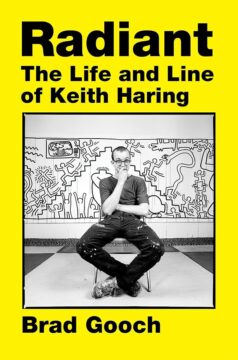 The impact of this work probably has nothing to do with whether it is high art masquerading as low art or low art masquerading as high art. Haring himself never seemed particularly interested in those divisions anyway. He liked Dubuffet and Alechinsky in exactly the same way that he liked cartoons and street graffiti. Pace Kuspit, I don’t think you can say that Haring’s art was fundamentally populist with a dash of high art influence to keep it from getting stale.
 I
I Picture two people sitting in a movie theater, both watching the screen: Are they seeing the same thing? Or is the movie playing out differently in each of their minds? Researchers from the Justus Liebig University Giessen (JLU) have found that it’s the latter, and they’ve
  On first opening a book I listen for the sound of the human voice. Instead of looking for signs, I form an impression of a tone, and if I can hear in that tone the harmonies of the human improvisation extended through 5,000 years of space and time, then I read the book. By this device I am absolved from reading most of what is published in a given year. I have found that few writers learn to speak in the human voice, that most of them make use of alien codes (academic, political, literary, bureaucratic, technical) in which they send messages already deteriorating into the half-life of yesterday’s news. Their transmissions seem to me incomprehensible, and unless I must decipher them for professional reasons, I am content to let them pass by. Too many subtle voices divert my attention, to the point that when I enter a bookstore I am besieged by the same sense of imminent discovery that follows me through seaports and capital cities. This restlessness never troubles me in libraries, probably because libraries are to me like museums. It is the guile of commerce that accounts for the foreboding in bookstores; I have a feeling of the marketplace, of ideas still current after 2,000 years, of old men earning passage money by telling tales of what once was the city of Antioch.
 Alzheimer’s disease slowly takes over the mind. Long before symptoms occur, brain cells are gradually losing their function. Eventually they wither away, eroding brain networks that store memories. With time, this robs people of their recollections, reasoning, and identity. It’s not the type of forgetfulness that happens during normal aging. In the twilight years, our ability to soak up new learning and rapidly recall memories also nosedives. While the symptoms seem similar, normally aging brains don’t exhibit the classic signs of Alzheimer’s—toxic protein buildups inside and surrounding neurons, eventually contributing to their deaths. These differences can only be caught by autopsies, when it’s already too late to intervene. But they can still offer insights. Studies have built a profile of Alzheimer’s brains: Shrunken in size, with toxic protein clumps spread across regions involved in reasoning, learning, and memory.
 I
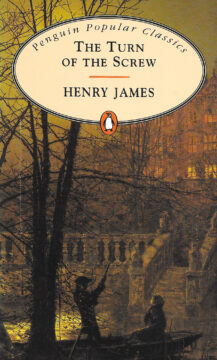
I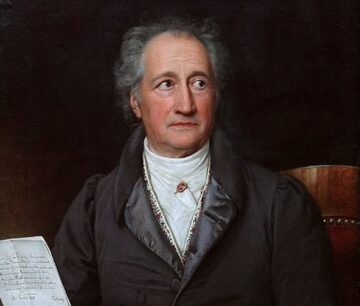 I was reading some Goethe recently, both in German, since I’m constantly working on my German these days for reasons not entirely clear to anyone, myself included, and also sometimes in an English translation, since it is pretty hard, actually, to read Goethe in German given the somewhat antiquated and very much literary nature of the writing. Actually, come to think of it, I haven’t really been reading Goethe. What I’ve been reading is the account of many long and short conversations between Goethe and a person named Johann Peter Eckermann, who was a youngish literary-minded fellow who sent Goethe some of his writing, writing that was rather ass-kissy in its love of, and reliance on, a Goethian way of thinking, and so Eckermann sent Goethe some of this Goethe-worshiping writing and Goethe, unsurprisingly, lapped it up and invited Eckermann to come and visit him at his fancy house in Weimar. This was in 1823 or thereabouts. Goethe was born in 1749, so this would have made him seventy-four when all this business with Eckermann took place. And then Goethe died in 1832, so there were roughly nine years of Goethe and Eckermann talking and talking and talking. The German edition of the conversations is multiple volumes and the Penguin English translation, which I think is complete, comes to 648 pages in fairly small print.
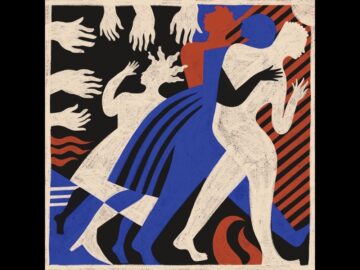 In 1796, when slavery remained both legal and common in New York, a white man named Aquila Giles set out to free Hannah, a 30-year-old woman he enslaved, and her daughter, Abigail, who was about 5. The manumission deed he signed declared his commitment “to serve the cause of humanity by promoting the liberation of such slaves as manifest a disposition to become useful members of society.” But he also put severe limits on Hannah’s and Abigail’s liberty. Hannah, he explained, would receive her freedom six years later—if she continued “to behave with fidelity and zeal in my service.” Abigail would not gain her freedom until 1820, when she would arrive at the age of about 29.
 I
I Opening with a title card that claims its story is “inspired by true events,” The Deliverance chronicles the plight of the Pittsburgh-based Jackson family as they contend with a demonic possession that threatens to destroy them from the inside out. Directed by
 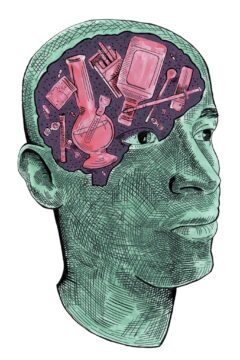 The message emblazoned on a walkway window at the airport in Burlington, Vt., is a startling departure from the usual tourism posters and welcome banners: “Addiction is not a choice. It’s a disease that can happen to anyone.” The statement is part of a public service campaign in yet another community assailed by drug use, intended to reduce stigma and encourage treatment.