Please take six minutes to watch this video. It may help you save someone's life.
[Thanks to Sardar Yousaf Hyat Khan.]

Please take six minutes to watch this video. It may help you save someone's life.
[Thanks to Sardar Yousaf Hyat Khan.]
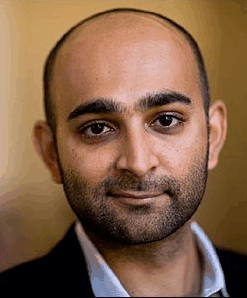
Mohsin Hamid in the New York Review of Books:
Pakistan is a large country, with a population of 180 million and a GDP of $175 billion. Average annual US economic assistance comes to less than 0.3 percent of Pakistan’s current GDP, or $2.67 per Pakistani citizen. Here in Lahore, that’s the price of a six-inch personal-size pizza with no extra toppings from Pizza Hut.
The alliance between the US and Pakistan is thus predominantly between the US and the Pakistani military. To enter the US as a Pakistani civilian “ally” now (a Herculean task, given ever-tighter visa restrictions) is to be subjected to hours of inane secondary screening upon arrival. (“Have you ever had combat training, sir?”) For a decade, meanwhile, successive civilian Pakistani finance ministers have gone to Washington reciting a mantra of “trade not aid.” They have been rebuffed, despite a WikiLeaked 2010 cable from the US embassy in Islamabad strongly supporting a free trade agreement with Pakistan and citing research showing that such an arrangement would likely create 1.4 million new jobs in Pakistan, increase Pakistani GDP growth by 1.5 percent per year, double inflows of foreign direct investment to Pakistan, and (because Pakistani exports would come largely from textile industries that US-based manufacturers are already exiting) have “no discernible impact” on future US employment.
Perhaps the vast majority of Pakistanis with an unfavorable view of the United States simply believe their annual free pizza is not worth the price of a conflict that claims the lives of thousands of their fellow citizens each year.
More here.
From Salon:
Xenophon's Socrates, too, thinks that lust for a beautiful boy is an inferior form of love, but his reasoning is merely pragmatic: “For, to my way of thinking, the man whose attention is attracted only by his beloved's appearance is like one who has rented a farm; his aim is not to increase its value but to gain from it as much of a harvest as he can for himself. On the other hand, the man whose goal is friendship is more like one possessing a farm of his own; at any rate he utilizes all sources to enhance his loved one's worth.” This sounds uncomfortably like the idea that you won't buy the cow if you can get the milk for free. At any rate, it's not the kind of thing that would inspire millennia of reverence for Socratic wisdom.
More here.
Fooling The Killers
Qasim,
I wonder now
where you are….
I haven’t forgotten you
after all these years,
long as the graveyard
wall is long. I always
ask the grass of the field
about you, and the dirt paths.
Are you alive,
with your poise,
your cane, and memories?
Did you marry?
Do you have a tent of your own,
and children?
Did you make it to Mecca?
Or did they kill you
at the foot of the Hill of Tin?
From Nature:

The edited segments were then synthesized and introduced into yeast cells, replacing the corresponding natural segments. Tests showed that the resultant semi-synthetic strains had apparently normal growth rates, colony appearance and gene expression. When the researchers turned on the scrambling system by activating the necessary enzyme, they were able to generate mutant strains with varying growth rates, drug sensitivity, temperature sensitivity, use of carbon sources and stress responses.
More here.

Outside Russia, and particularly in Germany, the siege of Leningrad has yet to be anchored firmly in people's minds. Not, it should be said, for lack of trying or information. The siege was an issue at the Nuremberg Trials (although the death count was then assumed to be 600,000), and there are more than enough international books on the subject, also from German researchers, with new material constantly being added to the list. And yet it remains an almost “unknown crime”. Why? Could it be that compared with the other huge crimes of National Socialism, it has remained the propagandistic “property” of the Soviet leaders, meaning that in the run-up to the Cold War after 1945 it was all but ignored?
I am not going to try now to open the eyes of the world to the of Leningrad Blockade. What I will write about here is less ambitious and somewhat more promising: the literature of the siege. First, though, I should make it clear that my use of the word “hell” in relation to besieged Leningrad, and particularly the first siege in the winter of 1941-1942, is in no way metaphorical. If hell exists anywhere, then it must literally be that: eternal coldness, darkness, unrecognisable scraps of music and news emerging from loudspeakers, marching for hours on foot with the principle means of transport used under the siege, children's ice-skates. Frozen corpses strewn on the roadside. And at home, the corpses of family members which could not be buried for days on end (because the rest of the family depended on their ration cards).
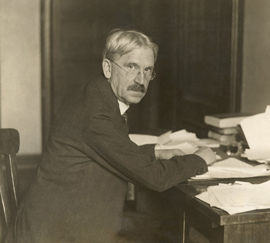
The concept of intellectuals in the modern sense gained prominence with the 1898 “Manifesto of the Intellectuals” produced by the Dreyfusards who, inspired by Emile Zola’s open letter of protest to France’s president, condemned both the framing of French artillery officer Alfred Dreyfus on charges of treason and the subsequent military cover-up. The Dreyfusards’ stance conveys the image of intellectuals as defenders of justice, confronting power with courage and integrity. But they were hardly seen that way at the time. A minority of the educated classes, the Dreyfusards were bitterly condemned in the mainstream of intellectual life, in particular by prominent figures among “the immortals of the strongly anti-Dreyfusard Académie Française,” Steven Lukes writes. To the novelist, politician, and anti-Dreyfusard leader Maurice Barrès, Dreyfusards were “anarchists of the lecture-platform.” To another of these immortals, Ferdinand Brunetière, the very word “intellectual” signified “one of the most ridiculous eccentricities of our time—I mean the pretension of raising writers, scientists, professors and philologists to the rank of supermen,” who dare to “treat our generals as idiots, our social institutions as absurd and our traditions as unhealthy.”
Who then were the intellectuals? The minority inspired by Zola (who was sentenced to jail for libel, and fled the country)? Or the immortals of the academy?
Fung:
In the domain of politics and policy, Chomsky stresses the responsibility of intellectuals to help their societies understand the truth about their governments. States, not least the United States, often act immorally, hypocritically, deceptively, and unjustly. Officials and other elites frequently justify these actions through deception and ideology. Intellectuals can help other citizens come to more truthful understanding of what their governments are doing and what is being done in their name. With regard to the foreign policy of the United States—in Asia, Latin America, and the Middle East—any honest reader of Chomsky’s work over the past 50 years must acknowledge that there is plenty to criticize.
But at the risk of belaboring the obvious, criticism is not the only public responsibility of the intellectual. Intellectuals can also join citizens—and sometimes governments—to construct a world that is more just and democratic.
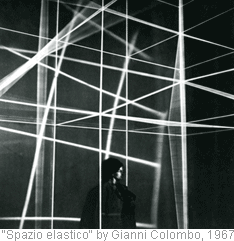
The more complicated matters become, the more things pile up and meanings get difficult to decipher, the more necessary it becomes to devise an itinerary of one's own and select a grid that is completely personal. In a situation where certainty and clarity are lacking, where there is no opportunity to gain a detached view, it becomes essential to follow Ariadne's thread guiding us like a red line through the wanderings of the labyrinth. But it has happened to me numerous times that on coming out in an exhausted state from one of the biennials or one of the documenta, I encounter an art critic, curator or journalist firing comments like a machine gun: “It's weak this year… a festival of mediocrity… a heap of material without meaning and an absence of any curatorial idea or guidelines whatsoever…” or things like that.
My immediate reaction has always been: “Why don't you change your job?” and “It's time you learnt how to look”, or even “Get your brain involved and use it.” I've also thought that one could seek to develop some sort of measure for quantifying the combined efforts of all the artists in order to contradict this type of judgment which sounds more like prejudice and which often is not based on genuine experience from exploring in depth and trying to understand what is in front of them. You could, for instance, ask all the artists present how much time they had invested in the works on display, and for how many years they worked as artists prior to being invited to participate in the Biennale. The sum of hours/days/decades, or indeed centuries, could almost be a quantitative indicator, even if – admittedly – it is no longer a measure of quality.
It has taken some time to understand that this position of the critic is probably – more than inability – to some extent a kind of survival reflex. To review a show such as the Biennale in its totality, with its 83 artists (of which 32 are women and 32 under the age of 35), 89 pavilions and 37 collateral events is simply impossible. To pretend to be able to manage to do this is a form of megalomania. I think that the only way of getting out of this is to make precise selections based on themes, trends or reflections which may have been sparked off by particular aspects of the various curatorial concepts, rather than specific works or pavilions. Therefore when faced with the boundless variety I decided to investigate three themes: the problem of light, the notion of nation and the principle of interaction.
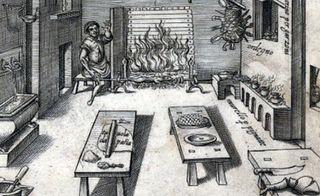
They called him “fat boy,” this seventeen-year old apprentice in the studio of Florentine painter Verrocchio who would receive care packages from his step-father, a pastry chef. The bastard son of a Florentine notary and a lady of Vinci, the boy’s doting step-father gave him a taste for marzipans and sugars from a very young age. The apprentice would receive the packages and devour them so quickly—crapulando, it was called, or guzzling—that the master felt the need to punish him, instructing the boy to paint an angel in the corner of a baptism of Christ, a mediocre painting which hangs in the Louvre for because it includes the first work of Leonardo da Vinci.
After three years as an apprentice, twenty-year old Leonardo took a job as a cook at the Tavern of the Three Snails near the Ponte Vecchio, working during the day on the few commissions his master sent his way and slinging polenta in the evenings. Polenta was the restaurant’s signature dish, a tasteless hash of meats and corn porridge. The other cooks at the Three Snails cared little about the quality of the food they served, and when in the spring of 1473, a poisoning sickened and killed the majority of the cooking staff of the tavern, Leonardo was put in charge of the kitchen. He changed the menu completely, serving up delicate portions of carved polenta arranged beautifully on the plate. However, like most tavern clientele, the patrons preferred their meals in huge messy portions. Upset with the change in management, they ran Leonardo out of a job.
Much like a modern struggling artist, Leonardo da Vinci was in his daily life a line cook, tavern keeper, and chef-for-hire. “My painting and my sculpture will stand comparison with that of any other artist,” he wrote in a humble introduction to Ludovico Sforza, the future Duke of Milan, by way of a job application. “I am supreme at telling riddles and tying knots. And I make cakes that are without compare.”
Janny Scott in the New York Times:
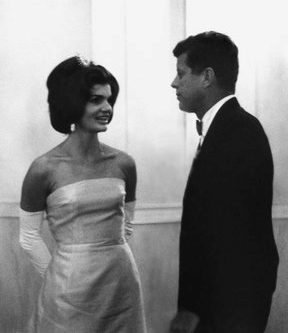
Charles DeGaulle, the French president, is “that egomaniac.” The Rev. Dr. Martin Luther King Jr. is “a phony” whom electronic eavesdropping has found arranging encounters with women. Indira Gandhi, the future prime minister of India, is “a real prune — bitter, kind of pushy, horrible woman.”
The White House social secretary, Letitia Baldrige, Mrs. Kennedy tells Mr. Schlesinger, loved to pick up the phone and say things like “Send all the White House china on the plane to Costa Rica” or tell them they had to fly string beans in to a state dinner. She quotes Mr. Kennedy saying of Lyndon B. Johnson, his vice president, “Oh, God, can you ever imagine what would happen to the country if Lyndon was president?” And Mr. Kennedy on Franklin D. Roosevelt: “Charlatan is an unfair word,” but “he did an awful lot for effect.”
More here.
David Bellos in The Independent:
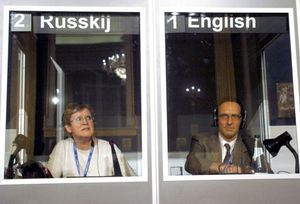
The corpus it can scan includes all the paper put out since 1957 by the EU in two dozen languages, everything the UN and its agencies have ever done in writing in six official languages, and huge amounts of other material, from the records of international tribunals to company reports and all the articles and books in bilingual form that have been put up on the web by individuals, libraries, booksellers, authors and academic departments. Drawing on the already established patterns of matches between these millions of paired documents, Google Translate uses statistical methods to pick out the most probable acceptable version of what's been submitted to it.
More here.
Prayaag Akbar in the Sunday Guardian:

For much of Mohammed Hanif's frenetic new novel, Our Lady of Alice Bhatti, it seems he is trying to convey this recklessness born of destitution.
More here.
From PhysOrg:

“This study is, to the best of our knowledge, the first to report a gene associated with psychological resources,” said lead study author Shimon Saphire-Bernstein, a doctoral student in psychology in Taylor's laboratory. “However, we wanted to go further and see if psychological resources explain why the OXTR gene is tied to depressive symptoms. We found that the effect of OXTR on depressive symptoms was fully explained by psychological resources.” At a particular location, the oxytocin receptor gene has two versions: an “A” (adenine) variant and a “G” (guanine) variant. Several studies have suggested that people with at least one “A” variant have an increased sensitivity to stress, poorer social skills and worse mental health outcomes. The researchers found that people who have either two “A” nucleotides or one “A” and one “G” at this specific location on the oxytocin receptor gene have substantially lower levels of optimism, self-esteem and mastery and significantly higher levels of depressive symptoms than people with two “G” nucleotides.
More here.
From MSNBC:

Excruciating
In five sets of studies in the laboratory and one field study at comedy performances, Dr. Dunbar and colleagues tested resistance to pain both before and after bouts of social laughter. The pain came from a freezing wine sleeve slipped over a forearm, an ever tightening blood pressure cuff or an excruciating ski exercise. The findings, published in the Proceedings of the Royal Society B: Biological Sciences, eliminated the possibility that the pain resistance measured was the result of a general sense of well being rather than actual laughter. And, Dr. Dunbar said, they also provided a partial answer to the ageless conundrum of whether we laugh because we feel giddy or feel giddy because we laugh.
More here.
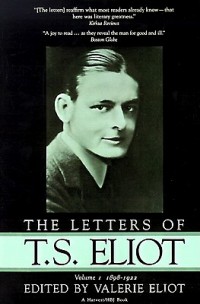
By the time T.S. Eliot was born in St. Louis on September 26, 1888, he had been preceded in this world by a brother and four sisters, the eldest of whom was nineteen years his senior. Inevitably, great care was lavished on the youngest Eliot; he had five mothers. Or perhaps six. Next door to the Eliot house on Locust Street lived Abigail Adams Eliot, Eliot’s grandmother, who had grown up in Washington, DC, and could recall clearly her great-uncle, the second president of the United States, after whose wife she had been named.
Great things were expected of the youngest Eliot, and a crucial part of his genius was to have achieved greatness in forms that no one in his family was fully equipped to countenance. Simultaneously, he fulfilled and decimated their expectations, constructing a life that allowed his family to admire his achievement only inasmuch as they were also bewildered, incapable of helping themselves to the side dish of self-congratulation that usually accompanies the main course of familial pride. The author of The Waste Land and Four Quartets secured the loyalty of his admirers (as well as the unshakable attention of his detractors) in precisely the same way.
Daniel Kahneman in Edge:
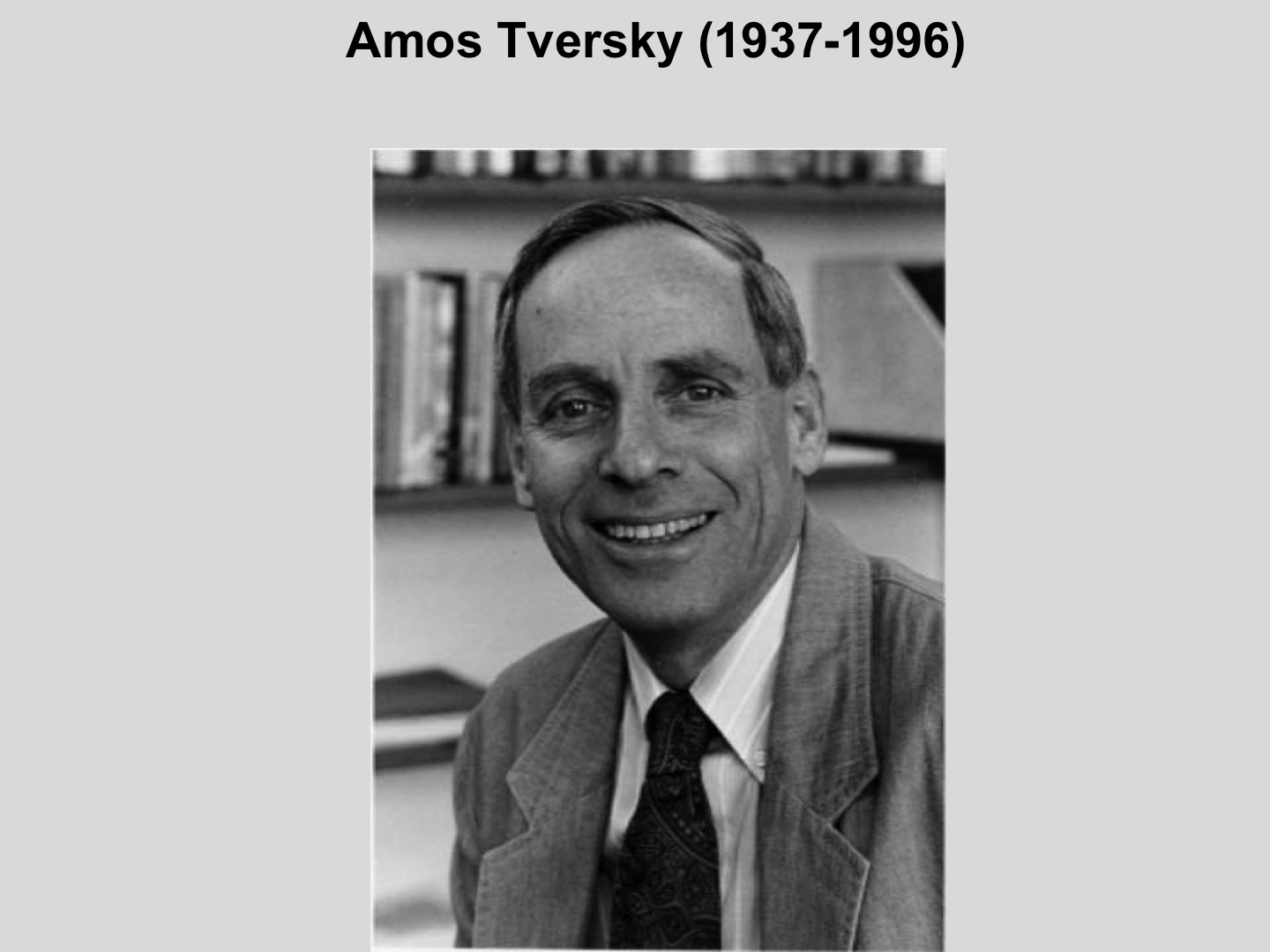
The marvels and the flaws that I'll be talking about are the marvels and the flaws of intuitive thinking. It's a topic I've been thinking about for a long time, a little over 40 years. I wanted to show you a picture of my collaborator in this early work. What I'll be trying to do today is to sort of bring this up-to-date. I'll tell you a bit about the beginnings, and I'll tell you a bit about how I think about it today.
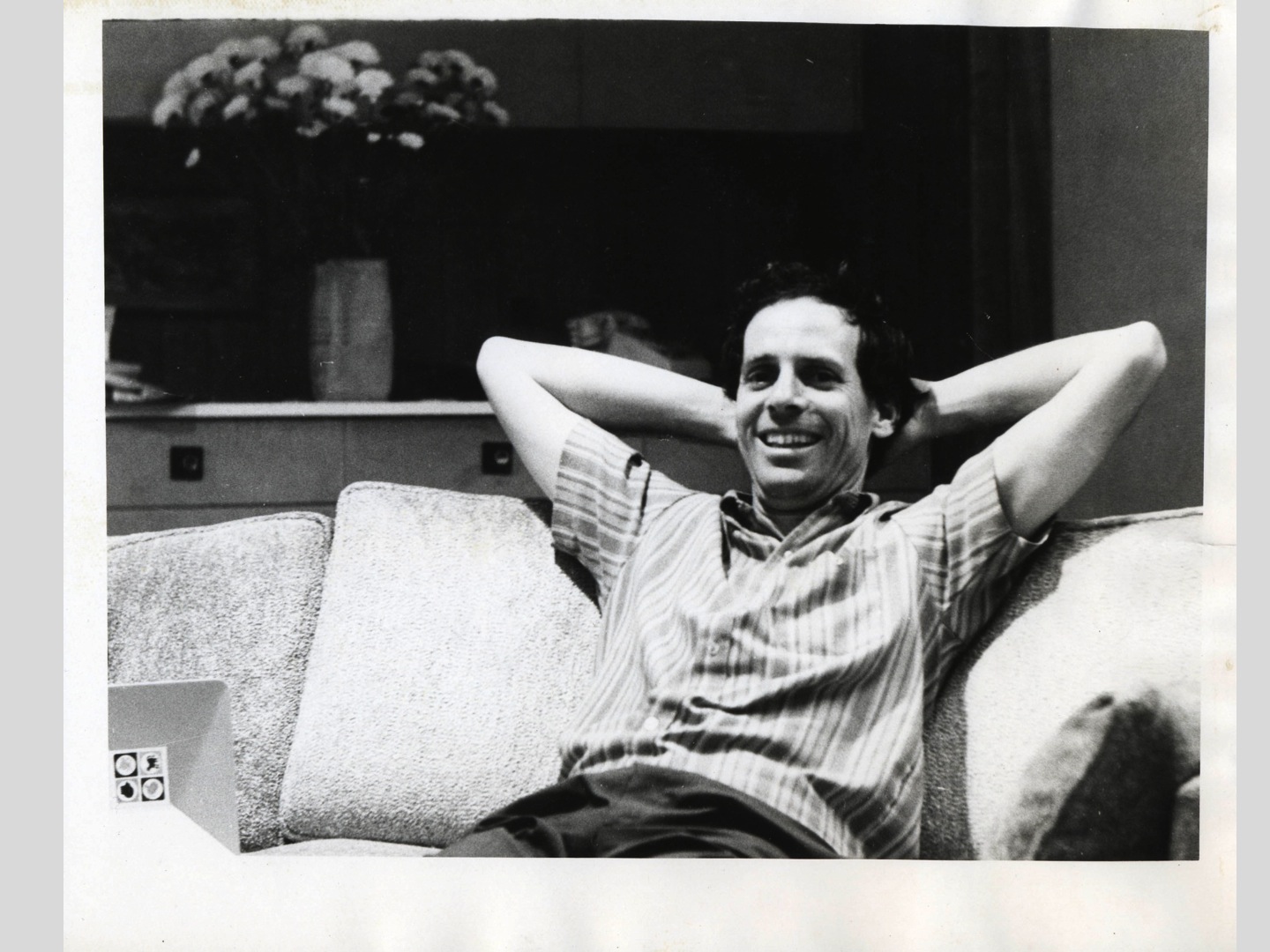
This is Amos Tversky, with whom I did the early work on judgment and decision-making. I show this picture in part because I like it, in part because I like very much the next one. That's what Amos Tversky looked like when the work was being done. I have always thought that this pairing of the very distinguished person, and the person who is doing the work tells you something about when good science is being done, and about who is doing good science. It's people like that who are having a lot of fun, who are doing good science.
We focused on flaws of intuition and of intuitive thinking, and I can tell you how it began. It began with a conversation about whether people are good intuitive statisticians or not. There was a claim at the University of Michigan by some people with whom Amos had studied, that people are good intuitive statisticians. I was teaching statistics at the time, and I was convinced that this was completely false. Not only because my students were not good intuitive statisticians, but because I knew I wasn't. My intuitions about things were quite poor, in fact, and this has remained one of the mysteries, and it's one of the things that I'd like to talk about today — what are the difficulties of statistical thinking, and why is it so difficult.
We ended up studying something that we call “heuristics and biases”. Those were shortcuts, and each shortcut was identified by the biases with which it came. The biases had two functions in that story. They were interesting in themselves, but they were also the primary evidence for the existence of the heuristics. If you want to characterize how something is done, then one of the most powerful ways of characterizing the way the mind does anything is by looking at the errors that the mind produces while it's doing it because the errors tell you what it is doing. Correct performance tells you much less about the procedure than the errors do.
Over at Philosophy Bites:
Is consequentialism in ethics a form of moral opportunism? Is torture always wrong? What about punishing the innocent? Philip Pettit, who recently gave the 2011 Uehiro Lectures on 'Robustly Demanding Values', discusses some common criticisms of consequentialism in conversation with Nigel Warburton in this episode of the Philosophy Bites podcast
Karachi is flooded by rains today, so I cobbled together this video from footage I shot with a tiny phone-type camera around the same time last year. My wife and I had landed at Karachi airport on a flight from Islamabad just as a major rainstorm hit. If nothing else, enjoy the Vivaldi Flute Concerto!
“As smoking gives us something to do with our hands when we aren’t using them,” Dwight Macdonald wrote in 1957, “Time gives us something to do with our minds when we aren’t thinking.” What leads us here, Macdonald asks, to the banal, boxed trifles of popular journalism? What, exactly, is to be gained by a three-hundred-word once-over of “World News”? Do we seek, as Macdonald concedes to be Time’s singular benefit, “practice in reading”? Perhaps we crave immersion in a warm bath of facts, to “have the little things around, like pets,” to collect “them as boys collect postage stamps.” Macdonald spent years laboring in the fact-friendly Luce empire as a writer at Fortune, no doubt watching his paragraphs hacked apart, the perfect verb sacrificed on the altar of snappiness, the clauses chopped into the staccato anti-rhythms of “readability.” Buy it if you like, was Macdonald’s position. But don’t call it edification. If the pointless accumulation of facts was taken to be some sort of mental tonic, and time spent with The Ed Sullivan Show assumed to be wasted (you could have been reading Time!), Macdonald blamed a particularly American reverence for the scientific method. What happens in a three-minute nightly news segment is in some sense subject to verification and thus accorded a certain respect: true trash over untrue trash.
more from Kerry Howley at Bookforum here.