the Orgasmatron

11Hitchens2-thumbStandard

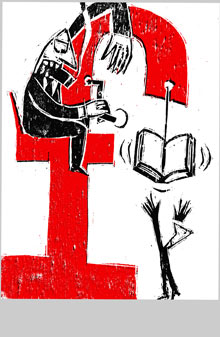
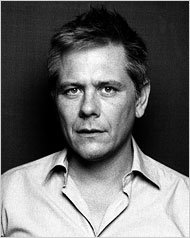
An alternative explanation for the temporary success of Reich, especially among American intellectuals both of the Marxisant stripe and of the do-it-yourself “organic community” sort, is that he was able to propose an essentially mechanical and “scientific” solution to a psychological problem, yet a mechanical solution that could be easily assembled and employed at home. Arriving in the United States in 1939 as one of the many dissident Freudians and heterodox Marxists to have escaped Hitler (and in his own case, also Stalin), Reich was quick to announce the invention of the “orgone energy accumulator.” This device or contraption took the form of a wooden cupboard lined with metal and insulated with steel wool. It was about the size of a telephone booth. In his movie “Sleeper,” Woody Allen satirically referred to the humble resulting structure as “the Orgasmatron”: a ridiculous name deftly annexed by Turner. But the real terms used by Reich to promote the cupboard of ecstasy — “orgastic potency”; “orgone energy” — were hardly less hyperbolic. Turner, an editor at Cabinet magazine, is clearly right to connect the Reich movement to the early stirrings of the postwar sexual revolution: a development that might have occurred naturally and that could well have been apolitical. However, a series of hysterically comic figures on the American right (and one or two rather sinister ones as well, like Senator Joseph McCarthy) claimed to see the figure of Alfred Kinsey, say, as a frontman for a wider conspiracy to sap American morals. It wasn’t long before agents from the F.B.I. and the Immigration and Naturalization Service were calling on Reich, either to ask him about subversive characters he might know, or about his own political past and affiliations. In a way, he made the perfect boogeyman for J. Edgar Hoover, who managed to amass a file of hundreds of pages on a man who must have seemed the perfect fusion of Red menace and sexual pervert.

more from Christopher Hitchens at the NYT here.
Want Evolutionary Change? Wait a Million Years.

Picture-1 Jerry Coyne over at Why Evolution is True:

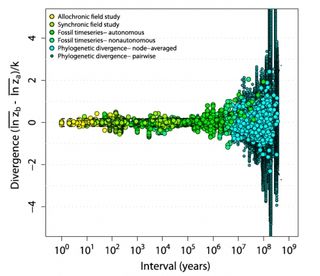
The question of the pattern of stasis (no change) versus gradualism (persistent and continuous change) in the fossil record continues. A new paper in the Proceedings of the National Academy of Sciences by Uyeda et al. comprises a huge survey and analysis of morphological change in animals (mammals, birds, squamate reptiles, and primates) over ten million years. The purpose was to determine whether change between species in one trait—body size—accumulates gradually with the passage of time since species diverged, or whether that change is more episodic. What they did was take a tremendous amount of data from three sources: current field studies of the rate of evolutionary change, fossil data showing change (again, this is all body size) through time, and estimates of rate of body-size divergence from living organisms whose divergence times can be estimated from molecular data.

Uyeda et al. then plotted the divergence in body size between related species (measured as proportional change, thus requiring a log scale) versus the divergence time. The graph below tells the tale: they see what they call a “blunderbuss” pattern, with not much change accumulating between species until they’ve diverged for about a million years, and then change occurring more rapidly and cumulatively after a million years.

Academic Publishers Make Murdoch Look Like a Socialist

Daniel-Pudles-illo-001 George Monbiot in The Guardian:

Murdoch pays his journalists and editors, and his companies generate much of the content they use. But the academic publishers get their articles, their peer reviewing (vetting by other researchers) and even much of their editing for free. The material they publish was commissioned and funded not by them but by us, through government research grants and academic stipends. But to see it, we must pay again, and through the nose.

The returns are astronomical: in the past financial year, for example, Elsevier's operating profit margin was 36% (£724m on revenues of £2bn). They result from a stranglehold on the market. Elsevier, Springer and Wiley, who have bought up many of their competitors, now publish 42% of journal articles.

More importantly, universities are locked into buying their products. Academic papers are published in only one place, and they have to be read by researchers trying to keep up with their subject. Demand is inelastic and competition non-existent, because different journals can't publish the same material. In many cases the publishers oblige the libraries to buy a large package of journals, whether or not they want them all. Perhaps it's not surprising that one of the biggest crooks ever to have preyed upon the people of this country – Robert Maxwell – made much of his money through academic publishing.

Troy Davis and Arguments Against the Death Penalty

Free_Troy_Davis-250x334 Lindsay Beyerstein in In These Times:

By the time you read this, Troy Davis will probably have been executed for a crime he probably didn't commit. (Update: At 11:08pm, Wednesday, Dahlia Lithwick of Slate reported that the state of Georgia had executed Troy Davis.)

Amanda Marcotte of Pandagon argues that, from here on out, death penalty abolitionists should focus on procedural arguments against the death penalty, as opposed to simply asserting that the death penalty is wrong. To change minds on capital punishment, we should stress that the justice system is fallible, racist, and classist and that it's foolish to give such a system the power of life and death.

Amanda's probably right about how to sway undecided voters on this issue. But I don't think that procedural objections to the death penalty are actually the strongest arguments.

I think the risk of killing an innocent person is a good enough reason to scrap the whole concept of judicial executions, but that probably only seems persuasive to me because I have a strong aversion to the state executing anyone. If I thought that the death penalty was synonymous with justice, I'd wave those concerns away.

The vast majority of people who are executed did all the murdering, raping, and mutilating they were found guilty of. The justice system makes mistakes in sending people to jail, too. That's unfortunate, but it's a cost of doing business. The answer is to make the system fairer, not to embrace across-the-board prison abolitionism. You can't give someone back the years that were wrongly taken from them any more than you can bring the back to life from a wrongful execution. We can commute death sentences, of course. But surely, more innocent people have died in prison than have been wrongly executed.

When I ask myself why I'm really against the death penalty–not just what I think other people will find persuasive–my bottom line is this: The state should only kill when it's absolutely necessary.

The Skin Trade

Model2 Chloe Schama reviews Ashley Mears'Pricing Beauty: The Making of a Fashion Model in TNR:

WHAT DOES IT take to succeed in an intensely competitive, cutting-edge industry? You need to show ambition, clearly, while never exuding unbecoming eagerness. For the right kind of exposure, you may have to work for free—even go into debt. You need to be calculating with your acquaintances, but avoid close connections with possible competitors. Above all, you need to stay beholden to the unlikely dream of success and the rare moments of magic, building calluses and erecting blinders to the unpleasant and grueling realities.

Such self-steeling is required for a career in any number of creative fields: journalism, novel-writing, acting, design, singing, dancing. But the world in which such demands come into perhaps the sharpest relief is that of the fashion model. The modeling world, with increased intensity in recent decades, has become one of freakish and outsized expectations—professionally and physically. Look no further than the apex of the industry, the high-end catwalk model, for the starkest example: she is often a size 00, with a waist that compares to a seven-year-old girl’s. For all the beauty it regularly displays, there is something deeply twisted about this industry. In her new book, the former-model and current professor of sociology Ashley Mears untangles just how crazy the fashion industry can be.

The physical requirements for the high-end model, while upsetting and grotesque, are not exactly unfamiliar. As an agent half-joked to Mears at the outset of her teenage modeling career: “Anorexia is in this season.”

Friday, September 23, 2011

Has pop culture, uh, stopped?

Parker-wide

Idea for a Saturday Night Live sketch: A group of ’80s post-punkers, famous for spiky guitar noise and grimacing intelligence, reunites to perform its most legendary album at a rock festival in 2011. The original lineup has not played a show together in 20 years. The bassist is now a college professor, the drummer owns a comic-book store, and so on. The charismatic lead singer, meanwhile, has become a surprise hit on the children’s circuit, peddling a groovified canon of kid-friendly sing-alongs to an audience of 6-year-olds. Of all the guys, he seems to have changed the most: in the dressing room he is uncharacteristically spritely, and keeps humming “Nellie the Elephant.” Also, is his voice … higher? It’s showtime, anyway, and the crowd roars—the silvering rock dudes, the love-handled ex-fanatics, the frowning young cognoscenti. But what’s the front man doing? His bandmates watch in horror as he bounces to the microphone, stares out wide-eyed, and yelps “Hey, everybody! Who else hates asparagus?!”

more from James Parker at The Atlantic here.

we strange children of Abraham

Kahn-cover2

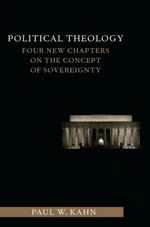
At a moment when some of the theoretical gestures being inspired by old, new, or futuristic political theologies have become ineffective, Paul Kahn’s Political Theology: Four New Chapters on the Concept of Sovereignty is a book of extraordinary significance. Or, perhaps I should say that I think it might be a book of extraordinary significance, inasmuch as it bears a potential to do something which has remained impossible, not only for Carl Schmitt, but also for some important contemporary critics of neo-liberal political economy. I want to reflect specifically about the way this impossibility might become possible, strangely, by way of a new migration of Abraham into the territory of philosophies of freedom and difference. Throughout, Kahn constructs a stage on which is presented a complex encounter between a decidedly American revolutionary heritage, a deeply European critique of liberalism, and a repeated and self-conscious reflection on Jewish traditions. In this encounter, each figure appears bathed in mutually illuminating light, a situation which is much more difficult to stage than one might think. Just for a start, it would have been impossible for Schmitt himself to conjure a similar forcefulness for his ruminations on intractable questions of freedom with these three actors. A sporadic anti-Judaism and anti-Americanism endemic not only to Schmitt’s writings in the ‘20s but also to the larger conversation about legality, freedom, and authenticity in which his work participated saw to that.

more from Ward Blanton at The Immanent Frame here.

nocturnalisation

Blanning_206589k

In 1710, Richard Steele wrote in Tatler that recently he had been to visit an old friend just come up to town from the country. But the latter had already gone to bed when Steele called at 8 pm. He returned at 11 o’clock the following morning, only to be told that his friend had just sat down to dinner. “In short”, Steele commented, “I found that my old-fashioned friend religiously adhered to the example of his forefathers, and observed the same hours that had been kept in his family ever since the Conquest”. During the previous generation or so, elites across Europe had moved their clocks forward by several hours. No longer a time reserved for sleep, the night time was now the right time for all manner of recreational and representational purposes. This is what Craig Koslofsky calls “nocturnalisation”, defined as “the ongoing expansion of the legitimate social and symbolic uses of the night”, a development to which he awards the status of “a revolution in early modern Europe”.

more from Tim Blanning at the TLS here.

Michael Sandel goes global

Thomas Friedman in the New York Times:

Yt-27e14c9f5b8ed061e894c6ac30d4b45d67664896-hqdefault You probably missed the recent special issue of China Newsweek, so let me bring you up to date. Who do you think was on the cover — named the “most influential foreign figure” of the year in China? Barack Obama? No. Bill Gates? No. Warren Buffett? No. O.K., I’ll give you a hint: He’s a rock star in Asia, and people in China, Japan and South Korea scalp tickets to hear him. Give up?

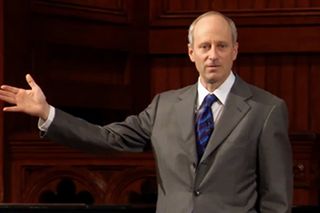
It was Michael J. Sandel, the Harvard University political philosopher.

This news will not come as a surprise to Harvard students, some 15,000 of whom have taken Sandel’s legendary “Justice” class. What makes the class so compelling is the way Sandel uses real-life examples to illustrate the philosophies of the likes of Aristotle, Immanuel Kant and John Stuart Mill.

Sandel, 58, will start by tossing out a question, like, “Is it fair that David Letterman makes 700 times more than a schoolteacher?” or “Are we morally responsible for righting the wrongs of our grandparents’ generation?” Students offer competing answers, challenge one another across the hall, debate with the philosophers — and learn the art of reasoned moral argument along the way.

Besides being educational, the classes make great theater — so much so that Harvard and WGBH (Boston’s PBS station) filmed them and created a public television series that aired across the country in 2009. (My wife, Ann, and I were among the many donors to the PBS broadcast.) The series, now freely available online (at www.JusticeHarvard.org), has begun to stir interest in surprising new places.

More here.

Friday poem

Renunciation

—after the Irish of Séathrún Céitinn

Dear one, with your wiles,
You’d best remove your hand,
Though burning with love’s fire,
I’m no more an active man.

Look at the grey on my head,
See how my body droops,
Think of my sluggish blood –
What would you have me do?

It’s not desire I lack.
Don’t bend low like that again!
But love without the act
Must live, slender minx.

Withdraw your lips from mine,
Strong as the inclination is,
Don’t brush against my skin,
That could lead to wantonness.

The intricacy of curls,
Soft eyes clear as dew,
The pale sight of your curves,
Give pleasure to me now.

Bar what the body craves,
And lying with you requires,
I’ll do for our love’s sake,
Dear one, with your wiles.

by Maurice Riordan
publisher: PIW, © 2011

Surviving a sticky wicket: A Personal History by Imran Khan

Arifa Akbar in The Independent:

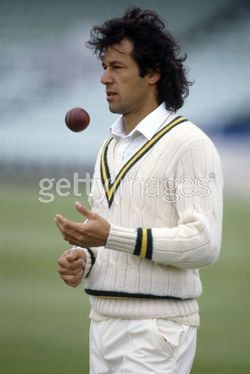
Immo It may seem like sporting profanity now but Imran Khan's cricketing debut was so inauspicious that it earned him the humiliating nickname, Imran Khan't. Four decades on, and still viewed as a national treasure for leading Pakistan's cricket team to its only World Cup victory in 1992, Khan recalls the Khan't moment. He draws parallels between the slow-burn success of first career and the early disappointments of his second, in Pakistani politics.

This book, an intelligently written mix of Pakistan's history and his own autobiography, reflects on the challenges that Khan faced in cricket and later, in his humanitarian work. The lessons learnt in his previous incarnations gave momentum to his entry into politics. Tahreek-e-Insaf (Movement for Justice), the party he founded in 1996, has faced many humbling moments – winning no seats in the 1997 elections and one in 2002 – although it is now seen as a credible alternative to the government by many Pakistanis. A mix of personal disclosure and political analysis, the book works surprisingly well on both counts. He reflects on his sporting achievements (the rigours of test cricket become a metaphor for life), his marriage to ex-wife Jemima Khan and the strain of the hate campaign that his opponents built around her, as well as the cancer hospital he set up in memory of his late mother, and his spiritual awakening. There are quietly heroic moments, particularly in his descriptions of the courage shown by the poor while he fundraises for the Shaukat Khanum Memorial Cancer Hospital, and also in the extraordinary determination he shows in 1992. He took his team to World Cup victory in spite of a secret injury that would have taken him out of the game, had he declared it. There are candid reflections too, including a half-hearted attempt to join Pakistan's arranged marriage circuit before meeting Jemima, and later, Jemima's encounter with a mystic who becomes Khan's religious guide, Mian Bahir. She is left wide-eyed as Bahir displays his visionary skills.

More here.

Brain imaging reveals the movies in our mind

From PhysOrg:

Brainscansle Imagine tapping into the mind of a coma patient, or watching one's own dream on YouTube. With a cutting-edge blend of brain imaging and computer simulation, scientists at the University of California, Berkeley, are bringing these futuristic scenarios within reach. Using functional Magnetic Resonance Imaging (fMRI) and computational models, UC Berkeley researchers have succeeded in decoding and reconstructing people's dynamic visual experiences – in this case, watching Hollywood movie trailers. As yet, the technology can only reconstruct movie clips people have already viewed. However, the breakthrough paves the way for reproducing the movies inside our heads that no one else sees, such as dreams and memories, according to researchers. “This is a major leap toward reconstructing internal imagery,” said Professor Jack Gallant, a UC Berkeley neuroscientist and coauthor of the study to be published online Sept. 22 in the journal Current Biology. “We are opening a window into the movies in our minds.”

PICTURE: This set of paired images provided by Shinji Nishimoto of the University of California, Berkeley on Wednesday, Sept. 21, 2011 shows original video images, upper row, and those images reconstructed by computer from brain scans. While volunteers watched movie clips, a scanner watched their brains. And from their brain activity, a computer made rough reconstructions of what they viewed. Scientists reported that result Thursday, Sept. 22, 2011 and speculated such an approach might be able to reveal dreams and hallucinations someday. In the future, it might help stroke victims or others who have no other way to communicate, said Jack Gallant, a neuroscientist at the University of California, Berkeley, and co-author of the paper.

More here.

When Pakistan plays with fire

Raza Ali Sayeed in Dawn:

Pamela-constable-543 Being in the eye of the storm in geopolitics has its downsides and its benefits. This holds especially true if you are a writer or simply a foreign correspondent sent to cover a volatile country like Pakistan. After the attacks of September 11 2001 in the United States and with the subsequent war in Afghanistan, much of the world’s attention focused on Pakistan and its image as a breeding ground for extremism and militancy. The country has longed been called a dysfunctional state or simply a failed state by westerners.

Pamela Constable in her book “Playing with Fire: Pakistan at War with Itself” seeks to dispel some of these preconceived notions and tries to navigate for the lay person the vast labyrinth that is Pakistan’s politics and society. Her resume as a journalist is impressive, being a former correspondent for the Boston Globe and now working for the Washington Post. As a foreign correspondent she has reported from Central and South America, with a particular focus on Chile during the grim years of the Pinochet dictatorship, as well as parts of the former Soviet Union.

Now she turns her focus to Pakistan, where there is indeed much to write about. In 11 straightforward yet riveting chapters she describes the country’s recent history. The chapters are almost in bullet form a summary of Pakistan’s political setup and the ghosts that have been haunting it ever since its birth in 1947. Constable presents us a nation with much vitality and brimming with talent, yet at the same time unable to throw off the shackles that have prevented it from becoming a dynamo which she says the country has the potential to be.

More here.

Particle physicists detect neutrinos travelling faster than light, a feat forbidden by Einstein’s theory of special relativity

Ian Sample in The Guardian:

ScreenHunter_01 Sep. 23 10.56 It is a concept that forms a cornerstone of our understanding of the universe and the concept of time – nothing can travel faster than the speed of light.

But now it seems that researchers working in one of the world's largest physics laboratories, under a mountain in central Italy, have recorded particles travelling at a speed that is supposedly forbidden by Einstein's theory of special relativity.

Scientists at the Gran Sasso facility will unveil evidence on Friday that raises the troubling possibility of a way to send information back in time, blurring the line between past and present and wreaking havoc with the fundamental principle of cause and effect.

They will announce the result at a special seminar at Cern – the European particle physics laboratory – timed to coincide with the publication of a research paper (pdf) describing the experiment.

Researchers on the Opera (Oscillation Project with Emulsion-tRacking Apparatus) experiment recorded the arrival times of ghostly subatomic particles called neutrinos sent from Cern on a 730km journey through the Earth to the Gran Sasso lab.

The trip would take a beam of light 2.4 milliseconds to complete, but after running the experiment for three years and timing the arrival of 15,000 neutrinos, the scientists discovered that the particles arrived at Gran Sasso sixty billionths of a second earlier, with an error margin of plus or minus 10 billionths of a second.

The measurement amounts to the neutrinos travelling faster than the speed of light by a fraction of 20 parts per million. Since the speed of light is 299,792,458 metres per second, the neutrinos were evidently travelling at 299,798,454 metres per second.

More here.

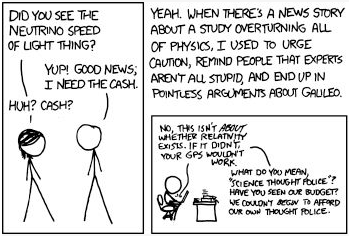
UPDATE: This is XKCD via Jennifer Oulette:

ScreenHunter_03 Sep. 23 23.33

ScreenHunter_04 Sep. 23 23.33

Thursday, September 22, 2011

The Palestinians’ just cause heads to the UN

Steven Hill at Al Jazeera:

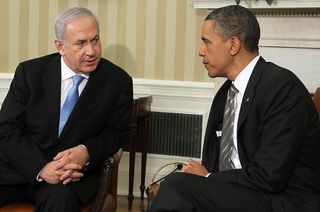
201191917539887734_20 The momentum of the Arab Spring is showing ongoing vitality, from Libya to Syria. In the next episode, which holds considerable potential as a catalyst for profound change, the Palestinians take their quest for statehood to the United Nations. Perhaps no other issue in the Middle East packs as much symbolic value as this one, and yet once again the United States is showing itself to be slow-footed, sclerotic and on the wrong side of history.

The Obama administration, like previous Democratic and Republican administrations, has announced it will fight hard against Palestine being recognized by the United Nations. Yet even President Obama recognises that the Palestinian cause, which would merely give 1.7 million Palestinians the same status as the thousand people that live in Vatican City, is undeniably just. Last year at the United Nations General Assembly, President Obama promised a peace plan that would lead to “an independent, sovereign state of Palestine”.

As in so many other areas of domestic and foreign policy, it's become a well-worn truism that Obama's deeds rarely match his words. In issue after issue, the man simply fails to deliver. It's hard to know if the inexperienced Obama is simply not very good at being president, and knowing how to wield the pulleys of power, or whether he is achieving the policy he wants and thinks no one is noticing the sizable gap between what he says and what he does.

More here.

I love you

Walter Kirn in his blog:

67670_440695296610_614301610_5790238_6530651_n All the kids now tell their friends “I love you.” Girls my daughter's age, 12, all say “I love you.” And so, sometimes, do boys my son's age, 10. They say it when they part ways after school. They write it in e-mails, in text messages, on Facebook. “I love you.” They even say it to their parents. “I love you,” they say, and then head off to the movies. “I love you,” they say, and then climb on the team bus. It's not something I did at their age, all those years ago, saying and writing “I love you” all the time, and it's not something that the other kids did, either, particularly not outside the home, the family, where love, as we then defined it, didn't exist. Outside the family, people 'liked' each other. Now they love each other. And they say so. Sincerely. With feeling. I've heard it. Authentic feeling. You can think it's a fad, but I've heard it: it's said with feeling.

Three weeks and three days ago my mother died unexpectedly at 71. She was in Iowa, visiting her boyfriend, which she did every year when the state fair was going. One morning he found her on the bathroom floor. She couldn't speak. Her eyes were open, but barely. An ambulance came and drove her to the hospital, to Iowa Methodist in downtown Des Moines (a city that is beige across the board and has terrible traffic at certain peculiar moments but then seems to empty out entirely), where someone ran a CAT scan and discovered a 'sizable mass' in her brain, behind her eyes. A surgeon went in and found an abscess there, 'encapsulated,' sealed off from other tissue, and immediately he drained it of built-up fluid and then bathed the area in antibiotics. The fluid, infected with something, was sent for tests. Hours passed. Night came. My mother remained unconscious, breathing with noisy mechanical assistance. A nurse said she saw her blink when spoken to sometime between four and five a.m. and rated her coma an optimistic '11' on a scale — an official coma scale — that runs to 15, for some reason, and starts at 3.

I got there a few hours later from Montana, fighting with my girlfriend the whole way.

More here.

Who was John Lennon?

From The Christian Science Monitor:

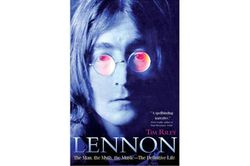
Len Tim Riley has been a music critic for nearly three decades now. His first book, “Tell Me Why” examines the music of the Beatles, song by song. This month his latest book, Lennon: The Man, the Myth, the Music – the Definitive Life, a 700-plus page biography of John Lennon, is being released. I recently had a chance to talk to Riley about his book and his lifelong fascination with the Beatles. Here are excerpts of our conversation:

You’ve been reading and writing about the Beatles for much of your adult life. Was there really anything new for you to learn as you researched this book?
I learned so many different things. I can’t tell you. I just learned basically how little I know.

Like what?
Beatles scholars tend to be the only people who know that Alfred Lennon, Lennon’s father, left behind a memoir called “Daddy Come Home.” Alf’s story is fascinating because he came from the Blue Coat Orphanage, he was a song-and-dance guy on the boat in the merchant marines. He was an emcee on these ships and he was a song-and-dance man. He ran away from an orphanage to join a band. So there’s a lot of fascinating stuff there. Even people who have written about Alf seem not to know. [I also had a] key moment interviewing a key subject, [Beatles friend and associate] Barry Miles, I was trying to come up with the reason that Lennon was so quiet and passive in the “Let It Be” movie [made in 1969]. So as I’m doing my research I’m realizing that [he and Yoko Ono] had just had a miscarriage at that time. So I said to Barry Miles, “Is that the reason that he’s so passive?” And Barry Miles just waved me off. He said “Oh no no. We knew they were on heroin all through 1968. And we were glad. Because it got him off acid.” That was really like WOW! They were really dealing with a major drug problem. And we sort of know that. In mythic terms we know that he was a major drug user.

More here.

Madame Curie’s Passion

From Smithsonian:

Madame-Curie-Paris-631 When Marie Curie came to the United States for the first time, in May 1921, she had already discovered the elements radium and polonium, coined the term “radio-active” and won the Nobel Prize—twice. But the Polish-born scientist, almost pathologically shy and accustomed to spending most of her time in her Paris laboratory, was stunned by the fanfare that greeted her.

She attended a luncheon on her first day at the house of Mrs. Andrew Carnegie before receptions at the Waldorf Astoria and Carnegie Hall. She would later appear at the American Museum of Natural History, where an exhibit commemorated her discovery of radium. The American Chemical Society, the New York Mineralogical Club, cancer research facilities and the Bureau of Mines held events in her honor. Later that week, 2,000 Smith College students sang Curie’s praises in a choral concert before bestowing her with an honorary degree. Dozens more colleges and universities, including Yale, Wellesley and the University of Chicago, conferred honors on her. The marquee event of her six-week U.S. tour was held in the East Room of the White House. President Warren Harding spoke at length, praising her “great attainments in the realms of science and intellect” and saying she represented the best in womanhood. “We lay at your feet the testimony of that love which all the generations of men have been wont to bestow upon the noble woman, the unselfish wife, the devoted mother.” It was a rather odd thing to say to the most decorated scientist of that era, but then again Marie Curie was never easy to understand or categorize. That was because she was a pioneer, an outlier, unique for the newness and immensity of her achievements. But it was also because of her sex.

More here.

1 Million Dead in 30 Seconds

21_3-cb

The odds of more Haiti-scale destruction are growing by the day because the world is urbanizing. Two hundred years ago, Peking was the only city in the world with a population of a million people. Today, almost 500 cities are that big, and many are much bigger. That explains why the number of earthquake-caused deaths during the first decade of this century (471,015) was more than four times greater than the number during the previous decade, according to statistics compiled by the U.S. National Earthquake Information Center. If the fatality trend continues upward—and it will, because the urbanization trend is continuing upward, as is the trend of housing migrant populations in death traps—it won’t be long before we see a headline announcing 1 million dead in massive earthquake. Indeed, we’ll be lucky not to see it in our lifetimes. Just as we know how to build airplanes that don’t crash, we know how to construct buildings that don’t collapse. If you want to learn how to do it, grab some marbles and a Teflon baking sheet and follow the sixth-grade lesson plan on Discovery Online. We also know which cities are most at risk: Bogotá, Cairo, Caracas, Dhaka, Islamabad, Istanbul, Jakarta, Karachi, Katmandu, Lima, Manila, Mexico City, New Delhi, Quito, and Tehran. Los Angeles and Tokyo are prime candidates for a major quake, but they will probably survive, since they are well built—though L.A. could do better. New York is at greater risk than people realize.

more from Claire Berlinski at City Journal here.