A Sister’s Eulogy for Steve Jobs

Mona Simpson in the New York Times:
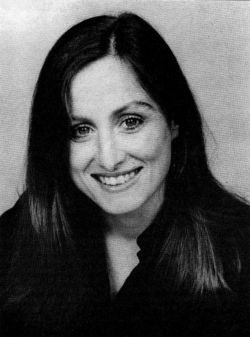
Simpson_01_bodyI grew up as an only child, with a single mother. Because we were poor and because I knew my father had emigrated from Syria, I imagined he looked like Omar Sharif. I hoped he would be rich and kind and would come into our lives (and our not yet furnished apartment) and help us. Later, after I’d met my father, I tried to believe he’d changed his number and left no forwarding address because he was an idealistic revolutionary, plotting a new world for the Arab people.

Even as a feminist, my whole life I’d been waiting for a man to love, who could love me. For decades, I’d thought that man would be my father. When I was 25, I met that man and he was my brother.

By then, I lived in New York, where I was trying to write my first novel. I had a job at a small magazine in an office the size of a closet, with three other aspiring writers. When one day a lawyer called me — me, the middle-class girl from California who hassled the boss to buy us health insurance — and said his client was rich and famous and was my long-lost brother, the young editors went wild. This was 1985 and we worked at a cutting-edge literary magazine, but I’d fallen into the plot of a Dickens novel and really, we all loved those best. The lawyer refused to tell me my brother’s name and my colleagues started a betting pool. The leading candidate: John Travolta. I secretly hoped for a literary descendant of Henry James — someone more talented than I, someone brilliant without even trying.

When I met Steve, he was a guy my age in jeans, Arab- or Jewish-looking and handsomer than Omar Sharif.

More here.
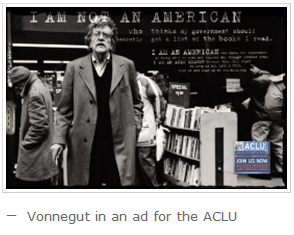
Occupy Wall Street: What Would Kurt Vonnegut Say?

Charles J. Shields in Writing Kurt Vonnegut:

ScreenHunter_01 Nov. 01 10.20Kurt, after all, made the national news for the first time in his life by speaking against nuclear weapons at a Meeting of the American Association of Physics Teachers in 1969. He later added his name to a letter of protest from PEN, the writer’s organization, condemning the expulsion of Aleksandr I. Solzhenitsyn from the Soviet writer’s union. And in 1973, he participated in a six-hour vigil of prayer, music, and readings at the Cathedral of St. John the Divine in New York intended to focus on the “responsibility of Americans to heal the wounds of war.” For the rest of his life, he continued to apply the sting of his aphoristic remarks to crimes and indecencies as he saw them. Now and then, you see a bumper sticker with his quote, “We could have saved the Earth, but we were too damned cheap.”

So would he have joined elder statesmen of protest and civil disobedience such as Pete Seeger and Arlo Guthie who went down to Zuccotti Park recently?

If he did, I suspect he would have felt some pangs of conscience. Because you see, Kurt was a fat cat himself. His life, his career, and his beliefs put him squarely in the moral paradox that most of us find ourselves in: we believe in the tenets of freedom, capitalism, and free enterprise… except when we don’t.

More here.

Monday, October 31, 2011

Sunday, October 30, 2011

The Arab Intellectuals Who Didn’t Roar

30worth-img-articleLargeAnother piece by Robert Worth in the NYT Magazine:

IN mid-June, the Syrian poet known as Adonis, one of the Arab world’s most renowned literary figures, addressed an open letter to the Syrian president, Bashar al-Assad. The stage was set for one of those moments, familiar from revolutions past, in which an intellectual hero confronts an oppressive ruler and eloquently voices the grievances of a nation.

Instead, Adonis — who lives in exile in France — bitterly disappointed many Syrians. His letter offered some criticisms, but also denigrated the protest movement that had roiled the country since March, and failed even to acknowledge the brutal crackdown that had left hundreds of Syrians dead. In retrospect, the incident has come to illustrate the remarkable gulf between the Arab world’s established intellectuals — many of them, like Adonis, former radicals — and the largely anonymous young people who have led the protests of the Arab Spring.

More than 10 months after it started with the suicide of a Tunisian fruit vendor, the great wave of insurrection across the Arab world has toppled three autocrats and led last week in Tunisia to an election that many hailed as the dawn of a new era. It has not yielded any clear political or economic project, or any intellectual standard-bearers of the kind who shaped almost every modern revolution from 1776 onward. In those revolts, thinkers or ideologues — from Thomas Paine to Lenin to Mao to Vaclav Havel — helped provide a unifying vision or became symbols of a people’s aspirations.

The absence of such figures in the Arab Spring is partly a measure of the pressures Arab intellectuals have lived under in recent decades, trapped between brutal state repression on one side and stifling Islamic orthodoxy on the other. Many were co-opted by their governments (or Persian Gulf oil money) or forced into exile, where they lost touch with the lived reality of their societies. Those who remained have often applauded the revolts of the past year and even marched along with the crowds. But they have not led them, and often appeared stunned and confused by a movement they failed to predict.

Pain is no more or no less profound than any other sensation

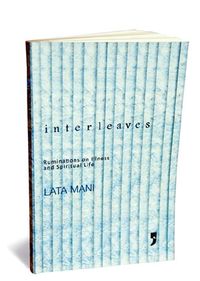
Lata Mani excerpted in the Wall Street Journal:

48b94dea-f8cc-11e0-983e-000b5dabf613It is often suggested that pain is beyond description, that language breaks down at the terminus of pain. It is certainly true that when one is in the midst of the cluster of physical sensations that we call pain, the last thing on one’s mind is finding the right words to make poetry out of one’s suffering. But there is nothing essentially mysterious about pain. It can, and for the body in pain must, be spoken of, even if only in the abbreviated cry to God, taking the form of a groan, curse, or a helpless “I don’t know how much more of this I can take”. No, pain is not beyond the horizon of meaning, beyond conceptualization. Rather it is squarely within the world of signification.

Pain throbs. Pain shreds. Pain darts. Pain weaves sly patterns across the length and breadth of the body. Pain stabs. Pain pulses. Pain plummets the body into a vortex unknown and at times fearful. Pain nags. Chronic pain drones repetitiously, monotonously, ad nauseam. Pain flays the surface of the skin, turning it almost translucent with frailty. Pain makes one so weak that the whole world is experienced through its omnipresent filter. Pain drains everything into its core. Pain can be focused as the point of a pinhead or as dispersed as one’s consciousness and, if suffered long enough, the pinpoint can seem to grow and swallow one’s entire physical being. Pain can be as hard as steel or as soft as a ripe pear. Pain shudders. Pain shivers.

More here.

Neuroscience and Justice

From Edge:

MICHAEL GAZZANIGA is a Neuroscientist; Professor of Psychology & Director, SAGE Center for the Study of Mind, University of California, Santa Barbara. His books include Human; The Ethical Brain; and Who's In Charge: Free Will and the Science of the Brain (forthcoming, November 11th).

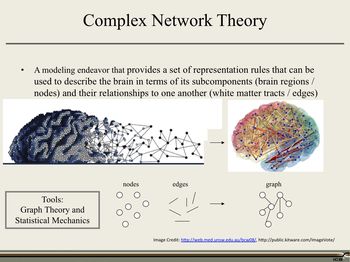
BrainMICHAEL GAZZANIGA: What I'm going to do is talk about neuroscience and how it may impact justice. I had to give a talk recently to judges and lawyers, but it really is the same talk you would give anybody. It is a summary of four years of effort that I've put into this MacArthur Law and Neuroscience project. How that came about is there was a meeting in New York of lawyers, philosophers, neuroscientists, and psychologists. They met four or five years ago to talk about whether one should study the topic of law and neuroscience. I left the room to go to the bathroom or something, I came back and they said, okay, you're directing it. So don't leave the room when these things are going on because you get saddled with surprises! Since “basic neuroscience for judges and lawyers” was exactly the wrong talk for you at 3:00 o'clock this afternoon, let's say “perspectives on basic neuroscience” because the former one reminds you of your high school biology class which most of you probably didn't like. I'm going to give you the fastest three-minute review of neuroscience. As I said I just gave to the judges of the Second Circuit Court of New York. Many of you maybe have cases in front of the Second Circuit, and they have a retreat every year up at Lake Sagamore , New York. The idea is: You can't, obviously, for someone who's not in neuroscience, you can't communicate the wealth of neuroscience in a hundred lectures, let alone one, let alone a few minutes. But you can kind of get a feel for it. I want to take you through that feel and then take that into the question of how is this field of neuroscience going to impact how we think about the law and, more importantly, how we think about justice.

At the Met, a New Vision for Islam in Hostile Times

Robert Worth in The New York Times:

IslamOver the past decade, many Americans have based their thoughts and feelings about Islam in large part on a single place: the blasted patch of ground where the World Trade Center once stood. But a rival space has slowly and silently taken shape over those same years, about six miles to the north. It is a vast, palacelike suite of rooms on the second floor of the Metropolitan Museum of Art, where some of the world’s most precious Islamic artifacts sit sequestered behind locked doors. On a recent afternoon, Navina Haidar stood in these rooms as a wash of voices echoed up from the halls of the Greek and Roman galleries, far below. Only three weeks remained until the long-hidden Islamic galleries were to be unveiled to the public, and Haidar — an elegant 45-year-old who was raised in New Delhi by a Muslim father and a Hindu mother — still had decisions to make. She has spent more than eight years devising a vision of Islamic tradition that is far more diverse, and less foreign, than the caricature mullahs and zealots who have come to define Islam for much of the non-Muslim world.

“We’re thinking of putting the Koran pages right here, by the entrance,” Haidar said, gazing at two eight-feet-tall manuscript pages in sloping Arabic script that date to the 15th century, parked casually on dollies. “That would make a bold statement right up front about Islam.” Around her, ladders and scaffoldings stood casually alongside life-size Afghan figures in stone and curved Ottoman daggers in gold. There is far more at stake here than the overhaul of a permanent collection at the Met, itself a once-in-a-generation event. The museum’s directors are acutely aware that their collection will be unveiled at a time when Islam is a more inflammable subject than ever. That is no small part of what makes Haidar so nervous as she prepares for opening day. It is also one reason the galleries — closed since 2003 — spent so long in the dark.

More here. (Note: Congratulations to dear Navina on this magnificent accomplishment and to her parents and my dear friends Kusum and Salman Haidar on their daughter's spectacular success. The new galleries are an absolute must-see at the Met)

Sunday Poem

‘The yellow of the Caribbean seen from Jamaica at three in the afternoon.’
– Gabriel García Márquez

Meditation on Yellow

1

At three in the afternoon
you landed here at El Dorado
(for heat engenders gold and
fires the brain)
Had I known I would have
brewed you up some yellow fever-grass
and arsenic

but we were peaceful then
child-like in the yellow dawn of our innocence

so in exchange for a string of islands
and two continents

you gave us a string of beads
and some hawk’s bells

which was fine by me personally
for I have never wanted to possess things
I prefer copper anyway
the smell pleases our lord Yucahuna
our mother Attabeira
It’s just that copper and gold hammered into guanin
worn in the solar pendants favoured by our holy men
fooled you into thinking we possessed the real thing
(you were not the last to be fooled by our
patina)

As for silver
I find that metal a bit cold
The contents of our mines
I would have let you take for one small mirror
to catch and hold the sun

I like to feel alive
to the possibilities
of yellow

lightning striking

perhaps as you sip tea
at three in the afternoon
a bit incontinent
despite your vast holdings
(though I was gratified to note
that despite the difference in our skins
our piss was exactly the same shade of yellow)

Read more »

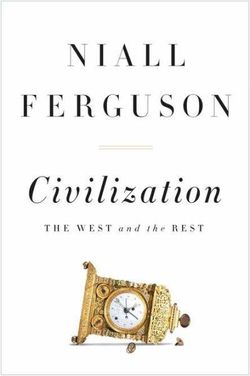
Niall Ferguson’s Civilisation: The West and the Rest

Pankaj Mishra in the London Review of Books:

Civilization-the-west-and-the-rest‘Civilisation’s going to pieces,’ Tom Buchanan, the Yale-educated millionaire, abruptly informs Nick Carraway in The Great Gatsby. ‘I’ve gotten to be a terrible pessimist about things. Have you read The Rise of the Colored Empires by this man Goddard? … The idea is if we don’t look out the white race will be – will be utterly submerged.’ ‘Tom’s getting very profound,’ his wife Daisy remarks. Buchanan carries on: ‘This fellow has worked out the whole thing. It’s up to us, who are the dominant race, to watch out or these other races will have control of things.’ ‘We’ve got to beat them down,’ Daisy whispers with a wink at Nick. But there’s no stopping Buchanan. ‘And we’ve produced all the things that go to make civilisation – oh, science and art, and all that. Do you see?’

‘There was something pathetic in his concentration,’ Carraway, the narrator, observes, ‘as if his complacency, more acute than of old, was not enough to him any more.’ The scene, early in the novel, helps identify Buchanan as a bore – and a boor. It also evokes a deepening panic among America’s Anglophile ruling class. Wary of Jay Gatz, the self-made man with a fake Oxbridge pedigree, Buchanan is nervous about other upstarts rising out of nowhere to challenge the master race.

Scott Fitzgerald based Goddard, at least partly, on Theodore Lothrop Stoddard, the author of the bestseller The Rising Tide of Color against White World Supremacy (1920). Stoddard’s fame was a sign of his times, of the overheated racial climate of the early 20th century, in which the Yellow Peril seemed real, the Ku Klux Klan had re-emerged, and Theodore Roosevelt worried loudly about ‘race-suicide’.

More here.

Meme Weaver: The author tries—and fails—to cash in on a big idea

Marshall Poe in The Atlantic:

ScreenHunter_07 Oct. 30 11.50When I was young I wanted to write a challenging book of ideas. I had in mind the kind of “deep” book that public intellectuals of the 1950s and ’60s wrote: The Lonely Crowd, The One-Dimensional Man, The End of Ideology. Intellectuals talked seriously about them in magical places like New York and San Francisco, places I—being in Kansas—knew nothing about. Unfortunately, I didn’t really have anything deep to say. So I did what most intellectually ambitious young Americans do. I went to graduate school. I found nothing deep to say there. Instead, I learned to do research and write clearly. In the years that followed, I wrote books, but not deep books of ideas. My books were focused, well-documented demonstrations of some minor fact about the world. They added to what we know. That’s something.

Yet I still hungered to write a book of ideas. I knew I wouldn’t ever do so in academia. So after about a decade of teaching at a big university you’ve probably heard of, I left to work in a staff position at a big magazine you’ve probably heard of. In my mind, this magazine stood at the pinnacle of American intellectual life. I didn’t think working at the big magazine would make me a public intellectual. I wasn’t hired as a writer; I was hired as a researcher. I cannot say, however, that I didn’t want to see my name in the big magazine.

In 2005, Wikipedia was taking off. I thought its history might be interesting. So I wrote a piece on spec about the founding of Wikipedia. The editors at the big magazine liked it, and they published it in the summer of 2006. Around the time my Wikipedia article appeared in the big magazine, another Wikipedia piece appeared in another big magazine. Wikipedia was suddenly, as Tina Brown says, “v. hot.” This was my chance to write a book of ideas—not that I had any good ideas to write about. I sent an e-mail to a literary agent picked at random, asking whether I could write a book about Wikipedia-style collaboration on the Internet. I got a call within minutes. The nice fellow at the other end of the line (who, incidentally, is still my agent) said he’d read my article. I could get a book deal with a big New York trade publisher.

More here. [Thanks to Thomas Wells.]

Irish President Elect Michael D Higgins Acceptance Speech

An amazing speech by a friend of ours here at 3QD, Michael D Higgins, who has just been elected president of Ireland in a rather incredible story of last minute political heroics and the like. Again, our congratulations to Michael and to the whole Higgins family (Alice Mary in particular). A frickin’ incredible story all around.

Saturday, October 29, 2011

Editing the genome: Scientists unveil new tools for rewriting the code of life

R. Alan Leo in the Harvard Gazette:

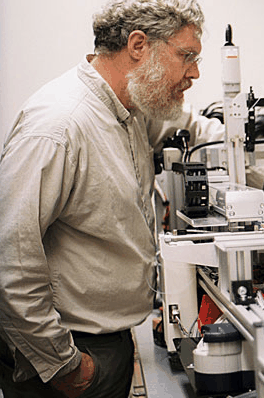
ScreenHunter_06 Oct. 30 11.09The power to edit genes is as revolutionary, immediately useful, and unlimited in its potential as was Johannes Gutenberg’s printing press. And like Gutenberg’s invention, most DNA editing tools are slow, expensive, and hard to use — a brilliant technology in its infancy. Now, Harvard researchers developing genome-scale editing tools as fast and easy as word processing have rewritten the genome of living cells using the genetic equivalent of search and replace — and combined those rewrites in novel cell strains, strikingly different from their forebears.

“The payoff doesn’t really come from making a copy of something that already exists,” said George Church, a professor of genetics at Harvard Medical School who led the research effort in collaboration with Joe Jacobson, an associate professor at the Media Lab at the Massachusetts Institute of Technology. “You have to change it — functionally and radically.”

Such change, Church said, serves three goals. The first is to add functionality to a cell by encoding for useful new amino acids. The second is to introduce safeguards that prevent cross-contamination between modified organisms and the wild. A third, related aim, is to establish multiviral resistance by rewriting code hijacked by viruses.

More here.

How Samuel Beckett Stood Up for German Jews

Benjamin Ivry in Forward:

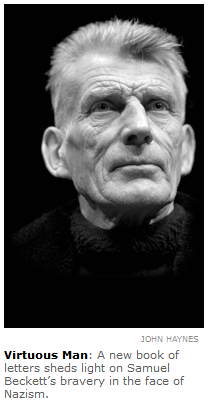
ScreenHunter_05 Oct. 30 10.58Although Nobel Prize-winning author Samuel Beckett is known for his tragicomically inert characters, he himself was an anti-Nazi activist during World War II. Unlike the ever-absent Godot, the bedridden vagrant protagonist of his novel “Molloy” or the despairing characters in his play “Endgame” who lack legs and the ability to stand, Beckett — though painfully shy and prone to melancholy — was a dynamic member of the French Résistance. His surprising wartime actions are detailed, if not fully explained, in the 2004 biography from Grove Press, “Damned to Fame: The Life of Samuel Beckett” by James Knowlson.

Like his mentor, James Joyce, Beckett was unusually philo-Semitic among European modernist writers, and he joined the Résistance, Knowlson notes, soon after Joyce’s Jewish friend and amanuensis, Paul Léon, was arrested in Paris (Léon would later be murdered in Auschwitz). A fuller understanding of Beckett’s motivation for his pro-Jewish and anti-Nazi activism had to wait until two new books appeared.

Taking us from wartime to the early part of the author’s great achievements, Cambridge University Press has just published “The Letters of Samuel Beckett: Volume 2, 1941–1956” following the first volume in 2009. This adds to insight gleaned from “Samuel Beckett’s German Diaries 1936–1937,” released in June by Continuum. Author Mark Nixon, analyzing still-unpublished journals by Beckett, describes the latter’s reactions to a sojourn in Germany intended to improve his grasp of the language and knowledge of the visual arts.

Together, these books underline how profound Beckett’s ties were with the Jewish people.

More here.

Ashis Nandy: on Pakistan’s latent “potentialities”

Christopher Lydon at Radio Open Source:

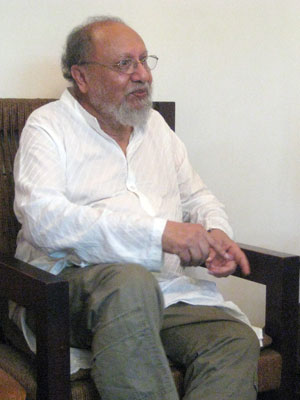
AshisnandyAshis Nandy, our sparkling Sage of New Delhi, is in effect a psycho-analyst of post-colonial South Asia. On the way home from Lahore, we stopped to ask the great man about Pakistan — and the “myth of Pakistan” which, he has written, “originates in India and dominates India’s public life,” too. “Pakistan is what India does not want to be… both a double and the final rejected self… the ultimate symbol of irrationality and fanaticism.”

Such is the myth. The reality and the possibility of Pakistan, and Ashis Nandy’s feeling about India’s neighbor come out very differently in conversation. “I feel at home in Pakistan,” said the poster version of the Bengali intellectual. “I miss only the vibrancy, the stridency of the political opinions that are articulated against fundamentalism and the state.” Pakistan is “a troubled country,” he is saying, “but not moribund, not a failed state” and not about to become one.

Ashis Nandy has just made his own study, in 1500 interviews, of the wounds of the 1947 Partition of India and Pakistan — among the searing and decisive memories of his own boyhood in Calcutta.

Read more and listen to the interview here.

Why We Can’t Tell Good Wine From Bad

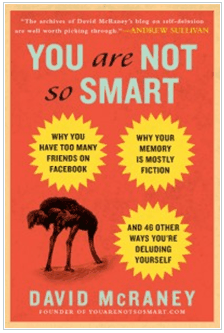
David McRaney in The Atlantic:

ScreenHunter_04 Oct. 30 10.45The Misconception: Wine is a complicated elixir, full of subtle flavors only an expert can truly distinguish, and experienced tasters are impervious to deception.

The Truth: Wine experts and consumers can be fooled by altering their expectations.

You scan the aisles in the liquor store looking for a good wine. It's a little overwhelming — all those weird bottle shapes with illustrations of castles and vineyards and kangaroos. And all those varieties? Riesling, Shiraz, Cabernet — this is serious business. You look to your left and see bottles for around $12; to your right you see bottles for $60. You think back to all the times you've seen people tasting wine in movies, holding it up to the light and commenting on tannins and barrels and soil quality — the most expensive wine has to be the better one, right?

Well, you are not so smart. But, don't fret — neither are all those connoisseurs who swish fermented grape juice around and spit it back out.

Wine tasting is a big deal to a lot of people. It can even be a professional career. It goes back thousands of years, but the modern version with all the terminology like notes, tears, integration, and connectedness goes back a few hundred. Wine tasters will mention all sorts of things they can taste in a fine wine as if they were a human spectrograph with the ability to sense the molecular makeup of their beverage. Research shows, however, this perception can be hijacked, fooled, and might just be completely wrong.

In 2001, Frederic Brochet conducted two experiments at the University of Bordeaux.

More here.