Hamza Tzortzis and Pervez Hoodbhoy Debate Religion & Rationality

Pervez Hoodbhoy explains the background of these videos in an email thus:

Tzortzis (Greek, lives in London) converted to Islam and is now hugely popular among young people brimming with faith…The man is a real entertainer. I had no idea who he was…some students at LUMS [Paksitan's Lahore University of Management Sciences] asked me to debate him. I agreed. The Islamic society here flew him in at a few hours notice.

Unfortunately, the debate ended badly. This was the only challenge Tzortzis received at a Pakistani university.

The second video is Pervez commenting on what happens at the end of the first video.

Cato of the Antipodes

John Cotter in Open Letters Monthly:
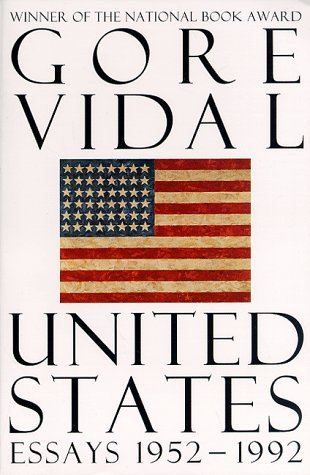
9780679755722In literature as in life, there is something to be said for indeterminacy, poetical ambiguity, and the aching, open synapses of incomplete ideas. But the essays of Gore Vidal are a break from all that, a weather station in the Alps. When the air is clear, you can see across borders; when it’s cloudy, chats by the fireside agitate and charm.

Atypically for a critic of the 20th century, Gore Vidal does not subordinate his perceptions to any school or ideology. This is why he can be trusted. For models, he looks to the worldly, progressive belletrists of the late 19th and early 20th century: Henry James, William Dean Howells, Henry Adams. Note the absence of their immediate predecessors: Hawthorne, Melville, Emerson. Vidal is not a romantic—his mind is empirical. Though he reads with a sympathetic eye, his judgments are sonorous with authority.

Though he often writes of politics, he is a critic and a satirist rather than a pundit, and much of even this work comes by way of book reviewing. “I start from the premise that the creator is ‘right,’” he notes, in the introduction to his second collection of essays, Reflections Upon a Sinking Ship. “I try to inhabit his work, to enjoy it, to be—very simply—had by the artist. Only later does one attempt to answer the question: to what extent has the maker of the world accomplished what he set out to do?” Mark that try. Vidal is a natural skeptic, and one of the pleasures of his criticism is the extent to which he refuses to be had by certain writers, try as they might. He claims to feel no pinch of sadism, and though his dismissive aperçus are rightly famous (on John Barth: “This isn’t bad, except as prose”; on Theodore Roosevelt: “Give a sissy a gun and he will kill everything in sight”), I don’t want to go on quoting them here, because they fill up space all too often in newspaper profiles and what Martin Amis calls the “shithead factfile” that precedes interviews. Isolated, these blow-gun darts of observation shock and amuse, yes, but they also diminish the author, show him only as a drawing-room wit and not the serious reader and thinker that, on more thorough perusal, he reveals himself to be.

More here.

3 Quarks Daily 2012 Arts & Literature Prize: Vote Here

Dear Reader,

Thanks very much for participating in our contest. For details of the prize you can look at the announcement here, and to read the nominated posts you can go here for a complete list with links.

If you are new to 3 Quarks Daily, we welcome you and invite you to look around the site after you vote. Learn more about who we are and what we do here, and do check out the full site here. Bookmark us and come back regularly, or sign up for the RSS feed. If you have a blog or website, and like what you see here, we would very much appreciate being added to your blogroll. Please don’t forget!

Results of the voting round (the top twenty most voted for posts) will be posted on the main page on March 7, 2012. Winners of the contest will be announced on March 19, 2012.

Now go ahead and submit your vote below!

PLEASE BE AWARE: We have multiple ways of detecting fraud such as multiple votes being cast by the same person. We will disqualify anyone attempting to cheat.

Cheers,

Abbas

Scientists: This man has your number

From Phys.Org:

ScinAttention, star scientists: Pierre Azoulay is watching you. Not literally, of course: Azoulay, an economist, inhabits an office tucked away in the MIT Sloan School of Management, far from any lab. But his forte is original research about how life scientists work — or, more precisely, what makes them work well. Which kinds of grants lead to the most creative scientific research? When elite scientists die or switch jobs, what happens to the output of their former colleagues and co-authors?

Information about those questions is just not readily available. Except to Azoulay: The hard numbers supporting his findings come from a unique database charting the careers of 12,000 scientific stars, which he has painstakingly built up over nearly a decade in collaboration with Joshua Graff Zivin, an economist at the University of California at San Diego. The database paints a kind of pointillist picture, with statistical dots representing those star scientists: It’s a complete record of their jobs, awards, patents, papers, their papers’ citations and more. If a life scientist has achieved almost any measure of acclaim in the United States during the last half-century, Azoulay knows about it. “In some sense I have a dossier on each of them and have become intimately familiar with all of them,” says Azoulay, a voluble Frenchman who talks about his own work with good-humored detachment. “I am a glutton for punishment in terms of data. I have never done a project that uses readily available data.”

More here.

Sarah Sze Will Represent the U.S. at the 2013 Venice Biennale

From Columbia.edu:

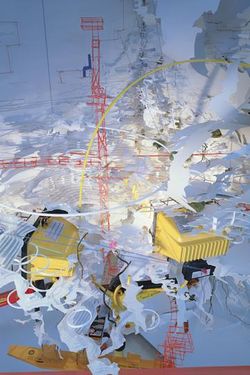
SSP_Sarah_Sze_at_Asia_SocietySarah Sze, Professor of Visual Arts at Columbia University School of the Arts, has been chosen to represent the United States at La Biennale di Venezia in 2013. Her work will be presented by Holly Block and the Bronx Museum of the Arts in the 55th International Art Exhibition. The work, titled Triple Point, will inhabit and directly comment upon the architecture of the 1930s Palladian-style structure of the U.S. Pavilion designed by famed architects William Adams Delano and Chester Holmes Aldrich, appearing to modify the building’s structure without actual physical change. “Sarah Sze is a perfect choice to deftly engage the U. S. Pavilion,” said Carol Becker, Dean of Faculty. “Her site-specific work is dramatic, playful, seductive and filled with ideas about the fragility and durability of contemporary life. She’s a fantastic artist, a great teacher and we are proud to have her on our faculty.”

Sze has won acclaim for her minutely detailed, accumulative installations, in which everyday items such as coffee cups, plastic bottles and electrical fans become vital objects that defy the boundaries between the throwaway and the precious, the mundane and the monumental. Sze has always been known for work that challenges viewers to experience space in unexpected ways, and her installation at the U.S. Pavilion at the Biennale promises to do the same on a grand scale. Sze will create a sequence of constructed environments that will activate the Pavilion’s architecture and extend beyond the building and into the courtyard, blurring the perceptual boundaries between the site’s interior and exterior.
In conjunction with the installation, the Bronx Museum of the Arts will create a video stream documenting Sze’s process of conceiving, fabricating, and installing the piece. This will extend the project’s reach beyond the Giardini and link Sze with a worldwide audience.

More here.

Keynes overwhelmed Hayek

Congdon_250873k

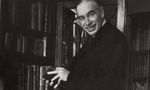
The truth is that Keynes overwhelmed Hayek, simply by making more interesting and relevant statements. Of course, the roundaboutness of production under capitalism may sometimes lead to waste, but that does not justify government inactivity. Economists have squabbled about many things since the 1930s, including the relative effectiveness of fiscal and monetary policies in a world where governments “do something” about deep recessions. But the case for policy activism of some kind is fairly uncontroversial. The concepts and ideas that figured in the Keynes–Hayek debate of 1931 have hardly ever been mentioned in the subsequent debates. By the 1950s, Hayek was a marginal figure in Anglo-American macroeconomics. Wapshott tries to substantiate the significance of the 1931 spat by seeing it as the source of a later multiplicity of disputes between the Keynesians and free market enthusiasts. But this is neither correct as an account of how the various disputes began and developed, nor as an appreciation of Hayek’s greatness. (And my interpretation – which may be wrong – is that Wapshott is keener on Hayek than on Keynes. As with a good detective novel, the suspense is maintained to the very last page.) Hayek surrendered to Keynes and the Keynesians on money and macroeconomics, and from the mid-1940s rebuilt his reputation by magnificent contributions to political philosophy and the philosophy of law. These contributions have only a tenuous relationship with Austrian capital theory and theorizing about roundabout production methods. Wapshott should not pretend that there was some sort of continuity between Hayek’s early work on money and his later work on the philosophy of the State, or that the 1931 debate had a special role in initiating later arguments.

more from Tim Congdon at the TLS here.

simply and happily to be himself

20120111_TNA33ValiunashomepageMaslow

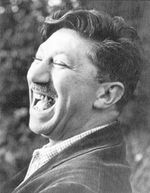
The most important American psychologist since William James, and perhaps the most important psychologist altogether since Carl Jung, was Abraham Maslow (1908-1970). Maslow’s brainchild was the ideal of the “self-actualizing” person, the supreme human type who becomes everything he is capable of becoming. “Everything?,” one may justly ask. That has a Nietzschean ring to it, and leaves a lot of room for moral ugliness and even enormity. Thus self-actualization has drawn heavy fire, principally from conservative intellectuals, as typical Sixties folderol, a bad idea endlessly spreading, infesting the public mind like a colony of poisonous spiders, and contributing to the dangerous stupidity of our culture. Such censure is not entirely misguided. The predominant effect of Maslow’s key idea, at least as it has been transmitted by various acolytes, epigoni, and pseudo-philosophical beachcombers, is far from wholesome. And yet Maslow himself must be distinguished from his following. He was a serious thinker with a vision of human sublimity for a democratic age, revering the extraordinary and sometimes far from democratic minds with whom he consorted, and contended, throughout his life: Aristotle, Nietzsche, Freud. Maslow may indeed have a lot to answer for, even if he did not intend or foresee the worst consequences of his line of thought, but before he is pilloried as a false prophet or worse we need to measure him by his own ideas and not what others have made of them. Abraham Harold Maslow was born on April 1, 1908, in New York City, the first child of Samuel, a Russian Jewish immigrant who worked as a cooper, and Rose, his first cousin. Abe grew up in Brooklyn, fearing his father, a rough-hewn, hard-drinking man, and loathing his mother, whom he later described as “schizophrenogenic” — the type of mother “who makes crazy people, crazy children.”

more from Algis Valiunas at The New Atlantis here.

what happens at davos?

120305_r21908_g290_crop

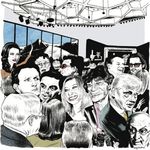
The annual meeting of the World Economic Forum, in Davos, Switzerland, was well under way when it officially commenced, early on a Wednesday evening in January, with an address, in the Congress Hall of the Congress Center, by Angela Merkel, the Chancellor of Germany. She had a lot to say about Europe. Some of it—“Do we dare more Europe? Yes, we do dare”—made the news. But outside the hall many Davos participants paid her no mind. They loitered in various lounges carrying on conversations with each other. They talked and talked—as though they hadn’t been talking all day. They had talked while sitting on panels or while skipping panels that others were sitting on. “Historic Complexity: How Did We Get Here?,” “The Compensation Question,” “Global Risks 2012: The Seeds of Dystopia”: over the course of five days, a man could skip more than two hundred and fifty such sessions. Many Davos participants rarely, if ever, attend even one. Instead, they float around in the slack spaces, sitting down to one arranged meeting after another, or else making themselves available for chance encounters, either with friends or with strangers whom they will ever after be able to refer to as friends. The Congress Center, the daytime hub, is a warren of interconnected lounges, cafés, lobbies, and lecture halls, with espresso bars, juice stations, and stacks of apples scattered about. The participants have their preferred hovering areas. Wandering the center in search of people to talk to was like fishing a stretch of river; one could observe, over time, which pools held which fish, and what times of day they liked to feed.

more from Nick Paumgarten at The New Yorker here.

Wednesday, February 29, 2012

Is Your Language Making You Broke and Fat?

104133389_ad035087991-300x225Julie Sedivy in over at The Crux:

Keith Chen, an economist from Yale, makes a startling claim in an unpublished working paper: people’s fiscal responsibility and healthy lifestyle choices depend in part on the grammar of their language.

Here’s the idea: Languages differ in the devices they offer to speakers who want to talk about the future. For some, like Spanish and Greek, you have to tack on a verb ending that explicitly marks future time—so, in Spanish, you would say escribo for the present tense (I write or I’m writing) and escribiré for the future tense (I will write). But other languages like Mandarin don’t require their verbs to be escorted by grammatical markers that convey future time—time is usually obvious from something else in the context. In Mandarin, you would say the equivalent of I write tomorrow, using the same verb form for both present and future.

Chen’s finding is that if you divide up a large number of the world’s languages into those that require a grammatical marker for future time and those that don’t, you see an interesting correlation: speakers of languages that force grammatical marking of the future have amassed a smaller retirement nest egg, smoke more, exercise less, and are more likely to be obese. Why would this be? The claim is that a sharp grammatical division between the present and future encourages people to conceive of the future as somehow dramatically different from the present, making it easier to put off behaviors that benefit your future self rather than your present self.

Update: Language Log’s take on these claims, here and here. (H/t: commenter Brian)

The Emperor Uncrowned

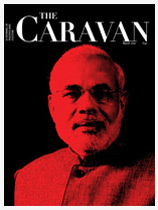
Modi_CaravanOn the 10th year anniversary of the communal riots in Gujarat, Vinod Jose profiles Narendra Modi in Caravan:

MODI HAD NOT GOTTEN OFF to a good start with India’s leading business figures. Nine years ago, in February 2003, the Confederation of Indian Industry (CII)—the country’s biggest and most important business trade association—held a special session at its auditorium in New Delhi: “Meeting with Narendra Modi, the New Chief Minister of Gujarat”. The meeting was organised after a special request from Modi: he had just won a resounding victory in state elections in the wake of the riots, but he was still facing public condemnation from national business leaders and dealing with an economy reeling from the impact of the violence.

The mobs who ran wild in the streets of Gujarat did not confine their rage to local Muslims: more than 1,000 trucks were set afire, and the torching of a shipment of Opel Astra cars from a General Motors factory made international headlines. One estimate suggested that industry in Gujarat had lost 20 billion ($409 million) in the riots. The spectre of communal violence made international investors jittery—new foreign direct investment inflows had all but dried up by September 2002—while Indian industrialists openly feared further chaos in what was, even before Modi’s arrival, one of the most critical states for their business operations.

In the months after the riots, some of corporate India’s biggest names had publicly voiced their anger and concern. Deepak Parekh, the CEO of HDFC Bank, said that India had lost its face as a secular country, and that he was ashamed of what had happened in Gujarat. Cyrus Guzdar, the CMD of the shipping company AFL, compared the violence against Muslims in Gujarat to “a genocide”. Two of Bangalore’s biggest IT chieftains, Narayana Murthy of Infosys and Azim Premji of Wipro, issued strong public condemnations. At a CII national meeting in April 2002, the chairwoman of the energy major Thermax, Anu Aga, received a standing ovation after delivering an impassioned speech about the suffering of Muslims in Gujarat.

Modi knew he was under pressure. But he also knew that he had won an overwhelming electoral mandate from the voters of Gujarat—and that Gujarat, riots or no riots, was of critical importance to the chieftains of Indian business. He came to Delhi to mend his image with the captains of industry, but he would do so, as always, on his own terms.

No Parties, No Banners: The Spanish Experiment with Direct Democracy

Baiocchi_37.1_handsGianpaolo Baiocchi and Ernesto Ganuza in Boston Review:

[The movement] 15-M has evolved to become a new political subject, distinct from the original Internet-based group—Democracia Real Ya, or Real Democracy Now (DRY)—that organized the mobilization of May 15, when about 20,000 people gathered in Puerta del Sol. Three months earlier, on a Sunday night in February, ten people met in a Madrid bar to began planning the event. They had already been exchanging opinions online about the political and economic situation in Spain. Their meeting ended with both a slogan—“Real Democracy Now: we are not goods in the hands of politicians and bankers”—and plans to hold a demonstration the week before the municipal elections of May 22.

Although DRY targeted unemployment and mortgage reforms, the main message was not about the economic crisis but about the breakdown of political accountability and representation. Some commentators on the left criticized this message as insufficiently radical, but more than 500 organizations and movements supported the May 15 event, even though DRY rejected official collaboration with any political party, union, or other expression of institutionalized political ideology.

The gathering was a success. The widespread disaffection of Spanish citizens took center stage at one of the nation’s most visible sites.

That was supposed to be it.

But not all of the participants left the plaza. Initially about 50 decided to stay. By midnight, this group had dwindled to just over twenty. They decided to spend the night in the square. Most of the holdouts did not belong to any social movement; they were not seasoned activists or even members of DRY. They stayed, some of them said, because they were “tired of demonstrations that finish happily and then: nothing.”

Silence is a sounding thing, To one who listens hungrily

BlackTo A Dark Girl

I love you for your brownness,

And the rounded darkness of your breast,

I love you for the breaking sadness in your voice

And shadows where your wayward eyelids rest.

Something of old forgotten queens

Lurks in the lithe abandon of your walk

And something of the shackled slave

Sobs in the rhythm of your talk.

Oh, little brown girl, born for sorrow’s mate,

Keep all you have of the queenliness,

Forgetting that you once were slave,

And let your full lips laugh at fate

More here. (Note: In honor of African American History Month, we have been linking to at least one related post throughout February. The 2012 theme is Black Women in American Culture and History).

Women of the Harlem Renaissance

From About.com:

HarlemIt was the early twentieth century, and the world had already changed tremendously compared to the world of their parents and grandparents. Slavery had ended in America more than half a century earlier. While African Americans still faced tremendous economic and social obstacles in both the northern and southern states, there were more opportunities than there had been. After the Civil War (and beginning slightly before, especially in the North), education for black Americans — and black and white women — had become more common. Many were not able to attend or complete school, but a substantial few were able not only to attend and complete elementary or secondary school, but college. Professional education opened up to blacks and women. Some black men became professionals: physicians, lawyers, teachers, businessmen. Some black women also found professional careers as teachers, librarians. These families in turn saw to the education of their daughters. Some saw the returning black soldiers from World War I as an opening of opportunity for African Americans. Black men had contributed to the victory, too. Surely America would now welcome these black men into full citizenship. Black Americans were moving out of the rural South, and into the cities and towns of the industrial North. They brought “black culture” with them: music with African roots and story-telling. The general culture began adopting as its own elements of that black culture: this was the Jazz Age! Hope was rising — though discrimination, prejudice and closed doors on account of race and sex were by no means eliminated. But there were new opportunities. It seemed more worthwhile to challenge those injustices: perhaps the injustices could be eliminated, or at least made less. In this environment, a flowering of music, fiction, poetry and art in African American intellectual circles came to be called the Harlem Renaissance. A Renaissance, like the European Renaissance, in which moving forward while going back to roots generated tremendous creativity and action. Harlem, because one of the centers was the neighborhood of New York City called Harlem, by this time predominantly peopled by African Americans, more of whom were daily arriving from the South. Below are women who played key roles in the Harlem Renaissance — some are well-known, and some have been neglected or forgotten.

More here. (Note: In honor of African American History Month, we have been linking to at least one related post throughout February. The 2012 theme is Black Women in American Culture and History).

Wednesday Poem

Sabbaths 1985 V

How long does it take to make the woods?
As long as it takes to make the world.
The woods is present as the world is, the presence
of all its past and of all its time to come.
It is always finished, it is always being made, the act
of its making forever greater than the act of its destruction.
It is a part of eternity for its end and beginning
belong to the end and beginning of all things,
the beginning lost in the end, the end in the beginning.

What is the way to the woods, how do you go there?
By climbing up through the six days’ field,
kept in all the body’s years, the body’s
sorrow, weariness, and joy. By passing through
the narrow gate on the far side of that field
where the pasture grass of the body’s life gives way
to the high, original standing of the trees.
By coming into the shadow, the shadow
of the grace of the strait way’s ending,
the shadow of the mercy of light.


Why must the gate be narrow?

Because you cannot pass beyond it burdened.
To come into the woods you must leave behind
the six days’ world, all of it, all of its plans and hopes.
You must come without weapon or tool, alone,
expecting nothing, remembering nothing,
into the ease of sight, the brotherhood of eye and leaf.
.

by Wendell Berry
from A Timbered Choir

chopstick theory

1205273-gf

When the young Mao Tse-tung agitated for revolution, he found a vivid way to get his point across to an uneducated audience: He picked up a single chopstick and snapped it in two. Then he picked up a handful of chopsticks: They would not break. Thus he showed that so long as everyone stood side by side, no force could withstand the tide of revolution. By gathering together China’s scattered, indignant chopsticks, Mao finally was able to ascend Tiananmen—the Gate of Heavenly Peace — on Oct. 1, 1949, and announce the establishment of his republic. Whether chopsticks come singly or in a handful is now an issue in China again. Mao’s successors, however, do the opposite of what he advocated, mobilizing immense resources to keep chopsticks from gathering together. The government knows that angry chopsticks are everywhere, but as long as they stay scattered, it believes it can break them in two, whatever their numbers. Thus it is that “stability maintenance” has become a key term in contemporary China. The government does not make public what it spends to maintain stability, but popular estimates go as high as 600 billion yuan. As mass protests become more frequent, that figure can only increase.

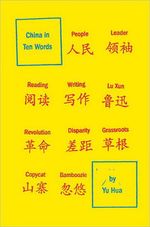
more from Yu Hua at NPQ here.

There is a devil haunts thee

Edwin_Booth_Hamlet-1

Abraham Lincoln’s courtship of Mary Todd was anything but smooth. At one point it helped bring on a bout of severe depression that left the future president nearly dysfunctional for a brief period and caused him to avoid Springfield’s social world for several months. In a letter to an absent friend, the future Mrs. Lincoln lamented this state of affairs and wished “that he would once more resume his Station in Society, that ‘Richard should be himself again.’ ” The expression she used is clear enough in meaning, but Lincoln’s biographers have been less certain about its source. In fact, the expression “Richard’s himself again” was in vogue in antebellum America, deriving from one of the best-known speeches in the most performed of all Shakespeare plays, Richard III. But that speech, as Lincoln himself would later point out, was not written by Shakespeare. This curious state of affairs is surprisingly emblematic of the undernourished state of our knowledge of Lincoln’s famous affinity for Shakespeare. We have so many well-attested stories of Lincoln extolling Shakespeare as a young man in New Salem, of his carrying a volume of Shakespeare’s works around with him on the judicial circuit, of his ability (and willingness) to recite from memory long passages from Shakespeare at the drop of a hat, and of his reading from the plays by the hour to his secretaries and guests as president, that there can be little doubt of his longstanding attachment to the writings of the Bard.

more from Douglas L. Wilson at The American Scholar here.

our own survival is greatly over-valued

Byrne_37.1_gates

Let us recap. You don’t have to go where your immaterial soul goes—not at least if it doesn’t take your mind with it. You don’t have to go where your body goes—not at least if it doesn’t take your mind with it. What does this suggest? That you go where your mind goes or, as Locke puts it, “personal identity consists . . . in the identity of consciousness.” Let us not pause to examine what exactly Locke means by “identity of consciousness” and instead turn to the development of his view by the philosopher Derek Parfit, whose 1984 book Reasons and Persons is partly devoted to defending a “neo-Lockean” theory of personal identity and to extracting some astonishing implications from it. The basic neo-Lockean idea is that you survive just in case your psychology continues on in roughly the manner it does in ordinary life. Our psychological lives are not a series of unrelated mental events, but form a complex structure. A simple example: you go to the beach and enjoy the experience of basking on the hot sand. At noon you decide to return home at sunset, and this explains why at dusk you gather up your towel. In the evening at home you recall being at the beach, the feeling of the sand on your feet, and so forth. This illustrates what Parfit calls “psychological connectedness,” the sort of relation that holds between your decision to leave and subsequent towel gathering, and between your beach experience and subsequent recollection. We can think of your psychological life from childhood to old age as overlapping stretches of psychological connectedness, like strips of paper glued together to form a much longer strip. Parfit calls this “psychological continuity.” Parfit’s view is that personal identity—our survival or persistence over time—consists in psychological continuity and connectedness.

more from Alex Byrne at Boston Review here.