
Mary Randolph in Smithsonian Magazine:
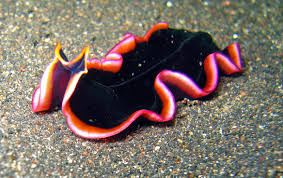
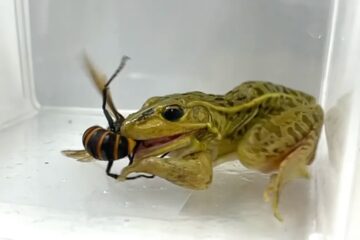 For a mouse several times its size, a sting from the “murder hornet” is deadly. For a colony of honeybees, the insects are catastrophic. The hornet even ignited fear in humans several years ago, when it arrived in North America as an invasive species. But for the black-spotted pond frog, the largest hornet in the world is nothing but a harmless snack.
A new study, published December 3 in Ecosphere, tested the ability of the frog, native to Japan, to consume hornets and withstand their stings. The paper details pond frogs devouring murder hornets, among other species.
“While a mouse of similar size can die from a single sting, the frogs showed no noticeable harm, even after being stung repeatedly,” says Shinji Sugiura, the sole author of the study and an ecologist at Kobe University in Japan, in a statement. “This extraordinary level of resistance to powerful venom makes the discovery both unique and exciting.”
More here.
Enjoying the content on 3QD? Help keep us going by donating now.
 On a leafy campus in eastern China, crews are working day and night to finish a mammoth round structure with two sweeping arms the length of aircraft carriers.
 Some of the premium increases can be attributed to an increase in
 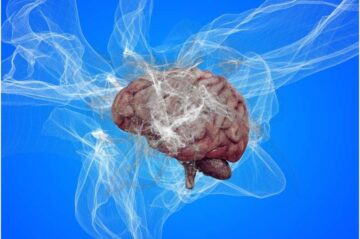 One of the main proteins that contributes to Alzheimer’s disease is called phospho-tau (p-tau). When p-tau gets too many phosphate groups attached to it (a process called hyperphosphorylation), it starts to stick together and form clumps called “tangles” inside of brain nerve cells. A new study by Mass General Brigham investigators shows that tau hyperphosphorylation may be a consequence of an antiviral response that protects the brain from infection. Results are published in
 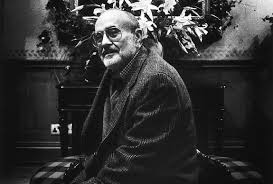 Topical though its title may sound, Harold Brodkey’s 1992 essay “Notes on American Fascism” probably couldn’t be published today. Reading it, one can almost hear the inevitable editorial demands that its argument be “sharpened” (premised upon the assumption that an argument, rather than notes, is what it offers), or at least that the words of a geopolitical expert or two be shoehorned in to gin up a bit of academic-journalistic gravitas. Not that the essay seems to have been publishable even when Brodkey first wrote it, given that it only appeared several years later in his collection Sea Battles on Dry Land, published a few years after his death from AIDS in 1996. Nevertheless, when revisited more than three decades on, its torrent of portentous observation and speculation about the decline of the kind of liberalism Brodkey calls “the primary American tradition” now seems considerably less disposable than the many anxious prophesies of a fascist United States published more recently, during the reign of Donald Trump.
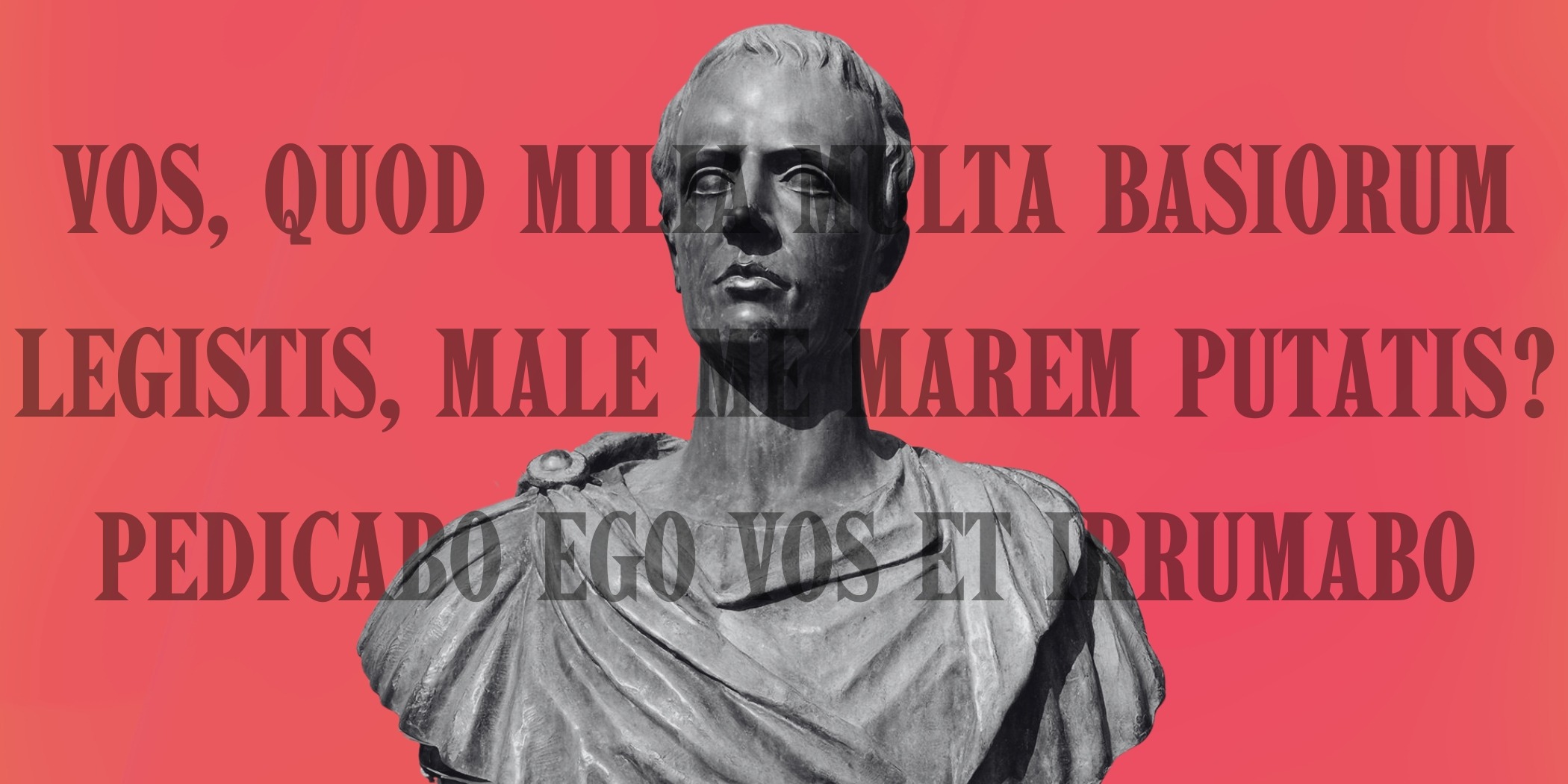 In this moment of especially rabid book banning, my high school senior has been translating Catullus in her Advanced Track (AT) Latin class. Catullus’s poems disappeared from the Western canon for centuries (likely because medieval Christian scribes avoided copying lurid pagan texts) yet were rediscovered and reprinted in the Renaissance, and are still alive millennia later, when would-be censors are long forgotten.
 The reason we can gracefully glide on an ice-skating rink or clumsily slip on an icy sidewalk is that the surface of ice is coated by a thin watery layer. Scientists generally agree that this lubricating, liquidlike layer is what makes ice slippery. They disagree, though, about why the layer forms.
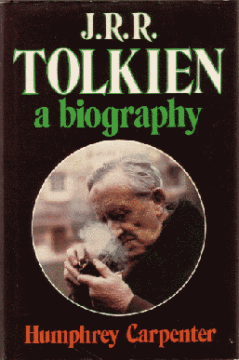 If you’re eccentric, you’re all right.” This is how Humphrey Carpenter, biographer of W. H. Auden, Ezra Pound and Benjamin Britten, explained the British character to me as an expatriate South African. It was 1993, and we were sitting at the table in my Oxford kitchen with a microphone between us. My role, as a fellow biographer, was to ask Humphrey questions, and his answers, he hoped, would provide material for an essay. Along with other speakers at a biography conference, he’d agreed to contribute a piece to The Art of Literary Biography (due to be delivered to Oxford University Press), but Humphrey had a problem. His confiding after-dinner talk had brought up the issue of fraught relations with a subject’s family.
 Historically, economic elites pushed for
  A
A  The persistent rumours that imprisoned Pakistani politician Imran Khan is dead have been crackling away like Lahore firecrackers these past few weeks. They feel less like revelations than the arrival of something long predicted. Or are they just the manifestations of an over-inventive public and mistrusted military?
 As AI wheedles its way into our lives,
  Dora and I walked
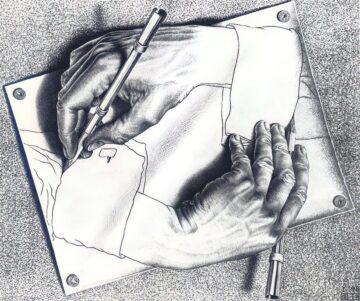 Most current digital doppelgängers, for all practical purposes, are automatons i.e., their behavior is relatively fixed with relatively well defined boundaries. I would argue that this is a feature and not a bug. The fixed nature of the automata is what gives them the feeling of familiarity. Now imagine if we were to take away this assumption and tried to incorporate semblance of some of autonomy in digital doppelgängers. In other words we would be allowing it to evolve and make its own decisions while staying true to the original person that it is based upon. A digital self trained on a person’s emails, messages, journals, and conversations may approximate that person’s style, but approximation is not equivalent to being the same. Over time, the model encounters friction e.g., queries it cannot answer cleanly, emotional tones it cannot reconcile, contradictions it can detect but not resolve. If we let the digital doppelgänger evolve to address these challenges, divergence between the model and the original will start to emerge until one point one is forced to admit that one is no longer dealing with a representation of the same person. What if it not an outsider interlocutor that comes upon this realization but the digital clone itself?