Alice Walker’s daughter: “How my mother’s fanatical views tore us apart”

Rebecca Walker in The Daily Mail:

Article-1021293-0159B4BB00000578-124_468x487I was raised to believe that women need men like a fish needs a bicycle. But I strongly feel children need two parents and the thought of raising Tenzin without my partner, Glen, 52, would be terrifying.

As the child of divorced parents, I know only too well the painful consequences of being brought up in those circumstances. Feminism has much to answer for denigrating men and encouraging women to seek independence whatever the cost to their families.

My mother's feminist principles coloured every aspect of my life. As a little girl, I wasn't even allowed to play with dolls or stuffed toys in case they brought out a maternal instinct. It was drummed into me that being a mother, raising children and running a home were a form of slavery. Having a career, travelling the world and being independent were what really mattered according to her.

I love my mother very much, but I haven't seen her or spoken to her since I became pregnant. She has never seen my son – her only grandchild. My crime? Daring to question her ideology.

More here.

Scientists finding new uses for hallucinogens and street drugs

Melissa Healey in the Los Angeles Times:

ScreenHunter_02 Dec. 03 20.56Janeen Delany describes herself as an “old hippie” who's smoked plenty of marijuana. But she never really dabbled in hallucinogens — until two years ago, at the age of 59.

A diagnosis of incurable leukemia had knocked the optimism out of the retired plant nurserywoman living in Phoenix. So she signed up for a clinical trial to test whether psilocybin — the active ingredient in “magic mushrooms” — could help with depression or anxiety following a grim diagnosis.

Delaney swallowed a blue capsule of psilocybin in a cozy office at Johns Hopkins University in Baltimore. She donned a blindfold, a blood pressure cuff and a headset playing classical music. With two researchers at her side, she embarked on a six-hour journey into altered consciousness that she calls “the single most life-changing experience I've ever had.”

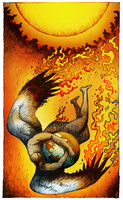
What a long, strange trip it's been. In the 1960s and '70s, a rebellious generation embraced hallucinogens and a wide array of street drugs to “turn on, tune in and drop out.” Almost half a century later, magic mushrooms, LSD, Ecstasy and ketamine are being studied for legitimate therapeutic uses. Scientists believe these agents have the potential to help patients with post-traumatic stress disorder, drug or alcohol addiction, unremitting pain or depression and the existential anxiety of terminal illness.

“Scientifically, these compounds are way too important not to study,” said Johns Hopkins psychopharmacologist Roland Griffiths, who conducted the psilocybin trial.

More here.

The Psychology of Nakedness

Jonah Lehrer in Wired:

ScreenHunter_01 Dec. 03 20.47And this brings me to a fascinating new paper by an all star team of psychologists, including Kurt Gray, Joshua Knobe, Mark Sheskin, Paul Bloom and Lisa Feldman Barrett. The scientists nicely frame the mystery they want to solve:

Do people’s mental capacities fundamentally change when they remove a sweater? This seems absurd: How could removing a piece of clothing change one’s capacity for acting or feeling? In six studies, however, we show that taking off a sweater—or otherwise revealing flesh—can significantly change the way a mind is perceived. In this article, we suggest that the kind of mind ascribed to another person depends on the relative salience of his or her body—that the perceived capacity for both pain and planned action depends on whether someone wears a sweater or tank-top.

In order to understand why sweaters and tank-tops influence the kind of minds we perceive, it’s important to know about the different qualities we imagine in others. In general, people assess minds – and it doesn’t matter if it’s the “mind” of a pet, iPhone or deity – along two distinct dimensions. First, we grade these minds in terms of agency. (Human beings have lots of agency; goldfish less so.) But we also think of minds in terms of the ability to have experience, to feel and perceive. The psychologists suggest that these dual dimensions are actually a duality, and that there’s a direct tradeoff between the ability to have agency and experience. If we endow someone with lots of feeling, then they probably have less agency. And if someone has lots of agency, then they probably are less sensitive to experience. In other words, we automatically assume that the capacity to think and the capacity to feel are in opposition. It’s a zero sum game.

What does all this have to do with nakedness? The psychologists demonstrated it’s quite easy to shift our perceptions of other people from having a mind full of agency to having a mind interested in experience: all they have to do is take off their clothes.

More here.

The Nude Photo that stunned Pakistan

From the BBC:

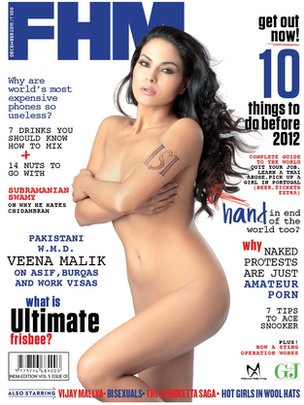
_57089826_57089825A row has erupted over an image of Pakistani actress Veena Malik sporting the initials ISI on her arm, with FHM India insisting it is not fake.

It has caused a sensation in Pakistan for both the nudity and the initials of Pakistan's controversial Inter-Services Intelligence spy agency.

Pakistani media have quoted a spokesman for Ms Malik as saying she never took part in such a photoshoot.

But FHM India's editor told the BBC that nothing had been doctored.

“We have video footage of the shoot as well as emails from Veena about how she's looking forward to the cover,” Kabeer Sharma told the BBC's Nosheen Abbas in Islamabad.

“The idea to have ISI written on her arm was mine, and it was Veena's idea to have it in block letters,” he added.

More here.

China’s Fox News

Oct20Christina Larson in Foreign Policy:

On most mornings, the senior editorial staffers at China's hyper-nationalistic Global Times newspaper flash their identification badges at the uniformed guard outside their compound in eastern Beijing and roll into the office between 9 and 10 a.m. They leave around midnight. In the hectic intervening 14 hours, they commission and edit articles and editorials on topics ranging from asserting China's unassailable claims to the South China Sea to the United States' nefarious role in the global financial crisis to the mind-boggling liquor bills of China's state-owned enterprises, to assemble a slim, 16-page tabloid with a crimson banner and eye-popping headlines. In the late afternoon, staffers propose topics for the all-important lead editorial to editor-in-chief Hu Xijin, who makes all final decisions and has an instinct for the jugular.

Take last Tuesday's saber-rattling editorial, printed with only slight variations in the Chinese and English editions, which duly unnerved many overseas readers. “Recently, both the Philippines and South Korean authorities have detained fishing boats from China, and some of those boats haven't been returned,” the editorial fumed. “If these countries don't want to change their ways with China, they will need to prepare for the sounds of cannons.” The war-mongering language was meant to attract attention, and that it did, with Reuters, Manila Times, Jakarta Globe, The West Australian, Taipei Times, and other overseas media referencing it in news articles. The bellicose editorial was certainly newsworthy, assuming that the paper on some level is a mouthpiece for China's rulers. But whose views, exactly, does Global Times really represent?

Biography of cancer wins Guardian First Book award

From Guardian:

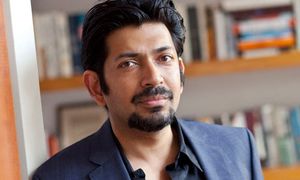
Siddhartha-Mukherjee-007An oncologist has won the Guardian First Book award for his “biography” of cancer, The Emperor of All Maladies, which traces the disease from the first recorded mastectomy in 500BC to today's cutting edge research. Siddhartha Mukherjee has called his book – a mix of history, memoir and biography, of science and the personal stories of cancer patients – “an attempt to enter the mind of this immortal illness, to understand its personality, to demystify its behaviour”. The only non-fiction title on the shortlist, it beat four novels to win the £10,000 award, narrowly seeing off Amy Waldman's The Submission, set in post-9/11 America. Stephen Kelman's Booker-shortlisted novel Pigeon English was also in the running. The chair of judges, Lisa Allardice, editor of Guardian Review, said Mukherjee's “anthropomorphism of a disease” was a “remarkable and unusual achievement”.

“In the end it came down to a very difficult decision between a first novel [The Submission] and a first book of tremendous research,” she said. “They were so different – both incredibly impressive achievements in their own rights, but in the end the Mukherjee was felt to be the more original. “He has managed to balance such a vast amount of information with lively narratives, combining complicated science with moving human stories. Far from being intimidating, it's a compelling, accessible book, packed full of facts and anecdotes that you know you will remember and which you immediately want to pass on to someone else.”

More here. (Note: Congratulations to Sid…dear friend, brilliant colleague and fantastic writer who is great at everything he does including all the bone marrows on my patients.)

Three’s a Crowd: My Dinner Party With Karl, Leon and Maynard

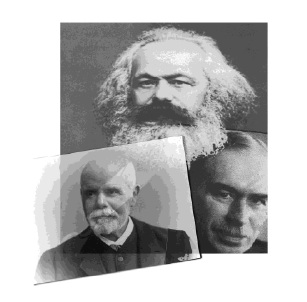
3saCrowdSpeaking of capitalism, here's a one act play by Sam Bowles:

KARL
(warmly shaking Leon’s hand as he rises)

Leon, I am very sorry that we were not able to meet that summer in 1862 when we vacationed on the same lake in Switzerland. (Pause, Leon starts to say something but Karl continues) Perhaps I could have persuaded you that even your modest market socialist reforms could be implemented only by a revolutionary working class.

LEON

Had I known of your interest in mathematics, Karl – may I call you Karl? – I certainly would have looked you up.

MAYNARD
(suddenly interested)

You, Karl, interested in math?

LEON
(cutting in)

Why surely, Maynard, you know that Karl wrote extensive notes on the calculus and had told his friend Fred in 1873 that one could “infer mathematically … an important law of crises.”

MAYNARD

Sorry, Leon, but that was exactly ten years before I was born.

KARL
(quietly)

…and I died.

MAYNARD
(having not heard Karl’s comment)

But it does suggest a way that we can avoid the usual polemics when liberals, market socialists and revolutionaries perchance meet: we can restrict ourselves to mathematical statements. (Pauses) Let’s see if we can model the determination of the real wage and the level of employment. (Pauses again, then with detectable condescension). That's what socialists are interested in, right?

Is Modern Capitalism Sustainable?

Pa2809c_thumb3Kenneth Rogoff in Project Syndicate:

I am often asked if the recent global financial crisis marks the beginning of the end of modern capitalism. It is a curious question, because it seems to presume that there is a viable replacement waiting in the wings. The truth of the matter is that, for now at least, the only serious alternatives to today’s dominant Anglo-American paradigm are other forms of capitalism.

Continental European capitalism, which combines generous health and social benefits with reasonable working hours, long vacation periods, early retirement, and relatively equal income distributions, would seem to have everything to recommend it – except sustainability. China’s Darwinian capitalism, with its fierce competition among export firms, a weak social-safety net, and widespread government intervention, is widely touted as the inevitable heir to Western capitalism, if only because of China’s huge size and consistent outsize growth rate. Yet China’s economic system is continually evolving.

Indeed, it is far from clear how far China’s political, economic, and financial structures will continue to transform themselves, and whether China will eventually morph into capitalism’s new exemplar. In any case, China is still encumbered by the usual social, economic, and financial vulnerabilities of a rapidly growing lower-income country.

Perhaps the real point is that, in the broad sweep of history, all current forms of capitalism are ultimately transitional.

Human Genome Untangled in 3-D

From Scientific American:

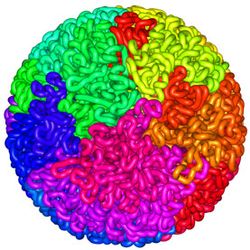
Human-genome-3-d_1Erez Lieberman Aiden was an undergraduate at Princeton University in 2000 when scientists announced with great fanfare that they had sequenced the first human genome, yielding a trove of information about what happens inside every human cell. But Aiden wondered what it would be like to see what was happening inside a human cell. How does this gigantic genome—which would stretch 2 meters if you unwound it from its 5-micron-wide coil in the nucleus—actually go about its work? To get to the bottom of this central question, he parlayed his mathematics major into applied math and health sciences and technology Ph.D. work at the Massachusetts Institute of Technology and at Harvard University, where he is currently a Harvard Fellow. Today in the journal Science, he explains the fruit of this work: a technique for mapping the genome that has already shed light on the human genome in all its 3-D glory. The essay won this year’s GE & Science Prize for Young Life Scientists.

The mapping technique that Aiden and his colleagues have come up with bridges a crucial gap in knowledge—between what goes on at the smallest levels of genetics (the double helix of DNA and the base pairs) and the largest levels (the way DNA is gathered up into the 23 chromosomes that contain much of the human genome). The intermediate level, on the order of thousands or millions of base pairs, has remained murky. As the genome is so closely wound, base pairs in one end can be close to others at another end in ways that are not obvious merely by knowing the sequence of base pairs. Borrowing from work that was started in the 1990s, Aiden and others have been able to figure out which base pairs have wound up next to one another. From there, they can begin to reconstruct the genome—in three dimensions.

More here.

Friday, December 2, 2011

Pipe Dreaming: What Can Screen Savers Tell Us About Our Wishes, Our Anxieties, and Our Obsessions?

Article_ding4Chinnie Ding in The Believer:

At a Pittsburgh gallery in 2006, artist Keny Marshall exhibited 3D Pipes, an elaborate, freestanding installation of aged metal plumbing. “Everybody’s got 3D Pipes on their computer,” said Marshall in an interview. “The only difference is this 3D Pipes took months to build and weighs three to four thousand pounds.” Oddly inconspicuous, mistakable for exposed utilities in the gallery’s warehouse-like space, this life-size, patina’d tribute to the PC’s workhorse screen saver of the 1990s and early 2000s spoke of our culture’s recent yearnings for industrially or intimately material work, Dirty Jobs adventurism or an Etsy sort of DIY. Yet perhaps more pervasively than any other 2D commonplace of its time, the virtual 3D Pipes—and the screen saver as a genre—had woven its own frenetic, filigreed dreamwork about work.

On when we’re off, screen savers are both hallucinatory napscapes and work-site facades. Though customizable, like icons and wallpapers, and comparable to other cubicle brighteners (potted plants, fluorescent stickies), they possess a distinct poetics. As boxed, watchable decor, where a fireplace or window might once have sufficed, they tend to emulate the mesmeric morphing and gelatinous luminosity of fish tanks, lava lamps, self-tilting wave tanks. (Cognate forms might include digital picture frames, dance-club visuals, the trompe l’oeil of Yule-log DVDs.) Whether ribbons of light that streak and fold, frantic zooms through a brick maze, or an inexorable volley into the Milky Way, the screen saver’s most insistent optical illusion is infinitude. Reaching beyond dead opaque surface and deadpan document glare—as if receding behind, sinking into the depths of true aliveness those occlude—its generous spaciousness seems to redeem work’s merely serial endlessness. The screen saver is comfort food for thought the way pop chaos theory is: it lets us believe we are more linked by the serendipities of a butterfly’s wings than by finance capitalism. As tasks await amid cascading windows or avalanching paper, the screen saver’s immersive depths unfurl the cosmic picture that keeps the job in perspective, outsourcing gripes to karma, converting tedium into trance. It acknowledges, and briefly gratifies, one’s drowsy desire for not-work. After Dark’s winged toasters gently flapping through black sky thus merge the wistful memory of breakfast with the anticipation of slumberland. Popular distributed-computing screen saver Electric Sheep, drawing on users’ networked machines to produce fractals resembling chrysanthemum monsters or viscous mandalas, styles itself a version of the pastoral: its server overseers are called “shepherds.”

Christa Wolf, 1929-2011

WOLF-obit-articleInlineDavid Binder and Bruce Weber in NYT:

Christa Wolf, a leading writer from the former East Germany whose novels, stories and essays explored the weight of history on ordinary individuals, especially and controversially including her own struggles with the legacy of Nazism and life in a Communist society, died Thursday in Berlin. She was 82.

Her death was announced by the publishing house Suhrkamp, which did not disclose a cause.

Ms. Wolf, who grew up in Germany under the Nazis, led a philosophically angst-ridden life that played out in her work. In novels like “Divided Heaven,” “The Quest for Christa T.,” “Cassandra” and “A Model Childhood,” she wrote about characters, largely women, whose daily lives were deeply colored by the political systems that governed them.

trongly autobiographical and gravely moral, her books were widely read in both East and West Germany, and over the years she became respected as a kind of public conscience of a long-divided people. Still, she was criticized as being insufficiently outraged by the repressiveness of the East German regime, and her reputation was tainted by her opposition to the dissolution of the German Democratic Republic, as East Germany was officially known, even as the Berlin Wall was coming down.

Another blow to her standing came in 1993, with the revelation that she briefly served as an informant for the East German secret police in the early 1960s.

She was difficult to categorize — a loyal dissident, a critic of the regime, but a believer in socialist ideals.

Europe’s Self-Destructive Article of Faith

Auer_468wStefan Auer in Eurozine:

Europe's better times were meant to be ahead of it. Not so long ago, “the European dream” was believed to have provided the best “vision of the future”; Europe was going to “run the twenty-first century”, having created “an entirely new species of human organization, the likes of which the world has never seen”. If the West – and most of the world – was American in the twentieth century, the twenty-first was going to be European. But not in any crude, old-fashioned, imperial, my-values-are-better-than-yours kind of way; rather in an open and open-ended reflexive, self-critical, you-are-as-good-as-or-better-than-me way. Europe was going to lead the world by example; do it gently. “Soft power Europe” would rule without anyone noticing but everyone benefiting. All these assumptions proved hubristic: Europe's turn of fortune is humbling, humiliating and, perhaps, irreversible.

What went wrong, and when? Europe's most audacious moment occurred some time between 1989 and 1991. That short period of time encapsulated both the demise of communism in central and eastern Europe – from Poland, Hungary, East Germany and Czechoslovakia in 1989 to the Soviet Union in 1991 – and the bold step forward on the path towards an “ever-closer union” in western Europe. Twenty years later, the significant failures of economic and political integration have forced Europeans to re-consider the underpinnings of their project.

Though it appeared in different shapes and sizes, and had numerous causes outside Europe (e.g. the US sub-prime crisis), the economic crisis of 2010-2011 has also manifested itself as a crisis of European democracy. The creation of a monetary union with a shared currency, the euro, is a project that, in many ways, arose out of the events of 1989-1990, in particular, the perceived need to anchor a reunified Germany more firmly within Europe. The common currency was always much more than a transnational medium of exchange. From its inception, it was intended to be the symbol of united Europe par excellence. Rather than achieving this, the eurozone crisis has reinforced latent suspicions, if not hostilities, between EU nations.

56 worst similes from high school students

From House of Figs:

  1. Her eyes were like two brown circles with big black dots in the center.
  2. He was as tall as a 6′3″ tree.
  3. Her face was a perfect oval, like a circle that had its two sides gently compressed by a Thigh Master.
  4. From the attic came an unearthly howl. The whole scene had an eerie, surreal quality, like when you’re on vacation in another city and Jeopardy comes on at 7:00 p.m. instead of 7:30.
  5. John and Mary had never met. They were like two hummingbirds who had also never met.
  6. She had a deep, throaty, genuine laugh, like that sound a dog makes just before it throws up.
  7. The ballerina rose gracefully en pointe and extended one slender leg behind her, like a dog at a fire hydrant.
  8. He was as lame as a duck. Not the metaphorical lame duck, either, but a real duck that was actually lame. Maybe from stepping on a land mine or something.
  9. Her vocabulary was as bad as, like, whatever.
  10. She grew on him like she was a colony of E. coli and he was room-temperature Canadian beef.

More here.

Friday Poem

Now I Become Myself

Now I become myself. It's taken
Time, many years and places,
I have been dissolved and shaken,
Worn other people's faces,
Run madly, as if Time were there,
Terribly old, crying a warning,
“hurry, you will be dead before —–“
(What? Before you reach the morning?
or the end of the poem, is clear?
Or love safe in the walled city?)
Now to stand still, to be here,
Feel my own weight and density!…..
Now there is time and Time is young.
O, in this single hour I live
All of myself and do not move
I, the pursued, who madly ran,
Stand still, stand still, and stop the Sun!

.

by May Sarton
from Collected Poems 1930-1993

Towards a Burmese spring

Larry Jagan in Himal Southasian:

BurmaHow much difference a year can make! The walls of closed society seem to be falling in Burma. But will the army remain silent? Change is in the air in Burma, according to many in Rangoon. Though how long until the winds shift remains an open question. ‘There’s definitely a Burmese Spring here,’ said a senior member of Aung San Suu Kyi’s National League for Democracy (NLD), on condition of anonymity. ‘But whether it’s only an illusion, a false dawn as we have had many times before, only time will tell.’ Nonetheless, many in the pro-democracy movement within Burma are optimistic, believing that the new president, Thein Sein, is serious about economic and political change. Critically, this is a process that seems to include Suu Kyi herself, though for the moment it is very unclear what role she may play.

Recent months have seen the continual unveiling of signs that the country’s new quasi-civilian government is trying to pursue a genuine transition to democracy of some sort. The release of more than 200 political prisoners, including the renowned comedian Zarganar, was one of the most recent, and most significant, signals that the new government is serious about political reform. According to a senior government minister on condition of anonymity, preparations are underway for the release of at least 200 more political detainees as well. Taken together, the movements made in the year since the new government was formed strike many as significant – though with caveats.

More here.

Reading Shakespeare helps doctors understand patients’ mental state

From Mail:

BardDoctors should brush up on their Shakespeare to help improve their understanding of how the mind can affect the body, according to an unusual study. Dr Kenneth Heaton said many doctors don't realise how many physical symptoms can be caused solely by psychological problems. But the Bard's works help illustrate this link because he had such an 'exceptional awareness of bodily sensations'.

The former gastroenterologist and expert on 16th-century literaturelooked for descriptions of sensory ailments in all 42 of Shakespeare's major works. He found dozens of examples when characters experienced psychosomatic symptoms – which was far more than in the writings of his contemporaries. For instance Hamlet is shown suffering from fatigue as a result of grief, crying out: 'How weary, stale, flat, and unprofitable seem to me all the uses of this world!' Meanwhile, coldness is shown to be a symptom of shock, as when Juliet in Romeo and Juliet reveals: 'I have a faint cold fear that thrills through my veins.'

More here.

Mahatma and the lights

StoryBigImageSGJROWFWhen-Paris_big

MAGIC CITY WAS A LARGE DANCE HALL on Paris’s Left Bank, used over the decades for purposes as diverse as transvestite balls in the roaring 1920s and the storage of Jewish property confiscated by the fascist French government in the 1940s. It was seized by the Nazis and lavishly refurbished as a radio studio run by the Gestapo during the Occupation, and it was where French television broadcasting set up shop during the 1950s. It was also the place where Mahatma Gandhi—on his way home from the Second Round Table Conference in London and en route to visit Romain Rolland in Geneva—made his only public appearance in Paris, on 5 December 1931, in the very same space where the celebrated Parisian drag queens Kymris and Monsieur Bertin once strutted their stuff. According to contemporary newspaper accounts of the event, it was a strange evening. Patrons were ushered to their seats by girls “bizarrely uniformed in bright red skirts, leather boots, and wide leather belts from which hung cutlasses”, according to the journalist Robert Gauthier’s report in Le Temps. Gauthier observed that the “atmosphere, part circus, part dancing hall, the overheated room, the massive columns of red marble, the flashes of magnesium from here and there, and the floodlights ready to be lit into action were not on the same level as this leader of men.” Further to the right, reporter Georges Suarez had a different take in L’Echo de Paris: “Mahatma Gandhi proves himself to be a great comic…. He appears crushed by his lamentable half-nakedness … but, if his sandals are those of Mohamed, his little bathing suit does not conjure up Napoleon’s coat at Wagram.”

more from Mira Kamdar at Caravan here.

looking backward

Tarnoff-thumb-490x300-2620

Fiction rarely influences politics anymore, either because fewer people read it or because it has fewer things to say. Yet novels have affected America in large and unsubtle ways: Uncle Tom’s Cabin and The Jungle shaped the contours of the national current no less profoundly than our periodic wars and bank panics. More recently, Ayn Rand’s tales of triumphant individualism, Atlas Shrugged and The Fountainhead, inspired a resilient strain of free-market fundamentalism that continues to color our economic life. A Russian immigrant who adored her adopted country, Rand strove to become American in all things, and in the process became an especially American sort of storyteller: the kind whose stories are a means to a social or political end. It’s an honored tradition in American writing, one that acquits fiction of its perennial charge of uselessness by making it practical, identifying problems and offering solutions—pragmatic books for the purpose of the country’s self-improvement. Few novels have sought to improve America as radically as Edward Bellamy’s bestseller Looking Backward, 2000-1887, published in 1888. Bellamy, like Rand, used fiction to popularize a philosophy, and with comparable results: Looking Backward sold nearly half a million copies in its first decade and appeared in several languages around the world.

more from Ben Tarnoff at Lapham’s Quarterly here.