Jed Perl in The New Republic:
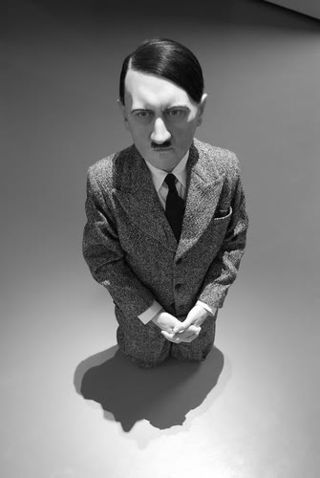
More here.

Jed Perl in The New Republic:
More here.
Mapping the Interior
Imagine that you had a dishcloth
Bigger than the one mothers put on the bread
To slow its cooling, that you could spread
Over the whole kitchen floor to bring up its face
As clearly as the features on the cake.
You’d have a print you could lift up
To the light and examine for individual traces
Of people who came to swap yarns, and sit on
Sugan chairs that bit into the bare floor, leaving
Unique signatures on concrete that creased
Over time into a map you could look at and
Imagine what those amateur cartographers
Were thinking when their eyes fell, in the silence
Between the stories, that was broken only by
The sound of the fire and whatever it was that
Was calling in the night outside.
by Eugene O'Connell
from One Clear Call
Bradshaw Books, Cork, © 2003
Mitch Dobrowner in Lensculture:
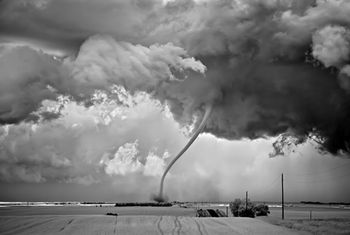
Words are inadequate to describe the experience of photographing this immense power and beauty. And the most exciting part is with each trip I really don’t know what to expect. But now I see these storms as living, breathing things.
More here. [Editor's note: You'll discover a lot more detail when you look at these images in our high-resolution slide show.]
Bill McKibben in Orion Magazine:

Here’s my answer: we’re moving, if we’re lucky, from the world of few and big to the world of small and many. We’ll either head there purposefully or we’ll be dragged kicking, but we’ve reached one of those moments when tides reverse. Take agriculture. For 150 years the number of farms in America has inexorably declined. In my state—the most rural in the nation—the number of dairies fell from 11,000 at the end of World War II to 998 this summer. And of course the farms that remained grew ever larger—factory farms, we called them, growing commodity food. Here in Vermont most of the remaining dairies are big, but not big enough to compete with the behemoths in California or Arizona; they operate so close to the margin that they can’t afford to hire local workers and instead import illegal migrants from Mexico. But last year the USDA reported that the number of farms in America had actually increased for the first time in a century and a half. The most defining American demographic trend—the shift that had taken us from a nation of 50 percent farmers to less than 1 percent—had bottomed out and reversed. Farms are on the increase—small farms, mostly growing food for their neighbors.
More here.
John Brockman in Edge:

Margulis was also a champion of the Gaia hypothesis, an idea developed in the 1970s by the free lance British atmospheric chemist James E. Lovelock. The Gaia hypothesis states that the atmosphere and surface sediments of the planet Earth form a self- regulating physiological system — Earth's surface is alive. The strong version of the hypothesis, which has been widely criticized by the biological establishment, holds that the earth itself is a self-regulating organism; Margulis subscribed to a weaker version, seeing the planet as an integrated self- regulating ecosystem. She was criticized for succumbing to what George Williams called the “God-is good” syndrome, as evidenced by her adoption of metaphors of symbiosis in nature. She was, in turn, an outspoken critic of mainstream evolutionary biologists for what she saw as a failure to adequately consider the importance of chemistry and microbiology in evolution. I first met her in the late 80's and in 1994 interviewed her for my book The Third Culture: Beyond the Scientific Revolution (1995). Below, in remembrance, please see her chapter, “Gaia is a Tough Bitch”. One of the compelling features of The Third Culture was that I invited each of the participants to comment about the others. In this regard, the end of the following chapter has comments on Margulis and her work by Daniel C. Dennett, the late George C. Williams, W. Daniel Hillis, Lee Smolin, Marvin Minsky, Richard Dawkins, and the late Francisco Varela. Interesting stuff.
More here.
From The Christian Science Monitor:
Your new novel moves more towards realism than your previous work. Why the change in style?
I’ve always considered myself a realist at heart. I’ve never written a book that violated physicalprinciples. My books often have an atmosphere of the fantastic or
the surreal, but actually nothing happens in them that couldn’t happen in reality, so I don’t know if this book is that much of a departure in terms of realism.
More here.
Arriving Shortly
When amma came
to New York City,
she wore unfashionably cut
salwar kurtas,
mostly in beige,
so as to blend in,
her body
a puzzle that was missing a piece –
the many sarees
she had left behind:
that peacock blue
Kanjeevaram,
that nondescript nylon in which she had raised
and survived me,
the stiff chikan saree
that had once held her up at work.
When amma came to
New York City,
an Indian friend
who swore by black
and leather,
remarked in a stage whisper,
“This is New York, you know –
not Madras.
Does she realise?”
Ten years later,
transiting through L.A. airport
I find amma
all over again
in the uncles and aunties
who shuffle past the Air India counter
in their uneasily worn, unisex Bata sneakers,
suddenly brown in a white space,
louder than ever in their linguistic unease
as they look for quarters and payphones.
I catch the edge of amma’s saree
sticking out
like a malnourished fox’s tail
from underneath
some other woman’s sweater
meant really for Madras’ gentle Decembers.
by K. Srilata
from Arriving Shortly
Publisher: Writers Workshop, Kolkata, © 2011
It might be that the stage musical is now pretty well over as a form. Certainly, the gloomy parade of ‘juke-box’ musicals through the West End doesn’t give one much hope for the future. It is difficult to pick out a worst offender, but the Ben Elton We Will Rock You, confected from the Queen catalogue, is as bad as any. Its premise, of taking the work of a curious-looking, homosexual, Parsi, excessive genius like Freddie Mercury and turning it into an idiotic story about two clean-cut stage-school kids Putting the Show on Right Now says something truly terrible about the musical: it says that it can only deal with conventional views of conventional subjects. The demonstration of just how untrue that really is comes with the collected works of Stephen Sondheim, who is surely the greatest figure in the entire history of the stage musical. In his long career, he has not hesitated to address difficult subjects. It’s certainly true that other classics in the genre have dealt with some serious issues — race relations in Showboat, the Anschluss in The Sound of Music, even trade union movements in The Pyjama Game and urban prostitution in Sweet Charity. When Sondheim takes on themes of colonial exploitation (Pacific Overtures), political assassinations (Assassins) or Freudian psychological depths (pretty well the whole oeuvre), he is not stepping outside the previously established limits of the form.
more from Philip Hensher at The Spectator here.
Protests do not write policy. And something as loosely formed as the OWS action shouldn’t be drafting white papers. What protests can do most effectively is to alter the common sense understanding of what is right and wrong. In this case, the OWS action makes other sufferers of debt and disenfranchisement feel that their problems are political—not a symptom of personal shortcomings, and not just the unfortunate side effect of a passing miscalculation by the Peter Orszags of the world. The real “goal” of OWS is to rally together everyone who is willing to say to Washington, “American democracy cannot bear this inequality.” This movement may prove to be adept at waging ideological war against the disastrous free-marketeers, occupying the airwaves as well as the streets—but it will indeed fall to others to write legislation and to organize economic priorities in debt-wracked communities. The OWS protests should operate in concert with such efforts (OWSers have assisted foreclosure resistance in Queens, for instance), and should put up new forms of protests that keep the public’s eyes on the culprits. Bank occupations have already begun. Major campaigns are now successfully exhorting citizens to move their savings and checking accounts from big banks to local credit unions. The black box of high finance has finally been pried open and exposed for the unregulated machine of destruction that it is, and the alternatives being proposed in the tumult of Occupy Wall Street sound pretty smart to me.
more from Sarah Leonard at Bookforum here.
Agatha Christie was not cozy. She earned the title the Queen of Crime the old-fashioned way — by killing off a lot of people. Although never graphic or gratuitous, she was breathtakingly ruthless. Children, old folks, newlyweds, starlets, ballerinas — no one is safe in a Christie tale. In “Hallowe’en Party,” she drowns a young girl in a tub set up for bobbing apples and, many chapters later, sends Poirot in at the very last minute to prevent a grisly infanticide. In “The ABC Murders,” she sets up one of the first detective-taunting serial killers. The signature country home aside, Christie’s literary world was far from homogenous. Her plots, like her life, were international, threading through urban and pastoral, gentry and working class, dipping occasionally into the truly psychotic or even supernatural. Christie murders were committed for all the Big Reasons — love, money, ambition, fear, revenge — and they were committed by men, women, children and in one case, the narrator. Some of her books are truly great — “Death on the Nile,” “And Then There Were None,” “The Secret Adversary,” “Murder on the Orient Express,” “Curtain” to name a few — and some are not. But even the worst of them (“The Blue Train,” “The Big Four”) bear the hallmarks of a master craftsman. Perhaps not on her best day, but the failures make us appreciate the successes, and the woman behind them, that much more.
more from Mary McNamara at the LA Times here.
Drew DeSilver in The Seattle Times:
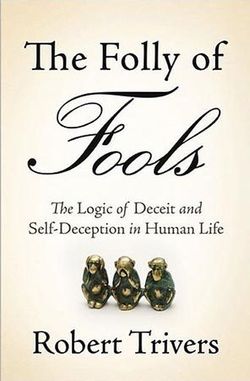
The crash, as cockpit voice recordings later showed, was primarily the result of the pilot's overconfidence leading him to ignore or minimize a whole series of warning signs that his more observant, but less assertive, colleague had pointed out to him. It's one of the most dramatic illustrations of the costs of self-deception in Robert Trivers' new book, “The Folly of Fools: The Logic of Deceit and Self-Deception in Human Life” (Basic Books, 397 pp., $28).
Trivers, an evolutionary biologist who teaches at Rutgers, starts by asking one of those questions that seems obvious once someone else asks it: Why should our brains — whose job, after all, is to make sense of everything we see, hear, touch, taste and smell — be so prone to self-deception? Natural selection would seem to work against creatures who persistently fail to see the world as it is, yet self-deception seems to be deeply embedded in our psyches.
Trivers' answer, which he first advanced in 1976 and has been elaborating since, is that we deceive ourselves the better to deceive others. If we can convince ourselves that we are stronger, smarter, more skillful, more ethical or better drivers than others, we're a long way toward convincing other people too.
More here.
Edward Miguel in Foreign Affairs:
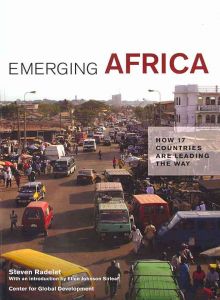
What is less well known is that Africa's prospects have changed radically over the past decade or so. Across the continent, economic growth rates (in per capita terms) have been positive since the late 1990s. And it is not just the economy that has seen rapid improvement: in the 1990s, the majority of African countries held multiparty elections for the first time since the heady postindependence 1960s, and the extent of civic and media freedom on the continent today is unprecedented. Even though Africa's economic growth rates still fall far short of Asia's stratospheric levels, the steady progress that most African countries have experienced has come as welcome news after decades of despair. But that progress raises a critical question: what happened?
More here.
[Thanks to Farrukh Azfar.]
Christopher Buckley in the New York Times Book Review:

It’s a truism that comic artists tend to hatch from tragic eggs. But as Vonnegut, the author of zesty, felicitous sci-fi(esque) novels like “Cat’s Cradle” and “Sirens of Titan” and “Breakfast of Champions” might put it, “So it goes.”
Vonnegut’s masterpiece was “Slaughterhouse-Five,” the novelistic account of being present at the destruction of Dresden by firebombing in 1945. Between that horror (his job as a P.O.W. was to stack and burn the corpses); the mother’s suicide; the early death of a beloved sister, the only woman he seems truly to have loved; serial unhappy marriages; and his resentment that the literary establishment really considered him (just) a writer of juvenile and jokey pulp fiction, Vonnegut certainly earned his status as Man of Sorrows, much as Mark Twain, to whom he is often compared, earned his.
Was Kurt Vonnegut, in fact, just that — a writer one falls for in high school and college and then puts aside, like one of St. Paul’s “childish things,” for sterner stuff?
More here.
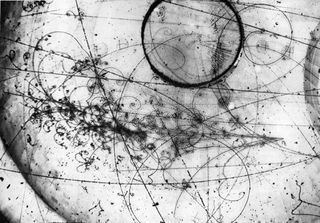
Those famous neutrinos that appeared to travel faster than light in a recent experiment probably did not, a group of scientists say, because they failed to emit a telltale type of radiation.
According to one physicist in the group, “it's hard to argue against” this latest objection to the controversial faster-than-light result produced by other scientists in the same Italian laboratory.
In a paper posted to the physics pre-print site arXiv.org, the group, which runs the ICARUS (Imaging Cosmic and Rare Underground Signals) experiment based at Gran Sasso Laboratory (LNGS) outside Rome, argues that any faster-than-light particles would be expected to emit a particular type of radiation as they traveled. Because they didn't detect any of this coming from the neutrinos — and because the particles didn't seem to be shedding energy in the form of undetected radiation — they must have been traveling at or below the speed of light.
Ultimately, the ICARUS group is arguing that the OPERA group, which ran the experiment that measured neutrinos making a trip from CERN Laboratory in Switzerland to LNGS in Italy 60 nanoseconds faster than light would have done, must have made some mistake in its timekeeping.
1. You start your work by examining the collapses of brutal military dictatorships in Europe’s southern tier (Greece, Spain and Portugal), and point out that although political and social processes led to accountability in Greece and Portugal, they didn’t in Spain. Will accountability for the horrendous crimes of the Franco period be avoided forever, or have they merely been delayed?
Based on charges filed by associations of victims and their families, Spanish Judge Baltasar Garzón opened an investigation in 2008 into more than 100,000 cases of executions and disappearances that took place from 1936 to 1951. So, we are talking here about executions and disappearances that happened between sixty and seventy-five years ago. My book is about the trend toward individual criminal accountability, which requires that cases be brought against specific living perpetrators. Virtually all of the suspected perpetrators in Spain are now dead. Although individual criminal accountability for human rights violations from that period is no longer possible, other forms of accountability are needed. In particular, many family members still hope to locate the remains of their relatives, to rebury those remains, and to know more about the circumstances that led to the deaths. Such truth-telling is still necessary and possible, even if individual criminal accountability is not.
2. Samuel Huntington wrote that if accountability trials were to be conducted, they had to occur immediately in the wake of transition or not at all. His view seems to have been the received wisdom of political scientists twenty years ago. Have the intervening events tended to sustain or to refute him?
The single most forceful finding of my research is that on this issue, Huntington was completely wrong. Justice comes slowly — often painfully, unacceptably slowly in the eyes of victims — but surprisingly it often does come. Domestic courts in Uruguay took twenty years to sentence former authoritarian leaders Juan María Bordaberry and General Gregorio Álvarez for ordering the murders of political opponents. The Extraordinary Chambers in Cambodia issued its first conviction last year, more than thirty years after the horrors of the killing fields.
The man who first described economics as a dismal science was a defender of the slave trade. Thomas Carlyle, an English historian and writer in the 19th century, claimed that slavery was a superior institution to the market, and that the liberation of slaves in the Caribbean islands had led to the moral decline of “the Negroes”. He was attacked by economists such as John Stuart Mill for this bizarre argument. Adam Smith had written much earlier about the common humanity of the street porter and the philosopher.
The human condition has been one of the central concerns of the best economists. Sylvia Nasar has chosen an opportune moment to remind us about this, at a time when economists have been criticized for being too engrossed in technical trivialities even as the world economy was rolling towards its deepest crisis in more than seven decades. Grand Pursuit: The Story of Economic Genius is an ambitious book by a writer who won well-deserved praise for A Beautiful Mind, her dazzling biography of John Nash, the tormented genius who revolutionized game theory but then fell prey to schizophrenia.
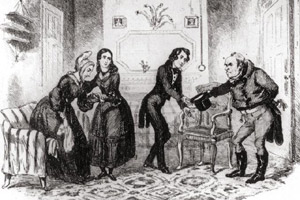
Nasar starts her story with Charles Dickens rather than Adam Smith. “Political economy is a mere skeleton unless it has a little human covering and filling out,” Dickens wrote in the first issue of a magazine he edited. “A little human bloom upon it, and a little human warmth in it.” It was a call to humanize economics.
Dickens was writing at a time when economists took a dim view of human progress. The clergyman Thomas Malthus believed that extreme poverty was the inevitable situation of “nine parts in ten of the whole human race”. The sexual drive was at fault, said Malthus, as mindless procreation would ensure that the human population would tend to outstrip available food supply, with disease and famine helping to correct the imbalance. It was this dire prognosis that earned economics the moniker of being a dismal science. The economic historian James Henderson has argued that A Christmas Carol, the famous moral tale written by Dickens, with its descriptions of abundant food, is an attack on Malthus.