Lizette Ortega in The Washington Post:
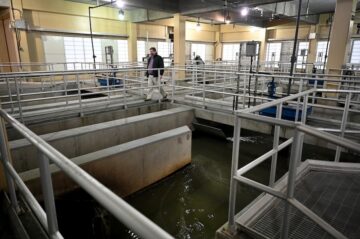 Scientists discovered that bacteria commonly found in wastewater can break down plastic to turn it into a food source, a finding that researchers hope could be a promising answer to combat one of Earth’s major pollution problems. In a study published Thursday in Environmental Science and Technology, scientists laid out their examination of Comamonas testosteroni, a bacteria that grows on polyethylene terephthalate, or PET, a plastic commonly found in single-use food packaging and water bottles. PET makes up about 12 percent of global solid waste and 90 million tons of the plastic produced each year.
“The machinery in environmental microbes is still a largely untapped potential for uncovering sustainable solutions we can exploit,” said Ludmilla Aristilde, senior author on the study and associate professor of civil and environmental engineering at Northwestern University. Unlike most other bacteria, which thrive on sugar, C. testosteroni has a more refined palate, including chemically complex materials from plants and plastics that take longer to decompose. The researchers are the first to demonstrate not only that this bacteria can break down plastic, but they also illuminate exactly how they do it.
Through six meticulous steps, involving complex imaging and gene editing techniques, the authors found that the bacteria first physically break down plastic by chewing it into smaller pieces. Then, they release enzymes — components of a cell that speed up chemical reactions — to chemically break down the plastic into a carbon-rich food source known as terephthalate.
More here.
Enjoying the content on 3QD? Help keep us going by donating now.
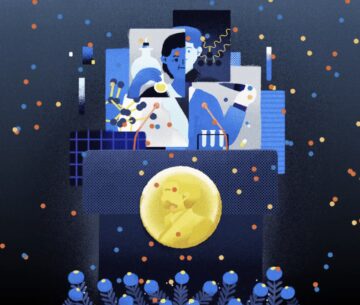 The Nobel prize has been awarded in three scientific fields —
  Regular Current Affairs readers know that I have a tendency to make grumbling remarks about a magazine called
 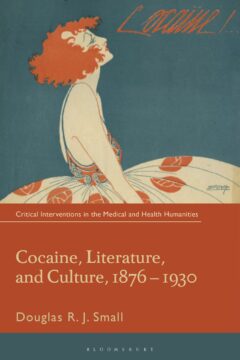 In the winter of 1886, William Alexander Hammond – a famed neurologist and the former Surgeon General of the United States Army – took an enormous amount of cocaine. A reporter from the New York paper The Sun who interviewed him waggishly observed that the doctor had been ‘on a terrific spree for science’. Hammond had experimentally worked his way through as many different ways of taking the drug in as many different quantities as he could devise: he tried fluid extracts of coca (the plant from which pure cocaine is extracted), mixed grains of cocaine hydrochloride into purified wines, and eventually began injecting the drug hypodermically. The injections, he said, gave him ‘a delightful, undulating thrill’. On cocaine, everything felt ‘refined’ and ‘softened’. Hammond became intensely talkative: when he was alone, he would talk to himself at great length. ‘I became,’ he said, ‘rather sentimental and said nice things to everybody. The world was going very well, and I had a favourable opinion of my fellow men and women … I enjoyed myself hugely.’
 In 1999, nearly a decade after he first devoted himself to poetry, Phillips drove through a blizzard to interview the poet
  T
T Academic philosophers—people for whom philosophy is a profession—like to joke about their discomfort on airplanes. As you make light conversation with your neighbor, the question of what you do for a living tends to come up, and then you have to cope with other people’s ideas about what it is to “do philosophy.” A friend from graduate school confessed that he hated these conversations so much he would pretend to be a mathematician. (Why not a financial adviser or a travel agent?) A colleague from my first job at Johns Hopkins would head things off by saying “I teach philosophy” rather than “I am a philosopher.” It definitely sounds more approachable. But when I still felt the novelty of being a professional philosopher—and pride at having survived the rigors of graduate school—I was not about to dumb it down. I was even eager to tell people I was a philosopher. Follow-up questions fell within a range: Who are your favorite philosophers? Does anyone listen to you? Isn’t that a job from the olden days?
 A
A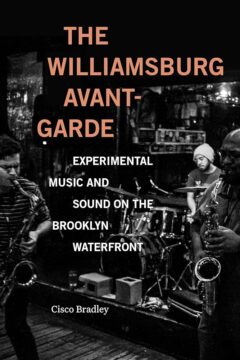 CISCO BRADLEY’S The Williamsburg Avant-Garde: Experimental Music and Sound on the Brooklyn Waterfront (2023) chronicles a vital and now-vanished facet of American musical and cultural history in New York City from the mid-1980s to 2015. The book investigates how, amid hypercommercialism and mutating audio technologies, bold musicians, expert and amateur alike, impelled by a big-hearted DIY ethos, made new, imaginative music as public, independent, and free as possible by exploiting urban niches and cultural interstices, using dive bars, loft spaces, garages, warehouses, restaurants, and cafés as musical laboratories for experiments in sound, installation, and performance.