Category: Recommended Reading
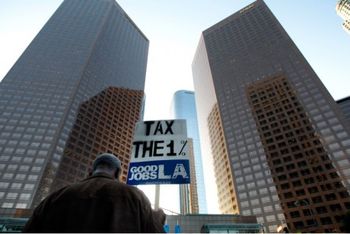
Taxing the 1%: Why the top tax rate could be over 80%
Thomas Piketty, Emmanuel Saez, and Stefanie Stantcheva in Vox:
In the United States, the share of total pre-tax income accruing to the top 1% has more than doubled from less than 10% in the 1970s to over 20% today (CBO 2011 and Piketty and Saez 2003). A similar pattern is true of other English-speaking countries. Contrary to the widely held view, however, globalisation and new technologies are not to blame. Other OECD countries such as those in continental Europe or Japan have seen far less concentration of income among the mega rich (World Top Incomes Database 2011).
At the same time, top income tax rates on upper income earners have declined significantly since the 1970s in many OECD countries, again particularly in English-speaking ones. For example, top marginal income tax rates in the United States or the United Kingdom were above 70% in the 1970s before the Reagan and Thatcher revolutions drastically cut them by 40 percentage points within a decade.
At a time when most OECD countries face large deficits and debt burdens, a crucial public policy question is whether governments should tax high earners more. The potential tax revenue at stake is now very large. For example, doubling the average US individual income tax rate on the top 1% income earners from the current 22.5% level to 45% would increase tax revenue by 2.7% of GDP per year,1 as much as letting all of the Bush tax cuts expire. But, of course, this simple calculation is static and such a large increase in taxes may well affect the economic behaviour of the rich and the income they report pre-tax, the broader economy, and ultimately the tax revenue generated. In recent research (Piketty et al 2011), we analyse this issue both conceptually and empirically using international evidence on top incomes and top tax rates since the 1970s.
Thursday Poem
.
mistakes. But to tell the truth the world
doesn't need anymore of that sound.
.
stop yourself, if your pretty mouth can't
hold it in, at least go by yourself across
.
of rocks and water to the place where
the falls are flinging out their white sheets
.
jubilation and water fun and you can
stand there, under it, and roar all you
.
drip with despair all afternoon and still,
on a green branch, its wings just lightly touched
.
puffing out its spotted breast, will sing
of the perfect, stone-hard beauty of everything.
.
.
Starting Over
From Seed:
In his famous Lectures on Physics, Richard Feynman presented this interesting speculation:
“If, in some cataclysm, all of scientific knowledge were to be destroyed, and only one sentence passed on to the next generations of creatures, what statement would contain the most information in the fewest words? I believe it is the atomic hypothesis (or the atomic fact, or whatever you wish to call it) that all things are made of atoms—little particles that move around in perpetual motion, attracting each other when they are a little distance apart, but repelling upon being squeezed into one another. In that one sentence, you will see, there is an enormous amount of information about the world, if just a little imagination and thinking are applied.”
Fascinated by Feynman’s question, Seed put a similar one to a number of leading thinkers: “Imagine—much as Feynman asked his audience—that in a mission to change everyone’s thinking about the world, you can take only one lesson from your field as a guide. In a single statement, what would it be?” Here are their answers:
“The dazzling diversity of species and biological adaptations over 3.5 billion years of life on Earth owes its existence to “adaptation by natural selection,” which requires just three simple conditions to operate: variation, differential selection (the best performing traits survive and reproduce more effectively than others), and replication of successful traits by subsequent generations, via a double helix of molecules that code for proteins as biological building blocks, or among more complex animals, via imitation or cultural transmission of methods and knowledge.”
—Dominic Johnson is a reader in politics and international relations at Edinburgh University.
More here.
Why aren’t we smarter already?
From PhysOrg:
We put a lot of energy into improving our memory, intelligence, and attention. There are even drugs that make us sharper, such as Ritalin and caffeine. But maybe smarter isn’t really all that better. A new paper published in Current Directions in Psychological Science, a journal of the Association for Psychological Science, warns that there are limits on how smart humans can get, and any increases in thinking ability are likely to come with problems. Tradeoffs are common in evolution. It might be nice to be eight feet tall, but most hearts couldn’t handle getting blood up that high. So most humans top out under six feet. Just as there are evolutionary tradeoffs for physical traits, Hills says, there are tradeoffs for intelligence. A baby’s brain size is thought to be limited by, among other things, the size of the mother’s pelvis; bigger brains could mean more deaths in childbirth, and the pelvis can’t change substantially without changing the way we stand and walk. Drugs like Ritalin and amphetamines help people pay better attention. But they often only help people with lower baseline abilities; people who don’t have trouble paying attention in the first place can actually perform worse when they take attention-enhancing drugs. That suggests there is some kind of upper limit to how much people can or should pay attention. “This makes sense if you think about a focused task like driving,” Hills says, “where you have to pay attention, but to the right things—which may be changing all the time. If your attention is focused on a shiny billboard or changing the channel on the radio, you’re going to have problems.”
It may seem like a good thing to have a better memory, but people with excessively vivid memories have a difficult life. “Memory is a double-edged sword,” Hills says. In post-traumatic stress disorder, for example, a person can’t stop remembering some awful episode. “If something bad happens, you want to be able to forget it, to move on.” Even increasing general intelligence can cause problems. Hills and Hertwig cite a study of Ashkenazi Jews, who have an average IQ much higher than the general European population. This is apparently because of evolutionary selection for intelligence in the last 2,000 years. But, at the same time, Ashkenazi Jews have been plagued by inherited diseases like Tay-Sachs disease that affect the nervous system. It may be that the increase in brain power has caused an increase in disease.
More here.
Grossman’s truth
Inevitably, however, we tend to create a generic Holocaust narrative out of the tales we hear most often, and find most easy to identify with. As Americans, we respond to stories of assimilated Western European Jews who are gradually shut out of their country’s life, like that of the German diarist Victor Klemperer. As city dwellers, our imaginations are compelled by Anne Frank’s experience of hiding out in a crowded apartment, invisible in the multitude. And as members of an advanced industrial society, we are compelled by the image of the gas chamber, which writers since Hannah Arendt have made the central emblem of the Holocaust—the ultimate reduction of human life to inanimate matter. All of these are truths about the Holocaust, but they are not the only truths. As many Jews died by simple shooting as in gas chambers; far more died in Eastern Europe than in Western Europe; millions were killed almost as soon as their towns and villages were occupied by the Germans, with no chance to hide out or adjust in any way to life under Nazism. Statistically speaking, the representative Holocaust story might not feature concentration camps or hiding places or repressive laws at all; it might simply be the story of waking up one morning to find German tanks in your street and a month later being shot and buried in a mass grave.
more from Adam Kirsch at Tablet here.
Pieces of Shadow
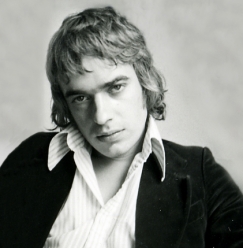
When young W.S. Merwin met Ezra Pound in a windowless room at St. Elizabeth’s Hospital, Pound advised the aspiring poet to begin his career translating, or to, as he put it: “Study the roots, not the twigs.” Translation, Pound held, was a way to inculcate poetic voice; it revealed new possibilities of one’s native language. Merwin, then eighteen, took his advice and began translating soon after his sojourn in Europe, a trip he describes in his memoir Summer Doorways. Merwin’s first major translation, The Poem of the Cid, soon followed, the result of another encounter with a poet-translator, Robert Graves. While tutoring Graves’ son in Majorca, Merwin met Dido Milroy who would help him get a job with the BBC, translating medieval poetry, which led to his rendering of the Spanish epic. Some sixty years later, Merwin has racked up a long list of translations: The Song of Roland, Sir Gawain and the Green Knight, poems by Dante, Osip Mandelstam, Basho, Pablo Neruda, Guilhem Ademar. However, it is his translations from Spanish that stand out, not only because they greatly outnumber his translations from other languages, but also because they demonstrate that a tradition some had considered minor is abundant, rich, and varied in both content and voice.
more from Jesse Tangen-Mills at Asymptote here.
loathed to a purpose
Why did they hate him so? It is hard to think of another great British political figure who is remembered mostly for being loathed. “I met Murder on the way – / He had a mask like Castlereagh.” But even Shelley is not quite as relentless as Byron, who hounded Castlereagh to the grave and beyond it. In the Dedication to Don Juan, “the intellectual eunuch Castlereagh” is denounced as a “Cold-blooded, smooth-faced, placid miscreant! / Dabbling its sleek young hands in Erin’s gore”, not only a callous, neutered killer always referred to as It but, almost worse, an incorrigible mangler of the English language: “An orator of such set trash of phrase / Ineffably – legitimately vile”. Castlereagh was as notorious in his day for his mixed metaphors and fractured syntax as George W. Bush and John Prescott were to be in theirs. Hazlitt did have some appreciation of Castlereagh’s strengths, but his portrait of the Foreign Secretary sitting in the House of Commons is almost more sinister because it is so vivid: “with his hat slouched over his forehead, and a sort of stoop in his shoulder . . . like a bird of prey over its quarry . . . coiled up like the folds of its own purposes, cold, death-like, smooth and smiling – that is neither quite at ease with itself, nor safe for others to approach”.
more from Fredinand Mount at the TLS here.
Wednesday, December 7, 2011
In the Land of Blood and Honey
From NDTV:
Once the red carpet follies were over, the war correspondent Christiane Amanpour introduced the film, calling it “remarkable and courageous” while warning that there was “no way to sugarcoat” the atrocities it portrays. The afterparty, at a nightclub high atop a hip New York hotel in the meatpacking district, complete with the usual supercilious doormen, rotating disco ball and thumping music, was co-sponsored by the Council on Foreign Relations and the human rights group Women for Women International. That was the atmosphere on Monday night at the New York premiere of In the Land of Blood and Honey, a harrowing look at the fratricidal Bosnian war of the 1990s: an unusual convergence of foreign policy seriousness and Hollywood glamour. But that is the way that Angelina Jolie, who wrote, directed and co-produced the film, operates these days.
“I've had fun as an actress,” Ms Jolie said in an interview over the weekend at the Waldorf-Astoria. “It's a very fun job, and I've had great experiences. But my heart has been on these foreign policy issues, and my interests are there. So to be able to combine them and be part of international affairs that way, working toward solutions and being part of a good dialogue with good people, felt like a nice evolution to me.” In the Land of Blood and Honey, which opens on Dec 23 and is Ms Jolie's directorial debut, tells the stories of Ajla, a Bosnian Muslim woman, and Danijel, a Serbian police officer, who meet in Sarajevo just before the war starts. Through them it examines the broader conflict, which killed more than 100,000 people, displaced 2 million more and introduced the term “ethnic cleansing” to the lexicon of war.
More here. (Note: I attended the premier and highly recommend the movie which is brutal but brilliant)
Britain’s Empire: Resistance, Repression and Revolt
From The Guardian:
Gott's achievement is to show, as no historian has done before, that violence was a central, constant and ubiquitous part of the making and keeping of the British empire. This vivid and startling book embarks on a journey through the origins of Queen Victoria's Pax Britannica. Except that Gott shows in 66 short, gripping chapters, which take us from North America to the Caribbean, Ireland, Australia, New Zealand, Africa and Asia, that the span from 1750 to 1860 was never peaceful. Not a year passed, he shows, without conflicts, large and small wars, uprisings, repression and reprisals of astonishing brutality. This kind of study is newer than it seems: while in France there has been Rosa Plumelle-Uribe's La férocité blanche (2001) and Marc Ferro's Livre Noir de Colonialisme (2003), only John Newsinger's shorter The Blood Never Dried (2006) has ever portrayed with such system the dark side of the British empire, or told so fully the stories of those who resisted it.
Imperial history is so often viewed with triumphalism, nostalgia or regret, luring the reader into a patriotic investment in a fictional national past. Gott instead always writes from the perspective of the victims and rebels. We are introduced to a dazzling series of extraordinary men and women – Pontiac in North America, Tacky and Nanny in Jamaica, Papineau in Quebec, Wickrama Sinha in Ceylon, Myat Toon in Burma, Lakshmi Bai in India – who stood at the centre of communities in revolt. Gott shows the injustices that pushed them on the dangerous road of resistance, and makes us partners in their moments of victory and defeat. Yet he is always precise in explaining the British imperial interests at stake, and readers with interests in grand strategy and war, or students searching for vignettes to anchor essays, will derive as much pleasure and benefit from Britain's Empire as those reading for the drama of situation and personality.
More here.
Creating Artificial Intelligence Based on the Real Thing
Steve Lohr in the New York Times:
The physical limits of conventional computer designs are within sight — not today or tomorrow, but soon enough. Nanoscale circuits cannot shrink much further. Today’s chips are power hogs, running hot, which curbs how much of a chip’s circuitry can be used. These limits loom as demand is accelerating for computing capacity to make sense of a surge of new digital data from sensors, online commerce, social networks, video streams and corporate and government databases.
To meet the challenge, without gobbling the world’s energy supply, a different approach will be needed. And biology, scientists say, promises to contribute more than metaphors. “Every time we look at this, biology provides a clue as to how we should pursue the frontiers of computing,” said John E. Kelly, the director of research at I.B.M.
Dr. Kelly points to Watson, the question-answering computer that can play “Jeopardy!” and beat two human champions earlier this year. I.B.M.’s clever machine consumes 85,000 watts of electricity, while the human brain runs on just 20 watts. “Evolution figured this out,” Dr. Kelly said.
Several biologically inspired paths are being explored by computer scientists in universities and corporate laboratories worldwide. But researchers from I.B.M. and four universities — Cornell, Columbia, the University of Wisconsin, and the University of California, Merced — are engaged in a project that seems particularly intriguing.
More here.
Markandey Katju: What is India?
Markandey Katju in The Times of India:
What is India? I will present before you five thesis for your consideration.
(i) India is broadly a country of immigrants like North America. Over 92% people living in India are not the original inhabitants of India. Their ancestors came from outside, mainly from the North West.
(ii) Because India is a country of immigrants like North America there is tremendous diversity in India – so many religions, castes, languages, ethnic groups etc.
(iii) Despite the tremendous diversity in India, by the interaction and intermingling of these immigrants who came into India a common culture emerged in India which can broadly be called the Sanskrit-Urdu culture, which is broadly the culture of India.
(iv) Because of the tremendous diversity in India the only policy which can work and hold our country together is secularism and giving equal respect to all communities, otherwise our country cannot survive for one day.
(v) India is passing through a transitional period, transition from feudal agricultural society to modern Industrial society. This is a very painful and agonizing period in history. If you read the history of Europe from the 16th to 19th Centuries you will find that this was a horrible period in Europe. Only after going through that fire, in which there were wars, revolutions, turmoil, intellectual ferment, chaos, social churning, etc., modern society emerged in Europe. India is presently going through that fire. We are going through a very painful and agonizing period in our history which I think will last for around another 20 years. I may now briefly elaborate these theses.
More here. [Thanks to Umung Varma.]
Sand Dancer
On Steven Pinker’s history of violence
Ingrid Norton in the Los Angeles Review of Books:
Pinker is a curious, lucid guide across eons of evidence. He is equally articulate about the social arrangements of primates and the pacifist theories of Immanuel Kant. With eclectic verve, he surveys taxonomies of different kinds of warfare, explores the way satire can puncture social norms, and interrogates how the increased presence of women in the public sphere has changed men’s perception of rape and sexual harassment. The scope of the undertaking is staggering; the results, unfailingly thought provoking.
But The Better Angels can also be an unwieldy book, by turns digressive and selective. Part of the problem is the infinite regress inherent to any deep examination of human existence, where myriad cultures and millions of years must be telescoped into a few hundred pages. Drawing on the empirical studies of evolutionary psychology and the evidence of anthropologists, archeologists, and primatologists, Pinker asserts that bloody conflict pervaded the thousands of generations before written history. As homo sapiens transitioned from small bands of foragers to larger agricultural and urbanized groups, rulers and fiefdoms emerged, which in turn led to empires and states. The concentration of power lessened homicide and feuding but brought forth organized armies and new forms of oppression. Narrative at this scale necessitates summary: solving solving the problems of tyranny and coercive government, Pinker explains at one point, “would have to wait another few millennia, and in much of the world it remains unsolved to this day.” Pinker’s vast scholarship, cogent intellect, and engaging style sweep the reader along, but also tend to mask some questionable — and significant — oversights.
More here.
repent!
The last time there was this much anxiety about the end of the world was after the Second World War and the advent of the atomic age. When The New Yorker devoted its entire August 31, 1946, issue to John Hersey’s groundbreaking article “Hiroshima,” an intimate account of six survivors’ lives before and after the bombing a year earlier, it was the first time most people in the English-speaking world had become aware in a visceral way of the A-bomb’s destructive power. The harrowing scenes Hersey describes are, even now, sixty-five years later, impossible to get out of one’s head: the silent, blinding flash and then the literal erasure of the city; the soldiers with their melted eyes running down their cheeks wandering through the rubble. By the 1950s, it became clear that human beings had developed a technology capable of instantly destroying all life on earth. Countless novels, stories, and films that imagined nuclear apocalypse followed, and countless reinforced concrete bomb shelters were dug in the backyards of suburban homes. The source of the anxiety is now different, if only because it isn’t focused on a single threat to the future of human life that might be defused by disarmament treaties. Our problems are vaguer and more systematic, not so much a matter of policy as of how we live, and seem to come from every direction at once.
more from Daniel Baird at The Walrus here.
the only kindness is make-believe
In a recent issue of Time Out London, an almost full-length photograph of Danish filmmaker Lars von Trier accompanies an interview promising to explain his “Nazi claims.” Four months earlier at a Cannes Film Festival press conference, von Trier had jokingly described himself as a Nazi and said he understood Hitler. The firestorm of condemnation that followed was far more newsworthy than the premiere of his film, Melancholia. In an unprecedented reaction, the Cannes organizers expelled von Trier from the festival. When Melancholia opened in London the media were still flogging the controversial press conference, not the film. Von Trier’s remarks were widely interpreted as anti-Semitic. The Time Out interview retold the filmmaker’s explanation: that they were about his Jewish and German identity, and that they were misunderstood. Although after Cannes he was contrite about the comments, Time Out reported that he recently went to Berlin for a retrospective where he repeated his remarks and got a rock star reception from his German audience. So is he or is he not an anti-Semite? I suspect that not even von Trier knows the full answer. Time Out’s interviewer describes him as “sniggering” about the whole situation. But von Trier’s carefully posed photograph is perhaps more instructive.
more from Alan A. Stone at Boston Review here.
Tuesday, December 6, 2011
The Evolved Self-Management System
Nicholas Humphrey in Edge:
I was asked to write an essay recently for “Current Biology” on the evolution of human health. It's not really my subject, I should say, but it certainly got me thinking. One of the more provocative thoughts I had is about the role of medicine. If human health has changed for the better in the late stages of evolution, this has surely had a lot to do with the possibility of consulting doctors, and the use of drugs. But the surprising thing is that, until less than 100 years ago, there was hardly anything a doctor could do that would be effective in any physiological medicinal way—and still the doctor's ministrations often “worked”. That's to say, under the influence of what we would today call placebo medicine people came to feel less pain, to experience less fever, their inflammations receded, and so on.
Now, when people are cured by placebo medicine, they are in reality curing themselves. But why should this have become an available option late in human evolution, when it wasn't in the past.
I realized it must be the result of a trick that has been played by human culture. The trick isto persuade sick people that they have a “license” to get better, because they'rein the hands of supposed specialists who know what's best for them and can offer practical help and reinforcements. And the reason this works is that it reassures people—subconsciously —that the costs of self-cure will be affordable and that it's safe to let down their guard. So health has improved because of a cultural subterfuge. It's been a pretty remarkable development.
I'm now thinking about a larger issue still. If placebo medicine can induce people to release hidden healing resources, are there other ways in which the cultural environment can “give permission” to people to come out of their shells and to do things they wouldn't have done in the past? Can cultural signals encourage people to reveal sides of their personality or faculties that they wouldn't have dared to reveal in the past? Or for that matter can culture block them? There's good reason to think this is in fact our history.
More here.
The Symbolism Survey
From The Paris Review:
In 1963, a sixteen-year-old San Diego high school student named Bruce McAllister sent a four-question mimeographed survey to 150 well-known authors of literary, commercial, and science fiction. Did they consciously plant symbols in their work? he asked. Who noticed symbols appearing from their subconscious, and who saw them arrive in their text, unbidden, created in the minds of their readers? When this happened, did the authors mind?
…The answers to the questionnaire were as varied as the writers themselves. Did Isaac Asimov plant symbolism in his work? “Consciously? Heavens, no! Unconsciously? How can one avoid it?” Iris Murdoch sagely advises that “there is much more symbolism in ordinary life than some critics seem to realize.” Ayn Rand wins the prize for concision; addressing McAllister’s example of symbolism in The Scarlet Letter, she wrote, “This is not a definition, it is not true—and, therefore, your questions do not make sense.” Kerouac is a close second; he writes, “Symbolism is alright in ‘Fiction’ but I tell true life stories simply about what happened to people I know.” The apologies Bruce received from secretaries—including those of John Steinbeck, Muriel Spark, and Ian Fleming—explaining that they were traveling and unable to respond were longer than that.
More here.
Astronomers Find Biggest Black Holes Yet
Dennis Overbye in The New York Times:
Don’t get too close. Astronomers are reporting that they have taken the measure of the biggest, baddest black holes yet found in the universe, abyssal yawns 10 times the size of our solar system into which billions of Suns have vanished like a guilty thought. Such holes, they say, might be the gravitational cornerstones of galaxies and clues to the fates of violent quasars, the almost supernaturally powerful explosions in the hearts of young galaxies that dominated the early years of the universe. One of these newly surveyed monsters, which weighs as much as 21 billion Suns, is in an egg-shaped swirl of stars known as NGC 4889, the brightest galaxy in a sprawling cloud of thousands of galaxies about 336 million light-years away in the Coma constellation.
The other black hole, a graveyard for the equivalent of 9.7 billion Suns, more or less, lurks in the center of NGC 3842, a galaxy that anchors another cluster known as Abell 1367, about 331 million light-years away in Leo. “These are the most massive reliably measured black holes ever,” Nicholas J. McConnell, a graduate student at the University of California, Berkeley, said in an e-mail, referring to the new observations. These results are more than just cool and record-setting. Observations with the Hubble Space Telescope over the years have shown that such monster black holes seem to inhabit the centers of all galaxies — the bigger the galaxy, the bigger the black hole. Researchers said the new work could shed light on the role these black holes play in the formation and evolution of galaxies.
More here.
Choosing Egypt’s Future
Yasmine El Rashidi in the New York Review of Books:
Few people I know in Cairo got much sleep last Sunday night. The voting stations were set to open at 8AM the following morning, and everyone was concerned that the day would be marred by the increasingly lethal violence we have witnessed in recent weeks. “I’m going to go as early as possible, before it gets crowded or anything bad happens,” my mother had told me. It seemed everyone had thought the same—by the time I reached my neighborhood voting station at 7:15AM Monday, it was already packed—there were at least 2,000 people there. A friend called me from her own voting station about 40 minutes away as I arrived, saying she couldn’t even see the end of the line.
For much of the past ten months, you could gauge the direction Egypt was moving in by seeing what was happening in Tahrir Square. Ever since serving as the epicenter of the revolution, it has been the place where the different post-Mubarak factions—the Islamists, unemployed youth, trade unions, liberal and secular parties, even government workers and the police—have staged rallies or aired their grievances. If Tahrir was calm, things were generally considered to be improving; if it was occupied, or worse—the site of confrontation with thugs or the military—it meant the country was in trouble.
This week, however, as we started voting in the country’s first parliamentary elections since the fall of Mubarak, that center of gravity seemed to have shifted. The square was once again occupied by activists protesting the recent violence at the hands of riot and military police, and they had announced they were boycotting the vote, on the grounds that it would legitimize the rule of the Military Council that they sought to remove. But by Monday morning, the “boycotters” were a muffled minority numbering only a few hundred people. Everywhere else, throughout Cairo and across the country, voters came out by the tens of thousands, often enduring hours-long lines to cast their ballots.
More here.