US foreign policy’s lack of expertise

Manan Ahmed in The National:

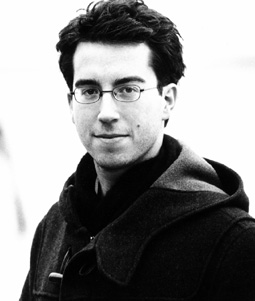
ScreenHunter_14 Dec. 15 16.04“I am sitting you next to Secretary Clinton at dinner. Say exactly what you think. If you don't, I never – ever – want to hear you criticise the policy again.” So said Richard Holbrooke, the US Special Representative to the Af-Pak region, barely a week after assuming his new position under the Obama administration. He was talking to Rory Stewart, and Stewart told the anecdote on the Huffington Post after Holbrooke's sudden death in 2010.

Holbrooke, Stewart remembered, praised his acumen regarding Afghanistan, and listened to him, even though Stewart disapproved of the emerging policy of General Petraeus. To Holbrooke, Stewart was the expert who dared disagree, but whose disagreement still needed to be heard in the halls of power.

Stewart is widely considered an expert on Afghanistan. Currently a Member of Parliament in Britain, he sits on the influential Foreign Affairs Select Committee. Previously, he was the Ryan Family Professor of the Practice of Human Rights at the Harvard Kennedy School. Before that, in 2003-04, he worked in southern Iraq with the American administration. And prior to that, in 2002, he walked 6,000 miles – partly across Afghanistan. This last bit, his walk in Afghanistan, became the fulcrum of his 2004 book, The Places in Between, which was a bestseller in the UK and the USA. The website for his book declared that he survived his walk because of “his knowledge of Persian dialects and Muslim customs” and a grounded knowledge of the entire region.

More here.

The Return of the Gods

Tumblr_lvp8c1j14F1qhwx0oArne de Boever on Hubert Dreyfus and Sean Dorrance Kelly’s polytheistic philosophy over at The LA Review of Books:

Last August, I traveled to France to participate in a reenactment of Plato’s banquet at the house of Bernard Stiegler, the French philosopher of technology. The reenactment was part of a school of philosophy that Stiegler started in the fall of 2010 and that is continuing this academic year. The school involves not just doctoral students but also high school students and people living in Stiegler’s hometown: the mayor and his wife, a photographer, an art dealer, a philosopher-turned-architect, and so on. For the banquet, they were joined by local and international visitors (academics, a community activist, a high-school physics teacher, a video artist, a software engineer).

Although there was no general theme for the banquet, many of the presentations and discussions revolved around the notion of pharmacology. Taking our cue from Jacques Derrida’s brilliant text “Plato’s Pharmacy,” which lays bare the ambiguities of the word “pharmakon” in Plato’s dialogues — it means, among other things, both “cure” and “poison” — the group reflected for four days on the “pharmacological” conditions of modern existence: the ways in which technology, for example, has both remedial and empoisoning effects (it enables you to read this article online, but it might also distract you to go update your status on Facebook, and miss out on the good stuff that is to come). Hence, the pharmakon requires a therapeutics, that is, some practice of care. Philosophy, those at the banquet believed, can participate in defining such a therapeutics, can actually be therapeutic; it can help one live a meaningful life in a time of disorientation.

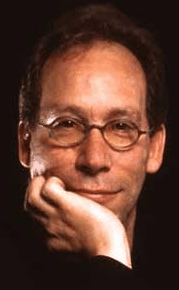
I thought of that banquet as I read All Things Shining, Hubert Dreyfus and Sean Dorrance Kelly’s new book on how to “find meaning in a secular age.” For Dreyfus and Kelly, professors of philosophy at UC Berkeley and at Harvard, respectively, philosophy provides orientation in a time characterized by all manner of crises, emergencies, and exceptions. All Things Shining echoes both authors’ work in existentialism and phenomenology. Following the position that Dreyfus takes up in his work on artificial intelligence (for example, in Dreyfus’s What Computers Can’t Do: The Limits of Artificial Intelligence), Dreyfus and Kelly argue that technology is an important contributor to the contemporary state of disorientation, because it has attacked and replaced the craftsmanlike skills that allow things to shine (more on this enigmatic formulation in a moment). Although it “improves our lives by making hard things easier,” the authors note that “the improvements of technology are impoverishments as well,” and thus enter into the logic of the pharmakon. In such a condition, only philosophy can help one navigate the treacherous, shifting border between poison and cure.

A Year In Reading

0679722432.01.MZZZZZZZOver at The Millions, several writers comment on their year in reading. Here's Siddhartha Deb's:

It was perhaps not the best book I read this year, but it came with the kind of extraneous charge few other works could match. The book was The Decay of the Angel by Yukio Mishima, the final novel in his Sea of Fertility tetralogy, completed just before Mishima launched a coup against the Japanese government.

I read the opening novel in the tetralogy, Spring Snow, four years ago, on a flight out from Japan. Since then, I’ve finished one book in the series each summer. Even as I’ve found myself in very different places, and sometimes in extremely different states of mind, I’ve followed Mishima’s brilliant and demented account of how modern Japan fell apart and was never quite put together again.

The story is told through the relationship between two characters, one of whom gets older in each novel while the other dies and is reincarnated, serving as an exemplar of the particular kind of transformation Japan is going through at the moment. Mishima was a right-wing nationalist, so I read him from a rather oppositional political stance. Yet he moves me with his obsessions: modernity, the west, materialism, sexuality, martial traditions, spirituality, love, the body, and the east, and I can’t help being touched when one of his principal characters travels to Calcutta and Benares in India.

This summer, as I read The Decay of the Angel, I became ever more conscious of the compositional history of the novel.

The Pope’s Life of Jesus

TLSWright_231257k

Jesus of Nazareth remains a disturbing presence, a question mark hanging over uneasy Western world-views. Some invoke him unquestioningly as the divine, redeeming Son of God. Others dismiss him as a minor figure whose followers invented stories about him and a religion around him. No serious historian doubts his existence, though some (noted and refuted by Maurice Casey in his trenchant introductory survey) still try. What we have, rather, in general and in the writings surveyed here, is a bewildering range of viewpoints, which with only a slight stretch could be described as pre-modern, modern and postmodern: in this case, a German, an Englishman and a North American. As Barack Obama said of a different trio (recent guest speakers in Westminster Hall), this is either a very high bar or the beginning of a very funny joke. Curiously, the Pope features in both trios. As his visit to Britain last year confirmed, Benedict XVI is by no means the hard-nosed dogmatic disciplinarian many had assumed. Deeply orthodox, of course. But he makes it clear in the preface to the first volume of Jesus of Nazareth (reviewed in the TLS, January 25, 2008) that he is not writing ex cathedra but contributing to discussion and devotion. Everyone is free to disagree with him. His project also reflects unflagging energy. For a man in his eighties to write a serious multi-volume work on Jesus (he promises a third instalment, on the infancy narratives) is remarkable enough. When the author happens to be the chief pastor of over a billion Catholics, it is truly extraordinary.

more from Tom Wright at the TLS here.

Thursday Poem

Tully Lake

The cry of the grey heron on the wind
the scream of the wild goose
over the crannog in the lake

the summer rain falling slowly
on Taoiseach Mc Kenna
mourning his brídeach sí and children
gone forever beneath the foam
into the lake of broken promises

All he has left now
is the whistle of the moor plover
the bleat of the jacksnipe
the scream of the wild goose
and the blubbing of the moorhen
a cormorant wheeling above him
as he empties his head of tears
in his lonely castle on the edge of the lake

by Caitríona Ní Chléirchín
translation by author

Poet's Note: crannog = an ancient Scottish or Irish fortified dwelling constructed in a lake or marsh; brídeach sí = fairy bride

This poem is based on the folklore story about the fairy bride in my native area Emyvale in County Monaghan. The Mc Kenna and Mac Mahon taoiseachs (chieftans) were in power in the local area under the leadership of the O’Neills in Tyrone, but they lost their lands and were slaughtered at the end of the sixteenth century.

The Mc Kenna Taoiseach met his fairy bride at the edge of Tully Lake according to the legend but when he broke his promises to her (never to make love to another woman, not to come home without firewood, and not to call the children out of their names), she went back into the lake with his children and was never seen again. After this he lost all his lands and eventually his life.

george whitman (1913 – 2011)

Tumblr_lw87hpmcTq1qkd1k5o1_400

George Whitman, the owner of Shakespeare and Company, a bookshop that became the center of English-language literary life in Paris and might be the most famous and beloved bookstore in the world, died Dec. 14 in his apartment above the store. He died two days after his 98th birthday. According to the store’s Web site, he had had a stroke two months ago. Mr. Whitman was an American expatriate who found his way to Paris after World War II and never left. He opened the bookstore, directly opposite Notre Dame cathedral, in 1951. In time, Mr. Whitman’s jumbled shop, with its sloping shelves and teetering stacks of books, became something of a cathedral in its own right and a required stop for Americans in Paris. For decades, Mr. Whitman presided over the store with a benign if somewhat mercurial presence, holding poetry readings and providing free room and board to thousands of would-be Hemingways. It has been featured in books, documentaries and the recent Woody Allen film “Midnight in Paris.”

more from Matt Schudel at the Washington Post here.

The Attack on “All-American Muslim”

From The New Yorker:

All-american-muslimDearborn, Michigan, is the city in America with the highest proportion of Muslims. That is not a new development. Immigrants from the Middle East began arriving in the area generations ago, when jobs building cars were still a lure—which should give a sense of the community’s vintage. Some still work in the auto industry, including Angela Jaafar, who is a marketer, and is married to Mike, a deputy chief in the sheriff’s office. The Jaafars and their children form one of five Dearborn families featured on “All-American Muslim,” a reality show, on TLC, created by some of the same team behind “Real Housewives of New York.” The show has become the target of an ugly campaign by a group called the Florida Family Association, which calls it “propaganda that riskily hides the Islamic agenda’s clear and present danger to American liberties and traditional values.” That someone, somewhere, would yell at the television when presented with images of Arab-Americans getting married or ready for school or running a football practice is sad, but might not be surprising. What is more remarkable, and even alarming, is that the group’s campaign persuaded Lowe’s, the home-improvement chain, to pull its advertising from “All-American Muslim.”

More here.

Visotsky, thank you for my life!

20111217_BKP501

“IF YOU want to understand Russia, you must listen to Vladimir Visotsky,” my Moscow friends told me. That was in 1980 as I began a Russian course at university. Visotsky, a poet and songwriter with a deep, hoarse voice, has often been called the “Bob Dylan of the Soviet Union”. As an East Berliner I soon began to see that the idealised image of “our great and glorious communist brothers” did not quite match real life in Moscow. Just as at home brave people such as artists, who dared to criticise the society around them, were monitored and often arrested by the Stasi, so they were here by the KGB. Whenever I visited my Moscow friends Eleg and Elita they played Visotzky songs and explained his lyrics to me. Of course they had the few records released by the state label “Melodia”. But most of the songs they played were secret recordings from live concerts which came on bootleg cassettes. I remember relatively opulent dinners at their flat, with lots of vodka, sovietskoje shampanskoje and endless discussions about bureaucracy, corruption, anti-Semitism, alcoholism, crime and the daily tribulations of Soviet life—subjects that Visotzky addressed in his songs. As Red Army veterans who had fought for a better world, Eleg and his brother-in-law Viktor (who shared the modest flat along with his wife) were clearly embarrassed by the status quo. I never saw Visotzky in the flesh. A month before I came to Moscow the man who was loved and worshipped as a voice of the people—and hated by the authorities for the same reason—died of a heart attack, aged 42.

more from Prospero at The Economist here.

The Midday Ride of Paul Revere

From Smithsonian:

Paul-Revere-Portsmouth-New-Hampshire-631Colonial Boston’s secret patriot network crackled with the news. Regiments of British troops were on the move, bound for points north to secure military supplies from the rebels. Paul Revere mounted his horse and began a feverish gallop to warn the colonists that the British were coming. Except this ride preceded Revere’s famous “midnight ride” by more than four months. On December 13, 1774, the Boston silversmith made a midday gallop north to Portsmouth in the province of New Hampshire, and some people—especially Granite Staters—consider that, and not his trip west to Lexington on April 18, 1775, as the true starting point of the war for independence.

With talk of revolution swirling around Boston in the final days of 1774, Revere’s patriot underground learned that King George III had issued a proclamation that prohibited the export of arms or ammunition to America and ordered colonial authorities to secure the Crown’s weaponry. One particularly vulnerable location was Fort William and Mary, a derelict garrison at the mouth of Portsmouth Harbor with a large supply of munitions guarded by a mere six soldiers. When Boston’s Committee of Correspondence, a local group of citizens opposed to British rule, received intelligence that British General Thomas Gage had secretly dispatched two regiments by sea to secure the New Hampshire fort—a report that was actually erroneous—they sent Revere to alert their counterparts in New Hampshire’s provincial capital. Just six days after the birth of his son Joshua, Revere embarked on a treacherous wintry journey over 55 miles of frozen, rutted roads. A frigid west wind stung his cheeks, and both rider and steed endured a constant pounding on the unforgiving roadway.

More here.

Wednesday, December 14, 2011

Glenn Greenwald: How the Law Is Used to Destroy Equality and Protect the Powerful

From Guernica:

Recognizing the nerd in all of us, Guernica brings you Conversations with History, a video series of interviews with distinguished intellectuals conducted by creator and executive producer Harry Kreisler and produced by the Institute of International Studies at the University of California at Berkeley.

In this week’s episode, Kreisler welcomes author/blogger Glenn Greenwald for a discussion of his new book, With Liberty and Justice for Some. Highlighting the degree to which the legal system frees the powerful from accountability while harshly treating the powerless, Greenwald describes the origins of the current system, its repudiation of American ideals, and the mechanisms that sustain it. He then analyzes the media’s abdication of its role as watchdog. He concludes with a survey of the the record of the Obama administration in fulfilling its mandate, argues for an alternative politics, and offers advice for students as they prepare for the future.

Patabiographical

Article00

Some years ago, while I was interviewing a cordial octogenarian for my biography of André Breton—often called, to his disgust, the “Pope of Surrealism”—my interviewee suddenly leaned across the table and threatened to give me “a sound thrashing” if I used the abhorred word pope in my book. I did include the term, of course, but not without trepidation—a fear that had little to do with the outrage of vengeful codgers and everything to do with disappointing those whose trust I’d spent years courting. It’s a quandary for any biographer, particularly when writing about a figure who still inflames the passions of a fervent cult: Does one respect the insider’s code and eschew those aspects of the subject deemed vulgar, indiscreet, or commonplace? Or does one acknowledge that, for the general reader, such inconvenient or well-rehearsed truths are an integral part of the story? In some ways, Alfred Jarry is the poster boy for literary cult figures. Like fellow turn-of-the-century French eccentrics Arthur Cravan, Raymond Roussel, and Jacques Vaché—though more famous than any of them—Jarry has left a legacy based partly on an enigmatic, often hermetic body of writing, and partly on an equally enigmatic, and more flamboyant, garland of anecdotes. Figures as diverse as Apollinaire, Picasso (with whom Jarry might have had a dalliance), the Surrealists, Italo Calvino, Philip K. Dick, J. G. Ballard, and even Sir Paul of Liverpool have acknowledged his influence—one that owed as much to Jarry’s nonconformist attitude as it did to his writing.

more from Mark Polizzotti at Bookforum here.

the zone

Vassileva-01-thumbnail

The pictures on the wall of the library at the Slavutych elementary school are vivid and richly colored—and startlingly postapocalyptic. A mournful ghost appears in front of an ashen city. The fins of a beautiful goldfish reach out and lightly touch the chimneys of a nuclear plant. An atom, its orbits laid out like petals, is on fire, and trees and buildings emerge from the flames. In the back of the room, three large posters repeat the same story, but the colors are bland, the plain charts and graphs government-sanctioned, and the blocks of text fail to capture the magical moment that the children have grasped intuitively. There was a disaster. A city was lost, another built in its stead. It’s a horrific story—and any seven-year-old here could tell it to you. This is how the day begins for first graders. They change their shoes, they exercise for five minutes, waddling like ducks around the room, and then they open their books for today’s lesson. A brief history refresher. What is the name of the country you live in? Ukraine. What are the colors of its flag? Blue like the sea and the sky, and a golden yellow like the sun and the wheat in the fields. What is the name of the capital? The beautiful city of Kiev. What city do you live in? Slavutych. When was it built? In 1988. Why? Because there was a nuclear explosion. The teacher nods after each answer.

more from Maria P. Vassileva at VQR here.

zweig

Seymour_12_11

Among the treasures in the British Library, one of the most unexpected is a collection of autographed manuscript scores that includes Mozart’s thematic catalogue of his own works. Donated in 1986, these formed part of the incredible hoard accumulated by Stefan Zweig throughout his life. The collecting habit began early. By the age of fifteen, Zweig, the indulged second son of a wealthy family of Viennese industrialists, had decided to become a writer. Praised by Hermann Hesse for his first collection of stories, Zweig decided to broaden his literary connections by inviting the celebrated writers of the day to correspond with him. His success rate increased after he took the kindly advice of one great author and began enclosing return postage; several agreed, not only to sign letters, but to sell their manuscripts to an enterprising youth who, by the age of twenty, was leading the life of a sixty-year-old, nestled among a gathering of framed photos, poems and autographs that included – his greatest jewel – a handwritten Goethe poem.

more from Miranda Seymour at Literary Review here.

Standing Tall to Beat the Heat?

From Science:

TallStand upright, cool off. That's long been touted as one of the benefits of our ancestors becoming bipedal in a hot and sunny world. But now researchers have poured cold water on the idea. A team examined how our ancient relatives, who were most likely covered with a thick pelt of hair, would fare while walking briskly in a sizzling place like the African savanna. The body dimensions used in the model—30 kg for females, 55 kg for males—were based on a group of early human ancestors, or hominins, such as Australopithicus afarensis, the species that includes the famous Kenyan fossil “Lucy.” The models showed that a 30-minute trek put hairy hominins at risk of heat stroke whether they were four-legged or erect , according paper published online today in the Proceedings of the National Academy of Sciences. Earlier models supporting the connection between bipedalism and heat loss examined ancient humans standing still in the sun, which the new paper's authors argue is less realistic.

Tantalizing Hints of Elusive Higgs Particle Announced

From Scientific American:

HiggsThe two largest collaborations of physicists in history Tuesday presented intriguing but tentative clues to the existence of the Higgs boson, the elementary particle thought to endow ordinary matter with mass. Representing the 6,000 physicists who work on two separate detectors at the Large Hadron Collider (LHC), called CMS and ATLAS, two spokespersons said that both experiments seemed to agree, as both their data sets suggested that the Higgs has a mass close to that of about 125 hydrogen atoms. The LHC is an international facility hosted by CERN, the European particle physics laboratory outside Geneva. “We are talking of intriguing, tantalizing hints,” said CMS spokesperson Guido Tonelli, speaking to a room filled with dozens of journalists and TV crews. “It's not evidence.”

The experiments, in which protons traveling at nearly the speed of light collide head-on, cannot directly detect the Higgs, because the boson would decay within a fraction of a nanosecond into other particles. Instead, physicists must search through the debris of many different types of particle decay to find precise combinations of by-products that the Higgs would produce—and different particles may well have the same signatures. A particular combination that appears more often than expected from other, “background” processes may signal the presence of the Higgs. But if it does not appear often enough compared with the expected background, it could just be a statistical fluctuation. Today, neither CMS nor ATLAS could claim to have the “3-sigma” statistical significance needed to claim evidence for a new particle—let alone 5 sigma for the accepted standard to claim a discovery. (A 3-sigma result implies a fraction of a 1 percent chance of a statistical fluke.) Instead, so far each experiment could only claim an event around 2 sigma.

More here.

The Moving Tide of Abundance: On Petersburg by Andrei Bely

BelyMalcolm Forbes in The Quarterly Conversation:

In a chapter of his memoir, Speak, Memory, Nabokov tells of his nocturnal wanderings through St Petersburg. Real darkness and artificial light conspire to make foreign his surroundings. “Solitary street lamps were metamorphosed into sea creatures with prismatic spines”; “various architectural phantoms arose with silent suddenness”; “great, monolithic pillars of polished granite (polished by slaves, repolished by the moon, and rotating smoothly in the polished vacuum of the night) zoomed above us.” The whole scale is recalibrated, all perspective redrawn, but the young Nabokov laps it up, feeling “a cold thrill” and “Lilliputian awe” as he stops to contemplate “new colossal visions” rising up before him. He is thrown by these hall-of-mirrors distortions but not entirely surprised to be so—after all, he is in “the world’s most gaunt and enigmatic city.”

This was 1915 and Nabokov was not the only writer to consider the city enigmatic. One year later, Andrei Bely’s Petersburg was published, a novel which possesses stranger, more fantastic distortions. The characters in Bely’s book are too flummoxed by the city and intoxicated by its swirling yellow mists to share Nabokov’s thrill. Their dazedness hardens into fear, and the reader is thrilled (and admittedly flummoxed, too) by the fecundity of surrealness on show and the sheer exceptionality of such a book coming from such a country at such a time. Nabokov himself approved, declaring Petersburg one of the greatest novels of the 20th-century.

Andrei Bely was born in Moscow in 1880 as Boris Nikolayevich Bugayev. He studied mathematics at Moscow University but realized his real interest lay in writing essays and poems. His work began to appear in print in 1902, poetry collections and prose “symphonies” that belonged to the burgeoning Symbolist tradition. Russian Symbolism, modeled on its French equivalent, sought to amalgamate literary genres, and its practitioners successfully fused poetry and prose into poetic prose. Despite their radical innovations, or precisely because of them, the Symbolists were considered scandalous by purists still grounded in 19th-century realism, forcing Boris Bugayev to become Andrei Bely to spare his distinguished father’s blushes. He left Russia in 1906 as the political situation worsened, settling in Munich. When he returned to his homeland he was reinvigorated and ready to utilise his pent-up reserves of literary energy. He started tentatively, his first novel, The Silver Dove (1909), being a conventional tale about a town’s religious sect and an outsider’s reaction to it. Believing the novel to be unfinished he set about writing a sequel, but during its composition it acquired new characters, a more complex plot, and grew into a thoroughly original work of art. The result was Petersburg.

Eels Über Alles: On Julio Cortázar

From-the-observatory-cortazarBen Ehrenreich in The Nation:

One evening, perhaps a decade ago, I was walking along Canal Street in Manhattan’s Chinatown when a fishmonger, rushing out of his shop carrying a tank full of eels, slipped. Before he could let out a curse, there were eels and elvers everywhere: dark and gleaming, slithering over pedestrians’ feet, wriggling off onto the asphalt, escaping through the storm drains, animating every crack in the concrete. For a minute, maybe two, the tight weave of reality tore open and boiled about our ankles.

Julio Cortázar would have been delighted. In the forty years he spent writing novels, short stories and works not so easily categorized, Cortázar reveled in the unexpected lurking within the everyday: not beneath its surface but spread right there on the skin of things. Again and again, he turned Alfred Jarry’s pataphysical principle—that each event in the universe be accepted as exceptional—into a literary mandate. A wristwatch could be “a tiny flowering hell, a wreath of roses, a dungeon of air” and still tell time. A short story could take the shape of an instruction manual for the most routine of tasks (crying, singing, winding said dungeon, killing ants in Rome), or a compendium of tales about fantastical but oddly familiar species. A novel didn’t have to progress from the first page to the last, hung on a rigid skeleton of plot: it could proceed in oblong leaps and great steps backward, like a game, say, of hopscotch. “Literature is a form of play,” said Cortázar. But playing, as he knew and as every child knows, can be the most serious thing in the world. So Cortázar was thorough: no expectation was so fundamental that it could not be toyed and tinkered with. All the built-in cabinetry of prose fiction—setting, character, point of view—could be rendered fluid. Eels could squirm through everything.

As might be expected, he made little attempt to resolve the contradictions that marked his life and work. Cortázar was a Latin American in Paris—and more of one there, he insisted, than he would have been had he continued living in Buenos Aires, which he had left in 1951 at age 37. He was a socialist with no patience for the stiff pieties of a “literature for the masses,” a devotee of the European avant-garde who remained faithful to Fidel Castro long after Cuba’s revolution had ceased to be fashionable. It is perhaps because he so stubbornly resists categorization, as much as for the ludic complexity of his work, that Cortázar is in these parts more admired than he is read.

The Neuroeconomics Revolution

Jk6_thumb3Robert J. Shiller in Project Syndicate:

Economics is at the start of a revolution that is traceable to an unexpected source: medical schools and their research facilities. Neuroscience – the science of how the brain, that physical organ inside one’s head, really works – is beginning to change the way we think about how people make decisions. These findings will inevitably change the way we think about how economies function. In short, we are at the dawn of “neuroeconomics.”

Efforts to link neuroscience to economics have occurred mostly in just the last few years, and the growth of neuroeconomics is still in its early stages. But its nascence follows a pattern: revolutions in science tend to come from completely unexpected places. A field of science can turn barren if no fundamentally new approaches to research are on the horizon. Scholars can become so trapped in their methods – in the language and assumptions of the accepted approach to their discipline – that their research becomes repetitive or trivial.

Then something exciting comes along from someone who was never involved with these methods – some new idea that attracts young scholars and a few iconoclastic old scholars, who are willing to learn a different science and its different research methods. At a certain moment in this process, a scientific revolution is born.

The neuroeconomic revolution has passed some key milestones quite recently, notably the publication last year of neuroscientist Paul Glimcher’s book Foundations of Neuroeconomic Analysis – a pointed variation on the title of Paul Samuelson’s 1947 classic work, Foundations of Economic Analysis, which helped to launch an earlier revolution in economic theory. And Glimcher himself now holds an appointment at New York University’s economics department (he also works at NYU’s Center for Neural Science).

Wednesday Poem

Same Sun Same Moon Same River
.
It is easy to imagine Heraclitus
walking stone streets witnessing
life in Athens with no permanence,
stopping strangers to explain about the river,
being laughed at as they moved
from point A to point B fearing Apollo
and Hades then at dusk drinking wine,
waiting for the happy obliteration alcohol brings,
not realizing how lucky they were
to be stupid and so deep
in their bodies even the sun
and moon trading places over and over
meant nothing.
.
by Neil Carpathios
from Poetry Magazine
July 1996

Tuesday, December 13, 2011

The Book of Jobs

Forget monetary policy. Re-examining the cause of the Great Depression—the revolution in agriculture that threw millions out of work—the author argues that the U.S. is now facing and must manage a similar shift in the “real” economy, from industry to service, or risk a tragic replay of 80 years ago.

Joseph E. Stiglitz in Vanity Fair:

ScreenHunter_12 Dec. 14 12.03It has now been almost five years since the bursting of the housing bubble, and four years since the onset of the recession. There are 6.6 million fewer jobs in the United States than there were four years ago. Some 23 million Americans who would like to work full-time cannot get a job. Almost half of those who are unemployed have been unemployed long-term. Wages are falling—the real income of a typical American household is now below the level it was in 1997.

We knew the crisis was serious back in 2008. And we thought we knew who the “bad guys” were—the nation’s big banks, which through cynical lending and reckless gambling had brought the U.S. to the brink of ruin. The Bush and Obama administrations justified a bailout on the grounds that only if the banks were handed money without limit—and without conditions—could the economy recover. We did this not because we loved the banks but because (we were told) we couldn’t do without the lending that they made possible.

More here. [Thanks to Donna Hughs.]