Scholars of Sodom

Argentina_jpg_470x429_q85Roberto Bolaño in the NYRB's blog:

Many years ago, before V.S. Naipaul—a writer whom I hold in high regard, by the way—won the Nobel Prize, I tried to write a story about him, with the title “Scholars of Sodom.” The story began in Buenos Aires, where Naipaul had gone to write the long article on Eva Perón that was later included in a book published in Spain by Seix Barral in 1983. In the story, Naipaul arrived in Buenos Aires, I think it was his second visit to the city, and took a cab—and that’s where I got stuck, which doesn’t say much for my powers of imagination. I had some other scenes in mind that I didn’t get around to writing. Mainly meetings and visits. Naipaul at newspaper offices. Naipaul at the home of a writer and political activist. Naipaul at the home of an upper-class literary lady. Naipaul making phone calls, returning to his hotel late at night, staying up and diligently making notes. Naipaul observing people. Sitting at a table in a famous café trying not to miss a single word. Naipaul visiting Borges. Naipaul returning to England and going through his notes. A brief but engaging account of the following series of events: the election of Perón’s candidate, Perón’s return, the election of Péron, the first symptoms of conflict within the Peronist camp, the right-wing armed groups, the Montoneros, the death of Perón, his widow’s presidency, the indescribable López Rega, the army’s position, violence flaring up again between right- and left-wing Peronists, the coup, the dirty war, the killings. But I might be getting all mixed up. Maybe Naipaul’s article stopped before the coup; it probably came out before it was known how many had disappeared, before the scale of the atrocities was confirmed. In my story, Naipaul simply walked through the streets of Buenos Aires and somehow had a presentiment of the hell that would soon engulf the city. In that respect his article was prophetic, a modest, minor prophecy, nothing to match Sábato’s Abbadon the Exterminator, but with a modicum of good will it could be seen as a member of the same family, a family of nihilist works paralyzed by horror. When I say “paralyzed,” I mean it literally, not as a criticism. I’m thinking of the way some small boys freeze when suddenly confronted by an unforeseen horror, unable even to shut their eyes. I’m thinking of the way some girls have been known to die from a heart attack before the rapist has finished with them. Some literary artists are like those boys and girls. And that’s how Naipaul was in my story, in spite of himself. He kept his eyes open and maintained his customary lucidity. He had what the Spanish call bad milk, a kind of spleen that immunized him against appeals to vulgar sentimentality. But in his nights of wandering around Buenos Aires, he, or his antennae, also picked up the static of hell. The problem was that he didn’t know how to extract the messages from that noise, a predicament that certain writers, certain literary artists, find particularly unsettling.

Naipaul’s vision of Argentina could hardly have been less flattering. As the days went by, he came to find not only the city but the country as a whole insufferably aggravating. His uneasy feeling about the place seemed to be intensified by every visit, every new acquaintance he made. If I remember rightly, in my story Naipaul had arranged to meet Bioy Casares at a tennis club. Bioy didn’t play any more, but he still went there to drink vermouth and chat with his friends and sit in the sun. The writer and his friends at the tennis club struck Naipaul as monuments to feeblemindedness, living illustrations of how a whole country could sink into imbecility. His meetings with journalists and politicians and union leaders left him with the same impression. After those exhausting days, Naipaul dreamed of Buenos Aires and the pampas, of Argentina as a whole, and his dreams invariably turned into nightmares. Argentineans are not especially popular in the rest of Latin America, but I can assure you that no Latin American has written a critique as devastating as Naipaul’s. Not even a Chilean.


Thursday Poem

Numbers

I like the generosity of numbers.
The way, for example,
they are willing to count
anything or anyone:
two pickles, one door to the room,
eight dancers dressed as swans.

I like the domesticity of addition–
add two cups of milk and stir
the sense of plenty: six plums
on the ground, three more
falling from the tree.

And multiplication's school
of fish times fish,
whose silver bodies breed
beneath the shadow
of a boat.

Even subtraction is never loss,
just addition somewhere else:
five sparrows take away two,
the two in someone else's
garden now.

There's an amplitude to long division,
as it opens Chinese take-out
box by paper box,
inside every folded cookie
a new fortune.

And I never fail to be surprised
by the gift of an odd remainder,
footloose at the end:
forty-seven divided by eleven equals four,
with three remaining.

Three boys beyond their mothers' call,
two Italians off to the sea,
one sock that isn't anywhere you look.

by Mary Cornish
from Poetry magazine
Volume CLXXVI, Number 3, June 2000

against the background imperative of seriousness

Sontag_040312_620px

Rather, it is precisely her reverent—or, more precisely, her acquisitive—attitude toward seriousness that makes her essays so solemnly, ostentatiously intelligent. “I make an ‘idol’ of virtue, goodness, sanctity. I corrupt what goodness I have by lusting after it,” she writes in 1970. The same could be said of her worship of seriousness: A person who is instinctively sure that she is serious does not spend so much time proving it. Irony and wit, qualities signally absent from Sontag’s work, are only possible when seriousness is the premise of one’s self-conception, rather than the result that must be achieved. This explains why so much of what has been written about Sontag after her death paints her as a rather ludicrous figure. In Terry Castle’s barbed elegy “Desperately Seeking Susan,” or in Sigrid Nunez’s short book Sempre Susan, Sontag often comes across as hugely self-centered and inadvertently comic—and the best way to be inadvertently comic is to always insist on being, and looking, serious. If Sontag’s inner life, as revealed in the diaries, is a moving drama, to other people she evidently seemed more like Dr. Johnson—a figure of massive egotism and unconscious eccentricity. It’s too bad that she had no Boswell following her around day after day to put her fully on paper; but even if she had, an outsider could have known only part of the truth about her. The more important parts are to be found in her essays, her novels, and—above all—in her diaries.

more from Adam Kirsch at Tablet here.

That purple piece of silk in the urn of Patroclus—could it mean something?

Rings-saturn

Winfried Georg Maximilian Sebald was already in his fiftieth year, and his third decade of residence in East Anglia, when he began to write of the walk he had taken two years before in the Suffolk country to dispel, he tells us, the strange emptiness which had come to fill him suddenly. Ironically enough, however, the walk soon became distressing as he took in, with ever-growing uneasiness, the traces of destruction reaching far back into the past that locked his gaze wherever he turned. Such was his horror upon return, he would have us believe, that, in due course, he had to be rushed to a hospital in a state of near paralysis. But once there, what the body had lost the mind gained, and before long it was soaring higher and higher with each tilt of the wings to view from above that Suffolk expanse, which, like the Borgesian Aleph, had now shrunk to a single spot, rightly so, devoid of all sensation. And yet, all the eye saw as the mind inscribed the words in its own cell was a colorless patch of sky framed in a window with a black mesh. In time, unable to hold his curiosity any longer, the writer went crawling like Gregor Samsa up to the window, from where peering down at the now utterly alien place, buildings and carparks rose up like fields of rubble or immense boulders to meet him.

more from Aashish Kaul at The Quarterly Conversation here.

Why do you look for the living among the dead?

TLSWILSON_258993h

Tom Wright, retired Bishop of Durham, now a professor of New Testament studies at St Andrews University, has written over fifty books, nearly all of them concerned with Jesus and most with the question of reconstructing the first-century Palestinian Judaism from which Christianity perhaps sprang. His latest book, with a title which in itself begs many questions, can be seen either as a devotional manual, or as a distillation of a lifetime’s scholarly work, or both. Readers are urgently encouraged to see the world as a first-century Jew would have seen it. Whether Wright succeeds in his task will depend, in part, on the reader’s tolerance of the hectoring tone. “I was trying to explain all this” – no less a matter than God’s overlordship of the world, which surely cannot be explained – “earlier this morning and back came the reply, ‘But I thought God was supposed to be in charge already, all the time?’ Ah, now we’re talking.” Chilling in its clumsiness is the metaphor Wright uses to define the post-Easter world: “Under new management”. Whereas the New Testament speaks of the Kingdom of God, or the Kingdom of Heaven, this author writes of “the vital part of the way in which Jesus operates right now, today, as part of his kingdom-project”.

more from A.N. Wilson at the TLS here.

Wednesday, April 4, 2012

In the Climate Casino: An Exchange

Nordhaus_exchange_1-042612_jpg_230x461_q85

Roger W. Cohen, William Happer, and Richard Lindzen respond to William D. Nordhaus's piece Why the Global Warming Skeptics Are Wrong, in the NYRB:

In the March 22, 2012, issue of The New York Review, William Nordhaus presents his opinion on why global warming skeptics in general, and the sixteen scientists and engineers who wrote two Wall Street Journal Op Eds1 in particular, are “wrong.” We are three of those sixteen authors, and we respond here to Professor Nordhaus.

Professor Nordhaus’s essay contains six points.

The first point contorts the obvious fact that there has been no statistically significant warming for about the past fifteen years into a claim that we did not make: that there has been no warming over the past two centuries. Professor Nordhaus proceeds to confuse this with the issue of attribution, i.e., the determination of what caused the warming. Attribution is a distinctly different matter. While there is much to contest in the published temperature records, there is general acceptance that there has been a net increase in global mean temperature similar to that shown in Professor Nordhaus’s first graph.

The prior two- to three-hundred-year period was much cooler and is known as the Little Ice Age, and, of course, a longer record would have shown still-earlier periods as warm or warmer than the present. The observation that the last few years include some of the warmest years on record no more implies future warming than record stock market highs imply a steadily rising future market. The fact that warming has greatly slowed does imply that, at the least, there are other processes that are currently competitive with the impact of steadily increasing greenhouse gases.

William Nordhaus replies:

In reading the letter from Roger Cohen, William Happer, and Richard Lindzen (CHL), I have the sense of walking into a barroom brawl. They defend the article by sixteen scientists in The Wall Street Journal by firing a fusillade of complaints at everyone in sight, including Science editor Donald Kennedy, climate scientists with hacked e-mails, columnist Paul Krugman, biologist Paul Ehrlich, activist Robert Kennedy Jr., economist Nicholas Stern, and even former Vice President Al Gore.

However, when all the shooting has stopped and you look up from behind the table, what you see can be summarized in one central point. They argue that global warming is full of uncertainties, but its dangers are being systematically exaggerated by climate scientists. I will review the key issues in this response.

How Carbon Dioxide Melted the World

1.10393Sonja van Renssen in Nature News:

Rising levels of carbon dioxide really did bring about the end of the most recent ice age, say researchers. By compiling a global climate record, a team has shown that regions in which concentrations of greenhouse gases increased after the warming were exceptions to the big picture.

There are many ideas about what caused the end of the last ice age 10,000 years ago, but a lack of data has hindered testing of hypotheses. It has been known that changes in temperature and CO2 levels were closely correlated during this time, but no one has been able to prove that CO2 caused the warming.

Ice samples from Antarctica even suggested that temperatures rose a few centuries before CO2 levels, making it impossible for the gas to have been responsible. This provided ammunition for climate sceptics.

But, by analysing data gathered from 80 locations around the world, Jeremy Shakun, a palaeoclimatologist at Harvard University in Cambridge, Massachusetts, and his colleagues have shown that at the global level, warming followed CO2 increases. The team used seven different records of past temperature, including ice cores, ancient pollen and the chemical composition of fossilized microscopic life.

“This is the first effort to get most of the data that’s out there together,” says Shakun. “It's the first hard empirical proof that CO2 was a big driver of global warming out of the ice age.”

Slacker at Twenty

SlackerAaron Lake Smith in n+1:

New York City is the great circling bathtub drain that young people from the college towns and mid-sized cities of North America disappear into, unable to resist the siren song of their own cosmopolitan ambitions. The drainage of souls from second- and third-tier cities like Cleveland, Columbus, and Houston culturally balkanizes the nation—the family-oriented and content stay at home, breeding more of the same, while the driven and career-minded pack off to New York, Los Angeles, and San Francisco to join thousands of others like them in the endless cultural orgy.

The most effective propaganda for the young urban way of life is friends. Many of those who stay in hometowns inevitably end up consuming the lives of their New York and California friends on Flickr and Facebook—their all-night parties and hangover brunches, their real careers, their expansive dating pool, their avant-garde theatre and Upright Citizens Brigade, until they eventually decide to give in and make a considered move to the city to join the party. This cultural natural selection—the coasts thriving and the middle dying out—is quietly undermined by a fifth column of factions that resiliently stick around smaller, less glitzy places to build them up and make them better places to live. These cultural Maoists bunker down against the forces of gravity to start up community spaces, independent video and record stores, and bike shops, seemingly undaunted by the losing war they’re fighting against attrition.

In Richard Linklater’s 1991 portrait of Austin’s freak gentry Slacker, there is a piece of recurrent graffiti that reads, “If you don’t like NYC, don’t go.” This early lumpen premonition of the coming Friends-era migration seems to be a preoccupation for this filmmaker. After a short stint living in New York, Linklater moved back to his Texas hometown and made Slacker on a shoestring budget of loans and maxed-out credit cards. When the film met with success, Linklater refused to move to Hollywood—instead he took an unconventional route, bunkering down in Austin and buying a two-story warehouse for Detour, his fledgling film production company. Nurtured by Detour and the Austin Film Society nonprofit, Linklater in Austin built up a small-film cottage industry. Slacker, though often canonized as a portrait of 1990s youth culture, is at root a local film. It was shot and produced entirely in Austin with local non-actors and musicians like the Butthole Surfers’ drummer Teresa Taylor. The fictionalized, documentary-style film doesn’t have a plot or recurring characters—long, omniscient shots track from one set of Austin hipsters to the next—but it manages to succeed on its own terms. Now, Slacker feels like a terrarium—a little universe of the living ideas and archetypes of a bygone time, preserved behind glass.

Just One More Game …: Angry Birds, Farmville and Other Hyperaddictive ‘Stupid Games’

08games1-articleInline-v2Sam Anderson in the NYT Magazine:

In 1989, as communism was beginning to crumble across Eastern Europe, just a few months before protesters started pecking away at the Berlin Wall, the Japanese game-making giant Nintendo reached across the world to unleash upon America its own version of freedom. The new product was the Game Boy — a hand-held, battery-powered plastic slab that promised to set gamers loose, after all those decades of sweaty bondage, from the tyranny of rec rooms and pizza parlors and arcades.

The unit came bundled with a single cartridge: Tetris, a simple but addictive puzzle game whose goal was to rotate falling blocks — over and over and over and over and over and over and over — in order to build the most efficient possible walls. (Well, it was complicated. You were both building walls and not building walls; if you built them right, the walls disappeared, thereby ceasing to be walls.) This turned out to be a perfect symbiosis of game and platform. Tetris’s graphics were simple enough to work on the Game Boy’s small gray-scale screen; its motion was slow enough not to blur; its action was a repetitive, storyless puzzle that could be picked up, with no loss of potency, at any moment, in any situation. The pairing went on to sell more than 70 million copies, spreading the freedom of compulsive wall-building into every breakfast nook and bank line in the country.

And so a tradition was born: a tradition I am going to call (half descriptively, half out of revenge for all the hours I’ve lost to them) “stupid games.” In the nearly 30 years since Tetris’s invention — and especially over the last five, with the rise of smartphones — Tetris and its offspring (Angry Birds, Bejeweled, Fruit Ninja, etc.) have colonized our pockets and our brains and shifted the entire economic model of the video-game industry. Today we are living, for better and worse, in a world of stupid games.

Game-studies scholars (there are such things) like to point out that games tend to reflect the societies in which they are created and played. Monopoly, for instance, makes perfect sense as a product of the 1930s — it allowed anyone, in the middle of the Depression, to play at being a tycoon. Risk, released in the 1950s, is a stunningly literal expression of cold-war realpolitik. Twister is the translation, onto a game board, of the mid-1960s sexual revolution. One critic called it “sex in a box.”

Günter Grass Attacks Israel in New Poem

Image-335661-panoV9free-nywsIn Speigel online:

Günter Grass, Germany's most famous living author and the 1999 recipient of the Nobel Prize in Literature, sparked outrage in Germany on Wednesday with the publication of a poem, “What must be said,” in which he sharply criticizes Israel's policies on Iran.

“Why did I wait until now at this advanced age and with the last bit of ink to say: The nuclear power Israel is endangering a world peace that is already fragile?” Grass writes in the poem. The 84 year old also criticizes the planned delivery of submarines “from my country” to Israel, a reference to Germany's plan to deliver Dolphin-class submarines to Israel that are capable of carrying nuclear-armed missiles. At the same time, Grass also expresses his solidarity with Israel.

In the poem, published by Germany's Süddeutsche Zeitung newspaper and other European dailies on Wednesday, Grass also calls for an “unhindered and permanent monitoring of Israel's nuclear potential and Iran's nuclear facility through an international entity that the government of both countries would approve.” It is widely believed that Israel possesses nuclear weapons, although it has never been proven.

In response to the publication, the Israeli Embassy in Berlin issued a statement offering its own version of “What must be said.” “What must be said is that it is a European tradition to accuse the Jews before the Passover festival of ritual murder,” the statements reads. “Earlier, it was Christian children whose blood the Jews allegedly used to make their unleavened bread, but today it is the Iranian people that the Jewish state allegedly wants to annihilate. What also must be said is that Israel is the only state in the world whose right to exist is openly doubted. That was true on the day of its founding and it remains true today. We want to live in peace with our neighbors in the region. And we are not prepared to assume the role that Günter Grass is trying to assign to us as part of the German people's efforts to come to terms with the past.”

the dream is szold

Hadassah

A hundred years ago, on the Jewish holiday of Purim in 1912, a group of women founded the Hadassah Chapter of the Daughters of Zion at Temple Emanu-El in Manhattan. Soon thereafter, this group began its medical endeavors in Palestine by sending two nurses to Jerusalem, which at the time was still under Ottoman rule. Today, the heart of the Hadassah Medical Organization remains in Jerusalem, and it includes two hospitals and related institutions that employ more than 5,000 men and women. Moreover, last week the organization began celebrating its centennial by opening a new hospital tower, an immense building with state-of-art technology that solidifies the organization’s place as arguably the leading medical center in the Middle East. But as I learned recently, the story here is not merely one of professional success but of human achievement in adverse political conditions. At a time when peace in the Middle East seems more distant than ever—and the Palestinian and Israeli governments appear happy in their immobility—places in civil society such as Hadassah exemplify a flourishing coexistence among Jews and Arabs.

more from Eyal Chowers at Dissent here.

guileless belief disguised as cynicism

Hirstspot-690x406

No one commands higher prices than Damien Hirst, and nothing is more fashionable than to loathe him. Still, we can’t do without him. In his person and his work, Hirst embodies the current condition of the art market: aloof, reckless, profligate, creepy, fast, fat and out of control. He is to art what Dubai is to architecture and Michael Bay is to movies: the leading exponent of the current blockbuster style. No one else has been as good at giving material drama and visual form to the vast accumulations of wealth during the latest, rococo phase of capitalist accumulation. That makes him our canary in the mineshaft. Whether despicable or dumb, whatever he does is at least worth noticing. This month, an exhibition of Hirst’s spot paintings opened at every outpost of the Gagosian Gallery empire the world over. It’s a terrific marketing trick, as is almost everything Hirst does. Anyone who visits all eleven galleries (spread among eight cities) will get a free print—and, in spite of myself, I’ve been wondering if I could swing a trip to Athens and Hong Kong next month. As an art exhibit, though, “The Complete Spot Paintings” offers a strange mix of commercial megalomania and aesthetic tedium.

more from Jacob Mikanowski at The Point here.

putin’s dilemma

Vladimir-Putin-007

Making sense of Putin’s elections during the past decade is as important for getting his regime right as is making sense of the show trials in the 1930s for getting Stalin’s regime right. A major task of Stalin’s spin doctors seventy-five years ago was to use the trials’ pre-decided verdicts to showcase Stalin’s power – a demonstration that was all the more effective the more painfully innocent those were who, in a choreographed mise-en-scène, falsely confessed their betrayal of the Great Leader and were speedily executed for their compliance. Similarly, though much less cruelly, the show elections between 2000 and 2008 demonstrated the Putin government’s puppeteer power. The Kremlin not only manipulated those elections, it also insisted (contrary to what one might expect) that everyone be made vividly aware that it was directing the movements of every single player in the electoral charade and orchestrating every apparent crisis in the run-up to an election. The Kremlin did not play the czar, it played God. Until recently, the paradox of Putin’s Russia has been that elections, though blatantly unfree and unfair, have been at the very heart of both the regime’s popular appeal and its authoritarian credentials. Just as Stalin’s claim to power was based on his constant purging of the Party of never-ending internal enemies, Putin’s claim to power has been based on his ability to organize elections that, although obviously rigged, have excited almost no open protest.

more from Stephen Holmes and Ivan Krastev at Eurozine here.

Tuesday, April 3, 2012

Killing Babies

Km11Kenan Malik over at his site, originally in Goteborg-Posten:

Is there no moral distinction between killing a newborn baby and aborting a fetus? And should an academic paper that seemingly advocated the killing of newborns have ever been published?

Those are the questions at the heart of a controversy that has erupted after the publication of a paper entitled ‘After-birth abortion: Why should the baby live?’ in the Journal of Medical Ethics. Two Australian academics, Alberto Giubilini and Francesca Minerva, argued that the moral status of a newborn baby was identical to that of a fetus. Given that most people view abortion as morally acceptable so, they argued, there is no reason not to see infanticide as morally acceptable, too, even in ‘cases where the newborn has the potential to have an (at least) acceptable life, but the well-being of the family is at risk’. Indeed, Giubilini and Minerva reject the term ‘infanticide’, preferring to talk of ‘after-birth abortion’.

The paper, which would normally have been read only by a handful of moral philosophers, was picked by newspapers and websites and caused outrage worldwide. ‘Slaughter newborn kids, say academics’, read the headline in one British tabloid. Australian commentators, American chat show hosts and Catholic bishops weighed in, many claiming that infanticide was the logical consequence of the legalization of abortion. The two authors say that they have received death threats.

There is, in fact, little new in Giubilini and Minerva’s argument. Philosophers such as Peter Singer have long championed similar kinds of claims. Humans, Singer suggests, have no intrinsic claim to life. The interests of an individual, including their right to life, depend upon their cognitive abilities. ‘The fact that a being is a human being, in the sense of a member of the species Homo sapiens, is not relevant to the wrongness of killing it', he argues; 'it is, rather, characteristics like rationality, autonomy, and self-consciousness that make a difference. Infants lack these characteristics. Killing them, therefore, cannot be equated with killing normal human beings, or any other self-conscious beings.’

Since a newborn, unlike an adult, is incapable ‘of anticipating the future, of having wants and desires for the future’, Singer has written, so they do not suffer by being deprived of a life they could never have imagined anyway. ‘Killing a newborn baby is', in his view, 'never equivalent to killing a person, that is, a being who wants to go on living’.

A Local Approach to Continuing Higher-ed: Bar Room U

Intelpost120409_plato_560

Christopher Beha looks at a new approach to continuing higher education started by our friends over at The Brooklyn Institute for Social Research, in New York Magazine:

One recent Tuesday evening, nine twenty- and thirtysomethings gathered in the back room of Boerum Hill’s Building on Bond to discuss a crucial text for understanding our sociopolitical moment: Plato’s Republic. While a waitress brought dinner and $3 pints of Bud, their conversation meandered from the foundational treatise to related matters left unexplored by its author, like whether Ron Paul’s libertarianism is more deontological or consequentialist. (The consensus: probably deontological at heart, though voters demand consequentialist arguments.) Two hours in, the crowd migrated up to the bar, where the discussion continued in the same vein. They were still drinking and talking when the bartender announced last call.

What transpired that night just may represent the future of higher education—or at least one proudly low-tech vision of it. Politics of the City, the formal name for the somewhat informal gathering, is the first course offered by the new Brooklyn Institute for Social Research. Its instructor, Ajay Chaudhary, dreamed up the institute while teaching in Columbia’s famed Core Curriculum, in which every undergraduate reads the classics of Western civilization. “Whenever I talked with people outside the university about what I did,” Chaudhary said, “they would tell me, ‘I want to do that. I want to read Aristotle and Augustine.’ ”

Continuing-education programs tend to be bluntly functional (professional-development courses like computer programming or bookkeeping), less than rigorous (culture “appreciation” classes), or flat-out silly (see “Transformers Star Tyrese Gibson: How to Get Out of Your Own Way—Tips for Making It” at the Learning Annex). More serious academic fare is proliferating online, but those classes are primarily for quants not quals.

In addition to classes, they are raising money over at Kickstarter to develop a knowledge tool, ~Archive. Consider a donation:

The ~Archive is a tool to provide easy electronic access to out-of-print or hard to find texts.

Okay, it's a tool. How does it work?

It happens every day. Mostly to academics, journalists, and other knowledge professionals, but also to anyone who is conducting independent research or simply trying to figure out something that's just beyond the reach of Google, Wikipedia, or even the local library. You find a reference to an important but impossible to find text. It could be old. It could be out of print. It could be rare. All you know is that you need it and you can't have it. These are not the old books you can already get for free on your Kindle or iPad through Project Gutenberg, or what you can find, sometimes incomplete, on Google Books. We love these services and wonder how we ever lived without them. We are talking about a lot of other stuff. Stuff that fell through the cracks. Works that history forgot to record, except for a tiny reference in an essay or a newspaper review. Books that are crumbling in an archive or private collection, which normally couldn’t be reproduced without permanent damage. And that's where our ~Archive comes in.

Facebook: The Next Tool in Fighting STDs

Std_facebook-460x307Tracy Clark-Flory in Salon:

Imagine being able to download a Facebook app that would alert you to your sexually transmitted infection risk based on your friend’s status updates. This may sound far-fetched, and it still is, but as some researchers shift their focus to risk among friend groups, as opposed to just sexual partners, social networks are rapidly becoming a tool to prevent the spread of STIs.

Peter Leone, a professor of medicine at the University of North Carolina’s Center for Infectious Diseases, is one of those experts. Earlier this month, he spoke at an international health conference and underscored the importance of exploring such possibilities. Real-world social networks — in other words, a person’s circle of friends and sexual partners — have already proved to be strong predictors of STI risk, he says. It follows that sites like Facebook, which convene all of those real-world connections in one virtual setting, have huge potential in this arena.

Leone found that when sexual partners of patients newly diagnosed with HIV came in for testing, 20 percent turned up HIV-positive. It might seem counter-intuitive to extend the targeted test circle to those a newly diagnosed patient is merely friends with, but people in the same social circle often sleep with the same people, and might engage in similar risk-related behavior. Instead of looking at people within a particular at-risk demographic, this approach allows them to target known clusters of infection.

Makes you think of the people on your “Close Friends” list a bit differently, doesn’t it?

The art of staying alive

From The Independent:

TomTom was my husband. Writing was his life and work. But in September 2008 he was diagnosed with a 'grade four' brain tumour, situated in the left temporal lobe, the area responsible for speech and language. During his last year, articulate speech became an effort. He willed words into being as they vanished again. It was a transcendent time, volatile and strange; full of danger. Tom's work was to keep his illness and his life in clear sight. His task was, in his own words, “a lesson in imagination, in self-imagination”. The incredible thing was that he could write this down.

Our house had long been a word factory. Since 11am on 11 March 2010, when we noticed Tom's words skip their sense in a more radical way, we knew that we were really in trouble. Tom had a second craniotomy on 13 April. After this, we were focused on the making of meaning. The level of production was intense. Tom kept writing. He revised older texts, collated essays, worked on images for an exhibition and wrote new material.

More here.

A Little Device That’s Trying to Read Your Thoughts

From The New York Times:

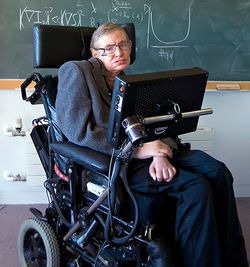
HawkSAN DIEGO — Already surrounded by machines that allow him, painstakingly, to communicate, the physicist Stephen Hawking last summer donned what looked like a rakish black headband that held a feather-light device the size of a small matchbox. Called the iBrain, this simple-looking contraption is part of an experiment that aims to allow Dr. Hawking — long paralyzed by amyotrophic lateral sclerosis, or Lou Gehrig’s disease — to communicate by merely thinking. The iBrain is part of a new generation of portable neural devices and algorithms intended to monitor and diagnose conditions like sleep apnea, depression and autism. Invented by a team led by Philip Low, a 32-year-old neuroscientist who is chief executive of NeuroVigil, a company based in San Diego, the iBrain is gaining attention as a possible alternative to expensive sleep labs that use rubber and plastic caps riddled with dozens of electrodes and usually require a patient to stay overnight. “The iBrain can collect data in real time in a person’s own bed, or when they’re watching TV, or doing just about anything,” Dr. Low said. The device uses a single channel to pick up waves of electrical brain signals, which change with different activities and thoughts, or with the pathologies that accompany brain disorders. But the raw waves are hard to read because they must pass through the many folds of the brain and then the skull, so they are interpreted with an algorithm that Dr. Low first created for his Ph.D., earned in 2007 at the University of California, San Diego. (The original research, published in The Proceedings of the National Academy of Sciences, was done on zebra finches.)

About the Hawking experiment, he said, “The idea is to see if Stephen can use his mind to create a consistent and repeatable pattern that a computer can translate into, say, a word or letter or a command for a computer.”

More here.