50 Amazing Numbers About Today’s Economy

171Morgan Housel in The Motely Motley Fool:

50. The S&P 500 is down 3% from 2000. But a version of the index that holds all 500 companies in equal amounts (rather than skewed by market cap) is up nearly 90%.

49. According to economist Tyler Cowen, “Thirty years ago, college graduates made 40 percent more than high school graduates, but now the gap is about 83 percent.”

48. Of all non-farm jobs created since June 2009, 88% have gone to men. “The share of men saying the economy was improving jumped to 41 percent in March, compared with 26 percent of women,” reports Bloomberg.

47. A record $6 billion will be spent on the 2012 elections, according to the Center for Responsive Politics. Adjusted for inflation, that's 60% more than the 2000 elections.

46. In 2010, nearly half of Americans lived in a household that received direct government benefits. That's up from 37.7% in 1998.

45. Adjusted for inflation, federal tax revenue was the same in 2009 as it was 1997, even though the U.S. population grew by 37 million during that period.

44. In November 2009, the nationwide unemployment was around 10%. But dig into demographics, and the rates are incredibly skewed. The unemployment rate for young, uneducated African-American males was 48.5%. For Caucasian females over age 45 with a college degree, it was 3.7%.

Where Do Space and Time Come From? New Theory Offers Answers, If Only Physicists Can Figure It Out

ObservationsGeorge Musser in Scientific American:

Vasiliev theory (for sake of a pithy name, physicists drop Fradkin’s name) takes to extremes the basic idea of modern physics: that the world around us consists of fields—the electrical and magnetic fields and a handful of others that represent the known forces of nature and types of matter. Vasiliev theory posits an infinite number of fields. They come in progressively more complicated varieties described by the quantum-mechanical property of spin.

Spin is perhaps best thought of as the degree of rotational symmetry. The electromagnetic field along with its associated particle, the photon, has spin-1. If you rotate it 360 degrees, it looks the same as before. The gravitational field along with its associated particle, the graviton, has spin-2: you need to rotate it only 180 degrees. The known particles of matter, such as the electron, have spin-1/2: you need to rotate them 720 degrees before they return to their original appearance—a counterintuititive feature that turns out to explain why these particles resist bunching, giving matter its integrity. The Higgs field has spin-0 and looks the same no matter how you rotate it.

In Vasiliev theory, there are also spin-5/2, spin-3, spin-7/2, spin-4, all the way up. Physicists used to assume that was impossible. These higher-spin fields, being more symmetrical, would imply new laws of nature analogous to the conservation of energy, and no two objects could ever interact without breaking one of those laws. The workings of nature would seize up like an overregulated economy. At first glance, string theory, the leading candidate for a fully unified theory of nature, runs afoul of this principle. Like a plucked guitar string, an elementary quantum string has an infinity of higher harmonics, which correspond to higher-spin fields. But those harmonics come with an energy cost, which keeps them inert.

Vasiliev and Frakin showed that the above reasoning applies only when gravity is insignificant and spacetime is not curved. In curved spacetimes, higher-spin fields can exist after all. Maybe overregulation isn’t such a bogeyman after all.

For Carlo Ginzburg, It’s Personal

W-ginzburg-041512Benjamin Ivry in The Forward:

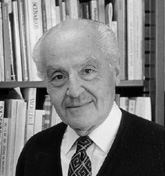
A collection of essays by the profoundly original, intellectually wide-ranging, Italian-Jewish historian Carlo Ginzburg underlines the influence of Yiddishkeit on his achievement. “Threads and Traces: True False Fictive,” published recently by University of California Press, is an illuminating collection of chapters, deftly translated from the original Italian by Anne C. and John Tedeschi.

An omnivorous analyst of artistic and human history, Ginzburg offers innovative ideas on a startling variety of texts and art forms, somewhat in the manner of Swiss-Jewish literary historian Jean Starobinski. Like Starobinski, who is of Polish-Jewish origin, Ginzburg can seem like a one-man team of readers and researchers, so profound is his erudition.

The wellspring of his inspiration is his Judaism. In the preface to his 1999 study, “History, Rhetoric, and Proof,” originally given as the Menahem Stern Jerusalem Lectures and hosted by the Historical Society of Israel, Ginzburg wrote: “I am a Jew who was born and grew up in a Catholic country; I never had a religious education; my Jewish identity is in large measure the result of persecution.”

Ginzburg’s father, Odessa-born philologist, historian and anti-fascist activist Leone Ginzburg, was arrested by Italian police and tortured to death in a Roman prison in 1944. At the time, his son Carlo, born in Turin, was 5 years old. Yet he retains clear memories of the central Italian town of Pizzoli, where his family had previously hid with his non-Jewish maternal grandmother, Lidia Tanzi. Ginzburg’s mother was noted author Natalia Ginzburg, born Levi. In 1941, Leone Ginzburg wrote a letter to historian Luigi Salvatorelli to describe how, despite imprisonments and persecution, domestic life temporarily continued; “evenings, when the children have been put to bed,” he and Natalia would sit opposite each other at a table, both busy with literary work: “These are our best times.”

The Black Light Project by Wolf Böwig and partners

Andreas Platthaus's article from the Frankfurter Allgemeine Zeitung:

ScreenHunter_06 Apr. 15 16.52First, one has to ask: What is Black.Light? Simply posing the question speaks volumes about the problems of the project. Normally, one would think a cross-border and cross-discipline concept for presenting human tragedy through a combination of artistic and documentary styles would stir interest and attract support. But during the time in which the tragedy played out – 1989 to 2007 – it was given short shrift outside of Africa. Fighting in the successor states of Yugoslavia, the Middle East conflict and two Iraq wars were more than just competition for publishing space: They made the West blind to the horrors in regions that are merely on the periphery of its spheres of interest. So much is true for areas like West Africa. From 1989 to 2007, Charles Taylor defined life in that part of the world. The Liberian warlord carried the power struggle for his homeland to neighboring states before actually becoming president of Liberia following the 1997 civil war. Once in office, he fomented a second civil war and further international conflicts. International pressure forced his resignation in 2003, he was extradited from his exile in Nigeria in 2006, and in 2007 he found himself charged with war crimes in Sierra Leone by a U.N. Special Court in The Hague. The trial against the man who once set West Africa aflame in still underway. Black.Light tells the story of the effects of Taylor's actions.

With interest in these events having been so little, nearly everything Black.Light portrays is new to us. It reveals a part of the world irradiated by a black light, one only illuminating individual details in a bizarre way. And there was always death in the shadows. During these times, German photographer Wolf Böwig and Portuguese reporter Pedro Rosa Mendes travelled repeatedly to the four West African states of Liberia, Sierra Leone, Guinea-Bissau and Ivory Coast. They returned with award-winning reports which were published around the world. Böwig and Mendes were even nominated for the Pulitzer Prize in 2007. As the photographer put it, “Pedro writes what I see, and I seem to photograph what interests him.” But that wasn't enough for them. Why not try to explain things so many people don't want to know in a manner that attracts more interest and reaches the people of Africa?

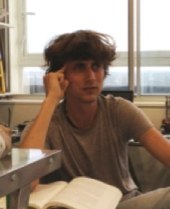
More here. [Photo shows Wolf Böwig explaining one of his photos to a young friend at an exhibition in Stuttgart in 2008.]

Whistling Pigs: German Adventures with Google Translate

Jalees Rehman in The Next Web:

Pig1Bilingual or multilingual friends can be quite annoying. Especially if you’re stuck at a social gathering with the ones who repeatedly mention their language skills and utter phrases such as ”Well, if only you could read this novel in the original, you would have a much more profound understanding of what the author wanted to express…..”. Or the ones who like to cite French, German and Arabic language newspaper articles and then remind you with a thinly veiled pomposity that you may have a very narrow view of the world if you only rely on English-language news.

However, this latter group is becoming more rare, possibly because a formidable foe is taking the wind out of their sails: Google Translate. The excellent book “Is That a Fish In Your Ear” by David Bellos has a chapter entitled “The Adventure of Automated Language-Translation Machines”, which is especially thought-provoking, because it explains some key concepts about Google Translate and the future of automated translation.

If a user enters a text into Google Translate, the linguistic search engine scours the Internet for multilingual texts, ranging from official documents posted by the European Union to articles and books that are available online in bilingual or multilingual versions. Using pattern recognition algorithms and statistical methods, Google Translate matches words and phrases contained in the user-entered text with those found in the large online repository of previously translated texts.

The underlying assumption of Google Translate is that any new text requiring translation contains phrases and word patterns that have been adequately translated in the existing online collection of bilingual or multilingual texts. Anyone who has used Google Translate can appreciate the success of this approach.

More here.

Terry Winters

From The Paris Review:

LastnotebookTerry Winters works on the fifth floor of a Tribeca walk-up. It is a steep climb, but the space is serene and open, decorated with a few large Nigerian ceramics, a framed Weegee photograph, and of course Winters’s own drawings and watercolors (he does his oil painting in a studio in the country). It is also remarkably free of clutter for an artist who describes himself as an “image junky.” Winters spends a lot of time here—“I try to show up for the job,” he remarks when I ask him about his daily practice—though he does not have much by way of routine, allowing the needs of the project to shape his day. This year marks the thirtieth anniversary of Winters’s first solo show at the Sonnabend Gallery. Now represented by Matthew Marks, Winters’s work continues to be informed by the ideas that animated his very first exhibition. One constant—besides his New York studio, where he has worked from the very start of his career—has been his use of found images, which he faithfully collects and assembles into collages that serve as miniature laboratories for future paintings. But the collages, with their layers and juxtapositions, their invocation of modern technology (several feature visible URLs, linking to universities and laboratories) and natural forms, are also lovely in their own right. In Winters’s current show at Matthew Marks—and on view for the first time in the United States—are images from his “Notebooks,” which showcase the artist’s process as an indelible part of his larger vision. I stopped by Winters’s studio on a mid-February afternoon. What follows are excerpts from our conversation about his practice, photos from the visit, and several images from the “Notebooks.”

In the current show there’s a clear extension of many ideas from my first exhibition. The beginnings of the “Notebook” collage project actually date from that time—clippings that I made in the eighties. Hopefully, the concerns of the work have widened and gotten deeper over time. The collages are a way of thinking for me. I use photographic or computer-generated images that are then transposed through a succession of layers to provoke unforeseen connections. The collages are complete in themselves, but they can also suggest other ways for me to explore their subjects or themes, as drawings or paintings, for example.

More here.

Nobel laureate Nadine Gordimer: ‘I have failed at many things, but I have never been afraid’

From The Telegraph:

Gordimerweb_2177083bShe is very small and at 88, still very beautiful but she appears alarmingly insubstantial, almost weightless. Absurdly, I feel protective of Nadine Gordimer. When I was growing up in Johannesburg, she lived just two streets away; the penumbra of her fame fell on our small house, lower down the hill. And when I started to write, I found it hard to shake the lyrical style she then employed.

Now, decades later, I wonder if she believes a life of engagement dangerous opposition has been worth it. The question arises because, 18 years after the first free elections, Gordimer has the regime of Jacob Zuma in her sights. She wants it understood that South Africa has a wonderful constitution and a world-class Bill of Rights. All that is required is that these should be honoured; they are South Africa’s secular religion, but the government with its Protection of State Information Bill – aka The Secrecy Bill – is intent on subverting them. The bill is a sham designed to hide widespread corruption, by giving any organ of the state the ability to decide what constitutes the protection of state information; ministers will be able to prosecute and jail offenders. Raymond Louw, distinguished former editor of the Rand Daily Mail, has described it as “worse than anything under apartheid. The powers the government is taking to curb the press are far wider now and the powers given to the minister of state security are greater”. And this is what Nadine Gordimer wants to speak about, rather than her new novel, No Time Like the Present.

More here.

The Stanford Education Experiment Could Change Higher Learning Forever

Steven Leckart in Wired:

ScreenHunter_02 Apr. 15 13.36Last fall, the university in the heart of Silicon Valley did something it had never done before: It opened up three classes, including CS221, to anyone with a web connection. Lectures and assignments—the same ones administered in the regular on-campus class—would be posted and auto-graded online each week. Midterms and finals would have strict deadlines. Stanford wouldn’t issue course credit to the non-matriculated students. But at the end of the term, students who completed a course would be awarded an official Statement of Accomplishment.

People around the world have gone crazy for this opportunity. Fully two-thirds of my 160,000 classmates live outside the US. There are students in 190 countries—from India and South Korea to New Zealand and the Republic of Azerbaijan. More than 100 volunteers have signed up to translate the lectures into 44 languages, including Bengali. In Iran, where YouTube is blocked, one student cloned the CS221 class website and—with the professors’ permission—began reposting the video files for 1,000 students.

Aside from computer-programming AI-heads, my classmates range from junior-high school students and humanities majors to middle-aged middle school science teachers and seventysomething retirees. One student described CS221 as the “online Woodstock of the digital era.” Personally, I signed up to have the experience of taking a Stanford course. Learning about artificial intelligence would be a nice bonus.

More here.

Sunday Poem

In a Dream Sometime Ago I Was a Woman

In a dream some time ago I was a woman
To the left of the road leading out of Jerusalem
At the end of a miraculous bypath
Between cornfields
Behind barbed-wire
I climbed onto a stage
In a square near a church
Whose entire facade
Was crammed with statues
I undressed
And stood with wonderful tits
In front of me was a microphone
But I didn’t have to say a thing
I leaped with joy
And the world leaped with joy
The world undressed and danced
Men and women
Each dance different
Some exposed
The statues came to life
The square is filled with people
[One can holler with pleasure]

by Zali Gurevitch
from Days
publisher: Am Oved, Tel Aviv, 2002

© Translation: 2002, Zali Gurevitch with Peter Cole and Gabriel Levin
from Cultural Studies: Critical Methodologies Vol. 2 (2002)

Read the original after the jump

Read more »

The Richest, Fattest Nation on Earth (It’s Not the United States)

Haley Sweetland Edwards in The Atlantic:

ScreenHunter_01 Apr. 15 13.28Qatar is a tiny country with a big problem.

This Connecticut-sized nation, sticking out like a loose tooth in the Persian Gulf, is one of the most obese nations in the world, with residents fatter, on average, than even those of the United States, which often takes the cake in such competitions.

According to recent studies, roughly half of adults and a third of children in Qatar are obese, and almost 17 percent of the native population suffers from diabetes. By comparison, about a third of Americans are obese, and eight percent are diabetic. Qatar also has very high rates of birth defects and genetic disorders — problems that, along with the prevalence of obesity (PDF) and diabetes, have worsened in recent decades, according to local and international health experts.

So what's going wrong in little Qatar?

To misappropriate a well-worn phrase: It's the economy, stupid. In September, Qatar officially became the richest nation in the world, as measured by per capita gross domestic product. It also recently became the world's biggest exporter of natural gas, and earned the title of fastest growing economy in the world. By international development standards, all this growth has happened virtually overnight, making Qataris' lifestyles much more unhealthy, and at the same time leading many to hang on resolutely to what's left of their fleeting tribal traditions — practices that include inter-marriage between close family members and cousins.

More here.

Saturday, April 14, 2012

Saturday Poem

In corrals of the carniverous
every lowly muscle twitches.
—Anon

Easter in the Oven

The goat kept on bleating hoarsely.
I angrily opened the oven what’s all the noise I asked
the guests can hear you.
Your oven’s not hot, it bleated
do something otherwise your cruelty
will go hungry and at festive time too.

I put my hand inside. It was true.
The head the legs the neck
the grass the pasture the crags
the slaughter all cold.

by Kiki Dimoula
from A minute´s licence
publisher: Poetry Greece, Corfu, 2000
translation: David Connoly

Original Greek after the jump

Read more »

Breadwomen

From The New York Times:

BagFive or six years ago, my mother and I sat in a darkened theater talking about a couple we knew. The wife was an executive with Ivy League degrees. The husband had some nebulous part-time job, but mostly he stayed home with the kids. What, I wondered, does he have that’s attractive to her? There was a pause. Sperm, my mother replied. Today, that conversation is as obsolete as “The Feminine Mystique.” For one, as The New York Times recently reported, more women are having children without marrying. In 2009 more than half of all births to women under 30 occurred outside marriage — an institution that is losing popularity in historic proportions.

Male underemployment, the surge in women’s economic fortunes and the decline in marriage swirled into a meme in 2010, when an article in The Atlantic asked, “What if the modern, post­industrial economy is simply more congenial to women?” The next year, the magazine ran a long essay in which the writer observed that the pool of those considered “traditionally ‘marriageable’ men” — the highly educated, the financially secure — was “radically shrinking.” This is the terrain Liza Mundy strides into in her ambitious new book, “The Richer Sex.” Mundy predicts that women’s economic rise above men, which she calls “The Big Flip” — one of several cutesy terms she uses, along with “bread­women,” her word for female breadwinners — will benefit everyone. “Women’s earnings will bring about a new liberation for women but also for men,” she writes. “More women will marry down; more men will marry up.” (Sounds like something that happened on “Downton Abbey.”)

More here.

Four Species of Homo You’ve Never Heard Of

From Smithsonian:

HomoGeorgicusWhile I was doing some research this week, I came across a hominid species I hadn’t heard of before: Homo helmei. The name was first given to a 259,000-year-old partial skull found in Florisbad, South Africa in 1932. The skull resembled early Homo sapiens but possessed many archaic features. Today some researchers think many of the African hominid fossils from around this time should be lumped in the H. helmi species; others call them Homo heidelbergensis, considered by some anthropologists to be the last common ancestor of modern humans and Neanderthals. And then there are those who don’t really know what to call them. It turns out I should have known H. helmei. It’s mentioned once in my college human evolution textbook. I even underlined the passage. Still, it’s not a species name that’s frequently used. And it’s just one of several obscure species of Homo that anthropologists don’t universally accept. These unfamiliar members of our genus are often based on a few fossils—sometimes just one—that don’t fit neatly into existing hominid species. Here are a few examples:

Homo gautengensis (lived about 2 million to 820,000 years ago): Earlier this year, Darren Curnoe of the University of New South Wales in Australia announced the possible discovery of a new species of Homo found in China. It wasn’t the first time he had identified a new type of hominid. In 2010, he reanalyzed fossils from the South African caves of Sterkfontein, Swartkrans and Drimolen and decided that some of the specimens had strangely shaped molar teeth relative to the known South African hominids, such as Australopithecus africanus. He grouped the weird forms into their own species, Homo gautengensis, claiming it was probably the earliest member of the genus Homo.

More here.

US students need new way of learning science

From Phys.org:

ScreenHunter_02 Apr. 14 10.07American students need a dramatically new approach to improve how they learn science, says a noted group of scientists and educators led by Michigan State University professor William Schmidt.

After six years of work, the group has proposed a solution. The 8+1 Science concept calls for a radical overhaul in K-12 schools that moves away from memorizing scientific facts and focuses on helping students understand eight fundamental science concepts. The “plus one” is the importance of inquiry, the practice of asking why things happen around us – and a fundamental part of science.

“Now is the time to rethink how we teach science,” said Schmidt, University Distinguished Professor of statistics and education. “What we are proposing through 8+1 Science is a new way of thinking about and teaching science, not a new set of science standards. It supports basic concepts included in most sets of state standards currently in use and compliments standards-based education reform efforts.”

The renowned group of scientists has met with Schmidt in an effort to rethink how science should be taught since 2006, when it was originally part of the PROM/SE research project (Promoting Rigorous Outcomes in Mathematics and Science Education) funded by the National Science Foundation.

The 8+1 concepts were derived from two basic questions: What are things made of and how do systems interact and change? The eight concepts are: atoms, cells, radiation, systems change, forces, energy, conservation of mass and energy, and variation.

More here.

Six Rules for Dining Out: How a frugal economist finds the perfect lunch

Tyler Cowen in The Atlantic:

ScreenHunter_01 Apr. 14 10.02At fancy and expensive restaurants (say, $50 and up for a dinner), you can follow a simple procedure to choose the best meal. Look at the menu and ask yourself: Which of these items do I least want to order? Or: Which one sounds the least appetizing? Then order that item.

The logic is simple. At a fancy restaurant, the menu is well thought-out. The kitchen’s time and attention are scarce. An item won’t be on the menu unless there is a good reason for its presence. If it sounds bad, it probably tastes especially good.

Many popular-sounding items, on the other hand, can be slightly below the menu’s average quality. For instance, you should be careful not to get too enthusiastic about roast chicken, especially if you are in a restaurant that, like virtually all restaurants, does not specialize in roast chicken. Roast chicken is an exceedingly familiar dish, and many people will order it to experience the familiar. Consider the incentive this provides the chef. And consider that a few items may be on the menu specifically because they are generally in demand, not because the chef cooks them with special brilliance.

So order the ugly and order the unknown. You’ll probably get a better and more interesting meal.

More here.

Social Criticism in the Age of the Normalized Intellectual

Axel Honneth in Transformations of the Public Sphere:

HonnethIn an article with the suggestive title “Courage, Sympathy, and a Good Eye,” Michael Walzer energetically sets the debate about social criticism on the track of virtue ethics. The argument with which he grounds this reorientation initially sounds as plausible as it is timely. Since social theory can provide neither necessary nor sufficient grounds for successful social criticism, its quality cannot be measured primarily by the merits of its theoretical content but, rather, more urgently by the qualities of the critic. According to Walzer, he or she must have developed a capacity for sympathy and finally a sense of proportion when applying it.

What sounds plausible in this conclusion is the fact that the forcefulness and practical effect of social criticism seldom results from the measure of the theory in which it is invested but, rather, from the perspicuity of its central concern. And today this results in a turn to the virtues of the critic, since it feeds the devaluation of sociological knowledge and meets up with the tendency to personalize intellectual contexts. All the same, the self-evidence with which Walzer still regards even the intellectuals of our day as born governors of social criticism is surprising. He does not speak of bold Enlighteners—we might think of figures on the model of Émile Zola—but of the ubiquitous sort of author who participates with generalizing arguments in the debates of a democratic public sphere. Is this normalized intellectual, a spiritual agent in the fora of public opinion formation, really the natural representative today of what was once called “social criticism”? Here I first trace an epochal transformation in the form of the intellectual before outlining a completely different physiognomy of the social critic than that found in Walzer’s work.

More here.

titanic

D25ec7d6-84ff-11e1-a3c5-00144feab49a

It is 100 years since the Titanic went down. Even as it happened, there were those who felt it was a metaphor for the end of the Victorian age. The great, self-confident ship, with its rigid social classifications, was clearly an emblem of the Britain that had sent the ship forth in April 1912. GK Chesterton, in The Illustrated London News, saw “our whole civilisation” as being “very like the Titanic” … “There was no sort of sane proportion between the extent of the provision for luxury and levity, and the extent of the provision for need and desperation. The scheme did far too much for prosperity and far too little for distress – just like the modern State.” The statistics for the deaths among the passenger lists seemed to bear out not simply the unfairness of the divisions between rich and poor, but also the differences between national characteristics. The death toll was 1,514, at least. Of these, 1,352 were men and 162 were women and children. Most of those who travelled first class were able to get into the lifeboats. Only four out of the 144 first-class women died, and three of them chose to remain on the ship. In second class, 154 men out of 168 died. In third class, 381 men out of 456 perished, and 89 women out of 165.

more from AN Wilson at the FT here.

a rake’s progress

16x9

With the deaths last year of Lucian Freud and Richard Hamilton, David Hockney suddenly catapulted into position as England’s leading painter. Although the cultivated image of a dandified English schoolboy in white pants, mismatched socks, polka-dot bow tie and beanie is long out of date for an artist who, at 74, is identified with iconic 1960s paintings of Los Angeles swimming pools, the thought is a bit of a shock. Still, the timing couldn’t be better for this enjoyable and well-sourced book, which — like Hockney’s own work — is both conversational and perceptive. The artist’s paintings serve as chapter headings in the first, fluent volume of Christopher Simon Sykes’ planned two-part biography. The list, roughly but not rigidly chronological, is not a gimmick.

more from Christopher Knight at the LA Times here.

the crisis of zionism

15ROSEN-articleLarge

“The Jews are like rats,” Peter Beinart’s grandmother told him when he was a boy. “We leave the sinking ship.” This grandmother — who was born in Egypt and lived in South Africa but dreamed of joining her brother in Israel — believed that Israel was the last refuge of a hounded people, and she made Beinart, who was born in the United States, believe it, too. But Beinart, a former editor of The New Republic who now runs a blog called Open Zion, has a problem: he finds Israel, morally, a sinking ship. Instead of simply swimming away, he has written “The Crisis of Zionism,” in which he sets out to save the country by labeling many of its leaders racist, denouncing many of its American supporters as ­Holocaust-obsessed enablers and advocating a boycott of people and products from beyond Israel’s 1967 eastern border. While saving Israel, Beinart hopes with evangelical zeal to save America from a handful of Jewish organizations that in his view have not only hijacked American liberalism but also stolen the spine of the president of the United States, who, despite having received 78 percent of the Jewish vote, is powerless to pursue his own agenda.

more from Jonathan Rosen at the NY Times here.