Unlearning the Art of Getting Lost

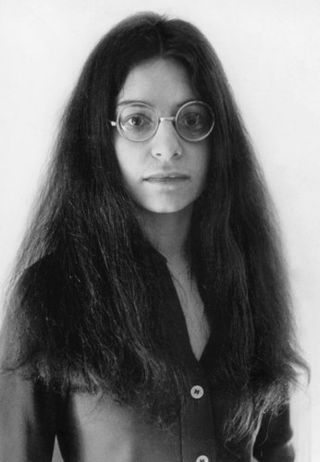
Ivan_vladislavic_by_minky_schlesinger_for_website

Vladislavić is one of the great writers of the fragment. The two works preceding Double Negative, The Exploded View (2004) and Portrait with Keys (2006), both attest to this. The Exploded View is a novel in four parts, one for each of four protagonists—a statistician gathering census data, a civil engineer working on post-apartheid housing developments, a market-savvy artist (who makes a delightful return in Double Negative), and an erector of billboards. All of them have a privileged perspective on life and society in Vladislavić’s home city, Johannesburg. Vladislavić calls the The Exploded View a novel, and though the juries of literary prizes disagree with him, I think this is a claim to be taken seriously. A case could be made that the novel’s divided form is justified by its object: Johannesburg, which is, as cliché would have it, the “divided” city. But Vladislavić’s tightly knit prose belies this diagnosis. Sensitive readers are struck by the uncanny repetitions, haunting resonances, and resounding echoes across the novel’s parts: by the work’s and the city’s unity, not their partition. Portrait with Keys is a collection of 138 short pieces about the city, which can be read in order, at random, or according to one of the suggested “itineraries” included with a map at the back of the book. This book is classified as “non-fiction,” and this time the juries of literary prizes do agree. The “portrait” in 138 brush-strokes has two subjects: the city and the artist himself. Both are rendered in imbricated, mutually enriching fragments, forming a nuanced whole. Neither rendering would be out of place in the very best fiction.

more from Jan Steyn at The Quarterly Conversation here.

coetzee on goethe, regarding werther

Coetzee_1-042612_jpg_470x488_q85

The Sufferings of Young Werther (otherwise known as The Sorrows of Young Werther) appeared in 1774. Goethe sent a synopsis to a friend: I present a young person gifted with deep, pure feeling and true penetration, who loses himself in rapturous dreams, buries himself in speculation, until at last, ruined by unhappy passions that supervene, in particular an unfulfilled love, puts a bullet in his head. This synopsis is notable for the distance Goethe seems to be putting between himself and a hero whose story was in important respects his own. He too had gloomily asked himself whether a self-defeating compulsion did not underlie his practice of falling in love with unattainable women; he too had contemplated suicide, though he had lacked the courage to do the deed. The crucial difference between himself and Werther was that he could call on his art to diagnose and expel the malaise that afflicted him, whereas Werther could only suffer it. As Thomas Mann put it, Werther is “the young Goethe himself, minus the creative gift.” Two energies go into the making of Werther: the confessional, which gives the book its tragic emotional force, and the political. Passionate and idealistic, Werther is representative of the best of a new generation of Germans sensitive to the stirrings of history, impatient to see the renewal of a torpid social order.

more from J.M. Coetzee at the NYRB here.

Tuesday, April 17, 2012

The story of Lucretius’ “On the Nature of Things”

Peter Reuell in the Harvard Gazette:

ScreenHunter_02 Apr. 17 17.13Last year, Stephen Greenblatt, the John Cogan University Professor of the Humanities, took home a National Book Award for nonfiction for “The Swerve: How the World Became Modern.” Today he was recognized with another prestigious literary prize.

Greenblatt’s book, which describes how an ancient Roman philosophical epic helped pave the way for modern thought, was awarded the 2012 Pulitzer Prize for general nonfiction.

In its citation, the Pulitzer board described “The Swerve” as “a provocative book arguing that an obscure work of philosophy, discovered nearly 600 years ago, changed the course of history by anticipating the science and sensibilities of today.”

The book tells the story of Lucretius’ “On the Nature of Things,” which 2,000 years ago posited a number of revolutionary ideas — that the universe functioned without the aid of gods, that religious fear was damaging to human life, and that matter was made up of very small particles in eternal motion, colliding and swerving in new directions.

Once thought lost, the poem was rediscovered on a library shelf in the winter of 1417 by a Poggio Bracciolini. The copying and translation of the book fueled the Renaissance, inspiring artists such as Botticelli and thinkers such as Giordano Bruno; shaped the thought of Galileo and Freud, Darwin and Einstein; and had a revolutionary influence on writers such as Montaigne and Shakespeare and even Thomas Jefferson.

More here.

Tiny animals solve problems of housing and maintaining oversized brains, shedding new light on nervous-system evolution

8981-2012441520598981-2012-05EberhardF1

William G. Eberhard and William T. Wcislo in American Scientist:

By focusing on evolutionary increases in brain size, biologists generally have overlooked nervous system organization in the smallest of animals. But when one looks closely at very small animals, an important question emerges: Where can a relatively large brain fit in a small body? The answers displayed by one animal after another deliver a new perspective on variation in nervous system design among animals. And this variation calls into question some basic assumptions regarding the uniformity of how central nervous systems function overall. In other words, much remains to be learned from the smallest of the small.

More here.

Pakistan Spring Emerging From Winter of Discontent

Vali Nasr at Bloomberg:

I._wX_p5OtlIOne new twist that should be particularly gratifying to the U.S. is the Pakistani public’s unexpected turn against the military. Popular anger at the U.S. for swooping into the country to kill bin Laden was matched by outrage that the military was caught snoozing by U.S. commandos. Pakistanis asked: Why do we need such an expensive military if it can’t even protect the country’s borders and doesn’t know that the world’s most wanted man is hiding in a garrison town?

If that weren’t enough, three weeks later, extremists attacked the naval base in Karachi, which houses nuclear warheads. They destroyed a helicopter and two advanced P-3C Orion patrol aircraft. Pakistani special forces lost 10 men and had to fight for 16 hours to end the siege.

More embarrassments followed. Impassioned appeals to the Supreme Court to find President Asif Ali Zardari a traitor backfired on the army and intelligence chiefs when the credibility of their witness, who had claimed that Zardari was colluding with the U.S. against the military, dissolved amid the man’s ever-changing story and his cameo in a mud-wrestling video. Next, the Supreme Court opened hearings in a case alleging that the military bought votes in the 1990 election. The televised spectacle of generals hauled to court to answer judges has mesmerized Pakistanis.

The humbling of the military is good news for democracy in Pakistan. National elections may take place as early as October and must occur by February. With the military restrained, there is hope that voting will be free and fair, and that the outcome may further strengthen civilian rule.

More here.

Tuesday Poem

From the Top of the Stairs

Of course
those who are standing at the top of the stairs
know
they know everything

with us it's different
sweepers of squares
hostages of a better future
those at the top of the stairs
appear to us rarely
with a hushing finger always at the mouth

we are patient
our wives darn the sunday shirts
we talk of food rations
soccer prices of shoes
while on saturday we tilt the head backward
and drink

we aren't those
who clench their fists
brandish chains
talk and ask questions
in a fever of excitement
urging to rebel
incessantly talking and asking questions

here is their fairy tale –
we will dash at the stairs
and capture them by storm
the heads of those who were standing at the top
will roll down the stairs
and at last we will gaze
at what can be seen from those heights
what future
what emptiness

we don't desire the view
of rolling heads
we know how easily heads grow back
and at the top there will always remain
one or three
while at the bottom it is black from brooms and shovels

sometimes we dream
those at the top of the stairs
come down
that is to us
and as we are chewing bread over the newspaper
they say

– now let's talk
man to man
what the posters shout out isn't true
we carry the truth in tightly locked lips
it is cruel and much too heavy
so we bear the burden by ourselves
we aren't happy
we would gladly stay
here

these are dreams of course
they can come true
or not come true
so we will
continue to cultivate
our square of dirt
square of stone

with a light head
a cigarette behind the ear
and not a drop of hope in the heart

Zbigniew Herbert

Poetry against purdah

From Himal Southasian:

Meera_baiWomen Sufi poets were part of a widespread emancipation movement in the Indian Subcontinent and West Asia that started more than a thousand years ago and lasted till the nineteenth century. Interestingly, these poets fought for women’s rights at a time when that concept was still unformulated. This movement saw the emergence of women saints on an unprecedented scale, and was one of the most significant characteristics of the medieval age in West Asia and Southasia. Mystic women poets subverted conventional notions of gendered behaviour, helping women to defy stereotypes and break the chains of tradition and orthodoxy, which sought to control their sexuality. In the spiritual sphere of Sufism, physical distinction between male and female was often completely overlooked and the two were fused and identified. Many of the saints believed that all creation, being the product of the supreme creative power, was feminine.

Wedlock – and specifically the husband – often appears in the works of Sufi women poets as an impediment to the quest for truth, and is perceived not as a temptation but as an obstruction. It is not the husband’s beauty or other allurements that must be resisted, but his interference, even tyranny. Both Lalla Arifa, also known as Lal Ded, and Mirabai walked out on their marriages. Lalla, who was a saint and mystic from Kashmir who lived in the 14th century, was married at the age of twelve to a Brahman and was badly treated by her mother-in-law. Her mother-in-law used to place a stone in her plate covered with a thin layer of food, starving the young Lalla. On the festive occasion of grihashanti (literally ‘peace at home’), Lalla’s friends teased her about the excellent food she would get to eat, to which she replied with the now famous verse: ‘They may kill a big sheep or a tender lamb, Lalla will have her lump of stone all right.’ This cruel upbringing encouraged her to enter the life of an ascetic.
More here.

The Challenge of Going Vegan

Tara Parker-Pope in The New York Times:

WellFrom Bill Clinton to Ellen DeGeneres, celebrities are singing the benefits of a vegan diet. Books that advocate plant-based eating are best sellers. But is eliminating meat and dairy as simple as it sounds?As countless aspiring vegans are discovering, the switch from omnivore to herbivore is fraught with physical, social and economic challenges — at least, for those who don’t have a personal chef. The struggle to give up favorite foods like cheese and butter can be made all the harder by harsh words and eye-rolling from unsympathetic friends and family members. Substitutes like almond milk and rice milk can shock the taste buds, and vegan specialty and convenience foods can cost two to three times what their meat and dairy equivalents do. And new vegans quickly discover that many foods in grocery stores and on restaurant menus have hidden animal ingredients.

“The dominant social-cultural norm in the West is meat consumption,” said Hanna Schösler, a researcher in the Institute for Environmental Studies at Vrije University in Amsterdam, who has studied consumer acceptance of meat substitutes. “The people who want to shift to a more vegetarian diet find they face physical constraints and mental constraints. It’s not very accepted in our society not to eat meat.” Still, the numbers are substantial, according to according to a 2008 report in Vegetarian Times. Three percent of American adults, 7.3 million people, follow a vegetarian diet, and one million of them are vegans, who eat no animal products at all — no meat, fish, eggs, milk, cheese, even honey. (And 23 million say they rarely eat meat.)

More here.

thomas kinkade, RIP

ID_PI_GOLBE_KINKA_AP_001

As Kinkade himself said, light is optimism — and optimism is always a mix of hope and fantasy, of the natural and supernatural. A thatched-roof house in a grove that recalls a memory of a perfectly nameless country town is also reminiscent of a hobbit house from The Lord of the Rings. A young deer standing in a flowerbed by a stream looks to an impossible rainbow that juts from a cliff and the deer also happens to be Bambi. This kind of unapologetically sincere optimism is an easy target. There is something undeniably childish — even ludicrous — about hope. For this reason, just as the light in Kinkade’s paintings is a light of hope and joy, his paintings are melancholy, too. At the Fashion Show Mall last year, I was reminded of something Robert Walser once wrote about the easy delights of Berlin’s Tiergarten. It was like a painted picture, he wrote, “then like a dream, then like a circuitous, agreeable kiss. …[O]ne is lightly, comprehensibly enticed to gaze and linger.” “A Circuitous, Agreeable Kiss” might be the name for any one of Thomas Kinkade’s paintings, for this title conveys well the sense of longing and melancholy that stimulates both Kinkade’s fans and critics. Thomas Kinkade has often been likened to Norman Rockwell — that other American populist who painted scenes of a happier America that existed in a bygone age. Like Rockwell, some have said, Kinkade attracted Americans not so much with hope but rather with nostalgia, the sweet sorrow of loss. Yet Kinkade’s paintings are not nostalgic; they are simply unreal. If anything, they depict an America that has never existed, and will never exist. It is the fantasy that makes them so attractive.

more from Stefany Anne Golberg at The Smart Set here.

This double inheritance of erudition and disdain…

220px-FullerDaguerreotype

In America, celebrated public intellectuals who are women have, most often, been admitted to the ranks of high cultural regard only one at a time, and never without qualification. In the last century, for instance, the spotlight fell on Mary McCarthy in the 1940s and Susan Sontag in the 1960s, each of whom was smilingly referred to by the public intellectuals of their times as the “Dark Lady of American Letters.” In the first half of the nineteenth century, although a fair number of her sex among abolitionists and suffragists were brilliant, it was Margaret Fuller, world-class talker and author of the influential treatise Woman in the Nineteenth Century (1845), who stood in the allotted space, alone in a sea of gifted men, most of whom chose to denature her—she thinks like a man—as they could not believe they had to take seriously a thinking woman. This was a great mistake, thought a former student of Fuller’s. “With all the force of her intellect,” said Ednah Dow Cheney in 1902, “all the strength of her will, all her self-denial and power of thought she was essentially and thoroughly a woman, and she won her victories not by borrowing the peculiar weapons of man, but by using her own with courage and skill.” Some 160 years after her death, Fuller remains a haunting figure not so much for the one important book she committed to paper as for the exceptional life she lived, the significance it had in its own moment as well as the one it might have had, if it had not been cut severely short in 1850 when she was 40.

more from Vivian Gornick at The Nation here.

armed america

120423_r22092_g290_crop

The United States is the country with the highest rate of civilian gun ownership in the world. (The second highest is Yemen, where the rate is nevertheless only half that of the U.S.) No civilian population is more powerfully armed. Most Americans do not, however, own guns, because three-quarters of people with guns own two or more. According to the General Social Survey, conducted by the National Policy Opinion Center at the University of Chicago, the prevalence of gun ownership has declined steadily in the past few decades. In 1973, there were guns in roughly one in two households in the United States; in 2010, one in three. In 1980, nearly one in three Americans owned a gun; in 2010, that figure had dropped to one in five. Men are far more likely to own guns than women are, but the rate of gun ownership among men fell from one in two in 1980 to one in three in 2010, while, in that same stretch of time, the rate among women remained one in ten. What may have held that rate steady in an age of decline was the aggressive marketing of handguns to women for self-defense, which is how a great many guns are marketed. Gun ownership is higher among whites than among blacks, higher in the country than in the city, and higher among older people than among younger people.

more from Jill Lepore at The New Yorker here.

Monday, April 16, 2012

Perceptions

DSCN5273

Sughra Raza. Wall of Names. Genocide Memorial Center, Kigali, Rwanda.

Digital photograph, April 7th, 2012.

“The Kigali Memorial Centre was opened on the 10th Anniversary of the Rwandan Genocide, in April 2004. The Centre is built on a site where over 250,000 people are buried. These graves are a clear reminder of the cost of ignorance.”

There are roughly 200 sites of genocide in Rwanda.

Saturday, 7 April, 2012 began the Week of Mourning to Commemorate 18 years since Rwanda's Genocide.

More here and here.

DSCN5277
Sughra Raza. Detail of wall shown above (hope springs eternal).

Digital photograph, April 7th, 2012.

Sunday, April 15, 2012

50 Amazing Numbers About Today’s Economy

171Morgan Housel in The Motely Motley Fool:

50. The S&P 500 is down 3% from 2000. But a version of the index that holds all 500 companies in equal amounts (rather than skewed by market cap) is up nearly 90%.

49. According to economist Tyler Cowen, “Thirty years ago, college graduates made 40 percent more than high school graduates, but now the gap is about 83 percent.”

48. Of all non-farm jobs created since June 2009, 88% have gone to men. “The share of men saying the economy was improving jumped to 41 percent in March, compared with 26 percent of women,” reports Bloomberg.

47. A record $6 billion will be spent on the 2012 elections, according to the Center for Responsive Politics. Adjusted for inflation, that's 60% more than the 2000 elections.

46. In 2010, nearly half of Americans lived in a household that received direct government benefits. That's up from 37.7% in 1998.

45. Adjusted for inflation, federal tax revenue was the same in 2009 as it was 1997, even though the U.S. population grew by 37 million during that period.

44. In November 2009, the nationwide unemployment was around 10%. But dig into demographics, and the rates are incredibly skewed. The unemployment rate for young, uneducated African-American males was 48.5%. For Caucasian females over age 45 with a college degree, it was 3.7%.

Where Do Space and Time Come From? New Theory Offers Answers, If Only Physicists Can Figure It Out

ObservationsGeorge Musser in Scientific American:

Vasiliev theory (for sake of a pithy name, physicists drop Fradkin’s name) takes to extremes the basic idea of modern physics: that the world around us consists of fields—the electrical and magnetic fields and a handful of others that represent the known forces of nature and types of matter. Vasiliev theory posits an infinite number of fields. They come in progressively more complicated varieties described by the quantum-mechanical property of spin.

Spin is perhaps best thought of as the degree of rotational symmetry. The electromagnetic field along with its associated particle, the photon, has spin-1. If you rotate it 360 degrees, it looks the same as before. The gravitational field along with its associated particle, the graviton, has spin-2: you need to rotate it only 180 degrees. The known particles of matter, such as the electron, have spin-1/2: you need to rotate them 720 degrees before they return to their original appearance—a counterintuititive feature that turns out to explain why these particles resist bunching, giving matter its integrity. The Higgs field has spin-0 and looks the same no matter how you rotate it.

In Vasiliev theory, there are also spin-5/2, spin-3, spin-7/2, spin-4, all the way up. Physicists used to assume that was impossible. These higher-spin fields, being more symmetrical, would imply new laws of nature analogous to the conservation of energy, and no two objects could ever interact without breaking one of those laws. The workings of nature would seize up like an overregulated economy. At first glance, string theory, the leading candidate for a fully unified theory of nature, runs afoul of this principle. Like a plucked guitar string, an elementary quantum string has an infinity of higher harmonics, which correspond to higher-spin fields. But those harmonics come with an energy cost, which keeps them inert.

Vasiliev and Frakin showed that the above reasoning applies only when gravity is insignificant and spacetime is not curved. In curved spacetimes, higher-spin fields can exist after all. Maybe overregulation isn’t such a bogeyman after all.

For Carlo Ginzburg, It’s Personal

W-ginzburg-041512Benjamin Ivry in The Forward:

A collection of essays by the profoundly original, intellectually wide-ranging, Italian-Jewish historian Carlo Ginzburg underlines the influence of Yiddishkeit on his achievement. “Threads and Traces: True False Fictive,” published recently by University of California Press, is an illuminating collection of chapters, deftly translated from the original Italian by Anne C. and John Tedeschi.

An omnivorous analyst of artistic and human history, Ginzburg offers innovative ideas on a startling variety of texts and art forms, somewhat in the manner of Swiss-Jewish literary historian Jean Starobinski. Like Starobinski, who is of Polish-Jewish origin, Ginzburg can seem like a one-man team of readers and researchers, so profound is his erudition.

The wellspring of his inspiration is his Judaism. In the preface to his 1999 study, “History, Rhetoric, and Proof,” originally given as the Menahem Stern Jerusalem Lectures and hosted by the Historical Society of Israel, Ginzburg wrote: “I am a Jew who was born and grew up in a Catholic country; I never had a religious education; my Jewish identity is in large measure the result of persecution.”

Ginzburg’s father, Odessa-born philologist, historian and anti-fascist activist Leone Ginzburg, was arrested by Italian police and tortured to death in a Roman prison in 1944. At the time, his son Carlo, born in Turin, was 5 years old. Yet he retains clear memories of the central Italian town of Pizzoli, where his family had previously hid with his non-Jewish maternal grandmother, Lidia Tanzi. Ginzburg’s mother was noted author Natalia Ginzburg, born Levi. In 1941, Leone Ginzburg wrote a letter to historian Luigi Salvatorelli to describe how, despite imprisonments and persecution, domestic life temporarily continued; “evenings, when the children have been put to bed,” he and Natalia would sit opposite each other at a table, both busy with literary work: “These are our best times.”

The Black Light Project by Wolf Böwig and partners

Andreas Platthaus's article from the Frankfurter Allgemeine Zeitung:

ScreenHunter_06 Apr. 15 16.52First, one has to ask: What is Black.Light? Simply posing the question speaks volumes about the problems of the project. Normally, one would think a cross-border and cross-discipline concept for presenting human tragedy through a combination of artistic and documentary styles would stir interest and attract support. But during the time in which the tragedy played out – 1989 to 2007 – it was given short shrift outside of Africa. Fighting in the successor states of Yugoslavia, the Middle East conflict and two Iraq wars were more than just competition for publishing space: They made the West blind to the horrors in regions that are merely on the periphery of its spheres of interest. So much is true for areas like West Africa. From 1989 to 2007, Charles Taylor defined life in that part of the world. The Liberian warlord carried the power struggle for his homeland to neighboring states before actually becoming president of Liberia following the 1997 civil war. Once in office, he fomented a second civil war and further international conflicts. International pressure forced his resignation in 2003, he was extradited from his exile in Nigeria in 2006, and in 2007 he found himself charged with war crimes in Sierra Leone by a U.N. Special Court in The Hague. The trial against the man who once set West Africa aflame in still underway. Black.Light tells the story of the effects of Taylor's actions.

With interest in these events having been so little, nearly everything Black.Light portrays is new to us. It reveals a part of the world irradiated by a black light, one only illuminating individual details in a bizarre way. And there was always death in the shadows. During these times, German photographer Wolf Böwig and Portuguese reporter Pedro Rosa Mendes travelled repeatedly to the four West African states of Liberia, Sierra Leone, Guinea-Bissau and Ivory Coast. They returned with award-winning reports which were published around the world. Böwig and Mendes were even nominated for the Pulitzer Prize in 2007. As the photographer put it, “Pedro writes what I see, and I seem to photograph what interests him.” But that wasn't enough for them. Why not try to explain things so many people don't want to know in a manner that attracts more interest and reaches the people of Africa?

More here. [Photo shows Wolf Böwig explaining one of his photos to a young friend at an exhibition in Stuttgart in 2008.]

Whistling Pigs: German Adventures with Google Translate

Jalees Rehman in The Next Web:

Pig1Bilingual or multilingual friends can be quite annoying. Especially if you’re stuck at a social gathering with the ones who repeatedly mention their language skills and utter phrases such as ”Well, if only you could read this novel in the original, you would have a much more profound understanding of what the author wanted to express…..”. Or the ones who like to cite French, German and Arabic language newspaper articles and then remind you with a thinly veiled pomposity that you may have a very narrow view of the world if you only rely on English-language news.

However, this latter group is becoming more rare, possibly because a formidable foe is taking the wind out of their sails: Google Translate. The excellent book “Is That a Fish In Your Ear” by David Bellos has a chapter entitled “The Adventure of Automated Language-Translation Machines”, which is especially thought-provoking, because it explains some key concepts about Google Translate and the future of automated translation.

If a user enters a text into Google Translate, the linguistic search engine scours the Internet for multilingual texts, ranging from official documents posted by the European Union to articles and books that are available online in bilingual or multilingual versions. Using pattern recognition algorithms and statistical methods, Google Translate matches words and phrases contained in the user-entered text with those found in the large online repository of previously translated texts.

The underlying assumption of Google Translate is that any new text requiring translation contains phrases and word patterns that have been adequately translated in the existing online collection of bilingual or multilingual texts. Anyone who has used Google Translate can appreciate the success of this approach.

More here.

Terry Winters

From The Paris Review:

LastnotebookTerry Winters works on the fifth floor of a Tribeca walk-up. It is a steep climb, but the space is serene and open, decorated with a few large Nigerian ceramics, a framed Weegee photograph, and of course Winters’s own drawings and watercolors (he does his oil painting in a studio in the country). It is also remarkably free of clutter for an artist who describes himself as an “image junky.” Winters spends a lot of time here—“I try to show up for the job,” he remarks when I ask him about his daily practice—though he does not have much by way of routine, allowing the needs of the project to shape his day. This year marks the thirtieth anniversary of Winters’s first solo show at the Sonnabend Gallery. Now represented by Matthew Marks, Winters’s work continues to be informed by the ideas that animated his very first exhibition. One constant—besides his New York studio, where he has worked from the very start of his career—has been his use of found images, which he faithfully collects and assembles into collages that serve as miniature laboratories for future paintings. But the collages, with their layers and juxtapositions, their invocation of modern technology (several feature visible URLs, linking to universities and laboratories) and natural forms, are also lovely in their own right. In Winters’s current show at Matthew Marks—and on view for the first time in the United States—are images from his “Notebooks,” which showcase the artist’s process as an indelible part of his larger vision. I stopped by Winters’s studio on a mid-February afternoon. What follows are excerpts from our conversation about his practice, photos from the visit, and several images from the “Notebooks.”

In the current show there’s a clear extension of many ideas from my first exhibition. The beginnings of the “Notebook” collage project actually date from that time—clippings that I made in the eighties. Hopefully, the concerns of the work have widened and gotten deeper over time. The collages are a way of thinking for me. I use photographic or computer-generated images that are then transposed through a succession of layers to provoke unforeseen connections. The collages are complete in themselves, but they can also suggest other ways for me to explore their subjects or themes, as drawings or paintings, for example.

More here.

Nobel laureate Nadine Gordimer: ‘I have failed at many things, but I have never been afraid’

From The Telegraph:

Gordimerweb_2177083bShe is very small and at 88, still very beautiful but she appears alarmingly insubstantial, almost weightless. Absurdly, I feel protective of Nadine Gordimer. When I was growing up in Johannesburg, she lived just two streets away; the penumbra of her fame fell on our small house, lower down the hill. And when I started to write, I found it hard to shake the lyrical style she then employed.

Now, decades later, I wonder if she believes a life of engagement dangerous opposition has been worth it. The question arises because, 18 years after the first free elections, Gordimer has the regime of Jacob Zuma in her sights. She wants it understood that South Africa has a wonderful constitution and a world-class Bill of Rights. All that is required is that these should be honoured; they are South Africa’s secular religion, but the government with its Protection of State Information Bill – aka The Secrecy Bill – is intent on subverting them. The bill is a sham designed to hide widespread corruption, by giving any organ of the state the ability to decide what constitutes the protection of state information; ministers will be able to prosecute and jail offenders. Raymond Louw, distinguished former editor of the Rand Daily Mail, has described it as “worse than anything under apartheid. The powers the government is taking to curb the press are far wider now and the powers given to the minister of state security are greater”. And this is what Nadine Gordimer wants to speak about, rather than her new novel, No Time Like the Present.

More here.