Obama at Barnard: “You Can Be Stylish and Powerful Too”

Transcript of the commencement address, from The Atlantic:

ScreenHunter_05 May. 17 16.20THE PRESIDENT: I will begin by telling a hard truth: I’m a Columbia college graduate. (Laughter and applause.) I know there can be a little bit of a sibling rivalry here. (Laughter.) But I’m honored nevertheless to be your commencement speaker today — although I’ve got to say, you set a pretty high bar given the past three years. (Applause.) Hillary Clinton — (applause) — Meryl Streep — (applause) — Sheryl Sandberg — these are not easy acts to follow. (Applause.)

But I will point out Hillary is doing an extraordinary job as one of the finest Secretaries of State America has ever had. (Applause.) We gave Meryl the Presidential Medal of Arts and Humanities. (Applause.) Sheryl is not just a good friend; she’s also one of our economic advisers. So it’s like the old saying goes — keep your friends close, and your Barnard commencement speakers even closer. (Applause.) There's wisdom in that. (Laughter.)

Now, the year I graduated — this area looks familiar — (laughter) — the year I graduated was 1983, the first year women were admitted to Columbia. (Applause.) Sally Ride was the first American woman in space. Music was all about Michael and the Moonwalk. (Laughter.)

AUDIENCE MEMBER: Do it! (Laughter.)

THE PRESIDENT: No Moonwalking. (Laughter.) No Moonwalking today. (Laughter.)

More here.

The Evolution of Virtue, Altruism, and Shame

Jag Bhalla in The Wilson Quarterly:

Boehm-Moral_OriginsThe stories we’ve been told about the role of competition in our evolution have been unnaturally selective. Sound-bite pop science, of the “red in tooth and claw” and “selfish gene” variety, has left out much that is essential to human nature. Anthropologist Christopher Boehm aims to resurrect some of those missing elements in Moral Origins. In his view, cooperation, along with the traits and rules needed to make it work, was as essential to our survival as large brains.

Boehm has spent 40 years studying hunter-gatherers and the behavior of our primate cousins. His book’s explanatory quest started with a 10-year review of all 339 hunter-gatherer cultures ethnographers have described, 150 of which were deemed representative of our ancestors. Fifty of these have so far been coded into a detailed database. Boehm says this deep data set shows that we have been “vigilantly egalitarian for tens of thousands of years.”
 
The dominant view of human evolution against which Boehm deploys his arguments and data is well summarized in evolutionary biologist Richard Dawkins’s hugely influential 1976 book The Selfish Gene. Dawkins famously warned that “if you wish . . . to build a society in which individuals cooperate generously and unselfishly towards a common good, you can expect little help from biological nature.” In nature, he declared, there is “no welfare state.” Indeed, he wrote, “any altruistic system is inherently unstable, because it is open to abuse by selfish individuals, ready to exploit it.” These ideas, aided by others’ similar claims, became barrier beliefs, preventing further analysis for decades.
 
Boehm’s story begins when the survival of our ancestors became a team sport.

More here.

Walker’s Filibuster

From Now I Know:

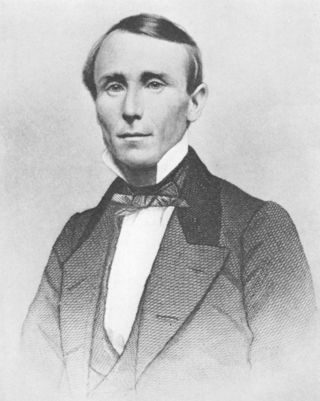
William_Walker_FilibusterWhen we think of the term “filibuster,” the definition that springs to mind is the political one, a legislative tactic sometimes used in the United States Senate, the Parliament of the United Kingdom, and in many other Westminster-style legislatures. But it has a second, deprecated meaning, one related to military actions. In that sense, Wikipedia defines a filibuster as a person “who engages in a unauthorized military expedition into a foreign country to forment or support a revolution.” The classic example of a filibuster? Meet William Walker, pictured above.

Walker was born in Nashville, Tennessee in 1827. A savant of sorts, he graduated from college by age fourteen and went to Europe to study medicine. By his early twenties, Walker had a medical degree and was licensed to practice law in the States. But he wanted more. He wanted to be a king. So he did what anyone would do: he hired himself an army.

Walker's dream was to create a slave ownership-friendly republic which, much like the Republic of Texas before it, would find itself invited to join the U.S. as a full state. At first, he attempted to take control of parts of Baja California in Mexico, and while he was briefly successful, the Mexican government managed to force him out. He returned to California, where he was put on trial for violating the Neutrality Act of 1794, but at the time, western Americans believed strongly in the notion of Manifest Destiny, and Walker was acquitted. He used his retained freedom to take another stab at his dream.

Read more »

Thursday Poem

Rondel of Merciless Beauty

Your two great eyes will slay me suddenly;
Their beauty shakes me who was once serene;
Straight through my heart the wound is quick and keen.

Only your word will heal the injury
To my hurt heart, while yet the wound is clean –
Your two great eyes will slay me suddenly;
Their beauty shakes me who was once serene.

Upon my word, I tell you faithfully
Through life and after death you are my queen;
For with my death the whole truth shall be seen.
Your two great eyes will slay me suddenly;
Their beauty shakes me who was once serene;
Straight through my heart the wound is quick and keen.
.

Geoffrey Chaucer

When I Die: Lessons from the Death Zone

From The Telegraph:

In January 2008 the political strategist Philip Gould was diagnosed with gastro-oesophageal cancer and given a 50/50 chance of recovery. “I made an immediate decision to be as open and honest as I possibly could about what had happened, reaching out to people rather than trying to do it alone,” he writes in his posthumously published memoir of his illness. Having broken the news to his wife, the publisher Gail Rebuck, and his daughters, Georgia and Grace, Gould began telling friends. Alastair Campbell was “totally solid and absolutely loyal”; Peter Mandelson was “typically stringent”. Tony Blair visited, “and so began an entirely new phase in our relationship”. From the moment of his diagnosis, Gould addressed his condition in political terms: “Everything I thought about the battle with cancer was strategic, as if I were fighting an election campaign. I saw the elimination of the cancer as victory and the test results as opinion polls.” As part of his strategy, he researched the best places for treatment, but could find no consensus. Eventually, the choice came down to radical surgery on the NHS, or a less invasive operation at the Memorial Sloan-Kettering hospital in New York City. He chose Sloan-Kettering – a decision he would come to regret. Back in London he returned to the NHS for chemotherapy, and initially appeared to make a good recovery. But his wife felt uneasy. She wrote a note imploring him to slow down: “Politics… is such a destructive force. It nearly killed you once, please don’t let it kill you again.” At his next scan, the doctors looked grim. The cancer had recurred; the prognosis was poor.

Over dinner with Tony Blair, Gould confessed to feeling lost. He had done everything required of him. Why had the cancer returned? Blair’s response was remarkable: “The cancer is not done with you, it wanted more. You may have changed but not by enough, now you have to go on to a higher spiritual level. You have to use this recurrence to find your real purpose in life.” This Messianic statement resonated powerfully with Gould. Throughout his final year he sought meaning in his death. “Death is not frightening if you accept it. It is a time for immense change and transformation, a time to fulfil yourself and others, and a chance in a small way to change the world.”

More here.

Replication studies: Bad copy

From Nature:

For many psychologists, the clearest sign that their field was in trouble came, ironically, from a study about premonition. Daryl Bem, a social psychologist at Cornell University in Ithaca, New York, showed student volunteers 48 words and then abruptly asked them to write down as many as they could remember. Next came a practice session: students were given a random subset of the test words and were asked to type them out. Bem found that some students were more likely to remember words in the test if they had later practised them. Effect preceded cause. Bem published his findings in the Journal of Personality and Social Psychology (JPSP) along with eight other experiments1 providing evidence for what he refers to as “psi”, or psychic effects. There is, needless to say, no shortage of scientists sceptical about his claims. Three research teams independently tried to replicate the effect Bem had reported and, when they could not, they faced serious obstacles to publishing their results. The episode served as a wake-up call. “The realization that some proportion of the findings in the literature simply might not replicate was brought home by the fact that there are more and more of these counterintuitive findings in the literature,” says Eric-Jan Wagenmakers, a mathematical psychologist from the University of Amsterdam.

Positive results in psychology can behave like rumours: easy to release but hard to dispel. They dominate most journals, which strive to present new, exciting research. Meanwhile, attempts to replicate those studies, especially when the findings are negative, go unpublished, languishing in personal file drawers or circulating in conversations around the water cooler. “There are some experiments that everyone knows don't replicate, but this knowledge doesn't get into the literature,” says Wagenmakers. The publication barrier can be chilling, he adds. “I've seen students spending their entire PhD period trying to replicate a phenomenon, failing, and quitting academia because they had nothing to show for their time.”

More here.

Wednesday, May 16, 2012

Brooklyn Babylon: A Darcy James Argue’s Secret Society Project over at Kickstarter

Darcy James Argue is an old friend of 3QD and a ridiculously talented composer and bandleader. We are huge fans of his 18 piece steampunk big band Secret Society, which played at the 2nd 3QD ball. Secret Society’s first album Infernal Machines was released 3 years ago and garnered a Grammy nomination for Best Jazz Large Ensemble Album in 2011. Last year, Darcy collaborated with graphic artist Danijel Zezelj in an amazing multimedia piece called Brooklyn Babylon, which debuted at the 2011 BAM Next Wave Festival. Secret Society is now about to record Brooklyn Babylon, the much-anticipated followup to Infernal Machines. You can support them by helping fund their recording over at Kickstarter. (A $10 donation gets you a digital download of the entire album. $100 gets you a signed copy of the Brooklyn Babylon graphic novel, a digital download of the entire album, a signed CD, and a signed limited-edition poster print of Brooklyn Babylon.)

Consider a donation. (Video by Marc Faletti.)


A Mathematical Challenge to Obesity

Claudia Dreifus in the New York Times:

You are an M.I.T.-trained mathematician and physicist. How did you come to work on obesity?

ScreenHunter_04 May. 16 23.42In 2004, while on the faculty of the math department at the University of Pittsburgh, I married. My wife is a Johns Hopkins ophthalmologist, and she would not move. So I began looking for work in the Beltway area. Through the grapevine, I heard that the N.I.D.D.K., a branch of the National Institutes of Health, was building up its mathematics laboratory to study obesity. At the time, I knew almost nothing of obesity.

I didn’t even know what a calorie was. I quickly read every scientific paper I could get my hands on.

I could see the facts on the epidemic were quite astounding. Between 1975 and 2005, the average weight of Americans had increased by about 20 pounds. Since the 1970s, the national obesity rate had jumped from around 20 percent to over 30 percent.

The interesting question posed to me when I was hired was, “Why is this happening?”

Why would mathematics have the answer?

Because to do this experimentally would take years. You could find out much more quickly if you did the math.

Now, prior to my coming on staff, the institute had hired a mathematical physiologist, Kevin Hall. Kevin developed a model that could predict how your body composition changed in response to what you ate. He created a math model of a human being and then plugged in all the variables — height, weight, food intake, exercise. The model could predict what a person will weigh, given their body size and what they take in.

However, the model was complicated: hundreds of equations. Kevin and I began working together to boil it down to one simple equation.

More here.

The tragic farce of voting in Iran

Laura Secor in The New Yorker:

120507_r22164_p465On February 29th, two days before parliamentary elections in Iran, I joined a few dozen foreign correspondents—along with official handlers—in the parking lot of the Laleh, a formerly five-star Tehran hotel with tatty rooms, an ornate lobby, and a surfeit of eyes. We had come to Iran to cover the election, but we were told upon arrival that there would be a compulsory program. Its first order of business was a bus trip to the Alborz Space Center, where we would learn about Iran’s new remote-controlled satellite.

Our bus, clearly in no hurry, rumbled westward along streets of low-slung storefronts until we’d left the capital; it traversed the neighboring city of Karaj, passing a string of industrial plants, and reached a clearing in the midst of sprawl. The space center was a modest glass-fronted building an hour and a half’s drive from any conceivable election activity in Tehran.

The regime had bused us all this way to show us a PowerPoint presentation. No one at the space center seemed to speak English, so one of our handlers stepped in to translate. He said jokingly, “I am not a member of Iran’s space program, so please don’t put that in your reports. I really don’t want to be the next Iranian scientist to be assassinated.” (Since 2010, four scientists connected to Iran’s nuclear program have been killed.)

More here.

The Science of Love and Betrayal

From The Guardian:

A-family-of-golden-lion-m-008I'm an expert. Many of us are. My first wife never said the word “love” without a sneer; my present wife is a true believer. So I've looked at love from both sides now. But if Robin Dunbar is to be believed, I really don't know love at all. Remember those PG Tips ads where they dressed chimpanzees as human beings and made them drink tea? This book is rather like those ads in that it confuses the animal and the specifically human. Why do we kiss, it asks. To taste our potential partner's saliva and decide if they are healthy enough to breed with, a bit like dogs sniffing at each other. A bad taste, a bad smell and off we go with someone else. Sometimes the truth is disturbing, but is this really why my wife and I are still kissing after all these years? It seems to me more like a way of having sex with our mouths – which is wonderful if you like sex, and disgusting if you don't. It certainly isn't something a dog would do.

Dunbar believes emotions such as love and social institutions such as marriage are strategies to maximise the reproduction of our genes. In biological terms, the most successful of all humans has been Genghis Khan – around 0.5% of all males alive today are descended from him and his brothers. But the Great Khan's reproductive strategy of mass rape is something of an aberration. Modern societies derive from communities of hunter-gatherers who practised serial monogamy. Love and marriage are the emotional and social expressions of a reproductive strategy that goes back 200,000 years or so. Why do we pair up? Not so that men can help feed and raise children – women would do this better on their own (the time men spent hunting was largely time wasted, unlike the time women spent gathering). Dunbar runs through a range of biological comparisons – wolves (“resolutely monogamous”, but male wolves vomit up food for the mother and pups; unlike many human males they really are good dads), goats, baboons, gorillas – and concludes that we are like marmosets. Women need husbands to protect them from being attacked by other men. Men don't get much out of love and marriage (except, of course, the reproduction of their genes); women get security. But women don't just want security. According to Dunbar (who doesn't see that this is a major hole in his argument), all women would have needed to do is gang together into large groups in order to defend themselves. If only they had kicked out the worthless hunters, who didn't catch enough to feed themselves, let alone anyone else, and only chased big game to show off, they could have managed perfectly well. Why are there no societies of vegetarian Amazons? Presumably because big-game hunting was a useful way of testing men's fitness for reproduction. So love and marriage are the result of a complicated trade off between safe sex and exciting sex. We are marmosets who dream of being gorillas.

More here.

Scientists lift lid on turtle evolution

From PhysOrg:

TurtleThe turtle is a closer relative of crocodiles and birds than of lizards and snakes, according to researchers who claim to have solved an age-old riddle in animal evolution. The ancestry of the turtle, which evolved between 200 and 300 million years ago, has caused much scientific squabbling — its physiology suggesting a different branch of the family tree than its genes do. “The evolutionary origin of turtles has confounded the understanding of vertebrate evolution,” the scientists wrote in a paper published Wednesday in the Royal Society journal Biology Letters. Until the latest study, that is — which claims to have been the biggest of its kind. “Our study conclusively shows that the genetic story is that turtles are more closely related to birds and crocodilians,” research team member Nicholas Crawford from Boston University told AFP. Anatomy and fossil studies of turtles and their reptilian relatives generally place the shelled creatures in the family of lepidosaurs — snakes, lizards and tuataras (rare lizard-like animals). Genetic studies, however, say they have more in common with crocodiles and birds — which fall into the archosaur group of animals that also included the extinct land-bound dinosaurs. The latter finding has now been confirmed by the most exhaustive genetic study on the topic ever done, said Crawford — having gathered “ten times as much” information as previous research efforts.

More here.

Wednesday Poem

A Stranger's Arms

In any dream of confession
I enter the chapel barefoot
Having come straight
From a stranger's arms
On the crooked side of town
Where a song came to us in fragments
From a safe room.
“…down to Georgia
Gonna weep no more.”

It's okay
That I have lost my shoes
And wear only a crepe dress
Although it's 10 days
Before Christmas.
I am warm with wine
And crossing myself
With tepid holy water.

When I speak
To the smoke screen
Of the priest's face
I tell him
How the stars
Drag me down with wishing,
How I am reluctant to be
Only one song
In the whole universe.

by Corrine Dewinter

Final Rap: Adam Yauch’s death marks the end of the Boys

Our own Morgan Meis in The Smart Set:

MorganThe Beastie Boys were a trio, a threesome. Musically, this presents certain difficulties. You could call it a theological problem. How do you unify a trinity? How do you balance the three individual voices without ending up in cacophony?

The fact that the Beastie Boys were rappers made it all the more difficult. Rappers don't sing; they rap. So harmony is out. There will be no blending of voices. No barbershop tricks were going to solve the problem for the Beasties. These three fellows from Manhattan and Brooklyn would have to develop a new style of rapping altogether. The style was perfected on their second album, Paul's Boutique, but it was already present in their debut album License to Ill. Maybe the fact that the Beastie Boys started almost as a gag (three white Jewish kids from New York make a rap album) had a freeing effect on their music. Taking themselves less than seriously, they were able to have a loose approach to rhythm and lyrics. They would finish one another's sentences, combining thoughts and rhymes, as if their three-partite mind was connected bodily and spiritually.

Without exactly intending to, the Beastie Boys helped solve one of rap's biggest problems in the early- to mid-1980s, which was rap's simplistic rhyme scheme. Early rap can often feel like a nursery rhyme set to music. The rhyming is too often obvious and formulaic. The stress is always on the last syllable of the line. No offense to Kurtis Blow (an innovator in his own place and time), but the lyrics to his less-than-fantastic song “Basketball” are a case in point:

Basketball is my favorite sport
I like the way they dribble up and down the court

It is straight iambics all the way through, with a hard caesura and stress to end each line. In a word: boring. (Blow's thoughts on basketball did not exactly kindle the imagination either, but that is another point.) Something had to change.

More here.

the philadelphia story

Barnescollection120521_1_560

Architecture has no problem with megalomania. The cocktail of delusion, vision, ambition, and money has yielded all sorts of juicy projects: a national library for a Kazakh potentate, the world’s tallest skyscraper in a desert kingdom, a private spaceport in New Mexico. By those standards, the new home of the art collection amassed by an odd pharmaceutical tycoon is a model of rational sobriety. The building’s design is exquisitely tasteful, the grounds strike a balance between comfort and formality, and the masterworks inside are all flatteringly lit. Yet the new Barnes Foundation building still gives off the whiff of one man’s inextinguishable weirdness. The story of this place is tormented and baroque. Barnes assembled a large and uneven treasure-house of paintings, metalwork, furniture, and plants, and then spent a lifetime (until his death in 1951) trying to perpetuate his control. He ­dictated who could see his collection and when, and how it was housed, hung, and reproduced. He’s still at it. Even though a judge finally allowed the move from Merion, ­Pennsylvania, to downtown Philadelphia, the foundation is obliged to retain Barnes’s dense and obsessively symmetrical arrangement. ­Honoring his eccentricities made sense in his dark and creepy house; here, they have become irksome.

more from Jerry Saltz & Justin Davidson at NY Magazine here.

why simic still writes poetry

Simic-entourax

There’s something else in my past that I only recently realized contributed to my perseverance in writing poems, and that is my love of chess. I was taught the game in wartime Belgrade by a retired professor of astronomy when I was six years old and over the next few years became good enough to beat not just all the kids my age, but many of the grownups in the neighborhood. My first sleepless nights, I recall, were due to the games I lost and replayed in my head. Chess made me obsessive and tenacious. Already then, I could not forget each wrong move, each humiliating defeat. I adored games in which both sides are reduced to a few figures each and in which every single move is of momentous significance. Even today, when my opponent is a computer program (I call it “God”) that outwits me nine out of ten times, I’m not only in awe of its superior intelligence, but find my losses far more interesting to me than my infrequent wins. The kind of poems I write—mostly short and requiring endless tinkering—often recall for me games of chess. They depend for their success on word and image being placed in proper order and their endings must have the inevitability and surprise of an elegantly executed checkmate.

more from Charles Simic at the NYRB here.

a novel at war with itself

120521_r22205_p233

The American Ambassador’s residence in Prague was built in the late nineteen-twenties by Otto Petschek. The Petscheks were among the wealthiest families in Czechoslovakia, and the mansion was lavish: long curving corridors, ornate bathrooms, a swimming pool in the basement. The Petscheks were also German-speaking Jews, wise enough to foresee the horrors that awaited them: they left Prague in 1938. When the Germans occupied the city in 1939, Nazi officers, with their unerring instinct for such things, seized the huge home, and made baleful use of it until the end of the war. As with many buildings in Europe, the Petschek villa is scored and crossed, like the hide of a whale, with the history of its accidents. Last year, I spent some time in the house as a guest—the current Ambassador’s family and my family once shared an apartment building in Washington, D.C., and we became friends. In Prague, my friend showed me something I will not forget: he got me to lie on my back and peer at the underside of some piece of ambassadorial furniture. There, on the naked wood, was a faded Nazi stamp, with swastika and eagle; and next to it, quietly triumphant in its very functionality, was a bar-code strip, proclaiming the American government’s present ownership.

more from James Wood at The New Yorker here.

Tuesday, May 15, 2012

The Organized Poor and Behind the Beautiful Forevers

MumbaislumMitu Sengupta reviews Katherine Boo's Behind the Beautiful Forevers: Life, Death, and Hope in a Mumbai Undercity, in Dissent:

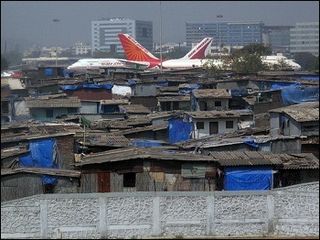
Behind the Beautiful Forevers is a beautifully written book. Through tight but supple prose, Boo presents an unsettling account of life in Annawadi, a “single, unexceptional slum” near Mumbai’s international airport. The slum lies beside a “buzzing sewage lake” so polluted that pigs and dogs resting in its shallows have “bellies stained in blue.” We meet “spiny” ragpickers rummaging through rat-filled garbage sheds, destitute migrants forced to eat rats, a girl covered by worm-filled boils (from rat bites), and a “vibrant teenager” who kills herself (by drinking rat poison) when she can no longer bear what life has to offer. Visitors to the airport, however, are spared the sight of this slum and its struggling inhabitants, who live with the constant fear of demolition. Annawadi is hidden from view by a wall that carries an advertisement for stylish floor tiles—tiles that, unlike the slum, promise to stay “beautiful forever” (hence, the book’s title).

As Boo explains in an author’s note, everything in the book is real, down to all the names. Though this work of nonfiction reads like a novel, it is the product of years of methodical observation and research. Boo chronicled the lives of Annawadians with photographs, video recordings, audiotapes, written notes, and interviews, with several children from Annawadi pitching in upon “mastering [Boo’s] Flip Video Camera.”

The intimate view of life provided by Boo is embedded within a larger concern about the government’s role in “the distribution of opportunity in a fast-changing country.” In these uncertain times—an “ad hoc, temp-job, fiercely competitive age”—has the government made things better or worse? In a bid to answer this question, Boo consulted more than 3,000 public records, obtained through India’s Right to Information Act, from government agencies such as the Mumbai police, the state public health department, public hospitals, the state and central education bureaucracies, electoral offices, city ward offices, morgues, and the courts.

The verdict, chilling in its details, is that there is a deep rot at the heart of the Indian state. The utter callousness of government officials is matched only by the utter vulnerability of the poor, who must daily navigate “the great web of corruption.” Police officers batter a child, aiming for his hands, the body part on which his tenuous livelihood depends. Doctors, at a government hospital, alter a burned woman’s records to absolve themselves of blame for her gruesome death. A school, meant for the poor, is closed as “soon as the leader of the nonprofit has taken enough photos of children studying to secure the government funds” (in contrast, a school funded by a Catholic charity “takes it obligation to poor students more seriously”).

In Boo’s rendering, the state not only fails to provide the basics of a decent life to vast numbers of citizens, but is wholly predatory.

A Superhero for the Ladies

Avengers1_615_320_s_c1Sady Doyle in In These Times:

With The Avengers becoming this summer’s (or this year’s) must-see movie, we are being treated to lots of op-eds on why it’s not for girls. The problem is, those pieces don’t have much to do with The Avengers, which, I would argue, has been successful in part by playing to women.

For an example of the punditry I’m talking about, take Moviefone’s excruciating “One Girl’s Guide to The Avengers”: “As your boyfriend probably told you, The Avengers is hitting theaters this Friday… But you hate action movies and you’ve never even read a comic book.” At this point, given that “you” are apparently a character in a tampon commercial, you expect to start hearing about how much more confident you’ll feel on your date, due to increased absorbency. But, no: The piece promises “cocktail introductions a la ‘Bridget Jones’s Diary.’” Yikes.

At Salon, Andrew O’Hehir takes a more pro-feminist approach, bemoaning the sexism of summer movie season: He says that most big “tentpole” movies are aimed squarely at young men, that movies for women earn less critical respect than movies for men, and that Hollywood is sexist. All of this is generally correct. But specifically, O’Hehir goes on to say that The Avengers is more or less identical to Transformers and predict that “a large majority of [the movie’s] ticket buyers will be teenage boys and young men.”

And yet, exit polls showed that the people who saw The Avengers were “50% over age 25 and 50% under 25, while 60% were male and 40% female.” That’s a male majority, but a slim one. And according to a Fandango poll, The Avengers was the most anticipated summer movie for men, and second-most anticipated for women. The only movie women wanted to see more was Snow White and the Huntsman, another action movie, but with a female lead.

So it turns out women do like movies about violence. (See also: The Hunger Games.) And they’re showing up in massive numbers to see this particular violent movie. Why?