The Really Nice Guy Materialist

Cover_article_14814_en_US

Julian Baggini interviews Patricia Churchland, in The Philosophers' Magazine (for Abbas):

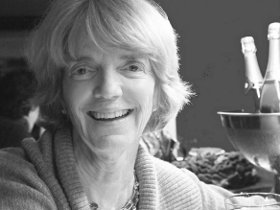
[Y]ou can understand the trepidation felt by many at the thought of Patricia [Chruchland] tackling the issue of morality head-on. But her recent book, Braintrust: What Neuroscience Tells Us about Morality defies such expectations, due largely to the fact that the answer to the question implied by the subtitle is very far from everything. This contrasts starkly with what many see as the scientific hubris of Sam Harris in his recent The Moral Landscape.

“Sam Harris has this vision that once neuroscience is much more developed then neuroscientists will be able to tell us what things are right or wrong, or at least what things are conducive to well-being and not. But even if you cast it in that way, that’s pretty optimistic – or pessimistic, depending on your point of view. Different people even within a culture, even within a family, have different views about what constitutes their own well-being. Some people like to live out in the bush like hermits and dig in the ground and shoot deer for resources, and other people can’t countenance a life that isn’t in the city, in the mix of cultural wonderfulness. So people have fundamentally different ideas about what constitutes well-being.

“I think Sam is just a child when it comes addressing morality. I think he hasn’t got a clue. And I think part of the reason that he kind of ran amuck on all this is that, as you and I well know, trashing religion is like shooting fish in a barrel. If Chris Hitchens can just sort of slap it off in an afternoon then any moderately sensible person can do the same. He wrote that book in a very clear way although there were lots of very disturbing things in it. I think he thought that, heck, it’s not that hard to i gure these things out. Morality: how hard can that be? Religion was dead easy. And it’s just many orders of magnitude more difficult.”

What Churchland believes science can do is describe the “neural platform” for ethics. What does she mean by this?

The Rumour Machine: On the Dismissal of Bo Xilai

200px-Voa_chinese_bo_xilai_13Feb12_portraitWang Hui in the LRB (image from Wikipedia):

‘March 14’ used to be shorthand in China for the 2008 unrest in Tibet; now it stands for the 2012 ‘Chongqing incident’. It is unusual for municipal policy to have national impact, and rarer still for the removal of a city leader to become international news. Some observers have argued that the dismissal of Bo Xilai, the party secretary of Chongqing, is the most important political event in China since 1989.

Stories began to circulate on 6 February, when Wang Lijun, Chongqing’s police chief, fled to the US consulate in the nearby city of Chengdu. Neither the Chinese nor the American authorities have revealed anything about what followed, the US saying only that Wang had an appointment at the consulate and left the next day of his own accord. Since then he has been in the custody of the Chinese government. Reports in the foreign media fuelled online speculation, with the result that all sorts of rumours began to spread – some of them later shown to be true. There were stories about a power struggle between Bo and Wang; about the corruption of Bo’s family (how could they afford to send their son to Harrow, Oxford and Harvard?); about coup attempts by Bo and Zhou Yongkang, the head of China’s security forces; about business deals and spying; about a connection between Bo and the mysterious death of the British businessman Neil Heywood in November. Even supporters of what has been called the Chongqing experiment – the reforms implemented under Bo, who became party secretary there in 2007 – were unwilling to say that no corruption or malfeasance took place. In today’s China, these offer a convenient pretext for an attack on a political enemy.

As the stories multiplied, two main interpretations emerged. The first – supported by a good deal of leaked information – saw the Chongqing case as merely a matter of a local leader who had broken the law. The second linked the incident to political differences. With a population of 32 million, Chongqing is one of the PRC’s four centrally governed municipalities (the others are Beijing, Shanghai and Tianjin). In the 1930s and 1940s, the city was an important arms-manufacturing centre for the Kuomintang, and today serves as a hub for much of south-west China. The Chongqing model operated within China’s existing political institutions and development structures, which emphasise attracting business and investment, but involved quite distinctive social reforms. Large-scale industrial and infrastructural development went hand in hand with an ideology of greater equality – officials were instructed to ‘eat the same, live the same, work the same’ as the people – and an aggressive campaign against organised crime. Open debate and public participation were encouraged, and policies adjusted accordingly. No other large-scale political and economic programme has been carried out so openly since the reform era began in 1978, soon after Mao’s death.

Memory Displaced: Re-reading Jean Améry’s “Torture”

Diner_468wDan Diner in Eurozine:

Back in the 1960s, Jean Améry's “Torture” (1965) was required reading. The line “Whoever has succumbed to torture can no longer feel at home in the world” had an exceptional persuasive intensity. In his iconic text, composed twenty-two years after being subjected to the torment of torture, Améry reflects on the pain inflicted on his body and soul. He develops a sort of anthropology of agony, scrutinizing the modes and manners of a deliberate and maliciously executed violence, one that rips through the layers of the flesh, wilfully rends the body's limbs, engendering abysmal suffering. The procedure starts with a first and definitive blow, shattering the human being's elementary trust in the world. Reflecting on its foundationally destructive impact in devastating man's personality, Améry writes: “The first blow brings home to the prisoner that he is helpless, and thus it already contains in the bud everything that is to come.”

Améry's essay presents a philosophy of pain remembered, of pain brutally inflicted on his body. In July 1943, after being arrested as an anti-Nazi resister, he was removed to Fort Breendonck, located between Antwerp and Brussels. There he was subjected to torture – a site of memory emblemized by W.G. Sebald in his novella Austerlitz, in allusion to Améry's existential experience there.

“There I experienced it: torture,” writes Améry. Yet the pain was not inflicted upon him randomly. The purpose of the torment directed at his body was to break his will as a political opponent to the regime, to compel him to betray his associates, his comrades. The torture carried out on the prisoner Améry was inflicted on a person who had chosen to resist – something that happens all the time and everywhere. Améry writes: “Somewhere, someone is crying out under torture. Perhaps in this hour, this second.” For him, the pain was exemplary, but by far not exceptional. All the more resolute and ultimate, therefore, was his judgment: “Torture is the most horrible event a human being can retain within himself”.

The Original Colonist

From The New York Times:

AntThis is not a humble book. Edward O. Wilson wants to answer the questions Paul Gauguin used as the title of one of his most famous paintings: “Where do we come from? What are we? Where are we going?” At the start, Wilson notes that religion is no help at all — “mythmaking could never discover the origin and meaning of humanity” — and contemporary philosophy is also irrelevant, having “long ago abandoned the foundational questions about human existence.” The proper approach to answering these deep questions is the application of the methods of science, including archaeology, neuroscience and evolutionary biology. Also, we should study insects.

…In “The Social Conquest of Earth,” he explores the strange kinship between humans and some insects. Wilson calculates that one can stack up log-style all humans alive today into a cube that’s about a mile on each side, easily hidden in the Grand Canyon. And all the ants on earth would fit into a cube of similar size. More important, humans and certain insects are the planet’s ­“eusocial” species — the only species that form communities that contain multiple generations and where, as part of a division of labor, community members sometimes perform altruistic acts for the benefit of others. Wilson’s examples of insect eusociality are dazzling. The army ants of Africa march in columns of up to a million or more, devouring small animals that get in their way. Weaver ants “form chains of their own bodies in order to pull leaves and twigs together to create the walls of shelters. Others weave silk drawn from the spinnerets of their larvae to hold the walls in place.” Leafcutter ants “cut fragments from leaves, flowers and twigs, carry them to their nests and chew the material into a mulch, which they fertilize with their own feces. On this rich material, they grow their principal food, a fungus belonging to a species found nowhere else in nature. Their gardening is organized as an assembly line, with the material passed from one specialized caste to the next.”

More here.

The Age of Insight: How Our Brain Perceives Art

From Columbia Magazine:

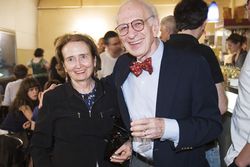
Denise-und-Eric-KandelMany strands of Eric Kandel’s life come together in his latest work, The Age of Insight: The Quest to Understand the Unconscious in Art, Mind, and Brain, from Vienna 1900 to the Present. The 82-year-old University Professor and co-director of the Mind Brain Behavior Initiative was born in Vienna, where, as a boy of 8, he witnessed the Nazis march into the Austrian capital. Decades later, he recalls how much his own intellectual interests were shaped not only by the Holocaust that followed, but by the cosmopolitan city that in the early 1900 served as an extraordinary incubator for creativity and thought that shaped the world we live in today. From the Modernist painters Gustav Klimt, Oskar Kokoschka and Egon Schiele to the pioneering psychoanalyst Sigmund Freud, a new view emerged of the human mind. Indeed, before Kandel plunged into research on the neurobiology of memory, which would win him the Nobel Prize in Physiology or Medicine in 2000, he had aspired to be a psychoanalyst himself. As he pondered the mission of Columbia’s Mind Brain Behavior Initiative—to connect biomedical sciences with the arts, humanities and social sciences—he came to see that our contemporary understanding of human behavior can be traced directly back to fin de sécle Vienna 1900, particularly in its emphasis on the unconscious and irrational aspects of the human mind.

And it didn’t hurt that he and his wife Denise, who survived the Holocaust as a child in France, have long been art collectors who own small works by Klimt, Kokoschka and Schiele, as well as by other German Expressionists. Indeed, Kandel’s 600-page work is dedicated to his wife, a professor of sociomedical sciences in the Department of Psychiatry at the Mailman School of Public Health. “I discuss beauty and I say everyone gets pleasure out of looking at a beautiful face, and I use a photograph of Denise when I first met her,” he says. “I mean she is, and she was, for me remarkably beautiful. And one of the things I enjoyed in our friendship when I first met her is that, in addition to our very wonderful relationship, she was just so pleasant to look at.”

Q. What made you decide to turn your attention to the neurobiology of how we perceive art?

There are many motivating factors. One was my longterm interest in Klimt, Kokoschka and Schiele, the three Austrian Modernists, my fascination with Vienna 1900 and with Freud. I wanted to become a psychoanalyst and I’m Viennese so I sense a shared intellectual history, particularly with turn-of-the-century Vienna. But the immediate stimulus actually came from [Columbia President] Lee Bollinger. The idea behind the Mind Brain Behavior Initiative is to try to understand the human mind in biological terms and to use these insights to bridge the biology of the brain with other areas of the humanities. Lee expressed the belief that the new science of the mind could have a major impact on the academic curriculum, that in a sense everyone at the University works on the human mind. I felt I was doing this for personal reasons, but isn’t it wonderful that it is also in line with one of the missions of the University?

More here.

Let the wild rumpus start!

16x9

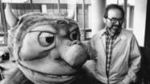
Over the years, Sendak expressed frustration that “Where the Wild Things Are,” published in 1963, tended to overshadow his other books, which include many children’s classics: “Pierre,” “Chicken Soup With Rice” and the phantasmagoric “In the Night Kitchen,” often challenged because it showed its boy protagonist, Mickey, in the nude. He also disputed the description of himself as a children’s writer; as he told Stephen Colbert in January, “I don’t write for children. … I write. And somebody says, ‘That’s for children.’ I didn’t set out to make children happy. Or make life better for them, or easier for them.” That’s a fair point, and it suggests why his work remains resonant, because he was writing not for a specific audience but to express himself. This is the essence of art, the essence of what books and stories have to offer, that sense of reaching out across the void. And yet, as Sendak recognized — indeed, as he encoded into his very narratives — such connections go only so far.

more from David L. Ulin at the LA Times here.

Gaddafi’s last stand

De647b26-9ae3-11e1-9c98-00144feabdc0

As Libyan rebels tried desperately to hold off Colonel Muammer Gaddafi’s forces in March last year in the town of Zawiya, 50km west of Tripoli, one opposition supporter had a simple question for the Sky News special correspondent Alex Crawford: “How can we do this on our own?” Within two weeks, his rhetorical plea – quoted in Crawford’s book, Colonel Gaddafi’s Hat – was moot. Following a UN Security Council resolution authorising “all necessary measures” to protect Libyan civilians, Nato warplanes had begun a bombardment of Gaddafi’s forces that over the next six months would chip away at the regime until a path was clear for the rebels to take Tripoli. I and other journalists saw the extraordinary bravery of many Libyans opposed to the colonel, from the long-persecuted Amazigh, or Berber, people battling out from their western mountain redoubt, to the Tripoli dissidents who tried to protest even as pick-ups packed with soldiers roamed the streets. But in the end they did need outside help in unseating an adversary who proved much more resilient than the leaders toppled in a matter of weeks in Libya’s neighbours Tunisia and Egypt.

more from Michael Peel at the FT here.

the impression of mastery

13HOTHSCHILD-articleLarge

In “Homage to Catalonia,” his memoir of the Spanish Civil War, George Orwell remarks that Francisco Franco’s military uprising against Spain’s elected government “was an attempt not so much to impose fascism as to restore feudalism.” Paul Preston’s magisterial account of the bloodshed of that era bears this out. Fascism may belong to the 20th century, but Franco’s grab for power evokes earlier times: the parading soldiers who flourished enemy ears and noses on their bayonets, the mass public executions carried out in bullrings or with band music and onlookers dancing in the victims’ blood. One of Franco’s top aides talked of democratically chosen politicians as “cloven-hoofed beasts,” and anything that smacked of modernity — Rotary Clubs, Montessori schools — seemed to draw the regime’s violent wrath. Echoing the Inquisition, Franco ordered particularly despised foes put to death with the garrote, in which the executioner tightens an iron collar around a person’s neck.

more from Adam Hochschild at the NY Times here.

Friday, May 11, 2012

Art Spiegelman discusses Maurice Sendak

Sasha Weiss in The New Yorker:

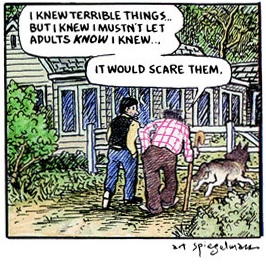
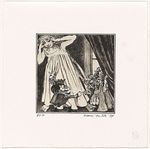
ScreenHunter_29 May. 12 11.59In 1993, Art Spiegelman and Maurice Sendak spent a rambling day at the older artist’s house in Connecticut. What emerged from their conversation—along with an ongoing and affectionate friendship—was the idea for a collaborative comic strip (reproduced above, click to expand) about the nature of children’s fears, that ran in The New Yorker in the September 27, 1993 issue. Working in Spiegelman’s studio in New York some weeks later, they sat side by side while Spiegelman drew on one half of a panel and Sendak worked on the other. I spoke with Spiegelman about his encounters with the creator of the Wild Things.

How did you come to know Maurice?

I came to know of Maurice’s big interest in comics through a guy named Woody Gelman, a very significant collector of old paper when old paper wasn’t really being collected, who had gathered together all the Little Nemo Sunday pages when nobody knew what they were. Woody was in touch with Maurice, who was very excited about them. They grew into being “In the Night Kitchen.” And so I would get news of Sendak way before I ever met him. This was in the late sixties. I am a little bit too old to have grown up with his kid’s books, but I saw them and was really jazzed by what I saw—a kindred spirit in the sense of somebody who was making kid’s books, drawings, but that had a comics inflection somehow.

More here.

maurice sendak and opera

Sen7

After yesterday’s bittersweetly funny Sendak remembrance, a trip to his more serious and obscure past: In 2003, Sendak collaborated with Pulitzer Prize-winning playwright Tony Kushner on Brundibar—a WWII children’s opera, originally written by Czech composer Hans Krása, which the duo adapted into a book illustrated by Sendak and an opera for which Sendak designed the sets and costumes. But Sendak’s fascination with the opera dated back some three decades, to the 1970s, when he began collaborating with printmaker Kenneth Tyler while working on sets and costumes for Mozart’s The Magic Flute and Tchaikovsky’s The Nutcracker. These operas inspired him to create a wealth of sketches, drawings, and watercolors. Some of them appeared in his beloved book Nutcracker and others were printed at Tyler Graphics between 1977 and 1984, and again in 2002, employing lithography and intaglio processes.

more from Maria Popova at The Atlantic here.

Invitation to a Beheading

120507_r22152_p233

Anthony Powell, in wise-facetious mood, once quoted an English publisher on how to write “a good Jewish novel”: write a good novel, then change all the names to Jewish ones. The joke came to mind while I was reading Hilary Mantel’s “Bring Up the Bodies” (Holt). Both this new book and its predecessor, “Wolf Hall,” are mysteriously successful historical novels, a somewhat gimcrack genre not exactly jammed with greatness. One of the reasons for this literary success is that Mantel seems to have written a very good modern novel, then changed all her fictional names to English historical figures of the fifteen-twenties and thirties. Where much historical fiction gets entangled in the simulation of historical authenticity, Mantel bypasses those knots of concoction, and proceeds as if authenticity were magic rather than a science. She knows that what gives fiction its vitality is not the accurate detail but the animate one, and that novelists are creators, not coroners, of the human case. In effect, she proceeds as if the past five hundred years were a relatively trivial interval in the annals of human motivation.

more from James Wood at The New Yorker here.

lotsa universes

194_science_ress

An astonishing concept has entered mainstream cosmological thought: physical reality could be hugely more extensive than the patch of space and time traditionally called “the universe.” We’ve learnt that we live in a solar system that is just one planetary system among billions, in one galaxy among billions. But there are signs that a further Copernican demotion confronts us. The entire panorama that astronomers can observe could be a tiny part of the aftermath of our Big Bang, which is itself just one bang among a potentially infinite ensemble. In this grander perspective, what we’ve traditionally called the laws of nature may be no more than parochial bylaws—local manifestations of “bedrock” laws that must be sought at a still deeper level. Astronomers might seem the most helpless of all scientists. They can’t do experiments on stars and galaxies, and human lives are far too short for us to watch most cosmic objects evolve. But there are some compensating advantages. There are huge numbers of objects in the sky, and one can infer the life-cycle of stars, just as one can infer how trees have grown and will die from one day’s wandering in a forest.

more from Martin Rees at Prospect Magazine here.

To Predict Dating Success, The Secret’s In The Pronouns

Alix Spiegel at NPR:

Pennebaker has counted words to better understand lots of things. He's looked at lying, at leadership, at who will recover from trauma.

But some of his most interesting work has to do with power dynamics. He says that by analyzing language you can easily tell who among two people has power in a relationship, and their relative social status.

“It's amazingly simple,” Pennebaker says, “Listen to the relative use of the word “I.”

What you find is completely different from what most people would think. The person with the higher status uses the word “I” less.

To demonstrate this Pennebaker pointed to some of his own email, a batch written long before he began studying status.

First he shares an email written by one of his undergraduate students, a woman named Pam:

Dear Dr. Pennebaker:

I was part of your Introductory Psychology class last semester. I have enjoyed your lectures and I'velearned so much. I received an email from you about doing some research with you. Would there be a time for me to come by and talk about this?

Pam

Now consider Pennebaker's response:

Dear Pam –

This would be great. This week isn't good because of a trip. How about next Tuesday between 9 and 10:30. It will be good to see you.

Jamie Pennebaker

Pam, the lowly undergraduate used “I” many times, while Pennebaker didn't use it at all.

More here.

Sam Harris On Knowing Your Enemy, and a response

Sam Harris in his blog:

Imagine that you work for the TSA and are executing a hand search of a traveler’s bag. He is a young man in his twenties and seems nervous. You notice that he is carrying a hardcover copy ofThe Girl with the Dragon Tattoo. You pick up the book and ask him if he likes it. He now appears even more nervous than before. You notice something odd about the book—the dust jacket doesn’t seem to fit. You remove it and find a different book underneath. How do you feel about this traveler’s demeanor, and the likelihood of his being a terrorist, if the book is:

A. The Qur’an (in Arabic)

B. The Magic Mushroom Grower’s Guide

C. Overcoming Impotence: A Leading Urologist Tells You Everything You Need to Know

D. Dianetics

If you care more about A than B, C, or D, as I think you should, you are guilty of religious profiling (and calling it “behavioral profiling” doesn’t change this fact).

The funny thing about my “racism” is that I would probably be more concerned if the young man in this example were light-skinned, like me, than Middle Eastern. Why? Because he would have had to make a great effort to learn Arabic. Is there anything intrinsically sinister about learning Arabic? No. I wish I knew Arabic. But it is one more detail that fits the profile of someone who is deeply committed to the worldview of Islam and disposed to conceal that fact. Are all such people terrorists? Of course not. But every person who attempts to blow himself up on an airplane, now or in the foreseeable future, is likely to come from this group. Of course, if that changes, we should alter our view of security accordingly. If the Ku Klux Klan were to declare a broader war on civilization and begin a campaign of suicide bombings, we would have to keep an eye on that profile too (and being nonwhite or Jewish would help smooth your path through security).

More here. And a response by security expert Bruce Schneier:

The right way to look at security is in terms of cost-benefit trade-offs. If adding profiling to airport checkpoints allowed us to detect more threats at a lower cost, then we should implement it. If it didn’t, we’d be foolish to do so. Sometimes profiling works. Consider a sheep in a meadow, happily munching on grass. When he spies a wolf, he’s going to judge that individual wolf based on a bunch of assumptions related to the past behavior of its species. In short, that sheep is going to profile…and then run away. This makes perfect sense, and is why evolution produced sheep—and other animals—that react this way. But this sort of profiling doesn’t work with humans at airports, for several reasons.

First, in the sheep’s case the profile is accurate, in that all wolves are out to eat sheep. Maybe a particular wolf isn’t hungry at the moment, but enough wolves are hungry enough of the time to justify the occasional false alarm. However, it isn’t true that almost all Muslims are out to blow up airplanes. In fact, almost none of them are. Post 9/11, we’ve had 2 Muslim terrorists on U.S airplanes: the shoe bomber and the underwear bomber. If you assume 0.8% (that’s one estimate of the percentage of Muslim Americans) of the 630 million annual airplane fliers are Muslim and triple it to account for others who look Semitic, then the chances any profiled flier will be a Muslim terrorist is 1 in 80 million. Add the 19 9/11 terrorists—arguably a singular event—that number drops to 1 in 8 million. Either way, because the number of actual terrorists is so low, almost everyone selected by the profile will be innocent. This is called the “base rate fallacy,” and dooms any type of broad terrorist profiling, including the TSA’s behavioral profiling.

More here.

Anna Quindlen talks about her new memoir ‘Lots of Candles, Plenty of Cake’

From The Christian Science Monitor:

Anna Quindlen — whose new memoir, Lots of Candles, Plenty of Cake, was published by Random House last week — is a woman of many accomplishments. Pulitzer Prize-winning journalist. Beloved novelist. Sought-after public speaker. The only author to ever have books on The New York Times' fiction, nonfiction, and self-help bestseller lists. She's also my mother, which she'd tell you is her greatest accomplishment (along with being the mother of my younger siblings, Chris and Maria). I thought, since her new book is filled with reflections on motherhood and family, who better to ask the right questions than someone who's been around for much of the journey her memoir describes? So I asked if I could interview her about the book and the stories behind it, and she said yes (of course). But as we sat down to talk, she was the one with the first question: “Isn't this so weird for you? I mean, did you ever imagine that someday we'd be sitting here at the dining room table, talking about my life?” In truth, the experience was a little surreal — and nerve-wracking. We've had plenty of conversations about her work before, but this was different; I felt the pressure any interviewer feels, to ask the right questions to get the interviewee talking. But it turned out to be so much fun that we both quickly forgot about the unusual occasion and the tape recorder between us. I thought we'd start with the title because I know you had a lot of difficulty arriving at a title for this book. I was hoping you could talk about the different titles you went through prior to Lots of Candles, Plenty of Cake.

Anna Quindlen: I'm not sure that any one title had traction for more than an hour when I first started writing this memoir. The problem is that the book is about so many different things. About motherhood, about friendship, about how we grow older, about how we care for ourselves and our families while we grow older. There wasn't one title that covered the waterfront. And what I realized at a certain point was that I wanted a title that communicated, for lack of a better word, the joyfulness of the book. The exuberance. I was walking across town to have dinner with my friend, the mystery writer Linda Fairstein, and Lots of Candles, Plenty of Cake just popped into my head. Full bore. I immediately e-mailed it to my agent. She loved it. She forwarded it to my editor. She loved it. We all felt that it really captured something about the book. It captured the age aspect, but also the joyfulness. And that was the duality that we really wanted to get front and center.

More here.

Manto: Curator of a hollowed conscience

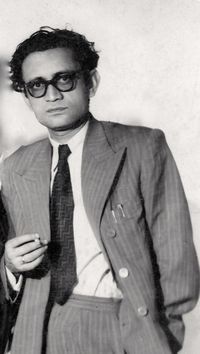
Ayesha Jalal in The Hindu:

Manto__1079584aSaadat Hasan Manto, whose birth centenary is being celebrated in Pakistan and India today, once remarked that any attempt to fathom the murderous hatred that erupted with such devastating effect at the time of the British retreat from the subcontinent had to begin with an exploration of human nature itself.

For the master of the Urdu short story this was not a value judgment. It was a statement of what he had come to believe after keen observation and extended introspection. Shaken by the repercussions of the decision to break up the unity of the subcontinent, Manto wondered if people who only recently were friends, neighbours and compatriots had lost all sense of their humanity. He too was a human being, ‘the same human being who raped mankind, who indulged in killing' and had ‘all those weaknesses and qualities that other human beings have.' Yet human depravity, however pervasive and deplorable, could not kill all sense of humanity. With faith in that kind of humanity, Manto wrote riveting short stories about the human tragedy of 1947 that are internationally acknowledged for representing the plight of displaced and terrorised humanity with exemplary impartiality and empathy.

Manto's partition stories are a must read for anyone interested in the personal dimensions of India's division and the creation of Pakistan. Pieced together from close observations of the experiences of ordinary people at the moment of a traumatic rupture, his stories are not only unsurpassable in literary quality but records of rare historical significance. Unlike journalistic and partisan accounts of those unsettled times, Manto's transcended the limitations of the communitarian narratives underpinning the nationalist self-projections of both Pakistan and India. He did not create demons out of other communities to try and absolve himself of responsibility for the moral crisis posed by the violence of partition.

More here.

Study links genes to melanoma development

From Nature:

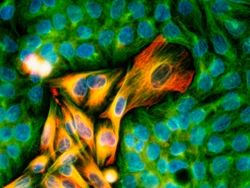
MelanResearchers have found a set of gene mutations that seem to play a part in some cases of skin cancer. Cancer geneticist Michael Berger of the Broad Institute of Harvard and MIT in Cambridge, Massachusetts, and his colleagues sequenced the genomes of 25 melanoma tumours that had been donated by patients and compared them to the patients' normal cells. They found that one gene, PREX2, was mutated in 11 of the 25 tumour samples, and that genetic rearrangements occurred near this gene in nine patients. PREX2 produces a protein that curtails the action of another protein called PTEN, which is involved in preventing cancer development.

Berger and his colleagues also found potentially damaging PREX2 mutations in 14% of 107 tumours that were not part of the initial study. And when they transplanted human skin cells containing PREX2 mutations into mice that had been engineered to develop skin cancer, four of the six different PREX2 mutations accelerated development of the tumours in mice. This led the researchers to suggest that PREX2 might have a similar role in human skin cancers. Their work is published in Nature today1. The team also confirmed some findings from earlier studies2, including the effect that sun exposure can have on the mutation rate of tumour DNA. Tumours from areas of the body that are not frequently exposed to sunlight had around 3 to 14 mutations every million base pairs, whereas one patient who was known to have had high levels of sun exposure had 111 mutations every million base pairs.

More here.

Thursday, May 10, 2012

Lions in Winter, Part One

ImageNYPLCharles Petersen in n+1:

In March 2008, the New York Public Library announced a $100 million gift from private equity billionaire Stephen Schwarzman and a sweeping plan to radically remake its landmark main building on 42nd Street. Six months later, Lehman Brothers collapsed; the plan, to no one’s surprise, was put on hold. Now, the administration has announced that the renovation, its budget increased from $250 to $350 million, is back on track. The proposed designs developed by British architect Norman Foster have not yet been made public, but the basic scheme remains the same: to tear out the steel stacks that occupy almost half of the main building—and that literally hold up the famed Rose Reading Room on the top floor—and replace them with a new circulating library. This library will offer plenty of books, DVDs, and other materials, which any patron will be allowed to take out of the building, unlike the current research collection. The plan will be financed through the sale of two of the library’s nearby branches—the Mid-Manhattan Library across the street and the Science, Industry, and Business Library (SIBL) at Madison and 34th—and through a $150 million grant from the City of New York. The new super-library will also be designed for a time when the idea of physically circulating books becomes a thing of the past and practically all library “materials” will be available exclusively through digital devices.

That, however, is in the future. What the present will bring is the removal of the majority of the library’s outstanding collection of research-level books, which for most of the past century have rarely if ever been allowed out of the building. These books will be moved to a storage facility in Princeton, New Jersey. Some will remain in the stacks beneath Bryant Park, but the rest of the books in the library’s core collection will be available only by putting in a request and waiting for them to be brought back to New York.

walk like a roman

Beard_266360k

When the ancient geographer Strabo described the native inhabitants of the Iberian Peninsula, he listed – with a predictable combination of relish, horror and exaggeration – all kinds of aspects of their weird barbarity. Some of the Spanish tribesmen, he insisted, stored vintage urine in cisterns and then bathed in it, or used it to clean their teeth. Others dressed their women up with iron rods around their necks rather than jewellery. Others, still stranger, appeared to have no gods. No less remarkable, for Strabo, was the bafflement some of these poor Spaniards felt at the day-to-day habits of their new Roman allies or conquerors. One group of tribesmen, he explained, visiting a Roman camp and seeing some generals taking a stroll, “walking up and down the road”, thought they were “mad and tried to take them back into their tents”, either to sit down and rest, or get up and fight. Despite Strabo’s patronizing tone, it’s one of those rare occasions where we can catch a glimpse of the barbarian point of view on the Romans. The Spaniards presumably thought that walking was something that got a person from A to B (or from tent to battleground). What on earth then were these Roman generals doing as they ambled around, chatting, but not actually going anywhere?

more from Mary Beard at the TLS here.