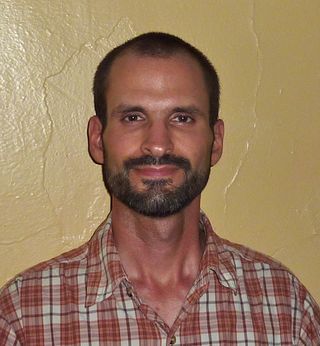
Justin E. H. Smith to Judge 4th Annual 3QD Philosophy Prize

UPDATE 9/24/12: The winners have been announced here.

UPDATE 9/17/12: The finalists have been announced here.

UPDATE 9/15/12: The semifinalists have been announced here.

UPDATE 9/6/12: Voting round is now open. Click here to see full list of nominees and vote.

Dear Readers, Writers, Bloggers,

JustinWe are very honored and pleased to announce that Justin E. H. Smith has agreed to be the final judge for our 4th annual prize for the best blog and online writing in the category of philosophy. (Details of the previous three philosophy prizes can be seen by clicking on the names of their respective judges here: Daniel Dennett, Akeel Bilgrami, and Patricia Churchland).

Justin E. H. Smith is professor of philosophy at Concordia University in Montreal, Canada. Beginning in 2013 he will be Professeur des Universités at the Université de Paris 7-Denis Diderot. Completing a Ph.D. from Columbia University in 2000, his primary research focus over the past 15 years has been the history of metaphysics, philosophy of science, and natural philosophy in early modern Europe, with a particular interest in the philosophy of Leibniz. This interest culminated in 2011 with a lengthy study of Leibniz's theory of the generation, structure, and motion of living beings, entitled Divine Machines: Leibniz and the Sciences of Life. He has recently completed a book on the origins of so-called 'racial science' in the 18th century out of early modern philosophical debates about species taxonomy and the problem of natural kinds. This book, Nature, Human Nature, and Human Difference: Early Modern Philosophy and the Invention of Race, will appear from Princeton University Press, in 2013. He has also recently completed a translation and critical edition, with François Duchesneau, of Georg Ernst Stahl's Negotium otiosum, seu Skiamachia (1720), to appear from Yale University Press next year. He also has longstanding metaphilosophical and methodological interests in the relationship of philosophy to its history. This interest has recently culminated in an edited volume, with Eric Schliesser and Mogens Laerke, on this topic, to appear next year from Oxford University Press. Another major research project, under contract with Princeton University Press, is a book entitled A Global History of Philosophy, to 1700, which, thankfully, he has another five years to complete. In this connection, he has a developing research interest in classical Indian philosophy, particularly the philosophy of language in the Pāṇinian tradition, as well as the theory of the composition of bodies in Vaiśeṣika atomism. Running through this recent turn to comparative and so-called 'non-Western' philosophy is a serious interest in the nature of the philosophical project, including its anthropology and sociology, and its historical relationship to other, partially overlapping domains of human activity, particularly religious ritual and applied science. He also writes for the New York Times Stone series. More about his work can be found here: www.jehsmith.com/philosophy.

As usual, this is the way it will work: the nominating period is now open, and will end at 11:59 pm EST on September 3, 2012. There will then be a round of voting by our readers which will narrow down the entries to the top twenty semi-finalists. After this, we will take these top twenty voted-for nominees, and the four main editors of 3 Quarks Daily (Abbas Raza, Robin Varghese, Morgan Meis, and Azra Raza) will select six finalists from these, plus they may also add up to three wildcard entries of their own choosing. The three winners will be chosen from these by Justin Smith.

The first place award, called the “Top Quark,” will include a cash prize of one thousand dollars; the second place prize, the “Strange Quark,” will include a cash prize of three hundred dollars; and the third place winner will get the honor of winning the “Charm Quark,” along with a two hundred dollar prize.

(Welcome to those coming here for the first time. Learn more about who we are and what we do here, and do check out the full site here. Bookmark us and come back regularly, or sign up for the RSS feed.)


Details:

PrizePhilosophyAnnounce2012The winners of this prize will be announced on September 24, 2012. Here's the schedule:

August 27, 2012:

  • The nominations are opened. Please nominate your favorite blog entry by placing the URL for the blog post (the permalink) in the comments section of this post. You may also add a brief comment describing the entry and saying why you think it should win. (Do NOT nominate a whole blog, just one individual blog post.)
  • Blog posts longer than 4,000 words are strongly discouraged, but we might make an exception if there is something truly extraordinary.
  • Each person can only nominate one blog post.
  • Entries must be in English.
  • The editors of 3QD reserve the right to reject entries that we feel are not appropriate.
  • The blog entry may not be more than a year old. In other words, it must have been written after August 26, 2011.
  • You may also nominate your own entry from your own or a group blog (and we encourage you to).
  • Guest columnists at 3 Quarks Daily are also eligible to be nominated, and may also nominate themselves if they wish.
  • Nominations are limited to the first 200 entries.
  • Prize money must be claimed within a month of the announcement of winners.

September 3, 2012

  • The nominating process will end at 11:59 PM (NYC time) of this date.
  • The public voting will be opened soon afterwards.

September 14, 2012

  • Public voting ends at 11:59 PM (NYC time).

September 24, 2012

  • The winners are announced.

One Final and Important Request

If you have a blog or website, please help us spread the word about our prizes by linking to this post. Otherwise, post a link on your Facebook profile, Tweet it, or just email your friends and tell them about it! I really look forward to reading some very good material, and think this should be a lot of fun for all of us.

Best of luck and thanks for your attention!

Yours,

Abbas

Sunday, August 26, 2012

A Portrait of the Economy

Brian Hayes in American Scientist:

20127311151309197-2012-09BrevHayesFAHistories of economics tend to start with Adam Smith and his Wealth of Nations, but Sylvia Nasar leads off with Charles Dickens and A Christmas Carol. It’s an unusual choice, but an effective and appropriate introduction to the story she wants to tell in Grand Pursuit: The Story of Economic Genius. Dickens shows us the redemption of Ebenezer Scrooge—his conversion from pinchpenny to beneficent bon vivant. Nasar aims to redeem economics from its intellectual roots as a science of scarcity and avarice and present it as a tool for improving the human condition.

Nasar is the author of A Beautiful Mind, a biography of the brilliant but troubled mathematician John Nash. Biography, rather than economics, is the true genre of this new book as well. Economic theories and principles are sketched when necessary, but economists’ lives are rendered in full color and lavish detail.

The book’s longest chapter is given to Beatrice Webb and, by extension, her husband Sidney Webb, the founders of the London School of Economics. We follow the wealthy young Beatrice from Gloucester to London for her coming out; we learn about her long and futile infatuation with Joseph Chamberlain (father of Neville) and her sparring matches with philosopher and evolutionist Herbert Spencer at the family dinner table; there’s a bit of upstairs–downstairs drama when Beatrice becomes close with a servant, Martha Jackson, whom she later learns is actually a poor relation.

More here.

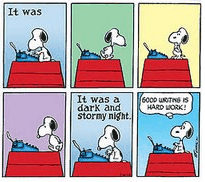
Bad Writing Award Winners Announced

Gabe Habash in Publishers Weekly:

ScreenHunter_53 Aug. 27 08.58Here are some other winners from this year’s awards. Click here for the full list of awfulness.

She slinked through my door wearing a dress that looked like it had been painted on … not with good paint, like Behr or Sherwin-Williams, but with that watered-down stuff that bubbles up right away if you don’t prime the surface before you slap it on, and – just like that cheap paint – the dress needed two more coats to cover her. — Sue Fondrie, Appleton, WI

They still talk about that fateful afternoon in Abilene, when Dancing Dan DuPre moonwalked through the doors of Fat Suzy’s saloon, made a passable reverse-turn, pirouetted twice followed by a double box-step, somersaulted onto the bar, drew his twin silver-plated Colt-45s and put twelve bullets through the eyes of the McLuskey sextuplets, on account of them varmints burning down his ranch and lynching his prize steer. — Ted Downes, Cardiff, U.K.

William, his senses roused by a warm fetid breeze, hoped it was an early spring’s equinoxal thaw causing rivers to swell like the blood-engorged gumlines of gingivitis, loosening winter’s plaque, exposing decay, and allowing the seasonal pot-pouris of Mother Nature’s morning breath to permeate the surrounding ether, but then he awoke to the unrelenting waves of his wife’s halitosis. — Guy Foisy, Orleans, Ontario

More here.

Climate change and the Syrian uprising

Shahrzad Mohtadi in the Bulletin of the Atomic Scientists:

Mideast_Syria_0463dTwo days short of Egyptian leader Hosni Mubarak's resignation, Al Jazeera published anarticle, headlined “A Kingdom of Silence,” that contended an uprising was unlikely in Syria. The article cited the country's “popular president, dreaded security forces, and religious diversity” as reasons that the regime of Bashar al-Assad would not be challenged, despite the chaos and leadership changes already wrought by the so-called Arab Spring. Less than one month later, security forces arrested a group of schoolchildren in the Syrian city of Dara'a, the country's southern agricultural hub, for scrawling anti-government slogans on city walls. Subsequent protests illustrated the chasm between the regime's public image — encapsulated in the slogan “Unity, Freedom and Socialism” — and a reality of widespread public disillusion with Assad and his economic policies.

Among the many historical, political, and economic factors contributing to the Syrian uprising, one has been devastating to Syria, yet remains largely unnoticed by the outside world. That factor is the complex and subtle, yet powerful role that climate change has played in affecting the stability and longevity of the state.

More here.

Indo-European Family of Languages Has Roots in Anatolia, Biologists Say

ScreenHunter_52 Aug. 26 17.24

Nicholas Wade in the New York Times:

Biologists using tools developed for drawing evolutionary family trees say that they have solved a longstanding problem in archaeology: the origin of the Indo-European family of languages.

The family includes English and most other European languages, as well as Persian, Hindi and many others. Despite the importance of the languages, specialists have long disagreed about their origin.

Linguists believe that the first speakers of the mother tongue, known as proto-Indo-European, were chariot-driving pastoralists who burst out of their homeland on the steppes above the Black Sea about 4,000 years ago and conquered Europe and Asia. A rival theory holds that, to the contrary, the first Indo-European speakers were peaceable farmers in Anatolia, now Turkey, about 9,000 years ago, who disseminated their language by the hoe, not the sword.

The new entrant to the debate is an evolutionary biologist, Quentin Atkinson of the University of Auckland in New Zealand. He and colleagues have taken the existing vocabulary and geographical range of 103 Indo-European languages and computationally walked them back in time and place to their statistically most likely origin.

More here.

Sunday Poem

Don't Tell Anyone

We had been married for six or seven years
when my wife, standing in the kitchen one afternoon, told me
that she screams underwater when she swims—

that, in fact, she has been screaming for years
into the blue chlorinated water of the community pool
where she does laps every other day.

Buttering her toast, not as if she had been
concealing anything,
not as if  I should consider myself

personally the cause of  her screaming,
nor as if we should perform an act of therapy
right that minute on the kitchen table,

—casually, she told me,
and I could see her turn her square face up
to take a gulp of oxygen,

then down again into the cold wet mask of  the unconscious.
For all I know, maybe everyone is screaming
as they go through life, silently,

politely keeping the big secret
that it is not all fun
to be ripped by the crooked beak

of something called psychology,
to be dipped down
again and again into time;

that the truest, most intimate
pleasure you can sometimes find
is the wet kiss

of  your own pain.
There goes Kath, at one PM, to swim her twenty-two laps
back and forth in the community pool;

—what discipline she has!
Twenty-two laps like twenty-two pages,
that will never be read by anyone.
.

by Tony Hoagland
from Poetry, Vol. 200, No. 4,
July/August, 2012

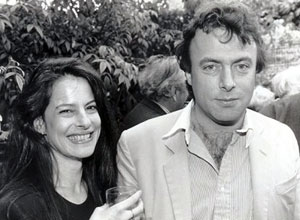
Christopher Hitchens: an impossible act to follow

Carol Blue in The Telegraph:

Carol-Blue-and-Christopher-Onstage, my husband was an impossible act to follow.

If you ever saw him at the podium, you may not share Richard Dawkins’s assessment that “he was the greatest orator of our time”, but you will know what I mean – or at least you won’t think, “She would say that, she’s his wife.”

Offstage, my husband was an impossible act to follow.

At home at one of the raucous, joyous, impromptu eight-hour dinners we often found ourselves hosting, where the table was so crammed with ambassadors, hacks, political dissidents, college students and children that elbows were colliding and it was hard to find the space to put down a glass of wine, my husband would rise to give a toast that could go on for a stirring, spellbinding, hysterically funny 20 minutes of poetry and limerick reciting, a call to arms for a cause, and jokes. “How good it is to be us,” he would say in his perfect voice.

My husband is an impossible act to follow.

And yet, now I must follow him. I have been forced to have the last word.

It was the sort of early summer evening in New York when all you can think of is living. It was June 8 2010, to be exact, the first day of his American book tour. I ran as fast as I could down East 93rd Street, suffused with joy and excitement at the sight of him in his white suit. He was dazzling. He was also dying, though we didn’t know it yet. And we wouldn’t know it for certain until the day of his death. Earlier that day he had taken a detour from his book launch to a hospital because he thought he was having a heart attack. By the time I saw him standing at the stage entrance of the 92nd Street Y that evening, he and I – and we alone – knew he might have cancer. We embraced in a shadow that only we saw and chose to defy. We were euphoric. He lifted me up and we laughed. We went into the theatre, where he conquered yet another audience. We managed to get through a jubilant dinner in his honour and set out on a stroll back to our hotel through the perfect Manhattan night, walking more than 50 blocks. Everything was as it should be, except that it wasn’t. We were living in two worlds. The old one, which never seemed more beautiful, had not yet vanished; and the new one, about which we knew little except to fear it, had not yet arrived. The new world lasted 19 months. During this time of what he called “living dyingly”, he insisted ferociously on living, and his constitution, physical and philosophical, did all it could to stay alive.

More here.

Meet Rumer

From The Daily Mail:

Early childhood memories are often fleeting and fragmented, but one of Sarah Joyce’s
first recollections offers an illuminating insight into the woman she would become. The 31-year-old singer-songwriter who performs as Rumer – hailed by Burt Bacharach, Carly Simon and Elton John as a major new talent – was born into a British family living near Islamabad in Pakistan, where her father was the chief engineer on the Tarbela Dam project. The youngest of seven children, she remembers standing in a room in the family home trying to be heard over the noise of her siblings. ‘I remember feeling physically very small and looking up at all these tall people and wondering how I could get their attention. So I decided to do impressions of Judy Garland and they would all fall about laughing, and I thought, “Great, I can get attention if I sing.” My singing was attention-seeking initially and then I realised – by accident – that I was quite good at it.’ It has taken Sarah – whose debut album Seasons of my Soul has received rapturous reviews – a long time to turn that childhood promise into adult reality. She’s been a receptionist, a cleaner and worked in a coffee shop (making ‘a good half a million cappuccinos’) while waiting ten long years for her break. But it isn’t just the depth and timbre of her voice (there have been comparisons with Karen Carpenter) that has made the record industry take notice. It is also her songs, inspired by a life story that is as compelling and moving as her music.

Her early childhood, happily entrenched in the expat community of Islamabad, was to be short-lived. When she was four, the family returned to Britain and shortly afterwards her parents’ marriage broke up. It wasn’t until she was 11 that she discovered the reason for the split, when her mother, by then remarried, informed her – ‘as if she were throwing a hand grenade into my life’ – that her father was not Jim Joyce, the man who had raised her, but the family’s Pakistani cook. ‘Before then there had been no doubts about my parentage. I was just obviously darker than the rest of my family. My siblings were blonde, and I was this dark-haired, dark-eyed girl, and I used to cry about it. I used to say, “I want to have blonde hair and blue eyes”, and one of my older sisters would say, “When I was a little girl I used to want brown hair and brown eyes” – but I knew that was rubbish,’ she says.

More here.

Saturday, August 25, 2012

Disco Inferno

Tonight at 7 p.m., Darcy James Argue's steampunk big band jazz orchestra Secret Society and the 17 piece disco band Escort (both bands are friends of 3QD, we say proudly) will play a joint show at the Ecstatic Summer — River To River Festival over at the World Financial Center Plaza. The show starts at 7:00 p.m. and is free.

Darcy has some interesting thoughts on disco (including some thoughts on Donald Byrd's 70s disco pieces), over at the Secret Society blog:

Was disco the last musical genre that absolutely everyone had to get in on? It wasn't just the likes of Rod Stewart and the Rolling Stones and Wings-era Paul McCartney and the Greatful Dead and Kiss… a surprising number of major jazz artists also made disco-inflected records. There's Ron Carter's 1976 Pastels, which opens with the glossy string-sweetened “Woolaphant.” Also in '76, Dizzy Gillespie put out a record called Dizzy's Partyhere's the title track. Sonny Rollins even put out a tune called, of all things, “Disco Monk” — it's from 1979's aptly titled Dont Ask. (Remember, Thelonious was still around at this point and consequently had no grave to spin in.) Almost all of the big bands had their disco moments, too — Buddy Rich, Woody Herman, Thad & Mel — but nobody embraced disco with as much gusto as Maynard Ferguson. I still vividly remember the time when my teenage self first heard his disco version of the theme to Battlestar Galactica — I think my jaw still hurts from where it hit the floor.

The above tracks (and more) were all referenced in a recent Twitter discussion of jazz-disco crossovers — I'm grateful to Jacob Garchik, Dave Sumner, Mark Stryker, and everyone else who chimed in with their suggestions.

The discussion was instigated somewhat by the fact that Secret Society is going to be appearing this Saturday, August 25 at the Ecstatic Summer Festival, where we'll be joined onstage by the 17-piece neo-disco band, Escort. In addition to separate sets, we'll be bringing both bands together for a few tunes, including an original of mine called “Penumbra” (think late 70's Quincy Jones meets Guillermo Klein's rhythmic filter) and my arrangements of two influential disco-era tracks recorded by Donald Byrd, “Stepping Into Tomorrow” and “Change (Makes You Want To Hustle)” — both of which will feature special guest soloist Tim Hagans.

This isn't a vein of music that we in Secret Society get to tap explicity very much, but that doesn't mean we don't love it or aren't deeply influenced by it. So let's take a minute to get a few things straight:

DISCO IS AWESOME. Notwithstanding the ill-advised crossover attempts listed above, the decades-long knee-jerk “Disco Sucks” backlash is lazy and tired and needs to stop. Yes, there is bad disco. There is bad everything. But disco was the natural outgrowth of 70's funk and Philly soul, and there's no shortage of deeply grooving disco tracks that easily stand up today. For the skeptical, I recommend and endorse this Sound Opinions podcast on disco's early years.

Pakistan’s Briefcase Warriors

Ilhan Niaz in Foreign Affairs:

Niaz_Briefcase_411One of the truly disheartening aspects of researching Pakistan's history is uncovering evidence that, at critical moments, the country's central bureaucracy provided its rulers of the day with rational and wise advice, only to be ignored.

In 1952, for example, G. Ahmed, Pakistan's Secretary of the Interior, urged Prime Minister Khwaja Nazimuddin to restrain the members of his party from treating the state as their personal estate, abandon manipulating religious fundamentalists for short-term political gain, and focus on policymaking. Nazimuddin ignored Ahmed. In March 1953, sectarian rioting broke out in the Punjab as rival factions of the ruling party aligned themselves with religious fundamendalists. The governor general and the military took the opportunity to push Nazimuddin out establishing the bureaucracy and army's primacy over the elected government.

Similarly, in the early and mid-1980s, Syed Ijlal Haider Zaidi, Secretary Establishment (in charge of the administrative tasks of posting and transfers within the civilian bureaucracy) produced a series of prescient summaries for Zia-ul Haq, Pakistan's third military dictator. His writings dealt with the need to reform the civil service and rehabilitate the provincial administration. Zaidi proposed a number of feasible solutions, such as creating specialized civil service elites to administer education, health, and infrastructure; restoring supervisory functions to the field level; and strengthening the provincial governments. These all could have been implemented, given the relatively healthy finances of Pakistan at the time. Instead, Zia opted to do nothing.

More here.

Darpa Has Seen the Future of Computing … And It’s Analog

Robert McMillan in Wired:

ScreenHunter_51 Aug. 25 17.13“One of the things that’s happened in the last 10 to 15 years is that power-scaling has stopped,” he says. Moore’s law — the maxim that processing power will double every 18 months or so — continues, but battery lives just haven’t kept up. “The efficiency of computation is not increasing very rapidly,” he says.

Hammerstom, who helped build chips for Intel back in the 1980s, wants the UPSIDE chips to do computing in a whole different way. He’s looking for an alternative to straight-up boolean logic, where the voltage in a chip’s transistor represents a zero or a one. Hammerstrom wants chipmakers to build analog processors that can do probabilistic math without forcing transistors into an absolute one-or-zero state, a technique that burns energy.

It seems like a new idea — probabilistic computing chips are still years away from commercial use — but it’s not entirely. Analog computers were used in the 1950s, but they were overshadowed by the transistor and the amazing computing capabilities that digital processors pumped out over the past half-century, according to Ben Vigoda, the general manager of the Analog Devices Lyric Labs group.

“The people who are just retiring from university right now can remember programming analog computers in college,” says Vigoda. “It’s been a long time since we really questioned the paradigm that we’re using.”

Probabilistic computing has been picking up over the past decade, Vigoda says, and it’s being spurred now by Darpa’s program. “They bringing an emerging technology into the limelight,” he says.

More here.

The Age of Niallism: Ferguson and the Post-Fact World

Ferguson3

Matthew O'Brien in The Atlantic:

People who believe facts are nothing think you'll fall for anything. Call it Niallism.

This is my last word (well, last words) on Niall Ferguson, whose Newsweek cover story arguing that Obama doesn't deserve a second-term has drawn deserved criticism for its mendacity from Paul Krugman, Andrew Sullivan, Ezra Klein, Noah Smith, my colleagues James Fallows and Ta-Nehisi Coates and myself. The problem isn't Ferguson's conclusion, but how Ferguson reaches his conclusion. He either presents inaccurate facts or presents facts inaccurately. The result is a tendentious mess that just maintains a patina of factuality — all, of course, so Ferguson can create plausible deniability about his own dishonesty.

Exhibit A is Ferguson's big lie that Obamacare would increase the deficit. This is not true. Just look at the CBO report Ferguson himself cites. Paul Krugman immediately pointed this out, and asked for a correction. How did Ferguson respond? He claims he was only talking about the bill's costs and not its revenues — a curious and unconvincing defense to say the least. But then Ferguson reveals his big tell. He selectively quotes the CBO to falsely make it sound like they don't think Medicare savings will in fact be realized. Here's the section Ferguson quotes, with the part he ellipses out in bold. (Note: Pseudonymous Buzzfeed contributor @nycsouthpaw was the first to notice this quote-doctoring. The italics below are Ferguson's).

In fact, CBO's cost estimate for the legislation noted that it will put into effect a number of policies that might be difficult to sustain over a long period of time. The combination of those policies, prior law regarding payment rates for physicians' services in Medicare, and other information has led CBO to project that the growth rate of Medicare spending (per beneficiary, adjusted for overall inflation) will drop from about 4 percent per year, which it has averaged for the past two decades, to about 2 percent per year on average for the next two decades. It is unclear whether such a reduction can be achieved through greater efficiencies in the delivery of health care or will instead reduce access to care or the quality of care (relative to the situation under prior law).
Ferguson completely changes the CBO's meaning. Why not just say he finds the CBO's analysis unconvincing, like Andrew Sullivan suggested, and leave it at that? Well, Ferguson tries that later — but not before appealing to the authority of the CBO when the CBO is not on his side. The damage is done.

On the Ground in Bamako: What’s next for Mali?

Bruce-Whitehouse-head-shot-e1345775951876-946x1024Rachel Signer interviews anthropologist Bruce Whitehouse on the coup in Mali, in Construction magazine:

On his blog, Bridges From Bamako, Whitehouse documented not only snippets of his research findings, but also observations of daily life in Bamako during the pandemonium and thoughts about how Bamakois were responding to the coup. The blog began attracting the attention of journalists who were covering the turmoil in Bamako from afar. Soon, Whitehouse was giving interviews to Time magazine, the New York Times, the blog Africa Is A Country, and other media outlets.

Whitehouse returned from Mali in June. He spoke with me from campus of Lehigh University, where he is an assistant professor.

Construction: Having previously lived in Mali, and living in Bamako as a researcher right before the coup, to what extent did you foresee the uprising?

Bruce Whitehouse: The history of Tuareg unrest and separatism goes back at least to 1963 and has recurred roughly once a decade. The Bamako regime has never fully controlled the desert. The region has long been home to smugglers, insurgents, and criminals. The coup wasn’t really a surprise to anybody. What was a surprise, I think, was just how different things were this time. When the rebellion resurged in late 2011, you had fighters showing up from Libya with lots of arms. But I don’t think the Libyan civil war made all the difference. If the state in Bamako had been stronger, the rebellion could have still been headed off. If you look at Libya, a lot of those fighters had to cross through Niger to get to Mali. And many convoys were fought and destroyed by Nigerien officials. Generally what had been seen as the Tuareg home region extended into Niger and Algeria, as well as Mali. But the Nigerien government showed that it had a firmer control of its territory. Niger has a border with Libya, yet it was able to contain the problem; Mali does not share a border and yet it wasn’t.

So why is that? You have to go back to what we’re calling the failure or the deterioration of the State.

The Moral Significance of Sex Workers and People With Disabilities

Tauriq Moosa in Big Think:

ScreenHunter_50 Aug. 25 16.05When prostitution cases are brought before a judge in Britain, a particular kind of “John” (or customer) will almost always have the case tossed out of court: that is, if the customer is a person with a disability. So explains a member of the groupTLC Trust to me: a group that defends and promotes the interaction between sex workers and people with disabilities – TLC, as you’ll see, and similar groups, has become my new favourite advocacy group. This powerful statement, of judges dismissing almost out of hand any prostitution cases involving persons with a physical disability, sets an important moral precedent that I think we all ought to follow.

For many, voluntary sex work – that is, done by people who do it without being physically forced* or blackmailed into it – is inherently wrong for reasons I find extremely wanting (unless they mean sex trafficking, in which case we're not talking about the same thing. Please see the notes below for more). But many, including judges, accept that there is a unique situation when it comes to the relationship between sex workers and people with disabilities**. However, what I perceive from sex workers and this relationship is an element of morality worth emulating and promoting; and thus ultimately treating both sex workers and people with disabilities with the respect both groups deserve, as persons with interests, that warrant wider respect and, indeed, admiration.

More here.