
Enjoying the content on 3QD? Help keep us going by donating now.
Category: Recommended Reading
Monday, October 14, 2024
What Good Is Great Literature?
A.O. Scott in the New York Times:
 The Swedish Academy is not here to tell you what writers you might like. Greatness is not the same as popularity. It may even be the opposite of popularity. Great books are by definition not the books you read for pleasure — even if some of them turn out to be, and may even have been intended to be, fun — and great writers, being mostly dead, don’t care if they’re your favorites. The great books are the ones you’re supposed to feel bad about not having read. Great writers are the ones who matter whether you read them or not.
How strange. And yet, how normal. “It is natural to believe in great men,” Ralph Waldo Emerson wrote. “We call our children and our lands by their names. Their names are wrought into the verbs of language, their works and effigies are in our houses, and every circumstance of the day recalls an anecdote of them.” That’s from the beginning of “Representative Men,” an 1850 collection of essays, influenced by Thomas Carlyle’s “On Heroes, Hero-Worship, and the Heroic in History,” that pursues the principle of greatness through time, locating it in a half-dozen exemplary individuals.
Given Emerson’s title and his times, it’s not surprising that all his exemplars are male. But it is notable that most are writers and thinkers, including Plato, Montaigne, Shakespeare and Goethe and Emerson’s favorite, the theologian Emanuel Swedenborg. Napoleon is the only political leader in the group, perhaps in keeping with a mid-19th-century New Englander’s temperamental mistrust of monarchic or imperial power.
More here.
Enjoying the content on 3QD? Help keep us going by donating now.
How Learning Can Guide Evolution
An interesting 1987 paper by this year’s physics Nobel laureate Geoffrey E. Hinton, and Steven J. Nowlan:
Many organisms learn useful adaptations during their lifetime. These adaptations are often the result of an exploratory search which tries out many possibilities in order to discover good solutions. It seems very wasteful not to make use of the exploration performed by the phenotype to facilitate the evolutionary search for good genotypes. The obvious way to achieve this is to transfer information about the acquired characteristics back to the genotype. Most biologists now accept that the Lamarckian hypothesis is not substantiated; some then infer that learning cannot guide the evolutionary search. We use a simple combinatorial argument to show that this inference is incorrect and that learning can be very effective in guiding the search, even when the specific adaptations that are learned are not communicated to the genotype. In difficult evolutionary searches which require many possibilities to be tested in order to discover a complex co-adaptation, we demonstrate that each learning trial can be almost as helpful to the evolutionary search as the production and evaluation of a whole new organism. This greatly increases the efficiency of evolution because a learning trial is much faster and requires much less expenditure of energy than the production of a whole organism.
More here.
Enjoying the content on 3QD? Help keep us going by donating now.
The U.S. Election Abroad: Twelve writers tell us what the race between Donald Trump and Kamala Harris looks like where they live
From The Dial:
 The U.S. presidential election is decided by American citizens in a handful of states, but its outcome reverberates internationally: the new president will have the power to shape trade, migration, security and rising authoritarianism across the world, as well as the wars in Gaza and Ukraine. The race is therefore a global event, the subject of countless newspaper articles, debates and calculations. We asked 12 writers, each from a different country, to share what the conversation sounds like where they live: What are politicians saying, and how is the press covering the race? What are the hopes for a Kamala Harris presidency, or a Donald Trump one — and what are the fears? Our writers describe widely divergent attitudes toward the election and its unknown conclusion, from apathy and disillusionment to anxiety, hope and glee.
More here.
Enjoying the content on 3QD? Help keep us going by donating now.
Ed Yong talks about his seven rules for being a public figure in a time of crisis
Enjoying the content on 3QD? Help keep us going by donating now.
Don’t Waste Your Wildness
Maria Popova at The Marginalian:
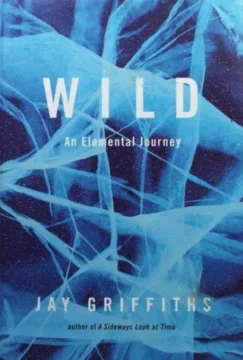 Jay Griffiths offers a mighty antidote in her 2006 masterpiece Wild: An Elemental Journey (public library) — the product of “many years’ yearning” pulling her “toward unfetteredness, toward the sheer and vivid world,” learning to think with the mind of a mountain and feel with the heart of a forest, searching for “something shy, naked and elemental — the soul.” What emerges is both an act of revolt (against the erasure of the wild, against the domestication of the soul) and an act of reverence (for the irrepressible in nature, for landscape as a form of knowledge, for life on Earth, as improbable and staggering as love.)
A century and a half after Thoreau “went to the woods to live deliberately” (omitting from his famed chronicle of spartan solitude the fresh-baked doughnuts and pies his mother and sister brought him every Sunday), Griffiths spent seven years slaking her soul on the world’s wildness, from the Amazon to the Arctic, trying “to touch life with the quick of the spirit,” impelled by “the same ancient telluric vigor that flung the Himalayas up to applaud the sky.”
more here.
Enjoying the content on 3QD? Help keep us going by donating now.
Commit Lit: In search of higher education
Joseph Keegin in The Point:
 In 2012, at the age of 25, I quit my part-time jobs cooking and cleaning houses and, having dropped out during my first semester seven years earlier, went back to school. To help pay for the modest tuition at Indiana University Southeast in New Albany, Indiana, I took a work-study gig at the university library. The campus of IUS is small, and most students are commuters; the library was accordingly quiet, the work languid. So in the many slow periods between tasks, I read. Essays, stories, poems—whatever I could get my hands on. My reading was omnivorous and unstructured: like the critics in the first part of Roberto Bolaño’s 2666, I pursued knowledge like sleuths in a roman noir, or like the poet Juan García Madero from his Savage Detectives, for whom “every book in the world is out there waiting to be read by me.” I followed a friend onto Twitter—the early 140-character years, with few journalists and politicians and no blue checkmarks—and there I came into contact for the first time with the world of magazines, small and large, that constituted the internal chatter of the educated American upper-middle class.
Amid this cacophony of culture-talk—heard from a remove, like music from a distant room—I began to discern a theme. I listened, equally interested and perplexed. It concerned the state of American higher education: plummeting enrollment in English, philosophy, history and other bookish, scholarly disciplines leading to the annulment of programs and the shuttering of departments; skyrocketing tuition and ballooning student debt; a pervasive sense of panic and despair.
More here.
Enjoying the content on 3QD? Help keep us going by donating now.
A Palestinian Photographer Reflects on One Year of Life and Death in Gaza
Yasmeen Serhan in Time Magazine:
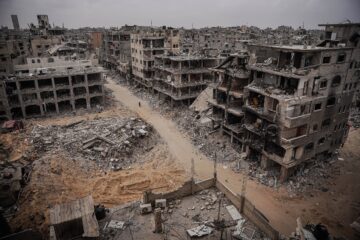 A year later, the 28-year-old is still documenting the lived experience of Palestinians in a place with scars visible from space. But for all of the images of physical destruction, Alghorra’s most profound photographs are of the human impact. In one, he found a Palestinian child crying in the rain as she and others wait for food to be distributed outside a refugee camp in the southernmost city of Rafah. Insufficient humanitarian aid reaching the Strip means that for most people, one meal a day is the most they can hope for. Dozens of children have died of starvation.
In another photo, a Palestinian family sits in the living room of their dilapidated home in Khan Yunis. The walls are scorched black and the infrastructure is crumbling, but it’s preferable to the alternative—the crowded tents where the vast majority of people in Gaza, including Alghorra, are now living. Since being forced to leave his home in Gaza City in the early days of the war, he now shares a tent with colleagues next to the Nasser Medical Complex, one of Gaza’s last remaining hospitals.
More here.
Enjoying the content on 3QD? Help keep us going by donating now.
Bioregional Belonging With Jay Griffiths
Enjoying the content on 3QD? Help keep us going by donating now.
The Elements of Marie Curie
Wendy Moore at Literary Review:
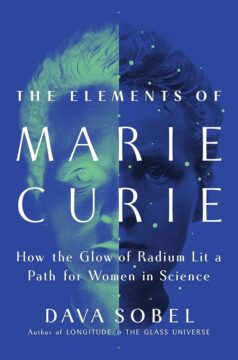 Marie Curie’s life was defined by professional triumph and personal tragedy. Ninety years after her death, she remains history’s most famous woman scientist. Curie was the first woman to receive a Nobel Prize – in 1903, she and her husband, Pierre, received the award for physics. In 1911, she was awarded a second Nobel Prize, this time for chemistry. She is still the only Nobel laureate to be garlanded in two scientific fields.
Yet after her husband’s death in a freak traffic accident in 1906, just eleven years into their marriage, she led a sorrowful and often lonely existence dedicated to continuing the work they had begun together. Meeting Curie in 1920, an American journalist described her as ‘a pale, timid little woman in a black cotton dress, with the saddest face I had ever looked upon’. She was selfless and self-effacing too. When asked to write an autobiography, Curie dictated a single paragraph: ‘I was born in Warsaw of a family of teachers. I married Pierre Curie and had two children. I have done my work in France.’
more here.
Enjoying the content on 3QD? Help keep us going by donating now.
Sunday, October 13, 2024
Marshall Plans
Kate Mackenzie and Tim Sahay in Polycrisis:
At September’s UN General Assembly in New York, Brazil’s President Lula described the international financial system as a “Marshall Plan in reverse” in which the poorest countries finance the richest. Driving the point home, Lula thundered, “African countries borrow at rates up to eight times higher than Germany and four times higher than the United States.”
Lula is not alone in this diagnosis. Centrist technocrats par excellence Larry Summers & NK Singh coauthored a report earlier this year arguing that the development world’s mantra to scale up direct financing to the global South—from “billions to trillions”—has failed. Instead, global finance seems to be running in the opposite direction, from poor to rich countries, as was the case last year. Summers and Singh summarize the arrangement thusly: “millions in, billions out.” Added to this is the great global shift to austerity that makes a mockery of climate and development goals.
It’s in this context that talk of “green Marshall Plans”—proposed by Huang Yiping in China and Brian Deese in the US—must be received. Negotiations over technology transfer, market access, and finance deals are a permanent feature of the new cold war: call it strategic green industrial diplomacy.
More here.
Enjoying the content on 3QD? Help keep us going by donating now.
Reckoning with Growth
Steve Keen in The Ideas Letter:
Daniel Susskind’s new book, Growth: A Reckoning (2024), opens with an important question about a remarkable fact: why did the real incomes of ordinary people in the United Kingdom rise so rapidly from the mid-1700s on, after many millennia of effective stagnation?
People struggling with the cost-of-living crisis today might not believe this is true, but Susskind illustrates this fact with data from the Bank of England’s excellent Millenium of Macroeconomic Data project. Using historical records on basic consumption items, the Bank of England indexed real wages to 100 in 1900, and showed that, though wages fluctuated over time, between 1200 and the late 1800s, the real wage never exceeded 80% of its 1900 level. Then, with a take-off that can be dated back to the mid-1700s, real wages rose dramatically, to six times the 1900 level by the year 2000, as Figure 1 illustrates.

Susskind observes that, though there had been 600 years of dramatic change before 1750, these changes did not increase the standard of living of the ordinary citizen of England…
More here.
Enjoying the content on 3QD? Help keep us going by donating now.
Discounting as a Political Technology: An Interview with Liliana Doganova
Alperen Arslan and Zac Endter in the blog of the Journal of the History of Ideas:
Liliana Doganova is Associate Professor at the Centre de sociologie de l’innovation, Mines Paris, PSL University, working at the intersection of economic sociology and Science and Technology Studies. Doganova spoke with Alperen Arslan and Zac Endter about her recent book, Discounting the Future: The Ascendancy of a Political Technology (Zone Books, 2024), which explores the links between valuation and temporality through a historical sociology of the technique of discounting the future.
Alperen Arslan and Zac Endter: Besides “discounting,” the word that seems to recur the most often in your book is some version of “crisis.” You present your book as a conscious political intervention in the present as well as a historical and theoretical one. This seems to be performed by your conceptualization of discounting as both a political theory of action and an economic theory of value. Given that this book consciously intervenes in a moment of urgency, could you share what brought you to this topic originally and how these crises or your understanding of them have evolved during your research?
Liliana Doganova: The book opens with a scene of crisis: the forest fires that devastated France in the summer of 2022. It introduces discounting through its implications in the broader climate crisis. Discounting is an economic technique that derives the value of things (including corporate investment projects, public policies, or even human life or nature) by projecting the flows of costs and benefits that they are likely to generate in the future; flows that occur at different points in time are made commensurate by being “discounted” to their so-called “present value”: the more distant a flow in the future, the less its value in the present.
More here.
Enjoying the content on 3QD? Help keep us going by donating now.
James Magee (1945 – 2024) Artist
Enjoying the content on 3QD? Help keep us going by donating now.
David Anfam (1955 – 2024) Art Historian
Enjoying the content on 3QD? Help keep us going by donating now.
Sunday Poem
Nurture
From a documentary on marsupials I learn
that a pillowcase makes a fine
substitute pouch for an orphaned kangaroo.
I am drawn to such dramas of animal rescues.
They are warm in the throat. I suffer, the critic proclaims,
from an overabundance of female genes.
Bring me your fallen fledgling, your bummer lamb,
lead the abused, the starvelings, into my barn.
Advise the hunted deer to leap into my corn.
And had there been a wild child—
filthy and fierce as a ferret, he is called
in one nineteenth century account—
a wild child to love, it is safe to assume,
given my fireside inked with paw prints,
there would have been room.
Think of the language we two, same and not-same,
might have constructed from sign,
scratch, grimace, grunt, vowel:
Laughter our first noun, and our long verb, howl.
by Maxine Kumin
from Nurture
Viking, 1989
Enjoying the content on 3QD? Help keep us going by donating now.
Friday, October 11, 2024
How a Cold War plan to stop nuclear proliferation could protect the world from an AI arms race
Ashutosh Jogalekar and Charles Oppenheimer at Fast Company:
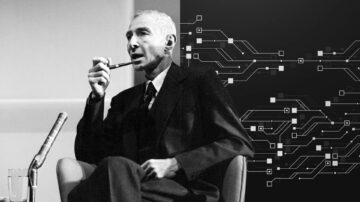 A few days after the atomic bombs were dropped on Hiroshima, Robert Oppenheimer (one of the author’s grandfather) wrote in a letter to his old teacher, Herbert Smith, that “the future, which has so many elements of high promise, is yet only a stone’s throw from despair.” The promise that Oppenheimer was talking about was the promise that the horror of nuclear weapons might abolish war. The despair that he was talking about was the despair that mankind may not be wise enough to handle this millennial source of power without destroying itself.
In 1946, Under-Secretary of State Dean Acheson asked the Chairman of the Tennessee Valley Authority and soon-to-be Chairman of the Atomic Energy Commission, David Lilienthal, to compose a report analyzing the threat of nuclear weapons and proposing a plan of action for the United States to present to the newly created United Nations. As scientific and industrial counsel, Lilienthal appointed Oppenheimer and a small team of consultants to advise him and craft the report.
Unofficially led by Oppenheimer as the one with the most knowledge, the committee came up with a proposal that presented the peculiar juxtaposition of being both radical and logical. The Acheson-Lilienthal Report was presented to the president and secretary of state in March 1946.
More here.
Enjoying the content on 3QD? Help keep us going by donating now.
A critical and unpredictable new phase of the climate crisis
James Dinneen in New Scientist:
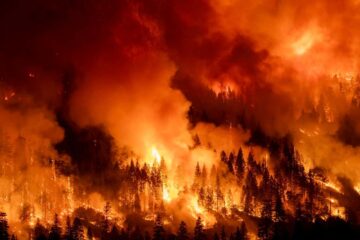 A growing number of the planet’s “vital signs” have reached record levels due to climate change and other environmental threats, according to a stark report by a group of prominent researchers.
“We are on the brink of an irreversible climate disaster,” write William Ripple at Oregon State University and his colleagues. “This is a global emergency beyond any doubt. Much of the very fabric of life on Earth is imperilled.”
The report is the fifth annual State of the Climate report led by Ripple in an effort to present a clear warning of what the researchers say is a crisis given the extremes measured across key climate indicators, from greenhouse gas levels to tree cover loss.
“The climate crisis isn’t a distant threat, it’s a here-and-now crisis,” says Michael Mann at the University of Pennsylvania, one of several well-known co-authors of the report, which also includes historian Naomi Oreskes, Earth scientist Tim Lenton and oceanographer Stefan Rahmstorf.
The researchers assessed 35 “planetary vital signs”, including the amount of heat in the oceans and the thickness of glaciers.
More here.
Enjoying the content on 3QD? Help keep us going by donating now.
A Smart, Sinuous Espionage Thriller Brimming With Heat
Dwight Garner in the New York Times:
 Rachel Kushner’s new novel, “Creation Lake,” is set in rural France, but not the rural France of guidebooks and Peter Mayle memoirs. No one rhapsodizes over an escargot or a tarte Tatin. We’re in the country’s southwest, where the soil is rocky. More essentially, we are in what Kushner calls the proletarian “real Europe,” with vistas of “highways and nuclear power plants” and “windowless distribution warehouses.”
Kushner’s narrator is an American spy-for-hire. She’s 34, a dropout from a Berkeley Ph.D. program in rhetoric. She is working under an assumed name, “Sadie Smith,” that has unnecessary — for this reader — literary undertones. Sadie has come to this region to infiltrate a radical farming commune bent on violence.
More here. And read an excerpt from the book here.
Enjoying the content on 3QD? Help keep us going by donating now.
2024 Nobel Laureate David Baker: Protein design using deep learning
Enjoying the content on 3QD? Help keep us going by donating now.