The Teardrop of the Subcontinent: A Tour of the Literature of Sri Lanka

Morgan in SLMorgan Meis in Virginia Quarterly Review:

Witness, if you will, Ashok Ferrey. A more urbane gentleman you may not meet. His prose, such as what may be his masterpiece Colpetty People, written in English, is witty and clever. And sly.

His sentences snap off the page. The novel begins: “I had always wanted to build the perfect house. For years I had looked at other people’s, surreptitiously, because as you know, houses don’t like to be stared at, whatever their owners might think.”

The book goes on to describe, in good humor, the utter failure of that building project. Ferrey’s home on Flower Road in the fashionable part of town has the fantastical aura of a place created for another era, one that could comfortably contain Scarlett O’Hara, Graham Greene, and Marguerite Duras all at one time for a dinner party. It has huge decorative earthenware and spots of sun under the grand piano in which the kittens play.

Ashok Ferrey, one would think, could not be in a world further away from Ayathurai Santhan’s Jaffna if he were in outer space. In fact, though, this is not true. He lived in London for a time, but he couldn’t escape. And in the end, he didn’t really want to.

Ferrey wrote a book recently that wasn’t so well received by the English language sophisticates of Sri Lanka. You could call it a book of self-criticism. Ashok Ferrey, you see, had a disturbing encounter with a thumb that made it impossible for him to remain complacent about life in Colombo. He writes about the thumb in the book, Serendipity.

On the very first page of this book, a bomb goes off. A fashionable society lady is asked by her husband what the noise was during his nap. “Nothing dear,” she says, “just a bomb.” And then a few minutes later she finds a thumb in her garden, ejected from the blast. She discards it without a second thought.

Why We Should Stop Talking About ‘Bus Stigma’

From Jarrett Walker with The Atlantic Cities:

BusElites are by definition a small minority, so it makes no sense to define a vast transit network around their personal tastes. Even when we’ve achieved all our sustainability goals, that particular city councilman can still drive his BMW everywhere, and that leading architecture scholar need never set foot on a bus. It doesn’t matter much what they do, because there just aren’t very many of them.

This, after all, is how Germany works. Germany is a world-leader in the design of expensive luxury cars, and has a network of freeways with no speed limits where you can push these cars to their ecstatic edge. But most urban travel in Germany happens on bikes, feet, or civilized and useful public transit systems in pleasant and sustainable cities. Transit’s purpose is to appeal to massive numbers of diverse riders, not chase the choosy few who would rather be on the Autobahn.

All of this came to mind in reading Amanda Hess’s recent Atlantic Cities article, “Race, Class and the Stigma of Riding the Bus in America.” Hess argues that the predominance of minority and low-income people on the bus is evidence of an American bus “stigma.” “In Los Angeles,” she writes, “92 percent of bus riders are people of color. Their annual median household income is $12,000.”

More here.

Global Warming’s Terrifying New Math

Three simple numbers from Bill McKibben that add up to a global catastrophe, via Rolling Stone:

GlobalwarmingIf the pictures of those towering wildfires in Colorado haven't convinced you, or the size of your AC bill this summer, here are some hard numbers about climate change: June broke or tied 3,215 high-temperature records across the United States. That followed the warmest May on record for the Northern Hemisphere – the 327th consecutive month in which the temperature of the entire globe exceeded the 20th-century average, the odds of which occurring by simple chance were 3.7 x 10-99, a number considerably larger than the number of stars in the universe.

Meteorologists reported that this spring was the warmest ever recorded for our nation – in fact, it crushed the old record by so much that it represented the “largest temperature departure from average of any season on record.” The same week, Saudi authorities reported that it had rained in Mecca despite a temperature of 109 degrees, the hottest downpour in the planet's history.

Not that our leaders seemed to notice.

More here.

Friday Poem

After Years

Today, from a distance, I saw you
walking away, and without a sound
the glittering face of a glacier
slid into the sea. An ancient oak
fell in the Cumberlands, holding only
a handful of leaves, and an old woman
scattering corn to her chickens looked up
for an instant. At the other side
of the galaxy, a star thirty-five times
the size of our own sun exploded
and vanished, leaving a small green spot
on the astronomer's retina
as he stood on the great open dome
of my heart with no one to tell.
.

by Ted Kooser
from Solo: A Journal of Poetry
Premiere Issue, Spring 1996

Genetic Aberrations Seen as Path to Stop Colon Cancer

Gina Kolata in The New York Times:

RajMore than 200 researchers investigating colon cancer tumors have found genetic vulnerabilities that could lead to powerful new treatments. The hope is that drugs designed to strike these weak spots will eventually stop a cancer that is now almost inevitably fatal once it has spread. Scientists increasingly see cancer as a genetic disease defined not so much by where it starts — colon, liver, brain, breast — but by genetic aberrations that are its Achilles’ heel. And with a detailed understanding of which genetic changes make a cancer grow and thrive, they say they can figure out how best to mount an attack. They caution that most of the drugs needed to target the colon cancer mutations have yet to be developed, but they say they are building the road map that they hope will lead them to new treatments.

The colon cancer study, published on Wednesday in Nature, is the first part of a sweeping effort that is expected to produce a flood of discoveries for a wide range of cancers. The colon cancer findings will soon be followed by studies of lung and breast cancers and, later this year, of acute myeloid leukemia. The effort, the $100-million-a-year Cancer Genome Atlas project, is being financed by two government agencies, the National Cancer Institute and the National Human Genome Research Institute. The colon cancer results, based on a study of 224 tumors, show what may be possible. “There are so many different ways that you can attack this tumor type,” said Raju Kucherlapati, the principal investigator for the colon cancer project and a professor of genetics and of medicine at Harvard Medical School. “We have an opportunity to completely change the landscape.”

More here.

blessed be the day

Lazarevska_220w

In the scene I am going to recount now, the bad luck no longer includes sniping and shelling. And the courtyard of our block is once again a refuge for cats, strays, rubbish, drunks… the underside of the city. Sometimes I see the phrase “flanked by” in the caption to a picture. I like to read the body language when I spot a picture like that; I like working out who she feels closer to, what she thinks about the two men. It’s usually women being “flanked” in those pictures. I never think about either of those “sniper alleys” while I’m trying to puzzle this out. One of them had its name changed since then, anyway. The city is no longer under siege. The two boys who were sitting on the sofa back then are in their teens now. There’s only one of them here. If he were to sit on the sofa there wouldn’t be much room for the other.

more from Alma Lazarevska’s memories of the Sarajevo siege here.

the life and death of van

Vanbuskirk-freddy

The epilogue to Van’s life that to some extent mitigates the tragedy of his early death was the creation of the book Lami. Edited by Rattray and collected from handwritten manuscripts in the possession of Van’s friends, Lami was first typed up by Clive Matson, an early enthusiast, who in turn got Herbert Huncke fired up about the poems. Huncke, after months of pestering, finally got Allen Ginsberg to take a look, and he was suitably impressed. He began sending the poems out to magazines, including Poetry, Evergreen Review, and City Lights Journal, demanding that they be published; and Ginsberg being Ginsberg, he was good at getting his way. Armed with Ginsberg’s introduction, Ceely and Rattray persuaded Dave Haselwood and Andrew Hoyem of Auerhahn to print Lami in an edition of 1,000 copies.

more from Garrett Caples at Poetry here.

in this moral void

Hedges_37.4_soldier

War comes wrapped in patriotic slogans; calls for sacrifice, honor, and heroism; and promises of glory. It comes wrapped in the claims of divine providence. It is what a grateful nation asks of its children. It is what is right and just. It is waged to make the nation and the world a better place, to cleanse evil. War is touted as the ultimate test of manhood, where the young can find out what they are made of. From a distance it seems noble. It gives us comrades and power and a chance to play a bit part in the great drama of history. It promises to give us identities as warriors, patriots, as long as we go along with the myth, the one the war-makers need to wage wars and the defense contractors need to increase their profits. But up close war is a soulless void. War is about barbarity, perversion, and pain.

more from Chris Hedges at Boston Review here.

Thursday, July 19, 2012

Reality Bites: Massachusetts Economy Proves Health Care Reform Didn’t Destroy Businesses

Kelly Bovio at the Huffington Post:

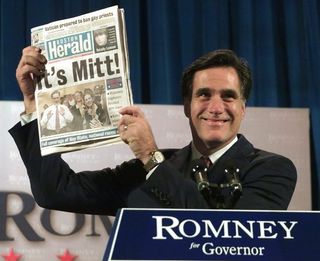
RomneycareSince implementation of the MA health care reform law, signed by then-Governor Mitt Romney, Wolf testified that Cape Air has “added a solid 15 percent more MA-based jobs, with our total revenue growing far faster.” While his business saw a 5 percent increase in health insurance premiums this year, Wolf stated that the cost was, “too much, but far from the 15 to 20 percent increases we saw year after year before reform took effect.”

Not only has health care reform been good for Cape Air, but Wolf argued the law has neither soured the business climate in Massachusetts nor ruined state's economy. “Unemployment in Massachusetts has dropped from 8 percent in 2009 to 5.8 percent in May of this year. This is 2.4 percent below the national average. Massachusetts ranks eighth in the nation in job creation this year, adding 37,800 new jobs through May. And, since January 2007, Massachusetts has ranked third in the nation in economic performance, as defined by gross state product.”

More here.

Military Spends Too Much On Music, Sports Promos

Betty McCollum (D) of Minnesota's Fourth District writes in the Star Tribune:

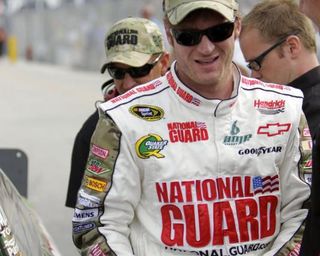
Earnhardt071812aIn May, USA Today reported that the National Guard's $26.5 million taxpayer-funded contract with Dale Earnhardt Jr.'s No. 88 NASCAR team resulted in the National Guard being “contacted by more than 24,800 individuals expressing interest in joining.” Of these contacts, the National Guard spokesperson said that “20 were qualified candidates and that none joined.” That's right, $26.5 million for zero recruits.

Military music has a long, proud tradition. However, borrowing $4 billion over the next 10 years from China to pay for the Navy Band New Orleans, the Air Force Falconaires jazz ensemble or the Army Medical Command Band does not advance our national security interests. I hope my House colleagues, especially Tea Party Republicans, will support my amendment. Spending $200 million for military ceremonial music, choral performances and country jam sessions needs to be enough.

More here.

Would a message from God pass these Catholic rules on revelation?

Julian Baggini in The Guardian's Comment is free:

RevelationHerein contains what we might call the paradox of revelation, which is confronted by any organised religion that is based on revelation, in whole or part. As its meaning makes clear, you can't have a “revelation” that tells everyone what they already know. The supposed revelations of God to humanity through Christ, or the word of God to Mohammed through the angel Gabriel, had the power they did because they indicated new truths, new directions for followers.

However, having established a religion on those revelations, the teachings revealed through them become non-negotiable, and the ecclesiastical authorities become the arbiters of their interpretation. And so that means no further revelation is admissible if it contradicts what is already believed. Revelation of radical new truths, if accepted as real, thus makes future revelation of radical new truths impossible. To put it another way, what was absolutely valid for the establishing of a religion becomes by necessity invalid once it already exists.

This isn't trivial. Although the Catholic church exists to further God's will on earth, the criteria set out by the Sacred Congregation for the Doctrine of the Faith make it impossible for the church to accept God's will as being anything other than what they already believe. So while in theory entirely subservient to God's will, God's will actually turns out to be subservient to that of the church.

Read the rest here.

When the Army was Democratic

William Pfaff in NYRB:

ArmyUp to Vietnam, the United States Army had been a people’s army. When the country thought it had to fight a war, it raised an army of citizens. The citizens defended the country and its beliefs, often making family and economic sacrifices to support the war effort. They enabled America’s wars. They also prevented them. The army was a democratic army, and the government was compelled to recognize and respect the popular will and the will of the civilian soldiers and ROTC and OCS officers who manned it. What fundamentally was destroyed in Vietnam was the democratic army. The all-volunteer professional army enables undemocratic wars, ideological in nature and inspiration, and, it would seem, without real end.

Read the full article here.

From the Ruins of Empire

From The Guardian:

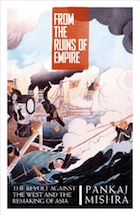
From-the-Ruins-of-Empire-TheDebates about the rise of the modern west (and corresponding decline of the east) remain a fertile source of historical polemic. Such oppositional historiography – the idea of a head-on clash of civilisations, with a clear winner and loser – seems to hold a perennial appeal in terms of both its simplicity and its drama of antagonism. Last year, Niall Ferguson – in his pugnaciously titled Civilization: The Six Ways the West Beat the Rest – brought the subject back into sharp media focus. “The rise of the west,” he argued, “is the pre-eminent historical phenomenon of the second half of the second millennium after Christ. It is the story at the very heart of modern history. It is perhaps the most challenging riddle historians have to solve.” To condense two extremes of a now venerable argument, the old school contended that somewhere in the early modern period a progressive and free-trading Europe surged ahead through innate superiority of character and government, while ancient superpowers such as China turned complacently in on themselves. A newer, postcolonial school places the “great divergence” rather later, arguing that until 1800, the Chinese empire largely kept up with Britain, the most prosperous and vigorous of the European economies. Early in the 19th century, however, Britain began to nose ahead, through sheer good fortune. Easy access to coal and Caribbean sugar fuelled the steam-power and workforces of the industrial revolution. New World calories, timber and silver (paying for tea, coffee, textiles) in turn liberated millions of European arable acres for other productive purposes, permitting the industrial revolution to generate firepower that, by the 1840s, was trouncing the great non-European conquest empires.

In From the Ruins of Empire, Pankaj Mishra turns his attention to the other side of the story: to attempts by Asian thinkers (in Afghanistan, China, India, Iran, Turkey) to rebuild their cultural and political identities after collisions with the imperialist west. His account begins in the first half of the 19th century with the west already approaching ascendancy in east Asia, India and the Muslim world. It spans Asia's steady disillusionment with western modernity through two world wars, then ends with the rise of China, India and global Islam, and the much-rumoured decline of the west.

More here.

Neanderthals ate their greens

From Nature:

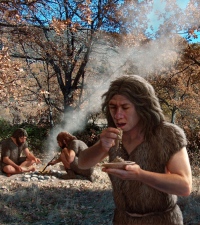
1_11030_C0103517-Neanderthals_cooking_vegetables,_artwork-SPLNeanderthals have long been viewed as meat-eaters. The vision of them as inflexible carnivores has even been used to suggest that they went extinct around 25,000 years ago as a result of food scarcity, whereas omnivorous humans were able to survive. But evidence is mounting that plants were important to Neanderthal diets — and now a study reveals that those plants were roasted, and may have been used medicinally. The finding comes from the El Sidrón Cave in northern Spain, where the roughly 50,000-year-old skeletal remains of at least 13 Neanderthals (Homo neanderthalensis) have been discovered. Many of these individuals had calcified layers of plaque on their teeth. Karen Hardy, an anthropologist at the Autonomous University of Barcelona in Spain, wondered whether it might be possible to use this plaque to take a closer look at the Neanderthal menu.

Using plaque to work out the diets of ancient animals is not entirely new, but Hardy has gone further by looking for organic compounds in the plaque. To do this she and a team including Stephen Buckley, an archaeological chemist at the University of York, UK, used gas chromatography and mass spectrometry to analyse the plaque collected from ten teeth belonging to five Neanderthal individuals from the cave. The plaque contained a range of carbohydrates and starch granules, hinting that the Neanderthals had consumed a variety of plant species. By contrast, there were few lipids or proteins from meat. Hardy and her colleagues also found, lurking in the plaque of a few specimens, a range of alkyl phenols, aromatic hydrocarbons and roasted starch granules that suggested that the Neanderthals had spent time in smoky areas and eaten cooked vegetables. The results are published today in Naturwissenschaften1. “The idea that Neanderthals were largely meat-eaters has been hard for me to accept given their membership in a mainly vegetarian clade. It is exciting to see this new set of techniques applied to understanding their palaeo-diet,” says Richard Wrangham, an anthropologist at Harvard University in Cambridge, Massachusetts

More here.

Fred and Adele

Cohen_281261h

The New York response to the Astaires was enthusiastic, but in London it was ecstatic. British audiences had never seen anything like them. They associated the pair’s seemingly effortless skill and breezy humour with an idea of America at its best. Adele, in particular, had a frothy, satirical charm that threw British audiences and critics into paroxysms of delight. The country’s aristocratic society embraced them. Fred and Adele partied with Lord and Lady Mountbatten, the Duke of York and the Prince of Wales, with Fred picking up sartorial tips from the latter who also, Riley notes, may have picked up some from him. The future Edward VIII was impressed, for example, by the dancer’s extensive collection of colourful braces. Riley also chronicles their friendship with George Gershwin, which began in 1914, when Fred and Adele were not yet on Broadway and Gershwin was working as a song-plugger for $15 a week. Gershwin and Astaire had an immediate affinity.

more from Paula Marantz Cohen at the TLS here.

architecture and war

Atlantik_jpg_230x800_q85

There has long been a tendency to see the most important innovations of Modernism as arising directly from progressive causes. War, in this view, was considered a limiting if not wholly destructive force that stymied civilian architecture in favor of retrogressive military structures. But in his groundbreaking recent book Architecture in Uniform: Designing and Building for the Second World War, the French architectural historian and architect Jean-Louis Cohen establishes one big, awful, inescapable truth: the full potential of twentieth-century architecture, engineering, and design was realized not in the social-welfare and urban-improvement schemes beloved by the early proponents of the Modern Movement, but rather through technologies perfected during the two world wars to slaughter vast armies, destroy entire cities, decimate noncombatant populations, and industrialize genocide. It is hard to come away from Architecture in Uniform without the same feelings of profound horror and lingering dread that overtake readers of recent books on World War II by Max Hastings, Timothy Snyder, and other historians who continue to reveal with terrifying immediacy just how horrific that catastrophe was.

more from Martin Filler at the NYRB here.

Die Verfassung Europas!

JurgenHabermas

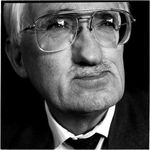
Habermas’s most recent book, Die Verfassung Europas, has caused a stir in Germany since its publication by Suhrkamp in November; it has just been published here in an English translation as The Crisis of the European Union. But its appeal in Germany has rested not so much on Habermas’s justified indignation about the EU, but instead on his tempered optimism about the future of democracy in Europe. Die Zeit called Die Verfassung Europas “the book of the hour”; Der Spiegel, “a philosopher’s mission to save the EU”; and the Frankfurter Allgemeine Zeitung, a manifesto for “a second chance for a united Europe.” The near unanimous enthusiasm of reviewers probably reflected less a consensus about the book’s arguments than sheer relief, given the daily bad news from Europe, that Habermas had written a hopeful book. He affirms his longstanding commitment to a cosmopolitan Europe in which the dynamics of global capitalism can be remastered beyond the nation-state, at a supranational and global level, and he sees a radically altered European Union as a model—indeed, as the precursor—for a constitutionally sanctioned cosmopolitan world order based not on utopian illusions but on realistic assessments.

more from Anson Rabinbach at The Nation here.