Mother Nature’s Olympians crowned

From MSNBC:

ChhetahThe Olympics is a time to celebrate the world's fastest and strongest humans, but you can rely on the International Union for the Conservation of Nature to put the best of human performance in perspective. They've just come out with their list of Olympians for the natural world — champions that range from the fleet cheetah to the humble fungus. “While celebrating the achievements of talented athletes across the world this summer, we should also take the time to appreciate these incredible species,” the IUCN says in today's Olympian roundup. Here are some of the conservation group's medalists for 2012:

Sprint: Cheetahs (Acinonyx jubatus) can bolt at 70 mph or more for short bursts, making them the world's fastest land animals. In comparison, Jamaican sprinter Usain Bolt is credited as the fastest human, with a top running speed of 27.79 mph. Theoretically, humans could reach velocities of 40 mph — still short of the cheetah's personal best.

High jump: To even things out, cross-species-wise, the IUCN is measuring jumping ability in terms of body length. By that measure, a lowly insect known as the common froghopper (Philaenus spumarius) gets the high-jump crown. It can jump 115 times its body length, while the record for humans is just a little over 8 feet (2.45 meters). That's about 1.25 times the height of the record-holder, Cuba's Javier Sotomayor (6-foot-5 or 195 centimeters).

More here.

50 Shades of Green

From Smithsonian:

Barcelona-vertical-garden-largeOver the next few days you’re going to see a lot of the London Eye, the giant slow-spinning Ferris wheel along the Thames River, particularly since during the Olympics it will be portrayed as a massive mood ring, changing color every night to reflect what people have been tweeting about the Games. If tweeters are feeling good about what’s going on, it will glow yellow. If not, it will turn morosely purple. What you’re less likely to see is the vertical garden covering the corner of the Athenaeum Hotel in Mayfair or the one at the Edgeware Road Underground station or the one climbing 14 stories up the side of an apartment building on Digby Road in Central London. Which is a shame, because while none of these walls are able to change color to reflect the whims of Twitter Nation, they are choice examples of one of the more pleasing architectural innovations trending in cities around the world.

But they’re much more than urban eye candy. Last week a study published in the journal Environmental Science and Technology concluded that green walls planted strategically could help cut pollution in cities by as much as 30 percent, almost 10 times more than previously thought. The key, say the researchers, is that green walls can filter out pollution not just at street level, as trees can, but much higher up in urban canyons. Their computer models suggested that grasses, ivy and flowers attached to the sides of walls and buildings could be even more effective at cleaning the air than plants in parks or on rooftops.

More here.

twenty years dead but his ardor uncooled

Cover00

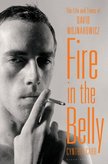
If David Wojnarowicz were alive today he’d be turning fifty-eight in September. Who knows what his art would look like by now? But there is every reason to think he would have been one of the relative few to have graduated from the hit-or-miss East Village art scene of the 1980s and gone on to greater glory. His stencils, icons, symmetry, hot colors, homoerotic imagery, and street art all remain visible in the work of others now. His ghost is just about discernible around the edges of stuff by Gilbert & George, Banksy, Shepard Fairey, Barry McGee, and I’m sure you can think of more. Of course, maybe if he’d lived he’d have taken several radical turns away from those tropes by now, but in either case he’d surely be getting retrospectives, awards, tributes—the treatment accorded a significant artist in the fullness of maturity. He was that vital, protean, fecund, original, and pioneering in his life and work.

more from Luc Sante at Bookforum here.

From the Ruins of Empire

F879c005-49d7-4632-aa84-d5130e7aaeb3

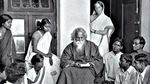
Oh, East is East and West is West, and never the twain shall meet,” wrote Rudyard Kipling in 1889. This was nothing if not wishful thinking, and no one knew it better than the poet of the imperial Raj himself: indeed, that same year Kipling visited Hong Kong and bemoaned the likely impact of bringing railways and newspapers to China. “What,” he warned, “will happen when China really wakes up?” With the British empire at the zenith of its power, it was hardly an immediate worry. The Chinese might pride themselves on avoiding the fate of a “lost country” such as India, with its viceroys and its foreign empress, but the Qing dynasty was losing its grip and only a few years later the nationalist Boxer rebellion would be brutally crushed by a western expeditionary force, precipitating the crisis from which China did not emerge for half a century.

more from Mark Mazower at the FT here.

how to write

29whitehead-articleInline

Rule No. 1: Show and Tell. Most people say, “Show, don’t tell,” but I stand by Show and Tell, because when writers put their work out into the world, they’re like kids bringing their broken unicorns and chewed-up teddy bears into class in the sad hope that someone else will love them as much as they do. “And what do you have for us today, Marcy?” “A penetrating psychological study of a young med student who receives disturbing news from a former lover.” “How marvelous! Timmy, what are you holding there?” “It’s a Calvinoesque romp through an unnamed metropolis much like New York, narrated by an armadillo.” “Such imagination!” Show and Tell, followed by a good nap.

more from Colson Whitehead at the NY Times here.

Friday, July 27, 2012

Poli-Sci-Fi

Joseph Young via (a cool new blog) Politcal Violence @ A Glance:

PoliscifiInternational politics is a tough thing to study. We can’t necessarily treat the interactions of states like a laboratory: perform a study, tweak, replicate, and then repeat. Yet, we want to explain the world, and sometimes even predict important outcomes.

For example, what should we do if a zombie hoard attacks? Dan Drezner has a plan informed by his experience as an international relations theorist.

Poliscifi, or the application of political science theories to science fiction, is more than just fun (it is fun, try it). Thought experiments have a long tradition in philosophy and allow us to overcome some of the problems associated with the difficulty of experimentation in international relations (field and laboratory experiments are gaining in prominence in the discipline, but that is for another post). After recently watching Falling Skies, Steven Spielberg’s dystopian alien invasion series [Spoiler Alert], I immediately began to poliscifi. What should we do if aliens showed up? What if they proved to be aggressive? What if we were horribly outgunned?

More here.

the sound of unsustainability

7772090

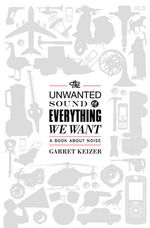
Over the three lengthy chapters that make up The Unwanted Sound of Everything We Want, Garret Keizer argues that life in our post-industrial era is the playground of the economically powerful, who carelessly inflict their refuse on the weak: “marginalized people, small creatures, and simple pursuits.” Noise, or “unwanted sound,” is the vector for this extended case study, and along the way it becomes something more than simply “unwanted.” It becomes an elegant cipher for the abundance of violence our civilization has not yet quelled or fully recognized. He reads a terrible richness in the ecological, social, and economical dynamics of machine noise’s interaction with life: small creatures terrorized by the din of a highway cutting through their habitat, airport workers forced to live under the flight path of the planes they service, and soldiers in the military “exposed to weapons fire and explosive devices that may produce sound levels as high as 185 dB.” Keizer believes an understanding of noise pollution in all its gravity gives the lie to any notion of a cleanly won modern world. “The extent to which we regard noise issues as ‘precious,’ in the pejorative sense of the word,” he writes, “is the extent to which we will squander those things we ought to hold precious in the positive sense of the word: fragile ecosystems, manual skills, local cultures, neighborhoods, children.

more from Sean Higgins at AGNI here.

“Moroni style”

Schwartz_web_12-081612_jpg_470x421_q85

The painter’s best-known work, Portrait of a Man, which is in London’s National Gallery and is informally known as The Tailor—it shows someone with shears in his hand and a bolt of cloth before him—stands out in part because it is the rare Moroni where the sitter is actually doing something. (It doesn’t hurt that the man is good-looking, and the way he leans over a little, and turns to face us, gives the portrait a kind of inner spring.) But this London picture, which has the generally bare appearance of many Moronis—he doesn’t, like Holbein, make something luxuriant out of the space surrounding his sitter—conveys little about what it was like to be a tailor at the time. It presents if anything the idea of being a tailor (or of being a cloth merchant), and Michael Levey, in his 1987 The National Gallery Collection, astutely saw that the sitter, with his appraising look, might as well be taking “the spectator’s measure.” This is Moroni’s tone in his portraits in general: his people scrutinize us. What also feels fresh and modern—and capable of making earlier commentators believe there was something obdurate or lacking in Moroni—is the unusually straightforward, almost anonymous, nature of his realism.

more from Sanford Schwartz at the NYRB here.

Friday Poem

When the Shoe Fits
.
Ch'ui the draftsman
Could draw more perfect circles freehand
Than with a compass.
.
His fingers brought forth
Spontaneous forms from nowhere. His mind
Was meanwhile free and without concern
With what he was doing.
.
No application was needed
His mind was perfectly simple
And knew no obstacle.
.
So, when the shoe fits
The foot is forgotten,
When the belt fits
The belly is forgotten,
When the heart is right
“For” and “against” are forgotten.
.
No drives no compulsions,
No needs, no attractions:
Then your affairs
Are under control.
You are a free man.
.
Easy is right. Begin right
And you are easy.
Continue easy and you are right.
The right way to go easy
Is to forget the right way
And forget that the going is easy.
.
.
by Chuang Tzu
from In the Dark Before Dawn
trans. Thomas Merton

Drone Court Advantage

An incisive piece by Charles Davis in The New Inquiry:

DronesTritely declaring President Obama no different from George W. Bush, these nominally left-wing suppressors of the vote even adopt the same bigoted, “pro-life” language one would expect to find outside an abortion clinic in Kansas, proclaiming our commander-in-chief a “criminal” and “baby killer” all because he has killed a few regrettable babies as part of wars that much of the world considers criminal — a privilege, mind you, never denied any of his white predecessors. They even attack the president because he has had the temerity to protect the lives of American servicemen and women through the record-breaking use of drones, ensuring the greatest threat they face is carpal tunnel, not a bullet from an angry savage.

…Talking about innocent men, women, and children killed by our way of life isn’t going to bring them back, but it will undermine support among President Obama’s left-wing base. Indeed, while some pacifists confuse their personal beliefs with politically viable policy solutions — thinking, as blogger Adam Serwer puts it, that America should stick to “using banana creme pies or wifflebats in its defense” — President Obama is compelled to live in the real world. And there he must confront real threats, like a potential GOP takeover of the Senate, that require an active and politically unassailable foreign policy. Instead of dwelling on dead foreigners and arguing and bickering over which president killed which child, the left would do well to remember the huge advances in progressive rhetoric we’ve made these last four years. Instead of bashing the man who saved us from Sarah Palin, we ought to rededicating ourselves to addressing the most pressing problem the planet faces right now: defeating Mitt Romney.

After all, if you don’t like that Barack Obama possesses the unilateral ability to decide who lives or dies, imagine how insufferable that power would be in the hands of the former Massachusetts governor.

Read the rest here.

Does Quantum Physics Make it Easier to Believe in God?

From BQO:

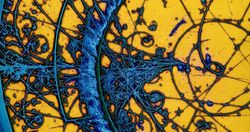
QuantNot in any direct way. That is, it doesn’t provide an argument for the existence of God. But it does so indirectly, by providing an argument against the philosophy called materialism (or “physicalism”), which is the main intellectual opponent of belief in God in today’s world. Materialism is an atheistic philosophy that says that all of reality is reducible to matter and its interactions. It has gained ground because many people think that it’s supported by science. They think that physics has shown the material world to be a closed system of cause and effect, sealed off from the influence of any non-physical realities — if any there be. Since our minds and thoughts obviously do affect the physical world, it would follow that they are themselves merely physical phenomena. No room for a spiritual soul or free will: for materialists we are just “machines made of meat.”

Quantum mechanics, however, throws a monkey wrench into this simple mechanical view of things. No less a figure than Eugene Wigner, a Nobel Prize winner in physics, claimed that materialism — at least with regard to the human mind — is not “logically consistent with present quantum mechanics.” And on the basis of quantum mechanics, Sir Rudolf Peierls, another great 20th-century physicist, said, “the premise that you can describe in terms of physics the whole function of a human being … including [his] knowledge, and [his] consciousness, is untenable. There is still something missing.”

More here.

Explosive backpacks: Termites explode to defend their colonies

From Nature:

TermitesA species of termite found in the rainforests of French Guiana takes altruism seriously: aged workers grow sacks of toxic blue liquid that they explode onto their enemies in an act of suicidal self-sacrifice to help their colonies (see video).

The “explosive backpacks” of Neocapritermes taracua, described in Science today1, grow throughout the lifetimes of the worker termites, filling with blue crystals secreted by a pair of glands on the insects' abdomens. Older workers carry the largest and most toxic backpacks. Those individuals also, not coincidentally, are the least able to forage and tend for the colony: their mandibles become dull and worn as the termites age, because they cannot be sharpened by moulting. “Older individuals are not as effective at foraging and nest maintenance as younger workers,” says Robert Hanus, who studies termite biology at the Institute of Organic Chemistry and Biochemistry in Prague, and led the study. But when the workers are attacked, he says, “they can provide another service to the colony. It makes perfect sense to me because theories predict that social insects should perform low-risk, laborious tasks such as housekeeping in the first part of their life and risky tasks such as defence as they age.”

More here.

Dmitri Nabokov: His Father’s Best Translator

Lila Azam Zanganeh in the New York Times:

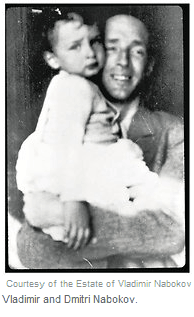
ScreenHunter_12 Jul. 27 12.10As an adolescent in Paris in the 1990s, I had listened as my mother, an Iranian exile, read English excerpts from “Speak, Memory,” Vladimir Nabokov’s memoir of his early years in Russia and his life after the Bolshevik Revolution, in Crimea, Germany and France. Dmitri appears in “Speak, Memory,” both as an infant in Berlin, his tiny hand placed “starfish-wise” on his father’s, and as a 6-year-old at the port of St. Nazaire, on the last page, about to catch sight of the enormous yellow funnel of the Champlain, the ship the Nabokovs would embark on to seek refuge in America. When my mother read this passage to me for the first time, I recall clinging to its final image: “something in a scrambled picture — Find What the Sailor Has Hidden — that the finder cannot unsee once it has been seen.” A secret trapdoor had suddenly opened. Reading was a matter of capturing a detail in a scrambled picture, which, once perceived, unveiled a new story, often richer and stranger than the one first imagined.

This, in my eyes, would prove to be true of Dmitri himself. Véra Nabokov was Jewish, which was why the family had been compelled to flee Europe in 1940 aboard the Cham­plain. This would be a second exile for the Nabokovs — in a space of two decades, they had escaped both the Bolsheviks and the Nazis, each time by a matter of hours. Thus, Dmitri was the child of a revolution and a war.

More here.

Tom Friedman as Midwife

Belén Fernández in Jacobin:

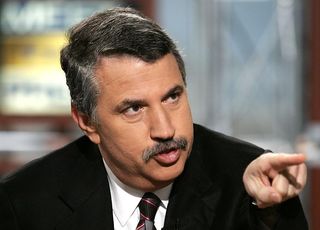
111In the aftermath of Pulitzer champ Thomas Friedman’s latest New York Times offering, “Syria Is Iraq,” commentators have begun to question whether Friedman himself has not discovered the joys of Friedman-parodying.

As Matt Taibbi remarked at Rolling Stone: “This column today is so crazy I have to think Friedman is kidding.”

To put it in Friedman-speak, this is a Friedman column on steroids, a distilled cornucopia of his signature journalistic maneuvers.

More here.

The United States is the deadliest wealthy country in the world. Can science help us explain, or even solve, our national crisis?

Eric Michael Johnson in The Primate Diaries blog at Scientific American:

ScreenHunter_11 Jul. 27 11.41While everyone agrees the blame should ultimately be placed on the perpetrator of this violence, the fact remains that the United States has one of the highest murder rates in the industrialized world. Of the 34 countries in the Organisation for Economic Co-operation and Development (OECD), the U.S. ranks fifth in homicides just behind Brazil (highest), Mexico, Russia, and Estonia. Our nation also holds the dubious honor of being responsible for half of the worst mass shootings in the last 30 years. How can we explain why the United States has nearly three times more murders per capita than neighboring Canada and ten times more than Japan? What makes the land of the free such a dangerous place to live?

There have been hundreds of thoughtful explorations of this problem in the last week, though three in particular have encapsulated the major issues. Could it be, as science writer David Dobbs argues at Wired, that “an American culture that fetishizes violence,” such as the Batman franchise itself, has contributed to our fall? “Culture shapes the expression of mental dysfunction,” Dobbs writes, “just as it does other traits.”

Perhaps the push arrived with the collision of other factors, as veteran journalist Bill Moyers maintains, when the dark side of human nature encountered political allies who nurture our destructive impulses? “Violence is our alter ego, wired into our Stone Age brains,” he says. “The NRA is the best friend a killer’s instinct ever had.”

More here.

Thursday, July 26, 2012

The Checkpoint: Terror, Power, and Cruelty

Naaman_37.4_checkpointOded Na’aman in Boston Review:

One morning, when I was about four years old, I proudly announced from the back seat of my family’s car, “Mother, I want you to know that I am the first kid in my whole kindergarten to think inside my head rather than out loud.” The car slowed to a standstill as we waited for the light to change. My mother turned to me, smiled, and said softly, “How do you know you’re the first?”

I was speechless. With one brief question, she had made the world a stranger to me and made me a stranger in my own world. She unveiled a universe of goings-on, a whole new brand of human activity that everyone I knew—the friends I played with, my sisters, even my parents—was engaged in, which I could have no access to. I sat on the staircase that day in kindergarten, observing the other kids play. Using my recently acquired skill, I wondered silently, with unmistakable trepidation, “Who knows what they are thinking?”

I soon regained my trust and grew up believing in the people around me. I knew there were dangers, but I felt certain I was not alone and therefore not helpless in facing them.

Fourteen years after my big kindergarten discovery, I was conscripted into the Israel Defense Forces (IDF). At the West Bank checkpoints, the terror of other minds took over again. It occupied my soul.

Masters of Surface: Roy Lichtenstein in Chicago, Mad Men on TV

Banana Republic Mad MenAnna-Claire Stinebring over at Critics at Large (Mad Men Collection by Banana Republic. Photograph by Tom Munro):

I found myself thinking of Mad Men: its popularity and all the mixed messages that go along with its good-looking façade. Mad Men, of course, is about advertising men in the 1960s. It explores but also glamorizes the world that produced the material for [Roy] Lichtenstein’s most famous paintings. The Mad Men full circle – from television show that allegedly tells us about another time to something we want in our own time – is exemplified by the simpering ad campaign that went along with the very successful Banana Republic Mad Men-inspired line.

What disquieted me about the image above is that it embraced the gender dynamic of the show’s world with a kind of visual shorthand (the confident man, studied by the adoring woman) as well as the style. Fashion is about taking on roles, it implies, and perhaps even misogyny is fun to try on for a little while. I’m relying here on Daniel Mendelsohn’s inspired take-down of the show in the New York Review of Books (Feb. 2011; after season 4), which also pinpoints why the show is so alluring. Watching stylish, emotionally stunted characters smoke and drink and torpedo their marriages, we get the double reward of living vicariously through them while feeling good that we are (surely) more enlightened. Mendelsohn goes on to say:

In its glossy, semaphoric style, its tendency to invoke rather than unravel this or that issue, the way it uses a certain visual allure to blind rather than to enlighten, Mad Men is much like a successful advertisement itself. And yet as we know, the best ads tap into deep currents of emotion. As much as I disliked the show, I did find myself persisting. Why?

Glossiness, “the tendency to invoke rather than unravel”: much of Mendelsohn’s description of Mad Men stands true for Lichtenstein’s oeuvre as well. Yet for me there can be a sense of foreboding and even nausea to Lichtenstein’s ad-inspired images. With the prominent use of a shade-towards-sickly yellow, this isn’t the feel-good world of advertising.

More Takes on The Dark Knight Rises

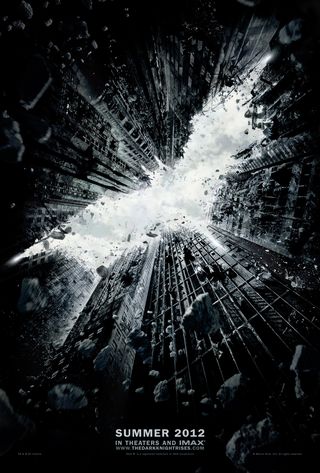
The-dark-knight-rises-teaser-poster1First, Aaron Bady in New Inquiry:

The Dark Knight Rises is not about Occupy Wall Street, even though it does have a five month anarchist occupation of New York City, which lasts into the winter until a huge phalanx of NYPD officers flood into lower Manhattan and pound the crap out of them. It is a movie that works very hard at not being about Occupy Wall Street, in fact: it fills the screen and narrative arc with all sorts of bells and whistles, bloating its running time way beyond necessity, and generally wearing you down with all sorts of things that are not Occupy Wall Street until you don’t notice anymore that it’s all the fuck about Occupy Wall Street. I mean, for fuck’s sake, Bane and a bunch of his goons literally Occupy Wall Street at one point, and then they lead a leaderless revolution of wealth redistribution and general assemblies, that they apparently hope will by example (mediated through mass media) be replicated across the country. I think Batman even subpoenas Malcolm Harris’ twitter feed at one point.

Via.This vacillation, ambivalence, even insistent disavowal is what seems to me to be, by far, the most interesting thing about the movie, and precisely the thing that so many “political” readings of it must almost bend over backwards to miss, as they struggle to claim it for various political persuasions. Take, for example, the honorable conservative Ross Douthat who tut-tutted yesterday — from his blog at the NY Times — against the “extraordinary overreactions from ideologically-inclined movie writers” like Salon’s Andrew O’Hehir, who he quotes as arguing:

“It’s no exaggeration to say that the “Dark Knight” universe is fascistic (and I’m not name-calling or claiming that Nolan has Nazi sympathies). [It has a] vision of human history understood as a struggle between superior individual wills, a tale of symbolic heroism and sacrifice set against the hopeless corruption of society. Maybe it’s an oversimplification to say that that’s the purest form of the ideology that was bequeathed from Richard Wagner to Nietzsche to Adolf Hitler, but not by much.

Second, Henry Farrell in Crooked Timber:

I saw Batman: The Dark Knight Rises on Saturday (I was a little nervous about copycat shootings). It has some excellent set-pieces, but is not a great movie. If the standard is ‘better than The Godfather Part III,’ it passes muster, but by a rather narrower margin than one would like. It wants to be an oeuvre, saying serious things about politics and inequality, but doesn’t ever really get there. This Jacobin piece by Gavin Mueller argues that it’s not a pro-capitalist movie, but a pro-monarchist one. I think that’s wrong. It’s a pro-aristocratic movie, which isn’t really the same thing. Mueller’s observation that:

There is barely any evidence of “the people” at all – it’s all cops and mercenaries battling it out. So instead of a real insurrection, the takeover of Gotham functions via Baroque conspiracies among elites struggling for status and power.

is exactly right – but a movie about “elites struggling for status and power” without some master-figure, however capricious, who can grant or deny them recognition isn’t actually about monarchy. It’s about the struggle between the elites themselves.

Mueller has lots to say about the movie’s take on Occupy, inequality and so on, all of which is right. But even if The Dark Knight Rises didn’t have this explicit political message, its politics would still be creepy.

A Know-It-All’s Guide To Olympic Music

Tom Huizenga snarkily shares some interesting tid-bits on over a century of Olympic theme music in NPR's Deceptive Cadence:

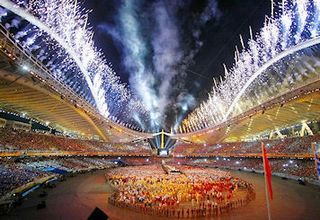
Ceremony-OlympicsA little closer to our own time, don't forget about Czech composer Josef Suk, whose soul-stirring Toward a New Life was written for the 1932 Olympic Games in Los Angeles and won him a silver medal. Bonus points for interjecting, particularly among classical music pretenders, that Suk was the son-in-law of the great Czech composer Antonin Dvorak.

Philip Glass is hip in almost any context. The prolific and expeditious composer (who once worked as a cabbie and plumber) was tapped to write something for the torch lighting ceremony at the 1984 Los Angeles games. He came up with a five-minute piece called The Olympian (below), and later commented: “I can think of no event to compare with the Olympic Games which makes us so conscious of our shared humanity, our common fate.” Glass also composed music for the 2004 Greek Olympics. The overly ambitious Orion featured collaborations with seven other composers including Ravi Shankar and Gambian kora player Foday Musa Suso.

More here.