Why You Can Change Your Genes

From The Guardian:

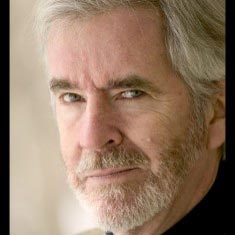
GeneThe Olympic Isle on opening night was “full of noises, / Sounds, and sweet airs that give delight and hurt not”. The lion of the industrial revolution could lie down with the lamb. But beneath the fantasy a sewer ran, diverted but untamed: the spectre of doping. And not just doping, because this is the age of genomics: gene doping. The man who came to warn of this prospect is himself a Spector: Tim Spector, professor of genetic epidemiology at King's College London and the author of this book. The means by which gene doping might be achieved (no one is sure whether it has yet been, or in practice can be, done) is Spector's field of expertise: epigenetics. So he has become a media pundit during the Olympics, but his real subject is twins and what they tell us about genes. Identical twins are a unique test of genes in action because, having come from a single fertilised egg, they have identical genomes, all 3bn letters of them. They are clones. The point about twins and identical genes is that genes in action do some strange things that we are only just beginning to understand – identical genes can diverge in their expression during the course of a lifetime. This is epigenetics. It is now generally accepted that personal experience can change our genes. If you practise music for six hours a day and become a great musician, your brain will show recognisable changes both in large-scale anatomy and genetically. London cabbies have “knowledge” – enhanced regions of the brain that start to recede when they retire. The chemical processes that alter the genes in epigenesis – methylation and deacetylation of the packaging proteins of the genes, the histones – are fairly well understood. But the puzzle is that some of these changes can be passed on to offspring, and the effect – although it eventually disappears after three to four generations – can have profound consequences. One hundred and fifty years of biological orthodoxy claimed that these phenomena were impossible. What is supposed to happen at reproduction – and mostly does – is that all the epigenetic marks acquired during life are erased and every birth is a fresh start. But the case of Dolly the sheep and other animals cloned since then show that where adult cells have been reprogrammed to wipe out the epigenetic marks, the process is inefficient. So Dolly, whose parent cell was six years old, was not really a fresh start. She died prematurely as a result. But even in normal reproduction, it seems that some epigenetic marks can persist for a few generations.

Spector explains these facts clearly and does not overdo the deep biology. Most of the book consists of case histories and studies of the crucial traits that matter to all of us: intelligence, athletic and artistic skill, disease, obesity, sexual orientation. What the genomic revolution has done is to reopen the old nature/nurture debate. How wildly this has lurched, protagonists on both sides blithely ignoring what little evidence there was. Spector recalls that in the 1960s and 70s it was almost possible to obtain funding for research on twins because of the prevailing blank slate, nurture-is-all ideology. This was preceded by the appalling eugenics period when, despite the evidence that hereditary genius dissipated over the generations, far too many serious biologists endorsed the idea of breeding the best and brightest and preventing this in the unfit. Today there are fewer excuses because the solid evidence is piling up. But the evidence is often puzzling. To the embarrassment of the Human Genome Project, researchers have come to the conclusion that the genetic component of some multi-factorial diseases is exceptionally low. Many genes have been found to be implicated in such conditions but their overall contribution might be as low as 2%.

More here.

Saturday Poem

At Midnight in the Bakery at the Corner

At midnight in the bakery at the corner
While bread and butter-biscuits are being baked
I remember the Rahman of my childhood
And Asmat’s sparkling eyes
Playing carom with me

At midnight in the bakery at the corner
While bread and butter-biscuits are being baked
I am boozing alone in my room
In front of me fried liver pieces gone cold in a plate
All my friends migrated to the Gulf

At midnight in the bakery at the corner
While bread and butter-biscuits are being baked
The wife of the Pathan next door enters my room
Closes the door and turns her back to me
I tell her, sister, go find someone else

When the bread develops its sponge, the smell
Of the entire building fills my nostrils.
.

by Dilip Chitre
from Ekoon Kavita -1
publisher: Popular Prakashan, Mumbai, 1992

translation Dilip Chitre, 2008
from Shesha: Selected Marathi Poems (1954–2008)

Hopes Spring Eternal

From The New York Times:

WomenAmericans have a curiously limited vision of France. We may be wild about Chanel sunglasses, Vuitton handbags, Champagne or Paris in the spring, but when it comes to the kinds of contemporary French culture that can’t be bought in a duty-free shop, most of us draw a blank. Luckily, this veil of benign ignorance is being lifted as publishers in the United States introduce American readers to a new generation of hugely gifted French writers who are reworking the boundaries of fiction, memoir and history (Emmanuel Carrère, Laurent Binet, the American-born Jonathan Littell) or of high art and snuff lit (Michel Houelle­becq). Among the recent crop of writers just reaching the top of their game, Marie NDiaye, born in 1967 and now living in Berlin, is pre-eminent.

NDiaye’s career has been stellar. When she was 18, the legendary editor Jérôme Lindon (best known as Samuel Beckett’s champion) published her first novel to high critical acclaim. Her subsequent fiction and plays have won numerous prizes and distinctions. (NDiaye’s “Papa Doit Manger,” or “Daddy’s Got to Eat,” produced in 2003, is the only play by a living woman to have entered the repertory of the ­Comédie-Française.) “Three Strong Women” — NDiaye’s most recent novel — won the Prix Goncourt when it appeared in 2009 and made her, according to a survey by L’Express-RTL, the most widely read French author of the year. That same year, NDiaye was the inadvertent cause of a national furor when a member of the French Parliament, responding to an interview in which she’d called the Sarkozy government “monstrous,” suggested in an open letter to the culture minister that Goncourt laureates should be required to “respect national cohesion and the image of our country” or else remain silent. What most disturbed people about this outburst — coupled as it was with the Sarkozy government’s increasingly ham-­fisted policies on inner-city policing and the expulsion of immigrants — was what they saw as its unspoken assumption that as a black woman of African parentage, NDiaye should have to prove herself deserving in a way that would never be demanded of white male laureates.

More here.

Friday, August 10, 2012

Is War Inevitable?

ChessE.O. Wilson in Discover Magazine:

Also see John Horgan's response to this piece, “No, War Is Not Inevitable.”

“History is a bath of blood,” wrote William James, whose 1906 antiwar essay is arguably the best ever written on the subject. “Modern man inherits all the innate pugnacity and all the love of glory of his ancestors. Showing war’s irrationality and horror is of no effect on him. The horrors make the fascination. War is the strong life; it is life in extremis; war taxes are the only ones men never hesitate to pay, as the budgets of all nations show us.”

Our bloody nature, it can now be argued in the context of modern biology, is ingrained because group-versus-group competition was a principal driving force that made us what we are. In prehistory, group selection (that is, the competition between tribes instead of between individuals) lifted the hominids that became territorial carnivores to heights of solidarity, to genius, to enterprise—and to fear. Each tribe knew with justification that if it was not armed and ready, its very existence was imperiled. Throughout history, the escalation of a large part of technology has had combat as its central purpose. Today the calendars of nations are punctuated by holidays to celebrate wars won and to perform memorial services for those who died waging them. Public support is best fired up by appeal to the emotions of deadly combat, over which the amygdala—a center for primary emotion in the brain—is grandmaster. We find ourselves in the “battle” to stem an oil spill, the “fight” to tame inflation, the “war” against cancer. Wherever there is an enemy, animate or inanimate, there must be a victory. You must prevail at the front, no matter how high the cost at home.

On Italo Calvino

01c_nyrb112185_png_208x864_q85From the NYRB archives, Gore Vidal:

On the morning of Friday, September 20, 1985, the first equinoctial storm of the year broke over the city of Rome. I awoke to thunder and lightning; and thought I was, yet again, in World War II. Shortly before noon, a car and driver arrived to take me up the Mediterranean coast to a small town on the sea called Castiglion della Pescáia where, at one o’clock, Italo Calvino, who had died the day before, would be buried in the village cemetery.

Calvino had had a cerebral hemorthage two weeks earlier while sitting in the garden of his house at Pineta di Roccamare, where he had spent the summer working on the Charles Eliot Norton lectures that he planned to give during the fall and winter at Harvard. I last saw him in May. I commended him on his bravery: he planned to give the lectures in English, a language that he read easily but spoke hesitantly, unlike French and Spanish, which he spoke perfectly; but then he had been born in Cuba, son of two Italian agronomists; and had lived for many years in Paris.

It was night. We were on the terrace of my apartment in Rome; an overhead light made his deep-set eyes look even darker than usual. Italo gave me his either-this-or-that frown; then he smiled, and when he smiled, suddenly, the face would become like that of an enormously bright child who has just worked out the unified field theory. “At Harvard, I shall stammer,” he said. “But then I stammer in every language.”

The Biological Response to Beauty and Ugliness in Art

Age-of-insight-excerpt_1An excerpt from Eric Kandel's The Age of Insight, in Scientific American:

Semir Zeki of University College London found that the orbitofrontal region is also activated in response to other, subtly pleasurable images that we interpret as beautiful. Zeki conducted a study in which he first asked volunteers to examine a large number of portraits, landscapes, and still lifes. He then had the volunteers classify the art, irrespective of category, on the basis of whether they found the painting beautiful or ugly. Zeki imaged the volunteers’ brains as they looked at the paintings and found that all of the portraits, landscapes, and still lifes, regardless of whether the viewer saw them as beautiful or ugly, lit up the orbitofrontal, prefrontal, and motor regions of the cortex. Interestingly, however, the pictures ranked most beautiful activated the orbitofrontal region most and the motor region least, whereas the pictures ranked ugliest activated the orbitofrontal region least and the motor region most. The activation of the motor region of the cortex suggests to Zeki that emotionally charged stimuli mobilize the motor system to be prepared to take action to get away from the stimulus in the case of ugliness or threat and toward the stimulus in the case of beauty or pleasure. Indeed, as we know, fearful faces also activate the motor region of the cortex.

Beauty does not occupy a different area of the brain than ugliness. Both are part of a continuum representing the values the brain attributes to them, and both are encoded by relative changes in activity in the same areas of the brain. This is consistent with the idea that positive and negative emotions lie on a continuum and call on the same neural circuitry. Thus, the amygdala, commonly associated with fear, is also a regulator of happiness.

For every evaluation of emotion, from happiness to misery, we use the same fundamental neural circuitry. In the case of art, we evaluate a portrait’s potential for providing new insights into another person’s psychological state. This discovery, by Ray Dolan and his colleagues at University College London, was based on a set of studies in which volunteers viewed faces whose expression of sadness, fear, disgust, or happiness was gradually changed from low to high intensity.

On Jeanette Winterson

Image.phpHannah Tennant-Moore in n+1:

“The original role of the artist as visionary is the correct one,” Jeanette Winterson writes in her essay “Imagination and Reality” (1997). When art was funded by the church, Winterson reminds us, “the artist and his audience were in tacit agreement; each went in search of the sublime.” Today most patrons of the arts are secular liberals who see art as either a reminder of beauty in an imperfect world or a social inquiry into the world’s imperfections. Perhaps this is why Winterson—the author of nineteen novels and a household name in Britain—has been widely celebrated as a writer of magical realism and shrewd fairytales, but has not been critically appreciated for what she feels is the supreme goal of fiction: to be “as successful as religion used to be at persuading us of the doubtfulness of the seeming-solid world.”

This clarity of artistic purpose is not surprising coming from a woman raised as a fanatical Pentecostal. Winterson’s only childhood companion—one does not endear oneself to secular 10-year-olds by embroidering THE SUMMER IS NEARLY ENDED AND WE ARE NOT YET SAVED on one’s gym bag—was her adoptive mother, a “flamboyant depressive” who punished Winterson by locking her in the coalhole for hours and telling her that “the devil led us to the wrong crib.” Winterson inured herself against loneliness with the conviction that she was destined for religious greatness: she began writing sermons and preaching to her congregation when she was still a child. But after Winterson’s mother discovered her romantic love for another girl, her church subjected her to an exorcism that involved being locked in a room with no food or heat for three days, while church elders alternately prayed for her and beat her. At 16, Winterson left home and turned to literature.

I would fain die a dry death

Bob-Dylan-performs-in-201-008

Could this be the last time? The customary intrigue that surrounds the arrival of a new Bob Dylan studio album – and this is his 35th – was stirred by its title: Tempest. Given that The Tempest was Shakespeare’s final play, and we know that Dylan is a student of the Bard, could this be the 71-year-old artist’s way of telling us that with this record he’s calling it quits? Dylan himself has appeared to pooh-pooh the question, telling Rolling Stone last week: “Shakespeare’s last play was called The Tempest. It wasn’t called just plain Tempest. The name of my record is just plain Tempest. It’s two different titles.” Nonetheless, that same report called the album “dark”; according to the LA Times “a darkness has replaced the instrumental interludes, buoyancy and lightness of his last three albums”; while Billboard in the US said that “death … is a dominant subject on Tempest”.

more from Caspar Llewellyn Smith at The Guardian here.

crocodile

Akhmedova_2_468w

The wood cabin’s kitchen is dark and cramped. At the table sits Witch with a bowl in front of her. In her hand she holds a wet sponge with which she is wiping the phosphorus off matchboxes. Dark red droplets drip into the bowl. Witch’s hands are red and bony, and she herself is as dark as an overdone roast potato. She has a mop of dark wiry hair. Outside the window are the sickly beds of the vegetable garden. The sky is leaden. At the gas cooker stands a thin man called Misha. His matchstick arms hold an enamel saucepan lid over the burner. On it are crushed tablets of Sedalgin, an analgesic rich in codeine. “This is the way to wash matches,” she says, turning to me.

more from Marina Akhmedova at Eurozine here.

It felt too good to be outside

Cover00

There are moments, reading this midwesterner who has thought seriously about his subjects and now wishes to speak plainly about them, that the voice on the page—its erudition tempered by politeness or maybe humility—carries an echo of the tone of the late David Foster Wallace. Indeed, Wallace himself shows up later in the book, more than once. By then, though, Magic Hours has taken a turn for the worse. The further the book goes—the essays arrive chronologically—the clearer it becomes that its rubric about “Creators and Creation” is a flimsy bag thematically. Bissell’s real subject here is something closer to “success,” or even “fame.” And success does not seem to suit him.

more from Tom Scocca at Bookforum here.

Murder your darlings

Anita Desai in Prospect:

YeatsColm Tóibín’s new book is called New Ways to Kill Your Mother: Writers and their Families (Penguin) but the key is in the subtitle. This collection of essays is by no means restricted to mothers. It is the entire family that needs to be destroyed, it seems, if an artist is to realise his vision. In India that has been the tradition through the ages. The soul demands the abandonment of family and society in order to achieve another level of being. Hence the Sufi artistic tradition: poets such as Rumi and Hafiz had to retreat into their own worlds to hear the music of another. Such iconoclasts acquired respect, reverence, even awe, not only because of their spiritual transcendence but for their artistic achievements, which are loved because they have no link to society or family, but take one to another realm. It is something of that secular transcendence one might experience in reading a book: an escape, brief and fleeting but all the more intense and poignant for that, into another life, extinguishing the boredom, failure and despair of one’s own. The paradox for the writer is that he is trapped—to a much greater extent than the composer or the painter—in the very stuff he wishes to escape. The stuff is, unfortunately, what nourishes his work: society and family. The writer does not have to travel to an office. Generally, his workplace is his home. This is awkward for both writer and family, as we see in Tóibín’s portrait of John Cheever: living in a suburban home in Ossining, New York that he loathed, wishing he could leave, while his family just as ardently wished he would. What is to be done about a writer in the family? Different families cope in different ways, as Tóibín relates. Not all can be as supportive as WB Yeats’s wife George. She conveniently discovered a talent for channelling the voices of spirits and joined Yeats in séances, which provided the inspiration for much of his poetry and his work on occult astrology, A Vision. She was rich, independent and capable, buying her husband a romantic ruin of a tower at Ballylee in which to write his poetry. With him she endured its lack of electricity and water. She also tolerated his love affairs and accommodated his mistresses with the same stoicism. At the other extreme is the family of the Irish playwright JM Synge. He was dominated by his mother, a fanatical Methodist who deplored his association with the stage and, even after his success in the Dublin and London theatre, ignored his work and its importance. Yet another contrast is provided by the family of the German writer Thomas Mann—a terrifying witches’ brew of incest, sexual ambiguity and suicide. After touring this chamber of horrors with Colm Tóibín, I can see that I was a fortunate child. At home I sat at a round green table in a corner of my room through the long, torpid afternoons, filling one notebook after another with my scribbling. I was given the label “the writer in the family,” just as a sister who enjoyed cutting up her dolls and then bandaging and stitching them together was named “the doctor in the family.” Neither of us escaped our designated fates—or ever really considered it.

The writing I did as an adult took place, like my childhood writing, in the midst of a family of four children. I am often asked by the practically-minded, “How did you manage to write all those books while raising your children?” I explain that having them was what allowed me to stay home and write instead of going out to work or, worse, entering Delhi society. I did so by obediently following their routine: going to my desk as soon as they left for school, then putting my papers away before they came home. I kept to this routine all through the school term, then suspended writing during their holidays or when they were in bed with the measles. It instilled a rhythm in me that continued even after they had all left home. It was my discipline, and don’t all writers fall back on just that—discipline? It also became a habit for me, as smoking cigarettes might be for another.

PICTURE: WB Yeats and his wife George in 1923: she bought him a tower in which to write and tolerated his mistresses.

More here.

Cancer research: Open ambition

From Nature:

BradnerJay Bradner has a knack for getting the word out online. You can follow him on Twitter; you can become one of more than 400,000 online viewers of the TEDx talk he gave in Boston, Massachusetts, last year; you can see the three-dimensional structure of a cancer-drug prototype created in his laboratory and you can e-mail him to request a sample of the compound. Bradner, a physician and chemical biologist at the Dana-Farber Cancer Institute in Boston, makes defeating cancer sound easy — one just has to play tricks on its memory. “With all the things cancer is trying to do to kill our patient, how does it remember it is cancer?” he asked his rapt TEDx audience. Bradner says that the answer lies in epigenetics, the programmes that manage the genome. DNA serves as the basic blueprint for all cellular activity, and DNA mutations have long been known to have a role in cancer. But much of a cell's identity is determined by modifications to chromatin, which comprises DNA and the proteins that bind and package it. Epigenetic instructions, in the form of chemical marks that cling to chromatin, tell cells how to interpret the underlying genetic sequence, defining a cell's identity as, say, blood or muscle. Findings over the past ten years have strongly implicated dysregulation of epigenetic instructions in cancer, where growth-driving genes express like crazy and genes that keep cell division in check are silenced. Bradner's aim is to create a drug that can rewrite those instructions so that cancer cells forget what they are and cease their deadly proliferation.

Bradner thinks that this epigenetic approach could strike down one of cancer's most treacherous drivers, the DNA-binding protein Myc. Myc is involved in up to 70% of cancers but is generally considered 'undruggable', because the active parts of its structure are not accessible to the kinds of small-molecule drugs that chemists generally create. “Myc is one of those things that people dream of targeting,” says Dash Dhanak, head of cancer epigenetics at GlaxoSmithKline (GSK) in Collegeville, Pennsylvania.

More here.

Thursday, August 9, 2012

Molly Crockett on Brain Chemistry and Moral Decision-Making

Over at Philosophy Bites:

Can we manipulate moral decision-making by altering levels of serotonin? And if we can, should we? Molly Crockett has researched the effects of serotonin in this area discusses her findings with Nigel Warburton in this episode of the Philosophy Bites podcast. This episode was originally released on Bioethics Bites and made in association with the Uehiro Centre for Practical Ethics and with a grant from the Wellcome Trust.

Listen to Molly Crockett on Brain Chemistry and Moral Decision-Making

The Obituary of a Movement

10280.annaManu Joseph in Open the Magazine:

There is a type of talented Indian who lives in the United States with his austere wife to whom he lost his virginity, and has two children who are good at spelling. He walks with a mild slouch. He is still intimidated by White waiters, but not Black waiters. In an elevator, chiefly in an elevator, he suspects he is probably small. He does not drive a Prius. He is acquainted with the word ‘generalise’ as something other people should not do. He is often a she. He is fundamentally a good person by almost all the definitions of that human condition—he is against genocide, burning people alive, including Muslims, and stabbing children, including Muslim children. And he loves Narendra Modi. ‘And’ not ‘but’, for ‘but’ will mean that he has considered all the facts and has made a moral decision. He loves Modi for honourable reasons. He loves the idea of a smart, tough and proud Hindu. He loves him because he loves Mother India. He was not always so traditional and patriotic.

He will give many reasons why he is so now, he will give abstract reasons. He will say love is abstract, love is inevitable. It is not, in reality. Love is calculated, always. In America’s caste system, he is nowhere at the top. In fact, at times he feels he is at the bottom. There are moments, he knows, when brown is the new black. Back home he was something by virtue of his birth, his lineage and education, which was clear to all in plain sight. And the riffraff, which knew its place, readily granted him his, unlike in the United States. That is why he loves India. That is why the Third World middleclass and the rich who live in the West are deeply in love with their homelands. Nations that are filled with the poor are feudal in nature, and so excellent homes for the middleclass. India is probably the best.

Resident Indians, despite all their reasonable grudges, experience the privileges every day. That is at the heart of the collapse of Team Anna’s apparent revolution, which called for a battle to the brink to overturn Indian politics, and asked informed Indians to dismantle what ignorant voters had erected.

reminiscing Vidal

TLSNB_286113h

Vidal rarely got angry. His characteristic outburst was a languorous sigh. “Rebirth of the novel? That seems unlikely.” Young people nowadays – this is 1976 again – “find the act of reading anything at all difficult and unrewarding”. As a preamble to his monumental effort to crush John Updike (10,000 words of TLS ordnance in 1996), he wrote: “What is the point to attacking writers in a period where they are of so little consequence? In observance of this law of a dying species, I have hardly mentioned, much less reviewed, Updike in the past . . .”. The burden of the sentence may be found in its finale: “. . . and he has observed the same continence with regard to me”. Yet – “the nicest of words in English”, Vidal once said (TLS, November 10, 2000) – gloom was but half of what is one of literature’s most durable double acts (Vidal’s career spanned eight decades). His vexation, over the state of the republic, the state of letters, of universities, Hollywood, had an opposing force: wit.

more from J.C. at the TLS here.

the whole catalogue of lyrical decay

A_560x375

We know vanished civilizations by the biggest, brawniest, and most durable buildings they leave behind: Roman stadiums, Egyptian temples, medieval cathedrals, Renaissance châteaux. The last 200 years have bequeathed to us an ungainly legacy of industry, and what we make of that inheritance helps define who we are. At the peak of the machine age, factories were emblems of human might, and artists like Charles Sheeler hymned their majesty and ruthless purpose. Later, the decline of manufacturing in the West gave us a new Gothic landscape, and we have come to savor the poetics of abandonment: silent smokestacks, vaulted basilicas with missing windows, massive brick fortresses, looming silos, weed-mossed trolley tracks, great steel trusses furred with rust. At the same time, the word industrial has been trivialized into an aesthetic label, shorthand for restaurants done in polished concrete and brushed steel.

more from Justin Davidson at New York Magazine here.

Decoding the Syrian Propaganda War

7563876144_44c73fbfe7_n

The battles of the Syrian revolution are, among other things, battles of narrative. As I recount in “Welcome to Free Syria,” the regime has indeed committed grievous massacres, including one I saw evidence of in the northern town of Taftanaz. The Assad government also puts forth a narrative—the country is under siege from an alliance of criminal gangs, Al Qaeda, and the CIA—that is quite removed from reality. Yet there is also a powerful pull in the West to order a messy reality into a simple and self-serving narrative. The media, which largely favors the revolution, has at times uncritically accepted rebel statements and videos—which themselves often originate from groups based outside the country—as the whole story. This in turn provides an incentive for revolutionaries to exaggerate. A Damascus-based activist told me that he had inflated casualty numbers to foreign media during the initial protests last year in Daraa, because “otherwise, no one would care about us.”

more from Anand Gopal at Harper’s here.

Pakistani Ahmadis Lose Hope This Ramadan

Zofeen Ebrahim at the Inter Press Service News Agency:

ScreenHunter_12 Aug. 09 18.35As millions around the world enter the third week of the Ramadan fast, the fraternity that typically unites Muslims during the holy month does not extend to Pakistan’s Ahmadi community, which is facing worse persecution than ever before.

What little space there might once have been for this religious minority – who believe that their founder, Mirza Ghulam Ahmad of Qadian, is the promised messiah and reformer whose advent was foretold by the Holy Prophet Muhammad – is quickly disappearing altogether.

“What space for Ahmadis are you talking about? They don’t have any,” Faisal Neqvi, a Lahore-based lawyer, told IPS.

Declared non-Muslims in 1974, the legal and social exclusion of Ahmadis was further enshrined in a 1984 law that prohibits them from proclaiming themselves Muslims or making pilgrimages to Saudi Arabia.

More here.

The Condemned: Ahmadi persecution in Pakistan

Rabia Mehmood in the Express Tribune:

The short documentary is a collection of testimonies in which those Ahmadis who have faced persecution narrate the target killings of loved ones, discrimination at the hands of fellow students and what it is like to live in jail as a blasphemy convict.

Rabwah, is a town of District Jhang with the highest population of Ahmadis in Pakistan. The town is also home to some who have been convicted of blasphemy and under the anti-Ahmadi Ordinance of 1984, making them prisoners in this town.

A major chunk of the report was filmed in Rabwah and identities of some community members have been hidden for the sake of their security. The young man who shares the story of the horrors his family faced after his brother was accused of blasphemy has now left Pakistan. Therefore, we took the risk of showing his face on-camera. The town still provides a sense of security for the rest, so the condemned could speak with hidden faces.

More here.