The Britishisation of American English

Cordelia Hebblethwaite at the BBC:

ScreenHunter_02 Sep. 30 13.07There is little that irks British defenders of the English language more than Americanisms, which they see creeping insidiously into newspaper columns and everyday conversation. But bit by bit British English is invading America too.

Spot on – it's just ludicrous!” snaps Geoffrey Nunberg, a linguist at the University of California at Berkeley.

“You are just impersonating an Englishman when you say spot on.”

Will do – I hear that from Americans. That should be put into quarantine,” he adds.

And don't get him started on the chattering classes – its overtones of a distinctly British class system make him quiver.

But not everyone shares his revulsion at the drip, drip, drip of Britishisms – to use an American term – crossing the Atlantic.

“I enjoy seeing them,” says Ben Yagoda, professor of English at the University of Delaware, and author of the forthcoming book, How to Not Write Bad.

“It's like a birdwatcher. If I find an American saying one, it makes my day!”

Last year Yagoda set up a blog dedicated to spotting the use of British terms in American English.

So far he has found more than 150 – fromcheeky to chat-up via sell-by date, and the long game – an expression which appears to date back to 1856, and comes not from golf or chess, but the card game whist. President Barack Obama has used it in at least one speech.

More here.

Behind the drones debate

Cyril Almeida in Dawn:

Drone2Drones kill civilians. Fewer civilians would probably die if there were less secrecy surrounding drone strikes in Fata. And the US kills people in Fata that it probably wouldn’t get away with killing in less remote parts of the world.

There. Now that that’s out of the way, there’s another obvious truth about drone strikes: they won’t end.

Because drones kill militants. Because there isn’t a good alternative to drones for killing militants in parts of Fata. And because the US security establishment likes them and the Pakistani security establishment doesn’t loathe them.

And, given what 140,000 troops in Fata can and have done, drones are — in terms of casualties and damage caused to civilian populations — on the periphery of the ‘what are we doing to our people’ debate.

If drones are here to stay, why this endless back and forth, sometimes acerbic, at other times restrained, between Pakistan and the US?

More here.

A Trans-Atlantic Trip Turns Kafkaesque

Gary Shteyngart in the New York Times:

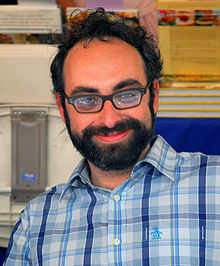
220px-GaryShteyngartYou, American Airlines, should no longer be flying across the Atlantic. You do not have the know-how. You do not have the equipment. And your employees have clearly lost interest in the endeavor. Like the country whose name graces the hulls of your flying ships, you are exhausted and shorn of purpose. You need to stop.

Flight 121 from Paris to New York began on a clear autumn afternoon. It ended over 30 hours later. For those of us without miles, it is probably still going.

The initial delay was a mere hour or two. Some were told that our aircraft possessed faulty tires and brakes. Others were told that the crew could not find their way in from Paris. Neither scenario was particularly encouraging.

The aircraft was indeed an interesting one. One of the overhead baggage compartments was held together with masking tape. Halfway across the Atlantic you decided to turn Flight 121 back because your altimeter wasn’t working. Some of us were worried for our safety, but your employees mostly shrugged as if to say, Ah, there goes that altimeter again.

More here.

To get the most out of life, you’ve got to live like a bird

Our own Morgan Meis in The Smart Set:

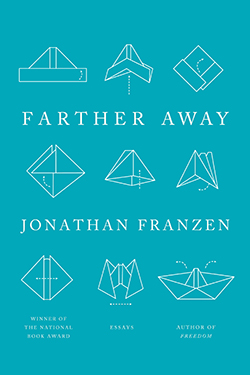
ID_IC_MEIS_FRANZ_AP_001A novel is a bird. I learned this from Jonathan Franzen. It is the underlying message of his newest collection of essays, Farther Away.

Franzen became a bird watcher many years ago. He is almost apologetic about that fact, realizing that — in the opinion of most normal human beings — the birdwatcher is a slightly pathetic if otherwise harmless individual. In his commencement address at Kenyon College, “Pain Won't Kill You,” Franzen writes:

It's a long story, but basically I fell in love with birds. I did this not without significant resistance, because it is very uncool to be a birdwatcher, because anything that betrays real passion is by definition uncool. But little by little, in spite of myself, I developed this passion, and although one half of a passion is obsession, the other half is love.

From his usage of words like “passion,” “obsession,” and “love,” it's obvious Jonathan Franzen thinks birdwatching is neither pathetic, nor, more importantly, is it harmless. For Franzen, birdwatching is a big deal. Paying attention to birds can change you. It can transform your sense of self and the world. Franzen knows this because it happened to him.

Many of the essays in Franzen's book therefore touch on the subject of watching birds. A couple of essays are explicitly about birdwatching, which Franzen has done in Cyprus, on an island in the South Pacific known as Masafuera, and in China, among other places. Franzen has become a defender of the birds. He is appalled by the killing of birds and by the destruction of their natural habitat. He laments with great pathos the lusty shooting of migrant birds that is a favorite pastime of the people of Malta. But what does it mean, this birdwatching, and why does Franzen keep coming back to the theme of birds over and over in his essays?

More here.

Saturday, September 29, 2012

Geller’s ‘savage’ ad displays the racism inherent in Israeli colonization

Shireen Tawil in Mondoweiss:

ScreenHunter_01 Sep. 30 10.21In her latest attempt to fan the flames of Islamaphobia, anti-Arab sentiments, and blind allegiance to Israel across America, Pamela Geller launched an ad campaignimploring Americans, “In any war between the civilized man and the savage, support the civilized man. Support Israel, defeat Jihad”. Published in August on buses and subway cars in San Francisco, the ad made its debut in New York City subway stations this week and is due to speckle the nation’s capital in the near future.

Geller’s vulgar and hateful ad campaign has rightfully received much resistance and heat from local populations, as well as the public transportation authorities whose vehicles it smuts. Local anti-hate activists’ creative and artistic responses have branded these ads as racist and hate speech. Her violent and distasteful language has been slammed for reeking of colonial racism and white supremacy. The San Francisco MTA refused to run the ad as it contradicts their stance against defamatory language, until Geller went to court and, winning the case, protected the ad under the First Amendment (much to their credit, in a refreshing reaction to being forced to post the ad, the SFMTA donated its proceeds from the ad to the San Francisco Human Rights Commission).

The language Geller employs in her ad is shocking, hurtful, divisive, violent, hateful, racist, and vulgar. But it is out there, and potentially spreading. The question now remains: what to do with it?

More here.

On Early Warning Signs

Sugiharacrit_HSGeorge Sugihara in Seed:

At a closed meeting held in Boston in October 2009, the room was packed with high-flyers in foreign policy and finance: Henry Kissinger, Paul Volcker, Andy Haldane, and Joseph Stiglitz, among others, as well as representatives of sovereign wealth funds, pensions, and endowments worth more than a trillion dollars—a significant slice of the world’s wealth. The session opened with the following telling question: “Have the last couple of years shown that our traditional finance/risk models are irretrievably broken and that models and approaches from other fields (for example, ecology) may offer a better understanding of the interconnectedness and fragility of complex financial systems?”

Science is a creative human enterprise. Discoveries are made in the context of our creations: our models and hypotheses about how the world works. Big failures, however, can be a wake-up call about entrenched views, and nothing
produces humility or gains attention faster than an event that blindsides so many so immediately.

Examples of catastrophic and systemic changes have been gathering in a variety of fields, typically in specialized contexts with little cross-connection. Only recently have we begun to look for generic patterns in the web of linked causes and effects that puts disparate events into a common framework—a framework that operates on a sufficiently high level to include geologic climate shifts, epileptic seizures, market and fishery crashes, and rapid shifts from healthy ecosystems to biological deserts.

The main themes of this framework are twofold: First, they are all complex systems of interconnected and interdependent parts. Second, they are nonlinear, non-equilibrium systems that can undergo rapid and drastic state changes.

Quick Intuitive Decisions Foster More Charity and Cooperation than Slow Calculated Ones

ThinkerEd Yong over at Not Exactly Rocket Science:

Our lives are governed by both fast and slow – by quick, intuitive decisions based on our gut feelings; and by deliberate, ponderous ones based on careful reflection. How do these varying speeds affect our choices? Consider the many situations when we must put our own self-interest against the public good, from giving to charity to paying out taxes. Are we naturally prone to selfishness, behaving altruistically only through slow acts of self-control? Or do we intuitively reveal our better angels, giving way to self-interest as we take time to think?

According to David Rand from Harvard University, it’s the latter. Through a series of experiments, he has found that, on average, people behave more selflessly if they make decisions quickly and intuitively. If they take time to weigh things up, cooperation gives way to selfishness. The title of his paper – “Spontaneous giving and calculated greed” – says it all.

Working with Joshua Greene and Martin Nowak, Rand asked volunteers to play the sort of games that economists have used for years. They have to decide how to divvy, steal, invest or monopolise a pot of money, sometimes with the option to reward or punish other players. These games are useful research tools, but there’s an unspoken simplicity to them. Sure, the size of the payoffs or the number of rounds may vary, but experiments assume that people play consistently depending on their personal preferences. We know from personal experience that this is unlikely to be true, and Rand’s experiments confirm as much. They show that speed matters.

Rand started with a simple public goods game, where players decide how much money to put into a pot. The pot is then doubled and split evenly among them. The group gets the best returns if everyone goes all-in, but each individual does best if they withhold their money and reap the rewards nonetheless.

strom

30OSHINSKY-articleInline

When Senator Strom Thurmond of South Carolina died in 2003 at the age of 100, he seemed to embody the term “political survivor.” Think of someone who began his career as a Roose­velt Democrat and finished it as a Reagan Republican, who campaigned for president as a white supremacist and ended up supporting a national holiday for Martin Luther King. Decades passed, one generation replaced another, but Thurmond soldiered on, swapping causes, even political parties, with a juggler’s eye. Where many politicians become objects of contempt or indifference over time, with Thurmond the reverse was true: the longer he lasted, the more revered he became. He hailed from Edgefield County in the hardscrabble Carolina Piedmont, home to several governors and a host of Lost Cause Southern heroes like “Pitchfork” Ben Tillman, the race-baiting demagogue who notoriously advocated lynching to protect white women from black “lust.” Edgefield had a tradition of enforcing its Jim Crow laws with a heavy hand — a necessity, whites believed, in a county where two-thirds of the residents were black.

more from David Oshinsky at the NY Times here.

the zoo problem

901df90c-c015-4624-a966-fede6a05c641.img

Of course, zoos have both passionate supporters and outright opponents. But most people, like me, occupy a middle ground: delighting at the squirrel monkeys chasing each other’s tails, but shamed by the bored and contemptuous glance of the gorilla. Zoos embody the dilemmas of our relationship to a nature that we strive to control, for good and frequently for ill. These dilemmas provide the common thread to four fascinating books on the lives of animals in captivity. The central dilemma is of course whether to keep animals removed from their natural habitats at all: to do so allows us to come closer to them, but only in an environment that seems unnatural and impoverished. In Death at SeaWorld: Shamu and the Dark Side of Killer Whales in Captivity, the investigative journalist David Kirby poses this question in the context of a very particular kind of zoo: the oceanariums and marine mammal parks in which some of the most sophisticated and spectacular of animals can be seen.

more from Stephen Cave at the FT here.

A Review of The Breathless Zoo: Taxidermy and the Cultures of Longing

1348623233

Anjuli Raza Kolb in The LA Review of Books:

IN HER MEMOIR Deep Blue Home, Julia Whitty describes a near collision with a young sperm whale as she swims, helpless among human companions, in the depths off the Galapagos Islands. She wonders if she will die. Calm and curious about her fate, she watches as he approaches full speed ahead, “with all the energy and incaution of adolescence.” Instead of ramming her, “he jackknifes his huge head downward,” she writes, “and I can see the sheets of cellophane-thin gray skin peeling off his body — the constant striptease one of the means by which cetaceans reduce their drag in the water.” This image captivates me: an empty whale skin, perfectly formed, floating gently up as its former contents shoot down in the water, all strength and purpose. The ghost whale unfurling itself and pouring outward on the surface of the water. I have since learned that whale skin releases in prosaic strips.

There is a quickening in this scene, a flush of longing, envy, and terror not just from the Melvillian symbolism of the whale, or the arresting account of a near-death experience, but, too, from the proximity to a living creature so other and so enormous. Whitty’s description is unmistakably erotic: the young whale’s shedding is a “striptease,” the “sculpted angle of his cheek and jaw,” his “tensile strength,” and his “arching upright” tail towering above her before he slides down into the dark waters. She writes of touching him, and it’s thrilling.

It is the trace, however, that struck me most. The oxytocin to the dopamine rush of first encounter, the strip of skin is like a lover’s token: prophetic, ontic, memorial, foretelling life lived together and the ways in which it ends. For those of us who love it and observe it closely, we are locked on a fast collision course with our natural world, tempting its wrath, waiting for it to fall apart or duck us, reaching for an acknowledgement of our presence in it, and, above all, enamored of its tokens and talismans.

Cradles of jewels, spun in an hour

From New Statesman:

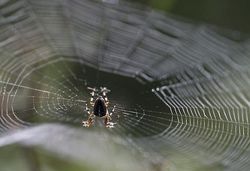
SpiderThe spider and the cleaner work in the same building, not far from each other but solitary in their worlds. The spider spins quietly, tapping and rubbing herself. When the Hoover starts up, she can hear it through her hairs, feeling the sound waves like a wind on her body. She has eight eyes. She may not see in colour but she’s sensitive to tiny movements. There’s something stately about her panic: no noise, no head movement, simply her legs carry her suddenly into hiding. The cleaner on the other hand shouts and steps backwards: “Weird isn’t it, all those legs, very fragile and quite soft. A spider might measure an inch and a half but the mind sees something huge. I must admit, I’m a little bit unnerved by big spiders. Someone told me they bite. I might just pick them up very quickly – you know, grab them with my hand very softly and fling them out the window. I’d never kill one.”

The cleaner has only two eyes. When he’s not cleaning, he paints detailed pictures of invisible worlds. When he cleans, he keeps his eyes tuned to the task. He sees dust, mud, smears, nail clippings, spillages, hairs in plugholes, unpaid bills, kicked-off shoes, all the secret debris of a human. At a certain point he glances at the ceiling and sees cobwebs: “Ah yes, what should you do about webs? Old webs I’ll get rid of, they’re just big balls or twists of dust; and kitchen webs, the more you leave them (and I’m talking years here) the more the whole place becomes a congealment of grease. But fresh webs – I tend to take one and leave another. I make a balancing decision. I try not to get anxious about the ethics of it. There’s the issue of flies, of course. Not hygienic but I have saved flies on occasion. But those webs, when you see them outdoors they’re like cradles of jewels between the gorse – it seems so sad to damage them.”

More here.

Saturday Poem

To Marina (excerpt)

Let's take a walk
Into the world
Where if our shoes get white
With snow, is it snow, Marina,
Is it snow or light?
Let's take a walk

Every detail is everything in its place (Aristotle). Literature is a cup
And we are the malted. The time is a glass. A June bug comes
And a carpenter spits on a plane, the flowers ruffle ear rings.
I am so dumb-looking. And you are so beautiful.

by Kenneth Koch
from The Collected Poems of Kenneth Koch
Alfred A. Knopf, 2007

The Great Disconnect

Mark Lilla in The New York Times:

Lilla-articleLargeOnce upon a time there was a radical president who tried to remake American society through government action. In his first term he created a vast network of federal grants to state and local governments for social programs that cost billions. He set up an imposing agency to regulate air and water emissions, and another to regulate workers’ health and safety. Had Congress not stood in his way he would have gone much further. He tried to establish a guaranteed minimum income for all working families and, to top it off, proposed a national health plan that would have provided government insurance for low-income families, required employers to cover all their workers and set standards for private insurance. Thankfully for the country, his second term was cut short and his collectivist dreams were never realized.

His name was Richard Nixon.

Whenever conservatives talk to me about Barack Obama, I always feel quite certain that they mean something else. But what exactly? The anger, the suspicion, the freestyle fantasizing have no perceptible object in the space-time continuum that centrist Democrats like me inhabit. What are we missing? Seen from our perspective, the country elected a moderate and cautious straight shooter committed to getting things right and giving the United States its self-­respect back after the Bush-Cheney years. Unlike the crybabies at MSNBC and Harper’s Magazine, we never bought into the campaign’s hollow “hope and change” rhetoric, so aren’t crushed that, well, life got in the way. At most we hoped for a sensible health care program to end the scandal of America’s uninsured, and were relieved that Obama proposed no other grand schemes of Nixonian scale. We liked him for his political liberalism and instinctual conservatism. And we still like him.

But more than a few of our fellow citizens are loathing themselves blind over Barack Obama. Why?

More here.

Friday, September 28, 2012

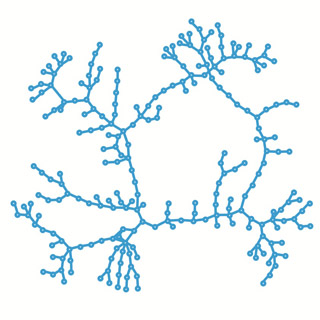
Thinking in Network Terms

Albert-László Barabási in Edge:

We always lived in a connected world, except we were not so much aware of it. We were aware of it down the line, that we’re not independent from our environment, that we’re not independent of the people around us. We are not independent of the many economic and other forces. But for decades we never perceived connectedness as being quantifiable, as being something that we can describe, that we can measure, that we have ways of quantifying the process. That has changed drastically in the last decade, at many, many different levels.


It has changed partly because we started to be aware of it partly because there were a lot of technological advances that forced us to think about connectedness. We had Worldwide Web, which was all about the links connecting information. We had the Internet, which was all about connecting devices. We had wireless technologies coming our way. Eventually, we had Google, we had Facebook. Slowly, the term ‘network connectedness’ really became part of our life so much so that now the word ‘networks’ is used much more often than evolution or quantum mechanics. It’s really run over it, and now that’s the buzzword.

The question is, what does it mean to be part of the network, or what does it mean to think in terms of the network? What does it mean to take advantage of this connectedness and to understand that? In the last decade, what I kept thinking about is how do you describe mathematically the connectedness? How do you get data to describe that? What does this really mean for us?

This had several stages, obviously. The first stage for us was to think networks, only networks down the line. That was about a decade ago, we witnessed the birth of network science. I could say a couple of geniuses came along and did it, but really it was the data that made it possible. Suddenly we started to discover that lots of data that’s out there, that we’re collecting thanks to the Internet and other technological advances, allowed us to look at connectedness and to measure it and to map it out.

Once you had data, you could build theories. Once you had theories, you have predictive power, you could test that and then the whole thing fitted itself. It suddenly very actively emerged as a field that we now call network science. Going beyond networks, going beyond connectedness, we realized we started to know not only whom you connect to and whom you see and where are your links (the economical, personal, social or whatever they are) but we started to see also the timing of your activities. What do you do with those links? When do you interact?

That was the second way; we called it ‘human dynamics.’

Trapped in the Total Cinema

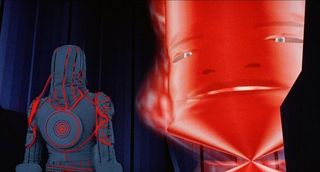
Tron-cropped-2_jpg_470x870_q85

J. Hoberman in The New York Review of Books:

Can we speak of a twenty-first-century cinema? And if so, on what basis?

In the immediate aftermath of World War II, the French film critic André Bazin characterized cinema as an idealistic phenomenon and cinema-making as an intrinsically irrational enterprise. “There was not a single inventor who did not try to combine sound and relief with animation of the image,” Bazin maintained in “The Myth of Total Cinema.” Each and every new technological development—synchronous sound, full-color, stereoscopic or 3-D movies, Smell-O-Vision—served to take the cinema nearer to its imagined essence, which is to say that “cinema has not yet been invented!” Moreover, once true cinema was achieved, the medium itself would disappear—just like the state under true communism. Writing in 1946, Bazin believed that this could happen by 2000.

In fact, something else occurred: the development of digital computer-generated imagery (CGI). Bazin had imagined cinema as the objective “recreation of the world.” Yet digital image-making precludes the necessity of having the world, or even a really existing subject, before the camera—let alone the need for a camera. Photography had been superseded, if not the desire to produce images that moved. Chaplin was perhaps but a footnote to Mickey Mouse; what were The Birth of a Nation and Battleship Potemkin compared to Toy Story 3?

The history of motion pictures was now, in effect, the history of animation. The process began in the early 1980s with two expensive and much-publicized Hollywood features. One From the Heart (1982), Francis Ford Coppola’s experiment in electronic image-making, returned but $1 million on a $26-million investment and effectively destroyed his studio, while Disney’s Tron (1982) the first sustained exercise in computer-generated imagery, was a movie whose costly special effects and mediocre box-office returns would be credited with (or blamed for) delaying CGI-based cinema for a decade.

“Vagina: A New Biography” by Naomi Wolf

Tunnel_250_250

Lindsay Beyerstein in In These Times:

Naomi Wolf tried vainly to deflect feminist criticism of her new book, Vagina: A New Biography in an interview with Amanda Hess of Slate.

Vagina has been savaged by leading feminist writers including Katha Pollitt, Michelle Goldberg, Jaclyn Friedman, Zoe Heller, and Ariel Levy. Even Germaine Greergot some good swipes in.

Why has Wolf's silly book inspired so much feminist pushback? Because we’re sick of religious conservatives trying to reduce us to our sexual organs. It’s bad enough when it’s a Republican senatorial candidate pontificating about “legitimate rape.” But it’s even more galling when the conservative in question is hailed as a major feminist thinker and her religion is Pop Tantra.

Like Todd Akin, Wolf preaches that women can only be fulfilled through rapturous surrender to our biological-cum-mystical destiny.

Akin and his cronies want to reduce women to their wombs. Wolf wants to reduce us to our vaginas. My colleague Sady Doyle sees Wolf’s daft brief for vagina worship as essentially harmless. If Concerned Women for America published this book, I'd agree.

If reactionaries are going to reduce us to our reproductive organs, they might as well reduce us to the fun ones. But pelvic essentialism is dangerous, whether it’s about babies or pleasure, and doubly so when it’s being peddled as feminism.

The Pornography of Equality

Femme-de-la-rue

Markha Valenta in Berfrois:

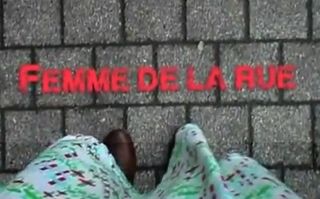
When Betty Friedan wrote The Feminine Mystique in 1963, “the problem that has no name” was the problem of college-educated housewives sitting at home being bored to death. Today, the “problem that has no name” is more widespread, more alluring and more aggressive. Its most insidious aspect is how close it comes to the licit ways in which women are used to lure, seduce, persuade and sweetly tease those who see them. To buy more. And more. Promising to make us sexy and our eyes glaze in pleasure. In the commercials saturating our public spaces. Thebestselling novel now rising high on sadomasochistic frisson. The film crossing and uncrossing its legs.

We like to think that these are metaphors. That the impossibly beautiful things calling out to us, seductively and low-voiced – to be them, to desire them, to touch and possess that thing they have, their hot sexiness on the edge or pure life itself – don’t literally mean it. Or do mean it, but then only in order to sell us sandwiches and Victoria’s secrets. Or as a bit of diversion from boredom. And yet, the constant presence of their siren-calls wherever we look, day in and day out doing their best to arouse in us some amalgam of desire to be, to possess, to have what they have, is striking.

Of course there is a steady stream of documentaries, manifestos and little squeaks of protestagainst this state of affairs. They include everyone from Christian grandparents to radical feminists to immigrant imams affronted in their moral sensibilities. But we studiously ignore them. They come and go without changing a thing. Rather like the tide.

But now something has happened that for a moment has made our societies’ traffic in women’s sexual assets a possible problem.