
Enjoying the content on 3QD? Help keep us going by donating now.
Category: Recommended Reading
Animals’ Understanding of Death Can Teach Us About Our Own
Susana Monso in Time Magazine:
 In 2018, field researchers in Uganda came across an unusual sight: a female chimpanzee carried an infant that she had recently given birth to, and which was affected by albinism, an extremely uncommon condition in this species that gives their fur a striking white color. Chimpanzee mothers often remove themselves from the group to give birth, which protects their babies from the infanticides that are sadly frequent in this species. The researchers seemed to have caught this mother on her return to the group. Sure enough, they were soon able to document the reactions of her mates when they first encountered the infant and his distinctive look.
The behaviors they saw were far removed from the curiosity and care that newborns tend to elicit: instead, the chimpanzees reacted with what looked like extreme fear, with their fur on end and emitting the kinds of calls that signal potentially dangerous animals, such as snakes or unknown humans. Shortly after, violence ensued, and the alpha male together with a few of his allies killed and dismembered the little one. Upon his death, the behavior of the chimpanzees radically changed, and the apes, overtaken by curiosity, began to investigate the corpse: sniffing it, poking it, tugging at its fur and comparing it to their own, entranced by this being who smelled like a chimp but looked so different.
More here.
Enjoying the content on 3QD? Help keep us going by donating now.
The Radical Origins of Spiritualism
Enjoying the content on 3QD? Help keep us going by donating now.
Thursday Poem
Traffic Stop
The officer asked, Do you know why
I pulled you over? So I tried to explain about the correlation
between an unhappy childhood and the need
to pull, about how Elon Musk invented Teslas
because we’re all characters
in Grand Theft Auto, about needing to outrun
my future, but he wanted to see my license and registration
so I pointed at his chest with my gold finger (in the shape of a gun)
showed him the Valentine’s cards stuffed in my glovebox
handed him a snapshot of my border collie at the beach
because a badge needs a quota like a chew toy
needs a puppy, but he asked me to step
out of the car, put the world in a backwards spell,
touch my eyes with my nose
closed, so I put on my blue
shoes, walked heel to toe,
cartwheeled for the crowd, asked
if he could share his body-
cam video on my wall, which is to say I promised
to donate a kidney for the Policeman’s Ball, which is to say I signed
his autograph book
and as he rolled away, the radio played,
there will be an answer, let it be, let it be.
by Pankaj Khemka
from Tribute to Indian Poets
Rattle Magazine #73, Fall 2021
Enjoying the content on 3QD? Help keep us going by donating now.
The Ontology of Social Norms
Kevin Richardson at Notre Dame Philosophical Reviews:
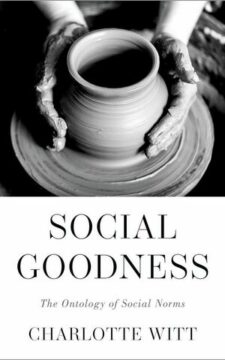 It is incredibly difficult to say something new about social norms. The question “What is a social norm?” has been given many detailed answers by philosophers and social scientists. Social norms are often theorized as rules of some kind; most of the ensuing literature concerns the nature of such rules and how they are established or maintained. Despite the mountain of literature on social norms, Charlotte Witt’s Social Goodness not only makes an original contribution to the literature, but it also does so in a way that points toward important, underexplored regions of conceptual space.
The traditional philosophical question about social norms is: what is a social norm? In Social Goodness, Witt asks a different question: what is the source of social normativity? Alternatively put: what makes social norms binding on us? Witt specifically investigates what she calls social role norms. Teachers ought to teach. Students ought to do their homework. Parents ought to take care of their children. In each case, we have a norm that follows from a social role (teacher, student, parent).
more here.
Enjoying the content on 3QD? Help keep us going by donating now.
Wednesday, October 23, 2024
The Babylonian Map of the World with Irving Finkel
Enjoying the content on 3QD? Help keep us going by donating now.
Fear And Loathing In Faulkner Country
Jennie Lightweis-Goff at The Point:
 College towns are a little like Vegas. They’re fallen capitals, scourged by development and game-day apartments. The boomer professors got there and built the Museum of the American Rebel; soon after, they withered into Cadaver Bohemias. The Godfather, the department chair who hired me in 2016, was nonetheless confident that I’d assimilate to the sprawling “family” he had helped build there. “Faculty regard Oxford as a suburb of New Orleans,” he told me, referring to the city where I’d lived for more than a decade. “So it won’t be too much of a change.” It was an amiable conversation, in which he assured me he’d hired his first choices for the two posts they’d needed: me as an instructor, and the Superstar writer-in-residence, a bestselling novelist and infamous Twitter provocateur.
On the first day of my visit, I heard someone call Oxford “the Little Easy”; no one has said it to me since. To be fair, I’ve never heard its referent—the Big Easy—used in conversation down South in New Orleans, and I don’t think anyone calls Oxford “the Velvet Ditch,” its alleged nickname, without well-earned embarrassment.
more here.
Enjoying the content on 3QD? Help keep us going by donating now.
Why is academic writing so boring?
Samantha Laine Perfas interviews Leonard Cassuto in The Harvard Gazette:
 You start your book by pointing out that all academic writers begin their careers writing for one person: their teacher. Why does that create problems?
This is the primal scene of academic writing: some student writing some paper for some teacher someplace. It happens again and again and is the process by which we are socialized into the community of academic writers.
The distinguishing feature of that primal scene is one that I think gets very little attention, namely that the reader (in this case the teacher) is being paid. You grow up as a writer where your audience is one who can never be bored or discouraged because they’re being paid to read to the end of it. You’re learning in some sense that the reader doesn’t matter that much and that they’re going to be with you no matter what.
This is inevitably the root of many potential bad habits, which can burst into flower as writers become more and more advanced.
More here.
Enjoying the content on 3QD? Help keep us going by donating now.
Pull-Up Diary
Mitchell Morgan Johnson at The Paris Review:
 Went back to the gym after ten days out of town. On vacation in Oregon, with my family, I didn’t work out a single time. On the plane home, I watched an episode of Succession with Alexander Skarsgård in it and thought, I’d like to look like him. He probably works out even when he’s on vacation. But he’s rich, of course, and likely does other extreme things like steroids and blending chicken into smoothies. Still I would like to look more like Alexander Skarsgård than I currently do. I’m 6’3, almost his height, but far skinnier.
Today I felt weaker than before the trip, but maybe that was in my head. I set the assisted pull-up machine to sixty pounds and could complete only four before my arms gave out. I moved on, humbled, to the leg press. I’ve googled “how to do a pull-up” a few times, which has inspired Instagram to start showing me Reels about it. One man with shoulders like cantaloupes explains proper technique. Arms no narrower than shoulder width, he says. You don’t want your body just dangling loosely in space.
more here.
Enjoying the content on 3QD? Help keep us going by donating now.
Sean Carroll’s Mindscape Podcast: Doyne Farmer on Chaos, Crashes, and Economic Complexity
Sean Carroll at Preposterous Universe:
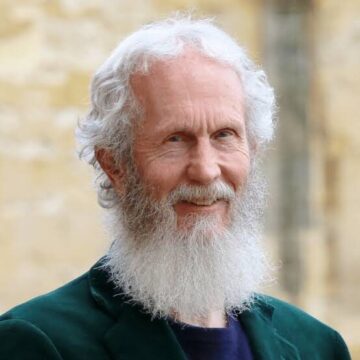 A large economy is one of the best examples we have of complex dynamics. There are multiple components arranged in complicated overlapping hierarchies, out-of-equilibrium dynamics, nonlinear coupling and feedback between different levels, and ubiquitous unpredictable and chaotic behavior. Nevertheless, many economic models are based on relatively simple equilibrium principles. Doyne Farmer is among a group who think that economists need to start taking the tools of complexity theory seriously, as he argues in his recent book Making Sense of Chaos: A Better Economics for a Better World.
More here.
Enjoying the content on 3QD? Help keep us going by donating now.
Ta-Nehisi Coates on Visit to Israel/West Bank
Enjoying the content on 3QD? Help keep us going by donating now.
The High Costs of the For-Profit American Healthcare System
From Literary Hub:
 For the next few weeks, Literary Hub will be going beyond the memes for an in-depth look at the everyday issues affecting Americans as they head to the polls on November 5th. Each week at Lit Hub we’ll be featuring reading lists, essays, and interviews on important topics like Income Inequality, Climate Justice, LGBTQ Rights, Reproductive Rights, and more. For a better handle on the issues affecting you and your loved ones—regardless of who ends up president on November 6th (or 7th, or 8th, or whenever)—stay tuned to LitHub.com in October. Read parts one and two, Income Inequality, and The Importance of Labor.
Today we’ve gathered the best stories published at Lit Hub about one of the most important issues affecting Americans: the high costs (literal and figurative) of America’s for-profit approach to healthcare. With an introduction, below, from Maris Kreizman.
More here.
Enjoying the content on 3QD? Help keep us going by donating now.
A letter to my friend Hanif Kureishi after the terrible accident that changed his life forever
Robert McCrum in The Independent:
 Dear Hanif,
You and I have been friends and sparring partners in the beaten way of the London book, theatre and media world for about half a lifetime – more than 40 years. At Faber’s in the 1980s, I published quite a bit of your early work (notably The Rainbow Sign, My Beautiful Laundrette, The Buddha of Suburbia and The Black Album).
So when I heard, just after Christmas two years ago, that you’d fallen badly in Rome and been taken into intensive care with a broken neck, severe paralysis, and had almost died (there were many rumours: none of the stories about you were exactly the same), I was stunned and distressed.
When, finally, I was able to visit you in the Stanmore rehab centre on your return to the UK, you were already a veteran of many months of neuro-physiotherapy, acclimatising to a weird new world of disability. Possibly, I was more concerned on your behalf than some of your circle. As someone who is a long-term survivor of a stroke (in 1995), I know all about the brain injuries that induce paralysis, and the struggles, inner and outer, involved in getting back to health. I also understood, in my own way, the dreadful severity of your plight as a tetraplegic – in your words, “like a Beckett character”. At any age, the reminder that we live in our bodies can be a personal apocalypse, and a shock that many don’t get over.
More here.
Enjoying the content on 3QD? Help keep us going by donating now.
The US is the world’s science superpower — but for how long?
From Nature:
 Science in the United States has never been stronger by most measures.
Over the past five years, the nation has won more scientific Nobel prizes than the rest of the world combined — in line with its domination of the prizes since the middle of the twentieth century. In 2020, two US drug companies spearheaded the development of vaccines that helped to contain a pandemic. Two years later, a California start-up firm released the revolutionary artificial-intelligence (AI) tool ChatGPT and a national laboratory broke a fundamental barrier in nuclear fusion.
This year, the United States is on track to spend US$1 trillion on research and development (R&D), much more than any other country. And its labs are a magnet for researchers from around the globe, with workers born in other nations accounting for 43% of doctorate-holders in the US workforce in science, technology, engineering and medicine (STEM).
But as voters go to the polls in November to elect a new president and Congress, some scientific leaders worry that the nation is ceding ground to other research powerhouses, notably China, which is already outpacing the United States on many of the leading science metrics. “US science is perceived to be — and is — losing the race for global STEM leadership,” said Marcia McNutt, president of the US National Academy of Sciences in Washington DC, in a speech in June.
More here.
Enjoying the content on 3QD? Help keep us going by donating now.
Wednesday Poem
The Keeper of Sheep
—excerpt
I don’t believe in God because I’ve never seen him.
If he wanted me to believe in him,
He would doubtless come and talk to me
and walk in through my front door
Saying, Here I am!
(This may sound ridiculous to the ears
Of someone who, because he doesn’t know what it is to look at things,
Doesn’t understand someone who speaks of them
In the way that noticing things teaches us.)
But if God is the flowers and the trees
And hills and the sun and the moonlight,
Then I do believe in him,
I believe in him at all hours,
And my whole life is one long prayer and mass,
And a communion with the eyes and ears.
But if God is the trees and the flowers
And the hills and the moonlight and the sun,
Why do I call him God?
I call him flowers and trees and hills and sun and moonlight;
Because if, so that I might see him, he made himself
Sun and moonlight and flowers and trees and hills,
If he appears to me as trees and hills
And moonlight and sun and flowers,
It’s because he wants me to know him
As trees and hills and flowers and moonlight and sun.
And that’s why I obey him
(What more do I know of God than God knows of himself?),
I obey him, living spontaneously,
Like someone opening his eyes and seeing,
And I call him moonlight and sun and flowers and trees and hills,
And I love him without thinking about him,
And I think him by seeing and hearing,
And I walk with him at all hours.
by Fernando Pessoa
from The Complete Works of Alberto Caeiro
New Directions Books, 2020
Enjoying the content on 3QD? Help keep us going by donating now.
Tuesday, October 22, 2024
Why Han Kang’s Nobel Matters
Yung In Chae at The Yale Review:
 On October 10, 2024—the day after Hangeul Day, which celebrates the invention of the Korean alphabet—I and millions of other Koreans were able to do something we had never been able to do before: read a novel by a Nobel Prize laureate in our native language.
And what extraordinary grace that the laureate should be Han Kang. Last year, I had the honor of interviewing Han about Deborah Smith and e. yaewon’s English translation of her novel Greek Lessons. We became friends who now meet up whenever I’m in Seoul, and I can testify that she embodies in real life the gentleness she demonstrates in her books. Beyond her individual worthiness, it is significant that South Korea’s two laureates—former president Kim Dae-jung received the Peace Prize in 2000—have both led careers shaped by the long fight for democratization. For decades, conservatives have denied or dismissed the Gwangju Uprising, the atrocity in which the military dictator Chun Doo-hwan killed hundreds of pro-democracy protesters, and wounded or maimed thousands more. Because of Han’s Nobel win, more of the world will know that it not only happened, but also that it continues to matter.
The Gwangju Massacre is central to Han’s magnum opus, Human Acts—a harrowing and clear-eyed yet somehow tender look at the weeks-long uprising against Chun that began on May 18, 1980, resulting in exorbitant death and enduring collective trauma. The novel also means a great deal to me personally: For as long as I can remember, my mother, who is four years older than Han, has resisted thinking about life under Chun in the 1980s, so much so that she avoids TV shows and movies set in that decade.
More here.
Enjoying the content on 3QD? Help keep us going by donating now.
Math Is Still Catching Up to the Mysterious Genius of Srinivasa Ramanujan
Jordana Cepelewicz in Quanta:
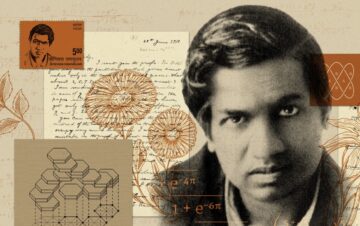 One afternoon in January 2011, Hussein Mourtada(opens a new tab) leapt onto his desk and started dancing. He wasn’t alone: Some of the graduate students who shared his Paris office were there, too. But he didn’t care. The mathematician realized that he could finally confirm a sneaking suspicion he’d first had while writing his doctoral dissertation, which he’d finished a few months earlier. He’d been studying special points, called singularities, where curves cross themselves or come to sharp turns. Now he had unexpectedly found what he’d been looking for, a way to prove that these singularities had a surprisingly deep underlying structure. Hidden within that structure were mysterious mathematical statements first written down a century earlier by a young Indian mathematician named Srinivasa Ramanujan. They had come to him in a dream.
Ramanujan brings life to the myth of the self-taught genius. He grew up poor and uneducated and did much of his research while isolated in southern India, barely able to afford food. In 1912, when he was 24, he began to send a series of letters to prominent mathematicians. These were mostly ignored, but one recipient, the English mathematician G.H. Hardy, corresponded with Ramanujan for a year and eventually persuaded him to come to England, smoothing the way with the colonial bureaucracies.
More here.
Enjoying the content on 3QD? Help keep us going by donating now.
Noam Chomsky on How America Sanitizes the Horror of Its Wars
Noam Chomsky at Literary Hub:
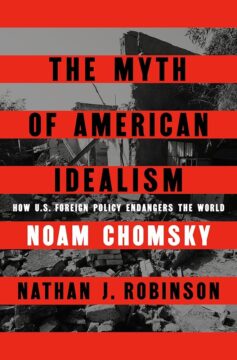 The basic principles of contemporary American strategy were laid out during World War II. As the war came to its end, American planners were well aware that the United States would emerge as the dominant power in the world, holding a hegemonic position with few parallels in history. During the war, industrial production in the US more than tripled; meanwhile, its major rivals were either severely weakened or virtually destroyed.
The US had the world’s most powerful military force. It had firm control of the Western Hemisphere—and of the oceans. High-level planners and foreign policy advisers determined that in the new global system the US should “hold unquestioned power” while ensuring the “limitation of any exercise of sovereignty” by states that might interfere with its global designs.
Winston Churchill captured the dominant sentiment when he said that “the government of the world must be entrusted to satisfied nations,” because rich countries had no “reason to seek for anything more,” whereas “if the world-government were in the hands of hungry nations there would always be danger.” Leo Welch of the Standard Oil Company expressed a similar aspiration when he said the US needed to “assume the responsibility of the majority stockholder in this corporation known as the world,” and not just temporarily, but as a “permanent obligation.”
More here.
Enjoying the content on 3QD? Help keep us going by donating now.
Jensen Huang, CEO Nvidia, talks AI
Enjoying the content on 3QD? Help keep us going by donating now.
On Evgeny Sholpo’s Variophone
Lauren Rosati at Artforum:
IN THE SUMMER OF 1917, the Russian engineer and inventor Evgeny Sholpo (1891–1951) wrote “The Enemy of Music,” a polemical science-fiction essay describing a colossal instrument he called the Mechanical Orchestra. Combining miles of slatted black paper tape with a network of electrical wires, pipes, levers, tuning forks, sine wave oscillators, and horns, this fictional sound machine allowed a piece of music to unfold automatically, rendering the musical performer obsolete. “Now,” Sholpo proclaimed, “we will receive ready-made pieces of music according to a specific recipe.” Years later, while working at the Central Laboratory of Wire Communication, a Soviet film lab in Leningrad, Sholpo attempted to bring this speculative project to life, incorporating elements of the fictive Mechanical Orchestra into a functional device called the Variophone, a proto-synthesizer used for scoring films that could reproduce—theoretically—any spoken or musical sound using abstract visual forms cut from paper. The Bureau of Realization of Inventions at the state-run film production company Lenfilm Studios agreed to fund the project; Sholpo built the first prototype in late 1931.
more here.
Enjoying the content on 3QD? Help keep us going by donating now.