The World of Everyday Experience, In One Equation

Sean Carroll in his personal blog:

Longtime readers know I feel strongly that it should be more widely appreciated that the laws underlying the physics of everyday life are completely understood. (If you need more convincing: here, here, here.) For purposes of one of my talks next week in Oxford, I thought it would be useful to actually summarize those laws on a slide. Here’s the most compact way I could think to do it, while retaining some useful information. (As Feynman has pointed out, every equation in the world can be written U=0, for some definition of U— but it might not be useful.) Click to embiggen.

Everyday-Equation-1024x353

This is the amplitude to undergo a transition from one configuration to another in the path-integral formalism of quantum mechanics, within the framework of quantum field theory, with field content and dynamics described by general relativity (for gravity) and the Standard Model of particle physics (for everything else). The notations in red are just meant to be suggestive, don’t take them too seriously. But we see all the parts of known microscopic physics there — all the particles and forces. (We don’t understand the full theory of quantum gravity, but we understand it perfectly well at the everyday level. An ultraviolet cutoff fixes problems with renormalization.) No experiment ever done here on Earth has contradicted this model.

More here.

Chasing the total eclipse across the Pacific Ocean

Frank Close in Prospect:

ScreenHunter_102 Jan. 05 18.52What is the most beautiful natural phenomenon that you have ever seen? A brilliant rainbow set against a distant storm, or a blood red sky just after sunset, perhaps? But anyone who has experienced the diamond ring effect that heralds the start of a total solar eclipse will agree it puts all others in the shade.

About once every 18 months, the moon passes directly between the sun and earth. As the moon moves slowly across the face of the sun, it casts a shadow on the earth’s surface about 100 miles in diameter, which is the distance from one horizon to another. As our planet spins in its daily round, the shadow rushes across land and sea at about 2000 miles an hour. Those beneath it as it passes see, for a few minutes, night brought to the dome of the sky directly overhead. Looking up myopically, you would see stars as if it were normal night, accompanied by an awesome sight: a circle of profound blackness, a veritable hole in the sky, surrounded by shimmering white light, like a black sunflower with the most delicate of silver petals. One watcher described it to me as like “looking into the valley of death with the lights of heaven far away calling for me to enter.”

There is a slow build-up to the show, as the moon gradually covers the sun, which becomes a thin crescent as darkness falls. Then as totality approaches, excitement mounts. After the thrill of the eclipse you can’t wait to do it again, but wait you must until that exquisite alignment of sun, moon and earth comes around once more, and when it does you must go to the thin arc where the moon’s shadow momentarily sweeps across a small part of the globe.

More here.

Saturday Poem

To My Brother George

Many the wonder I have this day seen:
The sun, when he first kist away the tears
that fill'd the eyes of morn; the laurel'd peers
Who from the feathery gold of evening lean;
The ocean with its vastness, its blue green,
Its ships, its rocks, its caves, its hopes, its fears,
Its voice mysterious, which whoso hears
Must think on what will be, and what has been.
E'en now, dear George, while this for you I wrote,
Cynthia is from her silken curtains peeping
So scantly, that it seems her bridal night,
and she her half-discover'd revels keeping.
But what, without the social thought of thee,
Would be the wonders of the sky and sea?

by John Keats

Germs Are Us

From The New Yorker:

GermsHelicobacter pylori may be the most successful pathogen in human history. While not as deadly as the bacteria that cause tuberculosis, cholera, and the plague, it infects more people than all the others combined. H. pylori, which migrated out of Africa along with our ancestors, has been intertwined with our species for at least two hundred thousand years. Although the bacterium occupies half the stomachs on earth, its role in our lives was never clear. Then, in 1982, to the astonishment of the medical world, two scientists, Barry Marshall and J. Robin Warren, discovered that H. pylori is the principal cause of gastritis and peptic ulcers; it has since been associated with an increased risk of stomach cancer as well. Until that discovery, for which the men shared a Nobel Prize, in 2005, stress, not an infection, was assumed to be the major cause of peptic ulcers. H. pylori is shaped like a corkscrew and is three microns long. (A grain of sand is about three hundred microns.) It is also one of the rare microbes that live comfortably in the brutally acidic surroundings of the stomach. Doctors realized that antibiotics could rid the body of the bacterium and cure the disease; treating ulcers this way has been so successful that there have been periodic discussions of trying to eradicate H. pylori altogether. The consensus was clear; as one prominent gastroenterologist wrote in 1997, “The only good Helicobacter pylori is a dead Helicobacter pylori.” Eradication proved complicated and expensive, however, and the effort never gained momentum. Yet few scientists questioned the goal. “Helicobacter was a cause of cancer and of ulcers,’’ Martin J. Blaser, the chairman of the Department of Medicine and a professor of microbiology at the New York University School of Medicine, told me recently. “It was bad for us. So the idea was to get it out of our bodies, as fast as we can. I don’t know of anyone who said, Gee, we better think about the consequences.”

No one was more eager to rout the organism from the human gut than Blaser, who has devoted most of his working life to the study of H. pylori. His laboratory at N.Y.U. developed the first standard blood tests to identify the microbe, and most of them are commonly in use today. But Blaser, a restless intellect who, in addition to his medical duties, helped start the Bellevue Literary Review, wondered how an organism as old as humans could survive if it caused nothing but harm. “That isn’t how evolution works,” he said. “H. pylori is an ancestral component of humanity.” By the nineteen-nineties, Blaser had begun to look more closely at the bacterium’s molecular behavior, and in 1998 he published a paper in the British Medical Journal suggesting, contrary to prevailing views, that it might not be so dangerous after all. The following year, he started the Foundation for Bacteriology, to help focus attention on the critical, and usually positive, role that these organisms play in human evolution.

More here.

A 17th-Century genius, a quack, or perhaps both

From The New York Times:

ManIn 2002 the New York Institute for the Humanities organized a symposium under the title “Was Athanasius Kircher the Coolest Guy Ever, or What?“ The highlights of this 17th-century German Jesuit polymath’s sprawling résumé, summed up in John Glassie’s brisk new biography, suggest the question wasn’t completely absurd. Kircher’s dozens of books — totaling some seven million words in Latin — covered optics, magnetism, geology, volcanology, medicine, archaeology, acoustics, Sinology and much, much more. He invented machines for generating mathematical music, did research on a universal language and collaborated with Bernini on the spectacular Fountain of the Four Rivers in Rome, where Kircher spent much of his adult life. He claimed to have deciphered Egyptian hieroglyphics and was one of the first to use a microscope to study disease. Visitors flocked to his Museum Kircherianum to see mermaids’ tails, talking statues and other wonders, not least the great genius himself. True, few of Kircher’s big ideas, elaborated in gargantuan books like “The Great Art of Knowing,” hold up today, if they even held up then. Descartes, after flipping through Kircher’s 1641 treatise on magnetism, pronounced him “more of a charlatan than a scholar.” But then did Descartes ever build a vomiting machine or a clock powered by a sunflower seed, let alone design a “cat piano” played by pricking the tails of seven cats with differently pitched cries? Enough said.

In “A Man of Misconceptions,” the first general-interest biography of Kircher, Mr. Glassie draws on three decades of renewed scholarly interest in his work to deliver a stirring if sometimes backhanded defense. So what if his works, “in number, bulk and uselessness are not surpassed in the whole field of learning,“ as one early-20th-century scholar put it? There’s something to be said, Mr. Glassie writes, merely “for having been a source of so many ideas — right, wrong, half right, half-baked, ridiculous, beautiful and all-encompassing.”

More here.

Friday, January 4, 2013

war in europe?

Great-war

Many raised their eyebrows: a war in Europe? Unimaginable, especially since the great majority of Europeans were not alive during the last major military confrontation. True, in the early 1990s Yugoslavia went through a bloody collapse right on our doorstep. But back then everything seemed so remote, despite the fact that those unhappy places were only a few hours’ drive away. There are many possible arguments against the idea that a war in Europe could still break out. But how valid are they in the midst of the storm that has taken over the Union? Can Europe really break apart? Jacques Delors, Jürgen Habermas, José Ignacio Torreblanca, Daniel Daianu, Ulrike Guérot, Slavenka Drakulic, John Grahl and others discuss the causes for the current crisis — and how to solve it. [ more ] One argument is that “European leaders wouldn’t allow it”. But which leaders are we talking about? Twentieth-century visionaries? Certainly not. Not only would the collapse of the European project bring forth an entirely different type of leader, it would actually be hastened by them. We can already feel their presence on what are still the peripheries of the national political stages. However they are becoming increasingly active and influential.

more from Ovidiu Nahoi at Eurozine here.

if termites had telescopes

750px-Earth-moon-e1354561167800

In 1955 I had a wonderful opportunity to participate in an expedition to observe a total solar eclipse in Ceylon. Thirty-two years later, in 1987, I was able to return to the eclipse site, and I was asked what did I notice that was different. I mused that Sri Lanka seemed much more crowded than Ceylon had been. That’s right, our tour guide responded. The population had doubled in those three decades. Since 1900 the entire world population has quadrupled. The physical mass of human beings and domesticated animals now makes up 90 percent of the vertebrate mass, up from 0.1 percent 10,000 years ago. The accelerating expansion of technological power, combined with the explosive growth of the world population and unsustainable consumption and production patterns, brings unparalleled challenges for the unity of nations. Already some centuries ago the expanding human population began to change the environment. Today, humans have modified more than 80 percent of Earth’s land surface.

more from Owen Gingerich at The American Scholar here.

trap streets

Argleton_final

These fictions sometimes extend to phantom settlements. In 2010, the place (because no such term—city, town, hamlet—exists for imaginary locations) known as Argleton disappeared from Google Maps. The poverty of digital archives means its provenance remains a mystery, but it existed for some brief period prior to this date. It lived, as it were, for some time as a settlement within the boundaries of the civil parish of Aughton in West Lancashire. The cascade effect of digital technologies has ensured its survival, partial as it may be, in real estate, employment, and weather databases. At time of writing, TravelRepublic.co.uk lists the West Tower Country House Hotel, the Swan Hotel, Martin Lane Farmhouse Holiday Cottage, the Farmhouse Burscough, and numerous others as potential holiday accommodations in Argleton. Padz.com lists rental accommodation—at least one “BRILLIANT MALE STUDENT FLAT!” and numerous others—in Argleton. And Enormo.co.uk has “a modern, two bedroomed, ground floor apartment, located in an established area just minutes walk from Ormskirk Town Centre shopping and transport facilities” located in the ghost precinct. Attempt to walk it and only fields are found.

more from James Bridle at Cabinet here.

Hunger Games: The New Science of Fasting

Emma Young in The Ledger:

What-does-the-bible-teach-about-fasting.jpg.crop_displayIn 1908, Linda Hazzard, an American with some training as a nurse, published “Fasting for the Cure of Disease,” which claimed that minimal food was the route to recovery from a variety of illnesses, including cancer. Hazzard was jailed after one of her patients died of starvation. But what if she was, at least partly, right?

A new surge of interest in fasting suggests that it might indeed help people with cancer. It might also reduce the risk of developing cancer, guard against diabetes and heart disease, help control asthma and even stave off Parkinson's disease and dementia.

“We know from animal models,” says Mark Mattson at the National Institute on Aging, “that if we start an intermittent fasting diet at what would be the equivalent of middle age in people, we can delay the onset of Alzheimer's and Parkinson's.”

Until recently, most studies linking diet with health and longevity focused on calorie restriction. They have had some impressive results, with the life span of various lab animals lengthened by up to 50 percent after their caloric intake was cut in half. But these effects do not seem to extend to primates.

More here.

Cliff deal hollow victory for American people

David Rothkopf at CNN:

120807103211-rothkopf-hedshot-left-teaseThe last political drama of 2012 and the first one of 2013 suggest that if you love America, you might want to consider making your New Year's resolution quitting whatever political party you belong to.

The “fiscal cliff” debate and the last-minute deal it produced have so far resolved nothing except to show that our system is profoundly broken and that radical changes are needed to fix it.

While many in Washington are breathing a sigh of relief and some are trying to spin the outcome as a win for the president, those who characterize this bill as a genuine victory for anyone at all have clearly lost perspective. The deal brokered by Vice President Joe Biden and Senate Minority Leader Mitch McConnell does make good on President Obama's promise to bring a little more equity to the tax code by raising rates on wealthier Americans, and it temporarily averts the most draconian “sequestration” cuts. But the list of what it does not do, and what it does wrong, is long.

By midday Tuesday, the Congressional Budget Office had concluded that the Biden-McConnell package would add nearly $4 trillion to federal deficits over the next 10 years. This was largely because it actually extends and makes permanent more than 80% of the Bush tax cuts. So much for the idea that this whole struggle was supposed to help America get its financial house in order.

Just as bad, or perhaps worse in terms of the day-to-day lives of average people, the bill only postpones the forced cuts of sequestration by two months, to precisely the moment the country will be engaged in another ruinous debate about lifting our national debt ceiling to ensure the country can pay its bills. It thus creates a new, even more dangerous fiscal cliff. Next time around, the markets will not be so blasé about congressional brinkmanship if the national credit rating and the stability of a bedrock of the international financial system are at stake.

More here.

Pankaj Mishra replies to Salman Rushdie’s criticisms of Mo Yan

Pankaj Mishra in The Guardian:

ScreenHunter_101 Jan. 04 15.38Salman Rushdie (Letters, Guardian, 16 December) helpfully clarifies that he approved of the assault on Afghanistan since he saw it as simple retribution rather than, as I incorrectly if charitably implied, an attempt at democracy-promotion. But my article was not about Rushdie's strenuous justifications of his government's fiascos. It did not propose a “moral equivalence” between what he calls “free” and “unfree” societies. Nor did it advance the preposterous argument that, as the estimable Perry Linkputs it, “if A is a citizen of country Y, he or she should shut up about country X.”

I actually wrote about the perennially ambiguous relationship between writers and power everywhere, and the unreasonably heavy burden of political obligations placed on fiction writers in non-western countries, particularly those – China, Pakistan, Iran – feared and disliked in the west. I tried to point out that writers in the west are not rated by their willingness to visibly denounce the violence and injustice perpetrated by powerful institutions and individuals in their “free societies”, or expected to address them explicitly and exclusively in their fiction.

Also, no figures of comparable influence in the non-west hold them to account, or point out the correct path to moral redemption and literary glory. Such are the imbalances of geopolitical power that it is hard even to imagine Mo Yan, or any writer in China for that matter, attacking Perry Link and Salman Rushdie for failing to be sufficiently critical of Barack Obama's routine executions using drones (which have killed many times more children than have died in random domestic massacres by crazed gunmen).

More here.

Tom Wolfe’s California

From City Journal:

WoolfTom Wolfe is most identified with New York City, for good reason. He has lived and worked in Manhattan since the early 1960s, and New York dominates his writing the way London looms for Dickens. But Wolfe has never been afraid to venture from his home turf—this fall’s Back to Blood, an exploration of Miami, is a case in point—and his true literary second home is California. Over the course of his career, Wolfe has devoted more pages to the Golden State than to any setting other than Gotham. In his early years, from the mid-1960s through the early 1970s, the ratio was almost one-to-one. More to the point, the core insights on which he built his career—the devolution of style to the masses, status as a replacement for social class, the “happiness explosion” in postwar America—all first came to him in California. Even books in which the state figures not at all are informed by Wolfe’s observations of the West. Without California, there would be no Wolfe as we know him—no Bonfire, no Right Stuff, no Radical Chic or Me Decade, none of the blockbuster titles or era-defining phrases that made him world-famous.

And without Wolfe, we would not understand California—or the California-ized modern world. At the time of his most frequent visits, the state was undergoing a profound change, one that affects it to this day and whose every aspect has been exported throughout the country and the globe. Both have become much more like California over the last 40 years, even as California has drifted away from its old self, and Wolfe has chronicled and explained it all.

More here.

TALES FROM THE WORLD BEFORE YESTERDAY: A Conversation with Jared Diamond

From Edge:

DiamondI'll tell you the incident in New Guinea that had the biggest influence on my subsequent life. I was with a group of New Guineans doing a survey of birds on a mountain, and we were establishing camps at different elevations on the mountain to survey birds of different elevational ranges. We were moving from one camp up to another camp, and so I'd wanted to choose a new campsite. I found a gorgeous campsite. It was on a place where the ridge broadened out and flattened out. It was a steep drop-off, so I could stand at that edge and look out and see hawks and parrots flying. The broad area of the ridge meant that there was going to be good bird-watching walking around there. And it was beautiful, because my proposed campsite was underneath a gigantic tree, just a gorgeous tree. I was really happy with this campsite. I told the New Guineans, “Let's make camp here.” And greatly to my surprise, they were frightened out of their minds, and they said, “We're not going to sleep here. We'll sleep out in the open, rather than sleep in tents here.” I said, “What's the matter?” They said, “Look at that tree. It's dead.” Okay, so I looked up, and yes, this gigantic tree was dead, but it was solid as iron. And I told them, “All right. So maybe it's dead, but it's going to stand there for another 70 years, it's so huge and solid.” But no, they were just terrified, and they were not going to sleep under that dead tree. They actually did, rather than sleep under the dead tree, they went and slept 100 yards away.

We stayed at that campsite for a week and naturally, nothing happened. I thought that the New Guineans were just being paranoid. And then, this was early in my career, as I got more experienced in New Guinea, I realized, every night I sleep out in New Guinea forest. At some time during the night, I hear the sound of a tree crashing down. And, you see tree falls in New Guinea forest, and I started to do the numbers. Suppose the chances of a dead tree crashing down on you the particular night that you sleep under it is only one in 1,000. But suppose you're a New Guinean, who's going to sleep every night in the forest, or spend 100 nights a year sleeping out in the forest. In the course of 10 years, you will have spent a thousand nights in the forest, and if you camp under dead trees, and each dead tree has a one in 1,000 chance of falling on you and killing you, you're not going to die the first night, but in the course of 10 years, the odds are that you are going to die from sleeping under dead trees. If you're going to do something repeatedly that each time has a very low chance of bringing disaster. But if you're going to do it repeatedly, it will eventually catch up with you. That incident affected me more than anything else, because I realized that in life, we encounter risks that each time the risk is very slight. But if you're going to do it repeatedly, it will catch up with you. And ever since then, I'm now very cautious about how I stand in the shower, how I walk on sidewalks, how I go up and down stairs, how I take left turns in my car.

More here.

Friday Poem

Haunts

Don't be afraid, old son, it's only me,
though not as I've appeared before,
on the battlements of your signature,
or margin of a book you can't throw out,
or darkened shop front where your face
first shocks itself into a mask of mine,
but here, alive, one Christmas long ago
when you were three, upstairs, asleep,
and haunting me because I conjured you
the way that child you were would cry out
waking in the dark, and when you spoke
in no child's voice but out of radio silence,
the hall clock ticking like a radar blip.
a bottle breaking faintly blocks away,
you said, as I say now, Don't be afraid.

by Michael Donaghy
from Conjure
Picador, 2000

Thursday, January 3, 2013

Chris Lydon’s “Letterman List” of Interviewing Tips

Christopher Lydon in Transom.org:

Chris_lydon_SquareBasic starting point: imagine in an interview you’re on a flight (90-minutes or so) to Chicago… You fasten your seatbelt and, to your amazement, find you’re sitting next to this person you’ve been wanting to interview…Magic Johnson, or Jane Austen or Paul Revere. Your mind is jumping to the moment when you can call home and say: you’ll never believe who I just talked with, heart to heart, no kidding.

Try these on the person in the next seat on the flight….

10. You have a definition of victory before you say hello. You’ve got an idea of what you’d like to phone home.

9. But: You’re ready for something entirely different. Jane Austen wants to talk about God, Paul Revere about sex… Somebody says: I know this isn’t what you’re interested in, but… and you know you’re launched.

8. The assignment is essentially about getting people to laugh, or cry. Or gasp. The novelist Alexander Theroux once told a prison writing class I was teaching that Buddy Hackett had it right about comedians and writers: the job is to go out there on stage, bang a nail into the wall, and then pull it out with your backside. I think with pleasure about interviewing Harold Evans about his book The American Century and intuiting from the book that the key moment was Harry Hopkins’ arrival in London with the Lend-Lease promise in 1940, or ’41. Harold Evans was 13 at the time, scared that his country (starting with mum and dad) was going down. I asked him just to talk about Harry Hopkins and sure enough he got to the moment when Hopkins recited from the Book of Ruth to Churchill and his Cabinet: “Whither thou goest, I will go… to the end.” And dear Mr. Evans cried like a baby. Bingo! He said Hopkins made Churchill cry, too.

More here.

Feminism and Me

1356033556newfeminism666

The latest issue of Dissent looks at The New Feminsim. You can find Sarah Leonard's introduction here. Michael Walzer on gender and Spheres of Justice:

A feminist friend asked me to write a piece addressed to this question: How would my work have been different if I had engaged with and learned from the feminists of the late 1960s and 1970s? I have tried to respond, in a more personal style than I usually adopt, but with what I hope is a familiar anxiety.

Before I begin, I need to claim an earlier education. In 1953, I dated and later married a woman who was a bolshevik feminist, who wouldn’t let me open a door for her, or help her on with her coat, or pay for her movie tickets, or do any of the things that boys were supposed to do for girls in those benighted days. And we had two daughters who were egalitarian, and argumentative about it, from their first conscious moment. I wanted them to grow up in a society where they could do…whatever they wanted to do. So long before I ever read a feminist tract, I was committed to August Bebel’s proposition that there couldn’t be a just society without “equality of the sexes.”

But that bit of political correctness didn’t necessarily make for what you might call intelligence about gender. If I had been intelligent in that way, what would I have written differently? The book to focus on is Spheres of Justice, which I wrote in the early 1980s. Spheresdeals with the distribution of social goods and bads, the benefits and burdens of our common life, and it includes a discussion of the conventional roles and rewards of men and women. The book provoked a lot of arguments, many of them critical, and for me the most interesting criticism came from feminist writers.

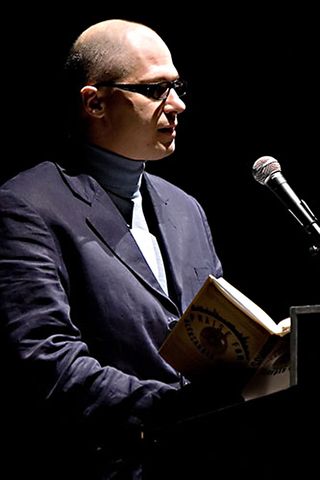
The most important of those writers was the late Susan Moller Okin, a leading member of the remarkable first generation of academic women writing political theory in the United States, which includes Carol Pateman, Jean Bethke Elshtain, Amy Gutmann, Nancy Rosenblum, and Iris Marion Young (who, like Okin, died too young). Okin was a student at Harvard and wrote her dissertation with me; in 1979, she turned it into her first book, Women in Western Political Thought. Her second book, Justice, Gender, and the Family, came out in 1989. I wrote a blurb calling it “a brilliantly argued and highly persuasive critique of current theories.” One of those current theories was mine. I want now to ask what I might have learned from Okin’s critique had she written it and had I read it before writing Spheres.

New York Times’ Bizarre and Misleading Praise of Austerity Poster Child Latvia

Philip Pilkington in Naked Capitalism:

After reading it [the New York Times article] I initially made my way over to Eurostat to look at the data and see if the facts led to a different narrative of Latvia’s experience with austerity.

Then I realised that this was an entirely pointless endeavour. Much better, I thought, to analyse the article itself rather than the statistics – which, if the reader cares to look into without blinkers will how the information presented by the Times is actually inconsistent with the happy face it attempts to put on Latvia’s exercise. In what follows then I include only details which are found in the original NYT article. We’ll look not at Latvia’s plight but the Times’ narrative to see how coherent it is on its own terms and, most importantly, what it attempts to convey.

The article begins with a story about a man who faced the austerity bravely. Because his newborn son required surgery he bought a tractor and began hauling wood to make ends meet. Quite the imagery, of course. Rugged, sturdy – very Baltic.

This is the theme throughout. Latvia is seen as a country that can endure the pain, whereas countries like Greece cannot. What the author means by this is that in Latvia people have largely accepted the cuts without protest while in Greece they have not. This is conveyed well by the image of the man hauling wood in order to ensure that his newborn child gets the surgery it needs.

What is so unusual about this piece and what strikes the informed reader straight away is that such endurance is seen as curative. As the headline says “used to hardship, Latvia accepts austerity, and pain eases”. The problem is that the piece doesn’t seem to ever substantiate this claim. Sure, there’s the story of a man who fires his employees only to rehire them after the worst of the recession is over, but this is just a story. I’m sure there are similar stories in Ireland, Spain or Greece if an eager reporter were to look hard enough. But when it comes to statistics – you know, the way we generally measure the effects of economic policies – the proof is strangely lacking.