Watch A How-to on Finding Love and Success in 'Rising Asia' on PBS. See more from PBS NewsHour.

Watch A How-to on Finding Love and Success in 'Rising Asia' on PBS. See more from PBS NewsHour.
From Scientific American:
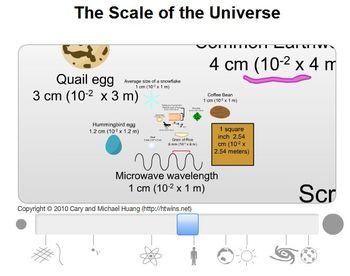
More here. (Note: Do try the interactive version…fascinating!)
Kyrie
At times my life suddenly opens its eyes in the dark.
A feeling of masses of people pushing blindly
through the streets, excitedly, toward some miracle,
while I remain here and no one sees me.
It is like the child who falls asleep in terror
listening to the heavy thumps of his heart.
For a long, long time till morning puts his light in the locks
and the doors of darkness open.
by Tomas Tranströmer.
from The Half-Finished Heaven
Swedish translation by Robert Bly, 2001
Graywolf Press, St. Paul, Minnesota
From The Telegraph:
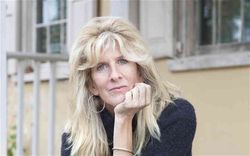
…Like all books which take an aim at the truth, Vow may change the way you see yourself; it will at least change your marriage. This is not because it is a morality tale or an account of infidelity that will scare you enough not to give it a go. It would be easy to produce this kind of book, and Plump doesn’t take the easy way through anything. What makes Vow so powerful is that she dissects not only the carcass of her own marriage, but the drive that propels so many otherwise sane people to destroy, for the sake of a moment of wanting, the bullet-proof world they have tried to create. Plump, who is now as wise as a serpent and as harmless as a dove, suggests that monogamous couples – at whom she gawps as though they were animals in a zoo – are committed less to their spouses than they are to themselves. Fidelity “has to do with their own honour”.
More here.
As in so much of Donne’s devotional verse, “Goodfriday” is structured around a “collision of the liturgy with the ego”, as Kirsten Stirling has put it. The speaker expresses guilt about travelling west on the day commemorating Christ’s crucifixion in the east, fulfilling personal obligations when he ought to be performing religious duties. However, awed by his contemplation of the crucifixion he reasons that he is facing the right way, and the direction of travel therefore directly enables the poem’s devotional climax. First, the poem explores the overwhelming nature of the crucifixion vision itself. To witness God’s death on earth would lead to a kind of paradoxical death difficult even to imagine (and Donne rhymes “dye” with “dye” at this point to powerful effect). How could a human being behold hands which could encompass infinity, or comprehend the “endlesse height” of heaven “Humbled below”? Given these visual impossibilities, the back of the head – said by Galen to be the seat of the memory – offers the more appropriate means of contemplation.
more from Daniel Starza Smith at the TLS here.
Berezovsky wasn’t just an oligarch: he was the first oligarch. He is sometimes referred to slightingly as a “former used car salesman”—this is a kind of joke. In fact Berezovsky was an accomplished mathematician, a corresponding member of the Soviet Academy of Sciences, with a specialization in game theory. In the late 1980s, as free enterprise began to be introduced in the USSR, piecemeal and with every possible loophole for corruption, the other future oligarchs began to go into “business”: Mikhail Prokhorov, future owner of Norilsk Nickel and then the New Jersey Nets, sold acid-washed jeans at the local market; Vladimir Gusinsky, future owner of Most-Bank and the country’s first independent television channel, NTV, became an event planner; Mikhail Khodorkovsky, future owner of the country’s largest oil company, now in prison for a decade, opened a cafe. Berezovsky, a generation older than these others, had an in at the Avtovaz factory in Togliatti, in central Russia; he had helped them set up their computer systems, and for years had been picking up hard-to-get auto parts there and reselling them in Moscow (so he was a bit of used car salesman—but they were new parts). As the USSR fell apart, Berezovsky saw that the country was moving from a barter economy to a cash economy.
more from Keith Gessen at n+1 here.
It’s hard to say what’s more remarkable: that the so-called father of deconstruction was already hatching his apostasy while just barely out of his teens, or that the undertaking involved so much suffering. Peeters’ Derrida is a nervous wreck: “a fragile and tormented man,” prone to nausea, insomnia, exhaustion, and despair. By the summer of 1960, after failing to get a promised post as a maître assistant at the Sorbonne and having spent the year teaching in a provincial capital instead, he was on Anafranil, one of the original anti-depressants, which had just appeared on the market. During another bout of the blues, he wrote to a friend from his infirmary bed, “I’m no good for anything except taking the world apart and putting it together again (and I manage the latter less and less frequently).” That’s not a bad description of deconstruction, an exercise in which unraveling—of meaning and coherence, of the kind of binary logic that tends to populate philosophical texts—is the path to illumination. In Derrida’s reading, Western philosophers’ preoccupation with first principles, a determination to capture reality, truth, “presence,”—what he called in reference to the phenomenologist Edmund Husserl “the thing itself”—was doomed. He traced this impulse in thinkers from Aristotle to Heidegger, famously arguing, for example, that a tendency to favor the immediacy of speech over the remoteness of writing was untenable.
more from Emily Eakin at the NYRB here.
From Atlantic:

METHODOLOGY: A small experiment out of the University of Missouri involved 20 overweight or obese females, aged 18 to 20, who identified as infrequent breakfast eaters. Each morning for a week, the researchers had the participants eat either 350 calories of cereal (13 grams of protein), 350 calories of eggs and beef (35 grams of protein), or skip breakfast entirely. Dietary fat, fiber, sugar, and energy density were kept constant across all of their breakfasts.
Participants adjusted to their diets for six days. On the seventh day, they were kept in a lab so that researchers could track/control their behavior. They had them fill out questionnaires about their hunger levels and cravings. They took repeated blood samples. They hooked them up to an fMRI while showing them pictures of food. These tests were repeated on three different Saturdays.
On lab days, the participants were all given a standard 500-calorie lunch; for dinner they were given cut-up pieces of microwaveable pizza pockets and told to eat until they were full. They were then sent home with coolers packed with 4,000 calories worth of snacks: cookies, cakes, granola bars, candy (in its hard, chocolate, and gummy forms), chips, popcorn, crackers, pretzels, microwaveable mac and cheese, string cheese, fruits and veggies, single servings of ice cream, beef jerky, yogurt, and more microwaveable pizza pockets. This was meant to simulate the overexposure to and wide availability of snacks typical of the “modern food environment.”
RESULTS: Eating any breakfast was associated with increased feelings of fullness, a reduced desire to eat, and lower levels of ghrelin (a hunger-stimulating hormone) throughout the morning. But meaty, eggy breakfast was associated with these benefits over the course of the entire day. Participants who had a lot of protein in the morning also had reductions in their “cravings-related” brain activity, and increased levels of a hormone associated with satiety. They snacked less on fatty foods in the evening, as compared to those who ate cereal or nothing.
More here.
From Smithsonian:
In 1968, Andy Warhol—already famous in his own right—further added to his celebrity by creating a lasting cliché: “In the future, everyone will be world-famous for 15 minutes.”

There is, however, some truth to 15-minutes idea: Names of lesser fame (those less frequently mentioned to start) exhibit significantly higher amounts of turnover from year to year. The researchers say these names mostly fall into the category of people involved in newsworthy events—such as natural disasters and crimes—rather than people who readers find newsworthy in their own right. As an example, Van de Rijt mentions Chelsey Sullenberger, the US Airways pilot who briefly achieved celebrity after successfully executing an emergency landing on the Hudson River in 2011, but is now scarcely frequently mentioned in the press.
More here.
The Underground
There we were in the vaulted tunnel running,
You in your going-away coat speeding ahead
And me, me then like a fleet god gaining
Upon you before you turned to a reed
Or some new white flower japped with crimson
As the coat flapped wild and button after button
Sprang of and fell in a trail
Between the underground and Albert Hall
Honeymooning, mooning around, late for the Proms,
Our echoes die in that corridor now
I come as Hansel came on the moonlit stones
Retracing the path back, lifting the buttons
To end up in a draughty lamplit station
After the trains have gone, the wet track
Bared and tense as I am, all attention
For your step following and damned if I look back
by Seamus Heaney
from Station Island
Faber, 1984
Mark Shiffman reviews Robert Chenavier's Simone Weil: Attention to the Real, in Notre Dame Philosophical Reviews:
Robert Chenavier's comprehensive and judicious précis of Simone Weil's thought is the fruit of years as a student and editor of Weil's oeuvre, as president of the French Weil Society and editor of the journal devoted entirely to her thought. A testimony to the very loving attention that is its theme, Attention to the Real is, by the same token, an almost entirely uncritical intellectual and spiritual hagiography — but one that is sufficiently lucid to provide the critical reader with the outlines of Weil's thought required for fruitful engagement.
The introduction identifies and situates Weil's central philosophical objective: “to reduce the opposition between a Plato whose theory of knowledge would have integrated the domain of work and a Marx who would have developed the most precious elements of his materialism by preserving the reality of the supernatural.” For Weil, work, as an engagement of the body and soul with the necessities and limits of matter, plays a crucial role in bringing us to a truthful encounter with the real. It is one dimension of an orientation toward encountering the real on all its levels, including that which surpasses our grasp while it draws us to itself: the supernatural. This sketch provides the itinerary for the subsequent chapters: (1) an overview of Weil's life, emphasizing her engagements with reality on its different levels; (2) an examination of her early philosophical studies and efforts to assess the real possibilities for labor reform; (3) the terms of Weil's attempt to surpass Marxist thought “from within”; (4) Weil's religious awakening and its consequences for her understanding of the ultimate reality that must be the reference point of a genuine humanism; (5) the various paths by which we must open our lives to this ultimate reality.
Weil's early engagement with the labor movement and socialist groups impels her in 1932 (at the age of 23) to travel to Germany to see for herself what the realities on the ground presage for the dreams of a workers' revolution. The vitriolic reaction of French socialists to her sober and pessimistic assessment, and subsequently to her honest, lucid critique of the Soviet government, reveals how determined the leaders of the labor movement are to remain wrapped in illusion. To gain the clarity they lack about the real challenges to reform, she goes to work in a factory, where she learns that the very character of the labor demanded is dehumanizing and deadening.
Jonathan Cushing in the LA Review of Books:
Looking back over a filmmaker’s early works for stylistic, aesthetic, or conceptual consistencies can be a fool’s errand, even if its draw seems irresistible. To construct an idea of who Marker was as a filmmaker and thinker is to impose the present upon a uniquely heterogeneous past. In projecting the faculties of the time-traveler from the year 4001 in Sans soleil onto the films themselves, we want Marker’s oeuvre to remember itself perfectly and to register a consistent authorial voice, even as it dramatizes the imperfection of memory.
But by the end of Olympia 52, there is indeed a moment that betrays Marker’s later concern with memory as a problem that emerges in both time and art. It is here that we begin to find some justification for our snooping:
And so the Olympic stadium emptied. The flame went out. The place of so many shouts retreated into silence. On the abandoned playing grounds, on the deserted tracks, we had come to seek out our ever-fleeting emotions, like childhood memories. For it is in some sense the world of childhood that had lived there again, among the eight broken world records, almost all Olympic records broken or equaled, the celebration in the city, the battle in the stadium, the two greats — the United States and the USSR — sharing the majority of the victories. It was certainly childhood, with its pure combats and its confidence in life. Athletically speaking, these games had been the most remarkable in Olympic history. We also saw them as the Games of a last chance [les Jeux de la dernière chance]. Before they began, we had called them the Games of the Cold War but, in reality, we almost forgot war there.
Bob Costas this is not, and not just because of its contemplative tone. Marker describes — perhaps even creates — a world, as opposed to a collection of individual acts. It is not about an athlete being the first from his or her country, gender, or race to achieve any singular feat. Individual athletes and spectators are subsumed under nations and geopolitical events, as well as under an even grander, classical force.
The Games return us, Marker suggests, to a childhood that is immediately transformed into a seemingly distant memory. In the moment, they appear to offer a respite from war but, outside of the present, they are identified with it. The naiveté of the “last chance” is the hope that sports can somehow transcend the contexts from which they emerge.
Daniel D'Addario talks to Nancy Polikoff in Salon:
So do you have mixed feelings about the Supreme Court case, and which side you want to win?
DOMA is unconstitutional. But the denial of access to marriage has come to stand in for the equal dignity and worth of gay people and our relationships. The side that doesn’t want gay people to marry makes arguments that I 100 percent disagree with. The side that wants to allow same-sex marriage to couples makes many arguments that I disagree with but makes many arguments I do agree with. I’m not conflicted about how the cases should turn out. That doesn’t mean I think this direction for family policy is the most constructive approach to how we organize our lives.
Do you think marriage is inherently a sexist institution?
If you were to look at the original purposes of marriage going back numerous centuries when marriage was really about property, I would say that was true. I wouldn’t say that in the modern context of how people talk about marriage.
To me, the important thing is eliminating marriage as the dividing line between relationships that count in the law and relationships that don’t. Marriage is an on-off switch for many legal consequences that matter to people. I’d like there to be more nuanced dividing lines as to who’s in and who’s out, for economically and emotionally interdependent units. If one person goes to work and is killed on the job, that unit is going to lose income it depended on. It shouldn’t matter whether that’s a unit based on marriage — what matters is there was an economically and emotionally interdependent household that has lost income. In many places, you get it if you’re married, you don’t get it if you’re not. For family policy purposes, we need to be evaluating the areas where marriage is an on-off switch.
Teju Cole in The New Yorker:
The book in which the passage above appears contains other passages that speak of times in the garden, trips taken with family, children learning from their parents and vice versa, and moments of laughter and joy. In most books, these evocations of summertime ease and sweet familial conviviality would be a pleasure. In Sonali Deraniyagala’s memoir, “Wave,” they are among the most difficult things I’ve ever read. The reason: “Wave” is about Deraniyagala’s husband, her parents, and her two sons, aged seven and five, all of whom died in a single morning in December, 2004, when the tsunami hit the resort where they were holidaying in Sri Lanka. Deraniyagala herself was found spinning around in circles and almost deranged in a swirl of mud after the water receded. “Wave” is her account of that day, and of the years that followed.
“Wave” is really two stories in one. The second story is about remembering the life of a family when they were happy. The first is about the stunned horror of a woman who lost, in one moment, her past, present, and future. Deraniyagala was raised in Sri Lanka, and trained as an economist at Cambridge and Oxford. She married her college sweetheart, the economist Stephen Lissenburgh, and together they had two preternaturally intelligent and happy boys. Her friend Orlantha, who was with them at Yala National Park in Sri Lanka, said to her that morning, “What you guys have is a dream.” But the next thing Orlantha said was “Oh my God, the sea’s coming in.” The dream had become a nightmare so unspeakable, so incommensurate with typical human experience, that Deraniyagala would later wonder what she had done to doom herself to such a fate. Steve was dead, Ma and Da were dead, as were Vik and Malli. Orlantha, too: dead. “Why else have I become this shocking story, this wild statistical outlier?” Deraniyagala thinks to herself. “I speculated that I must have been a mass murderer in a previous life, I was paying for that now.”
More here.
Farhad Manjoo in Slate:

But what if you could make a dense capacitor, one that stored a lot of energy but also charged and discharged very quickly? Over the past few years, researchers at several companies and institutions around the world have been racing to do just that. They’re in hot pursuit of the perfect “supercapacitor,” a kind of capacitor that stores energy usingcarbon electrodes that are immersed in an electrolyte solution. Until recently, though, supercapacitors have been expensive to produce, and their energy densities have fallen far short of what’s theoretically possible. One of the most promising ways of creating supercaps uses graphene—a much-celebrated substance composed of a one-atom layer of carbon—but producing graphene cheaply at scale has proved elusive.
Then something unexpectedly amazing happened. Maher El-Kady, a graduate student in chemist Richard Kaner’s lab at UCLA, wondered what would happen if he placed a sheet of graphite oxide—an abundant carbon compound—under a laser. And not just any laser, but a really inexpensive one, something that millions of people around the world already have—a DVD burner containing a technology called LightScribe, which is used for etching labels and designs on your mixtapes. As El-Kady, Kaner, and their colleagues described in a paper published last year in Science, the simple trick produced very high-quality sheets of graphene, very quickly, and at low cost.
More here.
Evan Selinger in Wired:

Cyber-savvy folks are arguing for such new etiquette rules because in an information-overloaded world, time-wasting communication is not just outdated — it’s rude. But while living according to the gospel of technological efficiency and frictionless sharing is fine as a Silicon Valley innovation ethos, it makes for a downright depressing social ethic.
People like Nick Bilton over at The New York Times Bits blog argue that norms like thank-you messages can cost more in time and efficiency than they are worth. However, such etiquette norms aren’t just about efficiency: They’re actually about building thoughtful and pro-social character.
Take my six-year-old daughter. When she looked at her new iPod Touch (a Chrismukkah gift), she saw it as a divine labor-saving device. Unlike the onerous handwritten thank-you notes she had to do for her birthday, she envisioned instead sending quick thank-you texts to friends and family. Months later, she still doesn’t understand why her parents forbid the shortcut. And she won’t. Not anytime soon.
More here.
I Have No Problem
I look at myself:
I have no problem.
I look all right
and, to some girls,
my grey hair might even be attractive;
my eyeglasses are well made,
my body temperature is precisely thirty seven,
my shirt is ironed and my shoes do not hurt.
I have no problem.
My hands are not cuffed,
my tongue has not been silenced yet,
I have not, so far, been sentenced
and I have not been fired from my work;
I am allowed to visit my relatives in jail,
I’m allowed to visit some of their graves in some countries.
I have no problem.
I am not shocked that my friend
has grown a horn on his head.
I like his cleverness in hiding the obvious tail
under his clothes, I like his calm paws.
He might kill me, but I shall forgive him
for he is my friend;
he can hurt me every now and then.
I have no problem.
The smile of the TV anchor
does not make me ill any more
and I’ve got used to the Khaki stopping my colours
night and day.
That is why
I keep my identification papers on me, even at
the swimming pool.
I have no problem.
Yesterday, my dreams took the night train
and I did not know how to say goodbye to them.
I heard the train had crashed
in a barren valley
(only the driver survived).
I thanked God, and took it easy
for I have small nightmares
that I hope will develop into great dreams.
I have no problem.
I look at myself, from the day I was born till now.
In my despair I remember
that there is life after death;
there is life after death
and I have no problem.
But I ask:
Oh my God,
is there life before death?
by Mourid Barghouti
from Midnight and Other Poems
Arc Publications, Todmorden, Lancashire, 2009
From Time:
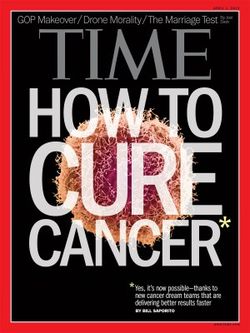
There are now nine (soon to be 10) such cross-disciplinary, cross-institutional research teams backed by SU2C. One of them is taking advantage of the latest developments in epigenetics, and conducting clinical trials focused on the enzymatic on/off switches that physically settle onto the genome and regulate whether and how loudly genes genes will be expressed. This includes the mutated genes that crank out cancer cells. While science can’t do much to change the genome, epigenetic functions are manipulated all the time―sometimes inadvertently, by exposure to environmental chemicals, say; other times cleverly, by drugs. Participating in these trials has helped one patient, Tom Stanback, shrink lung tumors associated with non small cell cancer that were making it difficult to breathe and swallow. “I’m alive. I’m healthier than I’ve ever been,” says the 62-year old ex-smoker. Even better, a few other patients in the study have enjoyed what appears to be complete remission. The epigenetics team includes geneticists, pathologists, biostatisticians, biochemists, informaticists, oncologists, surgeons, nurses and technicians, among others. “We’ve brought discovery researchers a lot closer to the clinical process: it’s an unbelievable asset,” says Dr. William Nelson, director of the Sidney Kimmel Comprehensive Cancer Center at of Johns Hopkins and a vice chairman of SU2C’s scientific committee. The success of such dream teams is prompting an important restructuring at MD Anderson, another top cancer center. President Dr. Ronald DePinho is adapting the team approach around what the institution calls its Moon Shot program. DePinho is assembling six multidisciplinary groups to “mount comprehensive attacks” on eight cancers, including lung, prostate, melanoma, and several women’s cancers that share genetic mutations. As in the SU2C effort, teams will be judged by patient outcomes, not by the number of research papers published. “Aspiring is not enough,” he says. “You must achieve.”
More here.
From Discover:

Soon thereafter, Kashefi and Brown set to work designing a half-experiment, half-art-exhibit that exposes C. metallidurans to gold chloride in a hydrogen-gas-rich atmosphere that serves as a source of food. Over the course of a week, the bacteria gradually strip-mined the toxic liquid, leaving flecks of pure 24-karat gold behind. The inefficient technique won’t supplant traditional mining, but the idea of using microbes as production facilities for a range of rare and difficult-to-produce materials has been gaining traction over the past several years.
More here.