
Dario Amodei at his own website:
 I think and talk a lot about the risks of powerful AI. The company I’m the CEO of, Anthropic, does a lot of research on how to reduce these risks. Because of this, people sometimes draw the conclusion that I’m a pessimist or “doomer” who thinks AI will be mostly bad or dangerous. I don’t think that at all. In fact, one of my main reasons for focusing on risks is that they’re the only thing standing between us and what I see as a fundamentally positive future. I think that most people are underestimating just how radical the upside of AI could be, just as I think most people are underestimating how bad the risks could be.
In this essay I try to sketch out what that upside might look like—what a world with powerful AI might look like if everything goes right. Of course no one can know the future with any certainty or precision, and the effects of powerful AI are likely to be even more unpredictable than past technological changes, so all of this is unavoidably going to consist of guesses. But I am aiming for at least educated and useful guesses, which capture the flavor of what will happen even if most details end up being wrong. I’m including lots of details mainly because I think a concrete vision does more to advance discussion than a highly hedged and abstract one.
More here.
Enjoying the content on 3QD? Help keep us going by donating now.
 Imagine sitting down with an AI model for a spoken two-hour interview. A friendly voice guides you through a conversation that ranges from your childhood, your formative memories, and your career to your thoughts on immigration policy. Not long after, a virtual replica of you is able to embody your values and preferences with stunning accuracy.
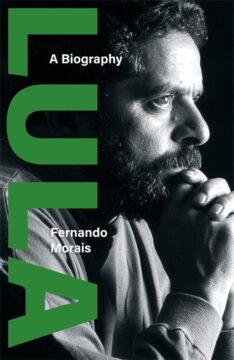 Fernando Morais’s Lula, a new biography of Brazil’s current third-term president, describes the tension on the morning of April 7, 2018. The night before, Luiz Inácio Lula da Silva—known simply as “Lula”—had been charged with corruption and given a day to turn himself in. He’d headed to São Paulo’s Metalworkers Union headquarters to discuss his next moves with a few close associates. “As the sun came up, fourteen of the twenty-four hours given by Judge Moro had come and gone,” Morais writes. “They can come and get me here,” Lula announces.
 In his 1974
 W
W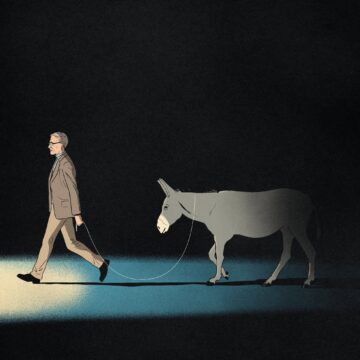 The election victory by Donald Trump and his Republican Party was a rebuke of a Democratic Party that has positioned itself as protector of a despised status quo, rendering it unable to connect with an electorate desperate for change. Defeating Mr. Trump in the future will require liberals, progressives and others on the left to articulate a positive vision that can capture the imagination of a broad majority of Americans.
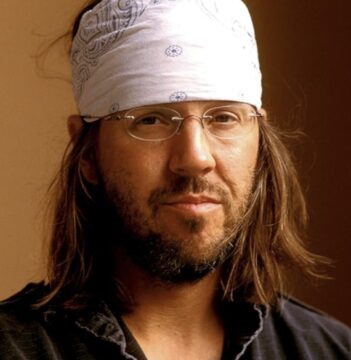 Like a pre-teen prodigy performing for grown-ups, Wallace is too show-offy, intent on dazzling us. Thomas Pynchon’s prose has this same adolescent “Look at me!” quality, which is why I could never get through Gravity’s Rainbow. Wallace also reminds me of J.D. Salinger, who sneerily divides characters into the cool, who get it, and the uncool, who don’t.
 W
W S
S