Goodbye, Maxwell’s: On the Demise of Hoboken and Places Like It

Hoboken1

Nick Moran in The Millions:

Both the Lipton Tea and the Maxwell House plants used to be situated at the north end of Hoboken’s Frank Sinatra Drive, a winding riverside road on the New Jersey side of the Hudson River. Built to capitalize on the town’s proximity to Manhattan, and also the accommodating docks famously depicted in On the Waterfront, the two plants employed generations of workers from Hoboken and its surrounding area. In the mornings, the entire town smelled like tealeaves and roasted coffee.

During my lifetime, both buildings underwent a routine familiar to residents of “up-and-coming” neighborhoods across America: they were closed, sold, and replaced with luxury condominiums. Today Eli Manning owns a fully automated apartment in the Hudson Tea Building. A one-bedroom at Maxwell Place rents for $3,200 a month.

The rest of the town has undergone a similar transformation. Locally owned shops that used to line Washington Street — the main drag spanning the length of the Mile Square City — have in the past three decades been replaced by more and more cookie cutter storefronts from the likes of Baby Gap, Anthropologie, Panera Bread, and Chipotle. Real estate values have skyrocketed due to an influx of young, childless Wall Street workers who appreciate the PATH train’s easy access to the financial district.

Unfortunately this development has come at the expense of longtime residents, many of whom belong to the working classes. Last year Hoboken High School was ranked 298th out of 328 public schools in New Jersey. (Down from 187th the year prior.) The shrinking supply of rent-controlled apartments is always one referendum away from being diminished further. Local businesses evaporate and the town loses its identity. People who moved here for its flavor wake up one day and realize that flavor’s gone.


Friday, June 14, 2013

zip

ID_PI_GOLBE_ZIPCO_AP_001

The campaign began with the name itself — ZIP. It was a good name. ‘ZIP’ sounded a lot friendlier than Zone Improvement Plan, the Orwellian phrase for which ZIP was an acronym. At the same time, ZIP said speed. Mr. Zip — a hand-drawn, wide-eyed little postal guy — became the face of ZIP code promotional efforts, the embodiment of the harmless yet zippy quality of ZIP codes. (‘Mr. Zip’ was also a significant improvement on Mr. Zip’s original name “Mr. P.O. Zone”.) Mr. Zip was speedy and clever, like other American cartoon heroes: Bugs Bunny or Speedy Gonzalez or the Road Runner. After July 1, 1963 Mr. Zip was everywhere. Americans would turn on their radios or televisions or open a newspaper and there was Mr. Zip, banging the drum for ZIP codes. The ZIP code campaign was prolific and varied, appealing to Americans on every level possible. The word “revolution” in some campaigns appealed to the revolutionary spirit of the nation’s citizens. “This is Mr. Zip,” began one television Public Service Announcement. “He revolutionized the mail delivery system of the United States with his ZIP Code. The heart of the system is a number — a ZIP Code number.” One radio spot titled “Machine” played simultaneously to an American sense of duty and love of technological progress. It made ZIP codes sound like a method for shooting your letters right into outer space.

more from Stefany Anne Golberg at The Smart Set here.

Psychiatry’s mistaken manual

Ritalin-e1370837545284

What have been the consequences of what Greenberg calls “a compendium of opinions masquerading as scientific truths?” Both he and Frances argue that medicine has ignored safer and longer-lasting methods of healing and addicted entire generations to pills that, in many cases, are no more effective than placebos but a lot more harmful. Worse, overreliance on the DSM and the rush to resort to drugs has led to “false epidemics” in autism, attention deficit hyperactivity disorder, social anxiety disorder, and pediatric bipolar disorder, among others, and contributed to a public health crisis of widespread prescription drug abuse. As Frances reports, there are now more overdoses in the United States from prescription drugs than from illicit ones. I see this problem firsthand as a college professor: with so many students diagnosed with ADHD (about 30 percent, according to Frances) and taking stimulants like Adderall, we have sold a generation on the fiction that prescription drugs are safe to abuse. The truth, of course, is otherwise—stimulant abuse can lead to depression, anxiety, and even suicide. Ditto for powerfully addictive antianxiety drugs like Ativan, Xanax, and Klonopin, which, when combined with prescription painkillers or alcohol, often cause overdoses. The toll extends beyond the number of lives lost because of overdoses to the “massive but hidden costs” of treating complications caused by these drugs, be it obesity, diabetes, or heart disease.

more from Alison Bass at The American Scholar here.

the bonobotopia.

Bonobos

In the heart of Africa, in a swamp forest near Lake Tumba in the Congo, a frolicking species of ape called the bonobo has long upset the Frazetta picture of our past. These apes, who, along with chimpanzees, share up to 98 percent of our DNA, confounded the first primatologists who observed them. Over time, they have created a colony far different from that of their intensely competitive, often violent, chimpanzee cousins. Bonobo society is based on cooperation and empathy; the culture is a matriarchy where competition is redirected into a communitarian sexual appetite. Bonobos also shocked these earliest scientists because they possessed a cheerful sense of general promiscuity, weaving wanton sex into their society, and they boasted a sexual repertoire once thought to be the exclusive property of Homo sapiens—deep kissing, foreplay, oral sex, homosexuality, and polyamory. Which is why bonobos have gained a certain notoriety in the animal kingdom and are so often bracketed by a kind of ridicule whenever some story about them appears in the paper.

more from Jack Hitt at Lapham’s Quarterly here.

Extreme capitalism of the Muslim Brotherhood

Images

Gilbert Achcar in Le Monde Diplomatique:

The Muslim Brothers’ economic credo of free enterprise unhampered by state interference is more closely consonant with neoliberal doctrine than was the form of capitalism dominant under Mubarak. This holds in particular for the version of that credo articulated by Khairat al-Shatir, the Brotherhood’s very capitalist number two after the murshid (guide), and a representative of its most conservative wing, or by Hassan Malek, an extremely wealthy, eminent member of the Brotherhood, who, after making his debut in the business world in a partnership with Al-Shatir, today manages, with his son, a constellation of enterprises in textiles, furniture and trade, employing more than 400 people.

The portrait of Malek painted by Bloomberg Businessweek could well have been titled The Brotherhood Ethic and the Spirit of Capitalism, so faithfully does it seem to paraphrase Weber’s classic: “[The Maleks] are part of a generation of religious conservatives ascendant in the Muslim world, whose devotion to God invigorates their determination to succeed in business and politics. As Malek says, ‘I have nothing else in my life but work and family.’ These Islamists pose a formidable challenge to secular governance in countries such as Egypt — not only because of their conservatism but because of their work ethic, single-minded focus, and apparent abstention from sloth and sin. They’re up for winning any contest. … ‘The core of the economic vision of Brotherhood, if we are going to classify it in a classical way, is extreme capitalist,’ says Sameh Elbarqy, a former member of the Brotherhood”.

The former Muslim Brother interviewed by Bloomberg Businessweek asked the right question. What is in doubt is clearly not the Brotherhood’s allegiance to the neoliberal capitalism of the Mubarak era, but its capacity to shed its worst traits: “What remains to be seen is whether the crony capitalism that characterised the Mubarak regime will change with pro-business Brotherhood leaders such as Malek and El-Shater in charge. Although the Brotherhood has traditionally worked to alleviate the conditions of the poor, ‘the working people and farmers will suffer because of this new class of businessmen,’ Elbarqy says. ‘One of the big problems with the Muslim Brotherhood now — they have it in common with Mubarak’s old political party — is the marriage of power and capital’”

Einstein and Freud’s Little-Known Correspondence on Violence, Peace, and Human Nature

Maria Popova in Brain Pickings:

EinsteinfreudDespite his enormous contributions to science,Albert Einstein was no reclusive genius, his ever-eager conversations and correspondence engaging such diverse partners as the Indian philosopher Tagore and a young South African girl who wanted to be a scientist. In 1931, the Institute for Intellectual Cooperation invited the renowned physicist to a cross-disciplinary exchange of ideas about politics and peace with a thinker of his choosing. He selected Sigmund Freud, born on May 6, 1856, whom he had met briefly in 1927 and whose work, despite being skeptical of psychoanalysis, the legendary physicist had come to admire. A series of letters followed, discussing the abstract generalities of human nature and the potential concrete steps for reducing violence in the world. In a twist of irony, the correspondence was only published in 1933 — after Hitler, who would eventually banish both Einstein and Freud into exile, rose to power — in a slim limited-edition pamphlet titled Why War?. Only 2,000 copies of the English translation were printed, most of which were lost during the war. But the gist of the correspondence, which remains surprisingly little-known, is preserved in the 1960 volume Einstein on Peace(public library), featuring a foreword by none other than Bertrand Russell.

More here.

Here He Goes Again: Sam Harris’s Falsehoods

Scott Atran in This View of Life:

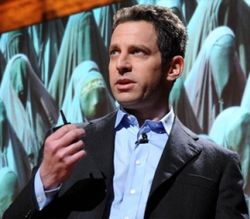
Sam_harris1-405x355Sam Harris posted a recent blog about my views on Jihadis that is unbecoming of serious intellectual debate, if not ugly. He claims that I told him following a “preening and delusional lecture” that “no one [connected with suicide bombing] believes in paradise.” What I actually said to him (as I have to many others) was exactly what every leader of a jihadi group I interviewed told me, namely, that anyone seeking to become a martyr in order to obtain virgins in paradise would be rejected outright. I also said (and have written several articles and a book laying out the evidence) that although ideology is important, the best predictor (in the sense of a regression analysis) of willingness to commit an act of jihadi violence is if one belongs to an action-oriented social network, such as a neighborhood help group or even a sports team (see Atran, TALKING TO THE ENEMY, Penguin, 2010).

Harris’s views on religion ignore the considerable progress in cognitive studies on the subject over the last two decades, which show that core religious beliefs do not have fixed propositional content (Atran & Norenzayan, “Religion’s Evolutionary Landscape,” BEHAVIORAL AND BRAIN SCIENCES, 2004). Indeed, religious beliefs, in being absurd (whether or not they are recognized as such), cannot even be processed as comprehensible because their semantic content is contradictory (for example, a bodiless but physically powerful and sentient being, a deity that is one in three, etc). It is precisely the ineffable nature of core religious beliefs that accounts, in part, for their social and political adaptability over time in helping to bond and sustain groups (Atran & Ginges, “Religious and Sacred Imperatives in Human Conflict,” SCIENCE, 2012). In fact, it is the ecstasy-provoking rituals that Harris describes as being associated with such beliefs which renders them immune to the logical and empirical scrutiny that ordinarily accompanies belief verification (see Atran & Henrich, “The Evolution of Religion,” BIOLOGICAL THEORY, 2010).

More here.

The island of long life

Andrew Anthony in The Guardian:

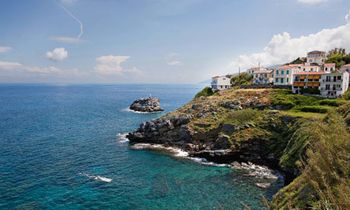
Greece-longevity-Evdilos-008With its beautiful coves, rocky cliffs, steep valleys and broken canopy of scrub and olive groves, Ikaria looks similar to any number of other Greek islands. But there is one vital difference: people here live much longer than the population on other islands and on the mainland. In fact, people here live on average 10 years longer than those in the rest of Europe and America – around one in three Ikarians lives into their 90s. Not only that, but they also have much lower rates of cancer and heart disease, suffer significantly less depression and dementia, maintain a sex life into old age and remain physically active deep into their 90s. What is the secret of Ikaria? What do its inhabitants know that the rest of us don't?

It has also been the subject of a number of scientific studies. Aside from the demographic surveys that Buettner helped organise, there was also the University of Athens' Ikaria Study. One of its members, Dr Christina Chrysohoou, a cardiologist at the university's medical school, found that the Ikarian diet featured a lot of beans and not much meat or refined sugar. The locals also feast on locally grown and wild greens, some of which contain 10 times more antioxidants than are found in red wine, as well as potatoes and goat's milk. Chrysohoou thinks the food is distinct from that eaten on other Greek islands with lower life expectancy. “Ikarians' diet may have some differences from other islands' diets,” she says. “The Ikarians drink a lot of herb tea and small quantities of coffee; daily calorie consumption is not high. Ikaria is still an isolated island, without tourists, which means that, especially in the villages in the north, where the highest longevity rates have been recorded, life is largely unaffected by the westernised way of living.” But she also refers to research that suggests the Ikarian habit of taking afternoon naps may help extend life. One extensive study of Greek adults showed that regular napping reduced the risk of heart disease by almost 40%. What's more, Chrysohoou's preliminary studies revealed that 80% of Ikarian males between the ages of 65 and 100 were still having sex. And, of those, a quarter did so with “good duration” and “achievement”. “We found that most males between 65 and 88 reported sexual activity, but after the age of 90, very few continued to have sex.”

More here.

How Can You Live to 100?

From National Geographic:

Though most of us won't make it to 116, National Geographic Fellow and longevity expert Dan Buettner has discovered tips on reaching old age through his work on blue zones—pockets of longevity around the world. In his second edition of his book The Blue Zones, Buettner writes about a newly identified Blue Zone: the Greek island of Ikaria (map). National Geographic magazine Editor at Large Cathy Newman interviewed him in December about the art of living long and well. (Watch Buettner talk about how to live to a hundred.)

Q. You've written about Blue Zones in Sardinia, Italy; Loma Linda, California; Nicoa, Costa Rica; and Okinawa, Japan. How did you find your way to Ikaria?

A. Michel Poulain, a demographer on the project, and I are always on the lookout for new Blue Zones. This one popped up in 2008. We got a lead from a Greek foundation looking for biological markers in aging people. The census data showed clusters of villages there with a striking proportion of people 85 or older. (Also see blog: “Secrets of the Happiest Places on Earth.”)

In the course of your quest you've been introduced to remarkable individuals like 100-year-old Marge Jetton of Loma Linda, California, who starts the day with a mile-long [0.6-kilometer] walk, 6 to 8 miles [10 to 13 kilometers] on a stationary bike, and weight lifting. Who is the most memorable Blue Zoner you've met?

Without question it's Stamatis Moraitis, who lives in Ikaria. I believe he's 102. He's famous for partying. He makes 400 liters [100 gallons] of wine from his vineyards each year, which he drinks with his friends. His house is the social hot spot of the island. (See “Longevity Genes Found; Predict Chances of Reaching 100.”)

He's also the Ikarian who emigrated to the United States, was diagnosed with lung cancer in his 60s, given less then a year to live, and who returned to Ikaria to die. Instead, he recovered.

Yes, he never went through chemotherapy or treatment. He just moved back to Ikaria.

Did anyone figure out how he survived?

Nope. He told me he returned to the U.S. ten years after he left to see if the American doctors could explain it. I asked him what happened. “My doctors were all dead,” he said.

More here.

Samantha Power and the Weaponization of Human Rights

Powers_01

Chase Madar in Counterpunch:

The intellectual career of Samantha Power is a richly instructive example of the weaponization of human rights. She made her name in 2002 with A Problem From Hell: America and the Age of Genocide. In this surprise global bestseller, she argues that when confronted with 20th-century genocides, the United States sat on the sidelines as the blood flowed. Look at Bosnia or Rwanda. “Why does the US stand so idly by?” she asks. Powers allows that overall America “has made modest progress in its responses to genocide.” That’s not good enough. We must be bolder in deploying our armed forces to prevent human-rights catastrophes—to engage in “humanitarian intervention” in the patois of our foreign-policy elite.

In nearly 600 pages of text, Power barely mentions those postwar genocides in which the U.S. government, far from sitting idle, took a robust role in the slaughter. Indonesia’s genocidal conquest of East Timor, for instance, expressly green-lighted by President Ford and Secretary of State Kissinger, who met with Suharto the night before the invasion was launched and carried out with American-supplied weapons. Over the next quarter century, the Indonesian army saw U.S. military aid and training rise as it killed between 100,000 and 200,000 East Timorese. (The figures and the designation of “genocide” come from a UN-formed investigative body.) This whole bloody business gets exactly one sentence in Power’s book.

What about the genocide of Mayan peasants in Guatemala—another decades-long massacre carried out with American armaments by a military dictatorship with tacit U.S. backing, officer training at Fort Benning, and covert CIA support? A truth commission sponsored by the Catholic Church and the UN designated this programmatic slaughter genocide and set the death toll at approximately 200,000. But apparently this isn’t a problem from hell.

Daniel Larison also on Power over at The American Conservative.

Thursday, June 13, 2013

William Gaddis: A very fine shambles

P23_Griffiths_349791k

In a late letter to Stanley Elkin, one of the colleagues he came to admire, Gaddis writes that “age 72 is daily more infringed by that blond pageboy off to boarding school age 5”. This is almost where we begin, with an account of school activities he sent his mother when he was just ten days past his eighth birthday. Edith Gaddis, whose husband had left well before this, was the recipient of most of the letters collected here from the next twenty years and more, years that took her son to Haiti, Mexico, Panama, Costa Rica, Spain, Paris and North Africa, as well as the American West (and Harvard, briefly), as he pursued a life of varied adventure. He was also beginning to write. “I have been working very hard”, he sends word to his mother from Mexico City in April 1947. “Many days. On a novel.” By December – now in Panama, working in the Canal Zone, where he would quickly come to see his country as deserting its responsibilities (“America I have such pity for, fury at”) – he had “started the plans for another novel”, which would be partly a study of abdication, deception and self-deception, expressing pity for and fury at not just one nation but the whole human race: The Recognitions. More than a quarter of this volume of correspondence is devoted to the period when Gaddis was writing his first published novel, though his references to work are at first few, interspersed among travel plans, notes on what he has seen and done, and concerns expressed for his recipients.

more from Paul Griffiths at the TLS here.

byzantium

Byzantium-400x500

The Turkish emir Osman I, father of the Ottoman dynasty, had a dream. A tree sprang from his loins, and from its roots flowed the great rivers of the world, and its canopy spread from the Caucasus to the Atlas. In the branches nightingales and parrots cried out. Every leaf was a scimitar. A wind blew up that turned these blades toward the cities that lay beneath the tree; most turned toward Constantinople. That city became the emerald in a ring, and the emir slipped the ring on his finger, and awoke. The Byzantines had said that when, as at its founding in a.d. 330, they were again ruled by an emperor named Constantine, son of a Helena, Constantinople would fall, which in 1453 they were and it did. The Muslims foretold that a leader who bore the Prophet’s name would take Constantinople, and in 1453 he did and he did. When the Turks at last breached Constantinople’s walls it was because someone left the door open.

more from Rafil Kroll-Zaidi at Harper’s Magazine here.

cassatt the printmaker

Tl_13_5023607

Cassatt’s biographer, Nancy Mowll Mathews, attributes the artist’s affinity for printmaking to her impatience with academic drawing. That’s a shrewd observation; Cassatt used printmaking to keep the image in play, to evade the demand for finish. In the exhibition, there are several opportunities to see two or three versions of the same image and study how Cassatt revised a composition as she worked through her thoughts about it. And any single image can also disclose the restless exploratory nature of Cassatt’s immersion in her subject matter. The earliest of her prints at the NYPL is a costume study after Paul Gavarni from around 1878. In its first state, there is a rather conventional figure against a nearly blank ground; in the second, the ground has been filled in with dark mottling, and details have dropped out of the figure. In the third, the figure has become a vaporous near-absence amid a nocturnal space. All three versions were still in Degas’s studio at his death.

more from Barry Schwabsky at The Nation here.

How nails regenerate lost fingertips

From Nature:

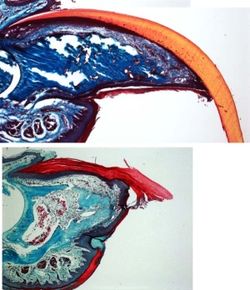
NailIf a salamander loses its leg, it can grow a new one. Humans and other mammals are not so fortunate, but we can regenerate the tips of our digits, as long as enough of the nail remains. This was first shown some 40 years ago; today researchers finally reveal why it is that nails are necessary. Working with mice, researchers led by Mayumi Ito at New York University have identified a population of stem cells lying beneath the base of the nail that can orchestrate the restoration of a partially amputated digit. However, the cells can do so only if sufficient nail epithelium — the tissue that lies immediately below the nail — remains. The results are published on Nature's website today1.

The process is limited compared with the regenerative powers of amphibians, but the two share many features, from the molecules that are involved to the fact that nerves are necessary. “I was amazed by the similarities,” says Ito. “It suggests that we partly retain the regeneration mechanisms that operate in amphibians.” By labelling groups of nail cells so that all the daughter cells they produced were blue, Ito, together with Makoto Takeo and others, showed that the nail base contains a small population of self-renewing stem cells, which sustain the nail’s continuous growth. This ongoing growth depends on signals carried by the Wnt family of proteins — if this signalling pathway is disrupted, mouse nails cannot form.

More here.

Sarah Sze Presents ‘Triple Point’ at the Venice Biennale

From Columbia.edu

SzeSze has won acclaim for her minutely detailed, accumulative installations, in which everyday items such as coffee cups, plastic bottles and electrical fans become vital objects that defy the boundaries between the throwaway and the precious, the mundane and the monumental. Sze has always been known for work that challenges viewers to experience space in unexpected ways, and her installation at the U.S. Pavilion at the Biennale promises to do the same on a grand scale. Sze has created a sequence of constructed environments that will activate the Pavilion’s architecture and extend beyond the building and into the courtyard, blurring the perceptual boundaries between the site’s interior and exterior.

Sarah Sze was born in Boston in 1969. She received a BA from Yale University in 1991 and an MFA from the School of Visual Arts in 1997. She has received critical acclaim for her public commissions and site-specific installations, including recent commissions for the New York City High Line, the Cartier Foundation, the Carnegie International and the São Paolo Biennial. A MacArthur Fellow and Louis Comfort Tiffany Award winner, she has challenged architectures and captivated viewers with her large-scale constructions that penetrate walls, suspend from ceilings, burrow into the ground and stretch across museums. Solo museum projects include at the Museum of Contemporary Art in Chicago, The Walker Art Center in Minneapolis, the Whitney Museum of American Art and The Institute of Contemporary Art, London. An exhibition of Sze’s drawings, Infinite Line was on view at the Asia Society in New York last year.

More here.

Thursday Poem

My Father Built England

‘Show me your hands.’ It was the only question
The foreman asked. They were your references
And your scholarship. That is why my father used
Piss to harden his schoolboy hands, as was custom
When blisters set fire to the skin, an ancient trick
Shown to him by a Meath man who died beneath
A truck, sober in Kilburn. In 1939, England needed
A solid Paddy full of gristle, to be counted on,
Semi-British for the duration. You supply your own
Sweat and wellies but could pick a white virgin
Shovel from the Gaffer and return it sharp, shined
By gravel. Only once was he broken, when black
Winds blew down the scaffolding; its tubular legs
Dancing across the unfinished airstrip. As he lay
Dead, a Geordie Tea-Boy nursed him well.
Wet Time was a bloody nightmare; always under
The Landlady’s feet and once he was thrown
Out of digs in a row about Rex’s favourite chair.
It was 1942 before he could pin fifty pounds to
The inside of his overcoat and take himself home.
Then, while German bombs fell on England,
My father built Ireland for Hogan and Son.

by Ron Carey
from Southward Journal
April 2013

Bonjour Tristesse: The Economic and Political Decline of France

Image-504323-breitwandaufmacher-xxwd

Mathieu von Rohr in Spiegel:

[T]he mood hanging over the country is depressed. France is in the midst of the biggest crisis of the Fifth Republic. It feels as if the French model had reached an end stage, not just in terms of the economy, but also in politics and society. A country that long dismissed its problems is going through a painful process of adjustment to reality and, as was the case last week, can now expect to be issued warnings by the European Commission and prompted to implement reforms.

France's plight was initially apparent in the economy, which has been stagnating for five years, because French state capitalism no longer works. But the crisis reaches deeper than that. At issue is a political class that more than three quarters of the population considers corrupt, and a president who, this early in his term, is already more unpopular than any of his predecessors. At issue is a society that is more irreconcilably divided into left and right than in almost any other part of Europe. And, finally, at issue is the identity crisis of a historically dominant nation that struggles with the fact that its neighbor, Germany, now sets the tone on the continent.

The French economy has been in gradual decline for years, without any president or administration having done anything decisive about it. But now, ignoring the problems is no longer an option. The economy hasn't grown in five years and will even contract slightly this year. A record 3.26 million Frenchmen are unemployed, youth unemployment is at 26.5 percent, consumer purchasing power has declined, and consumption, which drives the French economy, is beginning to slow down, as well.

There is a more positive side of the story, which sometimes pales in the face of all the bad news. France is the world's fifth-largest economy, and interest rates for government bonds have been at historic lows for months. The country is far from being on the verge of bankruptcy and cannot be compared with Italy or Spain, and certainly not with Greece. Nevertheless, France is ailing. And looking weak is something the French themselves hate more than anything else.

Physics’s Pangolin

Space-Pangolin-Web

Margaret Wertheim in Aeon:

Theoretical physics is beset by a paradox that remains as mysterious today as it was a century ago: at the subatomic level things are simultaneously particles and waves. Like the duck-rabbit illusion first described in 1899 by the Polish-born American psychologist Joseph Jastrow, subatomic reality appears to us as two different categories of being.

But there is another paradox in play. Physics itself is riven by the competing frameworks of quantum theory and general relativity, whose differing descriptions of our world eerily mirror the wave-particle tension. When it comes to the very big and the extremely small, physical reality appears to be not one thing, but two. Where quantum theory describes the subatomic realm as a domain of individual quanta, all jitterbug and jumps, general relativity depicts happenings on the cosmological scale as a stately waltz of smooth flowing space-time. General relativity is like Strauss — deep, dignified and graceful. Quantum theory, like jazz, is disconnected, syncopated, and dazzlingly modern.

Physicists are deeply aware of the schizophrenic nature of their science and long to find a synthesis, or unification. Such is the goal of a so-called ‘theory of everything’. However, to non-physicists, these competing lines of thought, and the paradoxes they entrain, can seem not just bewildering but absurd. In my experience as a science writer, no other scientific discipline elicits such contradictory responses.