Thin
How anything
is known
is so thin—
a skin of ice
over a pond
only birds might
confidently walk
upon. A bird's
worth of weight
or one bird-weight
of Wordsworth.
by Kay Ryan
From Poetry, April 2005

Thin
by Kay Ryan
From Poetry, April 2005
PZ Myers responds to Jerry Coyne on evolutionary psychology, in Pharyngula:
I detest evolutionary psychology, not because I dislike the answers it gives, but on purely methodological and empirical grounds: it is a grandiose exercise in leaping to conclusions on inadequate evidence, it is built on premises that simply don’t work, and it’s a field that seems to do a very poor job of training and policing its practitioners, so that it primarily serves as a dump for bad research that then supplies tabloids with a feast of garbage science that discredits the rest of us. I’d like to see the evolutionary psychologists who propose that there is a high quality core to their discipline spending more effort ripping into their less savory colleagues than on the indignant sniffing at critics of evolutionary psychology. I’d have more respect for the field if there was more principled internal striving.
There is also a tactic I really dislike; I call it the Dignified Retreat. When criticized, evolutionary psychologists love to run away from their discipline and hide in the safer confines of more solidly founded ideas. Here’s a perfect example:
…the notion that “the fundamental premises of evo psych are false” seems deeply misguided. After all, those premises boil down to this statement: some behaviors of modern humans reflect their evolutionary history. That is palpably uncontroversial, since many of our behaviors are clearly a product of evolution, including eating, avoiding dangers, and the pursuit of sex. And since our bodies reflect their evolutionary history, often in nonadaptive ways (e.g., wisdom teeth, bad backs, the coat of hair we produce as a transitory feature in fetuses), why not our brains, which are, after all, just bits of morphology whose structure affects our behaviors?
You know what? I agree entirely with that. The brain is a material product of evolution, and behavior is a product of the brain. There are natural causes for everything all the way down. And further, I have great respect for psychology, evolutionary biology, ethology, physiology, anthropology, anatomy, comparative biology — and I consider all of those disciplines to have strong integrative ties to evolutionary biology. Does Coyne really believe that I am critiquing the evolved nature of the human brain? Because otherwise, this is a completely irrelevant statement.
First, Laurie Penny in the Guardian:
[n]on-monogamy is stereotyped as a bad deal for women and girls, all of whom actually just want a white wedding, because we women are all the same, simple creatures with simple desires. When abuse happens within polyamorous relationships, outsiders often assume that the non-traditional relationship structure is to blame – but the same assumptions are rarely made when a “traditional” marriage turns violent, despite the fact that the practice historically treated women as property and until recently made it legal for men to rape their wives. For plenty of women, that's reason enough to consider other options.
Of course, polyamory isn't always political. People do it for all sorts of reasons, from grand ethical statements to boredom – managing the drama of multiple relationships is a great way to kill time on a Sunday afternoon. Personally, I started practising non-monogamy in my early 20s as a statement against the tyranny of the heterosexual couple form and the patriarchal nuclear family – but then again, I did a lot of silly things for similar reasons in my early 20s. If you'd asked 21-year-old me why precisely I was hanging half-naked out of a fourth-floor window on Holloway Road, I'd probably also have answered “as a statement against the tyranny of the heterosexual couple form”. Nowadays, from the wise and serious vantage point of my mid-20s, I practice non-monogamy because it works for me. It doesn't work for everyone, and I might not choose it forever.
Julie Bindel responds, also in The Guardian:
Polyamory is the latest subversive and a la mode sexual practice toreceive extensive media coverage. It appeals as a subject for to those interested in alternative lifestyles, but also attracts commentary from some deeply unpleasant folk who have trashed it alongside gay marriage. “What next?” ask the bigoted opponents of equal marriage. “Polygamy and marriage to your brother/cat/hedge trimmer?”
It is neither my business or concern as to how many sexual partners anyone has at any one time, and I genuinely could not care less how folk organise their relationships. But the co-opting and rebranding of polygamy, so that it loses its nasty association with the oppression of the most disadvantaged women, is as irresponsible as suggesting that because some women chose to enter high-end prostitution as a social experiment, all prostitution is radical and harmless.
Caroline Humphrey, a professor of collaborative anthropology at Cambridge University, has argued in favour of the legalisation of polygamy because, according to a number of women in polygamous marriages in Russia, “half a good man is better than none at all”.
Analee Newitz in io9:
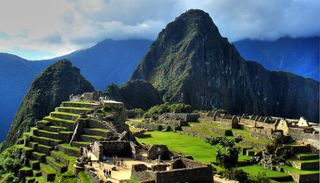
One of the outstanding questions for scientists and historians who study the Incas is why this wealthy, sophisticated culture developed scientifically and culturally without ever inventing markets. One possibility is that life was so difficult to sustain in their environment that all their innovations revolved around agriculture rather than economics. In other words, the Inca Empire was optimized to prevent starvation rather than to foster trade.
A few years ago, a group of archeologists took core samples in Cuzco valley in Peru, and found evidence for thousands of years of agriculture in the area, including animal husbandry, most likely of llamas. In a paper summarizing their findings, archaeologist A.J. Chepstow-Lusty and his team suggested that the Incas focused their technological and cultural institutions around food production and land management, rather than market economies. This may have been necessary in a region where droughts had likely wiped out a previous civilization (the Wari), and where climate fluctuations were a constant hazard. The rise of the Inca Empire coincided with a period of relative climate stability, but the peoples in the area would be well aware that this temperate spell could end at any time…
So how do you become a continent-dominating empire without cash? In the case of the Incas, it's likely that the technologies that granted them agricultural surplus (extra food and textile materials) helped them with their expansive empire-building. Food was their coin; pure labor structured their economy.
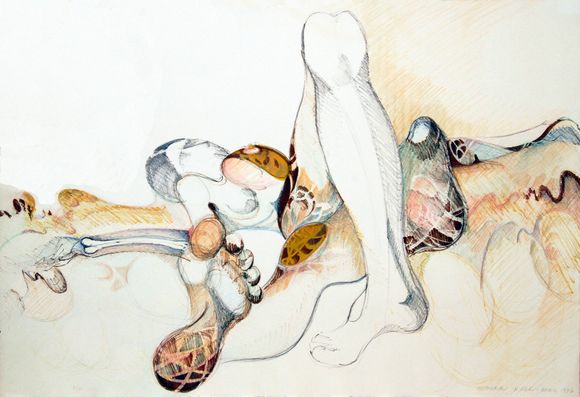
Sughra Raza. Untitled. 1976.
Etching with color pencil embellishment.
by Evert Cilliers aka Adam Ash
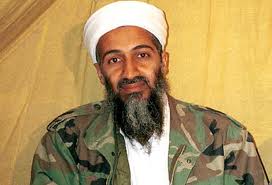
Our system had prevailed. In the end, we had won the Cold War. Communism had been defeated. Even China turned to capitalism. We had been right all along. And with our insistence on freedom and human rights, we were morally respectable (forget for a moment that we were propping up despots everywhere).
Today things look very different. Because of Bin Laden, we got involved in two unnecessary wars, tortured people, and ended up with a hugely expensive surveillance state.
Bin Laden brought fear into our lives, and turned the United States into a parody of Big Brother, spying big-time on its own citizens.
Think of America before 9/11: the world's undisputed and admired leader. Think of America just after 9/11: the world sympathized with us. Even in Iran, where we had installed the torturous regime of the Shah before he was overthrown in 1979, folks held candle-lit vigils for us.
Then think of us a few years later, when the biggest protests in human history took place all over the world against our imminent invasion of Iraq.
Over a million people in Rome marched against our proposed war with Iraq: that's just one example. And were they ever right to protest. Our war of aggression against an innocent nation that was not threatening us in any way, ended up with over 100,000 Iraqis murdered. And the scandals and atrocities of Abu Ghraib and Guantanamo Bay brought our moral superiority into disrepute forever. Moreover, the Iraq War became an ideal recruitment tool for Al Qaeda, and multiplied the number of terrorists in the world by the thousands. We ended up creating terrorists instead of diminishing their number.
Of course, Bin Laden also got lucky, because he struck us when two of the biggest idiots serving in government since Caligula appointed his horse as a Roman Senator, were running the country: the mediocre C-student George W. Bush and the eternally paranoid bird-killer Dick Cheney. If Al Gore had been president during and after 9/11, we certainly would not have started a war with Iraq, and might have made a deal with Afghanistan's Taliban for them to hand over Bin Laden, as they were apparently prepared to do, except that Bush/Cheney were so bent on war, they were in no mood to make a deal with the Taliban, even though they used to make deals with the Taliban before 9/11.
Robert Pinsky at the website of the Poetry Foundation:
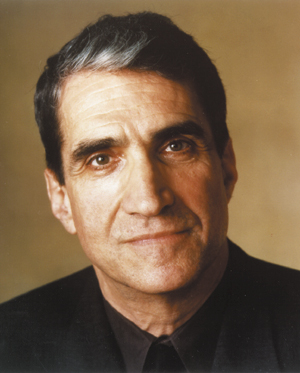
A reigning style can feel tyrannical: the assumptions behind it so well-established that there seem to be no alternatives. But there are always alternatives. How might a resourceful, ambitious artist get past or around a perceived tyranny? European painters early in the twentieth century, challenging the academic norm, found something useful in Japanese cigarette papers and African masks.
The past can offer a useful way of rebelling against the orthodoxies of the present. The early modernist poets revived interest in John Donne and Andrew Marvell, not because they wanted to correct the academic reading lists—that was a side effect—but because they were impatient with late-late Romantic, post-Victorian softness. They craved models of hard-edged intelligence and lightning wit.
In the 1970s, a young poet I knew described the manner most prevalent in the magazines and writing workshops of those days as “just grooving on images.” I remember that poet—now a considerable and innovative figure—introducing me toJames Shirley’s “The Glories of Our Blood and State,” praising the poem for the force of its statement and idiom, the cogency of its propositions, and its cadences.
More here.
Carl Zimmer in his excellent blog, The Loom:

The human genome contains about 3.2 billion base pairs. Last year,scientists at the University of Leceister printed the sequence out in 130 massive reference-book-sized volumes for a museum exhibit. From start to finish, they would take nearly a century to read.
A typical gene is made up of a few thousand bases. The human genome contains about 21,000 genes that encode proteins. There are other genes in the human genome that encode molecules known as RNA, but how many of those RNA molecules actually do anything useful in the cell is a matter of intense debate. A lot of the human genome is made of neither protein- or RNA-coding genes. Much (maybe most) of it is made up of dead genes and parasite-like stretches of DNA that do little more than making copies of themselves.
As I wrote recently in the New York Times, 3.2 billion base pairs and 21,000 genes are not essential requirements for something to stay alive. E. coli is doing very well, thank you, with a genome about 4.6 million base pairs. That’s .14% the size of our genome. Depending on the strain, the microbe has around 4100 protein-genes. That’s about a fifth the number of protein-coding genes that we carry. The high ratio of genes to genome size in E. coli is the result of its stripped-down, efficient genetics. Mutations that chop out non-functional DNA spread a lot faster in microbes than in animals.
E. coli, in turn, has proven to be positively gargantuan, genetically speaking, compared to some other species.
More here.
From NewStatesman:
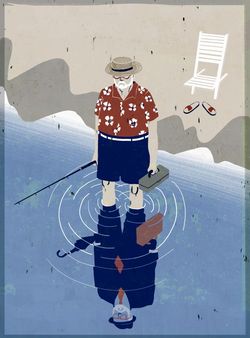
…There is an argument to be made against the prototypical life of hard work as the inevitable lot of humanity. In 1974 the Chicago anthropologist Marshall Sahlins published Stone Age Economics. He proposed the idea that individuals in many “simple” societies, far from working themselves to death merely to exist in their nasty, brutish and short lives, were actually members of the “original affluent society”. He suggested that, in those parts of the world where co-operation and social exchange were paramount, once people had done the few days’ hard work of felling a tree and carving out a canoe, there were large amounts of free time to lie about daydreaming, exploring, telling stories: doing “culture” or just skiving. You’d fish in the canoe you’d made, and by preserving and sharing the catch with others, who also shared theirs with you, you could then take a few days off before you needed to get any more. Decent members of those communities did what they needed to do and then when they didn’t need to do it, they stopped. Only when you worship the idea of accumulation and status based on its perceived wealth-giving properties do you have to work hard all the time. Accumulation was hampering; you had to carry it about with you when you moved from camp to camp, or find ways of storing and securing it if you were sedentary. Without the idea of surplus as a value beyond its use value, when you needed/wanted something you got it, and when you had it, you enjoyed it until it was time to get some more.
More here.
An attack on the renowned atheist as anti-Muslim is really designed to squelch honest conversation about religion.
Jeffrey Tayler in Salon:

Lean would do well to stiffen up, however. In tapping out a risible parody of a reasoned critique, he unwittingly both beclowns himself and lends credence to the very scientist and arguments he seeks to discredit. His piece is full of wrongheaded thinking and blundering jabs at Dawkins for pointing out uncomfortable truths about the state of science, or, rather, the lack of it, in Muslim countries. Lean purports to “expose” the “ugly underbelly of [Dawkins’] rational atheistic disguise,” but has authored a tract consisting almost wholly of politically correct shibboleths and befuddled assertions that insult his readers’ intelligence and aim to squelch honest debate about Islam and its role in the world today. If one believes in free speech, one cannot let what he wrote go unchallenged.
More here.
This Kid No Goat
Where have
all the angry young men gone?
Gone to the Island of Lament for Sharpville.
Gone overseas on scholarship.
Gone up North to milk and honeyed uhuru.
Gone to the dogs with the drink of despair.
Yesterday I met one in the bookstore:
he was foraging for food of thought
from James Baldwin, Amiri Baraka
Albet Camus, Jean-Paul Sartre.
He wore faded jeans and heavy sweater,
he saluted me with a
“Hi Brother!”
He was educated in the country mission school
where he came out clutching a rosary
as an amulet against
“Slegs vir blankes – For Whites Only!”
He enrolled at Life University
whose lecture rooms were shebeens,
hospital wards and prison cells.
He graduated cum laude
with a thesis in philosophy:
“I can’t be black and straight
In this crooked white world!
“If I tell the truth
I’m detestable.
“If I tell lies
I’m abominable.
“If I tell nothing
I’m unpredictable.
“If I smile to please
I’m nothing but an obsequious sambo.
“I have adopted jazz as my religion
with Duke Ellington, Count Basie,
Louis Armstrong as my High Priests.
“No more do I go to church
where the priest has left me in the lurch.
“His sermon is a decaying pulpit tree
to be swept away
by violent gusts of doubt and skepticism.
“My wife and kids can worship there:
They want to go to heaven when they die.
“I don’t want to go heaven when I’m dead.
“I want my heaven now,
here on earth in Houghton and Parktown;
a mansion
two cars or more
and smiling servants.
Isn’t that heaven?”
by Mbuyiseni Oswald Mtshali
from Sounds of a Cowhide Drum
Jacana Media, Johannesburg, 2012
translation: Mbuyiseni Oswald Mtshali
publisher: Renoster, Johannesburg, 1971
To commemorate the occasion, I am reposting a remembrance of Faraz Sahib by my sister Atiya B. Khan:
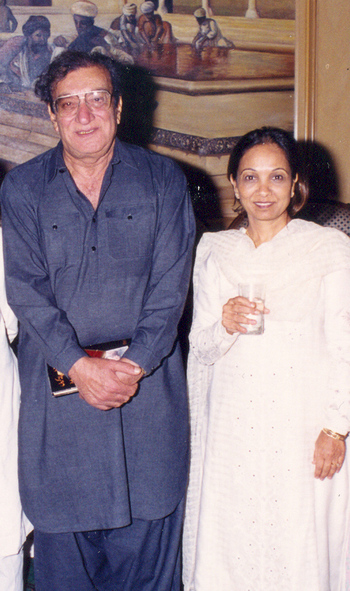
As far as Urdu poetry goes, none of his contemporaries could touch Faraz Sahib, or even come close. The superiority of his poetry owes much to his personal qualities: the boldness of his thought, his willingness to fight oppression and his very costly (to himself) political activism, his rebellious nature, and of course his romantic worldview.
More here. And a bonus article on the plight of Urdu here, thanks to Tunku Varadarajan.
From The Telegraph:
The address that Martin Luther King delivered from the steps of Washington’s Lincoln Memorial on August 28 1963 is still known simply as the Dream Speech, after the “I have a dream” phrase that he repeated, with his preacher’s cadence, to paint his hopes for a future of racial equality.
…That warm August day, the crowds, perhaps a quarter of them white, poured into the nation’s capital by bus, train and car from across America, from the poorest cotton-share-cropping districts of the South and the slums of the North, to affluent enclaves of New England. The march also attracted a slew of celebrities, including Marlon Brando, Charlton Heston, Harry Belafonte, Burt Lancaster, Paul Newman, Joan Baez and Bob Dylan. Some flew in despite being “advised” on the orders of FBI director J Edgar Hoover to withdraw support from the “Communist-organised” march. Many were nervous as they arrived, fearful of warnings that the protest would turn into a riot. There were dark predictions that white women would be raped, government buildings attacked, shops looted and burned. Instead, America witnessed a stunning and peaceful demonstration of racial unity, a defining moment in the civil rights movement. The year was the 100th anniversary of Abraham Lincoln’s abolition of slavery, with the Emancipation Proclamation that ordered the freeing of slaves in the Confederacy. A century later, protests were sweeping the same Southern states, against the Jim Crow laws that forced blacks to live as second-class citizens.
…In a landmark that not even the most ambitious dreamers in 1963 could have imagined, an African-American was elected president in 2008. Now into his second term, Barack Obama has a framed programme of the March on Washington on the wall of the Oval Office. The progress has been striking. But, as tens of thousands gathered at the Lincoln Memorial yesterday to mark the 50th anniversary of the march, the talk was as much about unfinished business as celebrating a momentous day. For one thing, the full name of the 1963 gathering was the March on Washington for Jobs and Freedom, a title that emphasised the organisers’ focus on economic as well as racial equality. For all the strides of the intervening half-century, the so-called “opportunity gap” between races remains stubbornly wide, with blacks almost twice as likely to be unemployed as whites. From the same steps where Dr King spoke, Mr Obama will address a “Let Freedom Ring” ceremony on Wednesday, alongside Bernice King, the clergywoman daughter of Dr King.
More here.
Ben Orlin in Math With Bad Drawings:
Economist: No! That’s so inefficient. Let’s each write down the amount we’re willing to put in, then auction off the remainder at some point on the contract curve.
Physicist: Huh?
Mathematician: Like most economics, that’s just gibberish with the word “auction” in it.
Engineer: Look, it’s simple. Total your items, add 8% tax, and 18% tip.
Mathematician: Sure. Does anybody know 12 plus 7?
Computer Scientist: You don’t?
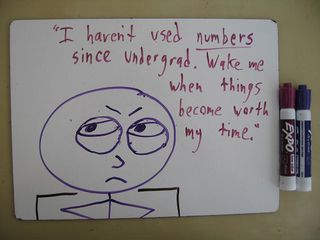
Mathematician: What do I look like, a human calculator? Numbers are for children, half-wits, and bored cats.
More here. [Thanks to Alon Levy.]
John Bew in New Statesman:
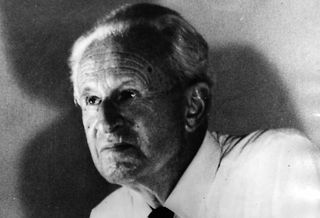
Franz Neumann, Herbert Marcuse and Otto Kirchheimer – leading figures in the creation of Marxist “critical theory” and, in Marcuse’s case, a “rock star” of the 1960s radical left – were Jewish émigrés who fled Germany for the US in the 1930s. Between 1942 and 1944, the three friends were headhunted from posts in American universities by General William “Wild Bill” Donovan, the leader of the OSS, and reunited in the service of the US government. The reports they prepared on Nazi Germany, first declassified in the mid-1970s, have now been collated and published for the first time, edited by the Italian academic Raffaele Laudani. Together they form a rich and multilayered collection of political essays that will be of enduring interest to students of military intelligence, Marxism, Nazi Germany and the Allied effort in the Second World War.
The Frankfurt group was housed in the central European section of the research and analysis branch of the OSS – a huge and eclectic organisation with a staff of more than 1,200. United in the successful prosecution of the war effort, it was perhaps the world’s greatest ever think tank and contained in its ranks some of the foremost intellectuals of 20th-century America – historians, economists and social scientists from across the political spectrum such as Felix Gilbert, Walt Rostow and Arthur Schlesinger.
In a foreword to the book, the Cambridge philosopher Raymond Geuss suggests that such “toleration of intellectual deviancy”, in which the ideas of Marxism could be harnessed in the defeat of fascism, stands in contrast to the “politics of myopic intellectual conformism” of the Anglo-American world in the 21st century. One might add that war produced a generation of academics willing to get their hands dirty and adjust their tradecraft in order to serve a greater cause.
Russell Jacoby in TNR:
It is hardly surprising that Fish passionately defends professionalization. Everything in his method celebrates the professional scholar-critic and his or her happy world. The anti-professionals trade in “essences—a commitment to the centrality … of transcendent truths and values.” Fish is past all of that. His view is the standard denunciation that the profession has succumbed to careerism, mindless specialization, and trivial research—and that, worse, the profession foolishly supposes “a truth that exists independently of any temporal or local concern.” On one side, the disinterested critic apparently taps into a shining truth. “On the other side,” this truth is “continually threatened by the contingent, the accidental, the merely fashionable, the narrowly political, the superficial, the blindly interested, the inessential, the merely historical, the rhetorical, by everything that seems to so many to be the content of professionalism once it has been divorced from or has forgotten the higher purposes and values.” For Fish, the “higher purposes and values” are bunk—or, at least, they can only be approached through the profession and its realities.
Fish proudly defends “the merely fashionable, the narrowly political, the superficial, the blindly interested.” Whatever objections arise against the ills of professionalism take place within it. “In short, the alternative to anti-professionalist behavior … is behavior of the kind we are already engaged in. One could call it business as usual.” For Fish “business as usual” does not necessarily mean complete acquiescence. “'Business as usual’ is understood to include looking around … to see conditions … that are unjust or merely inefficient.” It means also to understand that, whatever disputes emerge, all the parties are “agents embedded in different organizational settings with different priorities and interests” and that none “will be acting purely, that is, with no ax to grind.”