Surfacing Impunity

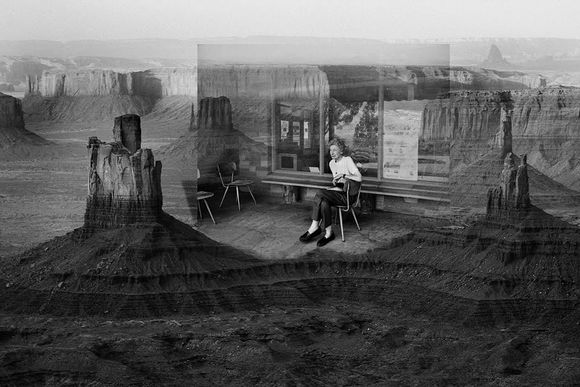
Guernica-oppenheimer2013_photo_by_oliver_clasper

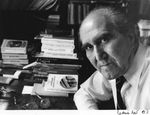
Emma Myers interviews Joshua Oppenheimer in Guernica:

“It is forbidden to kill; therefore all murderers are punished unless they kill in large numbers to the sound of trumpets.” No one captures the problematic pretense of impunity better than Voltaire—except perhaps documentarian Joshua Oppenheimer. The director’s new and profoundly disturbing film, The Act of Killing, opens with a direct nod to the philosopher, if only to one-up him. In an effort to expose the moral murkiness behind Indonesia’s 1965 and 1966 government sponsored purges, Oppenheimer gets up close and personal with a group of perpetrators whose attempts at self-glorification are enough to make a full brass band seem understated.

Documenting a fictive take on reality rather than reality per se, The Act of Killing unfolds in an unnerving aesthetic overlap between the surreal and the hyperreal. The subjects of the film, former members of the country’s vigilante military Pancasila Youth Party, go to theatrical extremes to reenact the atrocities they committed. In addition to recruiting women and children to act out large-scale massacres, the men stage interrogations, beatings, and executions, as well as costumed and almost hallucinogenic musical numbers in which dancers emerge from the mouth of a gargantuan metal fish.

Despite the overall effect of visceral and ethical nausea, moments of uncomfortable humor arise out of the disjunction between what we know about the subjects’ past and the way we see them behave in the present. When they drunkenly belt out Bob Dylan lyrics or stop filming because the call to prayer demands a moment of spiritual reverence, the viewer is forced into a state of cognitive dissonance. But as the Oppenheimer observes, the Manichean divide of good guys and bad guys can “only exist in movies.”

Reading Hegel in a Tehran Prison

1374020079

Ramin Jahanbegloo in the LA Review of Books:

[I]n a solitary jail cell, books simply help one to survive; one can never underestimate their power and importance in such a place. For prisoners in solitary confinement, reading books can guarantee their mental sanity. Strangely enough, the abstract philosophy of Hegel proved beneficial in pulling my mind out of the horrible dungeon in which I was living. Throughout the many years that I had read and taught Hegel’s Phenomenology, I had never had such an intimate relation with a philosophy in the making. In my cell I would read out loud each paragraph of the book in order to fully hear the sound of the abstract Hegelian concepts. I felt as if I was part of Hegel’s epic voyage of philosophical discovery; I was myself a stage of the process of spiritual history which the philosopher reproduces in his book.

The Phenomenology became an inseparable companion of the long hours of solitude that I spent in my cell, especially during the nights when my inquisitors did not poison my fragile existence, and the prison was haunted by a terrifying silence. While sitting on my blanket on the cold cement and leaning against the wall of my cell, I would take this huge book in my hands and start reading it slowly, in such a manner that only I could hear it. Phrases such as: “Universal freedom can […] produce neither a positive achievement nor a deed; there is left for it only negative action; it is merely the rage and fury of destruction” made my suffering soul tremble with excitement. Wasn’t I myself a victim of this tendency towards destruction, combined with an unyielding and constant suspicion, which leads inevitably, after each revolution in history, to the killing of innocent individuals? I was sharing the same space of death where many had agonized until the last moment before their execution.

This prison has the task not only of extinguishing life, but also of wiping out the individuality that threatens the whole that the revolution espouses. Thus every act, necessarily enacted from the standpoint of individuality, is treated as guilty — a guilt that only confession followed by death can absolve. And the lesson that I could see in all this was simple: a revolution is capable only of condemnation, and the guilty party, like me, must either negate the revolution or be negated by it.

From my house to U2 with some of Beethoven’s Pathetique

I made a video of a bike ride from my house to a bar called U2 in the parking lot of the Aquarena. I like this place because while every other place around here has some oppressively beautiful view from its outdoor seating area, U2 opens out onto the expansive asphalt of the Aquarena Parkplatz. Makes me feel like I am still a part of civilization, not some mountain man like Ötzi. The whole ride is only about a kilometer. Happy Friday night!

Rape Joke: A Poem By Patricia Lockwood

In The Awl [h/t: Susan Svatek]:

The rape joke is that you were 19 years old.

The rape joke is that he was your boyfriend.

The rape joke it wore a goatee. A goatee.

Imagine the rape joke looking in the mirror, perfectly reflecting back itself, and grooming itself to look more like a rape joke. “Ahhhh,” it thinks. “Yes. A goatee.”

No offense.

The rape joke is that he was seven years older. The rape joke is that you had known him for years, since you were too young to be interesting to him. You liked that use of the word interesting, as if you were a piece of knowledge that someone could be desperate to acquire, to assimilate, and to spit back out in different form through his goateed mouth.

Then suddenly you were older, but not very old at all.

The whole poem can be found here.

It’s Easier for Aliens to Visit Us Than Previously Thought

K-bigpic (2)

George Dvorsky in io9:

A new study suggests that by using the slingshot effect to propel self-replicating probes through interstellar space, an advanced extraterrestrial civilization should be able to visit every corner of the galaxy in a startlingly short amount of time. The Fermi Paradox, it would seem, is alive and well.

Before we get to the new study, let’s quickly review what we mean by self-replicating probes and their relation to the Fermi Paradox.

The hypothetical self-replicating probe (SRP) is an idea that’s been around since the 1940s. Devised by the brilliant mathematician John von Neumann (which is why they’re also called Von Neumann probes), it’s a non-biological system that can replicate itself. Von Neumann wasn’t thinking of space exploration and colonization at the time, but other thinkers, like Freeman Dyson, Eric Drexler, and Robert Freitas, have since extended his idea to exactly that.

Once launched into space, an SRP could travel to a neighboring star system, and through the application of robotics, molecular assembly, and AI, seek out resources to build an exact replica of itself. Really, all it would need to do is find an asteroid with the right material components.

clive’s dante

768564-130302-rev-clive2

There are at least two dozen English translations of parts or the whole of The Divine Comedy in print today, their number suggesting there is something symbolic about the enterprise itself. James’s introduction tells us that, for him, an important part of this symbolic value is in paying tribute to his wife, the Dante scholar Prue Shaw, from whom he has been publicly estranged. Yet he also advances another reason for publishing this version. According to James, most English translations fail to bring across the assonant and alliterative interplay of Dante’s original, because they are busy with the almost impossible task of reproducing its terza rima, the chain-link rhyme scheme. He is right: the strengths of polyglot English are also its weakness when it comes to rhyme. The kind of music that is almost automatic in Italian is achieved only with invention – and sometimes evident strain – in English.

more from Fiona Sampson at the New Statesman here.

The sea defines us, connects us, separates us

10989_the_sea_inside_philip_hoare

The world is full of wonders and mysteries, cruelties and colourful characters, and occasional flashes of enlightenment, as Philip Hoare’s book reminds us. Chief among the enigmas are other people. Until that moment, I’d thought the whale unfathomable. A half-fabled creature, emerging from the deep in a holiday resort. But that woman was now the greater puzzle. What was going on in her head? Hoare’s previous book, Leviathan, was a lengthy and engrossing disquisition on whales, whale lore, whale hunting and humanity’s abrupt volte-face about these creatures. He was also co-curator of the Moby Dick Big Read, an online extravaganza which involved all 135 chapters of Melville’s book being read, a chapter a day, by people as different as Stephen Fry, Tilda Swinton, even David Cameron, as well as ordinary folk. The Sea Inside is most at ease when, again, he is in the company of whales. Companionable and entertaining, the book follows the recent fashion for combining memoir, travelogue, historical byways, natural history and lore. This can suggest a hoarder’s fear that something might be left out. Or perhaps it’s a bid to escape categories in favour of an appropriate fluidity.

more from Kathleen Jamie at the LRB here.

photos from the Faroes

Ras-1

The Faroese are a storytelling people, with ancestries tracing back to Nordic and Irish lines and a history etched in bloody Icelandic sagas. For centuries, fishing has been a pillar of the Faroese livelihood and economy, a profession that keeps fathers, sons, and brothers at sea for nearly a lifetime. “My uncle used to quip that anyone who fished less than three hundred days a year was considered a hobbyist,” Rasmussen says. The Faroes became a protectorate of Denmark in the sixteenth century. Just shy of 50,000 people, it enjoys one of the highest minimum wages in the world ($20 USD) and a strong social-​welfare system that supports a healthy middle class. This sense of support permeates the culture. “Even if you’re the town drunk,” Rasmussen says, “even if you’re someone who’s slipping through the cracks, it’s such a tight-​knit community and network of families that you’re never going to slip through those cracks.”

more from Benjamin Rasmussen at VQR here.

How to Read Literature

From The Guardian:

No-one-cares-whether-you--010Terry Eagleton was once the bad boy of English studies. His seminal textbook Literary Theory introduced generations of students to what their tutors feared was the mind-rotting influence of the continent. But his new book is a more traditional affair. Aimed at “readers and students”, it is a personable stroll through a predictable canon: Charlotte Brontë, Forster, Keats, Milton, Hardy et al – plus JK Rowling, perhaps thrown in so as not to appear snobbish. The avuncular prof cautions his audience not to read in certain ways (no one cares whether you like the characters or not), and aims to show, through close reading of selected passages of poetry and prose, how to appreciate the best of what's been thought and said. Eagleton has many interesting things to say – as it were, in passing – about Conrad, Milton and so on, in a series of thematic chapters that focus in turn on “Openings”, “Character”, “Narrative”, “Interpretation” and “Value”. There are some longueurs, as when he devotes four pages to an elaborate reading of the nursery rhyme “Baa Baa Black Sheep” in order to show why such an interpretation is under-justified by the text, but overall it's an amiable affair. Charming, too, to find that Eagleton is a kind of happy existentialist who finds support for such an attitude in modernist (and proto-postmodernist) literature. “Works of fiction like Tristram Shandy, Heart of Darkness, Ulysses and Mrs Dalloway,” he remarks with cheering optimism, “can serve to free us from seeing human life as goal-driven, logically unfolding and rigorously coherent. As such, they can help us to enjoy it more.”

The book's knottiest chapter is the last, on “Value”, in which Eagleton considers various criteria for what literary value might be and gleefully demolishes them all. Must good literature be groundbreakingly original? In that case, Eagleton points out, “we would be forced to deny the value of a great many literary works, from ancient pastoral and medieval mystery plays to sonnets and folk ballads”. Should literature speak to our everyday concerns? Balls to that: “If we are inspired only by literature that reflects our own interests, all reading becomes a form of narcissism. The point of turning to Rabelais or Aristophanes is as much to get outside our own heads as to delve more deeply into them.”

Picture: 'Dostoevsky is better than Grisham in the sense that Tiger Woods is a better golfer than Lady Gaga' … Terry Eagleton.

More here.

What The Physics Of Love Looks Like

From PopSci:

Physicsoflove1Louise Ma, a Brooklyn-based designer, has been exploring the visualization of one of our most pressing emotions in an ongoing project called What Love Looks Like. This video, the first in a six-part series, shows different kinds of relationships as different solubility of a liquid in water–the people that become a part of you, the people you'll always remember and those who don't matter at all.

Ma and her collaborators, Chris Parker and Lola Kalman, have posted two more videos you can check out here. One involves fire! What Love Looks Like, video one of six from Tangible Graphics on Vimeo.

More here.

Thursday, July 25, 2013

The Zombie Argument that Refuses to Die

David Womersley in Standpoint:

Books-womersley_1We live, it seems, in a world of zombies. The economic crisis has created a host of metaphorical zombies-zombie banks, zombie companies, zombie households, all kept moving, if not exactly alive, by artificially low interest rates. The life of the mind also has its metaphorical zombies. In particular, there are zombie arguments, which can never be finally killed. No matter how often they are — you might think — overwhelmed by evidence to the contrary, these arguments find new advocates, are reanimated, get unsteadily to their feet, and stumble groggily onwards.

A prime example of such a zombie is the denial that the plays of Shakespeare were written by William Shakespeare, and the accompanying claim that in fact they were written by Francis Bacon, or the Earl of Oxford, or Christopher Marlowe, or even Queen Elizabeth I. It's worth just pausing for a moment, as we stand on the brink of an engagement with these assertions and before we have begun to consider their glaring weaknesses, to summarise the evidence for the straightforward view that William Shakespeare of Stratford wrote the plays attributed to him.

In the first place, in Shakespeare's lifetime plays were often written in a collaborative manner involving other playwrights, and also at moments drawing on contributions from the actors in the company which would perform the play (and which would also then own the playbook). This open and collaborative mode of composition would have made it virtually impossible for someone to pass off their work as that of someone else. The process of creating a play in Shakespeare's age was too public and involved too many people for a conspiracy over authorship to be sustained.

More here.

Mouseunculus: How The Brain Draws A Little You

Carl Zimmer in his excellent blog, The Loom:

Inside each of us is a miniature version of ourselves. The Canadian neurologist Wilder Penfield discovered this little person in the 1930s, when he opened up the skulls of his patients to perform brain surgery. He would sometimes apply a little electric jolt to different spots on the surface of the brain and ask his patients–still conscious–to tell him if they felt anything. Sometimes their tongues tingled. Other times their hand twitched. Penfield drew a map of these responses. He ended up with a surreal portrait of the human body stretched out across the surface of the brain. In a 1950 book, he offered a map of this so-called homunculus.

Homunculus-600

For brain surgeons, Penfield’s map was a practical boon, helping them plan out their surgeries. But for scientists interested in more basic questions about the brain, it was downright fascinating. It revealed that the brain organized the sensory information coming from the skin into a body-like form.

There were differences between the homunculus and the human body, of course. It was as if the face had been removed from the head and moved just out of reach. The area that each body part took up in the brain wasn’t proportional to its actual size. The lips and index finger were gigantic, for instance, while the forearm barely took up less space than the tongue.

That difference in our brains is reflected in our nerve endings. Our fingertips are far more sensitive than our backs. We simply don’t need to make fine discriminations with our backs. But we use our hands for all sorts of things–like picking up objects or using tools–that demand that sort of sensory power.

The shape of our sensory map reflects our evolution, as bipedal tool-users. When scientists have turned to other species, they’ve found homunculi of different shapes, the results of their different evolutionary paths.

More here.

In Defense of Carlos Danger

Richard Kim in The Nation:

Weiner_carlos_danger_rtr_imgThis is the true story of two men who, unfortunately for both of them, share the same body. Exhibit 1: Anthony Weiner—married politician, disgraced former congressman, mayoral candidate, public asshole. Exhibit 2: Carlos Danger—married man, habitual sexter, private dick. Let us now consider their respective “sins.”

As a congressman, Anthony Weiner was a spectacularly ineffective buffoon. A recent New York Times review of his tenure in the House paints a devastating portrait: Weiner was megalomaniacal, narcissistic, bad at navigating the political ropes, alienating to potential allies, alarmingly disinterested in making actual change and really, really mean to his staff (one former aide likened him to Miranda Priestly in The Devil Wears Prada). In his twelve-plus years in Congress, the Times notes, Weiner “sponsored and wrote only one bill that he steered to enactment: a measure pushed by a family friend who gave his campaigns tens of thousands of dollars in donations.” When Democrats controlled Congress in 2007–08, Weiner introduced fifty bills but didn’t get so much as a cosponsor on thirty-nine of them. According to a former staffer quoted by the Times, “He just never tried…. The point was to be able to say he introduced a bill.” Yes, Weiner squawked loudly about single-payer healthcare, but his interest in it always smacked of grandstanding opportunism. When the ACA finally came up for a vote, Weiner threatened to hold it up in committee unless he could introduce a single-payer amendment—a noble cause, which he bartered away not for any policy concessions but for a primetime speaking slot and a letter of recommendation from Nancy Pelosi.

More here.

The Summits

Thorpe---cover_358819k

Modernity was also revealing itself in the respectful partnership between savant and paysan; Hansen draws a parallel with Wordsworth and his eye-opening encounter with a “peasant” on the Simplon Pass. He adds, however, that Kant, in his positing of a transcendental aesthetics in The Critique of Judgement, distinguished Saussure from both the sceptical indigenes and the crampon-sporting hobbyists by his desire to edify, which opened him to elevating sentiments during the ascent and made him, for Kant, “the first mortal to climb to the summit of Mont Blanc”. The unassuming Paccard – who would take to wandering the mountains alone with a dash of opium – began to be left behind in the narrative because, as Hansen puts it, he “did not fit the model”: neither peasant guide nor (being from Chamonix) a travelling adventurer. A statue of him sitting alone was finally unveiled in the now chic town on the ascent’s bicentenary (a full ninety-nine years after the monument to Balmat and Saussure): its trendy materials had serious issues with the first winter, and it was redone in bronze.

more from Adam Thorpe at the TLS here.

the wine dark sea

Winlikesea

The famous likening of the sea to wine has endured through ages, from at least the late eighth century BC, the composition date of The Iliad, and the phrase “wine-dark” is now so securely lodged in our collective consciousness as to be known even by people who have never read Homer. It is not The Odyssey, Homer’s sailor’s saga, but the earlier, land-bound Iliad, set on Trojan soil, that first launched one of the best-known of all Homeric epithets on the world. The phrase occurs here only six times, the same incidence as “tumultuous” or “loudsounding,” while the less vivid “gray-gleaming” is used a dozen times. Yet it is “wine-dark” that has stuck with us, and it is clear why. The phrase is alluring, stirring, and indistinctly evocative. It is also, strictly speaking, incomprehensible, and for all the time the phrase has been relished, readers and scholars have debated what the term actually means. In what way did the sea remind Homer of dark wine? And of the myriad ways to evoke the sea, why compare it to wine at all? A translator’s task is to render into English both the plain meaning and the sensibility—the felt meaning—of a Homeric phrase or word, and so it is a duty, albeit a perilous one, to plunge deeper into this celebrated sea phrase, and grope for clarity. Impertinent questions must be floated: what does it mean—and is there possibly a better rendering?

more from Caroline Alexander at Lapham’s Quarterly here.

Beirut’s Ghosts

20130720-creswell-2_jpg_470x634_q85

Joyce famously boasted that his ambition in Ulysses was to give a picture of Dublin so complete that if the city were one day destroyed it could be reconstructed out of his novel. The same ambition seems to animate Jaber’s mapping of Beirut, where the possibility of destruction is not so remote as it might seem. It happened to the Hellenistic city in 140 BCE, then again in the earthquake of 551, and a third time during Lebanon’s fifteen year civil war (1975–1990). At the end of that conflict, the city’s downtown lay in ruins. Rafiq Hariri, who had earned billions in the Saudi construction business and was newly elected as Lebanon’s prime minister in 1992, set up a real estate company called Solidere to oversee the rebuilding of the city center (later the scene of his own assassination). Solidere began its work by razing most of the district to the ground, uncovering in the process a mille-feuille of archeological strata from Phoenician, Greek, Roman, Arab, and Ottoman Beirut. Ten years later, a glittering new downtown stood in place of the old. So the double-vision that Jaber gives his characters and readers—the ability to see specters of the past behind the solid structures of the present—is a symptom of the vast and sudden transformation Beirut has undergone since the end of the civil war.

more from Robyn Creswell at the NYRB here.

Water Works

From Orion Magazine:

Barnett2Trudge the sidewalks northwest to Seattle’s Belltown neighborhood, hang a left on Vine Street toward the sound, and a ten-foot-tall, bright blue rain tank pops from the dullness, tipped whimsically toward a red brick office building. Atop the tank, green pipes in the shape of fingers and a thumb reach out, the stretched index finger connected to a downspout from the rooftop. Rainwater flows from roof to finger to palm to thumb, from which it pours to a series of descending basins built between the sidewalk and the street. They, in turn, cascade to landscaped wedges growing thick with woodland plants. For two blocks, as Vine slopes toward the sound, water trickles down a runnel and through street-side planters, shining stones, and stepped terraces, enlivening the roadway with greenery, public sculpture, and the sounds of falling water.

The project, called Growing Vine Street, began as a small, grassroots effort among residents and property owners to turn their stretch of a former industrial neighborhood into an urban watershed. Twenty years later, it is a big part of the answer to the largest single source of pollution fouling Puget Sound and most of the major bays and freshwater ecosystems of the United States—stormwater.

More here.

How to regrow your head

From Nature:

WormKnocking out a single gene can switch on a worm's ability to regenerate parts of its body, even enabling it to grow a new head. The fact that such a simple manipulation can restore healing abilities provides new insight into how the stem cells involved in this process are marshalled in animals. Some animals, such as salamanders and newts, can regenerate entire body parts, and mice can regrow toes if left with enough nail (see 'How nails regenerate lost fingertips'). Yet other species, including humans, merely produce scar tissue after an amputation. A trio of studies published on Nature’s website today1–3 offers new clues as to what is behind these differences. All three studies looked at Wnt genes, which code for a series of enzymes that relay information from outside the cell to the nucleus, eventually producing proteins called β-catenins, which regulate gene expression. Wnt genes occur in all animals, but the studies looked at their roles in planarian flatworms. Some planarians can completely regenerate from small body parts such as their tails, whereas other flatworm species have more limited regenerative abilities.

Scientists already knew that the Wnt genes are expressed in a gradient along the worms' bodies — from high at the tail to low at the head — and suspected that the genes were involved in directing stem cells during healing. In the latest studies, researchers wanted to find out if a lack of Wnt gene expression was responsible for the poorer regenerative abilities in particular worm species. When these species are sliced apart at a point more than halfway to their tail ends, they can regenerate a tail from the head piece, but the tail section is unable to form a new head. However, if the wound is closer to the head — not more than about one-third of the way from it — then both parts will fully regenerate. To explain the disparity, Jochen Rink, a molecular biologist at the Max Planck Institute of Molecular Cell Biology and Genetics in Dresden, Germany, sliced a worm called Dendrocoelum lacteum at different positions along its body. He and his team then sequenced RNA from the various wounds1. The researchers found that, in wounds that did regrow heads, genes coding for a series of enzymes involved in the Wnt pathway had their expression turned up. But in the pieces that couldn’t regrow, the Wnt genes “didn’t even twitch”, Rink says.

More here. (Note: For dear friend and fellow scientist Dr. Stavroula Kousteni whose brilliant insights into the b-catenin signaling in cancer cells is helping me develop novel and individualized therapy for my MDS patients)

Thursday Poem

Legacy

The spear thrust in front of the pavilion
announced that the Khan was seriously ill.
First, and most importantly, among his four sons
he divided his far-flung territories,
the continent he had conquered in twenty years.

Then he called his sons to his bedside.
He gave them a single arrow. Break it, he said.
It was easily broken. Next, he gave them five arrows each.
Break them, he said. They couldn’t be broken. So you’ll
stick together
, he said. He who’s on his own will be broken.

He dismissed his sons; his last task too was finished.
The great Khan turned over slowly in his bed,
brought before his eyes the world he had built,
the Caspian at one end, the Great Wall of China at the other.
I can die at last, he said. My forefathers await me

my grandsons will dress up in golden robes,
ride horses swifter than the wind
embrace the prettiest of women.

And, alas, they will forget
in whose debt they are for all that,
I haven’t the slightest doubt.
.

by Roni Margulies
publisher: PIW, 2008
translation: 2008, Saliha Paker and Mel Kenne

Read more »