Jonathan Franzen’s ‘Kraus Project’

13SUBFAWCETT-articleInlineEdmund Fawcett at the NY Times:

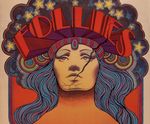
Placing Kraus was never easy, least of all for Kraus. Like many educated West European Jews, he favored assimilation, not Zionism. In 1899 he abandoned Judaism and in 1911 joined the Catholic Church, only to abandon that in 1923. His great love was the aristocrat Sidonie Nadherny; when she ended their long liaison, some guessed it was because he was “still a Jew” — a phrase Kraus himself had used satirically to mock veiled hostility to assimilated Jews. More probably she saw too little room for a second person in Kraus’s one-man show.

In making a present-day case for Kraus, Franzen has avoided the easy choice. Rather than a tasty serving of epigrams, he and two scholarly Germanists have chosen a pair of essays from the early 1900s that, Franzen believes, speak powerfully to us now. The first is on Heinrich Heine (1797-1856), who along with Goethe was one of Germany’s most famous 19th-century poets. Kraus aimed to knock Heine off the perch where “progressive” middle-class taste had placed the poet as a domesticated house radical. The second essay championed the sparkling musical farces and unpreachy social comedies of an Austrian actor-playwright, Johann Nestroy (1801-62). In both pieces Kraus attacks cultural pretension, false sentiment, cheap irony and reckless faith in progress, especially the economic and technological kinds.

more here.

Drowning in the Digital Abyss

Gravity-1-1_jpg_600x529_q85

J. Hoberman in the NYRB blog:

That audience numbers and sales of 3-D equipment to theaters have decreased this year suggests that the novelty of stereo movies has worn off. As sometimes happens, the fullest expression of a particular pop culture trend appears with the trend itself in apparent decline. In any case, the possibility of using stereoscopy—the side by side images that are the basis of 3-D—to create the illusion of depth is hardly new: the stereopticon was a popular nineteenth-century parlor toy and Edwin Porter, an assistant to motion-picture pioneer Thomas Alva Edison, developed an early 3-D system based on superimposed green and orange images.

But the current, digitally-based work in stereo filmmaking began in earnest in 2003 with James Cameron’s under-the-sea IMAX documentary Ghosts of the Abyss, and continued with such films as Cameron’s Avatar, which succeeded hisTitanic as the highest-grossing motion picture in history. Avatar was still in release when some sixty new 3-D films were announced, including not a few finished movies crassly “retro-fitted” with 3-D. Most were undistinguished.Gravity is the first 3-D movie since Martin Scorsese’s 2011 Hugo to suggest that the filmmaker has pondered the nature of stereo filmmaking rather than its effects.

A fantasy about Georges Méliès, Hugo was a celebration of so-called movie magic. Gravity is more material in its concerns. No previous 3-D feature has ever given a more physical sense of the void. The characters hover on the edge of eternity. When they fall away from the camera we know that they will be falling, or rather spinning head over heels, into negative space forever.

More here.

The Library: A World History

473ae2c4-321a-11e3-a16d-00144feab7deSarah Bakewell at The Financial Times:

In 1338, the library of the Sorbonne in Paris had 1,728 manuscripts in its register, 300 of them marked lost. In 2013, the British Library has almost 100,000 times as many: around 170m items, with 3m more streaming in every year. The explosion of demands made on libraries is dizzying yet some elements remain constant: acquire good stuff, keep it safe, make it findable, and give readers a pleasant environment in which to consult it. Sounds simple.

James Campbell’s new history of library architecture, with spectacular photographs by Will Pryce, takes us on a global tour of how these requirements have been fulfilled over the years, from the clay tablet storehouses of ancient Mesopotamia and the beautiful repositories of Buddhist sutra blocks and paper prints in Korea and Japan, to the grandiose designs and multimedia extravaganzas of the 21st century. One recent example came too late to make the book: the £189m Library of Birmingham, which opened last month. Designed by the Dutch firm Mecanoo, and featuring an art gallery, cafés, theatre, restaurant, terraces, children’s area, media centre and herb gardens, it stretches the meaning of the word “library” to its limits, although, somewhere inside it, you can find books, too.

more here.

The Miley Cyrus Complex – An Ontology of Slut-Shaming

181621279

Laurie Penny in The New Statesman (via The Brooklyn Institute for Social Research):

What does empowerment look like for young women today? That’s the debate du jour and, as ever, it stars a pretty young pop star in her pants. It all started when Sinead O’Connor wrote an open letter to the perennially halfnaked sexpot of the moment, Miley Cyrus, advising her not to let the male-dominated music industry “make a fool” of her.

Cyrus responded, as she usually does, by sticking out her tongue and taking off her clothes. Other female rock stars weighed in: Amanda Palmer wants O’Connor to respect Cyrus’s integrity as an artist. Annie Lennox is disturbed by porny music videos. Whose camp are you in? And who is being exploited – apart from the millions of readers who have flicked guiltily through endless snaps of Miley Cyrus in her scanties just to check how shocking they really are?

Nobody has covered themselves in glory in this insalubrious episode. Not O’Connor, whose “motherly” advice strayed into slutshaming, as she warned the younger singer about the dangers of being a “prostitute” and advised her that “your body is for you and your boyfriend”; not Cyrus, whose response was a cruel jab at the older woman’s mental health history. Nor the rest of us, the clickbait hunters and tabloid outrage merchants rubbing our hands with glee.

This is a familiar discussion. On the one hand, the worried middle-aged woman lecturing the ingénue on the importance of wearing clothes in public; on the other, the girl who is sick of being cast as a pure and perfect princess, who wants to have fun and feel powerful and has limited options for doing so in a society that remains intolerant of women trying to claim space as anything at all except hot and half-dressed.

More here.

alice munro

La-afp-getty-sweden-nobel-literature-prize-files-j-20131010David L. Ulin at the LA Times:

Alice Munro was nowhere to be found on Thursday morning when the Swedish Academy awarded her the Nobel Prize in literature. The permanent secretary of the Swedish Academy, Peter Englund, had to leave her a voice mail. The short story writer surfaced briefly for a quick interview with the Canadian Broadcasting Corp., and then dropped out of sight.

This is utterly in character, for Munro has never sought the spotlight during her remarkable career. The author of 14 books of fiction, she's well-known to readers around the globe and a perennial Nobel contender for the acuity of her vision, the precision of her voice. Now 82, Munro publishes regularly in the New Yorker, and several of her stories have been translated into film, including “The Bear Came Over the Mountain,” which was adapted by Sarah Polley into the 2006 film “Away From Her.”

In 2009, Munro won the Man Booker International Prize for her body of work, and this year, shortly after the publication of her most recent story collection “Dear Life,” she announced she would not be writing anymore.

more here.

The search for other Earths

Alvin Powell in the Harvard Gazette:

ScreenHunter_355 Oct. 12 09.05Scientists at the Harvard-Smithsonian Center for Astrophysics (CfA) are among those drafting the target list for NASA’s next planet-finding telescope, the orbiting Transiting Exoplanet Survey Satellite, or TESS, which will search the Earth’s galactic neighborhood for planets that might support life.

TESS cleared a major hurdle in April, gaining NASA approval for final design and implementation. Pending a series of reviews, TESS is expected to launch sometime in early 2018 and focus on Earth’s stellar neighbors, 500,000 of the nearest and brightest stars. Their proximity will raise the chances for follow-up observations of systems that show the telltale dimming in starlight that indicates a planet is crossing the star’s face.

Harvard-Smithsonian astronomer David Latham, the project’s science director, said the CfA’s work eventually will involve as many as 36 scientists, fellows, and students, as well as possibly hundreds more from around the world who will pore over data, which will be released publicly within months of being collected.

“These are the nearest and best and brightest examples of transiting planets we’ll ever have, at least from the Earth,” Latham said.

More here.

Rise and shine: the daily routines of history’s most creative minds

Benjamin Franklin spent his mornings naked. Patricia Highsmith ate only bacon and eggs. Marcel Proust breakfasted on opium and croissants. The path to greatness is paved with a thousand tiny rituals (and a fair bit of substance abuse) – but six key rules emerge.

Oliver Burkeman in The Guardian:

Daily-rituals-010One morning this summer, I got up at first light – I'd left the blinds open the night before – then drank a strong cup of coffee, sat near-naked by an open window for an hour, worked all morning, then had a martini with lunch. I took a long afternoon walk, and for the rest of the week experimented with never working for more than three hours at a stretch.

This was all in an effort to adopt the rituals of some great artists and thinkers: the rising-at-dawn bit came from Ernest Hemingway, who was up at around 5.30am, even if he'd been drinking the night before; the strong coffee was borrowed from Beethoven, who personally counted out the 60 beans his morning cup required. Benjamin Franklin swore by “air baths”, which was his term for sitting around naked in the morning, whatever the weather. And the midday cocktail was a favourite of VS Pritchett (among many others). I couldn't try every trick I discovered in a new book, Daily Rituals: How Great Minds Make Time, Find Inspiration And Get To Work; oddly, my girlfriend was unwilling to play the role ofFreud's wife, who put toothpaste on his toothbrush each day to save him time. Still, I learned a lot. For example: did you know that lunchtime martinis aren't conducive to productivity?

More here.

Friday, October 11, 2013

We Know Your Genes Can Influence Your Health, But Can They Also Influence Who You Love?

Megan Gambino in Smithsonian:

GeneImagine a dating site where, in addition to a completed survey, you have to submit a genetic profile. This could be the future of matchmaking, especially now that some scientists think that our compatibility genes—the same genes that determine whether an organ transplant will take—play a role in sexual attraction. Daniel Davis, an immunologist at the University of Manchester in England, tells the story of these distinct genes and their impact on our relationships in his new book, The Compatibility Gene: How Our Bodies Fight Disease, Attract Others, and Define Ourselves .

In a nutshell, can you explain the big idea—the thesis—of your new book, The Compatibility Gene?

The big idea is that a surprising amount of who and what we are comes from the way our species has evolved to survive disease. Put another way, this is about the idea that our immune system influences many aspects of human biology. We each have a very similar set of genes—the 25,000 or so genes that make up the human genome—but there are variations that give us individual characteristics such as our hair or eye color. Crucially, the few human genes in this story—our compatibility genes—are those that vary the most from person to person. These genes are, in effect, a molecular mark that distinguishes each of us as individuals.

What role do compatibility genes play?

These genes are medically important because they influence the success of many types of medical transplants. These are the genes that doctors try to match in bone marrow transplantation, for example. And importantly, the versions of these genes that you have inherited influence which diseases you are susceptible or resistant to.

More here.

Flights of Fancy

Stephen King in The New York Times:

DonnaProspective buyers have every right to ask: “Do I really want to give two weeks of my reading life to this novel? Can it possibly be worth it when there are so many others — most a good deal shorter — clamoring for my attention?” Last, consider the novelist — in this case Donna Tartt, whose first novel, “The Secret History,” published in 1992, was greeted with critical hosannas and excellent sales. Her follow-up, “The Little Friend,” was published 10 years later. This means she labored over “The Goldfinch,” her latest novel, for at least as long. Such a prodigious investment of time and talent indicates an equally prodigious amount of ambition, but surely there must be periods of self-doubt. To write a novel this large and dense is equivalent to sailing from America to Ireland in a rowboat, a job both lonely and exhausting. Especially when there are storms. Suppose, the writer thinks (must think), this is all for nothing? What if I’m failing and don’t know it? What if I make the crossing and am greeted not with cheers but with indifference or even contempt?

It’s my happy duty to tell you that in this case, all doubts and suspicions can be laid aside. “The Goldfinch” is a rarity that comes along perhaps half a dozen times per decade, a smartly written literary novel that connects with the heart as well as the mind. I read it with that mixture of terror and excitement I feel watching a pitcher carry a no-hitter into the late innings. You keep waiting for the wheels to fall off, but in the case of “The Goldfinch,” they never do. Like the best of Dickens (I will not be the last to make this comparison), the novel turns on mere happenstance — in this case, a heavy rainstorm in New York City. Theo Decker, our adolescent narrator, has been suspended from his school. He and his well-loved mother (“Everything came alive in her company; she cast a charmed theatrical light”) set off for a “conference” with school officials but duck into the Metropolitan Museum of Art to get out of the weather. There is a terrorist bombing, and many people are killed. One is a woman with a spray-on tan and a blouse printed with Fabergé eggs: “Her skin had a healthy apricot glow even though the top of her head was missing.” Audrey Decker, Theo’s mother, is another casualty.

More here.

The Dangers of Pseudoscience

448px-Hua_t08

Massimo Pigliucci and Maarten Boudry respond to Stephen T. Asma's piece on Chinese medicine, in The NYT's The Stone (image from wikimedia commons):

Philosophers of science have been preoccupied for a while with what they call the “demarcation problem,” the issue of what separates good science from bad science and pseudoscience (and everything in between). The problem is relevant for at least three reasons.

The first is philosophical: Demarcation is crucial to our pursuit of knowledge; its issues go to the core of debates on epistemology and of the nature of truth and discovery. The second reason is civic: our society spends billions of tax dollars on scientific research, so it is important that we also have a good grasp of what constitutes money well spent in this regard. Should the National Institutes of Health finance research on “alternative medicine”? Should the Department of Defense fund studies on telepathy? Third, as an ethical matter, pseudoscience is not — contrary to popular belief — merely a harmless pastime of the gullible; it often threatens people’s welfare, sometimes fatally so. For instance, millions of people worldwide have died of AIDS because they (or, in some cases, their governments) refuse to accept basic scientific findings about the disease, entrusting their fates to folk remedies and “snake oil” therapies.

It is precisely in the area of medical treatments that the science-pseudoscience divide is most critical, and where the role of philosophers in clarifying things may be most relevant. Our colleague Stephen T. Asma raised the issue in a recent Stone column (“The Enigma of Chinese Medicine”), pointing out that some traditional Chinese remedies (like drinking fresh turtle blood to alleviate cold symptoms) may in fact work, and therefore should not be dismissed as pseudoscience.

This, however, risks confusing the possible effectiveness of folk remedies with the arbitrary theoretical-metaphysical baggage attached to it.

More here.

Is Prostitution Safer When It’s Legal?

Rachel Lloyd in the New York Times:

Rachel_BookCoverImage-266x400As a teenager, I worked in Germany’s legal sex industry. I was, like many girls in the club, underage; most of us were immigrants, nearly all of us had histories of trauma and abuse prior to our entry into commercial sex. Several of us had pimps despite working in a legal establishment; all of us used copious amounts of drugs and alcohol to get through each night.

Violence is inherent in the sex industry. Numerous studies show that between 70 percent and 90 percent of children and women who end up in commercial sex were sexually abused prior to entry. No other industry is dependent upon a regular supply of victims of trauma and abuse.

The presence of an adult sex industry increases both the rates of child sexual exploitation and trafficking. It may be true that some women in commercial sex exercised some level of informed choice, had other options to entering and have no histories of familial trauma, neglect or sexual abuse. But, these women are the minority and don’t represent the overwhelming majority of women, girls, boys and transgender youth, for whom the sex industry isn’t about choice but lack of choice.

More here, along with various other points of views.

A Wilde Fashion

ID_POPKIN_WILDE_AP_001

Nathaniel Popkin in The Smart Set:

[W]e’ve come to see Wilde’s “true literary life,” when he wrote Dorian Gray, The Importance of Being Earnest, Salomé, and A Woman of No Importance, and made his mark as a piercingly funny avant garde social critic and dramatic visionary, as a kind of spontaneous explosion of genius and self-invention. Failing at brilliance, it’s been long imagined, from a somewhat determinist perspective, Wilde was so unflappably clever and intellectually original he could flip personas, almost as if playing a game. “Wilde’s game centered on masks, a game he relished…both in all seriousness and with delight in its manifest absurdities,” writes Richard Allen Cave, editor of the Penguin Classics edition ofThe Importance of Being Earnest and Other Plays (2000).

Even so, this sort of psychological explanation accounts for Wilde’s personality, but not necessarily the mechanics of a career about to blossom (writers rarely become famous by accident). The hard stop, journalism is over, now I’ll write a shocking novel and scores of beloved plays wasn’t quite adequate for John Cooper, a non-academic Wilde scholar, who runs a project called Oscar Wilde in America. Cooper understood implicitly that one thing draws from the other. “People know about Wilde’s early poetry. People know about the drama,” he says. “But this middle career: people tend to think he had merely settled down. They overlook the period as simply a domestic time.” In desiring to better understand the middle period, Cooper had often thought about something Wilde had said while at Oxford:

I'll be a poet, a writer, a dramatist. Somehow or other I'll be famous, and if not famous, I'll be notorious.

He began to imagine that “to locate Wilde the writer we must use the mantra of his quotation as a roadmap.” Youthful bravado or nonsense, the sequence of poet, writer, dramatist became for Cooper a research framework. He wanted to find new Wilde material that would help tell a richer story of this evolution, both personally and professionally, and that would provide links—seams, we might venture—between poet and writer, writer and dramatist. Then, this spring, he found it: a body of work, including Wilde’s first major piece of published prose writing, “The Philosophy of Dress,” an essay published in 1885 and mentioned again only once more, in 1920, on clothing, dress, and fashion.

More here.

Why we need Danilo Kiš

P16_NowThen_Web_375910mAdam Thirlwell at the Times Literary Supplement:

Such melancholy precision, of course, has its literary provenance. That voice is partly Kiš’s, but also partly belongs to Bruno Schulz – who made this manner of sentence inlaid with metaphor, brimming with retrospective sadness, his own. It was with Kiš’s next book, Hourglass – which completed the trilogy that would eventually be republished under the general title Family Circus – that Kiš invented his own form. (Even if, as Thompson notes, the presence of Schulz is still there in the title – a small echo of Schulz’s own title: Sanatorium Under the Sign of the Hourglass.) “I tried to replace the monotony of a given style with polyphony, a formal polyphony”, explained Kiš. “Hence the use of the most varied literary devices – lyrical and essayistic, ironic and tragi-serious, philosophical and parodic.” The single lyrical voice of his early books was replaced in Hourglass by a multiplicity of voices: notebook entries, clinically objective descriptions, police procedurals and, finally, a letter from Eduard Sam to his relatives in Kerkabarabás which describes in arcane detail all his complaints at how they had treated him. The letter, touched up by Kiš, was real – he had discovered it in a box of his father’s papers. It appears at the novel’s end, with the ironic title, “Table of Contents”. The collaged elements that have preceded it, the reader discovers, are attempts at elucidation, forms of commentary: they are approaches to the total terror of the Holocaust.

more here.

Japan’s tormented relationship with its modernity

Tokyo-street-fPankaj Mishra at Caravan:

VISITING JAPAN THIS YEAR, however, I felt pulled back in time. I had over-prepared, in a way, for this trip, reading widely, and seeking out authorities on the country, for several years. Still, I was surprised and often baffled by its isolationism, over-regulated economic regime, monopolies and inefficiencies—visitors will find it easier, for instance, to procure a data connection on their smartphone in Laos than in Japan, and a SIM card for voice calls is simply unobtainable. The Japanese were still rich. But why did their houses look so flimsy, their supermarkets so poorly stocked, and their public architecture so unprepossessing? As early as the 1920s, Japan was introduced to the material culture of capitalism, and its attendant phenomena: the consumption of cars, radio, films, magazines, the rise of the nuclear family, and the commercially motivated exaltation of youth and romantic love, and Western mores; it was also then that a popular culture grew around the new urban middle class, featuring the ubiquitous so-called salaryman (sarariman) and the hard-working white-collar women—moga, or modern girls, who were, in the overheated Japanese male imagination, as prone to retail kisses as Western clothes.

more here.

beauty will save the world?

Watering-can-984999-m-150x150Jeffrey Bilbro at Front Porch Republic:

I want to reflect today on the title chosen for this gathering, “Beauty will Save the World.” That’s quite the assertion, and I don’t know if I can convincingly support it, but I’ll give it a shot. My tentative thesis today is that the best way to cultivate healthy local cultures is to celebrate their beauty. It’s not to pass laws, it’s not to develop rational or economic arguments for their benefits, it’s not to start some new program. All these might be needed subsequently, but if we don’t first bear witness to the beauty of a healthy culture, then other approaches are doomed. It’s in this way, by enabling us to see the truth and goodness of healthy way of life, that beauty will save the world. So I want to think with you about the beauty of local culture, why that beauty is important, and how to cultivate it. I’ll begin by describing a beautiful, and I think saving, activity that I’ve had the privilege of participating in this past year.

A group of us at Spring Arbor University got together last winter and started discussing how we might start a small community garden. By springtime, we had secured the requisite institutional backing and organized several workdays where faculty, students, staff, and even one local high school student (he needed community service credit) came to help build the garden. We constructed ten raised beds near one of the student dorms, filled them with topsoil and manure, planted them, and set up a watering rotation. Later this summer, a local non-profit donated a greenhouse to us that they couldn’t use, and we’re looking forward to filling that with vegetables this fall and spring.

more here.

Friday Poem

Clegs at Totleigh Barton

Plenty of gates to lean on around here,
and plenty of time to watch the horse-flies
on the dung, to see if they are really
generated from it. There is more chill
than blessing in this gentle breeze off Dartmoor,
more edge than you’d expect in late September.
So: winter soon, after no summer.

Yes, this is the place: ‘Road liable to flooding’.
This is where Grace Ingoldby did handstands
on the frosty tarmac. Where Mick Imlah stayed,
when we nearly ran over the cliff
at Morwenstow, looking for Hawker’s hut
in which the old man composed, or didn’t.

Before Grace’s son died in the fire, and Grace died too.
Before Mick got ill. Today I am back on my own
to stare at these insects at their dreadful trade.

‘Now try your brakes’, it still says on the sign.
.

by Bernard O'Donoghue
publisher: PIW, 2011

Thursday, October 10, 2013

Re-imagining the City Critically

Marcuse_468w

Peter Marcuse in Eurozine:

Re-imagining the city can be a provocation to reconsider and expand the range of possibilities for a city in the future. It can simply be an opportunity for an unfettered imagination physically to design something completely new and different, not tethered to the existing city. Or it can open the door to a fundamentally critical view of the existing city, questioning the social and economic and organizational principles that underlie its present constitution and are normally taken for granted. The best of classic utopias do both. What follows focuses only on the latter, on the imagining not of the physical but of the human principles and practices on which an imagined city could be based. It raises some critical questions about some of the principles and practices as they implicitly exist today and imagines some alternatives.

If we were not concerned with the existing built environment of cities, but could mold a city from scratch, after our heart's desire, Robert Park's formulation that David Harvey is fond of quoting, how would such a city look? Or rather: according to what principles would it be organized? For its detailed look, its physical design, should only evolve after the principles it is to serve have been agreed upon. So what, in our heart of hearts, should determine what a city is and does?

Why not start, first, by taking the question literally. Suppose we had neither physical nor economic constraints, what would we want, in our hearts? Never mind that the supposition posits a utopia; it is a thought experiment that may awaken some questions whose answers might in fact influence what we do today, in the real world, on the way to an imagined other world that we might want to strive to make possible.

More here.

Epistemic Forces and Perception

DSC01955

Richard Marshall interviews Susanna Schellenberg in 3:AM Magazine:

3:AM: One of the questions about perception is whether we can only be conscious of conceptually structured content. Perhaps before going into your response to the issue you might lay out the issue for newcomers and say why non-conceptually structured perception is thought to be such a difficulty?

SS: This debate is in part terminological. Depending on how concepts are understood it is more or less plausible to think of experience as conceptually structured. Concepts have been understood in terms of mental representations, stereotypes, functional roles, and in terms, and inferential roles to name just a few standard candidates. Nonconceptual structures have been understood in terms of image-like or map-like representations, or simply in terms of the idea that we represent naked properties and objects without representing them in terms of employing concepts.

Reasons to think that perceptual content is nonconceptually structured are to account for the fineness of grain of perceptual experience and the richness of perceptual experience. The idea is that perceptual experience is much richer and finely grained than our concepts. For example, our color concepts are much more course grained than the color shades we are able to discriminate between in perception. If that’s right (and on certain notions of concepts it is), then that’s a reason to think experience is nonconceptually structured. Another reason is that non-rational animals have perceptions, but don’t have concepts, so perceptual content cannot be conceptually structured. Whether this is a good reason depends again on what notion of concept one is operating with. After all, on certain notions of concepts it’s unproblematic to attribute concepts to non-rational animals.

One standard reasons for thinking that perceptual content is conceptually structured is that on a Fregean understanding of content it’s not clear that content could not be conceptually structured. I don’t think this is a good reason for accepting the thesis that perceptual content is conceptually structured. In a number of papers, I’ve developed a Fregean notion of perceptual content in terms of employing perceptual capacities that are not conceptual capacities.

More here.