Too Much of a Bad Thing

One of the more depressing and alarming charts ever, in the Economist:

LAST year a brutal gang-rape on a bus in Delhi caused outrage in India. On September 10th the woman’s attackers were convicted of rape and murder. The case has brought new attention to violence against women in India. Unfortunately, the situation in neighbouring countries is none too bright, according to new research in the Lancet Global Health, a medical journal. More than one in ten men surveyed in six Asian countries said they had raped a woman who was not their partner—and that figure rose to nearly one in four when wives and girlfriends were included among victims…

20130914_gdc367_1190

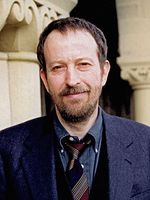
Marshall Berman, 1940-2013

Corey Robin in Jacobin:

Political theorist Marshall Berman, who was my colleague at the CUNY Graduate Center, died yesterday morning.

When I heard the news last night, my first thought was the date: 9/11. There’s no good day to die, but to die on a day so associated with death—whether the murder of nearly 3000 people on 9/11/2001, most of them in his beloved New York, or the 9/11/1973 coup in Chile that brought down Allende and installed Pinochet—seems, in Marshall’s case, like an especially cruel offense against the universe.

For as anyone who knew or read him knows, Marshall was a man of irrepressible and teeming life. The life of the street, which he immortalized in his classic All That’s Solid Melts Into Air; the life of sex and liberation, which he talked about in The Politics of Authenticity (read the section on Montesquieu’s Persian Letters; you’ll never read that book the same way again); the life of high art and popular culture, whether it was the Sex Pistols or hip-hop.

Marshall took in everything; his portion was the world. The only thing he couldn’t abide, couldn’t take in, was ugliness and cruelty.

10 Secret Trig Functions Your Math Teachers Never Taught You

Evelyn Lamb in the Scientific American's mathematics blog Roots of Unity:

On Monday, the Onion reported that the “Nation’s math teachers introduce 27 new trig functions.” It’s a funny read. The gamsin, negtan, and cosvnx from the Onion article are fictional, but the piece has a kernel of truth: there are 10 secret trig functions you’ve never heard of, and they have delightful names like “haversine” and “exsecant.”

A diagram with a unit circle and more trig functions than you can shake a stick at. (It's well known that you can shake a stick at a maximum of 8 trig functions.) The familiar sine, cosine, and tangent are in blue, red, and, well, tan, respectively. The versine is in green next to the cosine, and the exsecant is in pink to the right of the versine. Excosecant and coversine are also in the image. Not pictured: vercosine, covercosine, and haver-anything. Image: Tttrung and Steven G. Johnson, via Wikimedia Commons.

Whether you want to torture students with them or drop them into conversation to make yourself sound erudite and/or insufferable, here are the definitions of all the “lost trig functions” I found in my exhaustive research of original historical textsWikipedia told me about.

Versine: versin(θ)=1-cos(θ)
Vercosine: vercosin(θ)=1+cos(θ)
Coversine: coversin(θ)=1-sin(θ)
Covercosine: covercosine(θ)=1+sin(θ)
Haversine: haversin(θ)=versin(θ)/2
Havercosine: havercosin(θ)=vercosin(θ)/2
Hacoversine: hacoversin(θ)=coversin(θ)/2
Hacovercosine: hacovercosin(θ)=covercosin(θ)/2
Exsecant: exsec(θ)=sec(θ)-1
Excosecant: excsc(θ)=csc(θ)-1

I must admit I was a bit disappointed when I looked these up.

on the pacific

ID_PI_GOLBE_PACIF_AP_002

Here are a few facts about the Pacific Ocean. It is the biggest ocean by far. Four of our seven continents border the Pacific, and Antarctica would too if not for the Southern Ocean. The Pacific comprises 46% of the world’s water surface and one-third of its overall surface. This makes the Pacific Ocean bigger than all the Earth’s land area combined. The Earth is mostly water as we are mostly water, and if we think of ourselves as citizens of the world then all of us are children of the Pacific. The moles of the new-built California towns, the endless Archipelagos, the skirts of Asiatic lands — all are washed by the same waves of the Pacific. That’s what Herman Melville wrote. “Here, millions of mixed shades and shadows, drowned dreams, somnambulisms, reveries; all that we call lives and souls, lie dreaming, dreaming, still; tossing like slumberers in their beds; the ever-rolling waves but made so by their restlessness.” The Pacific is the great Potter’s Field of four continents, wrote Melville — the Indian and the Atlantic are merely its arms. From the middle of the Pacific we could be floating in space, and human life would be just as significant. Crossing the Atlantic makes us feel important. Crossing the Pacific makes us feel anxious and small. In the peaceful Pacifico is a Ring of Fire. Beneath the Pacific lies the deepest, darkest hole in the Earth.

more from Stefany Anne Golberg at The Smart Set here.

cather in letters

286_cather_about

“I don’t like reading other people’s private correspondence in print, and I do not want other people to read mine.” So T. S. Eliot wrote to his mother in 1927, in one of his letters that all sorts of other people may now read, as volumes of them succeed one another. Willa Cather agreed with Eliot when she made her will, forbidding all publication of her letters in full or in part. Yet here they are, or rather a large selection from the three thousand of them known to exist.[1] The editors justify themselves for defying the will in favor of “the values of making these letters available to readers all over the world.” They state that hitherto the only permissible way a biographer or critic could proceed was through paraphrase, which they rightly point out has its own distortions and limitations. But readers eager for more insight into Cather’s “sexuality” (as academics have learned to call it) will surely be disappointed that the two women with whom she was closest over the years—Isabelle McClung Hambourg and Edith Lewis—are scarcely represented. Since Isabelle McClung’s husband returned about 300 of the letters Cather wrote to her, it’s clear that some effective destruction took place.

more from William H. Pritchard at Hudson Review here.

hitler in hollywood

130916_r23947_p465

“The Americans are so natural. Far superior to us,” Joseph Goebbels, the Nazi propaganda minister, confided to his diary in 1935, after seeing “It Happened One Night.” American films, including musicals, were popular in Germany; they had a relaxed, colloquial way about them that German filmmakers, who tended toward agonized expressionism in the nineteen-twenties and rigid didacticism during the Nazi period, couldn’t match. Goebbels’s wistful appreciation of American ease is one of the bizarre ironies of the story, since he was intent on purging the cinema of anything that didn’t comport with Nazi ideology. Among other things, he removed Jewish artists and workers from the German film industry and pushed out Jews who worked for the distribution arms of American studios. The Nazis saw every movie as a potential threat to their immaculacy. Urwand quotes some solemn colloquies among Nazi officials, including a mental-health expert. Would “King Kong” (giant ape with Nordic-looking blonde) offend the “healthy racial feelings” of the German people? How about “Tarzan” (shirtless jungle man with white woman)? “King Kong” was released, “Tarzan” banned.

more from David Denby at The New Yorker here.

Ig Nobel Prizes put ‘beer goggle’ research in silly scientific spotlight

From NBC:

Beer“Beer goggles” are said to make the potential object of your affection look more and more attractive as more alcohol is imbibed, but do those goggles work on your self-image as well? Researchers have shown that they do, even if you only think you're having a stiff drink — and that discovery earned an Ig Nobel Prize, one of the silliest awards in science. An international team of scientists received the “Psychology Prize” for their beer-goggles study at the annual Ig Nobel ceremony on Thursday. The parody of the real Nobel Prizes has been paying tribute to “science that makes you laugh, then makes you think” since 1991. Past winners have included the inventor of a bra that turns into a pair of gas masks, a researcher who reported on what's thought to be the first documented case of homosexual necrophilia in ducks, and a team of scientists who studied how painful it can get when you have to pee.

Thursday's ceremony took place at Harvard University, amid the traditional flurries of paper airplanes, tributes to past winners, and interruptions from an impatient 8-year-old girl to move the proceedings along. Under the direction of Ig Nobel impresario Marc Abrahams, real Nobel laureates handed out this year's 10 prizes. Abrahams announced that each prize-winning team would receive a cash prize amounting to 10 trillion dollars — Zimbabwean dollars, that is, which equals about four bucks. The festivities also included the premiere of “The Blonsky Device,” a mini-opera celebrating the invention of a bizarre birthing centrifuge. The device's creators won an Ig Nobel in 1999. Although the awards are silly, most of the winners are serious scientists. Physicist Andre Geim won an Ig Nobel in 2000 for his work with magnetically levitating frogs, and then went on to win the 2010 Nobel Prize in physics for his work with graphene. That's one reason why Brad Bushman, an Ohio State University psychologist who worked on the “beer goggles” study, doesn't mind being singled out this year.

More here.

Thursday, September 12, 2013

On Pablo Neruda

Kenan Malik in Padaemonium:

Pablo-neruda-2It was forty ago today that Chile’s General Augusto Pinochet overthrew Salvador Allende, in a CIA-supported coup, replacing his democratically elected government with a bloody dictatorship. Twelve days after the coup, the poet Pablo Neruda died in mysterious circumstances, many believe murdered by the Pinochet regime. (Earlier this year a Chilean court ordered Neruda’s body to be exumed for forensic tests and a warrant was issued for the arrest of the man supposedly involved in poisoning the poet).

Gabriel García Márquez once called Neruda ‘the greatest poet of the 20th century in any language’, though as New York Times Book Review critic Selden Rodman observed after the poet’s death ‘No writer of world renown is perhaps so little known to North Americans’, or indeed to the wider Anglophone world. Born in 1904 as Neftali Ricardo Reyes Basoalto, Neruda chose his pen name after the Czech poet Jan Neruda. He first came to attention with his 1924 collection Veinte poemas de amor y una canción desesperada (‘Twenty Love Poems and a Song of Despair’), a cycle of sensuous and erotically charged love poems, but one also shot through with an almost unbearable sense of alienation, despair and chaos. The Spanish poet Federico García Lorca said of Neruda that he was ‘a poet closer to death than to philosophy, closer to pain than to insight, closer to blood than to ink. A poet filled with mysterious voices that fortunately he himself does not know how to decipher.’

More here.

When Memorization Gets in the Way of Learning

Ben Orlin in The Atlantic:

ScreenHunter_319 Sep. 12 17.11Some things are worth memorizing–addresses, PINs, your parents' birthdays. The sine of π/2 is not among them. It's a fact that matters only insofar as it connects to other ideas. To learn it in isolation is like learning the sentence “Hamlet kills Claudius” without the faintest idea of who either gentleman is–or, for what matter, of what “kill” means. Memorization is a frontage road: It runs parallel to the best parts of learning, never intersecting. It's a detour around all the action, a way of knowing without learning, of answering without understanding.

Memorization has enjoyed a surge of defenders recently. They argue that memorization exercises the brain and even fuels deep insights. They say our haste to purge old-school skills-driven teaching from our schools has stranded a generation of students upriver without a paddle. They recommend new appsaiming to make drills fun instead of tedious. Most of all, they complain that rote learning has become taboo, rather than accepted as a healthy part of a balanced scholastic diet.

Certainly, knowledge matters. A head full of facts–even memorized facts–is better than an empty one. But facts enter our heads through many paths–some well-paved, some treacherous. Which ones count as “memorization”?

More here.

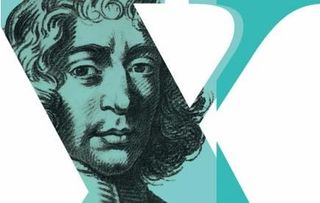
Why Spinoza Was Excommunicated

Steven Nadler in Humanities:

ScreenHunter_317 Sep. 12 17.02Bento de Spinoza was a young merchant in Amsterdam, one of many Sephardic Jews in that city involved in overseas trade in the early 1650s. The specialty of his family’s firm, which he and his brother Gabriel had been running since their father’s death in 1654, was importing dried fruit. Bento (or Baruch, as he would have been called in Hebrew in the Portuguese community’s synagogue—the names both mean “blessed”) was, at this time and to all appearances, an upstanding member of the Talmud Torah congregation. His communal tax payments and contributions to the community’s charitable funds may have been especially low by early 1656, but this could have been a reflection only of the poor condition of his business.

Or it may have been a sign that something else was amiss.

More here.

myths of the west

94b370b0-1ad8-11e3-_369013h

“Cut down one of these giants”, said Roosevelt’s double, “and you cannot take its place. Nature was its architect, and we owe it to ourselves and our children’s children to preserve them . . . . We should see to it that no man for speculative purposes or for mere temporary use destroys the groves of great trees. Where the individual and associations cannot preserve them, then the State, and if necessary the nation, should step in and see to their preservation. We should keep the trees as we should keep great stretches of wilderness, as a heritage for our children’s children to preserve them for use, and for the sake of the nation hereafter.” At the time I thought these sentiments entirely benign, even vote-worthy. But at that time, of course, I had not read Christine Bold’s exposé of the twenty-sixth President and his cronies, whom she dubs the Frontier Club. According to Bold, Roosevelt’s principles were far from altruistic; they were suspect, even sinister, having been inspired by the distasteful science of eugenics. Thus the trees become, in the words of one of their defenders, “a failing and dying race”, but one that must be preserved on account of its nobility.

more from Clive Sinclair at the TLS here.

pinker problems

Png

Consider this first difference, which is well illustrated by the starting point of Pinker’s article: He says that modern philosophers such as Descartes, Hobbes, Spinoza, Kant were in fact cognitive neuroscientists, evolutionary psychologists and social psychologists who just didn’t have the right theories yet: “They were cognitive neuroscientists, who tried to explain thought and emotion in terms of physical mechanisms of the nervous system. They were evolutionary psychologists, who speculated on life in a state of nature and on animal instincts that are “infused into our bosoms. And they were social psychologists, who wrote of the moral sentiments that draw us together”. If this is so, then why is it that most contemporary neuroscientists, cognitive psychologists and evolutionary biologists do not read a single line by these authors (apart from some erudite pop scientists who take the time to Google some quotations from Descartes for their new bestseller), whereas philosophers do? Does Pinker seriously think that philosophers and humanities scholars still read Kant or Hobbes because they have not been informed that new results in science are available? Are they just dumb idiots who read Hobbes instead of von Neumann and Morgenstern because they did not update their reading list on game theory? The mere suggestion is ludicrous.

more from Gloria Origgi at The Berlin Review of Books here.

franco moretti and the devil

87aaas_moretti

A few words further, however, must be said about Moretti’s body of work. First of all, it is important to recognize that he is, in the most literal sense, inimitable. His experiments are, as he often self-effacingly confesses, one-offs, little tinkered-together bits of one and another theory soldered onto the apparatus of one or another non-traditional tool: maps, graphs, trees, network theory. What they are meant to do is fit a particular problem—understanding the plot structure of Hamlet, retracing the development of the market for novels in 18th century England, determining the importance of clues in accounting for Arthur Conan Doyle’s success—and each problem, once identified, requires an original contraption. This bespoke process makes it very difficult merely to paraphrase Moretti’s arguments; the point is as much in observing the gradual concatenation of insights and rejected hypotheses as it is in the finished product, for the ways his experiments take shape are far more illuminating in their singularity than they could be in consistency. What is consistent, though, from experiment to experiment, and book to book, is Moretti’s dedication to breaking a new path, his insistence that current methods are not adequate. Moretti is thus right to connect, in the first passage quoted above, the question of how one reads to the question of how much one reads. Close reading is slow reading, and slow reading can never be very much reading, even if one is very devoted (and very gifted with grants or teaching exemptions).

more from Andrew Seal at The Quarterly Conversation here.

Can Beirut Be Paris Again?

Michael J. Totten in City Journal:

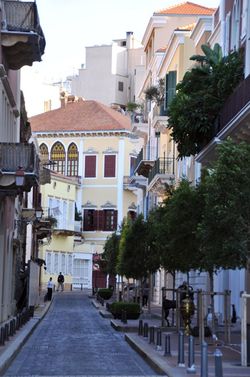
BeirutBefore it became the poster child for urban disaster areas in the mid-1970s, Beirut was called the Paris of the Middle East. With its French Mandate architecture, its world-class cuisine, its fashionable and liberated women, its multitude of churches on the Christian side of town, and its thousand-year-old ties to France, it fit the part. Then civil war broke out in 1975 and tore city and country to pieces. More than 100,000 people were killed during a period when Lebanon’s population was under 4 million. The war sucked in powers from the Middle East and beyond—the Palestine Liberation Organization, Israel, Iran, France, the Soviet Union, the United States—but no country inflicted more damage than Syria, ruled by the Assad family’s Arab Socialist Baath Party. Today, the shoe is on the other foot. Syria, not Lebanon, is suffering the horrors of civil war. With Syria’s Bashar al-Assad possibly on his way out—or at least too busy to export mayhem to his neighbors—will Beirut have the chance to regain its lost glory?

…In fact, much of the city may be doing that. In the name of postwar progress, many of Beirut’s most beautiful buildings and even entire streets are being demolished and replaced with high-rises. Some of the towers, like those along the city’s new waterfront, are outstanding architecturally; others are generic blocks, little more than vertical placeholders, that are replacing some of the most charming urban vistas in the Middle East.

…Beirut sometimes looks like what you’d get if you put Paris, Miami, and Baghdad into a blender and pressed PUREE. Gleaming glass skyscrapers rise above French-style villas adjacent to bullet-pocked walls and mortar-shattered towers. Hip entrepreneurs set up luxury boutiques next to crumbling modern-day ruins. A Ferrari showroom sits across the street from a parking lot that was recently a rubble field. Beirut’s fabulous cuisine never went away; neither did its high-end shopping districts, cafés, nightclubs, and bars. But English has eclipsed French as the second-most-spoken language. None of the new construction looks even the slightest bit French.

More here.

Thursday Poem

Stoning

They say under these womens’ chador walk children and restaurants
They say all the skin and passages are moonlight and marble . . .
They do their mock laughter
if the chador is blown away they would take the ‘disaster’ to be stoned
onto the gravediggers of justice

….. Hey! The cry of the creeking carts . . .

Meaning, if there were no boundaries
no desire should be tempted to advance?
But if someone was left under the stones . . .

….. buried alive . . .
….. a woman . . .
.
.
by Maryam Hooleh
from Cursed Booth
publisher: Baran, Stockholm, 2000

ranslation: Abol Froushan

Engineered bacterium hunts down pathogens

From Nature:

EcoliIn the war against infection, medicine needs a hero. Meet the bioengineered bacterium that can hunt down pathogens and destroy them with a powerful one–two punch. Synthetic biologist Matthew Chang at Nanyang Technological University in Singapore has armed Escherichia coli bacteria with a ‘seek and kill’ system that targets cells of Pseudomonas aeruginosa, an invasive bacterium that causes pneumonia and other illnesses1. In preliminary tests with infected mice, the modified bacterium left a trail of dead P. aeruginosa in its wake. Chang and his team had previously developed an E. coli that could brew up an antibacterial peptide called pyocin, and then explode to release its deadly cargo whenever it detected a chemical signal emitted by its prey2. Now the bioengineered vigilante is back — and it is tougher than ever. The researchers inserted genes into E. coli to make a killing peptide called microcin S (MccS). This is smaller than pyocin, so the E. coli can secrete it, rather than delivering the payload in a single suicidal burst. That means that fewer of the modified bacteria are required to treat an infection. The team then loaded the engineered bacterium with genes to make a nuclease called DNase I. This efficiently slices through the protective biofilm that envelops P. aeruginosa colonies by breaking down the nucleic acids that help to hold the biofilm together. The researchers programmed their E. coli so that it cunningly keeps its powder dry until it is close to its mark. It can detect a P. aeruginosa messenger molecule used for a process called quorum sensing, by which the invader assesses its own population density. Each E. coli generates a protein that latches on to a quorum-sensing molecule, forming a complex that activates its weapons systems. That complex also controls E. coli’s movement, so that the bacterium swims towards higher concentrations of a quorum-sensing molecule — a process called chemotaxis. As it homes in on its quarry, the E. coli ramps up its ammunition production. “That’s the real gem of this work,” says William Bentley, a synthetic biologist at the University of Maryland in College Park. “I think it’s really innovative.” Some of these tactics have been used individually in other bioengineered bacteria, but “putting it all together is totally new”, says Bentley. The assassin is unveiled this week in ACS Synthetic Biology1. Chang fed his microscopic mercenaries to mice infected with P. aeruginosa, then collected faecal samples a few hours later. He found that the animals had fewer pathogens than those given ordinary E. coli. and appeared to suffer no ill effects from the treatment. “It’s quite promising,” says Chang.

But can such engineered bacteria ever be used in humans? “I believe so,” says Chang. Most conventional antibiotic treatments kill bacteria indiscriminately, taking out both pathogenic microbes and beneficial bacteria in the gut, for example. By contrast, Chang’s E. coli offers the possibility of a surgical strike. Chang also suggests that the bacterium could be given to people at high risk of pathogenic infection. The E. coli would lie dormant in the gut, and activate only once its enemy makes an appearance. “Of course there are regulatory hurdles: these are genetically modified organisms,” says Chang. “But eventually, if we can demonstrate that it is safe and effective, I really envision that this could be used in humans.” Bentley and his collaborators have used a similar approach to make bacteria that seek out cancer cells, and deliver a burst of chemicals when they arrive2.

More here.

Wednesday, September 11, 2013

What Putin Has to Say to Americans About Syria

Vladimir V. Putin in the New York Times:

ScreenHunter_316 Sep. 12 10.53Recent events surrounding Syria have prompted me to speak directly to the American people and their political leaders. It is important to do so at a time of insufficient communication between our societies.

Relations between us have passed through different stages. We stood against each other during the cold war. But we were also allies once, and defeated the Nazis together. The universal international organization — the United Nations — was then established to prevent such devastation from ever happening again.

The United Nations’ founders understood that decisions affecting war and peace should happen only by consensus, and with America’s consent the veto by Security Council permanent members was enshrined in the United Nations Charter. The profound wisdom of this has underpinned the stability of international relations for decades.

No one wants the United Nations to suffer the fate of the League of Nations, which collapsed because it lacked real leverage. This is possible if influential countries bypass the United Nations and take military action without Security Council authorization.

More here.

September 11 secrets: The amazing life — and death — of an Internet pioneer on Flight 11

A plane that struck the Trade Center carried one of the Web's geniuses, who may have been the day's first casualty.

Molly Knight Raskin in Salon:
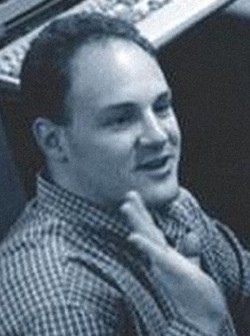
ScreenHunter_315 Sep. 12 10.49Despite the fact that the markets were no longer betting on Akamai, company executives chose Las Vegas for their 2001 sales kickoff. To mark the official launch of EdgeSuite, they flew several dozen employees and advisors out to Sin City for a few days at the Mandalay Bay Hotel & Casino.

As VP of sales, John Sconyers said that, despite the market downturn, the mood was celebratory. Akamai had a new service, and with it the promise of new customers. They were in Vegas, and for a time, they felt like big winners. “We were just pinching ourselves,” Sconyers recalled. “It was an unbelievable experience.”

Employees, customers and members of the company’s board were put up in swank suites and handed substantial wads of cash to gamble. Ironically, it was the only time Dwight Gibbs of the Motley Fool recalled any sort of dispute with founder Danny Lewin, who insisted that Gibbs, a member of the company’s customer advisory board, stay in an upscale suite. “I said I didn’t like the optics . . . Danny would hear none of it,” Gibbs explained. “It was a mild kerfuffle, and eventually Danny won. I should have given in immediately. It would have saved us both a lot of time.”

The featured event of the sales kickoff was a speech by Lewin, the mathematical genius who had created a set of algorithms to foster a faster, better Internet, who announced the official launch of EdgeSuite with much fanfare. Notwithstanding the reality of the plunging markets, he was ebullient and optimistic. “Isn’t EdgeSuite a crappy name?” he asked, pausing for a laugh. “Luckily, we use it to our advantage. Microsoft also told me EdgeSuite was a crappy name, but they said we also have a crappy name so [they] respect companies with crappy names. So we should keep it even though it sucks.”

More here.