Thursday Poem

Catbirds, Mocking Birds, Starlings
.

Birds repeat their parents' songs
As if their lives depend on it.
They do:
Catbirds, mockingbirds, starlings

Mimic birds or fire alarms but sound
Like catbirds, mockingbirds, starlings.
I compare my tongue-tied goodbye:
“You're dying, Mum.”

Stupid: I only hope
She was unconscious. (Was there a hand-squeeze?
Sometimes I tailor comfortless memories.)
I spoke so she'd know I was there, that's all.

Her chest sank on each useless breath:
Her lungs were full of fluid. She was drowning.
Pneumonia, the friend of suffering.
Unthinking, comfortless: at last, a truth we knew.

by John Donlan
July 23, 2004

When You Fail Once, Try Again. When You Fail Twice, Try Again.

David L. Ulin in The Paris Review:

Ryan-sandbox-Paris-ReviewI wrote my first first book over the course of three months, from July 23 to October 23, 1979. Four weeks in, I turned eighteen. This was a novel, and not the first I’d attempted; in fifth grade, I had written forty pages of a saga called Gangwar in Chicago, inspired by The Godfather and taking place in a city where I’d never been. Setting the story in Chicago meant scouring the map in World Book for locations: Canal Street, I recall, was one. I chose it because I knew Canal Street in New York, and it seemed the sort of landscape in which a gang war could take place. To this day, I have never seen Chicago’s Canal Street, despite the twenty years I spent visiting my wife’s family in a suburb on the North Shore.

The other novel, the one I finished, was motivated almost entirely by a specific case of envy—of my friend Fred, who had spent the same summer working on a novel of his own. Fred and I were high school writing buddies, confiding to each other, as we wandered the grounds of our New England boarding school, that we both wanted to win the Nobel Prize. Now, he’d written a campus novel, tracing his difficulties as a one-year senior, parsing the school’s social hierarchy in a way that seemed enlightening and true. Fred was more serious, more focused; he not only knew what symbolism was but also how to use it. It made sense that he would write a novel, and that it would be good. A year later, he would write another one, and then we lost track of each other, until six or seven years later, when his short stories started to appear in magazines.

More here.

365 days: Nature’s 10 people who mattered this year

Daniel Cressey in Nature:

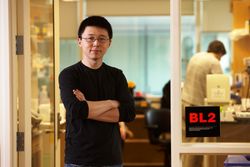
Feng%20ZhangFENG ZHANG: DNA’s master editor: Borrowing from bacteria, a biologist helps to create a powerful tool for customizing DNA. With a nip here and a tuck there, a DNA-cutting mechanism that bacteria use to protect themselves from viruses became one of the hottest topics in biomedical research in 2013. And a young neuroscientist with a penchant for developing tools helped to make it happen. Thirty-two-year-old Feng Zhang of the Massachusetts Institute of Technology in Cambridge is among those leading the charge in using a system called CRISPR/Cas to edit genomes cheaply, easily and precisely. In January, his group showed that the system works in eukaryotic cells — ones with membrane-bound nuclei, including those of all animals and plants. This confirmed its potential for tweaking the genomes of mice, rats and even primates to aid research, improve human-disease modelling and develop treatments (L. Cong et al. Science 339, 819–823; 2013). But as hot as the story has been this year, “the CRISPR craze is likely just starting”, says Rodolphe Barrangou, a microbiologist at North Carolina State University in Raleigh. CRISPRs (clustered regularly interspaced palindromic repeats) are DNA sequences that many bacteria and archaea use to defend themselves. They encode RNAs that can specifically recognize a target sequence in a viral genome. The RNAs work in complex with a CRISPR-associated protein, or Cas, which snips the DNA of the invader.

…Zhang now says that he feels challenged to be creative with other applications. One particularly ambitious project on his slate is to build a library of CRISPRs that can delete any sequence in an organism’s entire genome in 100–200 base-pair increments. This could make it easier to investigate the function of non-coding DNA. But he is most interested in using CRISPR to treat neuro­psychiatric conditions such as Huntington’s disease and schizophrenia by repairing genes in human tissues. To pursue therapeutic use of the technology, he and other CRISPR pioneers last month launched a company called Editas Medicine, based in Cambridge, that is backed by US$43 million in venture-capital funding. CRISPR “allows us to start to make corrections in the genome”, says Zhang. “Because it’s easy to program, it will open up the door to addressing mutations that affect few people but are very devastating.”

More here. (Note: I am convinced that CRISPR is one of the most important discoveries of the century)

Wednesday, December 18, 2013

Contemporary Scottish Friction

GMA-5131-383x439

Cal Flyn in The New Inquiry:

Next year the people of Scotland will go to the polls to decide whether their country will stay in the United Kingdom or strike out on its own as an independent country. The crowd were gathered on Edinburgh’s Calton Hill to mark one year to go until the referendum, held on the 700th anniversary of the Battle of Bannockburn – the legendary Scottish victory led by Robert the Bruce.

Although the referendum itself could go either way (latest polls gives 47 percent for the no’s, 38 percent yes and 15 percent “don’t know”) what is clear is the resurgence in national self-confidence it has brought. With discussions of Scottish culture and identity at the top of the agenda, it has brought clarity and purpose to many young Scots.

And it is outside politics, in the arts, where this transformation has been most marked. In the bookshops and in the bars, there has been a surge of enthusiasm for Scottish writing – poetry, prose and polemic alike – quietly consumed, circulated online, or called to crowds atop stages and soapboxes.

No longer is Scottish literature the preserve of the tartan-clad elderly, the public-spirited librarian, the council-funded initiative, nor the staid set-texts of Scottish school curricula, but a thriving literary scene. These writers are modern, relevant, speaking to their neighbors and friends. Voices of a generation, all of them, and excited to find themselves living through a monumental cultural event. For what is independence but the escape of a culture from the dominance of another?

Back on Calton Hill, the novelist Alan Bissett took the stage. “I don’t know how tae tell you this, Scotland, but I’ve changed ma mind. I had a visitor tae the door last night fae Better Together [the unionist campaign], and what can I say? He brought me round. With… logic.”

Laughter from the crowd. Someone catcalled from the back. Better Together, lapdogs of the English, are always good for a laugh.

More here.

Endless Fun

Playstation-Home-960-courtesy-IGN

Michael Graziano in Aeon:

Imagine a future in which your mind never dies. When your body begins to fail, a machine scans your brain in enough detail to capture its unique wiring. A computer system uses that data to simulate your brain. It won’t need to replicate every last detail. Like the phonograph, it will strip away the irrelevant physical structures, leaving only the essence of the patterns. And then there is a second you, with your memories, your emotions, your way of thinking and making decisions, translated onto computer hardware as easily as we copy a text file these days.

That second version of you could live in a simulated world and hardly know the difference. You could walk around a simulated city street, feel a cool breeze, eat at a café, talk to other simulated people, play games, watch movies, enjoy yourself. Pain and disease would be programmed out of existence. If you’re still interested in the world outside your simulated playground, you could Skype yourself into board meetings or family Christmas dinners.

This vision of a virtual-reality afterlife, sometimes called ‘uploading’, entered the popular imagination via the short story ‘The Tunnel Under the World’ (1955) by the American science-fiction writer Frederik Pohl, though it also got a big boost from the movie Tron (1982). ThenThe Matrix (1999) introduced the mainstream public to the idea of a simulated reality, albeit one into which real brains were jacked. More recently, these ideas have caught on outside fiction. The Russian multimillionaire Dmitry Itskov made the news by proposing to transfer his mind into a robot, thereby achieving immortality. Only a few months ago, the British physicist Stephen Hawking speculated that a computer-simulated afterlife might become technologically feasible.

It is tempting to ignore these ideas as just another science-fiction trope, a nerd fantasy. But something about it won’t leave me alone. I am a neuroscientist. I study the brain. For nearly 30 years, I’ve studied how sensory information gets taken in and processed, how movements are controlled and, lately, how networks of neurons might compute the spooky property of awareness.

More here.

Remembering Peter O’Toole

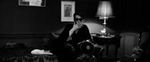
Peter-otoole-deadDavid Thomson at The New Republic:

To meet O’Toole was to be thrilled, if bewildered, by the restless panache that managed to be life-affirming and self-destructive at the same time. He was very well read, and he wrote two memoirs that are better than most books by actors. Without doubt, he slammed many doors in his career, and earned the reputation of being too difficult. It’s easy to say his Lawrence is all wrong historically, but he carries that film along. The Stunt Man is seldom seen these days, but it is a sardonic dark comedy. In addition, in years when he was working as an alternative to being smashed, he did Captain Tom Cat in Under Milk Wood; Don Quixote in the lumbering Man of La Mancha; Tiberius in the Bob Guccione Caligula; the Roman general in Masada; a brilliant Svengali to Jodie Foster’s Trilby; Henry Higgins in a TV Pygmalion (with Margot Kidder as Eliza); the bicycling tutor in Bertolucci’s The Last Emperor, and an enormous amount of rubbish.

He was not like the others. That may have been his cause all along, and there will be O’Toole stories long after respectable actors are forgotten.

more here.

fracking in Pennsylvania

Fracking_SiteS. Harrison Grigg at Guernica:

The governor decided to dub the region “The Pennsylvania Wilds” after remembering that we were up there, running loose in the woods, and making the first dignitary visit to Tioga County in years. “The Pennsylvania Wilds” was a marketing plan to seduce more leaf peepers, RV campers, and retirees. Outdoor gear shops replaced five-and-dimes; artisan shops filled the smoke shops. Someone even suggested building a casino at the edge of the state forest, near the gorge, to attract more tourists. The New York Times Real Estate section covered us, our affordable acreage plumed as weekend getaway properties. It was a compelling pitch, but the writer complained that the only chain restaurant option was a lonely McDonald’s.

There’s more. The ground, the shale of the canyon, below the state forests, below the farms, holds miles of natural gas. Companies circled over Pennsylvania for decades, but they could never crack the ground because their methods couldn’t safely tap the gas trapped in tiny pores—until hydrofracking.

Now they cut roads into the woods, fly choppers over pastures to haul in supplies, pour concrete well pads, erect compressor stations, and clear-cut miles of forest to run in a line. Millions of gallons of water are drawn from lakes, rivers, wetlands, and wells, and then mixed with sand, chemicals, and some other things that nobody knows and companies don’t have to disclose. This concoction is injected at high force through the massive concrete well, splintering layers of shale like a spoon cracking the surface of a crème brûlée. The toxic water fills the pores, thereby flushing out the gas.

more here.

A radical Pope’s first year.

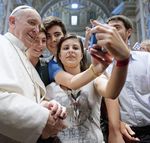
131223_r24421_p465James Carroll at The New Yorker:

“Who am I to judge?” With those five words, spoken in late July in reply to a reporter’s question about the status of gay priests in the Church, Pope Francis stepped away from the disapproving tone, the explicit moralizing typical of Popes and bishops. This gesture of openness, which startled the Catholic world, would prove not to be an isolated event. In a series of interviews and speeches in the first few months after his election, in March, the Pope unilaterally declared a kind of truce in the culture wars that have divided the Vatican and much of the world. Repeatedly, he argued that the Church’s purpose was more to proclaim God’s merciful love for all people than to condemn sinners for having fallen short of strictures, especially those having to do with gender and sexual orientation. His break from his immediate predecessors—John Paul II, who died in 2005, and Benedict XVI, the traditionalist German theologian who stepped down from the papacy in February—is less ideological than intuitive, an inclusive vision of the Church centered on an identification with the poor. From this vision, theological and organizational innovations flow. The move from rule by non-negotiable imperatives to leadership by invitation and welcome is as fundamental to the meaning of the faith as any dogma.

more here.

Race is a myth

Laura Miller in Salon:

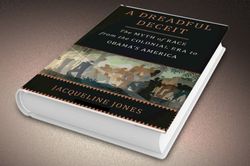
Dreadful_deceit-620x412Jacqueline Jones’ provocative new history, “Dreadful Deceit: The Myth of Race From the Colonial Era to Obama’s America,” contains a startling sentence on its 265th page. It comes after Jones quotes Simon Owens, the last of five African-Americans whose life stories she describes in the book. Owens — an auto worker, labor activist and writer who died in 1983 — stated, “I understood as a Negro first, in the South, the North, in the union, in the NAACP, in the C.P. [Communist Party] and in the S.W.P [Socialist Workers Party].” Jones adds, “Because generations of white people had defined him and all other blacks first and foremost as ‘Negroes,’ he had no alternative but to acknowledge — or, rather, react to — that spurious identity.” That racial identities are “spurious” is the foundational argument of this fascinating book. Race is a cultural invention, rather than a biological fact (on this scientists widely agree), and Jones, a history professor at the University of Texas and recipient of a MacArthur Fellowship, wants to show how pernicious and persistent this falsity is. In the book’s epilogue, she points to an article from the 2012 edition of the New York Times titled “How Well You Sleep May Hinge on Race,” based on a study showing that living in high-crime neighborhood or having chronic conditions like diabetes or hypertension can cause insomnia. But, as Jones observes, these are problems deriving from poverty, not race, and so the article “blatantly conflated socioeconomic status with the idea of race.”

Of the five people whose life stories are told in “Dreadful Deceit,” the first is essentially voiceless: an enslaved man named Antonio, abducted from his homeland in Africa and murdered while being “corrected” by a colonial landowner in 17th-century Chesapeake. As Jones relates, Antonio’s race “had no practical meaning” to the man who purported to own him, Symon Overzee. Describing in well-researched detail the economic and political milieu of the time, she argues that what created Antonio’s vulnerability to Overzee was not his skin color or any other physical trait but his uprootedness, “without a tribe or a nation-state to protect and defend him in the Atlantic world.”

More here.

How Our Unconscious Rules Our Lives

Marietta DiChristina in Scientific American:

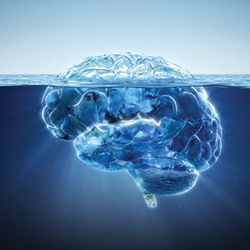
BrainDriving home after a visit with a relative, you suddenly realize you have no specific memory of how you got there. Well, you've taken that trip so many times, you tell yourself, that you could just about do in your sleep. Tying a shoe later, you reflect again on how often you accomplish things while your conscious mind is barely paying attention. Of course, you're not wrong. We all have those moments. At around three pounds, the gelatinlike tissue in your skull accounts for only a couple of percent of your total body mass, but it consumes a lot of energy—some 20 percent of the calories you eat every day. Conscious thought is “expensive” in energy terms. Is it any wonder the brain tends to shift its more costly processing tasks toward becoming more automated, “cheaper” routines?

That thought struck me during one of our weekly editorial meetings some months ago while we were discussing story ideas. How much of our lives is actually decided for us by our brain without our active awareness, I wondered? Naturally, when I asked that question out loud, longtime Scientific American senior editor Gary Stix was only too happy to explore the answer. The outcome is the cover story by Yale University psychologist John A. Bargh, “How Unconscious Thought and Perception Affect Our Every Waking Moment.” Bargh explains how decision making about such tasks as voting, making purchases or even planning vacations often occurs without our giving things much conscious thought. In matters small and large, we routinely arrive at automatic judgments, our behaviors shaped by embedded attitudes. Put another way, awareness about our relative lack of awareness gives us a new appreciation for how profoundly our unconscious mind steers our lives.

More here.

Pakistan-India relations are unlikely to improve

Anjum Altaf in the Friday Times:

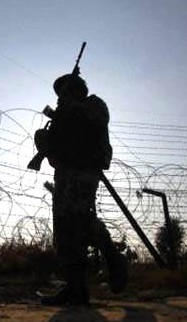
ScreenHunter_465 Dec. 18 13.10Pakistan and India continue to flounder in a relationship marked by a frustrating low-level equilibrium trap. Almost everyone concedes there are gains to making up but no one seems able to transcend the impasse. From time to time there is the promise of a breakout dissipated quickly by a sharp downturn. A flurry of advisories follows on the importance of maintaining the relationship and much posturing later things work themselves back to the annoying status quo.

The sequence has now been repeated often enough to suggest the combination of method and madness that might be at play. The mix of rationality and irrationality is not all that curious. People talk about its various elements but for reasons not hard to decipher refrain from assembling them all in one narrative.

I believe it is worth spelling out the factors that stand in the way of better relations if only to point to the major hurdles that remain to be negotiated. Acknowledging the unpleasant realities is a necessary step to understanding the challenges that lie ahead.

More here.

Wednesday Poem

I'm Alive, I Believe in Everything

Self. Brotherhood. God. Zeus. Communism.
Capitalism. Buddha. Vinyl records.
Baseball. Ink. Trees. Cures for disease.
Saltwater. Literature. Walking. Waking.
Arguments. Decisions. Ambiguity. Absolutes.
Presence. Absence. Positive and Negative.
Empathy. Apathy. Sympathy and entropy.
Verbs are necessary. So are nouns.
Empty skies. Dark vacuums of night.
Visions. Revisions. Innocence.
I've seen All the empty spaces yet to be filled.
I've heard All of the sounds that will collect
at the end of the world.
And the silence that follows.

I'm alive, I believe in everything
I'm alive, I believe in it all.

Waves lapping on the shore.
Skies on fire at sunset.
Old men dancing on the streets.
Paradox and possibility.
Sense and sensibility.
Cold logic and half truth.
Final steps and first impressions.
Fools and fine intelligence.
Chaos and clean horizons.
Vague notions and concrete certainty.
Optimism in the face of adversity.

I'm alive, I believe in everything
I'm alive, I believe in it all.
.
.
by Lesley Choyce
from Beautiful Sadness
Victoria, B.C.: Ekstasis Editions, 1998.

Tuesday, December 17, 2013

What Swiss Flying Cows Tell Us About the Future of the Environment

Veronique Greenwood in Aeon:

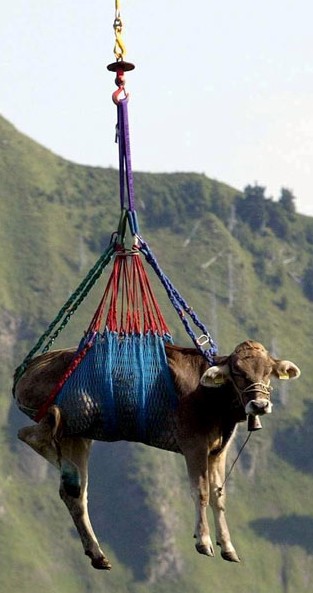
ScreenHunter_464 Dec. 17 17.21From time to time, a hiker through the Swiss Alps might witness a startling sight. First, the sound of a helicopter reverberates off the valley walls. Then the chopper appears, a long cable hanging from its belly. When the burden at the end of the cable heaves into view, it is not a rescued mountaineer, en route to the hospital. Nor is it a pot of cement or a pallet of planks, on the way to a high-mountain building project.

It is a single cow, hanging gently from a harness, her dark eyes alert, her hooves high above the ground.

When the scene is breathlessly described to a Swiss person, the response seems to be incredulity — at your amazement. The cow was hurt. It probably twisted its ankle in the high meadows, and needed to get to a vet. Of course they used a helicopter! It’s the right thing to do.

Look carefully.

This could be a postcard from the future.

This is the Valais — a canton, or Swiss state, known for its milk, cheeses, wine, apricots, and beef. It is one of the largest of Switzerland’s 26 cantons, about the size of Delaware, in a country no larger than Connecticut and Massachusetts put together. In practice, much of that land area is consumed by some of the tallest mountains on the continent.

More here.

Mark Zuckerberg and Yuri Milner announced new $3 million Breakthrough Prize in Mathematics

From PR Newswire:

4F07FBD3-ED5C-4D4E-9D25-234CF814A34C_w640_r1_s_cx0_cy2_cw0“Scientists should be celebrated as heroes, and we are honored to be part of today's celebration of the newest winners of the Breakthrough Prize in Life Sciences and the Fundamental Physics Prize,” said Anne Wojcicki and Sergey Brin.

The prize ceremony was hosted by actor Kevin Spacey, and awards were presented by the Prize sponsors and by celebrities including Conan O'Brien, Glenn Close, Rob Lowe and Michael C. Hall. The event was organized in cooperation with Vanity Fair and produced and directed by Don Mischer, the producer and director of the Academy Awards, among other television and live events. Grammy-nominated singer Lana Del Ray performed live for the guests of the ceremony.

The event will be televised by the Science Channel, one of the Discovery networks; it will be broadcast at 9pm on January 27th.

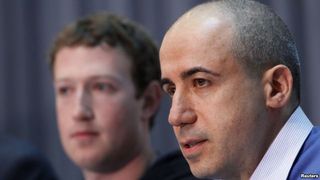
At the end of the ceremony, Mark Zuckerberg and Yuri Milner announced the launch of a new $3 million Breakthrough Prize in Mathematics. The details of the new prize will be announced at a later date.

“The Breakthrough Prize is our effort to put the spotlight on these amazing heroes. Their work in physics and genetics, cosmology, neurology and mathematics will change lives for generations and we are excited to celebrate them,” commented Mark Zuckerberg.

More here. Peter Woit hates the idea though.

Religion’s Quandary

Kenan Malik in the New York Times:

Contributors-images-slide-RPHF-articleInlineThey call it the Francis effect: the impact of Pope Francis in galvanizing the Catholic faithful. Since he arrived at the Vatican, church attendance has surged across the world, while in his homeland of Argentina, the number of people defining themselves as believers has risen by a reported 12 percent.

Not just Catholics but those of other faiths, and of no faith, have fallen under Francis’ spell. “Even atheists should be praying for Pope Francis,” as the Guardian columnist Jonathan Freedland put it recently.

Yet how much has really changed? Francis may be transforming the perception of the church and its mission, but not its core doctrines. He has called for a church more welcoming to gay people and women, but he will not challenge the idea that homosexual acts are sinful, refuses to embrace the possibility of same-sex marriage and insists that the ordination of women as priests is not “open to discussion.”

None of this should be surprising. Religious institutions necessarily spurn the modern and the fashionable, in favor of the traditional and the sacred. But it points up the dilemma in which religion finds itself in the modern world. If religious institutions do not change, they risk becoming obsolete. If they do change, they may imperil their authority. This quandary is faced not just by the Catholic Church but by all religious institutions today.

More here.

Breyten Breytenbach’s 2008 letter to Nelson Mandela

12APPhoto-LynneSladky-Harpers-400Breyten Breytenbach at Harper's Magazine:

In due time there will probably be an assessment of your political career and the impact you had as president of the country — and you were nothing if not a consummate politician. Your being the historical vector for controlled compromise and change may ultimately be equated with statesmanship. Already we know you saved us from civil war. This should be remembered as your single most important legacy, and we must never forget how lucky we were. Some will say you could only do so by aborting the revolution.

But my own unease, now, is of a slightly different kind. I wish to express my deep affection for you. You are in so many ways like my late father — stubborn to the point of obstinacy, proud, upright, authoritarian, straight, but with deep resources of love and intense loyalty and probably with a sense of the absurd comedy of life as well. A cad also, when tactical considerations made it necessary. I think I’ve told you this.

more here.

Robert Bellah: In Memoriam (1927-2013)

Bellah_15_3Richard Madsen at Hedgehog Review:

Bellah’s richly informed vision of the varieties of transcendent yearnings found brilliant expression in his final masterpiece,Religion in Human Evolution: From the Paleolithic to the Axial Age (2011). The book culminates in long, detailed chapters on the religious civilizations of ancient Israel, Greece, China, and India. In Bellah’s telling, Hebrew monotheism, Greek philosophy, Indian Buddhism, and Chinese Confucianism are each unique, the product of many historical contingencies. What unites them is not the sharing of some common essence of “religion” but their connection to a “deep past,” to a common historical story that extends all the way back to the Big Bang.

The epigraph to that book is from the Chinese sage Mencius: “When one reads the poems and the writings of the ancients, how could it be right not to know something about them as men? Hence one should try to understand the age in which they have lived. This can be described as ‘looking for friends in history.’” For Bellah, thinkers such as Confucius and Mencius were not simply creators of systems of thought; they were friends in history, conversation partners. The same was true of Socrates and Plato, Isaiah and Jeremiah, the Buddha, and more recent thinkers like Kant and Hegel, Weber and Durkheim. Bellah did not simply study about them. He argued and searched together with them for answers to the great questions of how we ought to live and how we think about how to live.

more here.

the soviet project to create entirely new sounds

ImageColin McSwiggen at n+1:

From roughly the mid-1910s until the end of the 1930s, a handful of Russian engineers and artists took it upon themselves to remake the practice of music in the image of a revolutionary utopia. In contrast to the better-remembered Prokofiev and Shostakovich, these inventors were mostly outsiders to formal musical traditions, and they believed that the future of music lay not in new compositional styles, but in new technologies for the production of sound.

What they created was astonishing, not only in its novelty but in its quantity and scale. Many of their more outlandish ideas never saw fruition: an organ powered by an entire factory, an electro-acoustic orchestra mounted on a fleet of airplanes. But they successfully fashioned a great number of unprecedented devices, from synthesizers to proto-samplers, with technology that predated magnetic tape let alone the integrated circuit. Many of their conceptual developments—methods for synthesizing speech, models of the physics of musical instruments, theoretical descriptions of the idiosyncrasies of live performers—would have been at home in the technological landscape of the ’80s, ’90s, and ’00s.

more here.