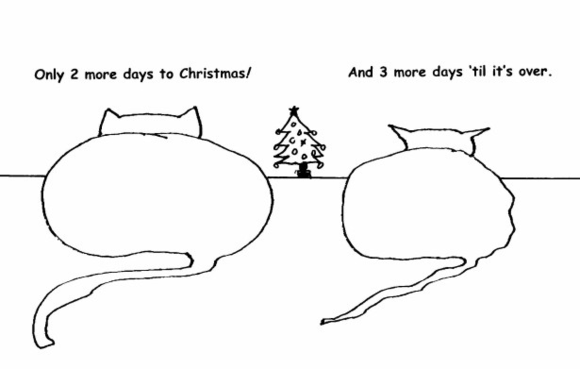
Happy holidays to everyone!

AbbasThanksLast day of this subscription stuff!

Dear Reader,

In the last year we have been approached by several large and well-known media conglomerates who have offered to take us under their financially secure wings but, though the offers were tempting, we have decided that it is more important for us to be completely independent and not beholden to anyone.

Please don't wait for others to do it. We need YOU to subscribe now. Oh, and in case you haven't noticed, the subscription button is in the left-hand column. Go. Do it. Now. Please.

If you do not wish to subscribe and would rather make a one-time payment, please do so using the “Pay Now” button in the left-hand column. You do NOT have to join Paypal, you can just use a debit or credit card to do this.

We know you like 3QD (and we are extremely flattered) because you have just told us so. I am appending some of the comments we got in our recent survey after this note. Thanks so much for your generous support as always.

Yours,

Abbas

P.S. For those of you who would rather not pay by debit card, credit card or use Paypal, please send me an email at s.abbas.raza.1 [at] gmail.com and I will tell you where to mail a check.
Read more »

Strained Analogies Between Recently Released Films and Current Events: The Desolation of Smaug and The Cessation of Unemployment Insurance

by Matt McKenna

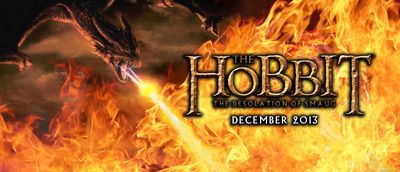
Hobbit-2It is tempting to read The Desolation of Smaug, Peter Jackson's second installment in the Hobbit film trilogy, as a sweeping metaphor for the most grandiose concepts and topics currently under discussion on the cable news networks in the United States.

For example, Thorin Oakenshield's company of thirteen dwarves, a wizard, and a hobbit does bear surface similarities to what could reasonably be seen as a fantasy rendition of Occupy. After all, both groups consist of idealistic outsiders who attempt to reclaim once public land. However, this reading is undercut by the fact that Bilbo Baggins, the protagonist and titular hero, has joined the quest explicitly to render his services as the company's “burglar.” It is fair to say that Occupy activists don't see themselves as burglars, and there is certainly no sense that Bilbo nor anyone else employed on the quest is attempting to reclaim the word from the lexicon of their oppressors. Furthermore, the social structure of the dwarves is anything but flat, and their decision-making processes are completely at odds with the typical methodologies of Occupy. Arguments comparing the film's heroes to members of the Tea Party movement can be made and summarily dismissed along similar lines.

Another tantalizing interpretation of the film is to see it as an allegory for the implosion of capitalism in an era of unsustainable equality. Indeed, the economically disadvantaged villagers of Laketown who aid the dwarves during their travels to Erebor refer to the arrival of our heroes as the fulfillment of an ancient prophecy. But which ancient prophecy? While the townspeople are literally referring to the diegetic prognostication that posits Dwarves will one day reclaim the Lonely Mountain, the audience is compelled to wonder if these characters are metaphorically referring to Karl Marx's prediction that capitalism–Smaug, the fire-breathing dragon–will collapse under the weight of its own success. But this reading quickly falls apart once the viewer realizes that Smaug the Terrible doesn't actually adhere to the tenants capitalism. In fact, Smaug is a textbook mercantilist, what with the hoarding of gold and the extraction of wealth from foreign lands. Now, if Smaug were to reinvest his ill-gained gold into fixing the missing scale absent over his left breast–a womp-rat sized hole which one assumes will cause him some discomfort in the third film–then this capitalism metaphor might have some legs.

Thus, the film is not a fantasy retelling of major political movements in the early 21st century, nor is it a critique of the world's dominant economic system. What, then, is it? Could it be that The Desolation of Smaug is a film that can only be coherently enjoyed as a literal tale of diminutive creatures with British accents attempting to liberate treasure from within a hollow and tritely named geological structure?

Of course not.

Read more »

Sunday, December 22, 2013

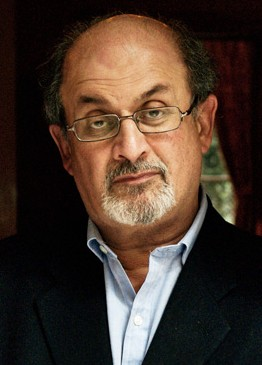
SALMAN RUSHDIE: “THE CURSE OF AN INTERESTING LIFE”

From The Talks:

Mr. Rushdie, do you have an optimistic view of the world?

ScreenHunter_470 Dec. 23 08.25No. (Laughs) In one word! I think it’s very difficult to be a writer in this moment of the history of the world and be an optimist. Anyway, darkness makes better comedy.

What motivates you to write?

I’ve got nothing else to do! I always wanted to write. The only other plan that I had in my life is that I wanted to be an actor. That didn’t work out! I had always thought that if there was a film of Midnight’s Children, the part I would like to play is the fortuneteller. I thought, since I made up the plot of the novel, if the film ever gets made I should play the fortuneteller.

Well, now the movie has been made. Were you in it?

The director hired me, but I fired myself because the last thing you want to happen in that scene is for the audience to be thinking, “Isn’t that Salman Rushdie?” (Laughs) It would just take your attention away from where it should be. We cut the scene out in the end anyway.

Too bad.

But my greatest regret about a part that I wasn’t able to play, I was approached by Will Ferrell’s company to play a part in what was then called “Untitled Will Ferrell Nascar Movie,” which became Talladega Nights.

More here.

Bird Cheaters Target Teams, But Teamwork Beats Cheats

Ed Yong in Not Exactly Rocket Science:

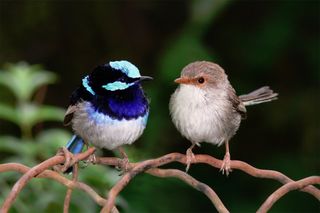
Superb-fairy-wren-990x660The common cuckoo is famed for its knack for mooching off the parental instincts of other birds. It lays its eggs in the nests of at least 100 other species, turning them into inadvertent foster parents for its greedy chicks. For this reason, it’s called a brood parasite.

It’s not alone. Among the birds, the full list of brood parasites includes more than 50 members of the cuckoo family, cowbirds, honeyguides, several finches, and at least one duck.

Now, William Feeney from the Australian National University has found that brand of reproductive cheating goes hand in hand with its polar opposite: cooperative breeding, where birds raise their young with help from siblings or offspring, often at the cost of the helpers’ own reproductive success.

The two strategies couldn’t be more different but Feeney found that each drives the evolution of the other. In places where one is common, the other is too. Exploitation goes hand-in-hand with cooperation.

More here.

Butterflies tied together Vladimir Nabokov’s home, science, and writing

Mary Ellen Hannibal in Nautilus:

ScreenHunter_469 Dec. 23 08.08The life and work of the novelist Vladimir Nabokov referenced many symbols, none so much as the butterfly. Butterflies prompted Nabokov’s travels across the United States, exposing him to the culture and physical environment that he would transform into his best-known novel, Lolita. Butterflies motivated his parallel career in science, culminating in a then-ignored evolutionary hypothesis, which would be vindicated 34 years after his death using the tools of modern genetic analysis. And it was the butterfly around which some of Nabokov’s fondest childhood memories revolved.

Nabokov was born in St. Petersburg, Russia to an aristocratic family, and spent much of his childhood at the family’s country estate in Vyra, 40 miles outside of the city. The Nabokovs were forced to flee Russia in 1919 in the wake of the Bolshevik Revolution. After moving between England, Germany, and France, Nabokov came to the U.S., returning for the final years of his life to Switzerland, where he died in 1977. Nabokov rued the loss of Vyra, and called it a “break with my destiny.” In his student days at Cambridge University in England, he lamented the loss in a 1920 letter to his mother: “Will I really never return, is it really all finished, wiped out, destroyed…? I would like to describe every little bush, every stalk in our divine park at Vyra…”

Lepidoptera and his childhood home were inseparable to Nabokov, an idea he explored in his letters and his science. Especially in his autobiography, Speak, Memory (1951), he identifies Vyra as the place where his love for the butterfly began. It was at Vyra that his father, a liberal-minded nobleman, taught him the correct flick of the wrist required to decisively push the net over a fluttering insect.

More here.

Having a Servant Is Not a Right

Ananya Bhattacharyya in the New York Times:

ScreenHunter_468 Dec. 23 08.00

Devyani Khobragade

At the heart of the fracas surrounding the arrest of an Indian diplomat in New York who promised to pay her housekeeper $9.75 per hour, in compliance with United States labor rules, but instead paid her $3.31 per hour, is India’s dirty secret: One segment of the Indian population routinely exploits another, and the country’s labor laws allow gross mistreatment of domestic workers.

India is furious that the diplomat, Devyani Khobragade, was strip-searched and kept in a cell in New York with criminals. Retaliation from the newly assertive but otherwise bureaucracy-ridden nation was swift. American diplomats were stripped of identity cards granting them diplomatic benefits, and security barriers surrounding the American Embassy in New Delhi were hauled away. A former finance minister suggested that India respond by arresting same-sex partners of American diplomats, since the Indian Supreme Court recently upheld a section of a Colonial-era law that criminalizes homosexuality.

Notwithstanding legitimate Indian concerns about whether American marshals used correct protocol in the way they treated a diplomat, the truth is that India is party to an exploitative system that needs to be scrutinized.

More here.

The haunting grace of Marilynne Robinson

Kenan Malik in Pandaemonium:

CandleWhich book am I most looking forward to in 2014? Perhaps, surprisingly, Marilynne Robinson’s forthcoming novel, Lila. Robinson’s life and writing is suffused with religious faith, indeed with a strong-souled Calvinism (though, improbably, she tends to see John Calvin more as a kind of Erasmus-like humanist than as the firebrand preacher who railed against the human race as constituting a ‘teeming horde of infamies’). Her most celebrated collection of essays, The Death of Adam, she describes as ‘contrarian in method and spirit’. It is an unfashionably sturdy defence of Calvinism. It is an equally unfashionable call to arms against cynicism:

When a good man or woman stumbles, we say, ‘I knew it all along,’ and when a bad one has a gracious moment, we sneer at the hypocrisy. It is as if there is nothing to mourn or to admire, only a hidden narrative now and then apparent through the false, surface narrative. And the hidden narrative, because it is ugly and sinister, is therefore true.

We have been, Robinson observes acutely, ‘launched on a great campaign to deromanticize everything, even while we are eager to insist that more or less everything that matters is a romance’. It is this combination of cynicism and sentimentality that oozes through much of contemporary life and against which Robinson bears arms.

There is much on which I disagree with Robinson, for there is a great distance between her view of the world and mine. And yet even in her wrongness she often possesses the power to illuminate and to make you question your certainties. And even in her wrongness the grace of her writing makes reading both a pleasure and an education.

More here.

William Styron, The Art of Fiction

George Plimpton interviews WS in The Paris Review:

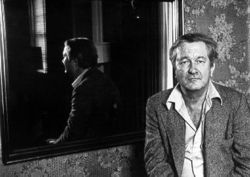
StyronINTERVIEWER: Are you worried about the future of the written word?

STYRON : Not really. I get moments of alarm. Not long ago I received in the mail a doctoral thesis entitled “Sophie’s Choice: A Jungian Perspective,” which I sat down to read. It was quite a long document. In the first paragraph it said, In this thesis my point of reference throughout will be the Alan J. Pakula movie of Sophie’s Choice. There was a footnote, which I swear to you said, Where the movie is obscure I will refer to William Styron’s novel for clarification. This idiocy laid a pall over my life for a dark brief time because it brought back all these bugaboos we have about the written word. But in the nineteenth century they said that the railroads were going to jeopardize the written word; in the 1920s they said that the appearance of sound movies was guaranteed to drive novels into purdah; then later, television. All of these means of communication have existed happily side by side and parallel with writing. I don’t think for a minute that literature is going to perish. Marshall McLuhan’s prophecy of forty years ago simply didn’t pan out. Even the Internet and the idea of the electronic book reinforces my belief—they will not threaten the written word but actually complement writing, and perhaps even ultimately enhance it.

More here.

Sunday Poem

Landmine
.

Some persons just by staying alive cause us discomfort. Such a man does not harm us, does not threaten us, shows us no hidden knife, does not snatch the gold-locket off a wife’s neck. He just keeps living. Year after year, through winter-summer-rain, he survives people’s apathy, pelting of brickbats and hot water. We think—it would be better if he died! May we not have to see his face again after tomorrow! But alas! The next day, too, we see him at the bend of the road, by the side of the Shiva temple, close to the railway-platform—just by staying alive, like a sleeping landmine, causing us discomfort!
.

by Angshuman Kar
from Nasho Square Feeter Jadukar
publisher: Saptarshi Prakashan, Kolkata, 2006

.

Saturday, December 21, 2013

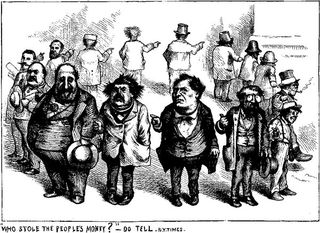
The Financial Crisis: Why Have No High-Level Executives Been Prosecuted?

Jed S. Rakoff in the New York Review of Books:

Rakoff_1-010914_jpg_600x684_q85Five years have passed since the onset of what is sometimes called the Great Recession. While the economy has slowly improved, there are still millions of Americans leading lives of quiet desperation: without jobs, without resources, without hope.

Who was to blame? Was it simply a result of negligence, of the kind of inordinate risk-taking commonly called a “bubble,” of an imprudent but innocent failure to maintain adequate reserves for a rainy day? Or was it the result, at least in part, of fraudulent practices, of dubious mortgages portrayed as sound risks and packaged into ever more esoteric financial instruments, the fundamental weaknesses of which were intentionally obscured?

If it was the former—if the recession was due, at worst, to a lack of caution—then the criminal law has no role to play in the aftermath. For in all but a few circumstances (not here relevant), the fierce and fiery weapon called criminal prosecution is directed at intentional misconduct, and nothing less. If the Great Recession was in no part the handiwork of intentionally fraudulent practices by high-level executives, then to prosecute such executives criminally would be “scapegoating” of the most shallow and despicable kind.

But if, by contrast, the Great Recession was in material part the product of intentional fraud, the failure to prosecute those responsible must be judged one of the more egregious failures of the criminal justice system in many years.

More here.

Who Ain’t a Slave? Historical fact and the fiction of ‘Benito Cereno’

Greg Grandin in The Chronicle of Higher Education:

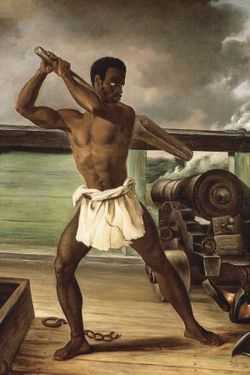
SlaveBenito Cereno is one of the bleakest pieces of writing in American literature. Published in installments in late 1855, midway between the commercial and critical failure of Moby-Dick and the start of the Civil War, the novella reads like a devil's edition of Harriet Beecher Stowe's Uncle Tom's Cabin,which had appeared a few years earlier. Where Stowe made her case for abolition by presenting Southern slaves as Christlike innocents and martyrs, Melville's West Africans are ruthless and deceitful. They act like Toms—but they are really Nat Turners. “Who aint a slave?” Melville had Ishmael ask in 1851's Moby-Dick. There's joy in the question, as well as in the implied answer—no one—an acceptance of the fact that humans, by sheer dint of being human, are bound to one another. Four years closer to the Civil War, Melville might have had that question in mind again when he wrote Benito Cereno. The answer would have been the same, yet the implications grimmer. There were no free people on board the Tryal (named San Dominick in the novella). Obviously not Cereno, held hostage by the West Africans. Not Babo and the rest of the rebels, forced to mimic their own enslavement and humiliation. And not Amasa Delano, locked in the soft cell of his own blindness.

Most of Benito Cereno takes place in the fictional Delano's mind. Page after page is devoted to his reveries, and readers experience the day on board the ship—which was filled with odd rituals, cryptic comments, peculiar symbols—as he experiences it. Melville keeps secret, just as it was kept secret from Delano, the fact that the slaves are running things. And like the real Delano, Melville's version is transfixed by the Spanish captain's relationship to his black slave.

More here.

Electron’s shapeliness throws a curve at supersymmetry

Eric Gershon at Yale News:

ScreenHunter_467 Dec. 21 17.49“We know the Standard Model does not encompass everything,” said Yale physicist David DeMille, who with John Doyle and Gerald Gabrielse of Harvard leads the ACME collaboration, a team using a strikingly different method to detect some of the same types of particles sought by huge experiments at the Large Hadron Collider (LHC) in Europe. “Like our LHC colleagues, we're trying to see something in the lab that's different from what the Standard Model predicts.”

ACME is looking for new particles of matter by measuring their effects on the shape of the electron, the negatively charged subatomic particle orbiting within every atom.

In research published Dec. 19 in Science Express, the team reported the most precise measurement to date of the electron's shape, improving it by a factor of more than 10 and showing the particle to be rounder than predicted by some extensions of the Standard Model, including some versions of Supersymmetry. This theory posits new types of particles that help account, for example, for dark matter, a mysterious substance estimated to make up most of the universe.

Researchers said they have shown that the electron's departure from spherical perfection — if it exists at all — must be smaller than predicted by many theories proposing particles the Standard Model doesn't account for. If the electron's shape is too round, many of these theories will be proven wrong, they said.

More here. [Thanks to Farrukh Azfar.]

Is it time to make knowledge of English a human right?

Rumy Hasan at Al Jazeera:

20131214131356706580_20 (1)For the first time in history, the world now is close to having a global language so that people from all corners of the globe can communicate with each other without recourse to interpreters and translators. This language is, of course, English. The reason why English has become so dominant is certainly interesting and debatable, but there is no debate that it is the sine qua non for many aspects of life. It is the language of diplomacy and international relations – the Iranians recognised this by agreeing to speak in English in their recent negotiations on their nuclear programme with the P5+1 countries. It is increasingly the language of global news as evidenced by many non-English speaking countries having television networks in the English language.

It is also essential for international business and finance, sport, airline travel (pilots are now required to have good command of English as part of the drive to improve aviation safety standards) and, to a significant extent, for popular music (for example, in the annual Eurovision Song contest, all but a handful of countries have their representatives sing in English).

It is also the language of knowledge. In many academic disciplines – especially natural and social sciences – cutting-edge research is conducted in English and findings are published in English language publications and websites. Accordingly, international conferences invariably demand that papers be submitted and presented in English. There is no denying, therefore, that without English, many avenues of some of the most rewarding careers and activities are simply closed.

More here.

the most revealing account of Lucian Freud ever written

Lucian-Freud-008Frances Spalding at The Guardian:

Geordie Greig's book is an unapologetic mixture of intelligent perception and high gossip. It deepens the reader's understanding of Lucian Freud, as both man and artist, but it also connives with the kind of mythology that stultifies inquiry. It is both fascinating and appalling. Freud had a reputation for being a man with no boundaries. This book likewise heeds no conventional restraints, mixes genres, seeps into questionable places, and fills gaps with cumulatively repetitive and often mawkish interviews with Freud's models, or connective passages that might have come straight out of Who's Who – were they not entirely concerned with sexual history. And yet no person interested in Freud will ignore this book. It is, overall, more revealing than anything about him yet written.

It begins benignly, in Clarke's, a light-filled upmarket restaurant, with starched white tablecloths, in Kensington Church Street. Here, for at least the last decade of his life, Freud breakfasted most days of the week. He would enter via the delicatessen next door, as breakfast is not normally served, and was usually accompanied by David Dawson, his assistant, who brought all the broadsheets and the Daily Mail, which they spread over the large circular table at the back of the room.

more here.

The Letters of Arthur Schlesinger, Jr.

22PACKERsub-thumbStandard-v2George Packer at the New York Times:

The best letters — and there are many — come from the typewriter of the public Schlesinger, the fighting liberal, especially when he’s jousting with a provocative antagonist like William F. Buckley (“You remind me of my other favorite correspondent, Noam Chomsky”) or, even better, arguing a matter of principle with a friend at the breaking point. The Vietnam War, which shattered the New Deal coalition, produced unsparing letters between Schlesinger, who became a vehement opponent of the war, and old friends like Alsop and Henry Kissinger, as well as a remarkable exchange with Schlesinger’s longtime liberal ally, Vice President Hubert Humphrey, during the 1968 campaign. “Don’t overrate yourself, Arthur,” Humphrey wrote in July, shortly before the disastrous Democratic convention in Chicago. “No one’s trying to blackmail you or anyone else into coming over to support my candidacy. On the basis of your earlier and more mature liberal convictions, you ought to be supporting me, but undoubtedly something has happened in your life that has made you angry and bitter.”

more here.