More on the top 100 searches of 2013 here.
[Thanks to Ruchira Paul.]

Carl Zimmer in The New York Times:
Scientists have long suspected that our big brain and powerful mind are intimately connected. Starting about three million years ago, fossils of our ancient relatives record a huge increase in brain size. Once that cranial growth was underway, our forerunners started leaving behind signs of increasingly sophisticated minds, like stone tools and cave paintings. But scientists have long struggled to understand how a simple increase in size could lead to the evolution of those faculties. Now, two Harvard neuroscientists, Randy L. Buckner and Fenna M. Krienen, have offered a powerful yet simple explanation. In our smaller-brained ancestors, the researchers argue, neurons were tightly tethered in a relatively simple pattern of connections. When our ancestors’ brains expanded, those tethers ripped apart, enabling our neurons to form new circuits. Dr. Buckner and Dr. Krienen call their idea the tether hypothesis, and present it in a paper in the December issue of the journal Trends in Cognitive Sciences.
More here.
From The Genius in All of Us: New Insights into Genetics, Talent and IQ by David Shenk via delancyplace:
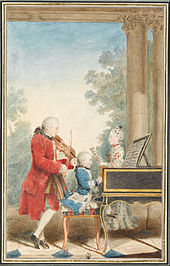
“Then came Wolfgang. Four and a half years younger than his sister, the tiny boy got everything Nannerl got — only much earlier and even more intensively. Literally from his infancy, he was the classic younger sibling soaking up his big sister's singular passion. As soon as he was able, he sat beside her at the harpsichord and mimicked notes that she played. Wolfgang's first pings and plucks were just that. But with a fast-developing ear, deep curiosity and a tidal wave of family know-how, he was able to click into an accelerated process of development. “As Wolfgang became fascinated with playing music, his father became fascinated with his toddler son's fascination — and was soon instructing him with an intensity that far eclipsed his efforts with Nannerl. Not only did Leopold openly give preferred attention to Wolfgang over his daughter; he also made a career-altering decision to more or less shrug off his official duties in order to build an even more promising career for his son.
…The tiny Mozart dazzled royalty and was at the time unusual for his early abilities. But today many young children exposed to Suzuki and other rigorous musical programs play as well as the young Mozart did — and some play even better. Inside the world of these intensive, child-centered programs, such achievements are now straightforwardly regarded by parents and teachers for what they are: the combined consequence of early exposure, exceptional instruction, constant practice, family nurturance, and a child's intense will to learn.
More here.
Let me make this perfectly clear.
You suspect this is a posture or an act
I am sorry to tell you it is not an act.
You actually think I care if this
Poem gets off the ground or not. Well
I don't care if this poem gets off the ground or not
And neither should you.
All I have ever cared about
And all you should ever care about
Is what happens when you lift your eyes from this page.
Do not think for one minute it is the Poem that matters.
Is is not the Poem that matters.
You can shove the Poem.
What matters is what is out there in the large dark
and in the long light,
by Gwendolyn MacEwen
from Afterworlds
McClelland & Stewart, 1987
Simon Beck. #5.
“Using an orienteering compass, measuring tape and a pair of snowshoes, 54-year-old Simon Beck turns the hills and frozen lakes around Les Arcs into geometrically-perfect immaculate masterpieces. His intricate prints are huge, often spanning the equivalent size of six football fields, but while you’d be tempted to think Beck needs at least several days to complete just one of these patterns, he really only needs about 10 hours, on average.”
Thanks to Walter Johnston.
by Brooks Riley
Cristina McDowell in LA Weekly:

Let me introduce myself. My name is Christina McDowell, formerly Christina Prousalis. I am the daughter of Tom Prousalis, a man the Washington Post described as “just some guy on trial for penny-stock fraud.” (I had to change my name after my father stole my identity and then threatened to steal it again, but I'll get to that part later.) I was eighteen and a freshman in college when my father and his attorneys forced me to attend his trial at New York City's federal courthouse so that he “looked good” for the jury — the consummate family man.
And you, Jordan Belfort, Wall Street's self-described Wolf: You remember my father, right? You were chosen to be the government's star witness in testifying against him. You had pleaded guilty to money laundering and securities fraud (it was the least you could do) and become a government witness in two dozen cases involving your former business associate, but my father's attorneys blocked your testimony because had you testified it would have revealed more than a half-dozen other corrupt stock offerings too. And, well, that would have been a disaster. It would have just been too many liars, and too many schemes for the jurors, attorneys or the judge to follow.
But the records shows you and my father were in cahoots together with MVSI Inc. of Vienna, e-Net Inc. of Germantown, Md., Octagon Corp. of Arlington, Va., and Czech Industries Inc. of Washington, D.C., and so on — a list of seemingly innocuous, legitimate companies that stretches on. I'll spare you. Nobody cares. None of these companies actually existed, yet all of them were taken public by the one and only Wolf of Wall Street and his firm Stratton Oakmont Inc in order to defraud unwitting investors and enrich yourselves.
More here.
Rowan Hooper in Slate:
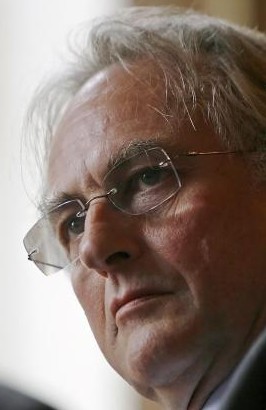
Richard Dawkins: I don't know how many people think I'm mean. I'm certainly not and I didn't consciously set out to do any image-cleaning or anything. I like to think it's an honest portrayal of how I really am. And I hope it is human, yes.
RH: Nevertheless, there's a gulf between the real you and the caricature Richard Dawkins. How has that come about?
RD: I have two theories which are not mutually exclusive. One is the religion business. People really, really hate their religion being criticized. It's as though you've said they had an ugly face, they seem to identify personally with it. There is a historical attitude that religion is off-limits to criticism.
Also, some people find clarity threatening. They like muddle, confusion, obscurity. So when somebody does no more than speak clearly it sounds threatening.
RH: You definitely polarize people. How do you feel about the hate mail you get?
RD: I did a film that's on YouTube of me reading hate mail with a woman playing the cello in the background. Sweet strains to contrast with this awful, “you fucking wanker Dawkins” and so on. Making comedy of it is a pretty good way of absorbing it.
More here.
David Derbyshire in The Guardian:
[…D]rawing on his background in statistics, [Robert] Hodgson approached the organisers of the California State Fair wine competition, the oldest contest of its kind in North America, and proposed an experiment for their annual June tasting sessions.
Each panel of four judges would be presented with their usual “flight” of samples to sniff, sip and slurp. But some wines would be presented to the panel three times, poured from the same bottle each time. The results would be compiled and analysed to see whether wine testing really is scientific.
The first experiment took place in 2005. The last was in Sacramento earlier this month. Hodgson's findings have stunned the wine industry. Over the years he has shown again and again that even trained, professional palates are terrible at judging wine.
“The results are disturbing,” says Hodgson from the Fieldbrook Wineryin Humboldt County, described by its owner as a rural paradise. “Only about 10% of judges are consistent and those judges who were consistent one year were ordinary the next year.
“Chance has a great deal to do with the awards that wines win.”
These judges are not amateurs either. They read like a who's who of the American wine industry from winemakers, sommeliers, critics and buyers to wine consultants and academics. In Hodgson's tests, judges rated wines on a scale running from 50 to 100. In practice, most wines scored in the 70s, 80s and low 90s.
Results from the first four years of the experiment, published in theJournal of Wine Economics, showed a typical judge's scores varied by plus or minus four points over the three blind tastings. A wine deemed to be a good 90 would be rated as an acceptable 86 by the same judge minutes later and then an excellent 94.
More here.
Chen Tian in News China:
Trotsky’s Views was openly published in China in 1980, two years after the country embarked on its ongoing experiment with Reform and Opening-up, and 40 years after Leon Trotsky, who remains one of the world’s most contentious political thinkers, was assassinated.
Its predecessor was Excerpts of Trotsky’s Reactionary Views, compiled by the Central Compilation and Translation Bureau and printed by the People’s Press, as one of the “Gray Cover” books issued to a limited number of Party cadres in 1964.
Gray Cover books were classified into three categories. Category C included books by such European socialist thinkers as Alexandre Millerand of France and Otto Bauer of Austria who attempted revisions to perceived orthodox Marxism. These were generally available to Party functionaries, though banned from public sale. Category B covered more controversial works by figures such as Eduard Bernstein and Karl Kautsky, both revisionist leaders of the Second International, and were restricted to higher-level cadres.
Category A covered books published for the exclusive consumption of ranking officials above the ministerial level, and Excerpts of Trotsky’s Reactionary Views fell under this category. The name Leon Trotsky, as it had within the Soviet Union, became synonymous with revisionism in the official ideology of the Communist Party of China (CPC), which, modified by the unique political theories of Mao Zedong, based its core ideology on a Stalinist interpretation of Marxism-Leninism. During Party purges of the 1930s and 40s, branded “Trotskyites” within the Party ranks were purged in their hundreds.
More here.
A Barred Owl
The warping night air having brought the boom
Of an owls voice into her darkened room,
We tell the wakened child that all she heard
Was an odd question from a forest bird,
Asking of us, if rightly listened to,
“Who cooks for you?” and then “Who cooks for you?”
Words, which can make our terrors bravely clear,
Can also thus domesticate a fear,
And send a small child back to sleep at night
Not listening for the sound of stealthy flight
Or dream of some small thing in a claw
Borne up to some dark branch and eaten raw.
by Richard Wilbur
from Collected Poems, 1943 – 2004
Maggie Jones in The New York Times:
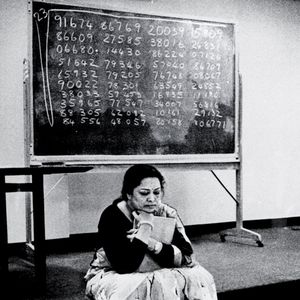
By adulthood, the duty to perform and travel had become a muscle that she couldn’t rest. For more than six decades, Devi packed her suitcase, often every several weeks, for England, the United States, Hong Kong, Japan, Sri Lanka, Italy, Canada, Russia, France, Spain, Mauritius, Indonesia and Malaysia. Before each performance, she needed an hour of silence. Then as soon as Devi stepped onstage in her flowing saris, her gold jewels and her pink lipstick, she was at ease and chatty. She asked for the birth years and dates of members of the audience: In one second or so, she pinpointed the day of the week on which they were born. Or she would rattle off the dates of, say, every Monday in a given year. “Is that correct?” she would ask. Yes, it was correct. Again and again, she was correct. She wowed the magician Ricky Jay on a CBS special, “Learned Pigs and Fireproof Women,” as she extracted roots from nine- and 10-digit numbers. She liked to see the numbers on a chalkboard, without commas, which interrupted their natural flow. The cube root of 849278123? The cube root of 2186875592? Then: Click. With a small shrug of her shoulders, she had the answer. On the BBC, she teased the host, David Frost, about the simplicity of her calculations. “You’ve got it?” she said, knowing full well he didn’t. “How do you do it?” TV hosts often asked. The question bored Devi, but she didn’t show it. “It’s a very automatic reaction. . . . I was born with this gift.”
More here.
Jeffrey M. Berry and Sarah Sobieraj in Salon:

…Like Sarah Palin’s “refudiate” or Anthony Weiner’s repeated sexting faux pas, Bachmann’s serial killer faux pas was tantalizing click-bait—a snarky jab at a favorite target—too good to pass up. Indeed, according to the Project for Excellence in Journalism’s New Media Index, a full third of the newslinks on blogs from the week of the John Wayne Gacy error were about Michelle Bachmann, with her candidacy and the John Wayne Gacy gaffe noted as sharing the spotlight. This political mudslinging is not new, but over the last 25 years outrage as a genre has grown exponentially. In this chapter we dispel the myth that the outrage we see today has always been present—an unfortunate but unavoidable side effect of American democracy—showing that while outrage as a rhetorical style was not recently invented, its emergence as a genre is new.
More here.
Christian Jarrett in Wired, via Andrew Sullivan:
[A] pair of neuroscientists in London have published a welcome review in the respected journal Current Biology entitled “What we know currently about mirror neurons.” In contrast to the hype that usually surrounds these cells, James Kilner and Roger Lemon at UCL have taken a calm, objective look at the literature.
They acknowledge that it is difficult to interpret mirror neuron activity in humans (using brain imaging) and so they focus on the 25 papers that have involved the direct recording of individual brain cells in monkeys. This research reveals that motor cells with mirror-like properties are found in parts of the front of the brain involved in motor control (so-called premotor regions and in the primary motor cortex) and also in the parietal lobe near the crown of the head.
Reading their paper it soon becomes clear that the term “mirror neurons” conceals a complex mix of cell types. Some motor cells only show mirror-like responses when a monkey sees a live performer in front of them; other cells are also responsive to movements seen on video. Some mirror neurons appear to be fussy – they only respond to a very specific type of action; others are less specific and respond to a far broader range of observed movements. There are even some mirror neurons that are activated by the sound of a particular movement. Others show mirror suppression – that is their activity is reduced during action observation. Another study found evidence in monkeys of touch-sensitive neurons that respond to the sight of another animal being touched in the same location (Ramachandran calls these “Gandhi cells” because he says they dissolve the barriers between human beings).
Importantly, Kilner and Lemon also highlight findings from monkeys showing how the activity of mirror neurons is modulated by such factors as the angle of view, the reward value of the observed movement, and the overall goal of a movement, such as whether it is intended to grasp an object or place it in the mouth. These findings are significant because they show how mirror neurons are not merely activated by incoming sensory information, but also by formulations developed elsewhere in the brain about the meaning of what is being observed.
More here.
Ryan Bubalo in the LA Review of Books:
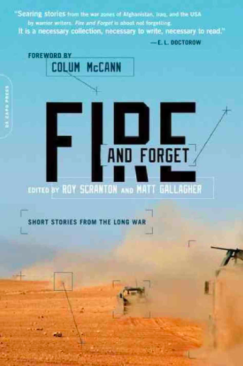
SOLDIER TALES produce their own tropes and metaphors, the unique hells of each war. World War I led us into the trenches. World War II carried us along for D-Day and dogfights. Vietnam was choppers, paddy field recons, and the smell of napalm in the morning. And now, while most of the country tries to forget the Iraq War ever happened, American Iraq fiction slams the doors on its underprotected Humvees and compels readers to take a perilous ride.
Fiction is, of course, serving rearguard here; the last decade has seen Iraq War films, poetry collections, documentaries, and non-fiction books too numerous to list, but part of what’s appealing about examining American Iraq War fiction now is that there isn’t that much yet. A common perspective unites this early wave of American Iraq War storytellers.“The war tried to kill us in the spring,” Kevin Powers writes in the elegant, elegiac opening of The Yellow Birds. Powers’ “us” could just as well include Ben Fountain’s Billy Lynn, David Abrams’ Gooding and Shrinkle, Lea Carpenter’s SEAL operators, and most of the protagonists in Fire and Forget, a collection of “short stories from the long war.” That “us” is the wife of Siobhan Fallon’s Meg in You Know When the Men Are Gone and the son of Lea Carpenter’s Sara. Because the texts that comprise the current corps of American fictions about Iraq are not just war stories, they are soldier tales.
David Simon’s Generation Kill and other early American works explored the halcyon invasion days of the war when the enemy and objectives were clear: topple Saddam, free Iraq. American fiction, though, focuses primarily on the occupation, and for American soldiers in occupied Iraq, there was driving and there were IEDs.
More here.
Over at the Rationally Speaking podcast, Massimo Pigliucci and Julia Galef:
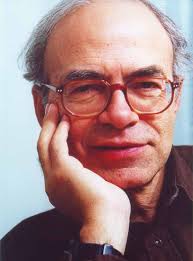
Few philosophers have as wide of an impact on the general public as ethicist Peter Singer, this week's guest on Rationally Speaking podcast. Singer's utilitarian arguments about how we should treat animals, why we have a moral obligation to give to charity, whether infants should count as “people,” and more have won him widespread fame — and notoriety — over the last few decades, and launched multiple movements. Tune in to hear his discussion with Massimo and Julia about why he's a utilitarian, and how his views of utilitarianism have recently changed (and find out how he influenced Massimo's life years ago).
More here.
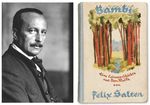
The years before the First World War mark the highpoint of Salten’s career as a Zionist speaker. He was invited back by Bar Kochba’s leaders, and when, in 1911, he made another appearance in the festive evening series, he shone just as brightly as he had the first time. But even after Zionist lecturing was mostly behind him, Salten continued to write as a Zionist. In 1924, for example, he travelled to Palestine and published a largely admiring book about what he saw there. This was soon after Salten had produced the work that would win him international fame: Bambi.
Bambi first appeared in serialized form in Vienna’s stately paper of record, the Neue Freie Presse. The book version appeared in 1923, and by then the story had established itself as one that appealed to adults and children alike. The American edition was so hotly anticipated that the fledgling Book of the Month Club ordered 50,000 copies before it had even appeared. Translated into English by Whittaker Chambers, of all people, and published in the United States in 1928, the novel was both a critical and commercial success.
more here.