The Dangers of Pseudoscience

448px-Hua_t08

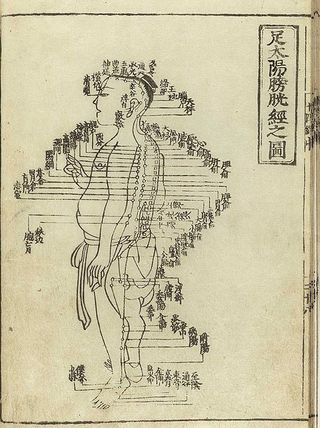
Massimo Pigliucci and Maarten Boudry respond to Stephen T. Asma's piece on Chinese medicine, in The NYT's The Stone (image from wikimedia commons):

Philosophers of science have been preoccupied for a while with what they call the “demarcation problem,” the issue of what separates good science from bad science and pseudoscience (and everything in between). The problem is relevant for at least three reasons.

The first is philosophical: Demarcation is crucial to our pursuit of knowledge; its issues go to the core of debates on epistemology and of the nature of truth and discovery. The second reason is civic: our society spends billions of tax dollars on scientific research, so it is important that we also have a good grasp of what constitutes money well spent in this regard. Should the National Institutes of Health finance research on “alternative medicine”? Should the Department of Defense fund studies on telepathy? Third, as an ethical matter, pseudoscience is not — contrary to popular belief — merely a harmless pastime of the gullible; it often threatens people’s welfare, sometimes fatally so. For instance, millions of people worldwide have died of AIDS because they (or, in some cases, their governments) refuse to accept basic scientific findings about the disease, entrusting their fates to folk remedies and “snake oil” therapies.

It is precisely in the area of medical treatments that the science-pseudoscience divide is most critical, and where the role of philosophers in clarifying things may be most relevant. Our colleague Stephen T. Asma raised the issue in a recent Stone column (“The Enigma of Chinese Medicine”), pointing out that some traditional Chinese remedies (like drinking fresh turtle blood to alleviate cold symptoms) may in fact work, and therefore should not be dismissed as pseudoscience.

This, however, risks confusing the possible effectiveness of folk remedies with the arbitrary theoretical-metaphysical baggage attached to it.

More here.

Is Prostitution Safer When It’s Legal?

Rachel Lloyd in the New York Times:

Rachel_BookCoverImage-266x400As a teenager, I worked in Germany’s legal sex industry. I was, like many girls in the club, underage; most of us were immigrants, nearly all of us had histories of trauma and abuse prior to our entry into commercial sex. Several of us had pimps despite working in a legal establishment; all of us used copious amounts of drugs and alcohol to get through each night.

Violence is inherent in the sex industry. Numerous studies show that between 70 percent and 90 percent of children and women who end up in commercial sex were sexually abused prior to entry. No other industry is dependent upon a regular supply of victims of trauma and abuse.

The presence of an adult sex industry increases both the rates of child sexual exploitation and trafficking. It may be true that some women in commercial sex exercised some level of informed choice, had other options to entering and have no histories of familial trauma, neglect or sexual abuse. But, these women are the minority and don’t represent the overwhelming majority of women, girls, boys and transgender youth, for whom the sex industry isn’t about choice but lack of choice.

More here, along with various other points of views.

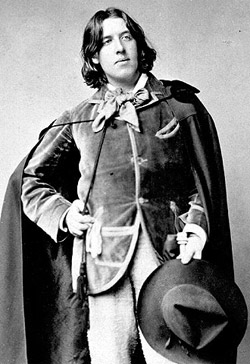
A Wilde Fashion

ID_POPKIN_WILDE_AP_001

Nathaniel Popkin in The Smart Set:

[W]e’ve come to see Wilde’s “true literary life,” when he wrote Dorian Gray, The Importance of Being Earnest, Salomé, and A Woman of No Importance, and made his mark as a piercingly funny avant garde social critic and dramatic visionary, as a kind of spontaneous explosion of genius and self-invention. Failing at brilliance, it’s been long imagined, from a somewhat determinist perspective, Wilde was so unflappably clever and intellectually original he could flip personas, almost as if playing a game. “Wilde’s game centered on masks, a game he relished…both in all seriousness and with delight in its manifest absurdities,” writes Richard Allen Cave, editor of the Penguin Classics edition ofThe Importance of Being Earnest and Other Plays (2000).

Even so, this sort of psychological explanation accounts for Wilde’s personality, but not necessarily the mechanics of a career about to blossom (writers rarely become famous by accident). The hard stop, journalism is over, now I’ll write a shocking novel and scores of beloved plays wasn’t quite adequate for John Cooper, a non-academic Wilde scholar, who runs a project called Oscar Wilde in America. Cooper understood implicitly that one thing draws from the other. “People know about Wilde’s early poetry. People know about the drama,” he says. “But this middle career: people tend to think he had merely settled down. They overlook the period as simply a domestic time.” In desiring to better understand the middle period, Cooper had often thought about something Wilde had said while at Oxford:

I'll be a poet, a writer, a dramatist. Somehow or other I'll be famous, and if not famous, I'll be notorious.

He began to imagine that “to locate Wilde the writer we must use the mantra of his quotation as a roadmap.” Youthful bravado or nonsense, the sequence of poet, writer, dramatist became for Cooper a research framework. He wanted to find new Wilde material that would help tell a richer story of this evolution, both personally and professionally, and that would provide links—seams, we might venture—between poet and writer, writer and dramatist. Then, this spring, he found it: a body of work, including Wilde’s first major piece of published prose writing, “The Philosophy of Dress,” an essay published in 1885 and mentioned again only once more, in 1920, on clothing, dress, and fashion.

More here.

Why we need Danilo Kiš

P16_NowThen_Web_375910mAdam Thirlwell at the Times Literary Supplement:

Such melancholy precision, of course, has its literary provenance. That voice is partly Kiš’s, but also partly belongs to Bruno Schulz – who made this manner of sentence inlaid with metaphor, brimming with retrospective sadness, his own. It was with Kiš’s next book, Hourglass – which completed the trilogy that would eventually be republished under the general title Family Circus – that Kiš invented his own form. (Even if, as Thompson notes, the presence of Schulz is still there in the title – a small echo of Schulz’s own title: Sanatorium Under the Sign of the Hourglass.) “I tried to replace the monotony of a given style with polyphony, a formal polyphony”, explained Kiš. “Hence the use of the most varied literary devices – lyrical and essayistic, ironic and tragi-serious, philosophical and parodic.” The single lyrical voice of his early books was replaced in Hourglass by a multiplicity of voices: notebook entries, clinically objective descriptions, police procedurals and, finally, a letter from Eduard Sam to his relatives in Kerkabarabás which describes in arcane detail all his complaints at how they had treated him. The letter, touched up by Kiš, was real – he had discovered it in a box of his father’s papers. It appears at the novel’s end, with the ironic title, “Table of Contents”. The collaged elements that have preceded it, the reader discovers, are attempts at elucidation, forms of commentary: they are approaches to the total terror of the Holocaust.

more here.

Japan’s tormented relationship with its modernity

Tokyo-street-fPankaj Mishra at Caravan:

VISITING JAPAN THIS YEAR, however, I felt pulled back in time. I had over-prepared, in a way, for this trip, reading widely, and seeking out authorities on the country, for several years. Still, I was surprised and often baffled by its isolationism, over-regulated economic regime, monopolies and inefficiencies—visitors will find it easier, for instance, to procure a data connection on their smartphone in Laos than in Japan, and a SIM card for voice calls is simply unobtainable. The Japanese were still rich. But why did their houses look so flimsy, their supermarkets so poorly stocked, and their public architecture so unprepossessing? As early as the 1920s, Japan was introduced to the material culture of capitalism, and its attendant phenomena: the consumption of cars, radio, films, magazines, the rise of the nuclear family, and the commercially motivated exaltation of youth and romantic love, and Western mores; it was also then that a popular culture grew around the new urban middle class, featuring the ubiquitous so-called salaryman (sarariman) and the hard-working white-collar women—moga, or modern girls, who were, in the overheated Japanese male imagination, as prone to retail kisses as Western clothes.

more here.

beauty will save the world?

Watering-can-984999-m-150x150Jeffrey Bilbro at Front Porch Republic:

I want to reflect today on the title chosen for this gathering, “Beauty will Save the World.” That’s quite the assertion, and I don’t know if I can convincingly support it, but I’ll give it a shot. My tentative thesis today is that the best way to cultivate healthy local cultures is to celebrate their beauty. It’s not to pass laws, it’s not to develop rational or economic arguments for their benefits, it’s not to start some new program. All these might be needed subsequently, but if we don’t first bear witness to the beauty of a healthy culture, then other approaches are doomed. It’s in this way, by enabling us to see the truth and goodness of healthy way of life, that beauty will save the world. So I want to think with you about the beauty of local culture, why that beauty is important, and how to cultivate it. I’ll begin by describing a beautiful, and I think saving, activity that I’ve had the privilege of participating in this past year.

A group of us at Spring Arbor University got together last winter and started discussing how we might start a small community garden. By springtime, we had secured the requisite institutional backing and organized several workdays where faculty, students, staff, and even one local high school student (he needed community service credit) came to help build the garden. We constructed ten raised beds near one of the student dorms, filled them with topsoil and manure, planted them, and set up a watering rotation. Later this summer, a local non-profit donated a greenhouse to us that they couldn’t use, and we’re looking forward to filling that with vegetables this fall and spring.

more here.

Friday Poem

Clegs at Totleigh Barton

Plenty of gates to lean on around here,
and plenty of time to watch the horse-flies
on the dung, to see if they are really
generated from it. There is more chill
than blessing in this gentle breeze off Dartmoor,
more edge than you’d expect in late September.
So: winter soon, after no summer.

Yes, this is the place: ‘Road liable to flooding’.
This is where Grace Ingoldby did handstands
on the frosty tarmac. Where Mick Imlah stayed,
when we nearly ran over the cliff
at Morwenstow, looking for Hawker’s hut
in which the old man composed, or didn’t.

Before Grace’s son died in the fire, and Grace died too.
Before Mick got ill. Today I am back on my own
to stare at these insects at their dreadful trade.

‘Now try your brakes’, it still says on the sign.
.

by Bernard O'Donoghue
publisher: PIW, 2011

Thursday, October 10, 2013

Re-imagining the City Critically

Marcuse_468w

Peter Marcuse in Eurozine:

Re-imagining the city can be a provocation to reconsider and expand the range of possibilities for a city in the future. It can simply be an opportunity for an unfettered imagination physically to design something completely new and different, not tethered to the existing city. Or it can open the door to a fundamentally critical view of the existing city, questioning the social and economic and organizational principles that underlie its present constitution and are normally taken for granted. The best of classic utopias do both. What follows focuses only on the latter, on the imagining not of the physical but of the human principles and practices on which an imagined city could be based. It raises some critical questions about some of the principles and practices as they implicitly exist today and imagines some alternatives.

If we were not concerned with the existing built environment of cities, but could mold a city from scratch, after our heart's desire, Robert Park's formulation that David Harvey is fond of quoting, how would such a city look? Or rather: according to what principles would it be organized? For its detailed look, its physical design, should only evolve after the principles it is to serve have been agreed upon. So what, in our heart of hearts, should determine what a city is and does?

Why not start, first, by taking the question literally. Suppose we had neither physical nor economic constraints, what would we want, in our hearts? Never mind that the supposition posits a utopia; it is a thought experiment that may awaken some questions whose answers might in fact influence what we do today, in the real world, on the way to an imagined other world that we might want to strive to make possible.

More here.

Epistemic Forces and Perception

DSC01955

Richard Marshall interviews Susanna Schellenberg in 3:AM Magazine:

3:AM: One of the questions about perception is whether we can only be conscious of conceptually structured content. Perhaps before going into your response to the issue you might lay out the issue for newcomers and say why non-conceptually structured perception is thought to be such a difficulty?

SS: This debate is in part terminological. Depending on how concepts are understood it is more or less plausible to think of experience as conceptually structured. Concepts have been understood in terms of mental representations, stereotypes, functional roles, and in terms, and inferential roles to name just a few standard candidates. Nonconceptual structures have been understood in terms of image-like or map-like representations, or simply in terms of the idea that we represent naked properties and objects without representing them in terms of employing concepts.

Reasons to think that perceptual content is nonconceptually structured are to account for the fineness of grain of perceptual experience and the richness of perceptual experience. The idea is that perceptual experience is much richer and finely grained than our concepts. For example, our color concepts are much more course grained than the color shades we are able to discriminate between in perception. If that’s right (and on certain notions of concepts it is), then that’s a reason to think experience is nonconceptually structured. Another reason is that non-rational animals have perceptions, but don’t have concepts, so perceptual content cannot be conceptually structured. Whether this is a good reason depends again on what notion of concept one is operating with. After all, on certain notions of concepts it’s unproblematic to attribute concepts to non-rational animals.

One standard reasons for thinking that perceptual content is conceptually structured is that on a Fregean understanding of content it’s not clear that content could not be conceptually structured. I don’t think this is a good reason for accepting the thesis that perceptual content is conceptually structured. In a number of papers, I’ve developed a Fregean notion of perceptual content in terms of employing perceptual capacities that are not conceptual capacities.

More here.

The Truth About GMOs

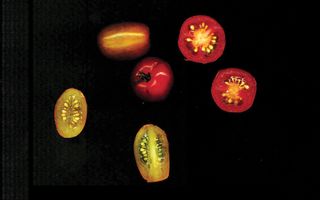
Ronald_tomato_web

The Boston Review has a forum on GMOs, with several responses to a lead piece by Pamela Ronald:

The world faces an enormous challenge: with changing diets and population growth of 2–3 billion over the next 40 years, UNESCO predicts that food production will need to rise by 70 percent by 2050. Many pests and diseases cannot, however, be controlled using conventional breeding methods. Moreover, subsistence farmers cannot afford most pesticides, which are often ineffective or harmful to the environment.

Yet many emerging agricultural catastrophes can almost certainly be avoided thanks to a modern form of plant breeding that uses genetic engineering (GE), a process that has led to reduced insecticide use and enhanced productivity of farms large and small.

In spite of these benefits, genetic engineering is anathema to many people. In the United States, we’ve seen attempts to force labeling of genetically modified organisms (GMOs). In much of Europe, farmers are prohibited from growing genetically engineered crops and so must import grain from the United States. And “GMO-free” zones are expanding in Japan.

The strong distrust of GE foods is curious. Opponents typically profess a high degree of concern for human welfare and the environment. They want the same things that scientists, farmers, food security experts, and environmentalists want: ecologically sound food production accessible to a growing global population. But their opposition threatens the great strides that have been made toward these goals through deployment of new technologies.

More here, including links to reponses and to Ronald's reply to her interlocutors.

Nobel Prize 2013: Alice Munro exclusive story

From Telegraph:

The final part of Alice Munro's latest collection, Dear Life, comprises four works she describes as “not quite stories”. They are, she writes, “autobiographical in feeling … the first and last – and the closest – things I have to say about my own life”. Published here exclusively is one of those:”Voices”

VOICES

Alice-Munro-story-_2698381bWhen my mother was growing up, she and her whole family would go to dances. These would be held in the schoolhouse, or sometimes in a farmhouse with a big enough front room. Young and old would be in attendance. Someone would play the piano — the household piano or the one in the school — and someone would have brought a violin. The square dancing had complicated patterns or steps, which a person known for a special facility would call out at the top of his voice (it was always a man) and in a strange desperate sort of haste which was of no use at all unless you knew the dance already. As everybody did, having learned them all by the time they were ten or twelve years old.

Married now, with three of us children, my mother was still of an age and temperament to enjoy such dances if she had lived in the true countryside where they were still going on. She would have enjoyed too the round dancing performed by couples, which was supplanting the old style to a certain extent. But she was in an odd situation. We were. Our family was out of town but not really in the country. My father, who was much better liked than my mother, was a man who believed in taking whatever you were dealt. Not so my mother. She had risen from her farm girl’s life to become a schoolteacher, but this was not enough, it had not given her the position she would have liked, or the friends she would have liked to have in town. She was living in the wrong place and had not enough money, but she was not equipped anyway. She could play euchre but not bridge. She was affronted by the sight of a woman smoking. I think people found her pushy and overly grammatical. She said things like “readily” and “indeed so.” She sounded as if she had grown up in some strange family who always talked that way. And she hadn’t. They didn’t. Out on their farms, my aunts and uncles talked the way everybody else did. And they didn’t like my mother very much, either.

More here.

Alice Munro’s road to Nobel literature prize was not easy

Margaret Atwood in The Guardian:

Nobel-literature-prize-wi-009Alice Munro has been awarded the Nobel prize in literature, thus becoming its 13th female recipient. It's a thrilling honour for a major writer: Munro has long been recognised in North America and the UK, but the Nobel will draw international attention, not only to women's writing and Canadian writing, but to the short story, Munro's chosen métier and one often overlooked.

…Munro found herself referred to as “some housewife”, and was told that her subject matter, being too “domestic”, was boring. A male writer told her she wrote good stories, but he wouldn't want to sleep with her. “Nobody invited him,” said Munro tartly. When writers occur in Munro stories, they are pretentious, or exploitative of others; or they're being asked by their relatives why they aren't famous, or – worse, if female – why they aren't better-looking. The road to the Nobel wasn't an easy one for Munro: the odds that a literary star would emerge from her time and place would once have been zero. She was born in 1931, and thus experienced the Depression as a child and the second world war as a teenager. This was in south-western Ontario, a region that also produced Robertson Davies, Graeme Gibson, James Reaney, and Marian Engel, to name several. It's this small-town setting that features most often in her stories – the busybodies, the snobberies, the eccentrics, the cutting of swelled heads down to size, and the jeering at ambitions, especially artistic ones. The pressure of cramped conditions may create the determination to break free, to gain some sort of mastery; but if you try this, you'd better do it well. Otherwise those who have laughed at you will laugh even harder, since an ice dancer who tries a triple axel and falls on her behind is hilarious.

More here.

Talking language with Ben Zimmer

From The Chicago Manual of Style website:

Shop Talk: A favorite debate in the CMOS community is whether new word usages should be allowed, with classic examples of hopefully and literally. How do you think we should draw the line between common usage and Standard Written English? Are there cultural or academic checkpoints that a word must go through before making the transition?

Ben: The first thing to recognize is that what we think of as “new” usage is very often not that new at all, thanks to what Stanford linguist Arnold Zwicky has called The Recency Illusion. We tend to think of stigmatized language patterns as artifacts of our current age, when in fact they can reflect long-standing usage among established, respected writers. But just because you can find Alexander Pope writing “Every day with me is literally another yesterday for it is exactly the same” in 1708, that’s not going to assuage those who insist that literally should only be used, well, literally, rather than emphatically or hyperbolically. I often point to such historical evidence in usage disputes, but I doubt that I’m convincing anyone who has already decided that a particular point of usage is simply wrong.

I chalk up much of this black-and-white thinking about language to pedagogy: in our schooling, we are constantly encouraged to think that there is only one right answer, which flies in the face of the flexibility and mutability of language. And so as adults, we look to authoritative texts like usage manuals and dictionaries to uphold an unequivocal standard. The messy linguistic facts reveal that there is no single standard, however, even if we limit ourselves to a supposedly unitary “Standard Written English.” Different social contexts require subtle adjustments to our language use, and for the most part we navigate these changes of register without even consciously thinking about it. It’s only when we get snagged on a shibboleth like literally or hopefully that questions of propriety arise and we expect an authority to decree that there is One Right Way.

Good usage manuals and dictionaries won’t shy away from the complexity of language but will instead offer advice about what is typically expected in different written and oral styles.

More here.

The Lustful Human Animal: Cultural Differences in Sexual Harm and Consent

Jesse Bering in Scientific American:

ScreenHunter_354 Oct. 10 18.54Most of us are convinced that we excel at being clearheaded, humane thinkers when it comes to sex. We appeal, and admirably so, to notions such as harm and consent. But since most of us aren’t anthropologists, we W.E.I.R.D. people (the anthropologist Joe Henrich’s apt acronym for “Western, Educated, Industrialized, Rich, and Democratic”) often assume a false obviousness along these lines of harm and consent that, interestingly enough, simply isn’t there. Scientists have found that since we would be harmed by a certain sex act,we presume others would be harmed as well.

In fact, cultural relativism is the most glaring sign that the lion’s share of our sexual ethics is arbitrary, given that our intuitive feeling of what’s “normal” and “deviant” hinges largely on our cultural indoctrination. In the past, for instance, a proper Crow gentleman wasn’t expected to simply woo the object of his desire over a slice of homemade juneberry pie. Instead, the tradition for a man so smitten involved his crawling up to the woman’s tent in the middle of the night and fishing around with his hand under the flaps for her body. And female Crow informants explained to the anthropologists inquiring about the tradition that this manual search in the dark for her orifices was an especially romantic first move. “If he is successful,” wrote the researchers Clellan Ford and Frank Beach, “a man may by this device persuade the woman to have intercourse with him later on.” If he were successful in our society, he’d be signing his name to the sex offender registry before dawn, if he still had a hand. But in the cultural context of these Native Americans, most women, presumably, favored this custom.

More here.

David Byrne: If the 1% stifles New York’s creative talent, I’m out of here

David Byrne in The Guardian:

ScreenHunter_353 Oct. 10 18.03I'm writing this in Venice, Italy. This city is a pleasantly confusing maze, once an island of fortresses, and now a city of tourists, culture (biennales galore) and crumbling relics. Venice used to be the most powerful city in Europe – a military, mercantile and cultural leader. Sort of like New York.

Venice is now a case study in the complete transformation of a city (there's public transportation, but no cars). Is it a living city? Is it a fossil? The mayor of Venice recently wrote a letter to the New York Review of Books, arguing that his city is, indeed, a place to live, not simply a theme park for tourists (he would like very much if the big cruise ships steered clear). I guess it's a living place if you count tourism as an industry, which I suppose it is. New York has its share of tourists, too. I wave to the doubledecker buses from my bike, but the passengers never wave back. Why? Am I not an attraction?

New York was recently voted the world's favorite city – but when you break down the survey's results, the city comes in at No 1 for business and only No 5 for living. Fifth place isn't completely embarrassing, but what are the criteria? What is it that attracts people to this or any city? Forget the business part. I've been in Hong Kong, and unless one already has the means to live luxuriously, business hubs aren't necessarily good places for living. Cities may have mercantile exchange as one of their reasons for being, but once people are lured to a place for work, they need more than offices, gyms and strip clubs to really live.

More here.

Thursday Poem

The Homeland

To the faces that harden behind a mask of gloom
I bow, and to streets where I left behind my tears;
To a father who died, green as a cloud
With a sail on his face, I bow,
And to a child that is sold
In order to pray and clean shoes
(In our land we all pray and clean shoes);
To a stone I inscribed with my hunger,
Saying it was lightning and rain, drops rolling under my eyelids,
And to a house whose dust I carried with me in my loss
I bow—all these are my homeland, not Damascus.
.

by Adunis
translation by M.M. Badawi

Wednesday, October 9, 2013

Some Belated Thoughts on the Pedagogy of Lewd Jokes

Justin E. H. Smith in his own blog:

6a00d83453bcda69e2019affd45e49970d-350wiI have, up until now, mostly held back my views on l'affaire McGinn, which shook the philosophy community in the United States some months ago. But there comes a point when discretion starts to feel uncomfortably similar to cowardice, and this is a moral failure I would like to avoid even more than the consternation of my peers.

I don't really want to discuss McGinn himself. I want to discuss the response to the affair offered by Louise Antony in a New York Times 'Stone' piece of September 5, 2013, entitled “Academia's Fog of Male Anxiety.” In particular, I want to respond to the suggestion that 'lewd conversation', including not least doubles entendres about handjobs, can be eliminated from the repertoire of possible topics of discussion between professors and students without any danger of compromising the educational experience.

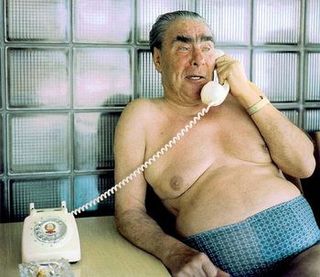
We sometimes hear grumblings about an encroaching Stalinism in academia, where good folk are rubbed out of memory for failing to follow, in every respect, the party line. This does not get it right, and indeed goes much too far. The current era is not Stalinist, but Brezhnevite: where dull-minded, rule-loving functionaries move in to manage the legacy of a glorious revolution.

To continue the analogy, I declare that I remain loyal to what I take to be the core principles of the revolution in question –the sexual revolution–, which had already begun to degenerate by the time I was born, and which in the broad sense in which I understand it began long before the era of rock-and-roll, and includes, inter alia, the life-affirming effulgences of the Montanan libertine Mary MacLane, and Walt Whitman's celebration of his own beard and musk and semen: of his own infinite desire and his freedom to express it in words.

I believe lewd jokes are a crucial part of what brings joy in life, and I believe the sexual revolution was important in enabling people in free societies to seize this joy.

More here.

The pseudo-profundity of Malcolm Gladwell

Steven Poole in The Guardian:

ScreenHunter_352 Oct. 10 11.37Gladwell is a brilliant salesman for a certain kind of cognitive drug. He tells his readers that everything they thought they knew about a subject is wrong, and then delivers what is presented as a counterintuitive discovery but is actually a bromide of familiar clichés. The reader is thus led on a pleasant quasi-intellectual tour, to be reassured at the end that a flavour of folksy wisdom was right all along. Little things really can make a big difference; trusting your gut can be better than overthinking; successful people work hard.

The art here lies in making the platitudinous conclusion seem like a revelatory place to end up, after one has enjoyed the colourful “stories” about carefully described plucky individuals with certain hairstyles and particular kinds of trousers. (Actual quote: “He is a tall young man with carefully combed dark-brown hair and neatly pressed khakis.”) Such books must thus be constructed with a certain suspenseful cunning. Gladwell likes first to tell an apparently convincing story and then declare that it’s not true, like a magician pulling an empty hat out of a rabbit. Thus does his book begin, relaying the standard version of David and Goliath – plucky shepherd defeating fearsome giant with fortunately slung pebble – and then announcing that “almost everything about it is wrong”.

More here.