
Julien Crockett in the Los Angeles Review of Books:
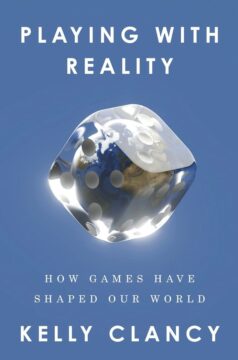 JULIEN CROCKETT: You dedicate Playing with Reality to the next generation, writing, “If play is the engine of creation, I cannot wait to see what new worlds you build.” A recurring theme in your book is the primacy of play and games to what it means to be human—that playing games is universal, an instinct. What makes games and play so important to understanding ourselves?
KELLY CLANCY: Play is something that predates humans. It’s fundamental to how animals engage in and understand the world. It’s how we test and figure out the rules of our environment, how social relationships work. Part of the idea to focus on play in the book was generated from David Graeber and David Wengrow’s book The Dawn of Everything: A New History of Humanity (2021), where they go through different ancient societies and show not only how incredibly diverse they were—contrary to the idea that there is a monolithic trajectory from hunter-gatherer to agriculturalist to industrial society—but also how incredibly playful all of these societies were. More recently, at events like Carnival in Renaissance Europe, people would put on costumes and participate in taboo things like gambling, having affairs, and drinking. There were all of these opportunities to release the strictures of society and try something new.
This is something that I think we’re missing in our current society but that maybe the internet is giving us—an opportunity to put on a new mask, a new personality, and to act in a way that we wouldn’t necessarily in our everyday interactions.
More here.
Enjoying the content on 3QD? Help keep us going by donating now.
 I’m at DealBook Summit in NYC today and I just heard Sam Altman
  Cass Sunstein: Well, I think that one mistake is that people think that universities are covered by the same principles, regardless of whether they’re public or private. And as a legal matter, public universities are governed by the First Amendment and private universities just aren’t. There’s also a lot of talk about incitement without a lot of clarity about what that particularly entails. So if I say something like, “If you don’t buy my book there’s going to be a revolution,” that’s kind of hopelessly useless talk on the part of an author and that would not be regulable as incitement.
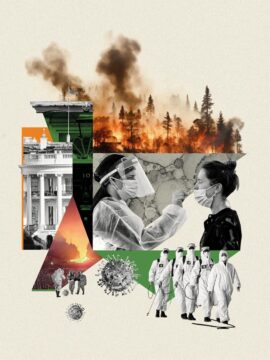 Nature’s survey — which took place before the US election in November — together with more than 20 interviews, revealed where some of the biggest obstacles to providing science advice lie. Eighty per cent of respondents thought policymakers lack sufficient understanding of science — but 73% said that researchers don’t understand how policy works. “It’s a constant tension between the scientifically illiterate and the politically clueless,” says Paul Dufour, a policy specialist at the University of Ottawa in Canada.
 To wake up one morning
 W
W Philosophers tend to tolerate a high degree of personal strangeness in one another. More specifically, they tend not to worry – at least explicitly or on the record – about whether the weird philosophical beliefs and the weird non-philosophical actions of a colleague might have a common source. The methodological norm rather is that ideas must stand or fall on their intrinsic merits; apart from anything else, this is probably good politics. Making the obvious psychological peculiarities of an author too operative a consideration within academic life might risk implicating an impractically large number of people. (And in that case, one probably wouldn’t trust most of them to apply the relevant criteria accurately anyway.) But this does make philosophy different from other areas of life, where we readily make informative connections, in both directions, between the strangeness of the person and the strangeness of his beliefs, often with a view to discrediting one or the other.
 Philosopher Peter Godfrey-Smith has devoted his career to examining how animal minds evolved. He blends formidable analytical skills with a deep curiosity about the natural world, mostly experienced at first hand in his native Australia. While writing his latest book, Living on Earth, he spent many hours scrutinizing noisy parrots and cockatoos in his back garden, weeks observing gobies building underwater towers made of shells and seaweed and years closely watching
  The political spasm that gripped South Korea last night has been widely seen as a portent of doom, but it need not be. Taking a page from
  T
T AI has become uncannily good at aping human conversational capabilities. New research suggests its powers of mimicry go a lot further, making it possible to replicate specific people’s personalities. Humans are complicated. Our beliefs, character traits, and the way we approach decisions are products of both nature and nurture, built up over decades and shaped by our distinctive life experiences.
 V
V