On Meat-eating

Nylen_468w

Antti Nylén in Eurozine:

There's a certain type of conservatism that takes on an almost elegiac quality in its statements on the ultimate inexplicability of the world. The myth of complexity is the salvation of the conservative thinker; it is the object of his love, his praise and his undying gratitude. When the background noise of the unbridled, indistinct, mystical “forces” of sin, nature and capitalism reaches a crescendo, the conservative can be sure of feeling at one with himself, serene on the uncomplicated foreground of the world at large. His affairs are all in order, because the rest of the world is in shambles. Or as Alain Badiou has it: “Our world is in no way as 'complex' as those who wish to ensure its perpetuation claim.”

In fact, the most difficult things are those that are held to be difficult – in the sense of being “preserved” (Lat. conservare). Nobody's making us. It's a maxim that applies often, if not always.

Veganism, for instance, a practice commonly held to be blisteringly difficult, is actually ridiculously easy. To be idle while others act.

Then there are downright arduous things, like building the Great Wall or translating the Iliad, but I am not concerned with those.

An impossible thing is a phenomenon unto itself. You can no more transform yourself into a millipede than you can spontaneously grow an extra arm, because human nature is simple: it is physical. Therein lies the beginning and the end of any and all metaphysical significance. The world, too, is simple and physical; the world = the Earth.

More here.

The Counterreformation in Higher Education

Great-U-Gamble-243x366

Christopher Newfield reviews Andrew McGettigan's The Great University Gamble : Money, Markets, and the Future of Higher Education, in the LA Review:

AMERICANS WHO WONDER what the heck is happening to their public colleges can find answers in the British case. While American educational and political leaders deny the negative outcomes of the actions they barely admit to be taking, the United Kingdom’s Tory government has offered explicit rationales for the most fundamental restructuring of a university system in modern history. The stakes are very high. Both countries have been downgrading their mass higher education systems by shrinking enrollments, reducing funding for educational quality, increasing inequality between premier and lower-tier universities, or all three at once.

Oddly, policymakers are doing this in the full knowledge that mass access to high-quality public universities remains the cornerstone of high-income economies and complex societies. The public has a right to know what politicians and business leaders are really doing to their higher education systems, why they are doing it, and how to respond.

Those who tried to follow the British drama through scattered newspaper articles and government reports will be glad to know that we now have a one-stop comprehensive guide to the whole affair. It is Andrew McGettigan’s The Great University Gamble: Money, Markets, and the Future of Higher Education. No one has assembled the political and financial pieces of the story as he has, and the book has started to reanimate discussion of higher education policy in Britain.

More here.

How science goes wrong

From The Economist:

ScreenHunter_379 Oct. 25 12.37A simple idea underpins science: “trust, but verify”. Results should always be subject to challenge from experiment. That simple but powerful idea has generated a vast body of knowledge. Since its birth in the 17th century, modern science has changed the world beyond recognition, and overwhelmingly for the better.

But success can breed complacency. Modern scientists are doing too much trusting and not enough verifying—to the detriment of the whole of science, and of humanity.

Too many of the findings that fill the academic ether are the result of shoddy experiments or poor analysis (see article). A rule of thumb among biotechnology venture-capitalists is that half of published research cannot be replicated. Even that may be optimistic. Last year researchers at one biotech firm, Amgen, found they could reproduce just six of 53 “landmark” studies in cancer research. Earlier, a group at Bayer, a drug company, managed to repeat just a quarter of 67 similarly important papers. A leading computer scientist frets that three-quarters of papers in his subfield are bunk. In 2000-10 roughly 80,000 patients took part in clinical trials based on research that was later retracted because of mistakes or improprieties.

More here.

Christening the Earliest Members of Our Genus

Carl Zimmer in the New York Times:

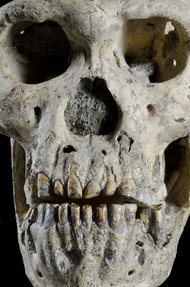
18skull-articleInlineAround 1.8 million years ago, human evolution passed a milestone. Our ancestors before then were little more than bipedal apes. Those so-called hominids had chimpanzee-size bodies and brains, and they still had adaptations in their limbs for climbing trees. But the fossils of hominids from 1.8 to 1.5 million years ago are different. They had bigger brains, flatter faces and upright bodies better suited to walking.

Their geography changed, too. While earlier hominid fossils have only been found in Africa, the newer ones also turn up at sites stretching across Asia, from the Republic of Georgia all the way to Indonesia. These cosmopolitan hominids are so much like modern humans that paleoanthropologists consider them the earliest members of our own genus, Homo.

But they didn’t belong to our species, Homo sapiens. After all, their brains were still no more than two-thirds the size of our own, and they could only make simple hand axes and other crude stone tools. But if not Homo sapiens, then Homo what? What species did these fossils belong to?

That turns out to be a remarkably hard question to answer — in part because it is difficult to settle on what it means to be a species.

More here.

Rihanna, Lady Gaga and what’s really behind burqa swag

Arwa Mahdawi in The Guardian:

ScreenHunter_378 Oct. 25 12.23Ladies! Wondering what to wear tonight that will turn heads and get all the boys excited? May I suggest a sexed-up burqa or perhaps a naughty niqab? While harem pants are v last season, veils are terribly in vogue. Not only do they add an exotic edge, but black is extremely mu-slimming.

All the celebs are getting involved. One such person is Rihanna, who was recently asked to leave a mosque in Abu Dhabi after posing for photos wearing her own interpretation of a burqa. Pairing a hooded black jumpsuit with bright red lipstick, Ri-Ri's brand of Islama-chic proved a hit on Instagram, but not among staff of the Sheikh Zayed Grand Mosque. Ri-Ri is reported to have been ejected, and there followed a statement that the photos were “inconsistent with the sanctity of the mosque”.

Rihanna's entire Instagram account is a chronicle of controversy and questionable decisions, so this latest episode isn't much of a surprise. What is noteworthy about the Abu Dhabi incident, however, is that it is the latest in a long line of attempts by western popular culture to eroticise the veil. From the creation of a burqa Barbie to Diesel ads featuring a tattooed woman wearing nothing but a denim niqab, overtly sexual depictions of the veil are suddenly everywhere. You can even buy a “Sexy Middle Eastern Arab girl burqa Halloween costume” from eBay. And there's a suitably ghastly name for this phenomenon: “burqa swag”.

More here.

Thursday, October 24, 2013

The Sound of Terror: Phenomenology of a Drone Strike

Nasser Hussain in the Boston Review:

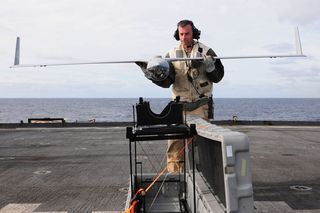
UAV-web“The drones were terrifying. From the ground, it is impossible to determine who or what they are tracking as they circle overhead. The buzz of a distant propeller is a constant reminder of imminent death.” This account of what a drone feels and sounds like from the ground comes from David Rohde, a journalist who was kidnapped and held by the Taliban for seven months in 2008. Yet this kind of report rarely registers in debates in the United States over the use of drones. Instead these debates seem to have reached an impasse. Opponents of drone strikes say they violate international law and have caused unacknowledged civilian deaths. Proponents insist they actually save the lives of both U.S. soldiers, who would otherwise be deployed in dangerous ground operations, and of civilians, because of the drone’s capacity to survey and strike more precisely than combat. If the alternative is a prolonged and messy ground operation, the advantage of drone strikes in terms of casualties is indisputable, and it is not my intention to dispute it here.

But the terms of this debate give a one-sided view of both the larger financial and political costs of drones, as well as the less than lethal but nonetheless chronic and intense harm continuous strikes wage on communities. This myopia restricts our understanding of the full effects of drones; in order to widen our vision, I provide a phenomenology of drone strikes, examining both how the world appears through the lens of a drone camera and the experience of the people on the ground. What is it like to watch a drone’s footage, or to wait below for it to strike? What does the drone’s camera capture, and what does it occlude?

More here.

If your DNA is sequenced at birth, how would if affect your life? A new project aims to find out

Carl Zimmer in Slate:

ScreenHunter_376 Oct. 24 15.46In June 2007, James Watson, a co-discoverer of the structure of DNA, went to Houston to pick up his genome. At a ceremonial press conference at Baylor College of Medicine, scientists handed the 79-year-old Nobel Prize-winner a DVD on which they had recorded a highly accurate reading of all the DNA nestled in the nucleus of each of his cells. There was, however, one glaring gap.

Watson spoke at the conference about the value of genomes to medical research. “I think we'll have a healthier and more compassionate world 50 years from now because of the technological advances we are celebrating today,” he declared. In addition to giving Watson his genome on a DVD, the Baylor team also put the sequence into the public database GENBANK, where scientists can download it and compare it to other publically available human genomes. But scientists will not be able to see one of Watson’s 20,000 genes. The gene encodes a protein called apolipoprotein E. A variant of the gene, called ApoE4, dramatically increases the risk of developing late-onset Alzheimer’s disease. Watson’s grandmother had died of Alzheimer’s disease, and Watson decided he would rather not know if he carried the variant.

More here.

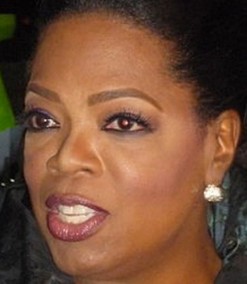
Oprah Winfrey and the Misuse of Celebrity Entertainment Platforms

Tauriq Moosa in Big Think:

ScreenHunter_375 Oct. 24 15.37Winfrey, like many celebrities renowned for their good work, has managed to make herself into a powerful brand (this is not necessarily a bad thing, merely a statement of fact). Like Lady Diana Spencer – or Diana, Princess of Wales – and others, Winfrey has managed to make her first name sufficient for identification. This is incredible marketing.

Further, there is little doubt that Winfrey herself is a remarkable person, or that she has done much to help many people’s lives (perhaps saved countless). She’s done more to make the world better than me and, probably, most people reading this (her Angel Network has raised over $80 million dollars for charity).

But doing remarkable work in one area doesn’t excuse you from serious wrongs done in another. Immunity is not acquired through charity.

Winfrey has allowed her powerful platform to be the fertile soil for many modern day weeds of thinking, dominating the light of visibility: quack medicine and its practitioners, pseudoscientific babble under the guise of science, and even “therapy” that is, in fact, entertainment – not actual help vulnerable people need.

More here.

New clichés that should be banned

John Rentoul in The Independent:

BannedIt is a while since I published 'The Banned List', my book about verbiage to be avoided, yet new horrors are invented or brought to my attention every week by public-spirited people who are here to help you. Here are 10 of the worst recent examples…

5. Talking in the present tense about past events As in, “Richard the Third then moves his army to the north…”

6. Wrap-around To describe anything other than packaging. From Dan Fox.

7. Innocent children As opposed to complicit children, about whom we are indifferent.

8. Sneak preview It's invariably just a preview. Thanks to Mike Higgins. Worse is “sneak peek”. And worst of all is “sneak peak”.

More here and here.

picasso through wittgenstein and nietzsche

FLAM_379098hJack Flam at the Times Literary Supplement:

No artist has reinvented the visible world in a more radical way than Picasso. In his stringent early Cubist paintings, composed with fragmentary geometric planes rendered in earth colours, the differences between figure and ground are hardly distinguishable, testing the limits of representation. After the First World War, he developed a very different kind of painting, paradoxically both flat and suggestive of intangible depth, hard-edged and often brightly coloured. The flexible space in these paintings permitted new kinds of interaction between emptiness and objects, and a broader range of subject matter, much of it erotic or violent, or both.

T. J. Clark focuses on those paintings of the 1920s and 30s in his ambitious but sometimes exasperating new book, Picasso and Truth, which is based on the six A. W. Mellon lectures he gave at the National Gallery of Art, Washington, in 2009. Picasso’s works from this period have now become so familiar that their complexity and radical strangeness are often taken for granted, even overlooked. Clark’s book sets out to explore just how radical and how strange these paintings are, and the new kind of moral universe that they embody.

more here.

david hockney: art and mortality

Weschler-1Lawrence Weschler at the Virginia Quarterly Review:

Now, I’m not in any way suggesting that Hockney fancies himself Moses-​like, the founding prophet of some new-​age religion. But the thing that stands out in that Sagan passage, looking back on it now, is the precision of its characterization of the challenge—​the need to break free from impinging orthodoxies, to reach for bigger and grander ways of being in the world; the way in which, as Hockney himself soon started insisting with ever greater urgency, wider vantages are called for now.

As it happens, Sagan died just a few years after penning those lines, and what might have initially read, in Hockney’s rendition, as a rousing monolithic assertion came, with the passage of time, to seem more like a tolling memorial headstone. Likewise, I’ve recently come to feel, with the whole sweep of Hockney’s production across the latter half of his career, starting in the early eighties with those Polaroid collages. Elsewhere I’ve attempted to evoke the dead end before which David had seemed to arrive toward the end of the seventies: how two Golden Boy decades in which he had seemed incapable of doing any wrong had culminated in that series of extraordinarily successful double portraits—​from Henry Geldzahler and Christopher Scott in 1969, and Celia Birtwell and Ossie Clark with their cat in 1971, and Peter Schlesinger gazing down on that swimmer poolside in that 1972 hillscape, on through the remarkable portrait of his parents from 1977 (his mother to one side, peering intently out at him, his father hunched off to the other, seemingly lost in the perusal of an art book spread across his lap).

more here.

isadora duncan and the dance

Jaco04_3520_01Laura Jacobs at the London Review of Books:

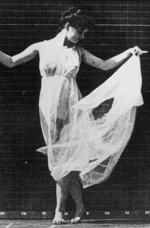
There is only one piece of film that shows Isadora Duncan dancing.​* It is four seconds long, the very end of a performance, and it is followed by eight seconds in which Duncan accepts applause. This small celluloid footprint – light-struck in the manner of Eugène Atget – contains quite a bit of information. It is an afternoon recital, early in the 20th century, and it takes place en plein air, trees in the background, like so much of the painting of the day. Duncan enters the frame turning, her arms positioned in an upward reach not unlike ballet’s codified fourth position, but more naturally placed. She wears a loose gown draped crosswise with a white veil, a floating X over her heart. Coming out of the turn and moving in the direction of the camera, her arms melt open as her head falls back. The white column of her neck, the spade-like underside of her jaw, the lifted breastbone crossed in white gauze: had any female dancer before Duncan projected such ecstatic presence and concrete power? Because of her thrown back upper body it seems as if she is running, but she is actually slow and steady, offering herself to something so large she doesn’t need to move fast. The dance over, she stands simply and acknowledges her audience with a Christ-like proffering of her palms. In fact, her classical garb is as much that of the sandalled shepherd of men as it is a barefoot goddess of Greek mythology. ‘I have come,’ she once said, ‘to bring about a great renaissance of religion through the dance, to bring the knowledge of the beauty and holiness of the human body through its expression of movements.’ Thus spake Isadora.

more here.

Extra gene makes mice manic

Amanda Mascarelli in Nature:

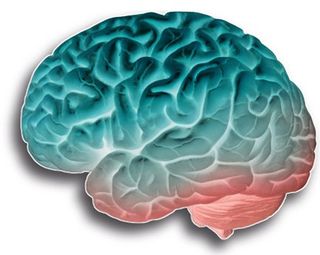
Web-134104964Duplication of a single gene — and too much of the corresponding protein in brain cells — causes mice to have seizures and display manic-like behaviour, a study has found. But a widely used drug reversed the symptoms, suggesting that it could also help some people with hyperactivity who do not respond to common treatments. Smooth functioning at the synapses, the junctions between brain cells, is crucial to functions that control everything from social etiquette to everyday decision-making. It is increasingly thought that some neuropsychiatric disorders are caused by function of the synapses going awry1, and indeed researchers have found that neuropsychiatric conditions such as schizophrenia and autism can sometimes be traced to missing, mutated or duplicated copies of SHANK32, a gene that encodes one of the 'architectural' proteins that help to ensure that messages are relayed properly between cells. Some people with attention deficit hyperactivity disorder (ADHD), Asperger's syndrome or schizophrenia have an extra copy of a wider region of DNA that contains SHANK33.

To explore the role of SHANK3, Huda Zoghbi, a neurogeneticist at Baylor College of Medicine in Houston, Texas, and her colleagues created mice with duplicate copies of the gene. “The mouse was remarkably hyperactive, running around like mad,” says Zoghbi. But the animals did not respond to stimulant medications typically used to treat ADHD. Instead, their hyperactivity grew much worse. “That’s when we knew this was not typical ADHD,” says Zoghbi. The study is published today in Nature4. The paper is a “really good example of the importance of gene dosage”, says Thomas Insel, director of the US National Institute of Mental Health in Bethesda, Maryland. “It matters a lot whether you have no copies, one copy, two copies” or more of a given gene, he says.

More here.

Thursday Poem

‘Palms of Victory / Deliverance is here!’
—1980 Jamaica Labour Party campaign song

Impossible Flying -excerpt

I
On Kingston’s flat worn earth,
everything is hard as glass.
The sun smashes into the city – no breath,
no wind, just the engulfing, asthmatic noonday.

We move with the slow preservation
of people saving their strength
for a harsher time. 1980:
this land has bled – so many betrayals –
and the indiscriminate blooding of hope
has left us quivering, pale,
void, the collapsed possibilities
causing us to limp. We are a country
on the edge of the manic euphoria
of a new decade: Reagan’s nodding
grin ripples across the basin’s
surface. We dare to dream
that in the spin and tongues of Kapo
perhaps we too will fly this time,
will lift ourselves from the slough
of that dream-maker’s decade –
the ’70s when we learned things only
before suspected: our capacity for blood,
our ability to walk through a shattered
city, picking our routine way to work
each morning. We are so used now to the ruins,
perhaps more than that, perhaps to wearing
our sackcloth and ash as signs of our
hope, the vanity of survival.

Read more »

Wednesday, October 23, 2013

Of Course the World Is Better Now Than It Was in 1900

Bjørn Lomborg in Slate:

ScreenHunter_373 Oct. 23 23.55For centuries, optimists and pessimists have argued over the state of the world. Pessimists see a world where more people means less food, where rising demand for resources means depletion and war, and, in recent decades, where boosting production capacity means more pollution and global warming. One of the current generation of pessimists’ sacred texts, The Limits to Growth, influences the environmental movement to this day.

The optimists, by contrast, cheerfully claim that everything—human health, living standards, environmental quality, and so on—is getting better. Their opponents think of them as “cornucopian” economists, placing their faith in the market to fix any and all problems.

But, rather than picking facts and stories to fit some grand narrative of decline or progress, we should try to compare across all areas of human existence to see if the world really is doing better or worse. Together with 21 of the world’s top economists, I have tried to do just that, developing a scorecard spanning 150 years. Across 10 areas—including health, education, war, gender, air pollution, climate change, and biodiversity—the economists all answered the same question: What was the relative cost of this problem in every year since 1900, all the way to 2013, with predictions to 2050.

More here.

How Many Cells Are In Your Body?

Carl Zimmer in his excellent blog, The Loom:

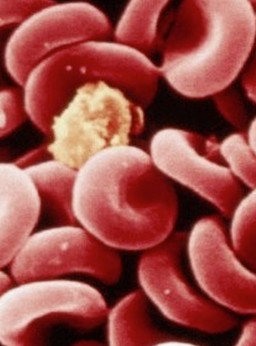
ScreenHunter_372 Oct. 23 23.06A simple question deserves a simple answer. How many cells are in your body?

Unfortunately, your cells can’t fill out census forms, so they can’t tell you themselves. And while it’s easy enough to look through a microscope and count off certain types of cells, this method isn’t practical either. Some types of cells are easy to spot, while others–such as tangled neurons–weave themselves up into obscurity. Even if you could count ten cells each second, it would take you tens of thousands of years to finish counting. Plus, there would be certain logistical problems you’d encounter along the way to counting all the cells in your body–for example, chopping your own body up into tiny patches for microscopic viewing.

For now, the best we can hope for is a study published recenty in Annals of Human Biology, entitled, with admirable clarity, “An Estimation of the Number of Cells in the Human Body.”

The authors–a team of scientists from Italy, Greece, and Spain–admit that they’re hardly the first people to tackle this question. They looked back over scientific journals and books from the past couple centuries and found many estimates. But those estimates sprawled over a huge range, from 5 billion to 200 million trillion cells. And practically none of scientists who offered those numbers provided an explanation for how they came up with them. Clearly, this is a subject ripe for research.

More here.

Rescued by Racism: The Blonde Maria and the Dark Roma

Tunku Varadarajan in The Daily Beast:
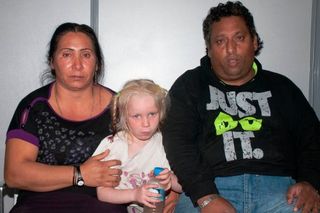
1382443672453.cachedNot since Fay Wray found herself in the meaty, black clutches of King Kong has a blonde in the custody of dark beings ignited the global imagination as has Maria, a tow-headed tot who was discovered in Greece three days ago, living in the midst of a Roma (or gypsy) family. As Greek police searched the family’s squalid home in pursuit of an unrelated criminal matter, they found Maria, flaxen-haired as the refulgent sun, underweight, unwashed, and so unconvincing as a gypsy child (for let it be noted, again: she was very blonde) that they switched their investigation instantly to one of the child and her origins. Who was she? How could she, so blonde, be living with these swarthy people? Something had to be very wrong: and very dark.

And so the child, Maria, was taken into custody, and an almighty international alert issued. Has anyone lost a child who looks like this little blonde creature? Six days later, the story is still vividly alive on network news and elsewhere. “Mystery Blonde Girl Found in Greece Prompts Search for Parents,” was how CNN put it. The best-selling Greek newspaper, Ta Nea, carried the story on its front page: “Mystery: A Blonde Angel Without an Identity.” The child’s blondeness became her talisman, the marker of her plight, her grace, and her salvation

Think back to those amusing diversions, those little puzzles, one used to find in old-fashioned children’s magazines. Let’s call this one “What’s wrong with this picture?” The answer came almost instantly to the Greek police: Everything! It was, of course, a Manichaean reaction: The possession of a blonde child by dark-skinned adults was wrong, ipso facto (as lawyers might put it). The fact spoke for itself. There was no scope for debate. The child had to have been abducted.

More here.