Doris Kearns Goodwin does Teddy Roosevelt

66172254-4802-11e3-b1c4-00144feabdc0Edward Luce at The Financial Times:

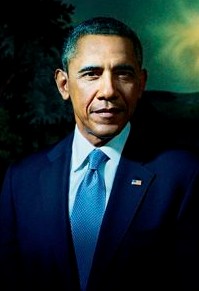
Most of all, Teddy was the progressive movement’s answer to the acute disparities of the gilded age. To his foreign contemporaries Roosevelt was larger than life. At a moment of incipient British decline, Roosevelt’s preternatural energy hinted at a new age to come. He had an Obamaesque ability to pull crowds. When he toured Europe more than a year after leaving the White House, tens of thousands thronged the streets of Paris, London and other cities to catch a glimpse of the “Rough Rider”. Even his enemies, notably Mark Hanna, who epitomised the corrupt Republican machine Teddy had sidelined, could not help but admire him – “that damned cowboy” was Hanna’s description.

The Bully Pulpit is more than just a biography of this most tireless of US presidents. It is also a tribute to America’s “golden age of journalism”. From early in his career, Roosevelt saw the benefit of having allies in the media. By the time he became president in 1902, they could be found mainly at the legendary McClure’s magazine, which housed the most talented stable of journalists in the US. Writers such as Lincoln Steffens, who chronicled the railroad barons, Ida Tarbell, who dissected Standard Oil, and Ray Baker, who exposed the rat-infested conditions of Chicago’s meat factories, became confidantes of the young president.

more here.

a 24-foot drawing of “The Great War”

La-155583-ca-0119-sacco-002-lob-jpg-20131030David L. Ulin at The LA Times:

“I didn't want this to be about bravery,” he insists, “but about carnage and its aftereffects. There was such enthusiasm on both sides. This was where you had to be if you were a young man of a certain age. But where does it lead? Even when I was drawing, I wanted to think about these things. I always knew that the battle would be at the center, but I also wanted to illustrate the trenches, and how they kept feeding, always feeding, the beast.”

This is the difference between history and journalism, which we might define as the difference between the big picture and the small. When it comes to journalism, in other words, it is important to see the faces of the soldiers, whereas history involves too many faces to see them all.

“As someone who has done a lot of work with conflict,” Sacco says, “I begin to wonder about the species. Not just the British and the Germans; I'm thinking about humanity and our enthusiasm for war. A journalist goes to the next conflict, but in the end, to me, you see the same thing. It's cooperative, but what is it that we cooperate on? What do we put our shoulder to? It never goes away, this great human endeavor that is war.”

more here.

hilton als on white girls

10BENJAMIN-articleInlineRich Benjamin at The New York Times:

A gay black man, Als portrays gay black men’s longing to cherish what they cannot sexually love, the putative opposite of themselves, yet the emblem with which they deeply identify: white girls. Als admires and loathes white girls, mocks and mimics white girls, is ignored by white girls, is depended on by white girls, is perceived to be a white girl. “White girls,” he shows, is not just literal people. It’s a state of mind, an art of being.

Witness, in one essay, the black drag queen wearing jeans, a halter top and an upswept hairdo, who plunks herself on the lap of an older white gentleman and announces: “That’s what I want you to make me feel like, baby, a white woman. A white woman who’s getting out of your Mercedes-Benz and going into Gucci to buy me some new drawers because you wrecked them. Just fabulous.”

Als owns up to the sadomasochistic nature of white-girl worship. Watching “Gone With the Wind” for the first time, he fell in love with Vivien Leigh, who as Scarlett “suffers, and says she will never suffer again, and I loved her so much I didn’t want her to suffer.” He adds, “I would have made her forget that I was colored and that she could lynch me if she wanted to because I knew I could make her love me.”

more here.

Friday, November 8, 2013

gladwell, glenn beck, and faith

Malcolm_gladwellIsaac Chotiner at The New Republic:

What most interested me was Gladwell’s claim about the book’s religious content. On this subject, Gladwell seconded what he had said to Beck, essentially arguing that different people read the book in different ways. “It’s a very interesting experience—I was in Salt Lake City…and everyone read the book that way,” Gladwell told me. “I must have done six interviews and all they talked about was the faith part. I think it depends where you stand.” He added, in a phrase that one could hear Beck uttering, that “people on the coast” seemed to be ignoring the faith-based aspects of the book. (On his show, Beck claimed that the book was something he himself could have written.)

Gladwell’s book has an index: Neither “faith” nor “God” nor “religion” appear in it. Faith is not mentioned on the cover flap. It’s true that some of the stories he tells involve religious people, but he shies away from religious language and lays almost no stress on the religious dimensions of the various tales.

more here.

The Best Years of Our Lives

Article00Howard Hampton at Artforum:

BY AN INTERESTING COINCIDENCE, Warner Bros. is releasing its new Blu-ray of the 1946 classic The Best Years of Our Lives at the same time as a box set of all three of James Dean’s films: Rebel Without a Cause (1955), East of Eden (1955), and Giant (1956). Most everyone who is serious about cinema has seen Dean’s movies (Giant maybe not so much), but I can’t help wondering how many people under fifty-five have ever watched The Best Years of Our Lives. It was the sort of picture you’d expect the parents in Rebel Without a Cause to relate to—meticulously designed to speak to the people who lived through World War II, valorizing their sacrifices and aspirations. Dean, film noir, and the artifice-baring melodramas of Douglas Sirk—with their collective angst, upfront neuroses, and unsettled entanglements—came along as rebellions against, or subversions of, precisely that type of big, square, ultra-schematic exercise in civic-minded drama and social duty. Where they have the cachet of the perpetually hip, The Best Years of Our Lives is weighed down by its ambitions toward universality (American-style), not to mention its seven Academy Awards: Almost by definition, anything Hollywood embraced so wholeheartedly must be suspect.

more here.

Bernard Berenson: A Life in the Picture Trade

Cover00Thomas Micchelli at Bookforum:

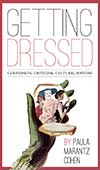
Though Berenson would become, in today's dollars, a millionaire many times over as well as a host to an endless parade of celebrities and scholars at his Florentine villa, I Tatti (whose grounds and library he eventually left to Harvard), his life “from the age of ten, had been a scramble to maintain a surface impression of belonging, with all the while a sense of incoherent and alien depths roiling underneath.” His compromised solution was “to work in a trade that, though more luxurious and outwardly significant [than his father's], still seemed to him sordid.” Up until the end of his life, Berenson's self-worth remained as fragile as the veneer of old-world sophistication put forth by his clients in the newly wealthy classes.

Berenson died on October 6, 1959, at the age of 94. Two years earlier, he wrote, “I wanted to become and be a work of art myself, and not an artist.” In her remarkable biography, Cohen approaches Berenson's life as a panorama full of artifice and profundity, whose brilliant flashes of color are inextricable from its substrates of shadow. The book leaves an indelible impression, not merely in the way it catalogues Berenson's accomplishments and failings, but also in its dissection of the struggle between desire and alienation that characterizes American art—and life—to this day.

more here.

The Art of Missing

James Guida in Orion Magazine:

Lin4IN ONE OF Aesop’s fables, “The Rogue and the Oracle,” a man approaches the Oracle at Delphi. In his hand, which he keeps hidden under a cloak, he has a little bird. The plan is to ask the oracle whether the bird is dead or alive: if the answer is “dead,” he will simply produce the living creature; if “alive,” he’ll crush it. But an oracle is not an oracle by being easily tricked, and the reply is this: “Stranger, whether the thing that you hold in your hand be alive or dead is a matter that depends entirely on your will.” I was reminded of that line while looking at artist and architect Maya Lin’s recent exhibition at New York’s Pace Gallery. There, from projectors attached to the ceiling of one of the gallery’s side rooms, ferries of sentence traveled across the wall, turning when they reached a corner as if hitting a bend or rapid. The words included historical accounts of the wolves that used to live in Manhattan, the oyster beds that once flourished around the Hudson, and a seven-foot sturgeon spotted in 1950 on the river’s New Jersey side by the writer Joseph Mitchell.

Lin is best known for designing the Vietnam Veterans Memorial in Washington DC, a competition she won in 1981 while still a student. The finished site, together with the precocious grit with which she met the obstacles to realizing it, turned her into a celebrity. Since then Lin has gone on to do other memorials, including the Civil Rights Memorial in Montgomery, Alabama, but for a long time she has said her last such project is in the works. Launched in 2011, the new memorial is ongoing, dispersed, collaborative, a kind of museum—that room at Pace with the running text is a part of it, though just one of many. There are satellite sculptures and multimedia installations planted throughout various cities, but the core of the project lives online, on an unusually cool website called What Is Missing? As for the “missing,” well, that would be animals and their habitats. The site honors extinct or endangered species, ecosystems lost or degraded, and, on a positive note, conservation efforts that have done some good.

More here.

An Audio Interview with Abbas Raza of 3 QUARKS DAILY

A couple of months ago, Adam Kampe of the National Endowment of the Arts wrote to me telling me that the theme of their upcoming quarterly magazine was going to be “the intersection of art and science” and that they had identified 3QD as a good exemplar and that he wanted to interview me for the magazine. We did the interview but then publication of the magazine was delayed because of the shutdown of the U.S. federal government. It has now finally been published, and here it is, in NEA Arts Magazine:

AbbasRazaAbbas Raza: There should be no dividing line between science and the arts. I think they should all be taught as equally important intellectual activities. And that’s what we have tried to do at 3QD; we try to find things that are interesting. It doesn’t matter what subject area they’re in.

Adam Kampe: That’s Abbas Raza, the founding editor of the filter blog, 3 Quarks Daily, or 3QD. Welcome to NEA Arts online. In this issue, we’re exploring the intersection of the arts and sciences. Blurring the line between these seemingly different worlds—art and science—is something 3QD does very well.

The original site praised by all sorts of heavy-hitting scientists such as Harvard professor Stephen Pinker and artists like David Byrne because it features such a unique and rich body of material. Just in the past month or so, I read an article about director Richard Linklater’s animated film, Waking Life; I stumbled into a documentary about the enigmatic Argentine, Jorge Luis Borges; I saw an article about how the brain generates consciousness, “How the Light Gets Out” and then of course there’s the series of point/counterpoints called Science vs. the Humanities. Poetry, philosophy, politics; it runs the gamut. The short video documentary of starlings in flight is one small example of the kind of art-meets-science material you can find at 3 Quarks. Okay, now back to Abbas Raza. He’ll explain how the blog works.

Abbas Raza: I felt very strongly that we should include a lot of science because science is often neglected by the literary humanities crowd, and I felt very strongly that we should look at all intellectual fields including those of science and so we started doing this. And 3 Quarks kind of took off in its readership and we got more and more readers and also some very prominent names like Richard Dawkins who wrote to us saying, “I really love 3 Quarks,” and that thrilled us.

More here, including the audio.

In It for the Money

Justin E. H. Smith in his blog:

6a00d83453bcda69e2019b00bb087f970c-320wiWhat is philosophy? One possible answer is that it is the intellectual project that disdains money. Or at least pretends to do so.

Such disdain forms a central part of the founding myth of Western philosophy as told by Plato in his relation of the trial and execution of his mentor Socrates. Here we learn that Socrates has been wrongly charged by the court at Athens on what may be reduced to two principal counts: that he teaches doctrines, and that he accepts money for this teaching. The denial of the first charge is important to the story we would like to tell here, too, but we will return to it soon enough. As to the second charge, Socrates protests: “As little foundation is there for the report that I am a teacher, and take money; that is no more true than the other. Although, if a man is able to teach, I honor him for being paid.” Socrates relates of a certain teacher named Evenus that he would admire anyone who “really has this wisdom, and teaches at such a modest charge. Had I the same, I should have been very proud and conceited; but the truth is that I have no knowledge of the kind.”

Thus philosophy, on this understanding, cannot be remunerated, because there is no real exchange, at least if this is thought of in terms of the offering of goods or services. Philosophy does not give its adepts a new body of knowledge, but only leads them through a dialectical method that shows what they already knew, or thought they knew, in a new light. There is nothing to sell here, and thus nothing to pay for.

Except that philosophy often does quite a bit more.

More here.

Ethnic Slurs and College Life: A Personal Essay

Amardeep Singh in his blog:

1004062_10151788373260786_1061838894_nToday, then, I want to talk a little about my own experience with ethnic slurs. As you know I am a Sikh, with family from India. I wear a turban and full beard as part of the custom for Sikh men. All of the adult men in my family have worn turbans, going back many generations. Given what has happened on campus this week, I want to talk a little about the damage that can come from ethnic slurs – but also about the strange and sometimes paradoxical thinking that leads them to be uttered in the first place. I will use some personal experiences I have had as examples, but my goal is to use those examples in connection with some general ideas about ethnic and racial slurs on a college campus. This is a personal essay, yes, but it's not really about me.

In the books we have read in this class, slurs have sometimes entered into the story somewhat ambiguously. In T.C. Boyle’s The Tortilla Curtain, slurs for Mexicans are used but in one instance at least Candido Rincon doesn't read enough English to understand what's being said — though he certainly understands the message since the vandals who spray-painted the words “Beaners Die” on a rock near his makeshift camp also destroyed his personal property. With Henry Park and Chang Rae-Lee’s Native Speaker, we had some discussion about the slur “gook,” that American soldiers coined with reference to the North Koreans they were fighting in the Korean War in the early 1950s. (As we discussed, “gook” would also be applied to other Southeast Asian people, especially the Vietnamese.)

More here.

Friday Poem

Blues From a Bull

Like the voom! of a volcano
Molten rocks spew
Lava gushes and flows
Each time the cape floats
He explodes . . .

At every glance
The wild reds bloom.

This, for him, is
Not a thriller, not an entertainment
Not a gamble, nor a crowning escapade
Nor an artistic heirloom of a tradition . . .
For him
This is
Retribution
Revenge
The warzone, the battleground, a life for a life.

He has
No anesthetic gun
No Fabian and Machiavellian tactics
No chaining and pertaining techniques
No forbidding thick walls of a hoosegow
No heavy metal shackles
No VIP corner, No sniper at the ready
No parade music, No crispy-wispy Champaign nights!

He has
Nothing
No . . . thing . . . at . . . all . . . but
his agility as his guardian angel.
His muscles are his vow.
At the tip of his nose
His will to escape gusts like a tornado.

Success or defeat, for him
Exiting through the door of death is always possible . . .

Wild reds in bloom
On his back
On his mind
On his life.
Once and for all,
Today, all the infiltrators
Will be shaken off
Onto this green ring.

Watch out!
His virtue of uprightness is
At the tip of his horns.

by Eaindra
from Eaindra: As if It Were for a Poem
publisher: The Eras, Rangoon/Yangon , 2012
translation: ko ko thett
Poetry International, 2013

Fountain-of-youth gene unleashes healing power

From Nature:

Mice that had been genetically engineered to develop tumours failed to do so. Instead, the animals grew up to be huge and very hairy. And when the tips of the pups’ toes were clipped off in a routine tagging procedure, they often grew back. What was different about these mice was that they carried a protein, Lin28a, which is generally produced only in developing embryos. Lin28a has already garnered attention for its involvement in the functioning of stem cells and in cancer. A study published today in Cell1 now shows that this protein can improve tissue repair — even in adults. In mice genetically modified to produce the protein throughout their lives, the animals’ hair grew faster than normal and puncture wounds in their ears healed almost completely. “We were just so shocked that such a small change in this gene could have profound effects on a complex regenerating tissue,” says Hao Zhu, a cell biologist at the University of Texas Southwestern Medical Center in Dallas and an author on the study.

Resetting cells using embryonic genes has been seen before, most prominently in the creation of cells known as induced pluripotent stem cells, which acquire an embryonic-like state after a suite of genes is activated. But the latest study reveals that such de-ageing changes can be made not just in cultured cells, but in developed tissues within an organism. It suggests that it might be possible to make older tissues behave more like young ones, which are much better at repairing damage. In mammalian fetuses, for example, even deep wounds can heal without scarring.

More here.

What Goes on in Our Minds When We See Someone Naked?

Brigit-Bardot (1)

Matthew Hutson in Aeon:

Objectification has been defined in feminist literature to include several elements, including the denial of autonomy and the denial of subjectivity — we see the person as lacking self-determination and feelings. He or she becomes, in the viewer’s mind, an object, a ‘piece of meat’, devoid of any internal life.

At least that’s what we thought. Recent research, however, would suggest that there is a more complex, though no less disturbing, process at play when we objectify not only girls and women, but boys and men as well. In contrast to popular belief, when we ‘objectify’ we don’t treat people as objects with no intelligence or emotions of their own. Several notable psychologists are beginning to argue that, when we objectify someone, we don’t assume that they have less mind overall, but that they have a different type of mind.

We spend much of our day pondering other peoples’ minds. They can love us, hate us, help us, or harm us — but we can never experience them directly, a fact that drives the work of the psychologist Kurt Gray. In his Mind Perception and Morality Lab at the University of North Carolina at Chapel Hill, the 32-year-old assistant professor began a research project into how we piece together incomplete data to build an idea of another person. This question led him to research attitudes toward persistent vegetative states, torture and judgments of guilt, robot-human interactions, belief in God, the fundamental structure of morality, and, most recently, objectification — the influence of embodiment on mind-perception. His findings offered what Gray calls ‘a significant twist on objectification’. What emerged was that we see the capacity for feelings, whether pleasure or pain or happiness or anger, as distinct from the capacity for intellectual thought and planning. Namely, that we treat those we objectify as less intelligent, yet simultaneously we endow them with a greater ability tofeel things.

More here.

Thursday, November 7, 2013

The evolution of human culture can be explained, not by the size of our brains, but by the quality of our relationships

Stephen T Asma in Aeon:

Baby-HeadMost of the people reading this article do not possess the skill to start a fire from scratch. And yet, many anthropologists think that the mastery of fire literally transformed our ancestors into human beings. They say it gave us cooking, protection and heat, and also reshaped our very anatomy. In Catching Fire (2009), the Harvard anthropologist Richard Wrangham argues that eating cooked food produced the efficient Homo erectus digestive tract, freeing up energy for brain growth.

Be this as it may, our ancestors lived for a long time without fire and we could presumably do it again, however unpleasant that sounds. In fact our ancestors did lose the knack of fire-starting, for generations. Control of fire first appears in South Africa as early as 1.5 million years ago. It crops up again in Israel and China around 700,000 years ago, but doesn’t appear in European populations until 300,000 years later. Why the dark interludes? Perhaps a tribe lost its master fire-starter to a predator before she had a chance to pass on the technique. Perhaps a whole population of fire adepts was wiped out in a single catastrophe. Either scenario could have blacked out whole millennia before the vital techniques were reinvented or re-encountered.

It appears, despite fire’s incredible value for survival, that natural selection has not given human brains any sort of prewired module for controlling it. Such skills belong instead to the realm of culture: not the high culture of libraries and works of art but an older, dumber process of transmission, working person-to-person and generation-to-generation, fragile enough to lose everything in a single tragic decade but sturdy enough to survive for millennia under the right conditions. And it isn’t the only vital skill to hang by so slender a thread.

More here.

Magritte taught us to distrust the painting, and in doing so, he taught us something about the world

Our own Morgan Meis in The Smart Set:

Have you ever felt odd? Perhaps an odd feeling came upon you one morning at the market. You saw the piles of vegetables and the cuts of meats covered in clear plastic. You noticed, with particular attention, the little signs above the individual fruits giving their names and prices. Suddenly, it seemed unaccountably odd that any of this should make any sense to anyone. How very strange that these numbers and words and pictures and physical objects are all related, you thought. It was a warm morning and you walked out into the sunlight with a beating heart and a sheen of sweat on the palms of your hands. For a few more moments you trusted neither sun, nor earth, nor sky. All aspects of reality seemed as arbitrary to you as those signs above the fruit in the market. And then the feeling faded and you were back in the world again. You proceeded to go about your day.

ID_IC_MEIS_MAGR_APRené Magritte must have had mornings like that. Think of the painting he made in 1935. The painting is called “La Clef des songes” (The Interpretation of Dreams). It is a painting of a board with four panels. The board is like an old school primer, used to teach children the names of things. There is a horse, a clock, a pitcher, and a valise. Under the objects are words. The horse is labeled “the door.” The clock is labeled “the wind.” The pitcher is labeled “the bird.” And the valise is labeled “the valise.” Why are three objects mislabeled, while one object is correctly labeled? Maybe it is like our confused morning at the market. We felt odd not because the fruits were labeled incorrectly, but because the relationship of signs suddenly struck us as utterly arbitrary even when everything had been labeled correctly. Likewise, when we see the three incorrectly labeled objects in “La Clef des songes,” we begin to distrust even the correct labeling of the valise. What does the word “valise” have to do with the picture of the valise, and what does the picture really have to do with the actual thing? When we represent reality in words or pictures, do we come closer to that reality, or push it further away?

More here.

Why Open Zion is Closing

1383668415343.cached

Peter Beinart in Open Zion:

I’m not saying that American Jews who criticize Israel are persecuted, or that doing so requires any great bravery. It doesn’t. But there’s an inevitable tension between being part of a close-knit community and challenging what that community believes. As I began writing critically about Israel, I began to feel it. When I asked one friend to comment on the manuscript of my book, he at first replied that for the sake of our friendship, he would rather not. At the kosher for Passover resort where I had been a speaker for many years (and no longer am), one guest told the proprietors that he wanted a room that would allow him to walk to and from meals without ever laying eyes on me. One Saturday morning when I was walking to synagogue, a man asked me if I was Peter Beinart. When I said yes, he announced—loud enough for his kids and mine to hear—that “I think your politics are shit.”

I’d been expecting some of that. What I hadn’t expected was something else: The yeshiva student in Brooklyn who emailed me because he felt that his school’s depiction of Arabs was inhumane. The middle-aged employee of a right-wing Jewish group who told me she had grown so disturbed by the way her organization depicted Muslims that she began, literally, cold calling local Muslims so she could see for herself if they were as pathological as she had been told. The college student and Birthright alum who almost began to cry at a panel sponsored by the Jewish Federations of North America as she described feeling “betrayed” because what “I’ve been told growing up [about Israel]…a lot of it has not been honest and not been true.”

As these unusual experiences mounted, I began to wonder whether it might be possible to build a different sort of community, a group blog infused with Jewish commitment yet dedicated to a radically open conversation that included Palestinians. When I proposed calling the blog “Zion Square,” which later became “Open Zion,” some supporters said it was too parochial. But that was exactly the point. I didn’t want a purely universalist space, devoid of tribal commitment. I wanted to show that asking the hardest, most painful, questions about Israel could be a Jewish, even Zionist, act.

More here.

The Moral Responsibility of Volunteer Soldiers: Should they say no to fighting in an unjust war?

Jeff McMahan and others discuss at the Boston Review:

ScreenHunter_390 Nov. 07 18.50The military services in the United States have been organized on a volunteer basis since 1973, when President Richard Nixon abolished the draft. The end of conscription came as a relief to most people—to young men, their parents, and eventually the leaders of the military services, which had been plagued by internal dissent and a lack of professionalism, partly as a result of having so many unwilling members.

Though isolated voices have always challenged the shift to a volunteer military, their criticisms have recently become more widespread and more vocal. The main objections come from two quite different directions.

Some critics argue that the reliance on an all-volunteer, professional army has led to diminished public concern and vigilance with respect to the wars the government decides to fight. Limiting the burdens of military service to volunteers has, according to these critics, weakened inhibitions against the use of military force. When the Iraq War was debated in 2002–3, most citizens were not concerned that they or their children would be required to fight. This eliminated a powerful constraint against the resort to war. According to these critics, the reintroduction of some form of conscription is necessary to reestablish greater democratic control over the practice of war.

Other critics come from the ranks of just war theorists. Their concern is not with diminished public vigilance but with individual moral responsibility.

More here.

On Pedagogy and Intellectual Community

BISR-edited

Abby Kluchin and Ajay Singh Chaudhary in Social Text:

At present there is a broad and sustained assault upon forms of critical education and scholarship. As a result, wide swaths of the humanities, social sciences and even the theoretical sciences are in danger of becoming the rarefied pursuits of a tiny, economically privileged elite or vanishing altogether. This is not due to lack of interest or to the transformation or exhaustion of these disciplines. Students and faculty alike are encouraged to pursue “practical” or “applied” fields at the expense of a liberal arts education in the humanities and social sciences, or even some of the theoretical areas within the highly touted “STEM” fields. This shift accompanies the growing trend towards the internalization of diffuse corporate ideologies within universities, in the “re-engineering” of the labor force as well as the increasingly prevalent view of students as “consumers” in the market of higher education. 1

We understand this phenomenon within the context of broader economic trends. The transformation of many formerly stable sectors of economic life into modes of precarious labor is by no means confined to academia. But American higher education represents a fairly dramatic example of this trend. In 1975, nearly 60% of faculty at American colleges and universities had full-time, stable employment. 2 Today, approximately 76% of the academic workforce is made up of contingent, undercompensated, and part-time workers who lack job security. 3 This transformation is not only disastrous for the livelihood and well-being of this workforce, but also has significant repercussions for the state of the academy, as it drastically constrains possibilities for research and writing and adversely affects the quality of students’ education.

These phenomena are unfolding within a political and administrative climate that is antagonistic to critical education and research. The past decade provides copious examples. In 2011, Florida Governor Rick Scott threatened the elimination of all state funding for anthropology. At the national level, the Senate recently adopted new rules limiting National Science Foundation funding and support in political science to projects that demonstrably promote “the national security or the economic interests of the United States.” The American Political Science Association aptly summarized the new rules: “While political science research is most immediately affected, at risk is any and all research in any and all disciplines funded by the NSF. The amendment makes all scientific research vulnerable to the whims of political pressure.”

More here.