
Kyle Buchanan in The New York Times:
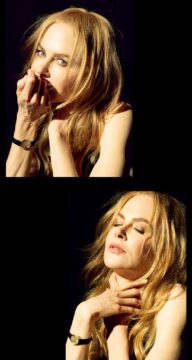 Nicole Kidman’s eyes widened. “Haven’t you been to the Rockettes?” she asked. “I go every year. Oh yeah, I’m obsessed!”
Over celery root soup at the Empire Diner in Manhattan last week, the 57-year-old Oscar winner regaled me with stories about the high-kicking Christmas spectacular, which she had attended the night before with her children and husband, the singer Keith Urban: “I was saying to my husband, ‘Why do we love it so much?’ And he said, ‘Because it’s a memory. You’re remembering the kid in you.’” Lately, Kidman has been thinking a lot about this sort of thing, tracing her life and career as part of a continuum. Her new film, “Babygirl,” is one such reconnection: Though she has recently been seen in splashy streaming series like “The Perfect Couple” and “Lioness: Special Ops,” it marks a return to the kind of risky, auteur-driven filmmaking she used to be acclaimed for.
“Babygirl” could earn Kidman her sixth Oscar nomination and has already won her the prestigious Volpi Cup for best actress at the Venice Film Festival in September, though Kidman had to miss that ceremony after the death of her mother, Janelle, at 84.
More here.
Enjoying the content on 3QD? Help keep us going by donating now.
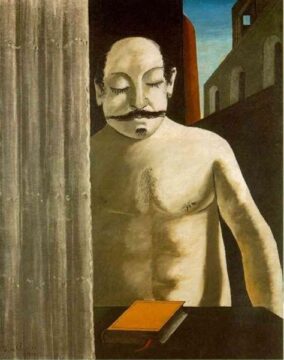 “So strong is the belief in life what is most fragile in life–real life, I mean–that in the end this belief is lost.” This is the first sentence of André Breton’s famous, infamous, notorious, and rarely actually read first Surrealist Manifesto. Breton was born in a small town in Normandy, France in 1896. He was thus a very young man at the outbreak of WWI. As for nearly everyone of that generation, the war was a defining and devastating experience. I myself had an obsession with learning about WWI around ten years ago. I remember reading some first-person accounts of soldiers describing the experience of gas attacks in the trenches of the Western Front. I had to put the book down. It was one of the few times in my life that I found myself literally unable to read through my tears.
 As Donald Trump gets ready to return to the White House on Jan. 20, he must be prepared to tackle one issue immediately: the possibility that the spreading avian flu might mutate to enable human-to-human transmission.
 Excessive prices charged by health care providers are overwhelmingly the reason why Americans’ health care costs so cripplingly much. But they’ve outsourced the actual collection of those fees to insurance companies, so that your experience in the medical system feels smooth and friendly and comfortable. The insurance companies are simply hired to play the bad guy — and they’re paid a relatively modest fee for that service. So you get to hate UnitedHealthcare and Cigna, while the real people taking away your life’s savings and putting you at risk of bankruptcy get to play Mother Theresa.
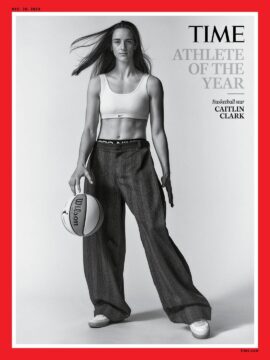 F
F Researchers at Google have built a chip that has enabled them to demonstrate the first ‘below threshold’ quantum calculations — a key milestone in the quest to build
 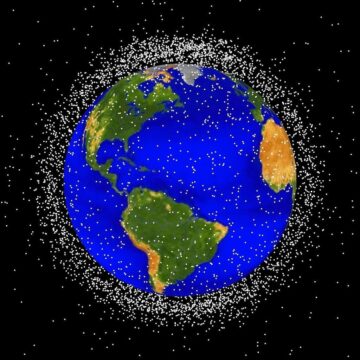 “Everywhere that humans go, they cause ecological problems. The environmental history is clear about this,” Daniel Capper, an adjunct professor of philosophy at the Metropolitan State University of Denver, who is a vocal proponent of such a movement, recently told me. Capper, who has a Walt Whitman beard and speaks with a genial kind of urgency, argues that commonly-held beliefs about the value of land and wilderness on Earth should hold just as much
 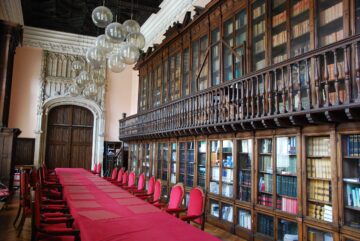 If it hadn’t been for a philosophy classmate at the Lycée Jeanne-d’Arc, I never would have entered the municipal library. I wouldn’t have dared. I vaguely assumed it was open only to university students and professors. Not at all, my classmate told me, everyone’s allowed in, you can even settle down and work there. It was winter. When I would return after class to my closet-size room in the Catholic girls’ dorm, I found it gloomy and awfully chilly. Going to a café was out of the question, I didn’t have any money. The thought of working on my philosophy essays, surrounded by books, somewhere that was surely well heated, was an appealing prospect. The first time I entered the municipal library, at once shy and determined, I suppose, I was struck by the silence, by the sight of people reading or writing as they sat at long rows of tables pushed together and overhung by lamps. I was struck by its hushed and studious atmosphere, which had something religious about it. There was that very particular smell—a little like incense—which I would rediscover later, elsewhere, in other venerable libraries. A sanctuary that required treading cautiously, almost on tiptoe: the opposite of the commotion and confusion of the lycée. An impressive and severe world of knowledge. I didn’t know its rituals, which I had to learn: how to consult the card catalogue, separated into “Authors” and “Subjects”; how to record the call numbers accurately; how to deposit the card into a basket, before waiting, occasionally a long time, sometimes shorter, for the requested book. I got into the habit of coming to the library regularly and writing my philosophy essays there.
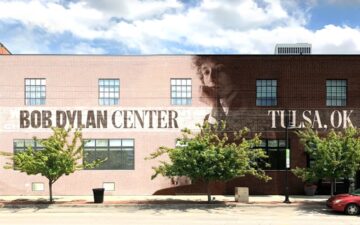 The Bob Dylan Archive had long been a subject of rumor and legend. Few outside the singer’s inner circle knew for sure whether it existed, let alone what it contained. It was kind of hard to picture Mr. Dont Look Back himself boxing up old notebooks for posterity. But if he didn’t, someone did. When the sale was announced in March 2016, the New York Times described it as “deeper and more vast than even most Dylan experts could imagine, promising untold insight into the songwriter’s work. . . . A private trove of his work, dating back to his earliest days as an artist, including lyrics, correspondence, recordings, films and photographs.”
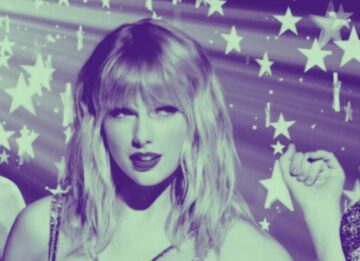 When Taylor Swift announced the title of her new album The Tortured Poets Department at the Grammy Awards in February, a question popped into my mind: How can poets and poetry enter into conversation with Swift? As a debut-era Swiftie, I knew that her lyrics contain all of the elements of poetry, and that her songwriting is simply unparalleled and literary.
 After years of rumours that the virus that causes COVID-19
 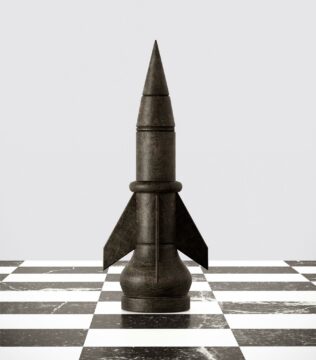 The descent — in the language of nuclear war, an escalation — is shaped by grave uncertainties. How well do my enemies understand me, and how well do I understand them? Furthermore, how does my understanding of their understanding affect their understanding of me? These and similar questions stand like the endless images in opposing mirrors, but without diminishing in size. The threat they pose is immediate and real. It leaves us to grapple with the central truth of the nuclear age: The sole way for humanity to survive is to communicate clearly, to sustain that communication indefinitely and to understand how readily communications can be misunderstood. Crucial to handling the attendant distrust are fallback communications integral to the art of de-escalation — an art that has been neglected and is now dangerously foundering.
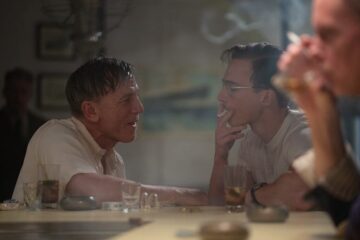 When William Lee stalks through Mexico City in “Queer,” he often seems on high alert, though sometimes he’s just high. The louche protagonist in Luca Guadagnino’s soft-serve adaptation of the William S. Burroughs autobiographical novella, Lee is a smoker, drinker, heroin addict and epic storyteller. He’s a refugee from America who at times seems like a visitor from another dimension. Played with sensitivity and predatory heat by Daniel Craig, Lee has a feverish mind, eyes like searchlights and a mouth that’s quick to sneer. There are moments when he seems possessed, though it’s not often clear what’s taken hold of his soul.
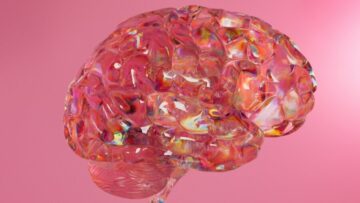 Compared to other primates, our brains are exceptionally large. Why?