
Quico Toro at Persuasion:
 When Javier Milei was sworn-in as Argentinian president a year ago, the smart money was on a spectacular train wreck. Impulsive, thin-skinned, hyper-ideological and irresistibly drawn to every culture war controversy, no matter how dumb, Milei doesn’t immediately strike you as the kind of leader that gets results. Taking over one of the world’s most notorious economic basketcases at a time of absolute fiscal disarray, Milei’s coming doom seemed all too predictable.
A year on, the naysayers have been, if not quite silenced, then given ample time to reconsider. Argentina’s economy hasn’t imploded—that was the job of the previous administration. It did go through the deep recession the president himself had almost cherished forecasting, but it’s coming out the other side with much lower inflation, and much improved prospects for growth. Yes, poverty spiked during the adjustment, as everyone knew it would. What’s remarkable is that, even so, Milei retains popularity ratings above 50%—an amazing feat in a region where incumbency and single-digit approval ratings increasingly go hand-in-hand.
More here.
Enjoying the content on 3QD? Help keep us going by donating now.
 Nate Bargatze loves fast food. He loves big-box stores and the suburbs and TNT marathons of Die Hard. He finds felicity in the familiar, comfort in the caloric, originality in the ordinary.
 I’ve often considered poetry as a core piece of therapy for myself. Ever since I was a child, it’s been my biggest way of understanding the world and my own experiences. I see my life through the lens of a poem, and it helps me process and heal whatever I may be going through. I’ve been writing poetry since I was six, and I have always credited it for getting me through traumatic experiences and helping me celebrate the beautiful ones.
 The town of Macondo never existed. It was never supposed to. And yet, here it is.
 I
I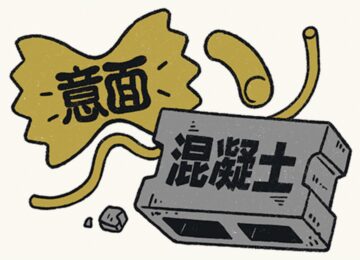 It’s always been a personal fascination of mine what words a culture uses — and what words it lacks. Not only is it a good indication of how native speakers tend to think and feel; the creation of new words reflects new thoughts and new emotions that have become common enough to require a shorthand. Nowhere is this happening faster than on the internet. Every year, dozens of new slang terms spread like wildfire in people’s vocabularies. I thought I’d cover some of the terms I find most interesting that are circulating on the Chinese internet right now.
 It is unlikely the dark conjecture would have occurred to me were I not offspring of one, but my prejudicial lens has no bearing on whether Shakespeare died a suicide. I have scoured biographies old and new and find that nobody over four centuries has entertained the idea in print. Hardly an exception is Edward Bond’s 1973 play Bingo—the character Shakespeare, guilt-ridden for failing to thwart land enclosures near Stratford, takes sugar-coated poison tablets left behind for him by Ben Jonson. Is our myriad-minded Shakespeare, the suicide taboo silently at work, above the degradations of Dante’s seventh circle, reserved for suicides, who must keep company with usurers and sodomites? Or is there no evidence?
 Not long
 Prioritizing fundamental research over deployment
 The thing about gay life is that you have countless mini-adventures, which years later leave only the faintest grooves on your cortex. The handsome big blond with the sweetest smile and strongest Boston accent I’d ever heard, who wanted to get fucked only and moved out to San Diego, where he caught the eye of many a sailor, got infected with AIDS, and died.
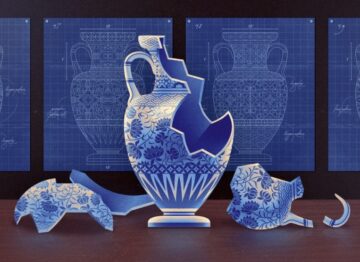 But despite its fundamental importance, entropy is perhaps the most divisive concept in physics. “Entropy has always been a problem,” Lloyd told me. The confusion stems in part from the way the term gets tossed and twisted between disciplines — it has similar but distinct meanings in everything from physics to information theory to ecology. But it’s also because truly wrapping one’s head around entropy requires taking some deeply uncomfortable philosophical leaps.
 To say that the American health-care system is in less-than-great working order may strike many as a colossal understatement. Yes, it functions well on the heroic-medicine front. It possesses incomparable medical technology and pharmaceuticals, and it can boast an impressive corps of well-educated and compassionate physicians, nurses, and other health-care workers. For all those strengths, however, American health care labors under mighty challenges, including an overstretched and underfunded public-health system, the increasing concentration of hospitals and even medical practices in the hands of for-profit businesses, and a patchwork health-insurance regime that leaves too many people inadequately covered and gives too much control to insurance-company executives and too little to health-care professionals.
 A primary byproduct of ore-smelting is the mixture of oxides and silicon dioxide known as slag. Heaped into giant conical mountains alongside industrial sites, these otherworldly piles are known as slag heaps. Appearing as granulated pyramids of blast furnace refuse, slag heaps can include an assortment of copper, nickel, and zinc removed as non-ferrous material during the refinement of what will become steel. For those raised in industrial regions, such as Pittsburgh, slag heaps were once a common site along rivers such as the Monongahela, Allegheny, and Ohio. These sooty remnants of the Jones & Laughlin Steel Corporation or the Carrie Blast Furnaces are the height of the great Indian mounds that dotted this landscape centuries ago, but rather than a verdant green, these heaps are the color of an overcast Western Pennsylvania sky. They are incongruously beautiful and have a way of getting into the lungs and blood of residents—both literally and metaphorically. As