How Vladimir Putin became evil

Tariq Ali in The Guardian:

ScreenHunter_581 Mar. 29 18.47Once again, it seems that Russia and the United States are finding it difficult to agree on how to deal with their respective ambitions. This clash of interests is highlighted by the Ukrainian crisis. The provocation in this particular instance, as the leaked recording of a US diplomat, Victoria Nuland, saying “Fuck the EU” suggests, came from Washington.

Several decades ago, at the height of the cold war, George Kennan, a leading American foreign policy strategist invited to give the Reith Lectures, informed his audience: “There is, let me assure you, nothing in nature more egocentric than embattled democracy. It soon becomes the victim of its own propaganda. It then tends to attach to its own cause an absolute value which distorts its own vision … Its enemy becomes the embodiment of all evil. Its own side is the centre of all virtue.”

And so it continues. Washington knows that Ukraine has always been a delicate issue for Moscow. The ultra-nationalists who fought with the Third Reich during the second world war killed 30,000 Russian soldiers and communists. They were still conducting a covert war with CIA backing as late as 1951. Pavel Sudoplatov, a Soviet intelligence chief, wrote in 1994: “The origins of the cold war are closely interwoven with western support for nationalist unrest in the Baltic areas and western Ukraine.”

When Gorbachev agreed the deal on German reunification, the cornerstone of which was that united Germany could remain in Nato, US secretary of state Baker assured him that “there would be no extension of Nato's jurisdiction one inch to the east”.

More here.

Gunshot victims to be suspended between life and death

Doctors will try to save the lives of 10 patients with knife or gunshot wounds by placing them in suspended animation, buying time to fix their injuries.

Helen Thompson in New Scientist:

Mg22129623.000-1_300Neither dead or alive, knife-wound or gunshot victims will be cooled down and placed in suspended animation later this month, as a groundbreaking emergency technique is tested out for the first time.

Surgeons are now on call at the UPMC Presbyterian Hospital in Pittsburgh, Pennsylvania, to perform the operation, which will buy doctors time to fix injuries that would otherwise be lethal.

“We are suspending life, but we don't like to call it suspended animation because it sounds like science fiction,” says Samuel Tisherman, a surgeon at the hospital, who is leading the trial. “So we call it emergency preservation and resuscitation.”

The technique involves replacing all of a patient's blood with a cold saline solution, which rapidly cools the body and stops almost all cellular activity. “If a patient comes to us two hours after dying you can't bring them back to life. But if they're dying and you suspend them, you have a chance to bring them back after their structural problems have been fixed,” says surgeon Peter Rhee at the University of Arizona in Tucson, who helped develop the technique.

More here.

The Story of the Jews

30SHULEVITZ-master495Judith Shulevitz at The New York Times:

Most of the book celebrates Schama’s main thesis: that Jews were not the rigidly pious and self-segregating people Christian invective as well as the theologically dominated research of the late 19th and early 20th centuries made them out to be. On the contrary. From the beginning of their known history and for centuries thereafter, Jews commingled with Canaanites, Egyptians, Babylonians, Persians, Greeks, Romans, pre-Muslim Arabs, Muslim Arabs and Christian Europeans. It was only when the Christians and Muslims turned on the Jews, singling them out for humiliation and, in the case of the Christians, grotesque insult and slaughter, that Jews began to withdraw or be pushed into their own separate spheres.

During the sixth and fifth centuries B.C., for instance, Jewish colonists on Elephantine flourished in the company of their Egyptian neighbors. The Elephantine Jews built their temple of Yahu across the street from the Egyptian temple of ­Khnum — even though, technically, the Bible forbade Jews to build a temple outside Jerusalem. The Jewish soldiers and their families were chided by their betters in Jerusalem, who disapproved of the Elephantines’ high rate of intermarriage and their lax standards of Passover observance, but Schama is charmed by their easy­going urbanity.

more here.

ON LYDIA DAVIS’ TRANSLATIONS OF A.L. SNIJDERS

Lydia-davis-dutchFlorian Duijsens at The Quarterly Conversation:

Imagine a literary genre much like a diary but composed for immediate consumption. A genre part commonplace book, part Blue Octavo Notebooks, part Twitter stream. Imagine something like a blog but written by public intellectuals and printed in major newspapers, or read out on national radio or television. Imagine a column in a newspaper that is too short to make a rigorous political argument, but that isn’t necessarily aiming to either. Imagine its strong social-democratic values, often only implied and somehow still rooted in the country’s liberation from the Nazi occupation in 1945.

This kind of writing is observational, street sketching really, and even though it isn’t beholden to any significant journalistic accountability, it still affects through the instant recognizability of the moments it relates. It works cumulatively, layering these observations to create something more, something bigger. Reading these small pieces day in day out, they slowly give you a glimpse into the mind of the author, plus a better sense of just what your country is. Or rather, what it could be.

This is the best way I can describe the Dutch genre that has found a home for people like Simon Carmiggelt (man-on-the-street portraiture), Arnon Grunberg (political footnotes), and A.L. Snijders (autobiographical fables). The country has many more such writers, each with their own twist, some more comical (Sylvia Witteman), others provocatively philosophical (Maxime Februari).

more here.

The Self-Portrait: A Cultural History

Las-Meninas-010Frances Spalding at The Guardian:

“The moment when a man comes to paint himself – he may do it only two or three times in a lifetime, perhaps never – has in the nature of things a special significance.” So Lawrence Gowing wrote, in an introduction to a 1962 exhibition of British self-portraits. And he is right: self-portraits, whether of men or women, have a particular call on our attention. Take Käthe Kollwitz's etching Self-portrait with Hand to her Forehead, reproduced in James Hall's new book. The head and hand fill the entire plate, leaving no room for anything else. The heavy, repeated lines form dark shadows on and around the head, while the eye under the hand is obliterated by darkness. Yet her face presses forward, as if she were leaning on the kitchen table, offering us, with inescapable intimacy, a memory of the suffering and sadness she witnessed in the poor quarter of Berlin where her husband worked as a doctor. The viewer need know nothing of this: it is all there in her look.

more here.

The Oldest Living Things On Earth

Carl Zimmer in his excellent blog, The Loom:

Zimmer-NG-face-280It is easy to feel sorry for the gastrotrich. This invertebrate animal, the size of a poppy seed and the shape of a bowling pin, swarms by the millions in rivers and lakes. After it hatches, it takes only three days to develop a complicated body, complete with a mouth, a gut, sensory organs, and a brain. Having reached maturity in just seventy-two hours, the gastrotrich starts laying eggs. And after a few more days, it becomes enfeebled and dies of old age.

To squeeze a whole life into a week seems like one of nature’s more cruel tricks. But that’s only because we are accustomed to measure our lives in decades. If the ancient animals and plants featured in this book could look upon us, they might feel sorry for us as well. We humans marvel at the longest-living human on record, Jean Calment, who lived from 1875 to 1997. But for a 13,000-year-old Palmer’s oak tree, Calment’s 122 years rushed by as quickly as a summer vacation.

Palmer’s oaks, gastrotrichs, and all the species in between are the products of evolution. The head-swimming diversity of life is joined in an evolutionary tree made up of tens of millions of branches. And one of the most spectacular of that diversity’s dimensions is longevity. If natural selection provides Palmer’s oaks with millennia, why does it only spare a gastrotrich a week of existence?

More here.

Finnegans Wake – in pictures

John Vernon Lord in The Guardian:

John-Vernon-Lord-2014-for-011A new illustrated edition of Finnegans Wake, as imagined by artist John Vernon Lord for the Folio Society, matches James Joyce's extravagant word games with elaborately collaged pictures, shedding a brilliant new light on Irish literature's 'book of the dark'. Here, Lord explains the thinking behind the images.

Shem
This illustration is mostly based on the Latin episode when Shem mixes ‘ink’ from his own excrement and urine and ‘through the bowels of his misery’ he writes ‘over every square inch of the only foolscap available, his own body’. It appears that whilst Shem prepared the ‘ink’ he chanted ‘fermented words’, possibly 'Lingua mea calamus scribae velociter scribentis', which is from Psalm 45:1, ‘My tongue is the pen of a ready writer.’ This is represented in my version of a twelfth-century psalter illumination from St Albans. The expression ‘fermented words’ could of course be alluding to the text of Finnegans Wake itself, having the same initials as well as being something of a description of its text.

More here.

Outsider Art

Fernanda Eberstadt in The New York Times:

ArtIn the 1980s, a series of posters began appearing on the streets of New York. The most arresting one — a yellow-and-crimson image of Ingres’s “Odalisque” wearing a gorilla mask that demanded, “Do women have to be naked to get into the Met. Museum?” — informed the viewer that “less than 5 percent of the artists in the Modern Art sections are women, but 85 percent of the nudes are female.”

“The Blazing World,” Siri Hustvedt’s sixth novel, plays on the same art-world gender bias as this protest campaign by a group called the Guerrilla Girls. Harriet Burden, Hustvedt’s pugnacious heroine, is an artist whose phantasmagoric multimedia installations, created from the 1970s to her death in 2004, have never received the acclaim they deserve. “The Blazing World,” presented as a posthumous sampler of Burden’s diaries, critics’ discussions of her work and interviews with her family, friends and collaborators, is a portrait of a creative titan whose career and reputation have seemingly been blighted by the art establishment’s ingrained sexism.

More here.

Saturday Poem

Chai

I've only seen a photograph —
boats anchored on the muddy shoals
of the Ganges. Splintered canopies
on top of blistered bows and sterns,
sari'd women leaving their men
to wash, or launch the dead
among the reeds.

A shadow surfaces
of a passing nimbus
that could be a pod of something.

I've been taking my tea brewed with
cardamom and milk: olive green
pods half submerged in coppery liquid.
Stirred, it raises the silt
of the river, spreads the aromatics of
ceremony, produces the sensation
that life will be remembered.
.

by Eddy Yanofsky
from Blues & True Concussions : Six New Toronto Poets.
Anansi, 1996.

Friday, March 28, 2014

Poetry and Action: Octavio Paz at 100

Joel Whitney in Dissent:

1395689192paz_pifal_666When protest movements spread through cities around the world in 1968, Octavio Paz looked upon the “great youth rebellions . . . from afar,” he wrote, “with astonishment and with hope.” The poet was then Mexico’s ambassador to India. He escaped the summer heat of New Delhi into the foothills of the Himalayas, following developments on the radio. Soon, he learned that Mexico had joined the rebellions. Mexico would host the Olympics in October. As protests grew entrenched, and students threatened to disrupt the games, government repression intensified. On October 2, hundreds of student protesters were killed at Mexico’s City’s Tlatelolco Plaza. Hearing the grim news, Ambassador Paz’s response was a swift vote of no confidence, a letter of unambiguous dissent. It was, as he described the rebellions themselves, the merging of poetry and action, a merger he constantly craved.

Paz was poetry’s great universalist. Winner of the 1990 Nobel Prize in Literature, he absorbed many of the great movements of the twentieth century: Marxism, surrealism, the European avant garde. Early in the Spanish Civil War, he tried his hand at social realism, and he admired North American poetry, especially Whitman, Pound, Elliot, and Williams. His ambassadorship to India in the 1960s introduced him to the pillars of Hindu and Buddhist thought.

In 2012, in anticipation of the fifteenth anniversary of his death, New Directions brought outThe Poems of Octavio Paz. All but ignored since publication, The Poems deserve attention, because—in addition to being frequently masterful, and impressively translated into English—they represent hybridity, universality, and an aesthetic and political middle way.

More here.

Wealth Over Work

Paul Krugman in the New York Times:

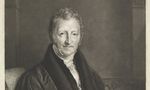
9780674430006_p0_v1_s260x420It seems safe to say that “Capital in the Twenty-First Century,” the magnum opus of the French economist Thomas Piketty, will be the most important economics book of the year — and maybe of the decade. Mr. Piketty, arguably the world’s leading expert on income and wealth inequality, does more than document the growing concentration of income in the hands of a small economic elite. He also makes a powerful case that we’re on the way back to “patrimonial capitalism,” in which the commanding heights of the economy are dominated not just by wealth, but also by inherited wealth, in which birth matters more than effort and talent.

To be sure, Mr. Piketty concedes that we aren’t there yet. So far, the rise of America’s 1 percent has mainly been driven by executive salaries and bonuses rather than income from investments, let alone inherited wealth. But six of the 10 wealthiest Americans are already heirs rather than self-made entrepreneurs, and the children of today’s economic elite start from a position of immense privilege. As Mr. Piketty notes, “the risk of a drift toward oligarchy is real and gives little reason for optimism.”

Indeed. And if you want to feel even less optimistic, consider what many U.S. politicians are up to. America’s nascent oligarchy may not yet be fully formed — but one of our two main political parties already seems committed to defending the oligarchy’s interests.

More here.

A Math Puzzle Worthy of Freeman Dyson

Thomas Lin in Quanta:

ScreenHunter_579 Mar. 28 16.18Freeman Dyson — the world-renowned mathematical physicist who helped found quantum electrodynamics with the bongo-playing, Nobel Prize-winning physicist Richard Feynman and others, devised numerous mathematical techniques, led the team that designed a low-power nuclear reactor that produces medical isotopes for research hospitals, dreamed of exploring the solar system in spaceships propelled by nuclear bombs, wrote technical and popular science books, penned dozens of reviews for The New York Review of Books, and turned 90 in December — is pondering a new math problem.

“There’s a class of problem that Freeman just lights up on,” said the physicist and computational biologist William Press, a longtime colleague and friend. “It has to be unsolved and well-posed and have something in it that admits to his particular kind of genius.” That genius, he said, represents a kind of “ingenuity and a spark” that most physicists lack: “The ability to see further in the mathematical world of concepts and instantly grasp a path to the distant horizon that’s the solution.”

Press said he’s posed a number of problems to Dyson that didn’t “measure up.” Months and years went by, with no response. But when Press asked a question about the “iterated prisoner’s dilemma,” a variation of the classic game theory scenario pitting cooperation against betrayal, Dyson replied the next day. “It probably only took him a minute to grasp the solution,” Press said, “and half an hour to write it out.”

Together, they published a much-cited 2012 paper in the Proceedings of the National Academy of Sciences.

More here.

Bertolt Brecht: A Literary Life

Sassoon_04_14Donald Sassoon at Literary Review:

What a predicament it is to be an artist or a writer. You are never fully in control of your productions. You paint a cheerful Florentine housewife and, a few centuries later, some jumped-up critic decides she is a castratingfemme fatale. You write an opera on Switzerland's national hero and the overture is endlessly used in stuff like The Lone Ranger andYankee Doodle Daffy. The worst fate is that of the playwright. You write a text with, at most, a few notes on scenery and cast (exits, enters). Then the product is snatched from your hands by actors, designers and directors. It becomes their play. You sit in a corner sulking or, more frequently, you turn in your grave. Pity, then, Bertolt Brecht, who regarded himself, with considerable justification, as the great dramatist of his age, yet was condemned to have so little control of his plays and of his life. His health was poor; his erstwhile communist comrades disagreed with him about what political theatre should be; he was forced into exile in Denmark, Finland, Sweden and the USA, all places where staging his works proved difficult. He became, as he wrote, the 'man to whom no one is listening':

He speaks too loud
He repeats himself
He says things that are wrong:
He goes uncorrected.

Only one aspect of his life did he manage to control: his lovers, towards whom he behaved appallingly, betraying them all but becoming enraged if he suspected them of cheating on him.

more here.

The Case for Working Less

ShipyardDavid Spencer at berfrois:

The idea that society might work less in order to enjoy life more goes against standard thinking that celebrates the virtue and discipline of hard work. Dedication to work, so the argument goes, is the best route to prosperity. There is also the idea that work offers the opportunity for self-realisation, adding to the material benefits from work. ‘Do what you love’ in work, we are told, and success will follow.

But ideologies such as the above are based on a myth that work can always set us free and provide us with the basis for a good life. As I have written elsewhere, this mythologizing about work fails to confront – indeed it actively conceals – the acute hardships of much work performed in modern society. For many, work is about doing ‘what you hate’.

Here I want to address another issue that is overlooked in conventional policy debates. This is the need to diminish work. Working less presents several advantages. One is the opportunity to overcome the anomaly of overwork for some and unemployment for others. Sharing out work more evenly across the available population by reducing average working time would enable those who work too much to work less and those do not work at all to partake in some work.

more here.

how to write about birds of prey

2014+10hawkJohn Burnside at The New Statesman:

Anyone who has ever stopped to watch a hawk in flight will know that this is one of the natural world’s most elegant phenomena. In many traditions, hawks are sacred: Apollo’s messengers for the Greeks, sun symbols for the ancient Egyptians and, in the case of the Lakota Sioux, embodiments of clear vision, speed and single-minded dedication.

Yet, for all their grandeur, airborne hawks are difficult to describe. It takes the finest of naturalists to capture a sense of their wonder – those such as Edwin Way Teale, who, in one of the most affecting pieces of nature writing I have ever read, describes a field trip to eastern Pennsylvania’s “hawkways” to see how raptors from all over New England seek out the powerful updraughts that run along the Kittatinny Ridge and sail “almost without an effort – just as, for ages, their ancestors had done – mile after mile on their long journey to a winter home”.

This passage, from Teale’s all but forgotten classic The Lost Woods (1945), celebrates not just the birds’ grace and power but also their attunement to the land, in words at once elegant and unsentimental.

more here.

WHEN NATURE OUTPLAYS NURTURE

Ed Smith in More Intelligent Life:

Sport_0Thirty-five years ago, a hundred tennis-playing children were tested for general athleticism. One girl (pictured) was rated by the psychologist leading the analysis as “the perfect tennis talent”. She outperformed her contemporaries at every tennis drill, as well as general motor skills. Her lung capacity suggested that she could have become a European champion at 1,500 metres. The girl’s name? Steffi Graf, who went on to win 22 grand slams. I was reminded of Graf’s innate sporting talent during a recent conversation with the geneticist and former Economist journalist Matt Ridley. We were discussing the common argument that greatness, even genius, is the result of 10,000 hours of dedicated practice. This has been the sales pitch of several widely read books, the subtitles of which include “The genius in all of us” and “Greatness isn’t born, it’s grown”. If nurture is so dominant and nature such an irrelevance, then an unavoidable question follows: how many people, of all those born in 1756, had the potential, if they were given the right opportunities, to be as good as Mozart? Or in this case, how many women, of all those born in 1969, had the potential to become as good at tennis as Graf? According to the logic that a genius lurks in all of us, the answer must lie somewhere between “most” and “many”.

Ridley’s answers were a bit different: four Mozarts and about 30 Grafs. There was mischief, of course, in attaching numbers to such hypothetical questions. But his answer rang true.

More here.

First synthetic yeast chromosome revealed

Ewan Callaway in Nature:

Nature-yeast-chromosome-carousel It took geneticist Craig Venter 15 years and US$40 million to synthesize the genome of a bacterial parasite. Today, an academic team made up mostly of undergraduate students reports the next leap in synthetic life: the redesign and production of a fully functional chromosome from the baker’s yeast Saccharomyces cerevisiae.

As a eukaryote, a category that includes humans and other animals, S. cerevisiae has a more complex genome than Venter's parasite. The synthetic yeast chromosome — which has been stripped of some DNA sequences and other elements — is 272,871 base pairs long, representing about 2.5% of the 12-million-base-pair S. cerevisiae genome.The researchers, who report their accomplishment in Science1, have formed an international consortium to create a synthetic version of the full S. cerevisiae genome within 5 years. “This is a pretty impressive demonstration of not just DNA synthesis, but redesign of an entire eukaryotic chromosome,” says Farren Isaacs, a bioengineer at Yale University in New Haven, Connecticut, who was not involved in the work. “You can see that they are systematically paving the way for a new era of biology based on the redesign of genomes.” The project began a few years ago, when Jef Boeke, a yeast geneticist at New York University, set out to synthesize the baker’s yeast genome with much more drastic alterations than those demonstrated by Venter and his team in 2010.

More here.

Friday Poem

Tante Tina Puts the 1991 Gulf War Into Perspective

…………… (for my mother, 1911-2001, whose story this is)

I have a right to be cranky, ja.
I am an old lady.
You come sitz mal here.
Na, a little closer.
I already have to talk so loud
my hearing goes.
But I think still, ja?

One time when I was little still in Russia
in the war, before the unsettling to Canada,
ja, I was maybe five maybe six years old, you listen mal
you're not so busy,
a man to the door was pummeling
at night, his hand bleeding in a torn shirt.
He was dirty, I could smell even,
not like the barn smelling, not like pigs
in spring, like old meat more, wurst gone bad.
His eyes were deep like the broken well with no water.
Mutti took him in, and has him soup gemade –
kertofel and water, it was all.
I was by the stove scared while he is slurping.
And then Mutti him to the bed showed
where Uncle Peter slept before they took him
and Papa. I was so tight holding
to Mutti's rough wool my fingers were aching.

We were just to bed going then,
the candle auss-poosting, and more men came,
krass, loud, shouting even more than you
and Papa sometimes. They grabbed the man from the bed
his feet banging on the floor,
and outside by the barn there was a crash.

The men left and we sat on the bed,
still, Mutti my hand squeezing again.
Finally with one hand she takes me
and a pail with water in the other
like she knows what she must do.

Come, Tina, she says, and we walk through the dark
where the cows were – we have them all
eaten, and Fritz the dog also – and there outside
by the door is the man, like a sack.
He is again with dirt and blood besmeared
so Mutti takes the water and I too
and we wash him. This could be Papa, she says.
This could somewhere be your Papa.
Always she looks over her shoulder.
I am thinking maybe the men will come back
but I am not afraid. Mutti and I are washing
a man who could be like Papa who was taken away.

Read more »