Ash Forests After Emerald Ash Borers Destroy Them

Maggie Koreth-Baker in The New York Times:

TreeThis past winter was the coldest Detroit had experienced in 36 years. Across the upper Midwest, cities shivered, and more than 90 percent of the surface area of the Great Lakes froze solid. It seemed like ideal weather to kill an unwanted insect. But it did little to stop the emerald ash borer, an invasive Asian beetle that is devastating ash trees from Minnesota to New York. “We didn’t find a single dead larva,” said Deborah G. McCullough, a professor of entomology and forestry at Michigan State, who led a study of ash trees in Lower Michigan over the winter. Even before the severe winter, Dr. McCullough and other scientists had come to the glum conclusion that they were going to lose the decade-long battle against the ash borer. Now they are assessing the cascade of consequences for Midwestern and Northeastern forests, both urban and wild. The effects will go far beyond what you see on a hike or how you feel about the loss of a tree on your property. They will ripple through forest ecosystems, affecting other plants, animals and water supplies.

Emerald ash borers do their damage as larvae, eating into the bark and burrowing deep into the trunk to insulate themselves against the cold. In the process, they cut off access to the nutrients and water that the tree needs to survive; it is like severing a human’s network of veins and arteries. After surviving the unusually cold winter, the beetles emerged in spring as adults. Now they are mating and laying eggs, leaving the next generation of larvae to tunnel through the trees’ internal organs. They can kill an ash tree in as little as two years.

More here.

Tuesday Poem

You Are the Penultimate Love of My Life
.

I want to spend a lot but not all of my years with you.

We’ll talk about kids
but make plans to travel.
I will remember your eyes
as green when they were gray.
Our dogs will be named For Now and Mostly.
Sex will be good but next door’s will sound better.

There will be small things.
I will pick up your damp towel from the bed,
and then I won’t.
I won’t be as hot as I was
when I wasn’t yours
and your hairline now so
untrustworthy.
When we pull up alongside a cattle car
and hear the frightened lows,
I will silently judge you
for not immediately renouncing meat.
You will bring me wine
and notice how much I drink.

The garden you plant and I plant
is tunneled through by voles,
the vowels
we speak aren’t vows,
but there’s something
holding me here, for now,
like your eyes, which I suppose
are brown, after all.
.

by Rebecca Hazelton
from Vow
Cleveland State University Press Poetry Center.

Monday, June 30, 2014

Sunday, June 29, 2014

A Case of Mohammad Hanif

From The Daily Star:

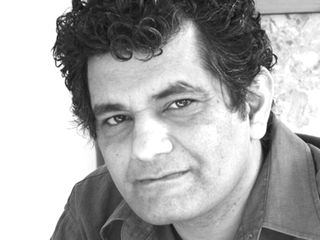
Mohammed-hanifMohammed Hanif is a Pakistani writer and journalist. Trained at the Pakistan Air Force Academy, Hanif has an inborn talent to hit the mark with his genius writing. His debut novel A Case of Exploding Mangoes won the 2008 Shakti Bhatt First Book Prize and the 2009 Commonwealth Book Prize in the Best First Book category. The novel uses the event of Pakistani dictator Zia-ul-Haq's plane crash in 1988 as a spring-board to delve into the conspiracy theories behind it. His second novel Our Lady of Alice Bhatti, the story of a hospital nurse in Karachi, was published in 2011 and shortlisted for the 2012 Wellcome Trust Book Prize and the 2013 DSC Prize for South Asian Literature.
In this interview with the SLR editor, Mohammed Hanif talks about the mystery of babies, an occasional need to shout from rooftops and reminds Dhakaites how important it is not to take even a bit of freedom for granted.

SLR: How has your writing sensibilities been shaped by your earliest reading?

MH: There were about two and a half books in the village where I grew up. Colonel Mohammed Khan's Bajang Amad – the memoir of a Punjabi officer in Second World War – was very funny, very exotic. The second one was a collection of miracles performed by Muslim saints; fantastic. We also used to get a free government-published magazine by the Family Planning Ministry. It was quite mysterious because you never learnt how babies are made. And then there was China Pictorial everywhere. I am sure every little bit that I read influenced me.

SLR: You are both a writer and a journalist. We all know the responsibility a journalist has. Do you think you have a responsibility as a writer from Pakistan?

MH: I hope not. I mean I should try not to bore my readers or lecture them because that I can do as a journalist.

More here.

Gavrilo Princip, Conspiracy Theories and the Fragility of Cause and Effect

DC-1914-27-d-Sarajevo-cropped-262x300

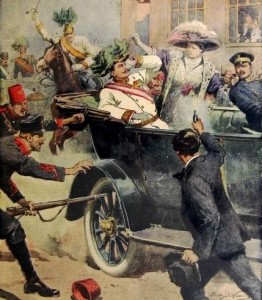
Ashutosh Jogalekar in Scientfic American (Achille Beltrame's illustration of the June 28, 1914 assassination of the Archduke Franz Ferdinand by Gavrilo Princip (Image: Wikipedia)):

When you read the story of the shots that led to World War 1, what strikes you is how staggering the gulf between cause and effect was, how little it takes for history to change, how utterly subject to accidental and unlikely events the fickle fortunes of men are. Reading the story of Princip and the Archduke, one sometimes gets the feeling of being no more than wood chips being cast adrift on the roaring river of history.

The dark comedy of the assassination of the Archduke and his wife is succinctly narrated in skeptic and writer Michael Shermer’s highly readable book “The Believing Brain“, and the story is as good an example of the roots of conspiracy theories as any other. It sheds light on human psychology and illuminates conspiracy theorizing in all scientific quarters, ranging from creationism to climate change denial.

Shermer recounts how, on that fateful day, six conspirators waited in the shadows to carry out their deed. When the Archduke’s motorcade passed close by, the first two conspirators failed to take any shots because of the crowds and an inadequate line of sight. The next conspirator managed to throw a bomb at the Archduke’s car but it simply bounced off and fell into the car behind. The two conspirators quietly disappeared while the third tried to commit suicide by ingesting cyanide but simply vomited and was captured by the police. Unlucky Princip and the other two insurgents gave up and sauntered away. Meanwhile the Archduke made it all the way to the city hall and gave a speech, expressing outrage to the mayor that he had just been subjected to an assassination attempt.

Since the Archduke had just expressed outrage at an attempted assassination, he should have known better than to drive back the same way he came. However it seems that only one of the generals in his entourage suggested taking an alternative route back. But in the heat of the moment, for some reason this timely advice was not communicated to the driver who decided to again drive back through the city center. While this was happening Princip had purportedly given up and was hanging around a bakery, maybe enjoying a pastry. However when he saw the car return on the same route the opportunity was too good to pass; more so since the transmission seemed to be jammed and the driver could not back up. The rest is very much history.

More here.

St Paul, Caravaggio and the agonised Catholicism of Pasolini

2014+24pasolini

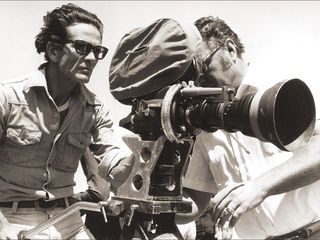
Ian Thomson on Pier Paolo Pasolini's St Paul: a Screenplay; translated by Elizabeth A Castelli, in The New Statesman (Photo: Mondadori via Getty):

San Paolo, published posthumously in 1977 and presented here for the first time in English as St Paul, is Pasolini’s screenplay for the life of the apostle. Drafted in 1966 and subsequently rewritten, it was intended to be a sequel toThe Gospel According to Matthew (1964), shot in the lunar landscape of Italy’s Basilicata region. The screenplay, with its New Testament voice-over, typically mingles an intellectual leftism with a Franciscan Catholicism: blessed are the poor, for they are exempt from the unholy trinity of materialism, money and property. The film was never made, for lack of funds.

Pasolini’s solidarity with the poor was at heart romantic. La ricotta, his 35-minute episode in the collaborative film RoGoPaG (1963), features Orson Welles as an American director shooting a film in Rome about Christ’s Passion. Stracci (the name means “rags”), the sub-proletarian actor who plays the part of the good thief, dies on set from a case of real-life starvation. For all its manifest compassion, the film led to a suspended prison sentence for Pasolini on blasphemy charges. Over a tableau vivant inspired by a Caravaggio-like painting of the Deposition, Welles cries out sacrilegiously: “Get those crucified bastards out of here!”

Like La ricotta, St Paul champions those who have been disinherited by capitalism and the “scourge of money”. Pasolini believed that the consumerist “miracle” of 1960s Italy had undermined the semi-rural peasant values of l’Italietta (Italy’s little homelands). In the director’s retelling of the Bible, Paul stands as a bulwark against the “corruption” brought to Italy by Coca-Cola, chewing gum, jeans and other trappings of American-style consumerism.

Nevertheless, as the former Saul, a Pharisee and persecutor of Christians, Paul was an ambivalent figure for Pasolini.

More here.

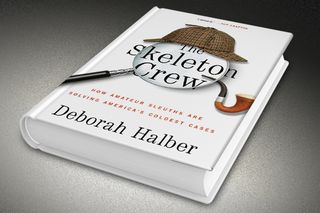
“The Skeleton Crew”: How a motley band of amateurs solves cold cases online

Skeleton_crew

Laura Miller in Salon:

The idealistic notion of an army of smart volunteers taking to the Internet to help solve crimes suffered a serious knock last year. That’s when cocky amateur detectives at Reddit.com took it upon themselves to scrutinize photos snapped just before the Boston Marathon bombing in search of likely “suspects.” Crowd shots were posted to the Web, complete with incriminating circles and arrows pointing to innocent spectators, many of whom just happened to have brown skin. When the FBI released closed-circuit camera images of the actual perpetrators (neither of whom had been fingered by the Redditors), some site members then went on to argue that one of the suspects was Sunil Tripathi, a missing college student later found drowned in Rhode Island. It was a clueless, hurtful and potentially dangerous performance that did not bode well for the future of crowdsourced law enforcement.

Let Deborah Halber’s “The Skeleton Crew: How Amateur Sleuths Are Solving America’s Coldest Cases” stand as a partial corrective to the hubris of the Redditors. Halber, a science writer, recounts how a motley band of committed hobbyists have devoted countless unpaid hours to linking unidentified human remains with missing-person reports. The case that serves as her framing device — “Tent Girl,” a young woman whose body was discovered wrapped in a striped tarpaulin off Route 25 in Scott County, Kentucky — was 30 years cold when a factory worker named Todd Matthews matched her to a listing posted by a woman in search of her long-lost sister.

Matthews solved that one all the way back in 1998, when the Web was young. As Halber reveals, listings of missing persons and unidentified bodies were among the first things average citizens wanted to put on the Internet. It turns out there are a lot of unidentified bodies out there. No one can say for sure how many because real-life law enforcement organizations are much less proficient at collecting and sharing information than the ones on TV.

More here.

Sunday Poem

The Buried Rib Cage

Eve slipped from its arced ridge-
the only body part
you don't
……do evil with:

the eye, the hand,
might beg
….. corruption;

the ribs are modest
shy crests, ticklish,
………. an open fan,
not quite sexual, yet not putitan:

delicate accordion
……………… -yawn, moan-
Soul breathes through its comb.
.

by Eve Grubin
from Morning Prayer
Sheep Meadow Press, 2005

Bad Chompers & Bum Tickers

Rebecca Kreston in Discover:

Mouth_sm Periodontitis is a chronic bacterial infection of the scaffolding of teeth, including the gums, connective tissue, and jawbone that surround and encapsulate a tooth. It may well be one of the most common diseases of man: in the United States, anywhere from 30 to 50% of the adult population has a mild form of the disease, while an additional 5 to 15% suffers from a severe form (1). That disease begins with dental plaque or calculus, a layering and mineralization of pathogenic microbes that thrive in the dark, wet, and (occasionally) nutrient-rich crevices of our mouth. Over 500 microbes have been implicated as residents of these so-called periodontal pockets, those clefts and rifts between tooth and gum, forming complex biofilms and microbiotic communities of Gram negative rods, Gram positive cocci and rods, and spirochetes (2). Periodontitis can incite additional infections: burrowing tooth cavities or caries; gingivitis, an infection of the fleshy gums; and, most severely, destruction of the alveolar jawbone that props the teeth (3). But periodontitis is not just a local infection, limited in its effects to the body’s entranceway. It goes beyond the pearly whites and has the potential to wreak havoc farther afield, upon our thrumming arteries, heart, and brain (3). The microbes responsible for periodontal disease assist in forming atherosclerotic plaques, which travel in the blood and set up shop in arteries (4)(5). One bacteria commonly found in our mouths and which is responsible for oral disease is Porphyromonas gingivalis. But outside the oral cavity, this bacteria can attract vital cells responsible for blood clotting, platelets, which in turn can form thromboses, leading to the embolisms responsible for heart attacks and strokes (6).

When the severity of periodontal disease was directly measured in a 2006 Swedish study by counting existing pockets of infection and decay, it was found to be associated with hypertension in a dose-dependent manner (7). In other words, the lack of oral maintenance that allows build-up of bacteria on our chompers allows a similar build-up in less visible but far more life-threatening locales as well.

More here.

Boyhood is a battlefield: The dangerous expectations of early masculinity

Judy Y. Chu in Salon:

Boy_dumbbellI conducted my study against a backdrop of literature that highlighted ways in which pressures for boys to conform to conventions of masculinity could negatively impact boys’ development. Research on girls’ development conducted by the Harvard Project on Women’s Psychology and Girls’ Development during the 1980s and early 1990s had inspired a resurgence of interest in boys’ development during the late 1990s. Specifically, revelations regarding the centrality of relationships in girls’ lives and the relational nature of girls’ development called into question traditional models of human development that promote individuation and separation in the name of growth, health, and, for boys, manhood. Following the studies of girls, a number of books focused on how boys’ socialization — towards masculine ideals that emphasize, for example, physical toughness, emotional stoicism, and projected self-sufficiency — may lead boys to devalue and disconnect from their emotions and relationships.

While this popular discourse on boys has been helpful in drawing attention to possible problems pertaining to boys’ gender socialization, it has been limited by its tendency to pathologize boys and problematize boys’ development. For example, most of these books are based on clinical populations of boys and adopt a diagnostic approach to understanding boys’ development. Starting from the assumption that there is something wrong with boys, these books emphasize their alleged emotional and relational deficiencies (as compared to girls) and aim to identify what is wrong and who or what is to blame. Boys’ emotional capacities and relational strengths are rarely mentioned, much less addressed. Furthermore, these books do not account for group and individual differences in boys’ socialization experiences and outcomes, including how some boys manage to thrive, and not merely survive, within the same contexts that can be debilitating for other boys.

More here.

Saturday, June 28, 2014

The Only Government I Know

Weaver---Hawk-web

Vesla M. Weaver in The Boston Review (Photograph: Thomas Hawk):

I met Renard in an unadorned room in a Catholic Charities building in New Orleans. Twenty years old, with a broad smile under chubby cheeks dotted with freckles, Renard is one of two dozen or so men and women who gather there regularly for Cornerstone Builders, a small Americorps program that provides community services jobs and training to ex-offenders. A few weeks before we spoke, Renard was released from prison where he was serving time for possession of marijuana and a firearm; he is still under correctional supervision. “They givin’ you ten years to mess up,” he says. In addition to the two and a half years in prison, he must complete two and a half years of parole and, after that, five years of probation.

Renard doesn’t think about the government in the way you or I might. Lots of Americans worry about too much government or too little. For Renard, there is both too much and too little. Until Cornerstone Builders came around, government had always been absent when he needed help, but ever-present otherwise.

“The government is hard,” he told me. “We’re free but we’re not free.”

Xavier, a long-time friend of Renard’s who joins him at Cornerstone Builders, has never been given a prison sentence but nonetheless described a life hemmed in by police and jails. Diagramming with saltshakers on the table, he showed me how a police station, courthouse, and jail encircled his neighborhood. Most of his family and friends have had contact with the criminal justice system, which he calls the “only government I know.”

When you meet people such as Renard, you see the human face of a system of punishment and surveillance that has expanded dramatically over the past fifty years. At this point, the facts of mass incarceration are well known. Families have been separated from fathers, sent away in greater numbers, for longer terms of imprisonment, seemingly without regard to the nature of their offenses. Millions have been economically and politically paralyzed by criminal records, which stymie their efforts to secure jobs and cast ballots.

But there is more to criminal justice than prisons and convictions and background checks.

Most people stopped by police are not arrested, and most of those who are arrested are not convicted of anything. Of those who are, felons are the smallest group, and, of those, many are non-serious offenders. In some cities, the majority of those who encounter criminal justice have never been found guilty of a serious crime, or any crime, in a court of law. Based on research in several cities across the country, my colleagues and I estimate that only three out of every two hundred people who come into contact with criminal justice authorities are ultimately convicted of violent crimes.

More here.

The Truth About Our Libertarian Age

Lede_art_lilla

Mark Lilla in The New Republic:

It is time, twenty-five years on, to discuss the cold war again. In the decade following the events of 1989, we spoke about little else. None of us anticipated the rapid breakup of the Soviet empire, or the equally quick return of Eastern Europe to constitutional democracy, or the shriveling of the revolutionary movements that Moscow had long supported. Faced with the unexpected, we engaged in some uncharacteristic big thinking. Is this the “end of history”? And “what’s left of the Left?” Then life moved on and our thinking became small again. Europe’s attention turned toward constructing an amorphous European Union; America’s attention turned toward political Islamism and the pipe dream of founding Arab democracies; and the world’s attention turned to Economics 101, our global Core Curriculum. And so, for these reasons and others, we forgot all about the cold war. Which seemed like a very good thing.

It was not. In truth, we have not thought nearly enough about the end of the cold war, and especially the intellectual vacuum that it left behind. If nothing else, the cold war focused the mind. The ideologies in conflict, whose lineages could be traced back two centuries, offered clear opposing views of political reality. Now that they are gone, one would expect things to be much clearer to us, but just the opposite seems true. Never since the end of World War II, and perhaps since the Russian Revolution, has political thinking in the West been so shallow and clueless. We all sense that ominous changes are taking place in our societies, and in other societies whose destinies will very much shape our own. Yet we lack adequate concepts or even a vocabulary for describing the world we find ourselves in. The connection between words and things has snapped. The end of ideology has not meant the lifting of clouds. It has brought a fog so thick that we can no longer read what is right before us. We find ourselves in an illegible age.

More here.

We may think we are the first organisms to remake the planet, but life has been transforming the earth for aeons

Robert Hazen in Aeon:

ScreenHunter_711 Jun. 28 17.35One could easily be forgiven for thinking that life bears little connection to rocks. From high-school science curricula to Wikipedia, the institutional separation of geology and biology seems as ingrained today as when the 18th-century Swedish botanist Carl Linnaeus first distinguished animals, vegetables, and minerals. After all, what could be more different than a fragrant rose and a cold chunk of granite?

Minerals are usually defined as naturally occurring inorganicsubstances that combine to form rocks. Until recently, many geologists assumed that most rocks had been around since the origins of Earth, well before life formed on this planet. Even ‘biominerals’ such as calcite and apatite, which organisms secrete to form shells, teeth and bones, are merely recent examples of very ancient and rather common non-biological materials. No wonder, then, that when I asked my PhD adviser if I should take a biology course as a capstone to my graduate studies, his response was: ‘Why? You’re a mineralogist. You’ll never use biology!’

For more than 20 years, my career flourished in blissful ignorance of microbes and mollusks, teeth and bone. But my perceptions changed a bit in 1996, when I began to research the origins of life.

More here.

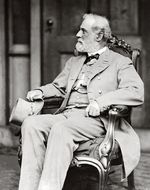
‘Clouds of Glory,’ Michael Korda’s Robert E. Lee Biography

22BORDEWICH-master495Fergus M. Bordewich at The New York Times:

Robert E. Lee occupies a remarkable place in the pantheon of American history, combining in the minds of many, Michael Korda writes in this admiring and briskly written biography, “a strange combination of martyr, secular saint, Southern gentleman and perfect warrior.” Indeed, Korda aptly adds, “It is hard to think of any other general who had fought against his own country being so completely reintegrated into national life.”

Lee has been a popular subject of biography virtually from his death in 1870, at the age of 63, through the four magisterial volumes of Douglas Southall Freeman in the 1930s to Elizabeth Brown Pryor’s intimate 2007 study of Lee and his letters, “Reading the Man.” Korda, the author of earlier biographies of Ulysses S. Grant and Dwight D. Eisenhower, aspires to pry the marble lid off the Lee legend to reveal the human being beneath.

He draws a generally sympathetic portrait of a master strategist who was as physically fearless on the battlefield as he was reserved in personal relations. He was, Korda writes, “a perfectionist, obsessed by duty,” but also “charming, funny and flirtatious,” an animal lover, a talented cartographer and a devoted parent, as well as “a noble, tragic figure, indeed one whose bearing and dignity conferred nobility on the cause for which he fought and still does confer it in the minds of many people.”

more here.