

Category: Recommended Reading
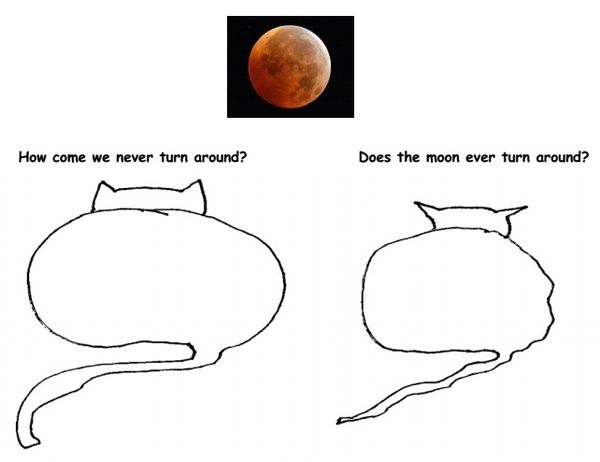
CATSPEAK
by Brooks Riley
Sunday, August 17, 2014
Our Microbiome May Be Looking Out for Itself
Carl Zimmer in the New York Times:

This recent research has given the microbiome a cuddly kind of fame. We’ve come to appreciate how beneficial our microbes are — breaking down our food, fighting off infections and nurturing our immune system. It’s a lovely, invisible garden we should be tending for our own well-being.
But in the journal Bioessays, a team of scientists has raised a creepier possibility. Perhaps our menagerie of germs is also influencing our behavior in order to advance its own evolutionary success — giving us cravings for certain foods, for example.
Maybe the microbiome is our puppet master.
“One of the ways we started thinking about this was in a crime-novel perspective,” said Carlo C. Maley, an evolutionary biologist at the University of California, San Francisco, and a co-author of the new paper. “What are the means, motives and opportunity for the microbes to manipulate us? They have all three.”
More here.
Graham Priest on Buddhism and logic
Massimo Pigliucci in Scientia Salon:

Second, Graham knows a lot more than I do about both logic and Buddhism (especially the latter), so surely I was going to learn new things about both topics and, more crucially, how they are related to each other. The problem is that I ended up learning and appreciating more about logic, not so much about Buddhism, and very little about their congruence. Hence this essay.
I am going to follow Graham’s exposition pretty closely, and will of course invite him to comment on my take at his pleasure. Broadly speaking, my thesis is that the parallels that Graham sees between logic and Buddhism are more superficial than he understands them to be and, more importantly, that Buddhism as presented in his essay, is indeed a type of mysticism, not a philosophy, which means that logic (and, consequently, argumentation) are besides the point. Moreover, I will argue that even if the parallels with logic run as deep as Graham maintains, Buddhism would still face the issue — fundamental in any philosophy — of whether what it says is true of the world or not, an issue that no mystical tradition is actually equipped to handle properly.
More here.
Henry Peck interviews Elliott Colla about his new novel
As Iraq faces a new crisis, the novel Baghdad Central explores the freighted “moment of ambiguity” a decade earlier.
From Guernica:
Guernica: Baghdad Central is unusual first of all for its Iraqi protagonist. What was the genesis of the book?

Guernica: How knowledgeable of Iraq were you at the time?
Elliott Colla: Recently I heard Barbara Ehrenreich talk about her writing process, and in response to a question on whether to write what you know, she said, “Listen, I write what I want to know.” I couldn’t put it any better.
More here.
More on Philosophy’s ‘White Man’ Problem
Justin E. H. Smith in his own blog:
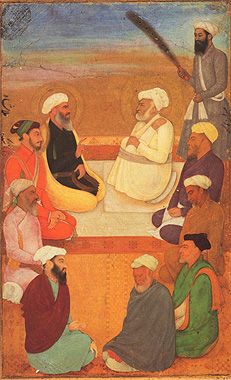
Jonardon Ganeri, following Homi Bhabha, articulates a distinction between two sorts of intercultural communication: cosmopolitanism and pluralism. Cosmopolitanism tends to interpret different viewpoints as “co-inhabitants in a single matrix, and to that extent [as] susceptible to syncretism,” while the cardinal tenet of pluralism “is that the irreconcilable absence of consensus is itself something of political, social, or philosophical value” (31). It has come to seem to me that most proposed solutions to the 'white man problem' in philosophy are based on a philosophical commitment to pluralism, in the sense defined, whereas I believe that cosmopolitanism is far more appropriate to the subject under investigation: expressions of philosophical ideas about, say, mind-body dualism, or the relationship between utterances and the things the utterances are about, really do exist in a universal matrix, bounded by the evolutionary history of the human species, whether they occur in Europe, India, or Amazonia. To study any of these ideas as if they were the particular property of any constituency in virtue of affiliation or ancestry is simply bad scholarship.
More here.
A Gandhi, A Gypsy And A Rushdie: García Márquez’s India Connect
Nina Martyris in Forbes India:
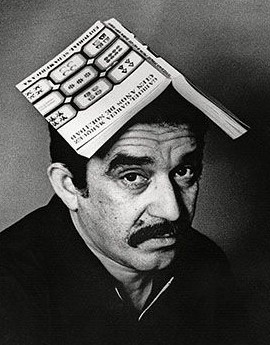
In that joyous moment, Gabo became to Colombia what Pele is to Brazil. For this beautiful Caribbean country battered by poverty, drug violence and civil war, the fact that one of its countrymen had won the Nobel was akin to it winning the World Cup. And because Gabo had grown up dirt poor and could be as coarse as a sailor and as chivalrous as Don Quixote, celebrations erupted not just in Bogota’s linen-clad salons but in the country’s barrios and villages as well. Taxi drivers in Barranquilla, where Gabo had spent his early years as a journalist, heard the news on their radios and began to toot their horns in unison. One excited reporter asked a prostitute if she had heard, and she replied, yes, a client had told her in bed. This nugget would have delighted the new laureate, for not only are prostitutes—especially the trembling child prostitute—portrayed with extraordinary sympathy in his stories (his depiction reminds one of Manto’s Bombay prostitutes), he himself had lived above a brothel in his youth when he was unable to afford more respectable quarters. Publicly Gabo maintained that winning the Nobel would be “an absolute catastrophe”, but secretly he longed for it. And so, when the Swedish minister called his home in Mexico City with the news, he put down the phone, turned to his beloved wife Mercedes, and said: “I’m fucked”.
That day, his telephone was so jammed with calls that his old friend Fidel Castro was forced to send a telegram: “Justice has been done at last… Impossible to get through by phone.” Far away in New Delhi, Prime Minister Indira Gandhi thrilled to the news, not least because she happened to be in the middle of One Hundred Years of Solitude. In a lucky turn of events, Gandhi got a chance to meet Castro the very next month in Moscow, where they’d both gone to attend Soviet Premier Leonid Brezhnev’s funeral. Why don’t you bring your friend to India for the Non Aligned Movement summit next year, she suggested. Why not, said Castro.
More here.
John Berryman: Life, Friends, is Boring
Band of Horses – The Funeral
Acquainted with the Night by Robert Frost
Water From Elephants
Jake Flanagin in The Morning News:

…In March of this year, a wild male elephant raged through a village in the state of West Bengal. Dipak Mahato awoke to violent crashing sounds as the bull besieged his home. He recalled hearing a loud “cracking sound” coming from the bedroom of his 10-month-old daughter: “We ran over and were shocked to see the wall in pieces and a tusker standing over our baby,” he said, according to the Times of India. “She was crying and there were huge chunks of the wall lying all around and on the cot. The tusker started moving away but when our child started crying again, it returned and used its trunk to remove the debris.” Mahato’s wife, Lalita, was shocked by the beast’s seemingly instantaneous shift from furor to almost parental tenderness. “We worship Lord Ganesh in our village. Still, I can’t believe that the tusker saved my daughter after breaking down the door and smashing a wall. We watched amazed as it gently removed the debris that had fallen on her. It’s a miracle.”
More here.
The man with the missing brain
Sanjiv Bhattacharya in The Telegraph:

Twenty years on, that crash continues to reverberate. Only this time, it’s a happier story, one that Lewis has told in a book, Rise and Shine, and before large audiences at numerous public events. It’s the story of his astonishing recovery, and it not only gives hope to sufferers of traumatic brain injury (TBI), but provides proof, in the most dramatic fashion, of the brain’s incredible ability to regenerate and reorganise itself. Doctors simply didn’t expect Lewis to live on the night of “the trauma”, as his mother Pat calls it. When two Jaws of Life machines freed him from the wreckage, he’d sustained a broken skull, jaw, arms, clavicle and pelvis, with compound fractures in nine ribs. And then there was the “catastrophic brain insult” he’d suffered – a stroke that destroyed a third of his right hemisphere and caused a contusion to the brainstem and severe internal bleeding.
More here.
Saturday, August 16, 2014
Comedy’s Cost
Matthew Hennessey in City Journal:

He was the Keith Moon of comedy, barely believable, a sweaty mess yet somehow right on the beat, a size XXXL figure with almost no earthly point of reference. It seemed as if he’d arrived fully formed, in an interstellar egg-ship like his first, wholly original creation—the now nearly non-translatable icon of the late 1970s, Mork from Ork. Then it seemed as if he’d always been here, as Popeye, as Garp, as the tweedy English teacher you never had but always wanted, as the zany and improbably Scottish Mrs. Doubtfire. He was a slam dunk on Leno or Letterman. In fact, he was a slam dunk everywhere. There were no half-assed Robin Williams appearances. He never phoned it in; you got the sense that he couldn’t. Like any comedian, some of his gags didn’t land, but not for lack of trying. Williams was all-in to make us laugh. The price, it seems, was paid mostly by him. His public exuberance masked private anguish. And in the end, tragedy won out of over comedy, as it does for many who strive to make us laugh.
More here.
ABBEY ROAD STILL FAMOUS AT 45
Rebecca Willis in More Intelligent Life:
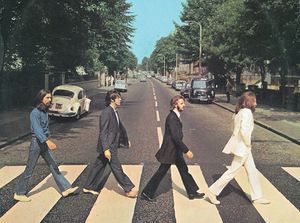
If you drive regularly over it, as I do, you soon learn that the rules of the Highway Code are virtually impossible to implement here. You can still “look out for pedestrians waiting to cross” and “be ready to slow down or stop to let them cross”, but however much you may want to “give way when a pedestrian has moved onto a crossing”, they just don't want you to. They wave you impatiently on, scanning the road beyond for a break in the traffic. The last thing they want is your car in their photo—even my little electric car, which is white and could do a passable imitation of the Beetle behind George Harrison's head. What the fans possibly don't know is that, at 11.35am on August 8th 1969 (also a Friday), a policeman stopped the traffic for the shoot, and the photographer, Iain Macmillan, stood on a stepladder in the middle of the road to get his vantage point.
More here.
You Are Not Nearly Scared Enough About Ebola

Laurie Garrett in Foreign Policy (Sean Gallup/Getty Images for Siemens):
Last week, my brilliant Council on Foreign Relations colleague John Campbell, former U.S. ambassador to Nigeria, warned that spread of the virus inside Lagos — which has a population of 22 million — would instantly transform this situation into a worldwide crisis, thanks to the chaos, size, density, and mobility of not only that city but dozens of others in the enormous, oil-rich nation. Add to the Nigerian scenario civil war, national elections, Boko Haram terrorists, and a countrywide doctors' strike — all of which are real and current — and you have a scenario so overwrought and frightening that I could not have concocted it even when I advised screenwriter Scott Burnson his Contagion script.
Inside the United States, politicians, gadflies, and much of the media are focused on wildly experimental drugs and vaccines, and equally wild notions of “keeping the virus out” by barring travelers and “screening at airports.”
Let's be clear: Absolutely no drug or vaccine has been proven effective against the Ebola virus in human beings. To date, only one person — Dr. Kent Brantly — has apparentlyrecovered after receiving one of the three prominent putative drugs, and there is no proof that the drug was key to his improvement. None of the potential vaccines has even undergone Phase One safety trials in humans, though at least two are scheduled to enter that stage before December of this year. And Phase One is the swiftest, easiest part of new vaccine trials — the two stages of clinical trials aimed at proving that vaccines actually work will be difficult, if not impossible, to ethically and safely execute. If one of the vaccines is ready to be used in Africa sometime in 2015, the measure will be executed without prior evidence that it can work, which in turn will require massive public education to ensure that people who receive the vaccination do not change their behaviors in ways that might put them in contract with Ebola — because they mistakenly believe they are immune to the virus.
We are in for a very long haul with this extremely deadly disease — it has killed more than 50 percent of those laboratory-confirmed infections, and possibly more than 70 percent of the infected populations of Liberia, Sierra Leone, and Guinea. Nigeria is struggling to ensure that no secondary spread of Ebola comes from one of the people already infected by Liberian traveler Patrick Sawyer — two of whom have died so far.
More here.
nostalgia

Few habits are as prone to affliction, or as vulnerable to an ordeal, as the bent of a peddler’s consciousness. Placeless, the peddler completes an untold number of transactions; there are ideas to conduct (through language, which can transact a mind) and feelings to certify (through tasks, repeated interminably).
One example: Kleist, writing at the start of the nineteenth century, wanted the mind to catch up to language, which leads the way. Ideas, in Kleist’s view, can be made to syncopate with speech—and the mind can arrive at the summit or at the top of an idea—but through language alone, which forms and dispatches a thought spontaneously. For Kleist, what matters is the movement of a consciousness; an idea can never be fixed, but created only by the whim, and the digressiveness, of thinking aloud.
Another, much earlier example: the mystic, who expends a human life to verify his piousness, and whose own movement entails an ongoing series of tasks, a life project, that ensures the intimacy of his relationship with God. Events, like ideas, are replayed endlessly in the soul of the believer (the soul being, for the mystic, the exemplary scene of revelation).
more here.
The colourful life of the man who translated Proust’s opus
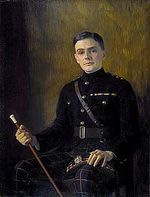
The subtitle of this entertaining biography describes CK Scott Moncrieff as a “Soldier, Spy and Translator”. But Jean Findlay, his great-great-niece, makes clear in Chasing Lost Time that the list of his accomplishments and activities did not end there. Scott Moncrieff was also a generous family man, a promiscuous homosexual and a converted Catholic. His colourful, 40-year life somehow seems to embody almost every literary cliché of his time, from poet of the trenches to jazz age expat. And yet his name never appeared on the front cover of any of the 20-odd books he published.
Born in 1889, Scott Moncrieff took part in the first world war and, like many sensitive young officers of his generation, he wrote poetry; unlike Siegfried Sassoon (whom he disliked) or Wilfred Owen (with whom he was in love), however, Scott Moncrieff’s poems were not bleak portrayals of futility and horror but rather jaunty little rhymes. In “Billeted” (published in 1917), for example, he wrote:
Mustn’t think we don’t mind when a chap gets laid out,They’ve taken the best of us, never a doubt;But with life pretty busy, and death rather nearWe’ve no time for regret any more than for fear . . .
more here.
The Grand and Terrible Polar Voyage of the USS Jeannette
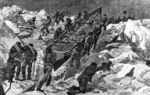
Ice. You remember ice. The stuff that forestalled so many polar explorers back before global warming and dreams of beachfront homes along the shores of Baffin Bay. But, as Hampton Sides reminds us in this first-rate polar history and adventure narrative, the notion of mildish weather in the Arctic did not begin with climate change. Just 150 years ago many believed that the Gulf Stream and its counterpart in the Pacific, the Kuroshio, reached all the way to the North Pole. Once a ship broke through a rim of ice circling the top of the globe, the thinking went, it would encounter an open polar sea and easy sailing to the pole.
Following the failed tries in the mid-19th century to discover a Northwest Passage and make progress north between Canada and Greenland, many experts, including August Petermann — the eminent German geographer known as the Sage of Gotha and, as Sides writes, “probably the world’s most vocal and indefatigable advocate of the Open Polar Sea theory” — argued for an attack on the pole from the other side of North America through the Bering Strait.
more here.
Neurons at work: Research provides a clearer view of ‘alternative splicing’
Peter Reuell in the Harvard Gazette:

A similar process, “alternative splicing,” is at work inside the bodies of billions of creatures — including humans. Just as a film editor can change the story with a few cuts, alternative splicing allows cells to stitch genetic information into different formations, enabling a single gene to produce up to thousands of different proteins.
Harvard scientists say they’ve now been able to observe that process within the nervous system of a living creature.
Using genetic tools to implant genes that produce fluorescent proteins in the DNA of transparent C. elegans worms, John Calarco, a Bauer Fellow at the Faculty of Arts and Sciences Center for Systems Biology, and postdoctoral researcher Adam Norris were able to gather hard evidence that the alternative splicing process frequently works differently in different types of neurons.The study was described in a recent paper in Molecular Cell.
“Splicing is an essential process in gene regulation that happens in most eukaryotic cells, all the time,” Calarco said. “It’s a fundamental part of how eukaryotic genes produce proteins, but when it goes wrong, it can lead to any number of diseases, including in the nervous system.”
On the surface, Calarco said, the splicing process is relatively simple.
More here. [Thanks to Sughra Raza.]
The Power of the Powerless: Hong Kong’s Last Stand
Kong Tsung-gan in Hong Wrong:

In the entirety of its modern history, from the start of British colonial rule in 1842 up to today (when Hong Kong is essentially under a new colonial rule of the Chinese Communist Party), Hong Kong has always been a colony and never been a democracy. Like the rest of China, it has no democratic tradition. Much of the current freedom struggle involves building the democratic culture Hong Kong has never had from the ground up. Creating culture, changing culture is by no means an overnight process. It takes time. The question is, Does Hong Kong have the time it takes? (More about that question in a moment.)
The process of democratic cultural change involves people transforming themselves from subjects ruled by others—which Hong Kong people have always been—to citizens who rule themselves. This means changing the way we see ourselves. It does not mean, in the first instance, the subjects ask the ruler for citizenship rights, for the ruler will not freely grant them. It means the subjects refuse to any longer act as subjects and instead act as citizens, demanding their full rights as citizens, demanding ownership of the society that is rightfully ours, taking our fate into our own hands.
More here.