
Enjoying the content on 3QD? Help keep us going by donating now.
Category: Recommended Reading
The Joke Isn’t Funny Anymore: Death and satire
Will Self in Harper’s Magazine:
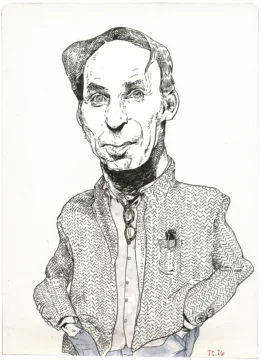 How could we satirize all sorts of different people, with different faiths, without implicitly arguing that they should abandon their ethical precepts in favor of our supposedly superior ones? Under such circumstances, all the satirist could responsibly do—especially if he lacked moral certainty himself—was get his readers to think about the problems they were all facing.
The test case for this had been the publication of Salman Rushdie’s not-unsatiric novel The Satanic Verses: Western liberals convulsed over the fatwa issued against the author by Iran’s ayatollah—largely because they were concerned about an enemy from within. Not that liberals would acknowledge their own bad faith in this regard; if they could have, they’d have had to do a lot of hard thinking, instead of indulging in the sort of empty attitudinizing many did when the next climacteric arrived, in the form of the 9/11 terrorist attacks, which caused certain satirists, such as my old friend Martin Amis (who really should have known better), to completely abandon their moral compasses and argue that the Muslim community deserved “to suffer until it gets its house in order.” And if a society’s most prominent public intellectuals are incapable of sustaining a discourse informed by a defined position on right and wrong, then there really is no discourse anymore.
More here.
Enjoying the content on 3QD? Help keep us going by donating now.
First atlas of brain organization shows development over a lifetime
Gemma Conroy in Nature:
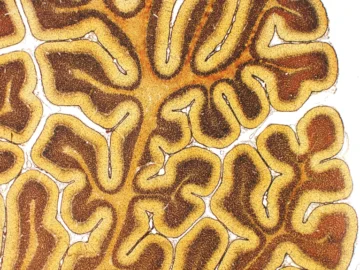 The brain is a noisy place. Sometimes two brain regions that are far apart are active at the same time, suggesting that they work together to support the same function. Such regions are said to be functionally connected, even though they do not necessarily sit close to each other in the brain.
To understand how this functional connectivity is organized, brain areas are plotted along a scale, or axis, on the basis of their connectivity patterns with the rest of the brain, says study co-author Patrick Taylor, a computer scientist at the University of North Carolina at Chapel Hill who focuses on neuroscience. There are three main functional axes. The sensory-to-association axis, for example, allows researchers to describe brain regions that lie along a continuum from those that focus mainly on processing sensory information to those that are engaged in sophisticated processes such as integrating sensory information into complex thought. The brain regions at each point along the axis have similar patterns of connectivity.
More here.
Enjoying the content on 3QD? Help keep us going by donating now.
Friday Poem
The first notion of Spoon River poems came to its author upon reading a Greek Anthology. After reading he was determined to write his own anthology following a conversation with his mother of the old days. He began to write Spoon River to give voices to the small-town dead and living as “characters interlocked by fate.” Here is one of the
214 poems written over some ten months:
Yee Bow
They got me into Sunday-school
in Spoon River
And tried to get me to drop Confucius for Jesus.
I could have been worse off
If I had tried to get them to drop Jesus for Confucius.
For, without any warning, as if it were a prank,
And sneaking up behind me, Harry Wiley,
The minister’s son, caved my ribs into my lungs,
With a blow of his fist. Now I shall never
sleep with my ancestors in Pekin,
And no children shall worship at my grave.
by Edward Lee Masters
from Spoon River Anthology
Collier Books, NY 1962
Enjoying the content on 3QD? Help keep us going by donating now.
Thursday, March 26, 2026
Five stunning images from Wildlife Photographer of the Year People’s Choice Award

More here.
Enjoying the content on 3QD? Help keep us going by donating now.
Artemis II: Inside the Moon mission to fly humans further than ever
Rebecca Morelle, Alison Francis, Paul Sargeant and the Visual Journalism team at the BBC:
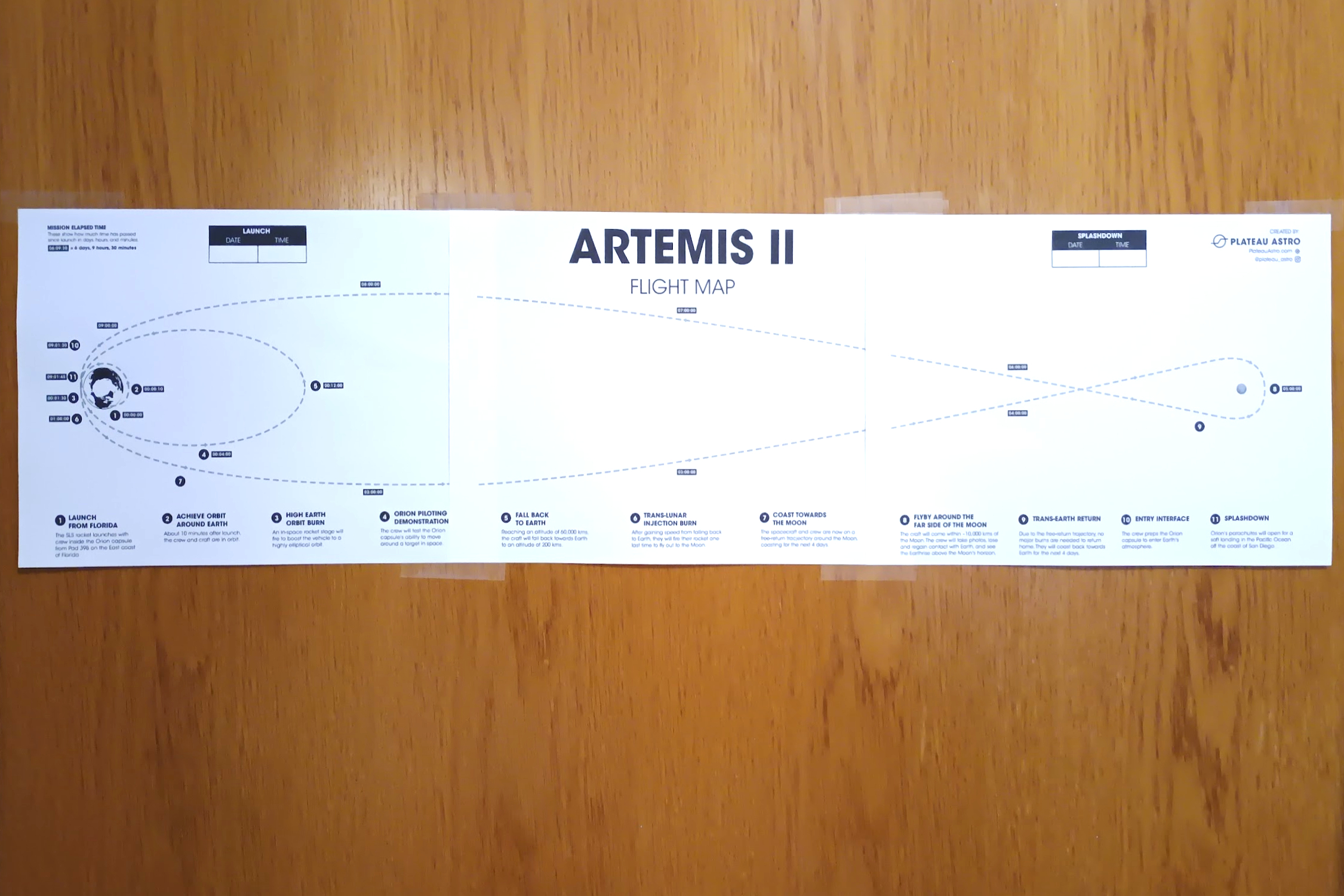
Four astronauts will take a trip of more than half a million miles around our celestial neighbour and back home in a mission filled with wonderment, but also danger.
Nasa’s Artemis II mission – which is scheduled to launch as soon as 1 April – will bring us stunning views of the Moon and a new understanding of the lunar environment.
It will also pave the way for a landing and, eventually, a Moon base – our first step in learning how to live on another world.
But the voyage comes with serious risks – the crew will fly in a spacecraft never used by humans before.
And there will be personal challenges: the astronauts will spend 10 days cramped together in a spacecraft the size of a minibus.
So how will this high-stakes mission work?
More here.
Enjoying the content on 3QD? Help keep us going by donating now.
OpenAI researcher Jason Wolfe talks about the Model Spec, the public framework that defines the intended behavior of ChatGPT
Enjoying the content on 3QD? Help keep us going by donating now.
The Darién Gap: A Reporter’s Journey Through the Deadly Crossroads of the Americas
Blake Scott at H-Environment:
 Why is it that a tourist can visit Panama—or any “supposedly fun” vacation destination from Baja to Colombia—and be welcomed like the second coming of divine capitalism? Yet at the same time, a weary migrant traveling through the same country is robbed and abused by state officials and officers they encounter along the way? The migrant journey, marked by mistreatment, also costs far more financially than the average tourist’s week-long vacation package. This problem of mobility/immobility is at the core of our modern predicament. And in recent years, like many contemporary crises, it appears to be worsening—especially in the Americas, from Minneapolis to Texas and southward along the maritime and land routes linking the United States with South America.
It is a moral contradiction with life-and-death consequences: Some people are permitted to travel in comfort and luxury, while others are forced to move in the shadows of legality, facing violence and uncertainty.
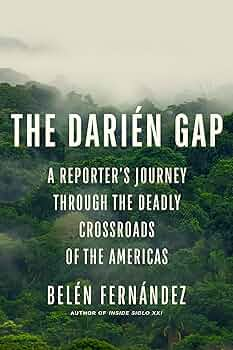
For anyone seeking to better understand this situation, journalist Belén Fernández’s newest book, The Darién Gap: A Reporter’s Journey Through the Deadly Crossroads of the Americas, is essential reading. The Darién—a stretch of undeveloped rainforest and mountainous terrain separating Colombia and Panama—is the only “gap” in the Pan-American Highway, which otherwise runs from Alaska to Patagonia.
More here.
Enjoying the content on 3QD? Help keep us going by donating now.
Motherhood reshaped how I see shame, art, and the female body
Megan O’Grady in The Yale Review:
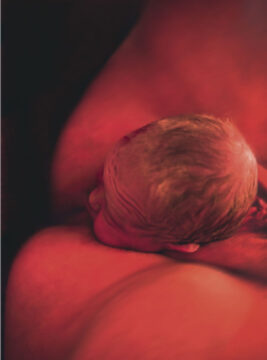 I had failed to grasp an obvious fact of parenthood: that I had bound myself irrevocably to the world and made myself freshly vulnerable to it. Nothing had prepared me for the cruelty of a culture that aggressively advocates breastfeeding and attachment parenting but has no federally mandated paid family leave. (Working wasn’t optional for me, as it had been for my mother; as a writer under contract, I was back at my desk within ten days.) I had not really understood, before giving birth, that parenthood was where society met my body, and that caregivers were continually making up for civilization’s many lacks, expected to embody all things lovingly boundless, unconditional, and selfless in a bottom-line world. I felt reduced to a symbolic ideal that didn’t align with the values of the society in which I existed as an actual woman, under real circumstances.
More here.
Enjoying the content on 3QD? Help keep us going by donating now.
The Derivative Depravity of the Epstein Class
Arjun Appadurai in The Wire:
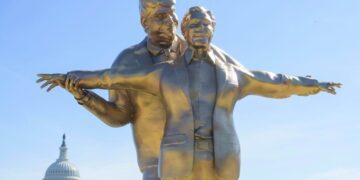 The shocking West Asian war unleashed by the USA and Israel is a source of relief to Donald Trump because it has temporarily taken media attention away from his greatest domestic scandal, his long and sordid ties with the deceased sex trafficker, Jeffrey Epstein. But the Epstein story will return to haunt Trump forever.
It is now evident that Jeffrey Epstein was both a financial conman and a depraved sex trafficker. These were his twin paths to cross breeding the most disparate elites on both sides of the Atlantic, and well beyond. He was the patriarch of what is now often called The Epstein Class. The connection between the sexual and financial elements of his career merit a closer look, which involves two keywords in modern finance: leverage and derivatives.
More here.
Enjoying the content on 3QD? Help keep us going by donating now.
Thursday Poem
No One Looked Back
As if 360 days of sunshine would never end.
As if the balance of rain to earth would remain even.
As if valleys and terraced hills would produce vineyards and fruit
……… forever
As if the earth, light, water and wind worked
……… in concert, in harmony, had consulted with each other.
No one expected a raging wind to rip trees from their roots
……… Or an ocean to roil through cities once so erect
……… Or a sun to crack and parch and not feed and nurture
……… Or a prophetic dream that would come to be
……… Or a darkness that would color every season.
by Maria Lucella
from Red Wheelbarrow #3 2010
Enjoying the content on 3QD? Help keep us going by donating now.
Wednesday, March 25, 2026
Wittgenstein’s Contribution to Philosophy
Enjoying the content on 3QD? Help keep us going by donating now.
The Highly Mobile Cucumber
Andrés Muedano at JSTOR Daily:
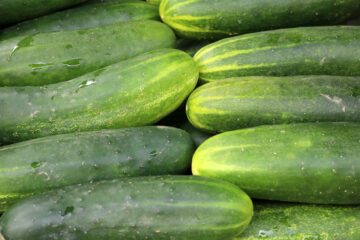 In the Georgics, a lyrical guide to agriculture published in 29 BCE, the Roman poet noted that “the cucumber, coiling through the grass, swells into a paunch.” His words evoke the image of an animal slithering on the ground before growing—an allusion that was likely intended as a gardening pun about reptiles, argues classics scholar Rebecca Armstrong. “For an instant reminding us of the sinister snakes lurking in the grass elsewhere in the Georgics,” she writes, “the cucumber emerges as a harmless, and welcome, vegetable.” It is, be thankful, an innocuous creature. It won’t jump at your pets and eat them.
But don’t let its stillness in the videos fool you. To think of this gourd as an object devoid of action would be a fatal mistake. Making sense of the cucumber demands an inquiry into movement. The plant that produces cucumbers is, after all, a creeping vine, and its history is shaped by different kinds of motion. The cucumber coils and it climbs; it circulates, and it spreads. It is, undoubtedly, a highly mobile plant.
more here.
Enjoying the content on 3QD? Help keep us going by donating now.
The Comfort of Crows
Maria Popova at The Marginalian:
 Nothing magnifies life — in the proper sense of the word, rooted in the Latin for “to make greater, to glorify” — more than the act of noticing its details, and nothing sanctifies it more: Kneeling to look at a lichen is a devotional act. We bless our own lives by recognizing and reverencing the details, the miniature marvels that make this improbable world what it is. And yet consciousness evolved to filter them out, to blur them into more abstract pictures we can parse, to sieves relevance from reality in order to save us from being too wonder-smitten by the flickering morning light on the edge of the kitchen sink and the iridescent eye of the house fly to move through our days. Cognitive scientists know this necessary ailment of consciousness: “Right now, you are missing the vast majority of what is happening around you,” Alexandra Horowitz wrote in one of my favorite books, examining the “intentional, unapologetic discriminator” that is attention. Poets know the remedy: “Attention without feeling,” Mary Oliver wrote, “is only a report.”
Paying conscious attention, then, is our primary instrument of loving the world, abiding by Iris Murdoch’s splendid definition of love as “the extremely difficult realisation that something other than oneself is real.” But because nothing abstract is real except mathematics, because love is made of the particular and the specific, to love anything — a person, a planet, your life — is at bottom a practice of noticing, which is always a devotional practice.
more here.
Enjoying the content on 3QD? Help keep us going by donating now.
A.I. Is Writing Fiction and Publishers Are Unprepared
Alexandra Alter in the New York Times:
 Many publishers don’t explicitly prohibit authors from using A.I. in their book contracts. Instead, they rely on longstanding contractual clauses that require writers to affirm that their work is “original,” which many people in the book business now interpret as effectively banning the use of A.I. for text or image creation.
Publishers are also wary of A.I. content because currently, A.I.-generated text and art can’t be protected by copyright. Still, given the widespread uses for A.I. during research, outlining and other parts of the writing process, there’s little clarity on what constitutes its appropriate use. Many in the industry worry that publishers are leaving themselves vulnerable to scammers — or even writers who believe their A.I. use doesn’t cross any lines.
One problem in regulating authors’ A.I. use is that most corporate publishing houses don’t want to ban it outright.
More here.
Enjoying the content on 3QD? Help keep us going by donating now.
Bill Gates: The next generation of electricity is almost here
Bill Gates at Gates Notes:
 If you’re an electricity nerd like me, this is an exciting moment. Earlier this month, TerraPower—the next-generation nuclear power company I created in 2008—received federal approval to start building the nuclear reactor at its Kemmerer, Wyoming plant. Wind and solar are reportedly generating more electricity than fossil fuels in the EU for the first time. We’re seeing a clear shift as the world’s electricity system is becoming more diverse, more innovative, and more dynamic than ever before.
Here are three of the coolest technologies people will be talking about this week:
Geothermal. Geothermal power has been around for more than a century, but new approaches are unlocking greater potential for the technology. Most geothermal power plants today are located near the boundary between two tectonic plates, where you don’t have to drill as deep to find usable heat that can be pumped to the surface to turn a turbine and generate electricity.
More here.
Enjoying the content on 3QD? Help keep us going by donating now.
NVIDIA Chief Scientist Bill Dally speaks with Google’s Chief Scientist Jeff Dean
Enjoying the content on 3QD? Help keep us going by donating now.
The Anywhere–Somewhere Value Divide
Yascha Mounk interviews David Goodhart:
 David Goodhart: The anywhere–somewhere value divide clearly contributed enormously to both the Brexit vote in 2016 in the UK and Trump’s first election in that same year, and indeed his reelection. The anywhere worldview, as you implied, is that of the highly educated, people comfortable with mobility, partly because they have often experienced it by attending residential universities. They are part of a world where change is something they can take in stride. Openness and autonomy come naturally because of their experiences as mobile graduates. It leans toward a natural kind of liberalism. Of course, they then go on into jobs that pay them well and confer high status.
It is a basic psychological point, isn’t it? The more secure you are, the more open and liberal-minded you are likely to be, and vice versa. The somewhere grouping is larger but less influential. These are people who tended to be less well educated, more rooted, and whose identities were often much more connected to place and group, making them more susceptible to being discomforted by social change, in contrast to the anywheres who are more adapted to it. That had been brewing beneath the surface for 20 or 30 years, probably since the late 1980s or early 1990s, and the inchoate somewhere pushback erupted in 2016.
More here.
Enjoying the content on 3QD? Help keep us going by donating now.
‘No Kings’ Protests May Draw Biggest—and Most Diverse—Anti-Trump Crowds Ever
Philip Elliott in Time Magazine:
 The next widespread protest against President Donald Trump is set to draw big numbers. As missiles continue flying across the Middle East, gas prices keep rising, and airport security lines continue stretching ever longer, there is no reason to think Saturday’s third nationwide No Kings protest will be anything smaller than the one in October that drew millions. In fact, all signs point to March 28 potentially being the single largest day of domestic political protest in history.
After all, Trump has the highest disapproval rating of any President at this point in his presidency in this century.
But for those looking for meaning in the venting, the makeup of those coming out to protest should draw just as much attention as their size. As they’ve grown bigger, these millions-strong protests are shifting from partisan echo chambers venting rage into something somewhat closer to the broader electorate. If the trend continues this Saturday, Republicans should be terrified.
More here.
Enjoying the content on 3QD? Help keep us going by donating now.
Plastic-Eating Microbes Work Better in Teams
Laura Tran in The Scientist:
 Plastic pollution has spread across the land and into the deepest parts of the ocean. Many plastics contain additives such as phthalic acid esters (PAEs), which act as plasticizers to make materials more flexible. But as plastic waste accumulates, these chemicals can leach into the environment, where they have been linked to endocrine disruption.
Although researchers have identified microbes capable of breaking down plastics, using them to clean polluted environments has proved challenging. Microbial digestion is often slow, it sometimes requires extreme temperatures, and many strains can degrade only a single type of plastic. In principle, a combination of different species with an appetite for plastic could tackle bioremediation more effectively than any one microbe alone.
Motivated by this idea, researchers from the Helmholtz Centre for Environmental Research (UFZ) studied how a bacterial consortium might collectively degrade plastics. Their findings, published in Frontiers in Microbiology, showed that three bacterial species work together by ‘cross-feeding,’ where one microbe releases metabolic byproducts that another takes up as nutrients, to break down PAEs.1 Alone, these microbes could not degrade plastic. “Introducing these bacteria into polluted natural environments, a process known as bioaugmentation, could potentially help reduce PAE contamination in real-world settings,” said coauthor and microbiologist Hermann Heipieper at UFZ, in a press release.
More here.
Enjoying the content on 3QD? Help keep us going by donating now.