Category: Recommended Reading
Living life by the book
Leo Robson in New Statesman:
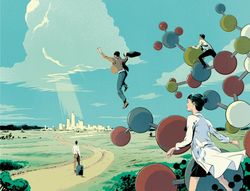
There is a series of postcards by the Dutch cartoonist Joost Swarte that applies the alarmist tone usually reserved for smoking to scenes of people reading. A sunbathing woman is going purple and the caption, set in black on white with a black border, says: “Reading causes ageing of the skin.” In other scenarios a man ignores the naked woman lying beside him (“Reading may reduce the blood flow and cause impotence”) and a mother pours huge quantities of salt into a meal (“Reading seriously harms you and others around you”). What makes the cartoons so flat and pointless, apart from Swarte’s winsome draftsmanship, is their apparent belief that the benevolence of reading is a stable fact, ripe for comic inversion, rather than a social attitude that we are free to dispute. It is the same ostensive irony that underpins George Orwell’s exercise in amateur accountancy, “Books v Cigarettes”.
Still, you can see where Swarte’s confusion came from. Reading has the best PR team in the business. Or perhaps it’s just that devoted readers have better access to the language of advocacy and celebration than chain-smokers or, say, power-ballad enthusiasts. Either way, somewhere along the line, an orthodoxy hardened: cigarettes will kill you and Bon Jovi will give you a migraine, but reading – the ideal diet being Shakespeare and 19th-century novels, plus the odd modernist – will make you healthier, stronger, kinder. With the foundation of Sex and Love Addicts Anonymous in 1976, reading became the last thing you can never do too often. Even the much-made argument that works of literature – Northanger Abbey, Madame Bovary – insist on the dangers of literature redounds to literature’s benefit, and provides yet another reason for reading.
More here.
Ripples From the Big Bang
Dennis Overbye in The New York Times:
When scientists jubilantly announced last week that a telescope at the South Pole had detected ripples in space from the very beginning of time, the reverberations went far beyond the potential validation of astronomers’ most cherished model of the Big Bang. It was the second time in less than two years that ideas thought to be radical just decades ago had been confirmed (at least so the optimists think) by experiment. The first was the discovery of the Higgs boson, associated with an energy field that gives mass to other particles, announced in July 2012; physicists have said they will be studying the Higgs for the next 20 years at the Large Hadron Collider in Europe and perhaps at successor machines, hoping for a clue that will lead them beyond the Standard Model, which has ruled physics for the last half-century. Now the South Pole telescope team, led by John M. Kovac of the Harvard-Smithsonian Center for Astrophysics, has presented physicists with another clue from what the Russian cosmologist Yakov B. Zeldovich once called the poor man’s particle accelerator — the universe itself.
The ripples detected by the telescope, Bicep2, were faint spiral patterns from the polarization of microwave radiation left over from the Big Bang. They are relics from when energies were a trillion times greater than the Large Hadron Collider can produce. These gravitational waves are the long-sought markers for a theory called inflation, the force that put the bang in the Big Bang: an antigravitational swelling that began a trillionth of a trillionth of a trillionth of a second after the cosmic clock started ticking. Scientists have long incorporated inflation into their standard model of the cosmos, but as with the existence of the Higgs, proving it had long been just a pipe dream. Astronomers say they expect to be studying the gravitational waves from mountaintops, balloons and perhaps satellites for the next 20 years, hoping to gain insight into mysteries like dark matter and dark energy.
More here.
Tuesday Poem
Shadowing the Medivac
He's already in the car, an hour's drive
he can't allow himself to think, just drive
in the helicopter's shadow peeling
silently over the hills, silently, like nothing
is happening inside, nothing going on,
can't think of anything newborn
zooming through the sky, an ounce of brain
racked by seizures, blue-skinned, underweight
and Swiss cheese for a heart.
What's in the rearview, eh? Anything coming?
Cars? Trucks? Glare and a crab-red face deformed
with thoughts of beats and breathing tubes,
and ahead, old magazines on tables, waiting rooms
where doctors lead men and women into offices to sob
oh my god oh god oh jesus no…
And some of the most beautiful scenery in this country
can be found along our many well-maintained highways.
Shield rock, tamarack swamp and pine groves
line the winding thoroughfares between our cities. He is still
driving, he can see the city coming up. The helicopter
must have arrived already, in Toronto, where they fiddle
inside her rib cage with the sanitary version of a bicycle tire
repair kit….and he's on his way to the hospital, he'll get there,
he's coming, he's keeping his eye on the road.
.
by Paul Vermeersch
from Burn
ECW Press, 2000.
.
Monday, March 24, 2014
The Winners of the 3QD Politics & Social Science Prize 2014
Mark Blyth has picked the three winners from the nine finalists:
- Top Quark, $500: Kenan Malik, In Defense of Diversity
- Strange Quark, $200: Filipe Gracio, Democratic Austerity: Semi-sovereign states, semi-sovereign peoples
- Charm Quark, $100: Philip Cohen, State of Utah falsely claims same-sex marriage ban makes married, man-woman parenting more likely
Here is what Professor Blyth had to say about them:
As is both necessary and customary, I would like to begin by thanking Abbas, Robin and the whole 3QD crew for asking me to do this.
Like most 40-somethings (uuugh!) while I could always do with more money, what I really would love is more time, which is of course harder to procure and cannot be printed, sadly. Consequently, I fail to read 3QD with the regularity it deserves. Yet being asked to do this allows me to use the hive-mind to filter out the best bits and enjoy them all in one morning of reading – so ‘yum' and thank you.
After reading I started to write, and I was immediately struck by the title of the prize – politics and social science – as if the latter can exist without the former? Thankfully, the finalists each in their own way show this separation to be fallacious at best and folly at worst.
I was also acutely aware of my own prejudices and interests in all of this as I pondered ‘what do I like here and why?'
I then remembered that trying to put that (self) aside and be ‘neutral' is its own form of politics and exclusion (like Connolly on secularism, social science ‘objectivism' – pick your poison) so I decided to embrace my flawed self as the frame for selection. That frame became three pots into which I put all nine pieces.
Pot A: The Bullshit Police
The first pot contains pieces that serve as great examples of social science writing that I call “charges from the bullshit police.” If social science has a public function this is it. Theory generation and hypothesis testing and all that grad school stuff is all fine and well, but at the end of the day the job is to take the claims of those that want us to think X is Y and sniff it to see if its bullshit.
Bullshit Police Contenders
- Family Inequality: State of Utah falsely claims same-sex marriage ban makes married, man-woman parenting more likely
- The Philosopher's Stone: How to Do History
Pot B: The Good Jeremiad
The second pot contains pieces that do more than complain about something, they tell us why it's worth complaining about and insist that we take it on board. They are at their best when they take what we think we know about something and then flip it around to show us that really, we don't know crap, because what we accept as being the truth is so far from reality we should be ashamed to have gone along with the status quo. This end up being the largest pot – what after all is the point of blogging if not to have a good Jeremiad?
The Good Jeremiad Contenders
- Forbes: How Putin Invented The New Authoritarianism
- The New Yorker: The Trial of Pervez Musharraf
- U.S. Intellectual History Blog: Not Everyone Wants to Hear Lee Atwater Sing the Blues
- Social Pulses: Democratic Austerity: Semi sovereign states, semi sovereign peoples
Pot C: Elpis' Helpers:
The third pot contains those pieces that give us cause for hope. For without hope there is only critique, which on its own becomes a thin gruel. This is the toughest pot to pick from since getting here requires not just mastery of the skills of spotting bullshit and doing a good Jeremiad, but also reminding us that change, and good change at that, is possible.
Elpis' Helpers Contenders
- Corey Robin: Jews Without Israel
- Pandaemonium: In Defense of Diversity
- Los Angeles Review of Books: I Am Malala : The Girl Who Stood Up For Education and Was Shot by the Taliban
And so to the winners from each pot (without a ranking, so far…)
The Bullshit Police
Robert Paul Wolff's distinction between historians that have too much data and those that have too little, and the ideological choices that go with either position, reminded me of the old quip about historians and economists on the same campus. Each group thinks anyone who is not one of them is an idiot, but they are willing to tolerate each other since they both at least know this essential truth.
But the winner in this pot is Philip Cohen for his family inequality piece on the state of Utah and same sex parenting. Take a causal argument. Test it. Test it again. Pronounce it bullshit. Move along. Move along. Fantastic stuff and first class ‘bullshit police' work.
The Best Jeremiad
Again, although I enjoyed all the contributions, from Melik Kaylan's debunking of Putin as in any way either normal or acceptable, to Omar Waraich's conclusion that the only reason for Musharraf returning to Pakistan is that he is still thinks, against any and all evidence, that he is the country's savior, to Andrew Hartman's take down of the racist double standards at play in the demonization of sexually explicit music, it was all good.
But, and this is of course due to my bias and I fully admit that, the winner in this pot is Filipe Gracio's Democratic Austerity.
That the ongoing economic slaughter of the lower classes of Europe's periphery continues to be both told and treated as a case of excessive spending, when it is in fact a slow motion banking crisis where the top 30 percent of the income distribution got their assets bailed out and stuck the bill on the 70 percent below them in the form of spending cuts is now known, but is still contested by the powers that be.
What this piece gives us is the political consequences of all this. Namely, that as “countries in the eurozone abdicated from having traditionally sovereign institutions,” which was fine until the crisis came, the political classes that did this passed the remit to fix the resulting mess to the bankers that caused the problem in the first place since those democratically elected had neither the necessary tools (nor the necessary ideas) about how to fix it. We need to remember that the bankruptcy of the European political elite is almost as bad as that of its banks, and it takes a great Jeremiad to remind us of that.
Elpis' Helpers
Finally, three pieces made it to the pot marked Elpis' Helpers. This was the toughest call of all. The simplicity of Corey Robin's observations belies the insight. That when a people no longer cares the way they used to, it opens up the possibility of positive transformation as much as it ignites fear for the old certainties that none can take for granted any longer.
Similarly, Shehryar Fazli's essay on Malala is so much more than an essay on Malala. It's a reaction to a life so nearly ended and an indictment of an entire system of politics that nearly ended it. And yet, it ends with hope in Malala's defiance, and her smile, despite the portrait of a society so badly governed and so badly defended.
And yet despite all that, the winner in this pot is Kenan Malik's wonderful essay in defense of diversity.
In this piece he not only does an excellent bullshit police take down of Goodhart, Collier, Caldwell and other immigration panic mongers, he also reminds us that such panics are historical commonplaces and all that is said now has been said before by the same forces of reaction. He also stresses, like Gracio, that what is causing the marginalization and immiserization of the British (and increasingly – by the argumentative extension of politicians everywhere) and the European working classes, are changes in the structure of labor, product and capital markets that have been 30 years in the making and have little to do with influxes of ‘foreignness' anywhere. But they are, like the Eurocrisis, portrayed as what they are not for political ends. And yet, although it is implicit, his essay carries hope at its end – that we have been through this before, and that both growth and democracy can triumph in such dark moments.
And now for the ranking:
- Top Quark: Kenan Malik
- Strange Quark: Filipe Gracio
- Charm Quark: Philip Cohen
I know this is probably exactly what you would expect someone like me with interests like me and passions like me to pick, and so you are right. But it's the best call I can make, at least as me. All three posts are things I would want everyone to read. I write for a living and few of my utterances would ever reach their level. So I applaud the winners and ask you all to try and make that happen. Let's make sure everyone reads them.
Best to all,
Mark
Congratulations also from 3QD to the winners (remember, you must claim the money within one month from today–just send me an email). And feel free, in fact we encourage you, to leave your acceptance speech as a comment here! And thanks to everyone who participated. Many thanks also, of course, to Mark Blyth for doing the final judging and for the charming taxonomy of his judging essay.
The three prize logos at the top of this post were designed by Carla Goller (top and charm) and me (strange). I hope the winners will display them with pride on their own blogs!
Details about the prize here.
Perceptions
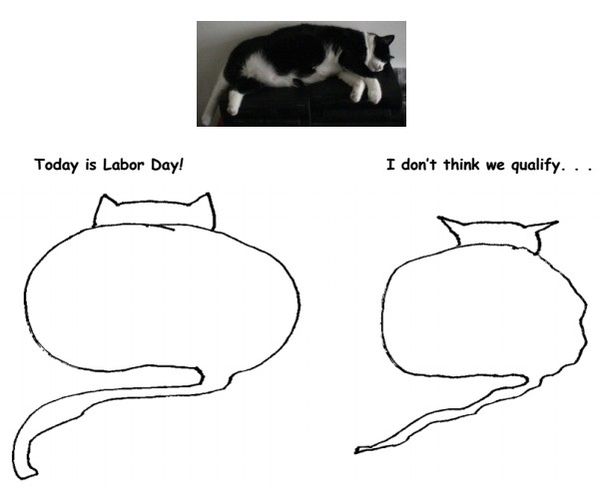
CATSPEAK
by Brooks Riley
Sunday, March 23, 2014
Matt Power: Headlamp a Must
Donovan Hohn in Harper's:
January 1998. In the windowless office shared by the Harper’s interns, I meet this hippie dude from Vermont: ponytail, spectacles of the sort favored by engineering students, lumberjack shirt. Matt Power. Others who’ve written remembrances of Matt have remarked on the poetry of his surname. In the spring of 1998, we treated it as if that were a thing — Matt power. If you had Matt power, you could recite entire episodes of The Simpsons by heart, along with passages fromMoby-Dick. You could get yourself photographed by the New York Times while up a tree across from City Hall, wearing some sort of goofy sunflower headdress — some sort of goofy sunflower headdress and that goofy grin, goofy but also beautiful and disarming, scrolling upwards into impish fiddleheads at the corners.
If you had Matt power, you could take up with a bunch of squatters in a derelict building in the South Bronx, as Matt did the year after we met. For some reason, I’ve always pictured him camped out on the building’s roof, hanging his flannel underwear out to dry on a telephone wire, perhaps, or roasting a pigeon on a spit.
For all of his brainy bookishness and street smarts, Matt in the spring of 1998 was a greenhorn. We all were, but there was an innocence about him, some portion of which he never lost. I was only two years older, twenty-six to his twenty-four, which at the time seemed like a big difference and now seems like nothing.
More here.
Virtual Gaming Worlds Are Revealing the Nature of Human Hierarchies
From MIT Technology Review:
One of the goals of anthropology is to understand the way that humans interact to form groups. Indeed, anthropologists have long known that human societies are highly structured.
But exactly what kinds of structures form and to what extent these groupings depend on the environment is still the subject of much debate. So an interesting question is whether humans form the same kinds of structures in online worlds as they do in real life.
Today, we get an answer thanks to the work of Benedikt Fuchs at the Medical University of Vienna in Austria and a couple of pals. These guys have studied the groups humans form when playing a massive multiplayer online game called Pardus.
Their conclusion is that humans naturally form into a fractal-like hierarchy in which people belong to a variety of groups on different scales. In fact, the formation of hierarchies seems to be an innate part of the human condition.
More here.
The digital humanities
Mark O'Connell in The New Yorker:
Until about six months ago, when I finally fled the sinking ship of my academic career for the precarious lifeboat of freelance writing, I worked on the top floor of a sleek, contemporary building in the center of Dublin called the Long Room Hub. High and airy, it overlooked the venerable panorama of Trinity College. The building was intended as a home for innovative research across the various disciplines of the arts and the humanities, and one of the priorities of the research was to facilitate a relatively recent academic enthusiasm known as the digital humanities. My desk in the building came as part of a postdoctoral fellowship I was doing; the project had no connection to anything that could be considered digital, but I was happy to have a place to sit and put my books.
Occasionally, I would be cc’ed on an e-mail asking everyone in the building to provide brief outlines of our research projects so that they could be included in promotional materials for the Long Room Hub, but I consistently managed, without consequence, to avoid answering these. (A lot of the other postgraduate and postdoctoral researchers were working on forbiddingly technical-sounding projects involving things like the “systematic evaluation of archeological digital epistemology” and “digital genetic dossiers.” I was basically just trying to think of clever things to say about the work of John Banville.) When I mentioned to fellow literary academic types where I happened to work—or work from—they tended to suspect that this work of mine had something to do with the digital humanities, and to ask me what the mysterious business was supposed to be about. To this, I usually replied that I wasn’t totally sure, but that I thought it had something to do with using computers to read books. As far as I could tell, there was a general skepticism about the digital humanities, combined with a certain measure of unease—arising, perhaps, from the vague aura of utility, even of outrightscience, emanating from the discipline, and the sense that this aura was attracting funding that might otherwise have gone to more low-tech humanities projects.
Having read “Uncharted: Big Data as a Lens on Human Culture,” a new book by the scientists Erez Aiden and Jean-Baptiste Michel, I am now experiencing a minor uptick in my understanding of this discipline.
More here.
404: Identity Not Found
Daniel E. Pritchard in The Critical Flame:
In March 2008, a month shy of his forty-fifth birthday, the critic and poet Reginald Shepherd was battling an aggressive form of colon cancer. The disease had already metastisized to his liver. He was in a tremendous amount of pain, with complications related to a series of other illnesses. As he underwent chemotherapy Shepherd wrote about his ordeal at the Poetry Foundation blog, Harriet:
Cancer came as a highly unpleasant surprise […] but psychologically it just confirmed my sense of my body as frail and vulnerable at best, or set on betraying me yet again at worst. I’ve never really identified with my body, have always seen it as distinct and separate from, even in opposition to, my “self.” It has felt more like a burden than anything else. Perhaps all these illnesses are my body’s revenge, its way of reminding me that I am it and it is mine, that it is me. What, after all, would I be without a body, however frail and ailing?
A few weeks later, the poet Linh Dinh juxtaposed this confession with Kenneth Goldmsith’s conceptualist assertion that “Now is the time of possibility we can be everyone and no one at all.” A person in pain, Dinh argued, could not possibly assent to the idea of an ultimately mutable self. Neither technology nor any poetic practice could actually disperse the stability at the center of lived experience. As Franz Kafka wrote, “people are sewn into their skins for life and cannot alter any of the seams.”
Displaying a typical largesse of intellect, Shepherd acknowledged in his response that “the most decentered self still has boundaries,” but wrote that “it is exactly the fact that I have other identities besides ‘a person with HIV’ or ‘a person with cancer’ that enable me to make it through my physical trials and travails.” The lack of stable identity was as a series of possibilities to be explored rather than a conflict to be resolved. Unfortunately, his illness placed boundaries before Shepherd that could not be overcome. By September of that year, he was gone.
More here.
Louisiana French, Cajun, and Zydeco music
old time cajun music
sad steps
Devotion and Defiance
Pamela Constable in The Washington Post:
By her own admission, Humaira Awais Shahid grew up in a rarefied atmosphere of privilege and freedom. Born in 1971 and raised far from her native Pakistan, she was encouraged to think for herself and study Western literature, while remaining largely ignorant of the cruel constraints that entrapped many women in her impoverished Muslim homeland. In her 20s, Shahid returned home to a “tidy, privileged corner” of Pakistan’s insular upper-class society. Harboring vague notions of defying convention and helping people, she shrugged off pressure for an arranged marriage, fell in love with the scion of a newspaper family and decided to take up journalism. Only then did her true education begin.
First came an appeal to the newspaper’s hotline from a poor man whose daughter had been raped. Shahid, rushing to assist, was coldly rebuffed by village elders who decreed that the victim must marry her rapist. It was a typical verdict in Pakistan’s tribal justice system, where such crimes are viewed through a prism of family honor and community peace, and where the state organs of law and justice rarely interfere. “You from the city need to understand some basic facts about village life,” one elder explained. “If we don’t marry her to the man who assaulted her . . . she will elope with another. That will bring more shame on the community and could incite a bloodbath.” Shahid withdrew in defeat, while the victim sobbed hopelessly in a dark hut. From this incident the author plunges into an account of her furious, often frustrated campaign for women’s rights in a conservative, patriarchal society of 180 million — and “Devotion and Defiance” becomes a book worth reading.
More here.
How to explode brain-cancer cells
From KurzweilAI:
Researchers at Karolinska Institutet and Uppsala University have discovered that a substance called Vacquinol-1 makes cells from glioblastoma, the most aggressive type of brain tumor, literally explode. When mice were given the substance, which can be given in tablet form, tumor growth was reversed and survival was prolonged. The findings are published in the journal Cell. The established treatments for glioblastoma are limited, including surgery, radiation, and chemotherapy. The average survival is just 15 months, so it’s critical to find better treatments for malignant brain tumors.
The researchers transplanted human glioblastoma cells into mice and fed them Vacquinol-1 for five days. The average survival was about 30 days for the control group that did not receive the substance. Of those who received the substance, six of eight mice were still alive after 80 days. The study was then considered of such interest that the journal Cell wanted to publish the article immediately, said Ernfors. The researchers found that Vacquinol-1 gave the cancer cells uncontrolled vacuolization, a process in which the cell carries substances from outside the cell into its interior. This carrying process is accomplished via vacuoles, a type of vesicle. The 2013 Nobel Prize in physiology or medicine was awarded for the discovery of how cellular vesicles move things in cells. When cancer cells were filled with a large amount of vacuoles, the outer wall of the cell collapsed and the cell simply exploded and died.
More here.
Sunday Poem
Cockspur Bush
I am lived. I am died.
I was two-leafed three times, and grazed,
but then I was stemmed and multiplied,
sharp-thorned and caned, nested and raised,
earth-salt by sun-sugar. I was innerly sung
by thrushes who need fear no eyed skin thing.
Finched, ant-run, flowered, I am given the years
in now fewer berries, now more of sling
out over directions of luscious dung.
Of water crankshaft, of gases the gears
my shape is cattle-pruned to a crown spread sprung
above the starve-gut instinct to make prairies
of everywhere. My thorns are stuck with caries
of mice and rank lizards by the butcher bird.
Inches in, baby seed-screamers get supplied.
I am lived and died in, vine woven, multiplied.
.
.
.
Saturday, March 22, 2014
Scientia Salon: A manifesto for 21st century intellectualism
Massimo Pigliucci at his new site Scientia Salon:
Which brings me to the current project, of which this essay is the beginning and informal “manifesto.” Scientia is a Latin word that means knowledge (and understanding) in the broadest possible terms. It has wider implications than the English term “science,” as it includes natural and social sciences, philosophy, logic, and mathematics, to say the least. It reflects the idea that knowledge draws from multiple sources, some empirical (science), some conceptual (philosophy, math and logic), and it cannot be reduced to or constrained by just one of these sources. Salons, of course, were the social engines of the Age of Reason, and a suitable metaphor for public intellectualism in the 21st century, where the gathering places are more likely to be digital but where discussions can be just as vigorous as those that took place in the rooms made available by Madeleine de Scudéry or the marquise de Rambouillet in 17th century salons.
While I have been thinking for years about a venture like Scientia Salon, and have indeed slowly ratcheted up my involvement in public discourse, first as a scientist and more recently as a philosopher, the final kick in the butt was given to me by my City University of New York (Brooklyn College) colleague Corey Robin. I have never (yet) met Corey, but not long ago I happened across his book, The Reactionary Mind [9], which I found immensely more insightful than much of what has been written of late about why conservatives think the way they do.
More recently, though, I read his short essay in Al Jazeera America, entitled “The responsibility of adjunct intellectuals” [10] and it neatly crystallized a lot of my own unease. Corey points out that academics have always loved to write for other academics using impenetrable jargon (his example of choice is Immanuel Kant), while other thinkers have forever complained about it. He quotes Thomas Hobbes, for instance, as saying that the academic writing of his time was “nothing else … but insignificant trains of strange and barbarous words.”
And yet, observes Robin, we live in an unprecedented era where more and more academics engage openly and vigorously with the public. This, of course, has been made possible by the technologies of the information age, and especially by social networking platforms like blogs, Twitter, Facebook, Google+ and the like.
More here.
a moving debut of life after Chernobyl
John Burnside at The Guardian:
Towards the end of Darragh McKeon's powerful and moving account of the Chernobyl disaster, two old dissidents are discussing the past. The younger, a former journalist named Maria, wants to know if her elderly acquaintance would have “put up some kind of resistance” if he could “have those years back”, to which he replies: “There was no resistance. Resist what? There were no rights or wrongs, no grey areas, there was just the system. I did all I could do, I survived.” The man – mischievously named Leibniz, after that most optimistic of philosophers – had survived 10 years in the gulag camps; now he earns a living by teaching piano to children. One of them is Maria's troubled nephew, Yevgeni, a child “genius” who, shamed by his poverty and bullied daily by his classmates, takes to the streets during a spontaneous demonstration. It's a scene that brilliantly captures the random fury that breaks out among the oppressed; ironically, this one night of violent catharsis allows him to find his true direction, a path that will lead to international stardom as a concert pianist. That fury will remain with him, the bright, fierce ember of another kind of resistance, in his music and in his soul.
more here.
ON THE INIMITABLE LYDIA DAVIS
Andrea Scrima at The Quarterly Conversation:
Among other things, Lydia Davis is a keen observer of her own mind. Terse sentences delineate some of the most intimate and urgent experiences of inner life, while characters seem to stand for isolated aspects of the self in duress as it tries to put into words the unintelligible stuff of human behavior and emotion. To assemble these voices into a portrait of the author, however, would be to miss the point of Davis’ obsessive logic. Less a collection of individual stories than a precisely crafted architecture, each story leads into the next like rooms in a dream where hidden stairways and secret chambers feel eerily familiar. Whereas Break It Down explores the shock dealt to the mind in the wake of lost love, Almost No Memory converges around our tenuous connection to our past.
“Foucault and Pencil” describes in truncated prose a scene in which the narrator is reading Foucault as she waits to talk to what is presumably a therapist or marriage counselor. The argument she has had with her husband or lover entwines in her mind with an account of the difficulties she experiences in trying to understand the French text:
Short sentences easier to understand than long ones. Certain long ones understandable part by part, but so long, forgot beginning before reaching end. Went back to beginning, understood beginning, read on, and again forgot beginning before reaching end. Read on without going back and without understanding, without remembering, and without learning, pencil idle in hand.
more here.