Barbara Ehrenreich faces the mystical

La-1803840-ca-jc-0406-barbara-ehrenreich-108-jpg-20140402David L. Ulin at The LA Times:

“[W]hat do you do with something like this — an experience so anomalous, so disconnected from the normal life you share with other people,” Ehrenreich asks in the foreword to the book, “that you can't even figure out how to talk about it?” Such a conundrum drives “Living With a Wild God,” which is part personal history and part spiritual inquiry.

That's a surprising turn for Ehrenreich, who for more than 40 years has been one of our most accomplished and outspoken advocacy journalists and activists. She is perhaps best known for the 2001 bestseller “Nickel and Dimed: On (Not) Getting By in America,” which traces her journey through the world of low-income workers, but she has written about everything from gender politics to healthcare to the mechanics of joy, and contributed to publications including Mother Jones, the Nation and the Los Angeles Times. Her 1989 book “Fear of Falling: The Inner Life of the Middle Class” was nominated for a National Book Critics Circle Award.

And yet, she says simply of the revelation or epiphany she underwent as a high school student, “I couldn't put it out of my life.” In the book, she explains in more detail: “[T]he world flamed into life. How else to describe it? There were no visions, no prophetic voices or visits by totemic animals, just this blazing everywhere. Something poured into me and I poured out into it. This was not the passive beatific merger with 'the All,' as promised by the Eastern mystics.

more here.

It’s a Living: the glum designs behind the world of modern work

Jerry Stahl in BookForum:

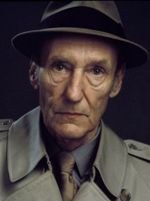
Cover00One of my favorite moments in Cubed, Nikil Saval’s lush, funny, and unexpectedly fascinating history of the workplace, comes in a chapter called “The Birth of the Office,” in which the author describes the insane yet rampant “efficiency” craze that began to sweep the nation in 1900. One of its outgrowths was a periodical called System, subtitled A Monthly Magazine for the Man of Affairs. “Each volume,” Saval writes, “had articles proposing new models for the minutiae of office life, whether a new system of filing or a more efficient mode of envelope licking.” (In 1929, the magazine changed to a weekly—and called itself BusinessWeek.) By sheer coincidence, I was perusing System’s less-than-colorful history on my way to a gig at City Lights Bookstore, where preparations were in full throttle for the celebration of William Burroughs’s one hundredth birthday. At that legendary Beat Generation mecca, I was surrounded by posters of Burroughs’s face, staring grimly in my direction, looking every bit like the midwestern Bürgermeister he by rights should have been, given his legacy as grandson of the original William S. Burroughs, founder of the Burroughs Adding Machine Company.

The juxtaposition felt perfect, somehow, given that the great delights of Saval’s opus are the segments he lifts from modern management literature. Saval deserves a lifetime supply of Advil, not just for the almost perverse depth of his headache-inducing research—the Proceedings of the 1935 Conference of the National Office Management Association! the Intel International Science and Engineering Fair! the Secret History of the Aeron Chair!—but also for the heroic effort he undertakes in successfully weaving his disparate dry-as-toast sources into genuine entertainment.

More here.

Charlie Chaplin

Chaplin, Charlie (Circus, The)_01Susie Boyt at The Financial Times:

Peter Ackroyd’s compact new life of Charlie Chaplin opens magnificently in the heart of south London in the last decade of the 19th century. This is a London rife with the “suspect pleasures” of gin and music halls; a London crammed with factories making biscuits, glue and pickles; a London of timber warehouses and slaughterhouses; a London reeking of smoke, beer and poverty. Young Chaplin’s existence in this world was never stable. No birth or baptismal certificates relating to him have ever been found. He was not even certain of the identity of his biological father, taking the name of a successful music hall singer who was, for a spell, married to his mother – herself a music hall artiste and later a mender of old clothes.

Chaplin’s childhood was perilous and often frightening, with disturbances and deprivation to rival Oliver Twist. Frequent flits from a series of rented rooms with a mattress on his back were a fact of his boyhood. There were periods spent in the Southwark workhouse, nights sleeping rough with his half-brother Sydney, a time at a school for the destitute.

more here.

Friday, April 4, 2014

The Limits of Muslim Liberalism

Arab-awakening-243x366

Zaheer Kazmi reviews two new books on the Middle East and Islam, one by Tariq Ramadan and another by Bassam Tibi, in the LA Review of Books:

As at the end of the Cold War, the recent tumult in the Arab world was not anticipated by weathered analysts. Neither was it foreseen by Muslim liberals who have staked their reputations on elucidating the Arab and Muslim “mindset” to Western audiences. Nevertheless, Bassam Tibi and Tariq Ramadan have both recently published books on the Arab Spring, which they believe has vindicated their respective bodies of work even as they concede they had not anticipated it. A Syrian-born German-based academic, Tibi came out of self-imposed retirement from public life, these events making him feel compelled to write his latest book, The Shari’a State. With several axes to grind — not only against his critics, but also against the whole enterprise of Islamic studies in the West — the light of his missionary zeal shines so brightly on the perils of his pet hate, the “double-speaking” Islamists, that at times it is difficult to discern anything other than the white heat of rage in his words.

As has become clear since the ouster of President Morsi in Egypt, far from “hijacking the Arab Spring,” as Tibi warns incessantly in the core message of his book, Islamists may now be set to be among its biggest losers, especially in the medium-term as the military, of which Tibi says next to nothing, reasserts its control. But this is only one of several profound misjudgments that plague the work, written with unapologetic emotion (“I do not claim to be detached,” he states early on), which, unsurprisingly, does not translate into analytical clarity. Nowhere is this more apparent than in Tibi’s odd assertions about his ancestral homeland, where, he insists, speaking as a “Sunni Syrian,” the threat of jihadism is a specter of Assad’s imagination, and the atrocities committed have been, more or less, one-sided. That he would prefer to live under the Syrian Muslim Brotherhood than Assad, despite viewing Islamists as an amorphous mass tied, in some vague way, to jihadists, only adds to the muddled thinking.

Most relevant for the latest US initiative in religious diplomacy, perhaps, is Tibi’s mantra of dealing with Islamists through a strategy of “engagement without empowerment.”

More here.

Poland’s Gender Dispute

Wigura_468w

Jaroslaw Kuisz and Karolina Wigura in Eurozine:

Among scholars, gender studies are seen as supporting a wide-ranging and on-going discussion on the social roles of men and women, on the time they devote to housework and childcare, on the perception of equality and independence in marriage, and on gender equality policies, among others. It therefore came as a great surprise to university teachers and feminist and LGBT activists when senior and highly respected representatives of the Roman Catholic Church in Poland issued a series of controversial statements concerning gender. The clergy compared what they considered a harmful “gender ideology” to communist or totalitarian ideologies, drawing attention, for example, to the idea that a child is “not born, but produced”, an idea that they perceive this gender ideology to endorse.

Whenever the ensuing row seemed to have blown over, yet another pretext emerged for stoking it up again. After a series of controversial statements from representatives of the Roman Catholic Church, the media devoted its attention to the decision of Anna Grodzka, the first openly transgender MP in Poland, to join the parliamentary committee formed to put an end to “gender ideology”. The committee's chairwoman, Beata Kempa of the rightwing conservative party United Poland, announced that it was Grodzka's intention to “make a fuss”. And so the gender dispute blew up again.

The direction that the row over gender has taken so far is baffling, not least in terms of how sharply it diverges from the broader discussion outlined above. Neither does it seem to have taken into account in any genuine way the social teachings of the Roman Catholic Church after the Second Vatican Council. Further, the more rational and moderate arguments of centrist and liberal milieus have received little attention in the wake of numerous jokes, some more appropriate than others. At the same time as playing with a foreign-sounding word, tabloid newspapers printed scare pictures of hairy creatures intended as representations of the kind of demons that the word “gender” now supposedly summoned in the public's imagination, accompanied by captions along the lines of “this is the face of gender”.

More here.

Invisible world, invisible saviors: The secret to overcoming the threat of extinction

Nicholas P. Money in Salon:

Bacterium-620x412Our highly bacterial nature seems significant to me in an emotional sense. I’m captivated by the revelation that my breakfast feeds the 100 trillion bacteria and archaea in my colon, and that they feed me with short-chain fatty acids. I’m thrilled by the fact that I am farmed by my microbes as much as I cultivate them, that bacteria modulate my physical and mental well-being, and that my microbes are programmed to eat me from the inside out as soon as my heart stops delivering oxygenated blood to my gut. My bacteria will die too, but only following a very fatty last supper. It is tempting to say that the gut microbiome lives and dies with us, but this distinction between organisms is inadequate: our lives are inseparable from the get-go. The more we learn about the theater of our peristaltic cylinder, the more we lose the illusion of control. We carry the microbes around and feed them; they deliver the power that allows us to do so. Viewed with some philosophical introspection, microbial biology should stimulate a feeling of uneasiness about the meaning of our species and the importance of the individual. But there is boundless opportunity to feel elevated by this science. There are worse fates than to be our kind of farmed animal. In his fascinating book, “The Limits of Self,” French philosopher Thomas Pradeu examined the ramifications of modern immunological theory on the concept of the individual. Much of his argument hinges on the ways in which our microbiome transforms us into chimeric organisms whose functions are integrated by the immune system.

More than 30 years ago, approaching the British equivalent of high-school graduation, I often escaped the school with a girlfriend and wandered around a community garden. Do not imagine Hogwarts for one second; and, worse, ours was a mostly miserable companionship sustained only by the certainty that this was a teenage misfortune from which the future promised deliverance. We called our refuge what we thought it did not resemble: The Garden of Eden. This triangle of grass was ringed by spindly trees that attracted chattering sparrows, and the birds drew the attentions of grimy cats; old men with gray faces shuffled around the garden too, smoking cigarettes while their dogs exercised; candy wrappers and empty bottles decorated the grass. It was an ugly little place at the bottom of a slope beneath a busy road. Calling this Eden was our satire upon the dearth of beauty in our lives. In this twenty-first century, I have my Ohio woods in spring, washed with the colors of flowers and animated by the buzz of pollinating insects. Some of the apparent differences between the community garden and the Midwestern woods are an illusion. The beauty of a forest imposes itself on us through the look, smell, sound, and feel of its plants and animals. Its wider significance—the activities that sustain humanity—lies elsewhere, in the functioning of an intact ecosystem and its power to cleanse the air and purify the groundwater. This, like the microorganisms that perform much of the work, is invisible. The evident sensuality of the forest as well as its hidden functions are both important things from our perspective; important because the woods have the power to elevate our feelings, boost our mood, and because without them, our species cannot prosper.

More here.

Siri Hustvedt, art and the patriarchy

81XG8byu22LLidija Haas at The Times Literary Supplement:

Not everyone translates what they read into images, a man once told Siri Hustvedt; “I just see the words”. More than once, Hustvedt has expressed something like compassionate horror at the thought of a person who does not experience reading visually, as a series of mental pictures. In Hustvedt’s books, seeing and being seen is fundamental to the self. Her novels are filled with visual artists whose works (often involving human figures) are carefully described. She makes use of studies on “mirror neurons” and how children develop via “visual communication” with their parents; as people, she often writes, this is how we are constructed, “made through the eyes” of others. The narrator of her third novel What I Loved(2003) speaks of art as relational in the same way, describing “the space between the viewer and the painting where the real action of all painting takes place – a picture becomes itself in the moment of being seen”. Even empathy, which Hustvedt has described as the ultimate imaginative act and “the true ground of fiction”, seems unusually visual in her account of it: she has written about having a condition (mirror-touch synaesthesia) that causes her to feel others’ pain almost directly – she experiences in her own body the suffering she sees in other people or on the movie screen.

Hustvedt frequently gives her interests and her reading on these subjects to characters in her fiction, but in her latest novel, The Blazing World, they are more than themes – they structure the whole book, serving as plot and propulsive force.

more here.

Lydia Davis’s inimitable decision process

Cover00Christine Smallwood at Bookforum:

Davis is the author of a novel and five volumes of short stories, some of which are as long as fifty pages and some of which are no more than a phrase. (It’s the latter that have attracted the most interest.) She doesn’t do narrative scenes at any length, and her “characters” are often just pronouns involved in an action or caught up in a memory. She’s like a monochrome painter; she makes the impossible look easy. The title story of her latest collection, Can’t and Won’t, goes as follows:

I was recently denied a writing prize because, they said, I was lazy. What they meant by lazy was that I used too many contractions: for instance, I would not write out in full the words cannot and will not, but instead contracted them to say can’t and won’t.

Two sentences that begin at laziness and end with will: Writing, like life, is a series of choices. Which word here, there; when to stop? Like Proust, whom she has translated, Davis writes the act of writing itself. I don’t just mean that her narrators tend to be teachers or authors, though that’s true; I mean that her stories are filled with moments of crisis about how to carry on, or what word to put down next, and fears that it could all mean nothing in the end. She’s a theorist of the arbitrary. The fact that she makes it look so easy—so arbitrary, even—is part of the fun

more here.

geoff dyer can’t see

Geoff-Dyer-002Geoff Dyer at The London Review of Books:

It seemed inconceivable that I could have had a stroke. I was 55, way too young, and of all of my contemporaries I would have put myself last in line for such a thing. I’d never had a cigarette. I drank a fair bit, but less than many of my friends, and was drinking less with every year. I actively disliked all the foods you’re meant to avoid. Except doughnuts and croissants. I’d always eaten a lot of pastries and in New York my doughnut habit had got, well, not out of control exactly but I was doing one a day for four months. Twice a week I had a couple of poached eggs, but what did that count for in the face of the overwhelming healthiness of my life?

‘Well, something,’ the neurologist called to tell me the following day, ‘has sent your cholesterol though the roof.’ Instead of twenty milligrams of Lipitor I should double the dose to bring it down as quickly as possible. After speaking to him I remembered that, fifteen years ago in England, my GP had said that my cholesterol was a little high. I paid it no mind, moved to a different part of London, signed on with another doctor. As far as I could recall my cholesterol had never been tested again. Until now. Now I’d joined the great American statin-dependent democracy, was being welcomed into the community of stroke victims as featured in a clutch of nicely produced brochures.

more here.

Off the shelf, on the skin

From Phys.Org:

ChipWearing a fitness tracker on your wrist or clipped to your belt is so 2013. Engineers at the University of Illinois at Urbana-Champaign and Northwestern University have demonstrated thin, soft stick-on patches that stretch and move with the skin and incorporate commercial, off-the-shelf chip-based electronics for sophisticated wireless health monitoring.

The patches stick to the skin like a temporary tattoo and incorporate a unique microfluidic construction with wires folded like origami to allow the patch to bend and flex without being constrained by the rigid electronics components. The patches could be used for everyday health tracking – wirelessly sending updates to your cellphone or computer – and could revolutionize clinical monitoring such as EKG and EEG testing – no bulky wires, pads or tape needed. “We designed this device to monitor human health 24/7, but without interfering with a person's daily activity,” said Yonggang Huang, the Northwestern University professor who co-led the work with Illinois professor John A. Rogers. “It is as soft as human skin and can move with your body, but at the same time it has many different monitoring functions. What is very important about this device is it is wirelessly powered and can send high-quality data about the human body to a computer, in real time.”

More here.

Friday Poem

.
at this moment, writing, I sense
what poetry is about
but when I think about it
it eludes me by definition

just as water cupped in your hand
disappears between your fingers
when you spread them

or the sky you saw shining in it
fragments and suddenly is gone

yet I am surprised to see
this cosmos on a page before me

words stainless, transparent
saved from a brain full of doubts

thoughts clothed again in language
expression of the human heart
blood all pure in our body

big words are a threat to poetry
they have no depth nor value

but children still speak free from care
fearless, they hold my hand

they wake me from my stupor
uninhibited, passionate, fiery
they lend my heart a new rhythm

in a dream I kiss their eyes
I'm ripening with them

with them I taste purity, friendship
a fruit of trust and love

by Shrinivási
from Poetry International, 2014
translation: Scott Rollins

~~~~

Read more »

How malaria defeats our drugs

Ed Yong in Mosaic:

ScreenHunter_588 Apr. 04 12.24The meandering Moei river marks the natural boundary between Thailand and Myanmar. Its muddy waters are at their fullest, but François Nosten still crosses them in just a minute, aboard a narrow, wooden boat. In the dry season, he could wade across. As he steps onto the western riverbank, in Myanmar, he passes no checkpoint and presents no passport.

The air is cool. After months of rain, the surrounding jungle pops with vivid lime and emerald hues. Nosten climbs a set of wooden slats that wind away from the bank, up a muddy slope. His pace, as ever, seems relaxed and out of kilter with his almost permanently grave expression and urgent purpose. Nosten, a rangy Frenchman with tousled brown hair and glasses, is one of the world’s leading experts on malaria. He is here to avert a looming disaster. At the top of the slope, he reaches a small village of simple wooden buildings with tin and thatch roofs. This is Hka Naw Tah, home to around 400 people and a testing ground for Nosten’s bold plan to completely stamp out malaria from this critical corner of the world.

Malaria is the work of the single-celled Plasmodium parasites, and Plasmodium falciparum chief among them. They spread between people through the bites of mosquitoes, invading first the liver, then the red blood cells. The first symptoms are generic and flu-like: fever, headache, sweats and chills, vomiting. At that point, the immune system usually curtails the infection. But if the parasites spread to the kidneys, lungs and brain, things go downhill quickly.

More here.

The Independent Republic of New York

ScreenHunter_587 Apr. 04 12.15As New York—a city that often has more in common with Europe than with the United States—prepares to be invaded by the red-state hordes during an election that has much of the city fearing the prospect of four more years, a persistent fantasy resurfaces—should New York secede?

Jennifer Senior in New York Magazine:

New York has always felt like a nation apart. In a country that grows ever redder, it is the bluest of blue cities in one of the bluest of blue states, with the eccentrics to match. Eric Bogosian, with those three cubic feet of curls and black-leather car coat; Harvey Weinstein, with his public tantrums and highfalutin taste; Ed Koch; Lou Reed and Laurie Anderson; the Black Israelites preaching in Times Square; Mexican kitchen workers preparing sushi in Korean delis—could any of them find a home anywhere but New York? Even the New York Post: Where else could a right-wing Australian media mogul win over a left-wing, multiethnic cosmopolis with a toothsome rag of boldface names, sports scores, political scandals, tearjerkers, hectoring editorials, and front-page oopsie-daisies announcing the anointment of Dick Gephardt as John Kerry’s running mate? Only in New York, kids. Only in New York.

Psychically, then, New York already seems headed out of the union—so why not go all the way? If we’re so blue, perhaps it’s time to choose another color entirely. (Maybe black.)

More here.

Thursday, April 3, 2014

What is academic history for?

Paula A. Michaels at the Oxford University Press blog:

Writing on Saturday in The Age, popular historian Paul Ham launched a frontal assault on “academic history” produced by university-based historians primarily for consumption by their professional peers.

In his article, Ham muses on whether these writings ever “enlightened or defied anyone or just pinged the void of indifference” Lamenting its alleged inaccessibility and narrow audience, Ham asks with incredulity:

What is academic history for?

Ham’s is only the latest in a steady stream of attacks castigating historians and other scholars for their inability to engage the general public effectively. New York Times columnist Nicholas Kristof sent American academia into a collective apoplectic fit with a February column imploring academics to make a greater contribution to policy debates as public intellectuals.

Less convinced than Ham of the purposeful obscurantism of academic writing, Kristof nonetheless met with a sharp rebuke from the academy, which defended its track record for engagement and faulted Kristof for pointing only to the highest profile venues to judge scholars’ participation in debates beyond the Ivory Tower.

As political scientist Corey Robin observes:

there are a lot of gifted historians. And only so many slots for them at The New Yorker.

More here.

Can you die of a broken heart?

Jason G Goldman at the BBC:

ScreenHunter_586 Apr. 04 10.04In 1986, a 44-year-old woman was admitted to Massachusetts General Hospital. She felt fine all day, but in the afternoon she developed extreme crushing pain in her chest, radiating through her left arm. It's a classic sign of a heart attack, but the puzzling thing was that she didn't suffer from coronary heart disesase. There was no life-threatening clot in the arteries surrounding the heart.

It looked, from the outside, like a heart attack, but it wasn't. Describing theunusual case in the New England Journal of Medicine, Thomas Ryan, and John Fallon suggest the apparent damage to the heart muscle was emotional rather than physiological. Earlier that day, she had been informed that her 17-year-old son had committed suicide.

Could the woman have suffered from a broken heart? The answer, it turned out, was already hiding in plain sight. The Massachusetts case was surprising to doctors – but it wasn’t news to everybody.

For many years, doctors scorned the idea of a relationship between psychology and physiology. In their book Zoobiquity, Kathryn Bowers and Barbara Natterson-Horowitz described this attitude: “Among many physicians, the idea that emotions could cause actual physical events within the architecture of the heart was viewed with nearly the same sideways glance as an interest in healing crystals or homeopathy. Real cardiologists concentrated on real problems you could see: arterial plaque, embolising blood clots, and rupturing aortas. Sensitivity was for psychiatrists.”

Despite this, the evidence that extreme emotions can impact the heart goes back decades – only not among humans. It was wildlife biologists and veterinarians who first noticed that extreme emotions can wreak havoc on body physiology.

More here.

Akhil Sharma’s ‘Family Life’

Sonali Deraniyagala in the New York Times:

0406-bks-cover-master675“Where is Ajay? What was the point of having raised him?” an elderly woman grumbles to her husband about their adult son in the opening pages of Akhil Sharma’s semi-autobiographical new novel, “Family Life.” This book, deeply unnerving and gorgeously tender at its core, charts the young life of Ajay Mishra as he struggles to grow within a family shattered by loss and disoriented by a recent move from India to America. “Family Life” is equally the story of Ajay’s parents, whose response to grief renders them unable to find the space in which to cherish and raise him.

Sharma’s previous novel, “An Obedient Father,” was a remorseless, forceful tale of a corrupt Indian civil servant who molests his daughter and ruins lives, including his own. “Family Life,” while also about domestic torment, is gentler and of an altogether different quality.

When we first meet the Mishras, they are a young, middle-class family living in Delhi in the mid-1970s. India is under emergency rule, a time of gloom and uncertainty, but for 8-year-old Ajay and his older brother, Birju, life is playful and secure. Their mother lights their world, while their father seems so superfluous that Ajay wonders if he’s been assigned to them by the government.

More here.

The Story of Italy and Its Citrus Fruit

Keates_04_14Joanathan Keates at Literary Review:

Goethe's 'The Apprenticeship of Wilhelm Meister', a neglected masterpiece if ever there was, is known nowadays for a single line from a ballad sung by Mignon, the daughter of a wandering musician. 'Know'st thou the land where the lemon trees bloom?' begins her mysterious song, describing an imagined world of blue skies, marble statues and thunderous waterfalls, not without a lurking menace beneath its beauty. When Wilhelm asks her where she heard it, Mignon answers, 'Italy! If thou go to Italy, take me along with thee; for I am too cold here.'

Goethe's verses encapsulate the romantic hankering for what Browning hailed as 'the land of lands' and Forster identified as 'a place that's upset people since the beginning of the world'. Citrus fruit, as Helena Attlee clearly understands, is the ultimate metaphor for Italy as an object of desire among us shivering mortals on the wrong side of the Alps. In Goethe's day, northern Europeans with enough money created elegant orangeries, where the precious trees spent a coddled winter indoors before sweating gardeners trundled them onto the terrace for a few weeks of watery sunshine. Such buildings were a fantasy Hesperides. The real golden apples grew far to the south, where the ancestral wisdom of farmers, cooks, perfumers, engineers and entrepreneurs placed citrus fruits alongside the grape and the olive as an archetype of Mediterranean fertility.

more here.

some good new poems

F2f_Dchiasson_opn2Dan Chiasson at the New York Review of Books:

American poets tend to want the benefits of song—its emotionality, its melodiousness—without its costs: its triviality, its obliviousness, its feyness. This conflict drives Michael Ruby’s American Songbook, whose title reminds us that we have no body of popular American poems to match the body of American songs, by the Gershwins and Irving Berlin and Cole Porter and many others, whose tunes and lyrics many people know by heart. Ruby’s book presents his own poems, some of them loosely connected with popular songs. What would “Love for Sale,” the Porter tune Ella Fitzgerald made famous, sound like as a difficult postmodern poem? Here is the opening of Ruby’s “Love for Sale,” dedicated by him to Ella Fitzgerald:

defeats sight force
feet please
lonesome
pail (of milk
I peacock throne open shop to a small group

moon of gazing down
draughts the lit tunnel
wayward town of
apricots mortals
smirk during
speeches
I peacock throne go toys to work on vanishing

This is “composed,” more in William Carlos Williams’s sense than in Porter’s, out of noirish bits of city life, rank with desire.

more here.