Can New York City Survive the Sea?

1404086440steinberglower_manhattan_blackoutreeve_joliffe666Ted Steinberg at Dissent:

New York has a long history of thumbing its nose at the sea. The Dutch colonists took some of the initial steps to wade out into the water—building a pier, for example—but it was the British who followed them who transformed underwater land into a commodity. This move formed the basis for the physical expansion of the island of Manhattan. Back in the 1600s, the lower part of the island ended at what is now Pearl Street, a couple of blocks inland from where it ends today. But grants to underwater land, made by the Crown and then the state of New York, expanded the city’s underwater real estate. By 2010 such expansion had added 2,286 acres—the equivalent of more than 1,700 football fields of land—to the island.

The process of encroaching on the sea, which began at the tip of Manhattan, was then replicated in other places around New York Harbor, including Brooklyn and Queens and, across the Hudson River, in Jersey City and Hoboken. Indeed, before massive landfilling operations in the 1800s, Hoboken was an island community, and Jersey City little more than a spit of land connected to the mainland at low tide by a soggy marsh.

As New York rose to become the nation’s largest city—a position it has retained for some 200 years—it continued to grow at the expense of its surrounding waters. The rise of the city’s red-hot real estate market in the latter part of the 1800s, meanwhile, helped to underwrite the idea of New York City as a limitless proposition.

more here.
A new biography retraces Leonard Cohen’s longings for the flesh and spirit

Cover00Rhett Miller at Bookforum:

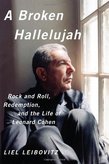
“So what is the prophet Cohen telling us? And why do we listen so intently?” Liel Leibovitz asks at the outset of A Broken Hallelujah, his moving portrait of the songwriter and poet Leonard Cohen. The author pursues the answers to these questions with the diligence and reverence of a religious scholar. Thank God. But Leibovitz recognizes that Cohen deserves more than mere rock biography, and so he structures A Broken Hallelujah around the premise that his subject is, indeed, a modern-day prophet.

Leibovitz’s account abounds with proof of this assertion, even as it charts the many other personae that Cohen has assumed through his long life and distinguished career. Still, to grasp the man’s peculiar sense of spiritual mission, one really need look no further than the greatest hymn of the rock ’n’ roll era, Cohen’s “Hallelujah”; in its closing verse, the singer proclaims, “I’ve told the truth, I didn’t come to fool you / And even though it all went wrong / I’ll stand before the Lord of Song / With nothing on my tongue but Hallelujah.”

Leonard Cohen grew up in a wealthy Jewish family in Montreal. When he was nine years old, his father, Nathan Cohen, died from lingering injuries sustained in World War I. Young Leonard was left with his sister and mother, as well as an extended family that included his maternal grandfather, a fiery rabbi named Solomon Klinitsky-Klein, “a celebrated scholar who was known as Sar haDikdook, or the Prince of Grammarians.”

more here.

Conversations with the Dead

Manguel_reading_jpg_250x1142_q85Alberto Manguel at the New York Review of Books:

Only a few centuries after the invention of writing, some six thousand years ago, in a forgotten corner of Mesopotamia, the few who possessed the ability to decipher written words were known as scribes, not as readers. Perhaps the reason for this was to lend less emphasis to the greatest of their gifts: having access to the archives of human memory and rescuing from the past the voice of our experience. Since those distant beginnings, the power of readers has produced in their societies all manner of fears: for having the craft of bringing back to life a message from the past, for creating secret spaces which no one else can enter while the reading takes place, for being able to redefine the universe and rebel against unfairness, all by means of a certain page. Of these miracles we are capable, we the readers, and these may perhaps help rescue us from the abjection and stupidity to which we seem so often condemned.

And yet, banality is tempting. To dissuade us from reading, we invent strategies of distraction that transform us into bulimic consumers for whom novelty and not memory is essential. We reward triviality and monetary ambition while stripping the intellectual act of its prestige, we replace ethical and aesthetic notions with purely financial values and we propose entertainments that offer immediate gratification and the illusion of universal chatting instead of the pleasurable challenge and amiable slow pace of reading.

more here.

John Oliver won’t be your therapist: How he torpedoed the reassuring tropes of fake news

Steve Almond in Salon:

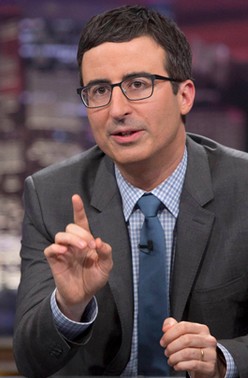
ScreenHunter_743 Aug. 15 15.33It’s been something of a shock — and a joyous one — to see how quickly John Oliver’s HBO program, “Last Week Tonight,” has gone from an awkward up-and-comer to an outright hit.

Not only is the program wildly popular with critics in the big markets, it’s being hailed in plenty of smaller regional venues. It’s pretty safe to say that landing an extended rave in the Auburn Citizen — circulation 10,000 — means you’ve broken out of the New York City media bubble.

The significance of the show’s surging popularity goes beyond its various laudable, and widely lauded, elements (the more diverse writer’s room, the commercial-free format, and so on). What the success of “Last Week Tonight” suggests, on a deeper level, is that American television viewers may finally be tired of the frantic bombast generated by the Stimulation Media.

What’s more, after years of making do with the therapeutic jibes of Jon Stewart and Stephen Colbert, they are finding in Oliver a figure more interested in making sense of the world than in making them laugh.

This is not to say that Oliver isn’t funny. He and his writers and guests have come up with some uproarious bits, most recently an infomercial supplied by comedian Sarah Silverman urgingAmericans in dire financial straits to do anything other than borrow money from a predatory payday loan firm. “People will pay you to pee on them,” she confides. “That’s true. Doodies too! Doodies are more. Like double.” But a bit like this is not the point of the show. It’s merely the scatological kicker to a much larger story, one about the rapacity of an industry dedicated to exploiting our most economically vulnerable citizens.

Oliver spent more than 15 minutes detailing what payday loans are, how the industry targets desperate consumers with misleading ads, conceals its draconian fees and dodges regulation. It was a tour de force of explanatory journalism.

More here.

Friday Poem

Fashion Craze

We die more and more beautifully
in Gianni Versace’s collection.
Elegance is aesthetics’ nestling.

We bustle about the churches of fashion
believing that the orange will suit us.

You kiss me in a changing room
Look, it’s just Rome’s fall in green.

We solve the puzzles of our archetypes.
Translate berets into foreign languages.

Tonight we are invited
to the opening of the Last Judgment.

We enter without tickets.
Today is dead admission.

by Ewa Lipska
from Sklepy Zoologyczne
publisher: Wydawnictwo Literackie, 2001
translation: Robin Davidson & Ewa Elżbieta Nowakowska

Read more »

How depression is like magic

Laura Miller in Salon:

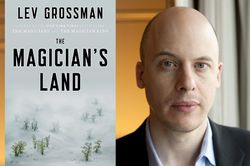
Lev_grossmanThe final novel in Lev Grossman’s bestselling, genre-bending trilogy, “The Magician’s Land,” landed in the No. 1 spot on the New York Times Bestseller list this week, following on more than one enthusiastic review. But when Grossman published the first book, “The Magicians,” in 2009, he felt some trepidation. Although it told the story of a young man, Quentin Coldwater, whisked from anomie in contemporary Brooklyn to a secret wizardry university in upstate New York, the novel was written in the sort of wised-up, self-conscious tone literary writers use to convey stories of tottering marriages and waylaid careers. Would it be too realistic for fantasy readers and too fantastical for fans of realism? Grossman, a book critic for Time magazine, describes himself as “risk-averse,” but he gambled, and it paid off. The Magicians trilogy has won a sizable and devoted readership, and a pilot based on the first book is currently in production for the SyFy channel. I recently spoke with Grossman about breaking the rules of the fantasy genre and the similarities between magic, writing code and clinical depression.

But the magic itself doesn’t represent depression surely? Depression seems so disempowering.

When you’re depressed, when you’re in bed and feel like you can’t get out, you can’t imagine doing work or accomplishing anything or anybody loving you. So when you look around you and you see these things happening to other people, they look like magic to you. They look that exotic, that strange, that impossible. And when you begin to crawl out of the pit and reengage with the world, it seems very magical. It felt as though getting out of bed yesterday was impossible, but now you’re doing it. Just by returning to daily life, you’re a magician.

More here.

Scientists create artificial brain out of spongy goo

Emily Underwood in Science:

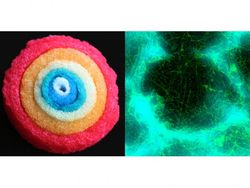
BrainThey may look like Play-Doh, but the colorful, spongy rings of goo (left) are alive and may one day be able to learn. The rings are engineered to mimic the structure and function of the six layers of human cortical brain tissue. Scientists coaxed neurons (right) to grow around stiff, porous matrices made of silk proteins immersed in collagen gel. Then, they colored the layers with food dye and pieced them together like a jigsaw puzzle. By tweaking the size and orientation of matrix pores, researchers attempted to emulate variations of cellular structure and function in a real cortex. Unlike flat neuron cultures grown in petri dishes, the structure provides cells with something to cling to as they branch out and make connections, forming complex, 3D networks that more closely mimic real neural circuits, the authors say. The rings live longer than other models; researchers hope to keep the neuronal sponge alive for at least 6 months. Already, researchers are using them to study how neural networks respond to drugs and heal after various insults, such as disease or a traumatic injury, they report online today in the Proceedings of the National Academy of Sciences. Eventually, they hope to study whether these neural circuits alter their activity in response to experience, a basic form of learning.

More here.

Thursday, August 14, 2014

The poet and the dictionary

Alan Wall in The Fortnightly Review:

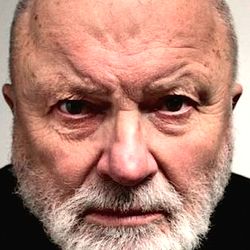
GhillyaleGeoffrey Hill’s poetic career has been mediated through his engagement with the dictionary. And that dictionary is first and foremost the OED. There is no greater dictionary in the world, and its making constitutes one of the great intellectual events of the twentieth century, though it started life in the nineteenth. There had never been anything like this before. Now the language itself has become the documented labyrinth of its own manifold meanings. Now history can be traced uttering itself thus and thus in one mutating word after another. The thought of a poet writing in English who would not grow excited turning the pages of the OED, or clicking on the electronic version, is so dismal that one wishes such a personage an even smaller readership than modern poets normally manage to acquire.

The anti-self to our word-blind, purblind poet is undoubtedly Geoffrey Hill. His verse uses lexicography and philology as heuristic principles. Where Robert Graves leapt out of the window after Laura Riding (even if he did go down a storey first), one suspects it would require the defenestration of Hill’s beloved bound set of the OED to elicit any such voluntarylapsus from him. The White Goddess, being no better than she should be, might have had a slightly harder time of it, had she been strutting her stuff in Worcestershire. With A. E. Housman to the left of her, and Geoffrey Hill to the right, she would have received some very old-fashioned looks indeed; chilly gazes from fellows not so easily beguiled. And acerbity is a necessary part of our theme. Acerbity is integral to Hill’s achievements in both verse and prose. Sentimentality is anathema. There are no flies on this fellow. The constable’s son is nothing if not forensic. Every emotion is likely to be treated as the scene of a crime, past, present, or to come.

More here.

The Curiosa

Justin E. H. Smith in his blog:

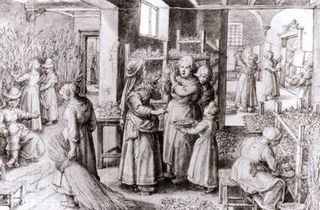
6a00d83453bcda69e201a73dff098a970d-400wiI, being sick of an Ague, have come out to Country for a change of Air. But in truth I am not so sick at all, and I embrace this circumstance with whole Heart, for it enables me to pursue, as is my true Vocation, still further Observations touching upon divers questions of Natural Philosophy.

The Duke, when he comes galloping through England between diplomatic missions to Vienna and Constantinople, makes light of my inquiries, and says mockingly how good it is that Philosophy now includes matters suitable for Ladies too. There was no room for the feminine sex in the Schools and their endless debates about the Quiddity of this and the Thisness of that, he laughs, but how fitting for a Duchess, with leisure to spare, to look with her magnifying Lens at the industry of Silkworms, at the fine detail of the leg of a Flea, or to place two such Lenses together within a Tube, and to look out at the Heavens, to chart the Eclipse of the Moon or to follow the path of a shooting Star.

But the Duke cannot see past his own Nose, I tell him, for in truth such matters were always of great concern to the Philosopher. For did Aristotle himself not wade in the Tides, searching for ever new forms of Corral, of Medusae and Polypi? Did he not describe the formation of Clouds and other Meteors, and the fatty exhalations of earth that we call Comets? No, ‘tis the Schools that shrank Philosophy down to the mere quarrel over Words, distorting the legacy of the great Aristotle, while neglecting altogether the work of Hippocrates, the Elder Pliny, Isidore of Seville. As if these too were not Philosophers! What these men possess, and the discoursers uponQuiddity lack, I believe, is Curiosity. Those discoursers suffer from Wind. They do not hunger for the World, nor have they Appetite for the astounding and infinite diversity of its Particulars.

More here.

Egypt’s Tiananmen

I went to Cairo to present Egypt's leaders with evidence that police slaughtered 1,000 people at Rabaa Square. They wouldn't even let me out of the airport.

Ken Roth in Foreign Policy:

ScreenHunter_742 Aug. 14 19.00Some combination of denial and fear led the Egyptian government to refuse my colleague and me entrance to the country on Sunday night. The form wrapped around my colleague's passport describing why we were being denied entry was checked, “For security reasons.”

It was an unprecedented step. No one from Human Rights Watch had ever been barred from Egypt, even during the darkest days of former President Hosni Mubarak's rule. But the reason for my visit was also unprecedented — a massacre that rivals the most notorious of recent times, such as China's Tiananmen killings in 1989 and Uzbekistan's Andijan slaughter in 2005.

I went to Cairo to present the results of a detailed investigation that Human Rights Watch had conducted into last year's massacre by Egyptian security forces of protesters at a large sit-in demonstration in Cairo's Rabaa al-Adawiya Square, which was organized to oppose the military's ouster of the Muslim Brotherhood's Mohamed Morsi, Egypt's first elected civilian president. In one day — indeed, in some 12 hours — security forces killed at least 817 people, each of whom has been individually identified by Human Rights Watch, and quite likely more than 1,000. The slaughter was so systematic that it probably amounts to a crime against humanity under international law.

More here.

BERTOLT BRECHT: A literary life

6cdea320-22d9-11e4_1087716hMichael Hofmann at the Times Literary Supplement:

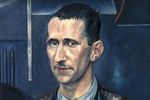
All his life Brecht had an instinctive originality that may once upon a time have been contrived in the form of a conscious and perverse style, but again maybe wasn’t: I tend to suspect it was always in him. This underwrites numerous remarks and positions of effortless carry and suggestion, whether he is discussing desirable qualities in acting (“Witty. Ceremonious. Ritual.”) or, in another, equally dazzling collocation, noting that “I keep coming back to the fact that the essence of art is simplicity, grandeur and sensitivity, and that of its form coolness”. In thirty years of translating, I have known nothing like the feeling of a joyfully manipulative intelligence I had when working on the wedding scene in The Good Person of Sichuan. Aesthetic assumptions are confounded wholesale by Brecht, whether it is an unhesitating, dumbfounding rejection of depth (“Depth takes you no further. Depth is a dimension of its own, just depth – which is why nothing comes to light in it”), or naturalism (imagining a possible play on a nineteenth- century slave rebellion, Brecht wanted the slaves speaking standard English, no questions asked) or entertainment (following The Threepenny Operaof 1928, “he would never again allow his audience to enjoy themselves in such an unfettered way”) or metaphysics (“For Brecht, militant opposition to metaphysics was an article of faith”). His favourite book – although he said, “Don’t laugh”, was the Bible. He was uninterested in personal matters.

more here.

the religion of humanism

Emile_durkheim_24Andrew Brown at The Guardian:

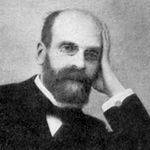
But there remains the question of whether humanism is in fact a religion, or something more like a religion than it is like any other sort of social movement. This is complicated because of the way in which “religion” has become a toxic brand. But if we go back to the science, I think the answer is clearly that it is. Emile Durkheim, who pretty much founded the scientific study of religion, defined it as “a unified set of beliefs and practices relative to sacred things, that is to say, things set apart and surrounded by prohibitions – beliefs and practices that unite its adherents in a single moral community called a church”.

So, can you have religions without a church? Humanism almost qualifies. It sacralises humanity, claiming for us a significance that is not to be derived from either biology or physics. Organised humanism clearly has unified beliefs and practices. It even has the world’s most lugubrious and sentimental hymn: John Lennon’s Imagine. Like all modern religions it has universalist aspirations, claiming to explain the lives of non-believers better than they can do so themselves. It can inspire heroism and self-sacrifice, but also be used to legitimise intolerance – see Sam Harris and his friends.

more here.

Photographer Garry Winogrand’s America

A_385x215Jerry Saltz at New York Magazine:

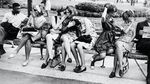
The photographer Garry Winogrand had night vision. With it he saw not only the dark side of his own time in America, he saw the first flickering of our hopelessly polarized and fissuring future—its paranoia, rage, and blind righteousness. Winogrand, who was born in 1928, took his first picture when he was 20 years old and never really put down the camera again. And I mean never. He moved like a meteor from city to city, neighborhood to neighborhood, returning to the same sites, always finding people devoured by desire, resignation, and nonbeing. He called himself “a gypsy.” Winogrand peered through the mist of changing America, saw brittle invalids, rich guys with rheumy eyes, figures acting prescribed parts, people frozen in hatred like the plaster figures in Pompeii. His pictures startle with their rawness. Almost always close in to his subjects, he’s aggressive. By the end of his life, he was shooting so incessantly he wouldn’t even take the time to develop his negatives, much less make prints from them. “I sometimes think I’m a mechanic,” he said. “I just take pictures.” In those years, he nearly stopped editing, or even looking at, his work. Other people did his printing and put his books and shows together. He died, too, with the same headlong drive. Diagnosed with cancer in January 1984, he went immediately to Tijuana to seek an alternative cure and was dead two months later. He was only 56.

more here.

Saadat Hasan Manto’s distaste for dogmas

Hirsh Sawhney in TLS:

TLS_Sawhney_414479hThe Urdu writer Saadat Hasan Manto wrote penetrative short stories about India’s tragic Partition in 1947, an event defined by mass murder, rape and forced migration. Though Manto was born a Muslim, these stories are distinctly nonpartisan, indicting individuals from all of South Asia’s political groups and religious communities, and also British imperialists, whose hasty flight from the subcontinent had cataclysmic consequences. Some of these tales, such as the well-known “Toba Tek Singh”, use satire to convey the political absurdity of Partition, which turned friends and neighbours into enemies overnight, whereas stories such as “Cold Meat” tackle the brutality head-on. In this latter tale, which prompted the postcolonial Pakistani government to prosecute Manto for obscenity, a Sikh man returns home after several days of looting and murdering. The sight of his voluptuous wife arouses him, and he tries to make love to her. But he can’t get an erection. His sexually frustrated wife grows suspicious that he’s been cheating, and stabs him. While the man bleeds to death, he admits to having raped a girl during the chaos, but his confession doesn’t end there: it transpires that this beautiful girl was actually a corpse and that the man inadvertently committed an act of necrophilia.

Though Manto’s stark Partition stories are his most celebrated and frequently anthologized, he wrote prolifically and worked in a variety of genres during his short life. Between his birth in undivided India in 1912 and his death in 1955 in Pakistan, he churned out hundreds of short stories, radio plays and screenplays, and translated various European authors, including Victor Hugo, into Urdu. Towards the end of his life, disillusioned with Partition and in and out of a mental asylum for his alcoholism, he wrote a series of “Letters to Uncle Sam”, farcical yet astute essays about international politics and post-war neoimperialism.

More here.

Scientists and the social network

Richard Van Noorden in Nature:

Scientists-and-the-social-networkIn 2011, Emmanuel Nnaemeka Nnadi needed help to sequence some drug-resistant fungal pathogens. A PhD student studying microbiology in Nigeria, he did not have the expertise and equipment he needed. So he turned to ResearchGate, a free social-networking site for academics, and fired off a few e-mails. When he got a reply from Italian geneticist Orazio Romeo, an inter­national collaboration was born. Over the past three years, the two scientists have worked together on fungal infections in Africa, with Nnadi, now at Plateau State University in Bokkos, shipping his samples to Romeo at the University of Messina for analysis. “It has been a fruitful relationship,” says Nnadi — and they have never even met. Ijad Madisch, a Berlin-based former physician and virologist, tells this story as just one example of the successes of ResearchGate, which he founded with two friends six years ago. Essentially a scholarly version of Facebook or LinkedIn, the site gives members a place to create profile pages, share papers, track views and downloads, and discuss research. Nnadi has uploaded all his papers to the site, for instance, and Romeo uses it to keep in touch with hundreds of scientists, some of whom helped him to assemble his first fungal genome.

More than 4.5 million researchers have signed up for ResearchGate, and another 10,000 arrive every day, says Madisch. That is a pittance compared with Facebook’s 1.3 billion active users, but astonishing for a network that only researchers can join. And Madisch has grand goals for the site: he hopes that it will become a key venue for scientists wanting to engage in collaborative discussion, peer review papers, share negative results that might never otherwise be published, and even upload raw data sets. “With ResearchGate we’re changing science in a way that’s not entirely foreseeable,” he says, telling investors and the media that his aim for the site is to win a Nobel prize.

More here.

Wednesday, August 13, 2014

Why We Can’t Rule Out Bigfoot

3885_311abb492a69fe7da41be858fdd2aae8

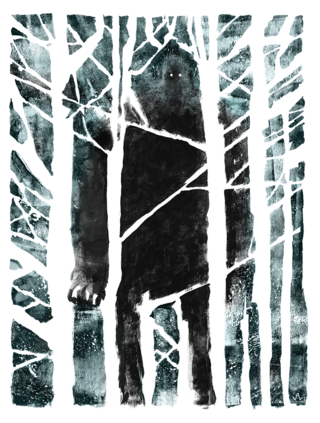
Carl Zimmer in Nautilus (illustration by Jeffrey Alan Love):

People often think that the job of scientists is to prove a hypothesis is true—the existence of electrons, for example, or the ability of a drug to cure cancer. But very often, scientists do the reverse: They set out to disprove a hypothesis.

It took many decades for scientists to develop this method, but one afternoon in the early 1920s looms large in its history. At an agricultural research station in England, three scientists took a break for tea. A statistician named Ronald Fisher poured a cup and offered it to his colleague,Muriel Bristol.

Bristol declined it. She much preferred the taste of a cup into which the milk had been poured first.

“Nonsense,” Fisher reportedly said. “Surely it makes no difference.”

But Bristol was adamant. She maintained that she could tell the difference.

The third scientist in the conversation, William Roach, suggested that they run an experiment. (This may have actually been a moment of scientific flirtation: Roach and Bristol married in 1923.) But how to test Bristol’s claim? The simplest thing that Fisher and Roach could have done was pour a cup of tea out of her sight, hand it to her to sip, and then let her guess how it was prepared.

If Bristol got the answer right, however, that would not necessarily be proof that she had an eerie perception of tea. With a 50 percent chance of being right, she might easily answer correctly by chance alone.

Several years later, in his 1935 book The Design of Experiments, Fisher described how to test such a claim. Instead of trying to prove that Bristol could tell the difference between the cups of tea, he would try to reject the hypothesis that her choices were random. “We may speak of this hypothesis as the ‘null hypothesis,’ ” Fisher wrote. “The null hypothesis is never proved or established, but is possibly disproved, in the course of experimentation. Every experiment may be said to exist only in order to give the facts a chance of disproving the null hypothesis.”

More here.

John Updike on John Cheever

Tumblr_mc689rrQcZ1r6xvfko1_1280John Updike from a 1991 piece in The New Republic:

In 1970, after the disappointing reception of the rather punchyBullet Park, an entry begins with the unforgettable cry, “Whatever happened to Johnny Cheever? Did he leave his typewriter out in the rain?” His perversely contented stuckness, as he rotates in a mire of drink and marital discontent, varied by rather forced spurts of child-cherishing and nature-worship but gradually deepening into phobia, artistic impasse, and vicious behavior, should be overwhelming, and it does tax our patience. But in fact even at his lowest ebb Cheever can write like an angel and startle us with offhand flashes of unblinkered acumen.

And there is, beneath the apparently futile churning of these jottings to himself, a story, which we know not from any editorial guidance in reading the journal excerpts but from the biographies by Susan Cheever and Scott Donaldson and his letters as edited by his son Ben. Cheever did, in the spring of 1975, stop drinking. The novel he then wrote, Falconer, and the handsome volume of Collected Stories that he allowed Gottlieb to assemble and to publish, won him the greatest financial and critical success of his life. At the same time, he came out of the closet, and the (mostly) suppressed homosexual urges so darkly alluded to in the earlier journals blossomed into lewd romps, mostly with “M.,” recorded as frankly and joyfully as a psychotherapist could wish: “When we met here, not long ago, we sped into the nearest bedroom, unbuckled each other’s trousers, groped for our cocks in each other’s underwear, and drank each other’s spit. I came twice, once down his throat, and I think this is the best orgasm I have had in a year.”

more here.

the literature of Alessandro Spina

Naffis-sahely_spinasshadow_ba_img_0André Naffis-Sahely at The Nation:

Three months after Alessandro Spina’s death in July 2013, Ilario Bertoletti, his Italian editor, published a memoir in which he described his first near-encounter with the notoriously reclusive writer: “It was June, 1993. The bell rang in the late afternoon; moments later, a colleague entered my office: ‘A gentleman dropped by. He looked like an Arab prince, tall and handsome. He left a history of the Maronites for you.’”

The editor made some inquiries and discovered that Spina had been quietly publishing a number of novels and short stories since the early 1960s. It was an oeuvre that charted the history of Libya from 1911, when Italy invaded the sleepy Ottoman province, all the way to 1966, when petrodollars sparked an economic boom, exacerbating the corruption and nepotism that eventually paved the way for Muammar Qaddafi’s coup d’état in 1969. Bertoletti runs an independent imprint based in Brescia, and it took him fifteen years to persuade Spina to let him reissue his books, or rather to assemble them into a 1,280-page omnibus edition entitled I confini dell’ombra: In terra d’oltremare (The Confines of the Shadow: In Lands Overseas).

more here.