Killer Plot: ‘The Silkworm’ by J. K. Rowling, as Robert Galbraith

Harlan Coben in The New York Times:

Corben-master675During a cocktail party in Robert Galbraith’s (a.k.a. J. K. Rowling’s) endlessly entertaining detective novel “The Silkworm,” the publisher Daniel Chard gives a toast in which he observes that “publishing is currently undergoing a period of rapid changes and fresh challenges, but one thing remains as true today as it was a century ago: Content is king.” Coming from an obscure, midlist, mystery author named Robert Galbraith such a statement might go unnoticed. But when the same passage is written by J. K. Rowling, author of the Harry Potter series and one of the most successful authors of all time, the words cannot help having a far greater impact. Therein lies the problem and the great joy of this book. You want to judge “The Silkworm” on its own merit, author be damned. It is, in fact, this critic’s job to do so. But writing that type of blind review in this case, while a noble goal, is inauthentic if not downright disingenuous. If an author’s biography always casts some shadow on the work, here, the author is comparatively a total solar eclipse coupled with a supermassive black hole.

…Some will also argue that while Harry Potter altered the landscape in a way no children’s novel ever has, here Rowling does the opposite: She plays to form. “The Silkworm” is a very well-written, wonderfully entertaining take on the traditional British crime novel, but it breaks no new ground, and Rowling seems to know that. Robert Galbraith may proudly join the ranks of English, Scottish and Irish crime writers such as Tana French, Ian Rankin, Val McDermid, John Connolly, Kate Atkinson and Peter Robinson, but she wouldn’t overshadow them. Still, to put any author on that list is very high praise. The upside of being as well known as Rowling is obvious — sales, money, attention. That’s not what she’s after here. The downside — and her reason for using the pseudonym — is that telling a story needs a little bit of anonymity. Rowling deserves that chance, even if she can’t entirely have it. We can’t unring that bell, but in a larger sense, we readers get more. We get the wry observations when we can’t ignore the author’s identity and we get the escapist mystery when we can. In the end, the fictional publisher Daniel Chard got it right: “Content is king,” and on that score, both J. K. Rowling and Robert Galbraith triumph.

More here.

Saturday Poem

Motion

Most motion now is at a speed
No Roman or enlightened despot ever dreamed
As truth. The landscape we see we miss;
The oceans we cross we overlook;
The accelerations of word and style
Disguise the flat art we flirt with
The thoughts we dispose of after use.
Speed in this palliative world
Amounts to no executive privilege
Nor does the distance we devour
Sustain us. We dream faster
Than we travel, and the dreams
Speed back to what they meant
When sceptic, wise and mortal Socrates
Lay paralyzed at the apex of his argument.
.

by John Bruce
from Canadian Poetry Online

Friday, June 27, 2014

Why Astronomers and Journalists should pay heed to Biologists about ET.

Earthfromspace

Nathan Taylor over at Praxtime (via Sean Carroll):

A new paper using data from NASA’s Kepler telescope came out recently, estimating that 22% of Sun-like stars harbor Earth-sized planets. This is a big increase over previous estimates. It’s very cool work. Love it. But the news spin was predictable:

    • New York Times: The known odds of something — or someone — living far, far away from Earth improved beyond astronomers’ boldest dreams on Monday.
    • USA Today: We are not alone.

You get the idea. Aliens under every rock. The existence of extraterrestrial intelligence (henceforth ETIs, or just ETs) is normally discussed in the context of the Fermi Paradox, which Wikipedia describes as “the apparent contradiction between high estimates of the probability of the existence of extraterrestrial civilization and humanity’s lack of contact with, or evidence for, such civilizations.” Now I’m a strong advocate for there being no ETs in our galaxy, as explained in this recent post. In fact I’ve gotten so tired of hearing about ETs I’ve started thinking of it as “Carl Sagan Syndrome.” Name checking the deservedly well regarded astronomer and advocate for the Search for Extraterrestrial Intelligence (SETI). With this latest news cycle I got to wondering. Why so much Sagan Syndrome? What am I missing?

A good starting point is Stephen Webb’s book “If the Universe Is Teeming with Aliens … WHERE IS EVERYBODY?: Fifty Solutions to the Fermi Paradox and the Problem of Extraterrestrial Life.” It’s a fun romp through the history of the Fermi Paradox. From page 23: “it was a 1975 paper by Michael Hart in the Quarterly Journal of the Royal Astronomical Society that sparked an explosion of interest in the paradox. Hart demanded an explanation for one key fact: there are no intelligent beings from outer space on Earth at the present time.” Hart’s explanation was “we are the first civilization in our Galaxy.

Hart’s 1975 paper is short and clear, and worth a quick read. Hart runs various scenarios, but for me the key insight is one of time scale. It takes (only) millions of years for intelligent life to completely fill the galaxy, but billions of years for it to evolve. So first out the gate should be everywhere before second out the gate. Logically if ETs exist they should be here. And they aren’t. So case closed.The Fermi Paradox literature since Hart could arguably be characterized as nonstop special pleading to avoid a common sense conclusion. Besides myrecent posts, you can find similar views from Robin Hanson, Ian Crawford,Leonard Ornstein. And in particular I want to cite Stephen Ashworth, both for his article “Alien Civilisations: Two Competing Models“, plus an email exchange where he was generous enough to spend time answering questions. Finally of course we have Stephen Webb himself (spoiler alert) finishing his book of 50 explanations by concluding ETs aren’t there. So while this is a minority view, it’s not uncommon.

More here.

How Ayn Rand became the new right’s version of Marx

Daniel-Pudles-0503-007 (1)

George Monbiot in The Guardian (Illustration by Daniel Pudles):

It is not hard to see why Rand appeals to billionaires. She offers them something that is crucial to every successful political movement: a sense of victimhood. She tells them that they are parasitised by the ungrateful poor and oppressed by intrusive, controlling governments.

It is harder to see what it gives the ordinary teabaggers, who would suffer grievously from a withdrawal of government. But such is the degree of misinformation which saturates this movement and so prevalent in the US is Willy Loman syndrome (the gulf between reality and expectations) that millions blithely volunteer themselves as billionaires' doormats. I wonder how many would continue to worship at the shrine of Ayn Rand if they knew that towards the end of her life she signed on for both Medicare and social security. She had railed furiously against both programmes, as they represented everything she despised about the intrusive state. Her belief system was no match for the realities of age and ill health.

But they have a still more powerful reason to reject her philosophy: as Adam Curtis's BBC documentary showed last year, the most devoted member of her inner circle was Alan Greenspan, former head of the US Federal Reserve. Among the essays he wrote for Rand were those published in a book he co-edited with her called Capitalism: the Unknown Ideal. Here, starkly explained, you'll find the philosophy he brought into government. There is no need for the regulation of business – even builders or Big Pharma – he argued, as “the 'greed' of the businessman or, more appropriately, his profit-seeking … is the unexcelled protector of the consumer”. As for bankers, their need to win the trust of their clients guarantees that they will act with honour and integrity. Unregulated capitalism, he maintains, is a “superlatively moral system”.

Once in government, Greenspan applied his guru's philosophy to the letter, cutting taxes for the rich, repealing the laws constraining banks, refusing to regulate the predatory lending and the derivatives trading which eventually brought the system down. Much of this is already documented, but Weiss shows that in the US, Greenspan has successfully airbrushed history.

More here.

The Myth of America’s Golden Age

140620_stiglitz_ny_getty

Joseph Stiglitz in Politco:

While other economists were obsessed with extolling the virtues of the market economy, I focused a lot of my work on why markets fail, and I devoted much of my Ph.D. thesis at MIT to understanding the causes of inequality.

Nearly half a century later, the problem of inequality has reached crisis proportions. John F. Kennedy, in the spirit of optimism that prevailed at the time I was a college student, once declared that a rising tide lifts all boats. It turns out today that almost all of us now are in the same boat—the one that holds the bottom 99 percent. It is a far different boat, one marked by more poverty at the bottom and a hollowing out of the middle class, than the one occupied by the top 1 percent.

Most disturbing is the realization that the American dream—the notion that we are living in the land of opportunity—is a myth. The life chances of a young American today are more dependent on the income and education of his parents than in many other advanced countries, including “old Europe.”

Now comes Thomas Piketty, who warns us in his justly celebrated new book, Capital in the 21st Century, that matters are only likely to get worse. Above all, he argues that the natural state of capitalism seems to be one of great inequality. When I was a graduate student, we were taught the opposite. The economist Simon Kuznets optimistically wrote that after an initial period of development in which inequality grew, it would begin to decline. Although data at the time were scarce, it might have been true when he wrote it: The inequalities of the 19th and early 20th centuries seemed to be diminishing. This conclusion appeared to be vindicated during the period from World War II to 1980, when the fortunes of the wealthy and the middle class rose together.

More here.

William R. Polk on American Grand Strategy for Iraq, Syria, and the Region

William R. Polk in The Atlantic:

6fd301a54Analysis of foreign affairs problems often ends in a mental block. As we have seen in each of our recent crises—Somalia, Mali, Libya, Syria, Iraq, the Ukraine and Iran—”practical” men of affairs want quick answers: they say in effect, 'don't bother us with talk about how we got here; this is where we are; so what do we do now?' The result, predictably, is a sort of nervous tick in the body politic: we lurch from one emergency to the next in an unending sequence.

This is not new. We all have heard the quip: “ready, fire, aim.” In fact those words were not just a joke. For centuries after infantry soldier were given the rifle, they were ordered not to take the time to aim; rather, they were instructed just to point in the general direction of the enemy and fire. Their commanders believed that it was the mass impact, the “broadside,” that won the day.

Our leaders still believe it. They think that our “shock and awe,” our marvelous technology measured in stealth bombers, drones, all-knowing intelligence, our massed and highly mobile troops and our money constitute a devastating broadside. All we have to do is to point in the right direction and shoot.

So we shoot and then shoot again and again. We win each battle, but the battles keep happening. And to our chagrin, we don't seem to be winning the wars. By almost any criterion, we are less “victorious” today than half a century ago.

More here.

Are Polite People More Violent and Destructive?

Kenneth Worthy in Psychology Today:

I’ve long thought that it’s the troublemakers and malcontents who will lead the way to a more sustainable, healthier planet, and now there’s some evidence to support this idea.

In a previous post I discussed Stanley Milgram’s famous obedience experiments and what they say about the conditions that lead people to make destructive, harmful choices. It turns out they’re the same conditions that most of us experience in everyday life when it comes to making choices more or less damaging to the environment—and they prompt us to take the more destructive path.

Now a new study using a variation of Milgram’s experiments shows that people with more agreeable,conscientious personalities are more likely to make harmful choices.1 In these new obedience experiments, people with more social graces were the ones who complied with the experimenter’s wishes and delivered electric shocks they believed could harm an innocent person. By contrast, people with more contrarian, less agreeable personalities were more likely to refuse to hurt other people when told to do so.

(One reason that the experimenters wanted to see the effects of agreeableness and conscientiousness is that some observers attributed those traits to Adolph Eichmann, main henchman of the German holocaust against the Jews and others the Nazis deemed inferior.)

The experimenters dug deeper to find out what other personality traits and political characteristics might help identify the people who would choose the more benign, caring path when put under social pressure to conform with harmful behavior. It turns out that people holding left-wingpolitical views were less willing to comply with demands to inflict suffering. A third group was also more likely to go against the grain and refuse destructive orders—women who had previously participated in rebellious political activism such as strikes or occupying a factory.

More here.

Katherine Mansfield on book reviewing

Mansfield-236x300Sam Sacks at Open Letters Monthly:

It would be a stretch to suggest that Mansfield was writing them for the ages (she certainly felt that way about her fiction), but from her very first column she’s frank about the terrible ephemerality of most fiction, and the trap both reviewers and readers can fall into by hitching themselves to a brand new novel’s rapidly dying star. The books in question here are Hope Trueblood, by Patience Worth, The House of Courage, by Mrs. Victor Rickard, and The Tunnel, by Dorothy Richardson, but before she will discuss them, Mansfield openly wonders why anyone should bother with new novels at all:

Public Opinion, garrulous, lying old nurse that she is, cries: ‘Yes! Great books, immortal books are being born every minute, each one more lusty than the last. Let him who is without sin among you cast the first criticism.’ It would be a superb, thrilling world if this were true! Or even if the moderate number of them were anything but little puppets, little make-believes, playthings on strings with the same stare and the same sawdust filling, just unlike enough to keep the attention distracted, but all like enough to do nothing more profound. After all, in these lean years of plenty how could it be otherwise? Not even the most hardened reader, at the rate books are written and read nowadays, could stand up against so many attacks upon his mind and heart, if it were. Reading, for the great majority—for the reading public—is not a passion but a pastime, and writing, for the vast number of modern authors, is a pastime and not a passion.

more here.

the Literary History of the First World War

570_image1Josh Levithan at The Millions:

Up and down Britain in August 1914, thousands upon thousands of literarily inclined young men volunteered, their heads filled with rousing warlike poetry and dreams of leading a heroic charge, only to be mowed down by machine guns, or else survive years hunkered in the mud, shells bursting overhead, to produce the first great anti-war poetry. Or so the traditional narrative, bemoaned by historians but enduringly popular, goes.

Yet the soldiers’ responses to their experiences were diverse, complex, and — for the first time — profusely and skillfully recorded. History is in constant danger of being smothered under its own weight, the known course of future events squeezing the life from earlier moments that had been lived with possibility, the familiar story retold until we only remember the parts that fit its conclusion. But how did those idealistic fools become those bitterly wise poets? And did they all, really? With the centennial of the war almost upon us, wouldn’t it be interesting to re-read the war from the beginning, rather than looking back down upon it from the height of all of our learned interpretations?

What if one were to read heaps of personal histories all together, following perhaps a few dozen of the most rewarding writers from the beginning of the war to the end, at a distance of exactly a century? It could be a chorus of many different voices, a symphonic literary history. This idle thought became a big project, acenturyback.com, a blog that will slowly build into a new way of reading — or re-experiencing, in real time — the Great War: every day a piece of writing produced a century ago, or a description of events befalling one of the writers on that day.

more here.

Lust and Loss in Madrid: the Spanish novelists

Marias_javier_071014_jpg_300x1040_q85Colm Tóibín at the New York Review of Books:

How strange it must seem to historians, sociologists, and philosophers that, after all that has happened in the world, the small matter of love, in all its minuscule twists and turns, continues to preoccupy novelists more than, say, the breaking of nations or the fate of the earth. Some novelists have tried to rectify this; they have attempted to make the art of the novel seem more important somehow by treating, say, terrorism or large political questions with great seriousness. But then other novelists return, like scavengers or renegades or deserters or prophets, to the old dramas of fidelity, treachery, and passion among people who are ordinary.

How these small, perennial, familiar issues can seem larger and more pressing than important public questions is a mystery. And further mystery arises from the idea that public events are often quite useful, at times indispensable, to novelists, but as mere background, as things that help to focus the narrative, give it flavor, or make the story seem more important than it is. Compared to investigative journalism, history-writing, biography, or self-help books, the novel is a strange, humble, hybrid form; it is perhaps in its very humility, in its pure uselessness, in its instability, in its connection to the merely human that its grandeur lies.

Both Javier Marías and Antonio Muñoz Molina write in the full awareness of the battle between pride and humility that has been waged in novels themselves over the past two hundred years.

more here.

Disruptive Genius: Clayton Christensen on spreading his gospel, the Gospel, and how to win with the electric car

Craig Lambert in Harvard Magazine:

DisruptDominant companies prosper by making a good product and keeping their customer base by using sustaining technologies to continue improving it. The products get ever better—but at some point their quality overshoots the level of performance that even the high end of the market needs. Typically, this is when a disruptive innovation lands in the marketplace at a lower price and relatively poor level of performance—but it’s a level adequate for what the lower end of the market seeks. The disruptive technology starts to attract customers, and is on its way to staggering the industry’s giants.

Examples abound. Small off-road motorcycles from Honda, Kawasaki, and Yamaha disrupted the hegemony of large, powerful bikes from Harley-Davidson and BMW. Transistors overthrew vacuum tubes. Discount retailing and home centers savaged the dominance of Sears. Online courses are barging into higher education. Drones challenge manned fighters and bombers. Nurse practitioners underprice medical doctors. Digital photography eclipsed film, and mobile telephones are replacing landline service. Outpatient clinics and in-home care pull revenue away from general hospitals. Consider the hegemony of Detroit’s Big Three—General Motors, Ford, and Chrysler. At one time, they dominated the auto industry, producing bigger, faster, safer, more comfortable cars with more and more features. But these improving products also “create a vacuum underneath them,” Christensen says, “and disruptive innovators suck customers in with fewer features and a cheaper price.” Toyota, Honda, and Nissan disrupted the Big Three’s marketplace by introducing smaller, lighter, less safe, and less comfortable but reliable cars that needed few repairs and got good gas mileage—at a significantly lower price. Within a few years, they had garnered a large share of the market. Says Christensen: “The leaders get killed from below.”

More here.

Thursday, June 26, 2014

Our Apples, Ourselves

Our own Morgan Meis in The Smart Set:

IC_MEIS_APPLES_AP_001Long has the fate of mankind been tied to apples. They got Adam and Eve banished from Paradise. With the apple, Johnny Appleseed tamed the New World. And then, in the late 19th century, Paul Cézanne declared he would paint the otherwise unremarkable fruit and “astonish Paris with an apple.”

Cézanne did just that. His paintings of apples confused critics and art enthusiasts alike. People were astonished that apples could look so ugly, and be so poorly painted. Some thought Cézanne’s still lifes were actually a joke, or an insult. It is difficult, looking at Cézanne’s paintings today, to feel the full force of that outrage. But there were certain artistic standards in the late 19th century. Painting that came out of the official Academy of Art (Écoles des Beaux-Arts) was expected to look a certain way. Brushstrokes, for instance, were supposed to be smoothed out and worked, more or less, into the finish of the painting. A glossy and well-varnished surface was expected. One look at the paintings currently on display at The Barnes Foundation’s Cézanne exhibit (The World Is an Apple: The Still Lifes of Paul Cézanne) is enough to see that Cézanne was not an Academy painter. He was making a point of being rough and crude.

There is a helpful juxtaposition of paintings in the catalogue to the Barnes Foundation exhibit. Curator Benedict Leca presents a picture by Henri Fantin-Latour called Still Life with Vase of Hawthorn, Bowl of Cherries, Japanese Bowl, and Cup and Saucer (1872). Fantin-Latour was a successful and well-respected Academic painter in his time. His still life is skillfully done. His rendering of the Japanese bowl and the cup and saucer is, in particular, masterful in its photographic details. The reflections on the bowl are perfect. Turning to Cézanne’s 1873-77 painting, Apples and Cakes, the contrast really is incredible.

More here.

What was Alan Turing really like?

Vincent Dowd at the BBC:

ScreenHunter_709 Jun. 26 19.44When Alan Turing died of cyanide poisoning in June 1954 his death was not huge news. The story of how he and colleagues at Bletchley Park had cracked the German Enigma codes was still secret and the Turing name was not yet public property.

In a two-paragraph story reporting his death, the Times described how he had “helped to develop a mechanical brain which he said had solved in a few weeks a problem in higher mathematics that had been a puzzle since the 18th Century”. It also noted his work on the Ace “automatic computing machine”. A short obituary followed a few days later.

Turing had contributed to a couple of radio programmes on the BBC Third Programme (sadly now lost) but otherwise his wide-ranging work on artificial intelligence and morphology seemed the stuff of specialist journals.

His name emerged from the shadows in 1983 when Andrew Hodges published a well-received biography which inspired the play Breaking the Code. It played in London and on Broadway and was later adapted for TV. The public image of Turing as tortured gay genius was taking shape.

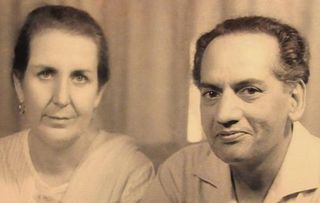
Yet long before the icon, the Greenbaums knew the man. The memories of Barbara and Maria Greenbaum (now Barbara Maher and Maria Summerscale) remain vivid.

More here.

Don’t Trouble Yourself

Philip N. Cohen in the Boston Review:

ScreenHunter_708 Jun. 26 19.40In his latest book, Nicholas Wade, a longtime science journalist, argues that evolution by natural selection created human races with different genetic predispositions for social behavior. As races evolved following divergent migrations out of Africa, their social behavior diverged and became written in their genes. This divergence fueled the development of disparate societal institutions, leading to contemporary inequalities between rich and poor countries according to their adaptability to modern economic imperatives. In Wade’s telling, the Caucasian and East Asian races comprise the richest and most powerful nations in the world because they are genetically better adapted to success in modern capitalist systems than are Africans and the other racial groups, who remain steeped in tribalism, the “default” human condition.

We might know all this already, Wade claims, if it were not for politically correct gatekeepers who are afraid to discuss the realities of genetic forces underlying racial differences. Of course, Wade says, no one wants to reignite the racism that gave us social Darwinism, eugenics, and the Holocaust, but enough with taboos. It is time to move on to a scientific examination of how genes explain racial differences.

The book has nothing to do with racial superiority, Wade assures us. Unless you consider economic, political, and cultural success—thanks to your genes—an indicator of superiority. It is a hard assurance to accept from a needlessly defensive book riddled with scientific errors, deaf to better-supported theories, and willfully blind to its own implications.

More here.

george herbert, voice of eros

XChapelle_sixtine_x448.jpg.pagespeed.ic.mikhfNHg6GAdam Plunkett at Poetry Magazine:

George Herbert, the 17th-century poet and parson, is notable for having written almost only sacred poems, about his experience of God rather than that of other people. His single and singular masterpiece, The Temple, written throughout his adulthood and published shortly after his death in 1633, is “a record of spiritual struggles,” as T. S. Eliot wrote, struggles inspired “only in the Faith, in hunger and thirst after godliness.” A good churchman, Herbert wrote poems to draw his readers, like his parishioners, toward the love of God. This meant that he evoked the range of human love, from sacred to profane. But it also made him, perhaps unwittingly, a master of erotic poetry. This is not something of which the churchman is often accused. But erotic love is everywhere in The Temple, the unspoken drive behind many other loves in the poems and, in the end, their impossible fulfillment.

Herbert’s God was that of the flourishing moderate and humanist Anglicanism in the early 17th century, set against what the Anglicans saw as the ritual austerity of Puritanism, the ideological austerity of Calvinism, and the elaborate hierarchies and rituals of Roman Catholic popery. In 1611, when Herbert was 18, the King James Bible was first published, the translation that reproduced the majesty of biblical language in the vernacular.

more here.

kunkel on piketty

Capital--621x414Benjamin Kunkel at the London Review of Books:

In the background to Piketty’s wide and admiring reception lie two crises. One is disciplinary. Economists, endowed until a few years ago with more authority than other scholars, now appear in the eyes of many to have produced models of efficiency and harmony whose perfection was won at the cost of reality. The mathematised dream of some future catallaxy – Hayek’s lovely word for the spontaneous peaceful order that would result from maximum liberation of the market – bore little resemblance to actually existing capitalism. Since the crash, behavioural economics has generated much of the excitement in the field, but it too is better equipped to make sense of individual economic actors than of the mutually determining trajectories of social classes and national economies. The second crisis is not of economics but the economy: the maldistribution of wealth and incomes visible in every facet of societies today. Piketty’s searching investigation of this phenomenon has been met with understandable gratitude. Branko Milanovic, in a symposium titled ‘Piketty’s Triumph’ in the American Prospect, hailed ‘a monumental book that will influence economic analysis (and perhaps policymaking) in the years to come’, and restores economics to its ‘roots where it seeks to understand’ – in Marx’s phrase – ‘the “laws of motion” of capitalism’. Martin Wolf in the Financial Times wrote that ‘in its scale and sweep’ Capital in the 21st Century‘brings us back to the founders of political economy’. The inadequacy of mainstream economics in the face of the capitalist economy today has clearly produced a hunger for such a book. But the hungry are apt to praise any substantial meal as a feast.

more here.

The Near-Death of Grand Central Terminal

DetroitPublishingCo-LoC-GrandCentral-630Kevin Baker at Harper's Magazine:

Many consider the destruction of New York’s original Pennsylvania Station in 1963 to have been the architectural crime of the twentieth century. But few know how close we came to also losing its counterpart, Grand Central Terminal, a hub every bit as irreplaceable. Grand Central’s salvation has generally been told as a tale of aroused civic virtue, which it was. Yet it was, as well, an affirming episode for those of us convinced that our political culture has become an endless clown-car act with the same fools always leaping out.

“In New York then, I learn to appreciate the Italian Renaissance,” said Le Corbusier of Grand Central. “It is so well done that you could believe it to be genuine. It even has a strange, new firmness which is not Italian, but American.” It was not seen as such by its owner, New York Central Railroad, which viewed it mostly as a cash cow. As early as 1954, the Central proposed replacing the terminal with something called The Hyberboloid — an I. M. Pei monstrosity that, at 108 stories and 1,600 feet, would have become the world’s tallest building at the time. There was enough public outcry that a scaled-down Hyberboloid was built instead just north of Grand Central, where it was retitled the Pan Am (later the Met Life) Building. Even at a lesser height, it proved every bit as grotesque as promised.

more here.

Top 10 books about Indian families

Sandra Hunter in The Guardian:

Family-on-a-motorbike-013Let's face it: the Indian family is irresistible to readers. Will the grandmother reveal the secret about mad Uncle Arun? Will Preeti go through with the arranged marriage? And what are they going to cook next and where can we get some? But I'm less interested in the sequins and spices than the family tensions that occur due to immigration, an accident or disease, the introduction of a new element or person, or that sense of displacement we've all come across in arriving in a new place and not knowing how time works. I'm always drawn to writers who explore similar themes. So, here are 10 stories about Indian families.

Rich Like Us by Nayantara Saghal

When Ram Surya marries cockney girl Rose and brings her back to India, his first wife Mona and the family are dumped into chaos. Ram doesn't appear to be affected by the conflicts caused by his decision to have two wives. Saghal shows how male selfishness is trumped by the adaptability and strength of women, regardless of tragic outcomes (no spoilers!)

Life Isn't All Ha Ha Hee Hee by Meera Syal

I'm a big fan of Syal's work as a comedian, so, I devoured her novel about British-born Indian women with successful working lives who then “morph into obedient wives and self-abnegating mothers the moment they come home”. The story jumps off the page and drags you in so that you feel like you're running around London with Sunita, Chila and Tania.

More here.