
Category: Recommended Reading
No Second Troy by W B Yeats
The Free Market is an Impossible Utopia
Henry Farrell in The Monkey Cage:
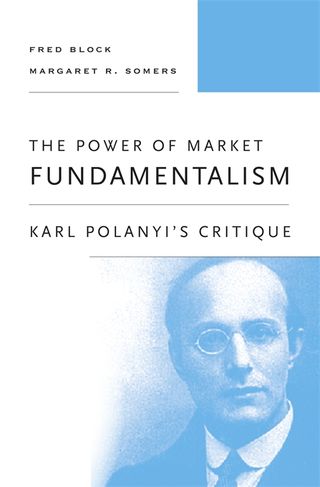
Fred Block (research professor of sociology at University of California at Davis) and Margaret Somers (professor of sociology and history at the University of Michigan) have a new book, “The Power of Market Fundamentalism: Karl Polanyi’s Critique” (Harvard University Press, 2014). The book argues that the ideas of Karl Polanyi, the author of “The Great Transformation,” a classic of 20th century political economy, are crucial if you want to understand the recession and its aftermath. I asked the authors a series of questions.
HF – Your book argues for the continued relevance of Karl Polanyi’s work, especially “The Great Transformation.” What are the ideas at the core of Polanyi’s thought?
FB & MS – Polanyi’s core thesis is that there is no such thing as a free market; there never has been, nor can there ever be. Indeed he calls the very idea of an economy independent of government and political institutions a “stark utopia”—utopian because it is unrealizable, and the effort to bring it into being is doomed to fail and will inevitably produce dystopian consequences. While markets are necessary for any functioning economy, Polanyi argues that the attempt to create a market society is fundamentally threatening to human society and the common good. In the first instance the market is simply one of many different social institutions; the second represents the effort to subject not just real commodities (computers and widgets) to market principles but virtually all of what makes social life possible, including clean air and water, education, health care, personal, legal, and social security, and the right to earn a livelihood. When these public goods and social necessities (what Polanyi calls “fictitious commodities”) are treated as if they are commodities produced for sale on the market, rather than protected rights, our social world is endangered and major crises will ensue.
Free market doctrine aims to liberate the economy from government “interference”, but Polanyi challenges the very idea that markets and governments are separate and autonomous entities. Government action is not some kind of “interference” in the autonomous sphere of economic activity; there simply is no economy without government rules and institutions. It is not just that society depends on roads, schools, a justice system, and other public goods that only government can provide. It is thatall of the key inputs into the economy—land, labor, and money—are only created and sustained through continuous government action. The employment system, the arrangements for buying and selling real estate, and the supplies of money and credit are organized and maintained through the exercise of government’s rules, regulations, and powers.
More here.
The New Science of Evolutionary Forecasting

Carl Zimmer in Quanta:
If you want to understand why evolutionary biologist have been so loathe to make predictions, read “Wonderful Life,” a 1989 book by the late paleontologist Stephen Jay Gould.
The book is ostensibly about the Cambrian explosion, a flurry of evolutionary innovation that took place more than 500 million years ago. The oldest known fossils of many of today’s major animal groups date to that time. Our own lineage, the vertebrates, first made an appearance in the Cambrian explosion, for example.
But Gould had a deeper question in mind as he wrote his book. If you knew everything about life on Earth half a billion years ago, could you predict that humans would eventually evolve?
Gould thought not. He even doubted that scientists could safely predict that any vertebrates would still be on the planet today. How could they, he argued, when life is constantly buffeted by random evolutionary gusts? Natural selection depends on unpredictable mutations, and once a species emerges, its fate can be influenced by all sorts of forces, from viral outbreaks to continental drift, volcanic eruptions and asteroid impacts. Our continued existence, Gould wrote, is the result of a thousand happy accidents.
To illustrate his argument, Gould had his readers imagine an experiment he called “replaying life’s tape.” “You press the rewind button and, making sure you thoroughly erase everything that actually happened, go back to any time and place in the past,” he wrote. “Then let the tape run again and see if the repetition looks at all like the original.” Gould wagered that it wouldn’t.
Although Gould only offered it as a thought experiment, the notion of replaying the tape of life has endured. That’s because nature sometimes runs experiments that capture the spirit of his proposal.
For an experiment to be predictable, it has to be repeatable. If the initial conditions are the same, the final conditions should also be the same. For example, a marble placed at the edge of a bowl and released will end up at the bottom of the bowl no matter how many times the action is repeated.'
Biologists have found cases in which evolution has, in effect, run the same experiment several times over. And in some cases the results of those natural experiments have turned out very similar each time. In other words, evolution has been predictable.
More here.
Frantz Fanon Black Skin White Mask
This Man Wants to Genetically Engineer Trees to Save the World

Annalee Newitz in io9:
The poplar tree's genome has been sequenced and it has 42 thousand genes — roughly twice the number as a human. It turns out that this is typical for a perennial plant like the poplar. Though we animals think of ourselves as far more sophisticated than plants, Tuskan explained that trees have to be a lot tougher and more resilient than the typical animal. He explained:
Humans or mice or elephants can move. If it's cold they can go underground or build shelter. Perennial plants have to stand there and take it for thousands of years in some cases — they have to be equipped biochemically for a drought, ready for heat or cold, ready for an insect attack. I think that's part of why plants have larger arrays of genes — that's their way of surviving.
Out of all these genes, only a handful may turn out to be useful for industry. “Half of the genes have no known function,” Tuskan said, “and with lignin it's probably somewhere between a dozen and three or four dozen genes that will turn out to be important.”
A lot of what Tuskan's lab does with poplars is an effort to link the behavior of specific genes to physical traits in the tree. This kind of analysis is called a genome-wide association study or GWAS, which everybody in the field pronounces “gee wass,” like J-Lo for genome geeks. “Basically it's figuring out the genome's relationship to the phenotype,” said Tuskan.
He and his colleagues have already had some success isolating genes that control various aspects of the tree's metabolism. In one case, they were able to start and stop the growth of a symbiotic fungus in poplar tree roots. Ultimately, Tuskan would like to have genetic switches that control many aspects of the poplar's development. Farmers could do things like grow a tree that's designed to have more lignin or less, depending on what the market demands.
More here.
A YouTube Video Is Doctor’s Secret Weapon Against Back Pain
John Henning Schumann in NPR:

To convince her of this, I had to resort to my secret weapon: I showed her an 11-minute educational video created by Dr. Mike Evans of Toronto. You may be familiar with Evans' work, even if you've never heard of him. He's the man behind the famous “23 1/2 Hours” whiteboard video that says the single-best move for health is being active for a half-hour or so a day. The video became a viral Internet sensation, racking up millions of page views, and even a shoutout on the hit TV show Orange Is the New Black. Evans is passionate about making complex medical ideas simple. He and his team have made more than a dozen whiteboard videos on health topics including how to deal with stress, acne, quitting smoking and even flatulence.
More here.
What is wisdom? It does not automatically come with age
Julian Baggini and Antonia Macaro in FT Magazine:
One of the most important skills is captured in the serenity prayer, which says that wisdom is knowing the difference between what can and can’t be changed. This requires performing a balancing act between striving to maximise our potential and accepting our limitations. So we enjoy life while appreciating its fragility; we make decisions in an inescapable state of uncertainty, knowing we’ll often get it wrong; and we accept we’re the product of our circumstances and have limited but crucial opportunity for self-improvement. Wisdom is not something that automatically comes with the passing years. While older people may be better able to put things in perspective than their younger counterparts, many never put their life experience to good use. Luckily, some of the skills that make us wise can be cultivated, so it’s up to us to make what effort we can to ensure that our experience bears fruit.
More here.
Saturday, July 19, 2014
Gabriel Chevallier’s ‘Fear’

In the era before cheap air travel, those in the English-speaking world who wanted to taste authentic French village life read Gabriel Chevallier’s gently satirical novels, published between the mid-1930s and the early 1960s. “Clochemerle” and “Clochemerle-Babylon” were deft, wise and celebratory in what people thought of as the French style. On the town of Clochemerle, in the Beaujolais region, the issues of French politics, class difference and coming or past collaboration with fascism lay more lightly than did eccentricity, pride in local wine, cooking and love.
So “Fear,” never previously published in the United States, is at first acquaintance a shock. Here national rhetoric is not directed for or against the building of a municipal restroom, as in “Clochemerle.” Instead it shreds the bodies of young men. This unadorned yet memorable novel is one of a number of savagely frank novel-memoirs of the war that appeared throughout Western Europe within a year of one another. Frederic Manning’s “The Middle Parts of Fortune” shook English readers in 1929. In the same year, Erich Maria Remarque’s “All Quiet on the Western Front” seemed treasonous to the fascists of Germany.
more here.
Bernard Malamud’s anomaly: ‘The Natural’
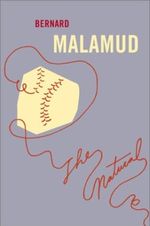
THE NATURAL might be considered an anomaly within Bernard Malamud’s oeuvre if it didn’t so closely resemble nearly everything else within Bernard Malamud’s oeuvre.
Actually, it’s considered an anomaly, anyway.
Earlier this year, the Library of America published two volumes containing all of Malamud’s work up through the 1960s. (A third volume, with the rest, is said to be on its way.) His novels and stories have subsequently received a fair amount of press. Conspicuously, The Natural, his first novel, hasn’t — in some cases, it’s been mentioned only so it can be dismissed. “The reviewer has not read and is not likely ever to read The Natural, a baseball novel said to incorporate a mythical theme,” Cynthia Ozick wrote in TheNew York Times in March. “Myth may be myth, but baseball is baseball, so nevermind.” In his survey of Malamud’s work for Harper’s, Joshua Cohen dedicated to The Natural fewer than 10 words — it “concerns baseball, a.k.a. frustration” — before moving on to discuss the author’s more discussed narratives.[1] Likewise James Campbell, in The Wall Street Journal, cast it aside; he called The Natural “[Malamud’s] anomalous debut novel,” and quickly noted: “The two books that followed are probably his best.”
more here.
Anya Ulinich’s “Lena Finkle’s Magic Barrel”

It's tempting to frame Anya Ulinich's “Lena Finkle's Magic Barrel” in terms of its antecedents: Bernard Malamud and Anton Chekhov, on the one hand, both of whom are referenced in the narrative, and on the other, graphic novelists such as Marjane Satrapi and Harvey Pekar, whose work is rich, allusive and (perhaps most important) alive with words.
What's more accurate, however, is that “Lena Finkle's Magic Barrel” has no antecedents, that it transcends its influences so thoroughly it creates a form, a language, all its own. Ulinich wrote a previous (nongraphic) novel, 2007's “Petropolis,” which tells the story of a Russian mail-order bride named Sasha Goldberg, who ends up in Brooklyn by way of Arizona. Something of a similar set of migrations is at play here, but don't let that mislead you: This new book is a departure in nearly every way.
Most obvious, of course, is its status as a graphic novel, the interplay of words and images through which so much of the narrative unfolds. Ulinich has an MFA in painting from the University of California and has done her share of portrait work and illustration, but this is a different order of magnitude.
more here.
What Writing and Running Have in Common
Rachel Toor in The Chronicle of Higher Education:

When I think harder about it, what I believe running and writing have most in common, at least for me, is the state of vulnerability they leave you in. Both require bravery, audacity, a belief in one’s own abilities, and a willingness to live the clichés: to put it on the line, to dig deep, to go for it. You have to believe in the “it,” and have to believe, too, that you are worthy. That is hard because the results always seem impossible. At the beginning of every track practice, when the coach gives us a workout, I think: I can’t do that. No one could ever do that. When I line up at the start of a marathon, I imagine driving from Hopkinton to Boston or from Staten Island to Central Park and I tell myself that’s too far to run. At longer races, when I know the unimaginable elevation of the peaks I’ll have to climb and descend in 30 or 50 miles of tough trail, I wonder what’s wrong with me to believe I could do something so challenging. It’s too hard, I think. I can’t do that.
Which is exactly how I feel when I’m starting on a book project.
More here.
The Woman: The Honorable Clare Boothe Luce
Maureen Dowd in The New York Times:
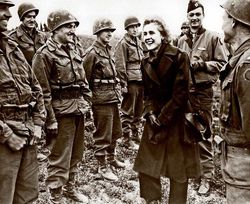
In Morris’s first volume, “Rage for Fame,” Luce — the illegitimate daughter of a violet-eyed, conniving Upper West Side beauty who urged her daughter to use her blue eyes, blond hair and luminous skin to ensnare wealthy men — is on the ascent, driven by “her perpetual hunger for power in yet more spheres.” She had few real friends, as Lawrenson wrote, because “she seemed to trust no one, love no one.” Yet, Lawrenson said, Luce “could enter a room where there were other women, more beautiful, better dressed with better figures, and they faded into the background, foils for her radiance.” Luce flourished as a coquette and courtesan in bows and ruffles, but she once told male diplomats at a well-lubricated dinner: “Women are not interested in sex. All they want is babies and security from men. Men are just too stupid to know it.” Her sometime escort, the French artist Raymond Bret-Koch, appraised her this way: “It’s a beautiful, well-constructed facade but without central heating.”
More here.
Friday, July 18, 2014
Documentary Art
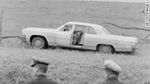
What makes a documentary photograph also a work of art? When does its news remain fresh, even after the daily paper or monthly magazine that printed it has faded? Bruce Davidson is a documentary photographer with a sixty-year track record, the most distinguished survivor of a time before photography was sold profitably in art galleries or studied widely in universities. It was only in the 1970s that the idea of “art photography” was recognized as being not a contradiction in terms; before then, someone wanting to earn a living with a camera relied on advertising agencies or periodicals. Many pictures that later entered museums began their lives in fashion and news-feature magazines.
Walker Evans once said that his photographs were not documentary pictures but “documentary style.” He explained: “An example of a literal document would be a police photograph of a murder scene. You see, a document has use, whereas art is really useless. Therefore art is never a document, although it certainly can adopt that style.” As one looks through the wealth of Davidson’s body of work, this distinction is helpful to keep in mind.
more here.
The Saddest Poem Ever Written

“Spring and Fall,” written by Gerard Manley Hopkins in September, 1880, and collected in his Poems and Prose, is the saddest poem ever written. I have been moved by other poems, including “Rock Me Mercy” by Yusef Komunyakaa, “Saying Goodbye to Very Young Children” by John Updike, and “Aubade Ending with the Death of a Mosquito” by Tarfia Faizullah. There are countless more poems, published and unpublished, seen and unseen, that could scar my heart. Yet in 15 lines and 94 words, Hopkins builds a melancholic, elegiac sentiment that still affects me now, hundreds of reads later.
The poem is invoked to a “young child,” Margaret, who is the silent recipient of the adult narrator’s lament. Hopkins composed the poem while serving as a parish priest in Lydiate, England, and occasionally celebrated Mass at Rose Hill, a private home. He was not a successful preacher, and, devoid of a “working strength,” soon left pastoral work. He taught intermediate Latin and Greek for three years, and then became Chair of Classics at University College, Dublin. He found little joy in any of these professional endeavors, and died of typhoid fever on June 8, 1889. His poems were not published until 1918, by his friend, British poet laureate Robert Bridges.
more here.
Iraq Illusions

The story most media accounts tell of the recent burst of violence in Iraq seems clear-cut and straightforward. In reality, what is happening is anything but. The Islamic State of Iraq and al-Sham (ISIS), so the narrative goes, a barbaric, jihadi militia, honed in combat in Syria, has swept aside vastly larger but feckless Iraqi army forces in a seemingly unstoppable tide of conquest across northern and western Iraq, almost to the outskirts of Baghdad. The country, riven by ineluctable sectarian conflict, stands on the brink of civil war. The United States, which left Iraq too soon, now has to act fast, choosing among an array of ugly options, among them renewed military involvement and making common cause with Iran. Alternatives include watching Iraq splinter and the creation of an Islamist caliphate spanning eastern Syria and western Iraq.
Much of this is, at best, misleading; some is outright wrong. ISIS, to begin, is only one of an almost uncountable mélange of Sunni militant groups. Besides ISIS, the Sunni insurgency that has risen up against the government of Nouri al-Maliki includes another jihadi group, Ansar al-Islam (Supporters of Islam), as well as the Military Council of the Tribes of Iraq, comprising as many as eighty tribes, and the Army of the Men of the Naqshbandi Order, a group that claims to have Shiite and Kurdish members and certainly includes many Sunni Baathists once loyal to Saddam Hussein.
more here.
Violence, voices and visibility
Laxmi Murthy in HimalSouthAsian:
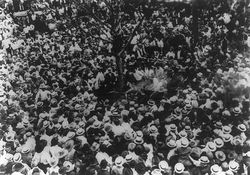
The manner in which the bodies were strung up is reminiscent of the lynching of African-Americans in the late 19th century. What does this spectacle of violence serve to do? Lynching, or mob-inflicted punishment, was most infamously used before the American Civil War to discipline rebellious blacks and show them their place.
More here.
a gene that links stem cells, aging and cancer
From Medical Xpress:

Both of these facts—that Sox4 is expressed only in some cells in the adult organism, and that it favours cancer development when there is too much of it—indicate that Sox4 is a powerful gene, with important consequences if it is not properly regulated.The CNIO group, therefore, wanted to study more in depth the role of Sox4 in the adult organism. It was not an easy task, because mice in which Sox4 had been eliminated die before birth. The authors' working strategy consisted of generating a line of mice that do express Sox4, but at lower quantities than normal. These animals survive and are fertile, but they have several peculiarities: they are smaller than normal, age earlier and do not have cancer. Conversely, they do develop other age-related illnesses. As stated by the researchers, the mice with less Sox4: “show signs of premature loss of tissue homeostasis (maintenance), shorter telomeres, and, as a consequence, accelerated ageing and the appearance of pathologies associated with ageing, as well as cancer resistance.”
More here.
Thursday, July 17, 2014
ephemeral compositions of sound

We want, sometimes, to hold on to the physical body of an artist because art is so elusive. The jumping spluttering paintings of Jackson Pollock, for instance, are hard to pin down. But the paintings, like prayers, eventually point the viewer away from the canvas and toward the unseen energy that created them.
Maryanne Amacher’s art was especially elusive. Amacher sculpted with sound, that most invisible medium. What is sound anyway? Paint makes a painting — even words can be looked at, and the words produce objects in our minds. Sculpting with sound is like sculpting with time. Is a sound artist like a clock? Maryanne Amacher’s temporal art was site-specific, composed for and in and of rooms, houses, monasteries. Architecture — the place where her sounds were physically located — was essential to the work of Maryanne Amacher. Most of her compositions had to be heard in the places they were made for, creating, as she wrote, “intense and dramatic sound experiences that [could not] be realized in home listening environments.” Her compositions were sonic worlds. When you walked into a Maryanne Amacher composition you entered her story of sound. Walls and floors shaped the tones but so did your body. Your body became architecture. When the listeners left and Amacher went home, the art disappeared. You wonder if it ever existed.
more here.
Informal settlements and urban poverty as cultural commodity
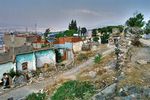
Informal urban settlements, otherwise known as slums or shanties, appeared at various moments during the twentieth century as the spatial manifestation of urban poverty. Their histories differ from one socio-geographic region to the other: the gecekondu districts in Turkey developed under different circumstances to the favelas in Brazil, and so on. However, what unites these settlements is that they make visible uneven capitalist development on an urban scale. Urban researchers have studied these districts extensively, focusing on a variety of issues. Urban planners, for example, made an effort to develop ideas about how to normalize irregular urban settlements, while sociologists have studied the structural and economic causes for the emergence of such districts. Anthropologists have focused both on questions of gender in shanties as well as on their potential for resistance in everyday life. Until twenty years ago, informal settlements were studied mainly as an urban sociological phenomenon under rubrics such as “urban poverty” or “rapid urbanization”. Recently, however, they have begun to appear in very different contexts, for example in architectural/urban planning projects and debates, contemporary art and popular culture.
more here.