
Dana Smith in The New York Times:
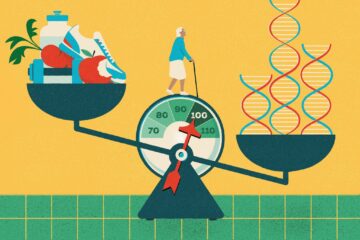 When Dr. Nir Barzilai met the 100-year-old Helen Reichert, she was smoking a cigarette. Dr. Barzilai, the director of the Institute for Aging Research at the Albert Einstein College of Medicine, recalled Mrs. Reichert saying that doctors had repeatedly told her to quit. But those doctors had all died, Mrs. Reichert noted, and she hadn’t. Mrs. Reichert lived almost another decade before passing away in 2011.
There are countless stories about people who reach 100, and their daily habits sometimes flout conventional advice on diet, exercise, and alcohol and tobacco use. Yet decades of research shows that ignoring this advice can negatively affect most people’s health and cut their lives short. So how much of a person’s longevity can be attributed to lifestyle choices and how much is just luck — or lucky genetics? It depends on how long you’re hoping to live. Research suggests that making it to 80 or even 90 is largely in our control. “There’s very clear evidence that for the general population, living a healthy lifestyle” does extend the life span, said Dr. Sofiya Milman, a professor of medicine and genetics at the Albert Einstein College of Medicine.
More here.
Enjoying the content on 3QD? Help keep us going by donating now.
 I
I The unending wars and fortified borders fracturing much of the world have created lucrative testing grounds for the private firms tinkering with defense and security technologies. Venture capitalists scrolling through pitch decks of products seemingly lifted from blockbuster thrillers are rapidly cashing in. According to a Dealroom
  Everyone has heard that it’s vital to get seven to nine hours of sleep a night, a recommendation repeated so often it has become gospel. Get anything less, and you are more likely to suffer from poor health in the short and long term—memory problems, metabolic issues, depression, dementia, heart disease, a weakened immune system.
 The scariest thing about contemporary American politics is that on January 7, 2021, it was widely acknowledged among American conservatives that Donald Trump’s behavior on January 6th was completely unacceptable.
 Not infrequently,
 Over the past two decades, research has emerged showing that opportunities for risky play are crucial for healthy physical,
  When, on January 19, 1939, W.H. Auden boarded at Southampton a ship bound for New York City, he could not have known that he would never live in England again. But some months earlier, he had told his friend Christopher Isherwood that he wanted to settle permanently in the United States. Almost as soon as he arrived in New York, he began to rethink his calling as a poet, and, moreover, to reconsider the social role and function of poetry. (He also began a spiritual pilgrimage that would lead him to embrace the Christian faith of his childhood.)
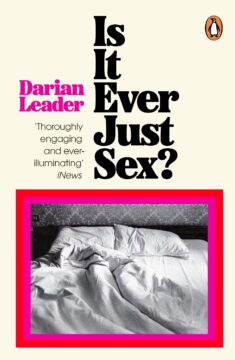 To seek out a therapeutic practice, we are sometimes told, is often the expression of a desire for change. But ‘therapy’ is hardly separate from the culture it intersects with, and may end up changing that very culture. If the poet W. H. Auden could describe Freud as ‘no more a person / now but a whole climate of opinion’, then surely that was because Freud’s language eventually became our own; phrases like ‘acting defensively’ or ‘feeling conflicted’, as John Forrester notes, have been absorbed into everyday speech. A particular therapeutic practice can thereby help to bring into being the self it seeks to describe (such as the epochal emergence of what Philip Rieff once called ‘psychological man’), as its models of successful treatment and its language for the mind, emotions, and behaviour become part of culture’s common-sense. Even the use of ‘therapy’ tells us something about its contemporary cultural status, indexing far more than any individual therapeutic act. ‘You should talk to a therapist’ is a refrain regularly printed on t-shirts, worn by internet celebrities of all stripes, and the remark trades off the sense that recommending therapy could be seen as an act of care just as it could also be a moral corrective for bad behaviour (‘go to therapy, you naughty boy!’).
 In 2009, The New York Observer published “
 Watching television while using another smart device is so common that over
  Yascha Mounk: One of the things that I’ve really been trying to wrap my head around is the impact of AI. The launch of easily publicly accessible AI was now a little over two years ago, and it is clear that AI has tremendous capacities. At the same time, so far, its impact on the world has been a little bit more limited than might have been imagined two years ago. How do you see this panning out over the course of the next few years?
 Whether embedded in a hospital, a high school, a zoo, a welfare center, an army training camp, a public library, a city hall, or an entire neighborhood, his films are “stylistically ur-vérité,” as